Imparting the Value of Wonder on Aspiring Scientists

An adult scientists assists a young girl as she peers through a microscope in a research lab.

Teaching an afterschool forensics course was about more than imparting knowledge of DNA; we aimed to teach students the value of asking questions and seeking answers.

Published August 1, 2014

By Giovanna Collu and Jonathan Isaac Schneiderman

Image courtesy of Verin via stock.adobe.com.

Training for our afterschool “forensic science” course flew by: fingerprints, shoeprints, crime scene sketches, hair and fabric samples, and an encouraging “You’ll do great!” Not specializing in forensics, we scribbled down notes and were certainly a little nervous as the slow trickle of students came into the classroom that first day. “Is this ‘MAD SCIENCE’ class?” someone popped their head in and asked. We both looked at each other puzzled, until one of the teachers in the room replied, “Yes, yes it is. Now sit down already.”

Unlike past longer-term mentoring opportunities that we’d had, our afterschool class only ran for one semester. Given that we had a different mix of kids attending each week, it was clear that the brief and sporadic nature of our interaction with each student would require a different mentoring game plan. We needed to quickly establish a relationship of mutual respect, generate and maintain enthusiasm, and most importantly, seed a lasting change in the kids’ relationship with science. Piece of cake, right?

“So, does anyone know what ‘forensic’ means?” we asked a silent classroom. “It’s like on TV, when there’s a crime that needs to be solved,” we explained. But the truth was that we weren’t there to teach them forensics at all. We were there to show them that scientists don’t have to be crazy-haired, old white men—because we aren’t. We were there to be relatable adults who happened to be scientists and were taking the time to teach them something interesting.

A Fun Break from the Classroom Routine

With 90 minutes per session, we knew that time would always be limited. Still, the mission was clear: provide a fun break from the classroom routine. Once the kids were engaged with hands-on activities, we could get them excited about solving problems using an evidence-based approach. Sure, we were “investigating crimes,” but asking questions and critically assessing answers are also important for understanding science as well as the world at large.

We raised the stakes a few sessions into the semester when we planned a fieldtrip to the Harlem DNA Lab, a short train ride away. Tucked away in an area far-removed from our research facilities, the center is a division of Cold Spring Harbor Laboratory, an organization home to numerous Nobel laureates. The trip gave us an exciting opportunity to share a small part of our day-to-day lives with the students.

So there we were, 12 kids, two teachers and the two of us, on the New York City subway during rush hour, on our way to see how DNA is analyzed in a lab. Our mantra-like counting of heads to ensure no child was left behind was all but drowned out by a stream of questions from the group: “Are we going to a real crime lab?” “Will we be wearing white coats?” “Are there going to be dead bodies there?”

After a short refresher about DNA, our instructor, Melissa Lee, quickly split us into groups, each equipped with a gel-box and colored tubes. Once all the kids tried their luck loading samples, the gang was teeming with excitement and huddled in the dark around an illuminated gel. “Wow! Does DNA really glow green?” one of them asked. “Well, not exactly…we use a fluorescent dye to see it,” Melissa replied with a smile.

Exciting for Students and Teachers

On our way back, the chatter had a new topic, and now the teachers were in on the conversation, too. Apparently, seeing DNA was pretty cool and warranted further discussion, and that was the whole point. We wanted to use the little time we had to get everyone excited; not just the kids, but the teachers as well. After all, the teachers’ continuous reinforcement would ultimately ensure none of these children would be left behind.

Time will tell whether we succeeded in making a lasting change. However, we knew that we’d achieved one of our goals. When asked how a “real scientist” would dress, one student quickly replied, “She can wear whatever she wants.” Although we weren’t there to convince them all to become lab scientists, conveying that they were fully capable of doing so was certainly a good use of our time.

So, what worked well with our group? Like most things in life, it all came down to striking a balance. We had to enter the classroom with a clear teaching objective, but at the same time be flexible enough to let the kids follow up with tangential questions so that they felt engaged. We also learned to include a variety of activities and not be too didactic. Overall, though, the key to this mentoring experience was to be ourselves, have fun solving crimes, and let our love of science speak for itself.

Also read: Good Mentors are Key to Student Interest in STEM


About the Authors

Giovanna Collu, PhD, is a postdoctoral fellow in the Mlodzik Lab at the Icahn School of Medicine at Mount Sinai.

Jonathan Isaac Schneiderman, PhD, is associate director of science at McCANN RCW.

Challenging Young Innovators to Think Big and Bold

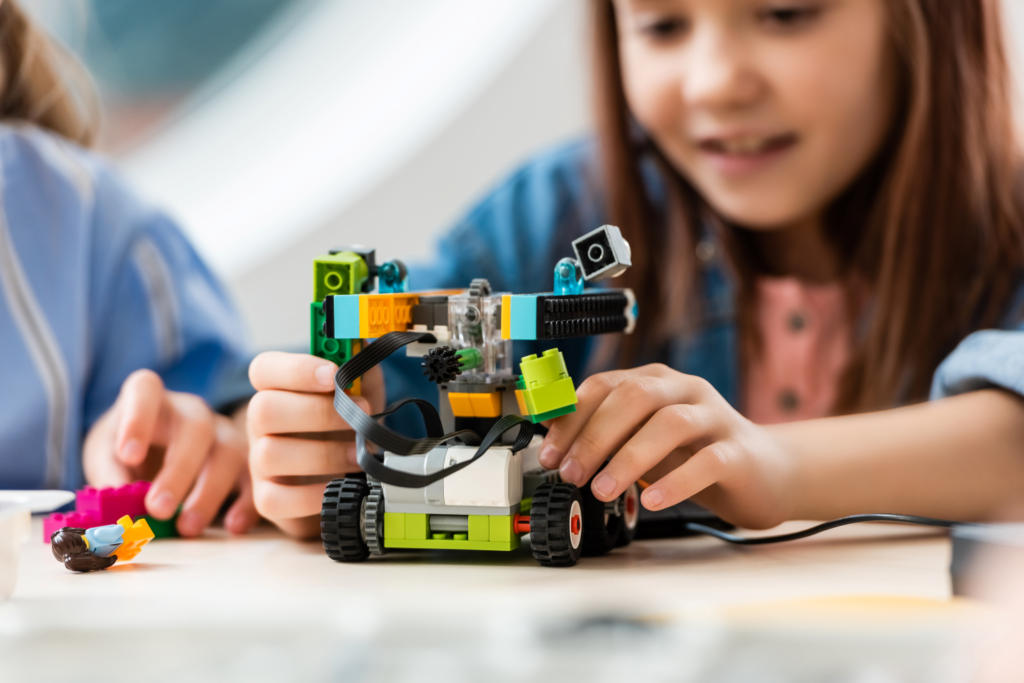
A young girl built a small, wheeled vehicle out of LEGOs.

Middle school students tackle “Nature’s Fury” through teamwork, persistence, and robots at an Academy event.

Published August 1, 2014

By Caitlin Johnson

For a moment, 12-year-old Gabriella Ryan was distracted by the sweeping view of the Hudson River from The New York Academy of Science’s (the Academy’s) fortieth-floor conference space at 7 World Trade Center.

“This is the first time my team has competed in the city this year and it’s really cool to be in this atmosphere,” Ryan said, admiring the spring sun reflecting off the buildings below. “It’s like, so real because we’re here. I’m really excited to see all the different teams. And of course, all the robots.”

Ryan, a seventh grader at the St. Clare School on Staten Island came with her team, the Transformers 2, and 10 other middle school teams for the Academy’s fourth annual Family Engineering Challenge Day this spring.

In all, more than 100 students from schools across New York City took part in the daylong celebration of science and engineering. Students worked together to problem-solve, learn, and have some serious fun with science.

Teams came prepared to compete in three activities: a LEGO® Robotics Gameboard Challenge, a research project—both of which are part of a global series of events sponsored by LEGO and the nonprofit science mentoring program, FIRST®—and a networking challenge where students collected stickers for successfully interacting with scientists and engineers.

The National Geographic Explorers’ Engineering Challenge

This year, a fourth challenge was announced the day of the event: the National Geographic Explorers’ Engineering Challenge, which asks students to tackle a problem that a National Geographic photographer might encounter in the field: how to lift a camera 10 feet in the air for an aerial shot while the photographer’s feet remain firmly on solid ground.

Each of the challenges picks up on the theme of this year’s event, “Nature’s Fury.” It’s a theme that hit close to home, especially for those who live in areas of the Northeastern U.S. hit hard by Superstorm Sandy just over a year ago.

In addition to the students, their families, and coaches, more than 30 adult volunteers—most of them graduate students or professionals in STEM fields—volunteered to spend their Saturday serving as mentors or judges for the research projects.

For Bridget Huang, a biochemistry PhD student at Columbia University and volunteer mentor for the day, it’s all about demystifying science and helping kids see that it’s not boring, scary, or foreign.

“It’s not necessarily about making everyone here become a scientist,” Huang said. “My goal is that I don’t want any of them to be afraid of science. I want them to have interest, which will help them in any case. Even if they work in business, they should to be able to talk to scientists.”

Tinkering & Teamwork
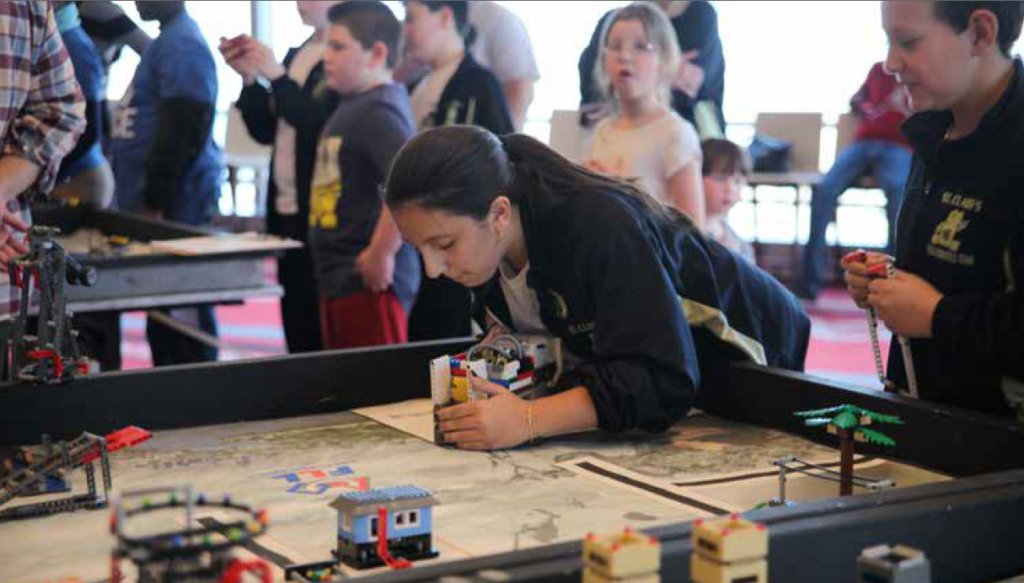
The centerpiece of the day was the tabletop LEGO® Robotics scrimmage, where teams design and program a LEGO robot to navigate an 8-foot by 4-foot game board in two-and-a-half minutes. The layout of the board simulated the aftermath of a natural disaster. Teams earned points for each task their robot completed—for example, clearing debris, avoiding obstacles, and picking up and moving pieces from one spot on the board to another.

Many of the students said they were especially excited about learning computer programming to “teach” their robots what to do, and about incorporating high-tech components into their LEGO creations. “The coolest thing was the ultrasonic sensor we put on our robot. We could program the distance from barriers and surfaces and it could avoid them,” said Ariel Sanchez, 9, with PS 94K’s Master Blaster team.

His teammate Eric Velasquez, also 9, said that they first learned about the sensor by watching others use it and “we decided to learn how to use it for the missions. The sensor makes me feel like, ‘How can we learn and use new things?’”

That spirit of collaborative learning—borrowing and building on what works—is a big part of what this annual event is designed to foster.

Because this was a scrimmage, not an official FIRST LEGO League (FLL) competition, it was open to teams who didn’t qualify for the FLL finals taking place later in the spring at the Javitz Center in New York. And while the scrimmage mimicked the competition format—with four tables of teams competing at the same time—each robot was going for its personal best rather than trying to beat the others.

Collaboration and Problem Solving

Each team got three runs on the scrimmage tables; in between, they could take their boards back to their “base camps” and tweak things. “As with all good engineering, there’s iteration that happens and the teams learn a lot about what happens with the robots as they watch them perform,” said Stephanie Wortel, Academy Education Program Manager. “They work together to problem-solve and make their robots even better.”

That’s what members of team Flash from Genesis Middle School at Xavarian High School in Brooklyn did after their first run. Huddled over their gameboard, Ryan Clark, 11, and teammates CJ Ruiz, Michael Cuddy, and Chris McElhinney, all 12, were replacing their robot’s treads and swapping out some of the parts.

“This wasn’t planned, it was more like a last-minute thing,” Cuddy admitted. “The referees told us we could use more accuracy and speed.”

Teammate Alexander Ayoub, 13, stopped tinkering long enough to reflect: “The thing about this, it’s just a great experience because many other people don’t do this kind of stuff and it really makes us a lot smarter. But it takes a lot of things, like building and programming, and you need strategies. That helps you with practically everything in life, not just if you want to become an engineer or a programmer.”

Nearby, David Cadunzi, 13, with St. Clare Transformers, said that’s what he likes most about this annual Academy event: “It’s about having fun, and the trial and error that helps you succeed. When my team and I don’t get a program we want to get, we don’t back down. We keep trying it even though we mess up a lot.”

“Gameifying” Science and Mathematics
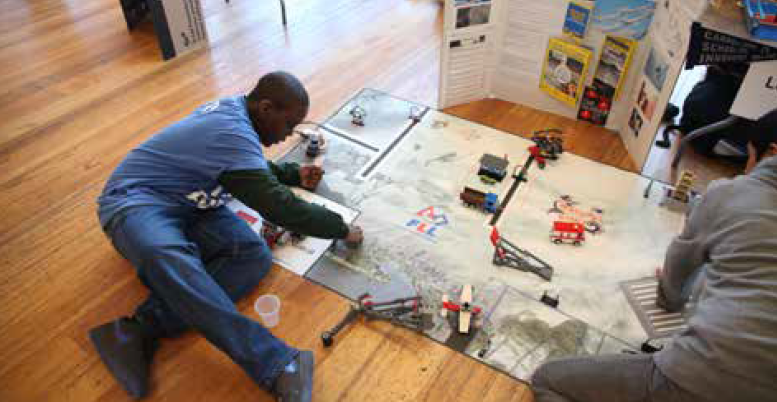
John Steib, 12, with Team LEGO Force agreed: “That’s a good thing you have to learn in life, too. You can’t just fix everything by doing it one way or with the push of a button.”

“It’s easier working together with a team because if you’re doing one thing and it’s hard for you, your friends are there and you can learn from them,” Shameekah Gray, 13, said.

Some pretty grownup lessons were being learned through “gameifying” science and mathematics.

The Robotics Challenge may have been the main event, but students were equally excited about the research project. In September 2013, teams were given an assignment: identify a real community and a nature-related problem it faces, and come up with an innovative solution that will prevent damage or help the community recover from the natural disaster.

And innovate they did.

Projects ranged from a waterproof coating to prevent generators from exploding (developed by students in Bay Ridge and Breezy Point, Brooklyn, which was plagued by fires after Sandy) to an inflatable “SnapAlert” life vest that includes supplies and a homing device to alert rescuers, to a full-body suit to keep wearers safe and warm in dirty flood waters. A more fanciful project, Hurricane Fighters, centered on large flying robots that emit countervailing winds to disrupt hurricanes.

At the Academy, each team got 20 minutes to pitch their ideas and field questions from a panel of judges, all of them STEM professionals from Tata Consultancy Services, Moody’s, Goldman Sachs, and InfoSys.

“It felt so real because we were in a conference room and the judges were actual engineers and people in the field,” said Thomas Drennan, a member of St. Clare’s Transformers.

Special Recognition

Judges gave special recognition to several stand-out projects, including those designed by the two St. Clare Transformers teams from Staten Island.

“Sandy was definitely a big motivator for us because we lived it,” said Mary Lee, coach of both Transformers teams. “We were out of school for a week with no electricity, and we had kids whose families lost homes.”

“We considered a lot of ideas and decided on the ones we thought would be the most effective and would help our community the most,” St. Clare student Daniella Gomes said.

Transformers 1 designed “Pack N’ Track,” a waterproof box that keeps valuable papers safe and has a transponder so it can be tracked at a distance of 35 feet (in version two, the team plans to boost the distance).

Transformers 2 built “The Window Seal,” a window that automatically seals itself during a flood. They used a typical basement window and lined it with a bicycle tire tube that inflates when water activates a pressure sensor, indicating that flood waters are nearing the window.

Not all teams designed research projects to solve hurricane and flood-related problems. Team LEGOForce from MS 442 in Brooklyn chose Boston as their community, and blizzard-related power outages as their problem to solve.

“During a blizzard, it’s really important [to keep power on] because you can get hypothermia and that can be deadly,” said Ivan Sanchez, 13.

After talking to an Office of Emergency Management employee and one of the team member’s landlords, an electrician, they came up with the idea for a cover for electric power lines made from a flexible series of connected casings “like the shell of a millipede.”

A Little Scary, A Lot Cool
That way, “it’s a little bouncy so when a tree or a branch lands on it, it will bounce off a little. It reinforces the wire,” Yosmai Bielma, 13, said.

“The quality of the presentations and the ideas and the access the kids have to information continues to amaze me,” said Paul Walker, a physicist by training who leads technology for Goldman Sachs and is also an Academy Board Member. He volunteered to judge the presentations, as he has done each year of the event.

Walker noted that this year, the networking component was integrated throughout the event. “In so many science programs, formal communication and science are emphasized but informal communication or networking—which is really the difference between success and failure in many of these fields—is not part of the program.”

Bronx Taskforce coach Oscar Lemus said the Academy scrimmage “gives kids a career awareness that other tournaments can’t offer. They have unlimited questions, and this is a place where they can ask real scientists.”

For Enxon Zheng, from PS 94 in Brooklyn, the networking was both “scary and cool. Today, I learned how to be braver and have courage to talk with others and learn and know about them. I’m usually kind of shy.”

Meeting Real Scientists

“That’s my favorite part,” said Darius Gravely with team LEGOForce. “I get to meet people who are actually, like, from science and ask how they work with science.”

This year, that included a visit from real-life astronauts, including Charlie Camarda and Rick Linnehan. Throughout the event, they visited with teams and fielded questions from excited students.

A Queens native and graduate of Brooklyn Polytech, Camarda praised the Academy for teaching teamwork, communication, and the importance of failing and trying again.

“The older these kids get, the more they’re going to be told what works and what doesn’t work. We have to make sure that they stay critical thinkers and lifelong learners and [don’t] just take at face value what someone says but figure it out for themselves and stay creative,” he said.

Check out the Innovation Challenges sponsored by The New York Academy of Sciences!


About the Author

Caitlin Johnson is the co-founder and managing editor of www.sparkaction.org, a website that covers a range of child and youth issues.
40 Years of Advancing Science for the Public Good

A cover shot of the publication The Sciences.

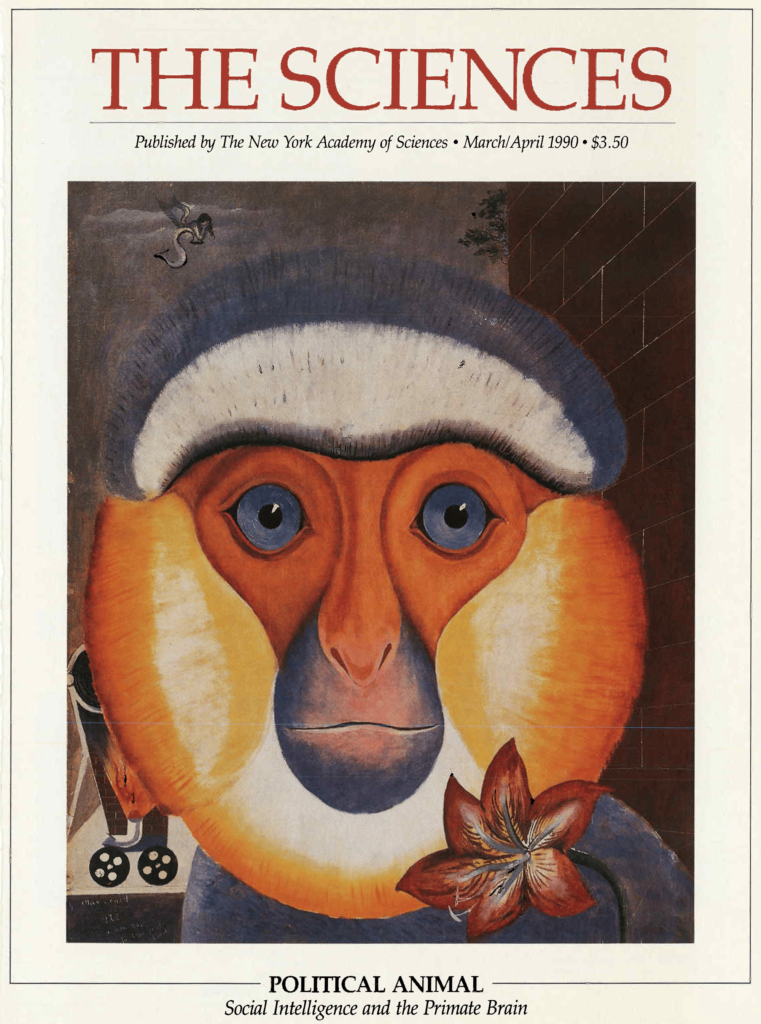
The Sciences, published by the Academy for 40 years, became one of the most honored science magazines in America. The contents of the entire run of issues are now available for members to enjoy online.

Published August 1, 2014

By Peter G. Brown

A cover shot of the publication The Sciences.

In 1961, the year The Sciences was born, the Russian cosmonaut Yuri Gagarin became the first man launched into space. Roger Maris hit 61 home runs, breaking Babe Ruth’s record. Catch 22 was published. JFK and Nikita Khrushchev were in office, and one night in August the Berlin Wall was put up.

1961 was a banner year in science, too. Sydney Brenner and Francis Crick showed that the code for making the building blocks of any protein is a series of three consecutive DNA base pairs. Murray Gell-Mann and Yuval Ne’eman developed a scheme they called the eightfold way (later reformulated as the quark model) for classifying “elementary” particles. Louis and Mary Leakey discovered Homo habilis in Tanzania’s Olduvai Gorge.

In those early days, The Sciences was a modest undertaking. The first issues amounted to little more than pamphlets, four sheets of letter-size paper folded once and stapled along the spine. But The New York Academy of Sciences nurtured the project through its fledgling years, and soon major scientists realized they could communicate with the public as well as their peers by contributing to its pages. The magazine gained a reputation as a small voice of reason and authority in the world of science writing for the general public.

Early Days

My initial contact with The Sciences was a fairly typical first encounter. In 1980, fresh out of grad school, I landed in New York, where I decided to “become a science journalist.” I contacted every science magazine I could think of about “writing something.” Susan Hassler of The Sciences was the only editor kind enough to respond to my naïveté, and she took the chance of assigning me to do a brief story for the magazine’s news section. After some editorial back-and-forth, my piece was published, unsigned, but in a form still recognizable to its author. I was on my way.

Like most magazines, The Sciences developed its own “stable” of scientist-authors, artists, freelance journalists, and, of course, staff writers such as Jonathan Weiner and Robert Wright who made regular or semi-regular appearances. Among the “outsiders” (i.e., nonstaff), the most important were designated “contributing editors”—a list that included the cartoonist Roz Chast, Stephen Jay Gould, Brian Hayes, Horace Freeland Judson, Laurence Marschall, Ashley Montagu, and Hans Christian von Baeyer. Artists were drawn from every style, every era, and every culture, but favorites, at least in my day, included those who might be described as neo-surrealists, such as Fanny Brennan, Alfredo Castañeda, Odd Nerdrum, Mark Tansey, and Kit Williams.

The magazine, through the Academy, also attracted its share of noteworthy scientist-authors, among them the Nobel laureates Hans Bethe, Francis Crick, Christian de Duve, John C. Eccles, Roald Hoffmann, Leon Lederman, Peter Medawar, Norman Ramsey, Andrei Sakharov, Richard E. Smalley, and Frank Wilczek, along with such luminaries as Enrico Bombieri, Freeman Dyson, Sir Fred Hoyle, Alan Lightman, Lynn Margulis, Heinz Pagels, Oliver Sacks, Albert Sabin, Robert Sapolsky, and Edmund O. Wilson.

Assembling Eminent Scientists

Perhaps the most amazing assembly of eminent scientists associated with The Sciences gathered in fall 1996 at the Academy for a celebration of the magazine’s 35th anniversary. They included von Baeyer, the biologist and Nobel laureate Günter Blobel, the biologist Tom Eisner, the chemist and Nobel laureate Dudley Herschbach, Margulis, and the physicist/mathematician (and Fields medalist) Edward Witten. We invited these and 20 other leading scientists to list the three most important achievements of the preceding 35 years, the three advances they most expected in the next 35 years—and at least one example of their discipline’s worst mistakes.

Some responses were serious, some not so much. But what we had not expected—and what made the lists so readable—was the playful approach and sparkling wit from some of the world’s smartest people, having a very good time. You can read their responses in “A Billion Seconds of The Sciences” (November/December 1996).

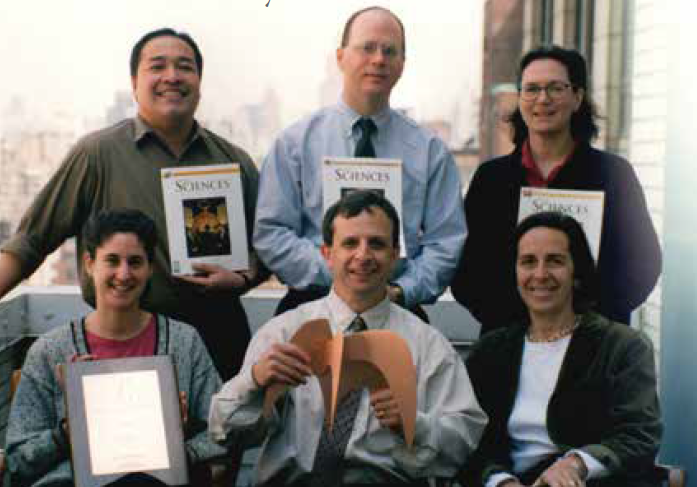
The Sciences staff celebrates a National Magazine Award. Front Row, Left to Right: Emily Laber, Peter Brown, Elizabeth Meryman. Back Row, Left to Right: Levin Santos, Jeffrey Winters, Mary Beth Aberlin. Photo taken May 2000.

Amidst all the scientific royalty, the one feature for which The Sciences was perhaps best known was its use of fine art. Successful offspring have many fathers, and several former chief editors have claimed major roles in inventing or advancing what became the most brilliant design decision of the magazine’s history. In truth, though, fine art was introduced primarily to save money, not to enhance design. Commissioning original oil paintings or airbrush illustrations, as commercial magazines of the day were doing, was out of the question. Even original photography was quite expensive if it was any good. Rental fees for reproductions of paintings and sculpture, however, were quite reasonable.

Art in The Sciences

Reproductions of fine art were appearing in The Sciences by August 1966, under Samuel Burger, the first chief editor of record. Burger’s successor, Peter D. Albertson (editor, 1966–1968), introduced more sophisticated layouts, which he continued decorating with art. Subsequent editors gave an increasingly prominent role to art, until Paul T. Libassi (editor, 1981–1989)—who once held the title Fine Arts Consultant—insisted that all images come from the arts. (Even Libassi, however, found, on rare occasions, that he had to admit a diagram.) The role of art had morphed into a signature feature, chosen to complement the scientific articles rather than simply to illustrate them.      

Sometimes the interplay of science and art is straightforward yet striking, as in Rembrandt’s self-portraits from young artist to old man that accompany an article on aging in 1991 (“On Growing Old,” by Robert M. Sapolsky and Caleb E. Finch, March/April 1991). More often, though, placing artwork next to scientific text adds depth and reveals interpretive possibilities that neither the art nor the science could do alone.

The abstract patterns woven into textiles by “Anonymous,” which complement a 1996 article on the origins of the Internet (“Casting the Net,” by Katie Hafner and Matthew Lyon, September/October 1996), or Yves Tanguy’s paintings mashed up with an article on prime numbers,(“Prime Territory,” by Enrico Bombieri, September/October 1992), are two good examples of a synthesis greater than its parts.

Battle for the Bottom Line

But art, introduced as an economy, was beginning to have a substantial indirect impact on cost. Paper quality had been enhanced almost monotonically since the earliest days of The Sciences, until, by the Libassi era, the presses were running Cadillac-quality “body stock.” The paper was a fine, bright, opaque and glossy sheet, the best possible medium for reproducing art. But fine paper is costly, and it weighs more per sheet than lesser stock, which drove up postage and shipping costs as well. By the time I became editor, in late 1989, these high production values, coupled with a “book size” (the page count per issue) pushing 80, were raising red flags for the Academy’s management.

As things turned out, it was quite possible to produce a high-quality magazine with fewer pages and less luxurious materials. After a series of cuts, the issues settled in at around 48 pages each. A blue-ribbon panel of top editors and publishers, including Jacqueline Leo (at the time, the group editorial director for women’s magazines of The New York Times), the late Charles Ramond (a financial whiz with a background in advertising research), and Dick Stolley (a Time-Life wunderkind who was the founding editor of People Weekly magazine), managed to stabilize matters for several years.

But the eventual demise of the magazine never seemed in doubt. Things came to a head in early 2001, when Academy CEO Rodney W. Nichols, ever skeptical about the membership value of the magazine, cut the frequency from bimonthly to quarterly. In the end, as we now know, that lasted one issue. After nearly 40 years of publishing, the Spring 2001 issue of The Sciences rolled off the presses—with a cover story on climate change intentionally titled to convey a double meaning: “Climate of Doubt.”

There would be no summer.

More Info about The Sciences

The success of The Sciences in garnering the most prestigious awards in magazine journalism was so out of proportion to its size or budget that a year without winning or placing among the top five finalists at the National Magazine Awards was the rare exception. In the period 1985–2000 the magazine was either a finalist or a winner in the category “General Excellence (under 100,000 circulation)” in every year except 1992, 1994 and 1997. At the time of its closure in 2001, its lifetime record of seven wins put it in a four-way tie (with Business Week, Outside, and Sports Illustrated) for 11th place among all U.S. magazines

Access to ‘The Sciences’ archive is just one perk of being an Academy member. Not a member? Sign up today.


About the Author

Peter G. Brown was the editor of The Sciences from 1989 until its closure in 2001.

The Caped Crusader for Better Mental Health Outcomes

An illustration of a superhero overlooking a city skyline as his cape blows in the wind.

Andrea Letamendi, PhD, discusses the value of addressing mental health issues through the lens of beloved fictional narratives.

Published July 24, 2014

By Diana Friedman

Image courtesy of rudall30 via stock.adobe.com.

In honor of Batman’s 75th anniversary, DC Entertainment declared July 23 Batman Day. What does this have to do with science? More than you might expect, with a little imagination. For psychologist Andrea Letamendi, PhD, the Batman world, with its roster of criminally insane villains, is a fictional window onto very real issues. Her podcast series, The Arkham Sessions (named for the asylum where Batman’s enemies usually wind up after the hero thwarts their plots) analyzes characters and interactions from Batman: The Animated Series to explore subjects such as coping with trauma, mental disorders, patient treatment, and stigmatization of people with mental illnesses.

According to National Library of Medicine historian Dr. Michael Sappol, “It’s a powerful technology for forming public opinion. It [doesn’t] just reason with the audience, it recruit[s] the audience’s emotions.”  Dr. Letamendi leverages a balance between that emotional resonance and the relative security of fiction to engage her audience in consideration of challenging themes. “It’s a way to educate people about psychological science and address important topics in a way that feels safe—less threatening or less personal,” she says. “At the same time, many people feel very connected to these fictional narratives and the stories actually help us to tune in.”

Dr. Letamendi spoke with The New York Academy of Sciences (the Academy) from Comic-Con in San Diego about superheroes and psychology.

Why apply psychological analysis to fictional characters?

As a psychologist, I’m invested in broadening public knowledge about the psychological sciences. I find that one way I can do that is to speak to my passion and the passion of many others: comic books, science fiction, and fantasy. I’ve had wonderful opportunities to speak at universities and at Comic-Con and other cultural conventions to utilize these narratives that people can really relate to—the stories, heroes, and villains that people already know—to examine important health issues. It’s fun but it’s also an educational advantage.

Are there useful parallels between cartoon characters and real people?

Yes! For example, my first experience speaking on a panel was talking about how comic book heroes are actually really similar to real life heroes, specifically soldiers who have experienced combat-related trauma. I used to practice at a veterans hospital and have a lot of experience working with soldiers and veterans returning from Iraq and Afghanistan with physical and psychological injuries.

The panel was a chance to talk openly about the impact of recent wars on the people who fight in them, and how the field of psychology is struggling with how to meet the needs of the men and women coming back from those conflicts. It’s a really serious topic, but we can draw upon these fictional narratives that simulate and evoke real tensions and interests in a way that feels safe and remains relatable.

How does your series, named for the Arkham Asylum for the Criminally Insane, avoid associations between mental illness and criminal behavior?

It’s really important to us to always make that distinction. When we started the show we knew we’d be examining the psychology of a lot of villains, but we’re not just trying to come up with labels or diagnoses for them. Every episode of the Batman series has a lot of psychological elements to it. We end up talking about such a wide range of subjects—memory loss, substance abuse, anxiety, family issues, patient care and hospitalization, childhood trauma.

We speak about these issues in a way that deliberately doesn’t stigmatize, but rather helps to normalize these experiences. The result is that we’re very inclusive in a way that let’s everyone relate. We include Batman in our analyses, not just villains, and he’s a character with a lot of issues as well. My hope is that it combats the idea that people with mental health problems are villains or criminals.

Do you have a favorite character?

I like the villains who are overlooked because they’re just seen as being big and burly, like Killer Croc or Clayface. They’re like onions. When you unravel them you realize there’s a deep psychological history and trajectory there that got them to where they are [by the time you meet them in the series].

Are there lessons from Gotham City that might apply to real cities’ policies on mental health care?

There are real barriers to appropriate, evidence-based care. In big cities with diverse populations, we deal with issues of underserved populations that don’t have access to care. There are groups of people with structural and psychosocial barriers to getting care. Sometimes we struggle to provide care that’s culturally or linguistically appropriate. We need to think about all of these psychosocial elements to ensure that people have opportunities to heal.

Any parting thoughts?

It is Comic-Con week! If you’re coming, please keep in mind that you can put together a curriculum of educational panels on really interesting topics like psychology, underrepresentation, and gender equality. Comic-Con is fun and a celebration of superheroes, but it’s also an opportunity for education and to demystify and reduce some of the myth around science.

Also read: From Imagination to Reality: Art and Science Fiction

A Science State of Mind in the Empire State

An overhead shot of NYC.

An introduction to New York’s newest role: that of an undisputed scientific powerhouse.

Published June 1, 2014

By Sharon Begley

Image courtesy of ecst22 via stock.adobe.com.

Come, New York has long beckoned: come achieve your dreams and create what has never existed before—come build America’s first department store and largest stock exchange, her first pizzeria and first public brewery. Come make New York City the nation’s capital of finance and media and fashion, and come invent the inventions that change the way we live (air conditioning, toilet paper), the way we remember (photographic film), and the way we sing (folk rock).

Immerse yourself in neighborhoods filled with other artists and writers and thinkers who will nurture and challenge your ideas, producing the critical mass that will enable you to achieve what you cannot in isolation. Change the way an entire nation thinks, as when the abolition movement put down roots in Rochester in the mid-1800s.

Even as New York City and State have called the world’s doers and dreamers to their shores for centuries, scientists became almost an afterthought by the mid-20th century. Yes, Nikola Tesla did pioneering experiments on alternating current in lower Manhattan during the Golden Era for New York science in the late 19th century; biologists at The Rockefeller University discovered in the 1940s that DNA is the molecule of heredity; and physicists using particle accelerators at Brookhaven National Lab on Long Island in the 1960s, 1970s, and 1980s discovered some of the basic building blocks of the universe and the magical rules that govern them.

But by the post-war era, science and technology had become less central to the life, commerce, and the very identity of New York than the rising commercial behemoths of advertising, finance, law, and business.

Exulting in a Science Renaissance

Now, New York is exulting in a science renaissance. You can measure it in glass and steel, like the $350 million Advanced Science Research Center that The City University of New York is building on St. Nicholas Park in Upper Manhattan and which, when it is completed next year, will house scientists whose work will be driven by a revolutionary new way of organizing research. You can measure it in bold new collaborations, such as the New York Structural Biology Center in Harlem or the $50 million New York Genome Center in SoHo, both of which attract researchers from around the country and around the world.

You can measure it in the ways that long-established institutions are expanding their research footprint: in West Harlem, Columbia University is building an entirely new campus, allowing it to increase the size of its engineering faculty by 50%. “Never before in our city’s history has there been…so much scientific investment,” said then-Mayor Michael Bloomberg in his 2013 State of the City address.

And you can measure it in the ways that New York is hanging up “Science Wanted” signs, such as its offer of land on Roosevelt Island and up to $100 million to induce world-class institutions to build a state-of-the-art applied sciences and engineering campus. Welcome, Cornell Tech, a collaboration between the Ithaca, NY, university and Technion-Israel Institute of Technology, which has been hailed as “the most exciting economic development project our city has ever undertaken.”

“[R]eclaiming our title as the world’s capital of technological innovation.”

Only a decade ago, New York, the city as well as the state, were behind other regions with relatively well-educated populations and leading universities in attracting scientists and research funding. That began to change when Bloomberg vowed that the city would rise from the ashes of the 9/11 attacks with a more diversified economy, one in which science would take its rightful place alongside other creative, forward-looking fields. The city’s “ultimate goal,” Bloomberg said in a 2009 speech, is “reclaiming our title as the world’s capital of technological innovation.”

Just as Wall Streeters and Mad Men, as well as denizens of the diamond and garment districts, draw much of their energy and hone their competitive instincts from sheer proximity to one another in the neighborhoods where they cluster, so too have scientists formed a critical mass in New York, both upstate and downstate.

New York City is home to more students than any other city in the country. Attracted by the city’s dynamism and culture, to say nothing of the access to capital, ideas, and the growing presence of others like them, young people are streaming into New York to study, to invent, and to start technology companies; welcome, Silicon Alley. For sheer creative and intellectual energy, Paris in the 1920s has nothing on New York City in the 2010s.

In Upper Manhattan, CUNY’s Advanced Science Research Center will be welcomed to the neighborhood by the five-year old CUNY Energy Institute, the new CUNY Hub for Innovation and Entrepreneurship, and a new City College science building. A subway ride away is Columbia University’s new Mortimer B. Zuckerman Mind Brain Behavior Institute.

Spawning Science Startups

Continue downtown to the three-year-old Alexandria Center for Life Science on the East River, which has already drawn such tenants as Kadmon Pharmaceuticals, ImClone Systems, and Pfizer’s Centers for Therapeutic Innovation, and has spawned dozens of life sciences startups. With NYU Langone School of Medicine and Bellevue Hospital close by, Midtown East is as dense with biologists and physicianscientists as 6th Avenue in the 20s is with wholesale florists.

Global organizations that could have chosen headquarters in Beijing, Boston, Baltimore, or anyplace else with an abundance of science talent are lately choosing New York, including The Global Alliance for TB (tuberculosis) Drug Development and the International AIDS Vaccine Initiative’s (IAVI) AIDS Vaccine Design and Development Lab. Both leverage New York City’s status as the crossroads of the world—and the international hub of finance and communications—to carry out their ambitious missions.

New arrivals have long brought new energy and new ideas to the city, starting well before a soaring copper-and-wrought-iron lady with a torch welcomed them in its harbor. The scientific groups putting down stakes today are doing the same, igniting a research renaissance that is rejuvenating well-established institutions. The Rockefeller University, established in 1901, recently launched a Center for Genomic Medicine—which is barely two years old. And Mount Sinai Medical Center, whose roots go back to the 1850s, expanded its clinical and research space by nearly 30% last year with the completion of the Hess Center for Science and Medicine, which promotes a trans-disciplinary approach to patient-centered care.

A State-Wide Effort

The research renaissance doesn’t peter out once you leave the five boroughs. New York State, spurred in part by the need to replace lost manufacturing jobs, is making its own big bets on science and technology, and drawing national support. A dozen years after its founding in 2001, the College of Nanoscale Science and Engineering (CNSE) of the State University of New York (SUNY) has attracted more than 3,100 scientists, engineers, students, and faculty to its world-class labs, drawing researchers from IBM, Intel, Samsung, Toshiba, and many others.

Albany has not only CNSE but, as of 2010, The RNA Institute, also part of SUNY, which in turn taps the expertise of faculty at the University at Albany School of Business to develop and commercialize new biotechnology in the Capital Region. On Long Island, the Advanced Energy Research and Technology Center is leveraging $45 million from the state to bring together 14 universities, Brookhaven National Laboratory, and telecom companies—among others—to accelerate and commercialize research on solar and wind energy, fuel cells, and the efficiency and security of the electric grid.

A Scientific Powerhouse

In a collaboration that fuses upstate with downstate and medicine with engineering, the Icahn School of Medicine at Mount Sinai Medical Center in Manhattan and Rensselaer Polytechnic Institute (RPI) in Troy signed an agreement last May to build on the institutions’ respective strengths—Mount Sinai’s in biomedical research and patient care, and RPI’s in engineering and invention prototyping.

It’s clear from just a quick dive that New York has indeed reclaimed its place as a scientific powerhouse. These scientific institutions are truly astounding—and will no doubt have implications far beyond the local area.

Also read: A Region on the Verge of Discovery


About the Author

Sharon Begley is a science journalist and author in New York.

Research Leads to New Treatments for Immune Diseases

Models of different atoms and molecules.

John O’Shea turned his passion for clinical care into a successful research career focusing on understanding the molecular basis of cytokine action, with the aim of providing better treatment options for patients.

Published June 1, 2014

By Diana Friedman

John O’Shea, MD, Director, National Institute of Arthritis and Musculoskeletal and Skin Diseases Intramural Research Program, NIH, has pushed the frontiers of molecular medicine during his career through research that has led to new treatments for immune diseases. He was named the 2014 winner of The Ross Prize in Molecular Medicine, which honors researchers whose discoveries change the way medicine is practiced.

How did you get involved in studying immunology?

I was drawn to immunology after admitting a veteran to the hospital, who had vasculitis and, sadly, died of this illness. At the time, the NIH was the center for research on vasculitis, so that’s what ultimately led me to join the NIH for training beyond internal medicine.

I initially worked on complement receptors and then the T cell receptor in my postdoctoral training at the NIH. When I set up my own lab, the importance of tyrosine phosphorylation as a first step in signal transduction was becoming increasingly apparent. We therefore set out to find kinases expressed in lymphocytes and cloned one of the Janus kinases, right around the time it was becoming clear that this family of kinases was critical for cytokines.

Why are cytokines so exciting as a research focus?

Cytokine signaling is of particular interest to me because it is a very basic problem: how cells respond to external cues. What is exciting is that the pathway is an evolutionarily ancient one employed by Dictyostelium and everything from insects to mammals. Advances from all these diverse organisms and models are valuable in understanding the basic problem. Equally, though, these insights often are directly relevant to patients with immune-mediated disease.

What questions are you currently trying to answer?

We remain very interested in how cytokine signals cause cells to grow and differentiate. What that means to us now is how external cues impact epigenetic changes and how this relates to control of gene expression. Of course, “genes” means more than just classical protein coding genes, so we are also interested how microRNAs, lncRNAs, and eRNA are all regulated by cytokines.

We are also interested in how Jak inhibitors do or do not work in patients with autoimmune disease. Will second generation selective inhibitors be as effective and be safer or not? What is the best way to use these new drugs, and for which diseases?

How has the field of molecular immunology changed since you started—and how will it continue to change?

Image courtesy of alice_photo via stock.adobe.com.

What is most different about doing science now versus a decade or two ago is that today many experiments are set up in a way that the denominator is often the entire genome or products of the entire genome. More and more this will be the case, and as such the analysis of the data becomes increasingly complex. We will be perturbing cells in many of the same ways, but the analysis will be vastly more complex and comprehensive. We will also use single cells and not heterogenous populations of cells, adding yet more complexity to the analysis.

But the basic question we are still trying to answer—how cell behavior is changed by external cues—is not so different from the one we began asking decades ago. What is astonishing is how these questions can now be answered.

How important is collaboration in the field of molecular medicine?

I have had very edifying interactions with industry scientists over the last 20 years with the outcome that patients with rheumatoid arthritis have a new treatment option. These people are experts in making treatments a reality and they are essential to moving the field forward.

Additionally, the NIH has been an extraordinary place to work. From my first experiences, the support from so many colleagues has been astonishing. One really feels like the only limitation to discovery is one’s creativity and ability. It is troubling at a time when so much could be done to really understand basic biological processes and mechanisms of human disease that funding is limited. This is a loss on many levels, but most of all a loss for patients with debilitating diseases.

The other big plus of place like the NIH is the ability to move from very basic problems directly to the bedside and back again. This was a common occurrence during my training—physicianscientists moved from one realm to the other.

Do you think that medical education currently has enough of an emphasis on research?

I worry that at a time like this, when there is so much opportunity, that we are not doing everything we can to foster the development of physician-scientists and translational basic researchers. At the same time, physicians-in-training have so much to learn these days—the amount of knowledge that students in medical school have access to now, and need to absorb, is just astronomical compared to what it was in my day; not to mention there is also the technology they have had to become proficient in using, and complex societal changes that have taken place. So working as a team, with people with different specialties and knowledge sets becomes increasingly important.

What does winning The Ross Prize mean to you?

Being that the prize is focused on molecular medicine, it is very gratifying—this is exactly how I think about myself in terms of my career focus. It’s very humbling, but also very exciting because that’s sort of what I was hoping to accomplish from the start —to make discoveries that are important scientifically, but also directly help people. For me, it doesn’t really get any better than that.

About The Ross Prize in Molecular Medicine

The Ross Prize in Molecular Medicine was established in conjunction with the Feinstein Institute for Medical Research and Molecular Medicine. The Ross Prize recognizes biomedical scientists whose discoveries have changed the way medicine is practiced. The prize is awarded to midcareer scientists who have made a significant impact in the understanding of human disease pathogenesis and/or treatment and who hold significant promise for making even greater contributions to the general field of molecular medicine.

Read more about the Academy and the Ross Prize.

A New Model for a Career in Industry

A graphic diagram of a man hold his chest, presumably a heart condition.

Biophysicist Mark Kaplan explores a fast-track to bring innovation to patients.

Published June 1, 2014

By Hannah Rice

Image courtesy of Sebastian Kaulitzki via stock.adobe.com.

For Mark Kaplan, a biophysicist who chose industry after his postdoc, the appeal of science lies in its predictability. From an early realization that he could position the stars and planets by studying astronomy—and check his predictions peering through his own telescope—to his work in drug discovery, his interest has drawn on a fascination with tracing the logic behind phenomena and harnessing it to answer questions.

“There are those who are more motivated by ideas and those more motivated by problems; there’s a relationship between the two, but I found myself more attracted to solving problems than to exploring ideas,” Kaplan says. “That’s what motivated me to take a leap and get my first job in industry.”

Kaplan is now a senior principal scientist at Pfizer’s Centers for Therapeutic Innovation (CTI) New York, a new facility at the Alexandria Center for Life Sciences, where he works with academic research labs to design drugs in several disease areas. In December 2012 Kaplan brought his work on myocardial infarction (i.e., heart attack) to The New York Academy of Sciences, co-organizing a successful Hot Topics in Life Sciences symposium that explored investigational treatments such as cell-based therapies and strategies to preempt heart damage.

Finding Drug Discovery

But when Kaplan tried to organize an astronomy club in junior high school, he was disappointed by the response: “Being the nerd that I was, I couldn’t understand why that many other people weren’t interested,” he says.

“One particular aspect that always struck me is that when you look at the stars you’re also looking back in time: the light that you’re seeing was emitted hundreds or thousands of years ago. The star that you’re looking at could have blown up and given the vast distances of space you won’t know it.”

Despite this vastness, we can study the stars and watch as their movements validate our models. In high school, Kaplan was drawn to this same predictability in the periodic table of elements. And eventually, as he began searching for patterns that govern life, he became interested in understanding “life as a chemical reaction,” explaining how biochemistry can “give life, make things alive, and give you memory and emotion.” Although Kaplan recognizes that this depiction is perhaps too reductionist, it’s a quest that intrigues him.

Kaplan studied biochemistry at Harvard as an undergraduate and pursued a PhD in biophysics with a focus on radiation biology at the University of California, San Francisco. As a postdoc studying the genetic basis of cancer at the University of Wisconsin–Madison, he looked at what happens when a specific DNA repair mechanism is inhibited. Cells repair DNA after it is damaged by exposure to environmental insults such as radiation, and errors in DNA that are not corrected can lead to cell growth abnormalities. This time, Kaplan could design experiments to target a particular section of DNA in the lab, and then find out how the modifications affect a living animal using gene-knockout technology.

A Career in Industry

After completing his postdoc, Kaplan decided to work in industry because of its focus on translating research into solutions for patients. He says he realized that “if your motivation is to solve problems, then industry is probably a better place for you.”

Today, Kaplan works with a staff of 25 at CTI-NY, which is not intended to replace the traditional pharmaceutical model, with thousands of researchers on a campus shepherding medicines from inception to large-scale clinical trials and rollout. Instead, it serves as a bridge between academia and industry, and its scientists look for ways to speed the transition from “a really interesting scientific discovery [to] a new compound and a new medicine.”

Although his background is in oncology, Kaplan is leading a team of scientists to develop drugs for cardiovascular disease, and he says that this flexibility is central to the CTI strategy. CTI is “disease agnostic,” meaning that researchers are not focused on a specialization but are instead searching for agents that seem particularly promising for medical uses.

Their approach involves working closely with experts in the field at research institutions, and CTI-NY is designed to be conducive to such collaboration—it’s centrally located in NYC, it provides lab space on-site, and project leadership is shared between a university PI (a professor) and principal scientist at Pfizer. The idea is to create an equal partnership, so intellectual property is also co-owned and academics can present results in medical journals.

A Shift Toward Greater Openness

The pharmaceutical industry has shifted away from a “closed system” toward greater openness; a “striking emphasis on external innovation” now prevails, Kaplan says. Previously, companies pursued therapies created by their own scientists, but they are now seeking to “access the scientific breakthroughs that are occurring in the wider world,” which he thinks is an exciting change. The CTI model is replicated in other cities (Boston, San Francisco, and San Diego), bringing Pfizer staff into proximity with academic medical centers in these local areas. Kaplan explains that “being able to meet face to face is important for building trust and for making sure that goals are aligned.”

Drug discovery as a field is always racing to find new therapies: to contend with internal competition, to meet patient demand, and to keep up with itself by replacing drugs whose patents are ending. Although Kaplan wonders whether the “easy drugs” that can keep up with the growing costs of R&D have been found, he answers his own query by saying that if he thought so, he’d be in a different business. Kaplan thinks that large molecules such as monoclonal antibodies and antibody-drug conjugates hold the greatest promise for therapeutic advances in coming years, as well as cell-based therapies (stem cells), which when fully realized will be a “quantum leap in terms of what we can do for patients.”

Building Networks

Kaplan says, with a tinge of irony, that it’s “an interesting time to be a scientist in New York,” pointing in the next breath to the old Chinese curse, May you live in interesting times. There are fewer industry jobs in New Jersey, where big pharmaceuticals have traditionally been based in the metro area. But New York City is home to innovation that is driving research in new directions, with projects like CTI leading this effort. There is also a strong research base at universities, and smaller biotech companies and nonprofits are in vogue: “If you are actively managing your career and looking for exciting opportunities they’re absolutely there.”

The ability to take new directions often depends on leadership, and Kaplan is quick to acknowledge the role mentors have played in his career. He is particularly grateful to those who gave him independence to take on projects that didn’t always match his qualifications, allowing him to “go out and fail,” as he jokingly describes it. Indeed, Kaplan’s career is defined by adaptability. He calls his transition to new research areas at Pfizer “a great learning opportunity” and talks with enthusiasm about his experiences interacting with other scientists in CTI and academia. The Academy too serves as an important venue for cross-sector and cross-organization interaction, Kaplan points out; you could “run into professors you might want to collaborate with.”

In our hyper-connected world where sharing is the it verb, it’s perhaps no surprise that science has followed suit, with scientists from every sector and discipline looking for new ways to team up to find solutions for some of our most challenging diseases.

Live from New York, It’s Einstein a Go Go

A hand adjusts a knob on an audio mixing board.

Presenting science updates on Australian public radio helps to bridge the gap between continents, and spark scientific interest among people half a world away.

Published June 1, 2014

By Jennifer Henry

I am passionate about communicating science, basically to anyone who is interested. Every two months I do a call-in radio segment on a weekly science program called “Einstein A Go Go,” on public radio station 3RRR-FM in Melbourne, Australia (which happens to be my home country).

The station is not unlike The New York Academy of Sciences (the Academy)—it is a membership-based, not-for-profit organization that is supported by community sponsors and 12,000 subscribers. “Einstein A Go Go,” which airs on Sunday mornings (Melbourne time) is headed up by Dr. Shane Huntington. Huntington has a background in physics, with a specialty in photonics and imaging. The five or so other panelists on the show are equally accomplished scientists and science communicators, holding PhDs in areas spanning infectious diseases, chemistry, engineering, and quantum mechanics. The show’s aim is to discuss science and science-related issues in a friendly and accessible manner.

My brief is to cover “What’s Hot in New York Science.” I have covered such diverse topics as:

  • the fascinating ginkgo fruit, including ginkgo recipes;
  • the work of the Office of the Chief Medical examiner, particularly their analysis of the biological samples at Ground Zero;
  • the arrival of the once-every-17-years periodical cicada;
  • scientific highlights from Obama’s 2nd inauguration speech;
  • how Hurricane Sandy hit various research labs in NYC; and
  • changing pitches and frequencies in NYC’s emergency response sirens.

Preparation Is Key

When I am preparing for a show, I spend about two months looking at research breakthroughs, current affairs, or interesting presentations that I have heard at the Academy—basically seeking anything that catches my attention through the eyes of a science-interested citizen. This process starts the minute I’m off the call from the previous show. I spend a few hours researching the topic and preparing a few pages of notes, at which point I usually find I have way too much information for a 10-minute segment, then spend a while distilling it down into a page or two of bullet points.

Once show time rolls around, I tune in via streaming radio and listen to the first half hour of the show so I can be sure not to repeat any material already discussed, including breaking news stories that the other panelists may have seen in Science or Nature that week. Due to the fact that we are multiple time zones apart, the show goes to air at 11am on Sunday morning (east coast Australia time), which is either 7pm or 9pm on Saturday night in New York (depending on daylight savings).

I therefore also need to get “in tune” with the Sunday morning vibe of the show and be cognizant of any major events that took place the night before in Melbourne, such as the aftermath of a federal election, cuts to Australian science budgets, or a football grand final (equivalent to the Superbowl). If Huntington’s team (Essendon) and mine (Collingwood) have recently played each other, a few jokes usually fly…

Live from New York…

Jennifer Henry

With the words “…and after the break, we will be joined by Dr. Jennifer Henry, live from New York…,” they cut to a track, and I call in via Skype. Huntington picks up my call, we have a quick chat to test the sound quality, and he puts me on hold until the track finishes. He then says “…and joining us now on the phone from New York, we have Dr. Jennifer Henry, director of Life Sciences at the New York Academy of Sciences. What’s happening over there, Dr. Jennifer?”

And off I go. I try to make my segment as natural, chatty, and conversation-like as possible. I talk my way through the topic using my prepared bullet point notes to keep the facts straight. After a few minutes, the other panelists contribute their thoughts (which gives me the chance to catch my breath, and gives me guidance on what angles they, as representatives of the citizen-science community, find interesting about the topic). It can be rather like an exam, as the panelists throw in unexpected questions and I have to hope that my preparation was sufficiently broad to get me through this phase of the segment.

Answering the Right Questions

“How does the life span of the periodical cicada differ from those of the cicadas we see every summer in Australia?”

“How did the coroner’s office handle processing the remains of the terrorists alongside those of the victims?”

“Is there evidence that New Yorkers no longer take emergency response sirens seriously?”

This is where my notes come in handy—hopefully the panelists’ questions touch upon issues that I have researched. At times, however, I am caught by surprise if they ask an unexpected question or one from way out of left field. All I can do then is make an educated guess, or ask the panelists if they have an opinion (which they invariably do).

Advancing Science for the Public Good

We then wrap up the segment, vow to do it all again in two months, and I get off the call with a huge sigh of relief. I walk to the other end of the apartment, where my husband has usually been hiding out in the bedroom to give me some privacy on the call, and he says “How did it go?” My response is almost always “Fine…I think.” It takes at least half an hour to get over the ordeal.

So why do I subject myself to this grueling mini-exam every two months? Wouldn’t I rather spend my Saturday evening relaxing? Yes, it’s work, and it’s often difficult to find the free time to select and research a topic, but, like all things that require effort, the feeling of achievement when it’s all over makes it well worth it. I love the feeling of international science connectivity. Furthermore, I love that, even though my fellow panelists, the listeners, and I can all read the same material in Science or Nature, I can hopefully bring an extra, more personal dimension to the issues with an on-the-ground New York perspective.

I also love spreading the word about the Academy’s mission, and hope that this might propel listeners to visit our fabulous website, listen to our extensive range of eBriefings and podcasts, read our regularly-updated blog and archive of Annals, and possibly also become a member of our truly international network.

Opportunities for Inter-Generational STEM Engagement

Three people, dressed formally, pose together inside.

At today’s White House Science Fair, The New York Academy of Sciences pledges to positively impact the STEM education crisis through innovative, impactful, and inspiring programming.

Published May 27, 2014

By Diana Friedman

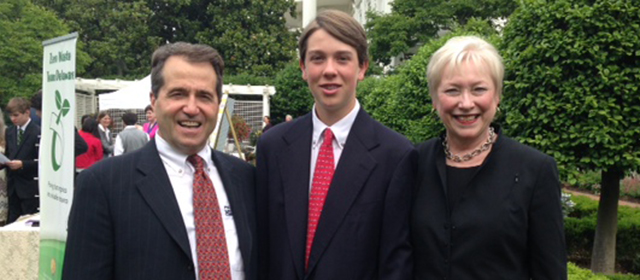
Attending the White House Science Fair, (left to right) Rocket21 CEO Mark Grayson, student Thompson Whiteley, and Academy Board Chair and SUNY Chancellor of Education Nancy Zimpher.

At the White House Science Fair on May 27, 2014, The New York Academy of Sciences (the Academy) pledged to positively impact the STEM education crisis through innovative programming that inspires students to see science as an exciting conduit to solve local and global challenges.

Today’s students are tomorrow’s workforce. Such a fact is not lost on the Academy, which today, along with its partners in The Global STEM Alliance, is tackling the science, technology, engineering, and math (STEM) education crisis head on-by creating opportunities for inter-generational mentoring and engagement in STEM subjects.

By joining the White House in making a formal commitment to STEM education today, the day of the White House Science Fair, the Academy is joining with a group of like-minded organizations, and the federal government. 

“It is essential that the nation’s classrooms, from the earliest stages of education through college, utilize technology and critical thinking as we strive to meet increasing demand for STEM graduates in today’s competitive, global economy,” says Nancy L. Zimpher, Academy board chair and State University of New York chancellor, who is attending today’s event. “We are thankful to have the support of the White House as the New York Academy of Sciences’ Global STEM Alliance continues to help educate and train a technologically-savvy, innovative workforce for the future.”

Why Target STEM?

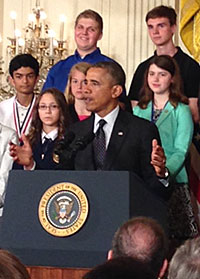
President Obama addresses the audience at the White House Science Fair.

The world needs a workforce of skilled science and technology innovators to address the most pressing global challenges of the coming century-climate change, food shortages, increases in chronic diseases, energy shortages, and more. In the U.S. alone, it is estimated that by 2018, some 75% of occupations will be middle- or high-skilled, with the majority of these jobs requiring an education in STEM subjects. And yet, students are dropping out of STEM at alarming rates, in the U.S. and in countries the world over, from China to South Africa, due to lack of engagement.

How Will We Solve the Crisis?

Enter a new initiative: The Global STEM Alliance, launched by the New York Academy of Sciences and its partners. The Alliance is designed to connect students from around the world with each other and scientific role models, through a mix of site-based programs, a collaborative digital platform, and a social learning network.

The initiative will begin with students in the United States, Malaysia, Australia, and the City of Barcelona, with other countries and regions expected to join. Working with sophisticated Telepresence capabilities and additional tools from fellow founding partner Cisco, the virtual platform allows students to interact and discuss STEM with counterparts in other countries; participate in mentoring relationships with brilliant, young scientists; elect to participate in cutting-edge science courses, challenges, games, and other activities; learn about a day in the life of a scientist; and seek advice and network with science-minded peers for life.

Additional members of the Alliance include GALXYZ, a game-based intergalactic science adventure, and Rocket21, an online youth innovation platform, with more to come.

Connecting Science and Community Service

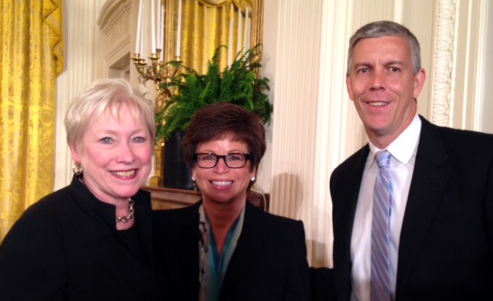
Academy Board Chair and SUNY Chancellor of Education Nancy Zimpher, Senior Advisor to the President of the United States Valerie Bowman Jarrett, and United States Secretary of Education Arne Duncan, at the White House Science Fair.

Rocket21’s Dream Green Innovation Winner, 14-year-old budding environmentalist Thompson Whiteley from Easton, Conn., is attending today’s White House Science Fair. Whiteley created a winning plan to capture and repurpose plastic from The Great Pacific Garbage Patch in the North Pacific.

“Students like Whiteley make clear the connection between engagement in STEM subjects and the ability to solve problems in local communities, and beyond. Such is the premise of the Academy and Rocket21’s Dream Big for the World initiative, which we are excited to launch with the Academy,” says Mark Grayson, CEO of Rocket21.

Dream Big for the World is a series of STEM challenges designed to immerse middle and high school students in the pressing global issues raised in the USAID Grand Challenges. Planned for launch during the 2014-2015 academic year, the challenges will invite students, working independently or in teams, to develop innovative solutions to their choice of Grand Challenges, with opportunities to connect virtually with content experts, as well as provide resources to teachers.

The ultimate goal: The Global STEM Alliance seeks to scale the experience of humanizing science and providing students with real-world STEM role models through technology. By connecting students with the best scientists and engineers, with each other, and with innovative curriculum and educational challenges, the Alliance will foster engagement, mitigate STEM drop-out, and create the next generation of STEM leaders and innovators.

Learn more about educational programming at the Academy.

The Mischievousness Early Life of a Nobel Laureate

A side shot of a man seated at a chair.

Nobel laureate and Academy Chairman Emeritus Torsten Wiesel maps receptive field properties within the visual cortex, etching a singular vision for his own life.

Published December 1, 2013

By Marci A. Landsmann

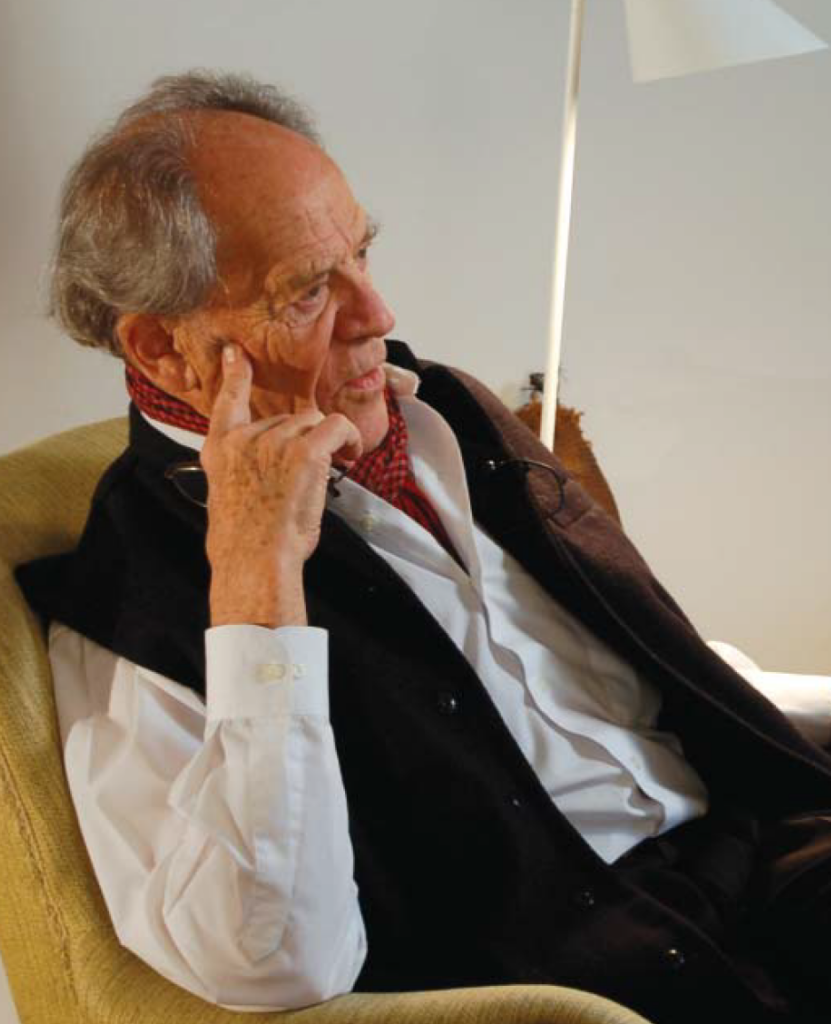
Torsten Wiesel

When examining the life of a Nobel laureate, what generally emerge are clear bends in the path: chance situations, meetings, and discoveries that serve as critical signposts to lead an intellectual down the road to greatness. In the same way, our brain provides a complex circuitry of form and function—chemical processes not fully understood, yet acting precisely, as stoplights do, to spark a desired action at just the right time.

Torsten Wiesel’s own fascination with the inner workings of the brain led him to trace the pathways of how the mind “sees” and “perceives” the world. His research, exploring the role of receptive field properties of neurons in the visual cortex, earned him and colleague David Hubel the honor of the 1981 Nobel Prize in Physiology or Medicine (an honor also shared with Roger W. Sperry, for independent research). Their research elucidated how light and patterns move from the retina and organize into neural columns within the cortex. They identified a neural hierarchy within the striate cortex, where images are processed. By blocking the vision of one eye in cats and then monkeys, these investigators also established how gaps in visual stimulation at a critical time period during infancy could lead to permanent and irreversible blindness.

When asked about his early influences, Wiesel points out the often serendipitous nature of life, much the same way a researcher might describe lab work: “It is difficult to say. You often move forward and try to find a way,” he says. “Afterwards, it seems logical what you did, but the process, while you are going through it, is actually much more complex.”

Following in His Father’s Footsteps

Wiesel, the youngest of five children, spent much of his childhood in Beckomberga Hospital, one of the largest psychiatric hospitals in Europe. His father, chief psychiatrist Fritz S. Wiesel, lived with his family on the campus of the large hospital, located on the outskirts of Stockholm, Sweden. While Wiesel went to a private school in Stockholm each day, he was also exposed, from an early age, to different types of people on the hospital campus. Wiesel describes himself as a mischievous child and teenager who was far more interested in sports than his studies. After his parents divorced and his brother became ill, he, at age 17, suddenly took stock of his own life’s direction. “All of these things worked together and made me want to understand human behavior and the mind,” he says.

Despite not having a close relationship with his father, Wiesel followed in his father’s footsteps, and earned a medical degree.

He graduated from Karolinska Institute in Stockholm in 1954. He worked first with adults and then children in psychiatric settings for a year and a half after graduation. During that time, he realized the limiting nature of psychiatric treatments, including electro-shock therapy and insulin shock therapy. “It was before the pharmacologic revolution, you must remember,” he says. “And I became frustrated that there was so little we could do,” Wiesel recalls.

Wiesel turned his efforts to the lab, where he would spend the next 40 years. He returned to his early college mentor, Carl Gustaf Bernhard, a professor of neuroscience at Karolinska Institute, and began doing basic neurophysiologic research.

A Chance Inquiry

At that point, a chance inquiry would change Wiesel’s future path. Stephen Kuffler, now referred to as “the Father of Modern Neuroscience,” asked Bernhard for a promising post-doctorate fellow to work with him at the Wilmer Institute at Johns Hopkins Medical School in Baltimore, MD. When he accepted the position, Wiesel was, first and foremost, looking forward to exploring the culture of the United States. But he became immediately intrigued when he read over Kuffler’s research papers of the receptive field arrangements of cat retinal ganglion cells—research that would eventually spur his own discoveries.

Wiesel never worked in the lab with Kuffler, but he credits the researcher for fueling his career in those early days of his ophthalmology lab fellowship. “Stephen had an informal style. He hated pomposity and could be very critical of facts. But you never felt threatened or not accepted. His style of mentoring certainly affected my way of being,” Wiesel recalls. The two would take long walks and discuss science and life in general, he says.

Kuffler had a hands-off approach. He left his postdocs, Wiesel and David Hubel, another neurobiologist, alone to carry out and explore their findings. Using Kuffler’s research on the retina as a start, the young investigators studied central vision and pinned down its neural beginnings.

Establishing a Department of Neurobiology

When Kuffler was offered a position at the Department of Pharmacology at Harvard Medical School in 1959, he brought four promising investigators, including Wiesel and Hubel, with him. After a few years, these young investigators became part of the faculty of a new Department of Neurobiology, which Kuffler founded. “Neuroscience in those days was pretty much rooted in anatomy and physiology,” Wiesel recalls. But Kuffler’s interests in neurochemistry changed that. Kuffler brought chemists and physiologists together to pursue answers to the brain’s illusive questions—and Harvard’s neurobiology department would soon come to be considered one of the most esteemed in the country.

Wiesel, ironically, never completed his PhD. “It never really occurred to me until people started to ask where I got my PhD [that this was strange],” he recalls. “In some ways, it saved me some time so I could get right to my research. It’s interesting; a formal education is very important, but, at the same time, it is possible to function [without it]. If someone is doing well in research, formalities are less important sometimes.”

At the age of 68, an age when most think of retiring, Wiesel assumed the role of president at The Rockefeller University, a New York-based institution known for allowing independent and self-directed laboratory study. When he became president in 1991, the university was in financial trouble and needed re-direction. Wiesel quickly built up morale and financial backing. “There is nothing like doing an experiment, but to be part of rebuilding an institution was a special challenge,” he says.

From Research to Administration

During his 7-year tenure as president, Wiesel took pride in recruiting 16 bright and forward-thinking faculty members. He also established six interdisciplinary research centers, including the Center for Studies in Physics and Biology. In addition, he formed the University’s collaborative relationship with the Aaron Diamond AIDS Research Center, of which he was chairman.

Wiesel applied these same leadership skills to The New York Academy of Sciences (the Academy) during a difficult time in its history. Wiesel suggested delaying the sale of the Academy’s office building, since the real estate was severely undervalued at the time. This decision led to about an extra $10 million in revenue for the Academy when the building was sold a few years later.

The key to Wiesel’s administrative success at the Academy came, in part, from his ability to shift the Academy’s mission back to scientific discovery and conversation, instead of political activism. “Think-tanks serve an important purpose, but they belong in Washington. We returned to our roots to become part of the scientific community.”

Supporting Scientific Discovery

In recent years, Wiesel’s passion for removing roadblocks to scientific discovery has only grown. In 2000, Wiesel became involved with the Human Frontier Science Program, an organization headquartered in Strasbourg, France, that stresses international and interdisciplinary collaboration, with its focus on life sciences. Wiesel served as secretary general for 9 years and helped to introduce a grant program for young investigators, a career development award for post-doctoral fellows who go back to their home countries, and a post-doctoral program for physicists and chemists who want to study biology.

For 10 years, up until 2004, Wiesel also served as the chair of the Committee of Human Rights, sponsored by the National Academy of Sciences, the National Academy of Engineering, and the Institute of Medicine. The committee writes appeals on behalf of unjustly imprisoned scientists, engineers, and health professionals, as well as personal letters of encouragement.

While he clearly is an advocate for human rights, Wiesel takes issue with the designation of “activist,” despite serving on several activist-oriented boards, including the Pew Center on Global Climate Change. His focus has been, and will always be, science, he says.

“I do think it’s important to keep science and politics separate,” Wiesel says, “But as a member of society, you have a responsibility to ensure that laws and justice are respected. I’ve always believed when people do something wrong, we have a responsibility to tell them and to advocate for justice.”

Breaking Down Boundaries

Wiesel is also interested in breaking down boundaries. He chairs the Board of Governors of the Okinawa Institute of Science and Technology (OIST), an international graduate university offering a 5-year PhD program in science, which is supported by the Japanese government. “One important feature is that there are no departments in physics, chemistry, biology, mathematics, computer science, or engineering, so the scientists and the students are free to explore.” says Wiesel.

“We have a mixture of scientists with different disciplines and different cultures, so it’s a way of trying to create a kind of ‘university of the future’.” The future, and progress, of science is a concept Wiesel embraces—viewing life as a welcome series of challenges and discoveries.

About the Author

Marci A. Landsmann is a medical writer in Philadelphia.