New York City and the History of Philanthropy

A stack of $100 bills.

Global leaders of business and philanthropy are contributing to a scientific resurgence, the likes of which New York, and the world, has never before seen.

Published November 1, 2013

By Noah Rosenberg

The year was 1924 and Albert Einstein was desperately in need of funding. And so he did what legions of scientists, emerging and renowned alike, would later do in his footsteps: he turned to philanthropists.

In his case, Einstein wrote a letter to the Rockefeller Foundation. The executive leadership had no guarantees of future breakthroughs from Einstein, but they took a chance on the “unknown scholar”—awarding him $1,000.

“He may be on to something,” John D. Rockefeller said when instructing his top lieutenant to double Einstein’s initial request of $500.

With that gift, comically small by today’s standards, the Rockefeller Foundation not only demonstrated its commitment to Einstein himself, but it solidified its place in the pantheon of powerful philanthropic institutions emerging in New York City at the time—a network fueled by a common desire to foster a better world; a network whose ripple effect would eventually extend well beyond the Big Apple.

This institutional mindset was arguably pioneered by the formation of the Carnegie Corporation of New York, which Andrew Carnegie seeded with $125 million in 1911 and 1912, making it the largest philanthropic trust ever established. Within a decade, the Corporation had begun channeling its resources to the natural and social sciences, part of a great effort to improve “scientific management” in the U.S.

This trend continues today, with foundations and individual philanthropists—whose potential beneficiaries are virtually limitless— placing a premium on furthering science through financial support. According to the most recent national report from the nonprofit Foundation Center, which tracks global philanthropic giving, the health industry was the number one recipient of foundation dollars in 2008, receiving nearly 23% of the pie.

The Epicenter of Targeted Giving

The volume of philanthropic monies awarded today is staggering, and it is only logical that New York, an axis of power, wealth, and creativity— and the birthplace of large-scale philanthropy—remains the epicenter of targeted giving. Based on a list of the top donors in America—who each gave over $1 million—published by The Chronicle of Philanthropy, foundations and individuals in New York State gave close to $1.5 billion in 2012. So far in 2013, the amount from New York-based donors has already exceeded $2.2 billion.

Sanford I. Weill

Financier Sanford Weill, who endowed the Weill Cornell Medical College with a $250 million gift in 2007, is often near the top of The Chronicle of Philanthropy’s annual list. Continuing to break his own records for philanthropy—his total giving is now approaching $1 billion—Weill and his wife Joan, and the Weill Family Foundation, gave an additional $100 million to Weill Cornell Medical College in the fall of 2013 to boost the school’s research endeavors.

With New York having become such a hotbed of health and technology- related innovation, Weill says there is no shortage of scientists who are “easy to give money to.”

“What they do is not based on how much money they’re going to make for themselves,” Weill explained recently in his office overlooking Central Park, “but how they’re going to help make the world a better place.”

Supporting Scientific Innovation

And in that sentiment, Weill is hardly alone. In equally grand offices across Manhattan, moguls of finance, media, real estate, and investment are recognizing the profound importance, and future potential, of the scientific innovation that is emerging from New York. Like Weill, they are leveraging their great professional success and personal contacts to endow local laboratories, medical centers, and nonprofits with financial support that is unparalleled in science-centered philanthropic circles. Many are firm believers, and pioneers, in “transformative philanthropy,” a more engaged, lean-forward approach in which donors seek out high-value ROIs while still allowing the scientific innovators to innovate the way they know best.

This new generation of funders, whose names now grace the facades of leading global institutions across New York and beyond, are furthering the health-related causes long championed by proven powerhouses like the Carnegie Corporation and the Rockefeller, Ford, and Alfred P. Sloan Foundations, each established before the Second World War. Together, they have created a robust philanthropic landscape that is quickly propelling New York toward achieving the city’s “ultimate goal,” as vocalized by Mayor Michael Bloomberg in a 2009 speech: “Reclaiming our title as the world’s capital of technological innovation.”

It is only logical that Jan Vilcek would feel indebted to the field of science and to the institution that helped him turn his capacity for it into a wildly lucrative career.

After escaping the crushing grips of Czechoslovakian Communism in the mid-1960s, Vilcek, then a pioneering young researcher, was rewarded with a faculty post at New York University’s School of Medicine, where he remains today. In the course of his research, Vilcek contributed to the development of Remicade, a blockbuster therapeutic drug that would treat untold multitudes of patients suffering from Crohn’s disease, rheumatoid arthritis, and dozens of other inflammatory disorders.

Promoting Basic Research

“We expected the royalty income would grow,” Vilcek recently said, “but we had no idea it would become as successful as it actually has.” And so Vilcek and his wife, Marica, formed the Vilcek Foundation as a way to support the sciences and the arts. And beyond their foundation, they decided to channel a portion of their Remicade earnings to NYU.

One gift alone, donated to NYU in 2005, totaled $105 million. The funding has largely promoted basic research, which Vilcek sees as the building blocks of scientific discovery.

“A decade ago it seemed like there was much more going on in the Boston area and in California,” he says of scientific research outside of the five boroughs. But New York, he adds, is rapidly catching up, with charitable giving serving as a core driver of the innovation.

“Philanthropy is really essential, especially in the times we witness today, when government spending is down,” Vilcek notes. “Without philanthropy, there would be complete stagnation.”

Jim & Marilyn Simons

Likewise, James (Jim) Simons built his financial career on the back of science and technology and he, too, saw fit to pay it forward. His hedge fund, Renaissance Technologies, rose to the top of its field by using complex mathematical models to evaluate and execute trades.

“All the sciences have a beauty to them—a well-conceived experiment, a dramatic new finding,” even intricate financial algorithms, Simons says. “And I think science needs all the help it can get.”

Studying the Human Brain and the Origin of Life

About 20 years ago, Simons and his wife Marilyn formed the Simons Foundation, which focuses its energies on funding basic science and mathematics research. Among his proudest achievements is the foundation’s Autism Research Initiative, which, since 2007, has awarded grants to more than 150 researchers across the globe. Along with a myriad of other programs, the foundation created a novel initiative called Math+X to generate highly competitive challenge grants fostering collaboration between mathematicians and those in science and engineering.

The Simons Foundation is also devoting substantial resources to studying the overall functionality of the human brain and the origin of life.

Asked about his interest in the latter, Simons shrugs and smiles: “It’s interesting! Wouldn’t you like to know?”

“We look at the stars and wonder how this whole thing got here,” he says.

Indeed, in over a dozen interviews with leaders in business and science philanthropy over the summer of 2013, a common personality trait quickly emerged: visionaries like Simons, and those with names like Appel, Soros, and Allen, appear to possess an unbridled curiosity, which motivates them to channel their money to those capable of answering some of life’s greatest questions and solving some of its most dire challenges.

Robert Appel

“When you’re in Wall Street everyone else looks good,” Robert Appel likes to joke. “The Wall Street people make good money and if they’re smart they’ll support other things. But in the medical field, if you do good you’re saving somebody or you’re making them better, and that’s a very refreshing approach.”

A Link Between the Arts and Sciences

Appel, a private investor and financier at his namesake money management firm, Appel Associates, is a self-described futurist who believes that “technology will make it better for all of us.” As Chairman of the Board of Jazz at Lincoln Center, he also sees a direct creative link between the arts and science.

Appel admits that philanthropists might initially support the science and medical fields out of a desire to care for their own families, should the need inevitably arise.

“But what happens is it becomes broader than that,” he says, “once you meet these people and you see the work that they’re doing.” Philanthropists, Appel explains, quickly realize the immensity of change that their financial support can create for those well beyond their bloodline.

To that end, Appel was instrumental in raising the funds to build Weill Cornell Medical College’s new Belfer Research Building, which will become a hub, on East 69th Street, for translational research initiatives. He and his wife, Helen, also endowed Weill Cornell Medical College’s Appel Institute for Alzheimer’s Research, as a means to encourage cross-disciplinary research into the study of Alzheimer’s disease and other neurodegenerative conditions.

“The things that are going on are extraordinary,” Appel says. “And to be involved where extraordinary things are being done by extraordinary people is a very exciting way to spend your life.”

Kickstarting Silicon Alley

Sanford Weill hates the sight of blood. But in 1982, the financier and former chief executive and chairman of Citigroup found himself on the board of Cornell University with no time to commute to Ithaca for meetings.

“They had this operation in New York that was just a fair kind of a place,” Weill said of the University’s medical college, “so I figured that might be some fun.”

In 1998, Weill and his wife, Joan, endowed the medical school with a $100 million gift intended to “create the greatest medical complex in the world,” Weill said at the time.

And in a more recent quest to make New York the greatest technological center in the world, Weill helped orchestrate the newly formed partnership between Cornell University and the Technion-Israel Institute of Technology. Their collaboration will form the basis of the revolutionary Cornell Tech campus, set to open on Manhattan’s Roosevelt Island in 2017. The institute, born of a $350 million gift from Atlantic Philanthropies and its founding chairman, Charles Feeney, has been heralded as an NYC-Silicon Valley equalizer, with Mayor Bloomberg comparing it to an “Eerie Canal of the 21st Century,” according to Weill.

“The best kind of philanthropy is when you get somebody to make a contribution and they see results…and they give again and again and again.”

Weill cites a “can-you-top-this?” attitude that he stresses is integral to philanthropic success. At the foundational level, such a strategy often takes the shape of so-called challenge grants—employed with great success by the Simons Foundation—which seek to inspire others to offer a matching gift.

Investing in Health Sciences

Such a phenomenon is evident in the increasing number of business icons investing in the health sciences, from Facebook’s Mark Zuckerberg to retired hedge fund manager Julian Robertson and Carlyle Group co-founder David Rubenstein.

It’s all about “teamwork rather than individual superstars,” Weill explains. “Together, there’s no telling the good we can do.”

Mortimer Zuckerman

If anyone should be given a free pass to use a real estate pun at his leisure, it is Mortimer Zuckerman.

And the real estate and media tycoon does just that when he describes the sheer joy and sense of purpose he derives from giving, which he considers to be “another form of public service.” Zuckerman’s latest such service to make headlines was a $200 million gift to Columbia to endow the Mortimer B. Zuckerman Mind Brain Behavior Institute, which, upon opening in 2016, will become a nerve center for what Zuckerman believes is “the most exciting frontier in medicine.”

The institute sits at a crossroads of pure genius and talent, he says, “and to be involved on the ground floor—pardon the pun—on something like this is, for me, just an opportunity to make a contribution that might have a real consequence.”

“It’s certainly an opportunity to make a lot of medical science come to fruition a lot earlier,” he adds.

But despite Zuckerman’s hope for, and expectation of, a big impact, he explains that patience is a key factor in scalability. “The whole idea is to create a platform initially. It’s not going to be the be-all, end-all of everything,” he says.

An Obligation to Empower

What most people might not know about Carl Icahn is that he could have been a doctor.

Carl Icahn

His medical school stint may have been short-lived—“I didn’t like it,” Icahn says, bluntly—but his interest in science never left him. He would go on to become an enormously successful investor and today remains the majority shareholder of Icahn Enterprises, the diversified holding company.

Icahn’s strategy throughout his myriad of business and philanthropic endeavors has had one core principle in common: he looks for “secular change” in the industries and opportunities to which he devotes his attention and resources. One of those sectors is genomics, or the study of the human genome.

“The change that’s going on is amazing,” Icahn says of the field. “I wish I were younger so I could really enjoy watching what happens.”

But Icahn is doing all he can while he is still around, having recently endowed a genomics laboratory to Princeton, his alma mater. His financial support extends into other realms, too: the Mount Sinai School of Medicine was recently renamed in his honor based on gifts totaling $200 million, and Icahn has been a staunch supporter of charter schools in New York.

Through it all, he has learned to stay on the sidelines, cautioning that it would be “absurd and presumptuous” for a businessman like himself to tell the science or education experts how to do their jobs.

“Don’t think because you made a lot of money that you’re so damn smart and you can tell these guys what to do,” he says with a laugh. “That’s my advice. Don’t micromanage them.”

He continues: “People who make a lot of money start believing that they’re geniuses. But they’re not. I can attest to that one.”

How Yong Talent can Flourish

Kenneth Langone

Similarly, Kenneth Langone, the venture capitalist and financial backer of Home Depot—and chair of NYU Langone Medical Center—knows full well the value of a well-placed investment, and he emphasizes that he does not “believe in managed progress.”

He references Jonas Salk and Albert Bruce Sabin—“two Jewish kids that grew up in New York and New Jersey” and pioneered the first polio vaccines—as a powerful example of how young talent can flourish, and change the world, when uninhibited.

Of Salk and Sabin’s science descendants, Langone adds, “These kids who could be making lots of money as lawyers or in finance are making major sacrifices by going into science. Their treasure is time; mine is money. So I want to give my money to make their time well spent.”

In the same fashion, Daisy Soros, who together with her late husband formed the Paul and Daisy Soros Fellowships for New Americans, calls philanthropy her “raison d’être.” Paul, a shipping innovator, “defected to the U.S. with $17 in his pocket,” Soros says, in explaining their decision to support immigrant graduate students through their fellowship. Soros has been told by past awardees, many of whom have gone on to careers in science and medicine, that the fellowship she started with Paul “has heart.”

Meeting the Challenges of World Interdependence

Daisy Soros

It was Soros’ personal eagerness to learn about the latest medical innovations that led her to agree to participate on the board of overseers at Weill Cornell Medical College 20 years ago. But for Soros, who once considered a career in medicine, simple interest in a cause is not enough: “I do my research and I want to understand where the money goes. I don’t want [to] waste money by giving it to organizations that don’t spend it on the people who need it. I believe in due diligence.”

Of course, Soros’ ties to philanthropy run deep: her brother-in-law, George Soros, is legendary for the global vision with which he approaches philanthropy through his Open Societies Foundation and the wide array of grants and fellowships it offers. And no talk of global philanthropic empowerment is complete without mention of the Clinton Foundation, which, from its office in Midtown Manhattan, works to meet the challenges of world interdependence, much of them health-oriented.

On a more local level, Len Blavatnik, the founder and chairman of holding company Access Industries, places a similar emphasis on creating exposure, and financial support, for the challenges being tackled by young innovators in the New York area. Along with The New York Academy of Sciences (the Academy), for which he serves as a board governor, his Blavatnik Family Foundation supports the Blavatnik Awards for Young Scientists, which provides monetary awards to scientists under the age of 42 who are performing groundbreaking research in science, engineering, and mathematics.

Len Blavatnik

As Carl Icahn says, “Give where your money does the most good.”

Success Breeds Success

To say that Larry Silverstein enjoys a world-class view from his office would be a gross understatement. The Manhattan-based real estate developer sits in a sprawling, glass-walled space on the 38th floor of 7 World Trade Center, a building he built in 2006 after the original structure collapsed following the 9/11 attacks. Silverstein can practically reach out and touch One World Trade Center, his most iconic, and important, creation to date, which soars past his office in a shimmer of shiny blue.

As one of the world’s most influential landlords, it is only fitting that Silverstein has a lofty perch from which to watch over the city of New York, his birthplace, which is currently undergoing what he considers a renaissance of ingenuity. Silverstein can tell you all about Wall Street’s forthcoming rebound and the plum opportunities for real estate development, but he’s just as bullish about science, which, he says, “is at the basis of everything.”

Larry Silverstein

“I believe the city is going to experience enormous growth in the sciences, in research of all kinds, in technology, in creativity, in communications,” Silverstein said over iced coffee in his office recently. “The growth here is phenomenal today, and it’s going to become even more so tomorrow.”

Silverstein is a man with a seemingly endless list of philanthropic pursuits, from NYU’s Real Estate Institute and Medical Center to the United Jewish Appeal. But he grows most animated when talk turns to Cornell Tech and all it will do for the city that buzzes hundreds of feet below.

“What they’re going to create here in New York—wow!” Silverstein remarks. “Powerful, powerful draw, powerful magnet. The sciences, the scientists that will come here to participate in it—phenomenal. Absolutely phenomenal.”

New York’s Role as a Cultural Center

Paul L. Joskow, who helms the Alfred P. Sloan Foundation—which been supporting science for the better part of a century—couldn’t agree more. Sloan gives $75 million annually in support of science, but Joskow says that because New York is home to so many world-class researchers, Sloan spends one out of every five dollars here.

“We put money where the talent is,” says Joskow, “and the scientific talent in New York is staggering.” Recently, Sloan has turned its attentions to the promise and perils of the data avalanche unleashed by information technology and the Internet, partnering with the Moore Foundation in a $7.5 million initiative to turn NYU’s Center for Data Science into a national leader in big data management.

But, perhaps surprisingly, Joskow says it’s New York’s influential role as a cultural center that may hold the most promise for research. “We won’t have a society that adequately funds research until we have a society that fully appreciates researchers.” Sloan acts on this insight by partnering with NYC artistic institutions—from the Metropolitan Opera to the Tribeca Film Festival—to raise the visibility of science and educate the public about the value of research.

“Science deserves a seat at the cultural table,” says Joskow. “New York can give it one.”

Of course a large part of the reason that science is becoming intertwined with New York culture like never before, is the city’s fortunate status as home to many of the world’s most active science-promoting philanthropists and foundations. Close to a century after Albert Einstein received that first auspicious check from the Rockefeller Foundation, it’s fitting that science-related philanthropy is reaching a groundswell moment in and around New York, hand-in-hand with groundbreaking research.

Learn more about how your support can help the Academy advance its mission of science for the public good.


About the Author

Noah Rosenberg is a journalist and the founder of Narratively.

Research in New York City is Having a Global Impact

An eyedropper drops an unknown liquid into a test tube.

A convergence of industry research and development is transforming science and technology in the New York metro area—and beyond.

Published November 1, 2013

By Steven Barboza

Image courtesy of kwanchaift via stock.adobe.com.

In its quest for creating new products as one of the world’s leading food and beverage companies, there’s hard science at work behind PepsiCo’s research and development initiatives. For instance, in the area of flavors, PepsiCo scientists have enlisted a high-tech company robot, encased in a clear glass box and hardwired to the genetic sequences of human taste buds.

The robot might taste 100,000 assays ranging from roots, plants, and fruits per day; and the payoff could be huge. PepsiCo, based in Purchase, NY, sees the use of this technology as one of the many ways to continue building upon its success of offering a highly diversified portfolio that ranges from treats to healthy eats. Today, that success includes 22 $1 billion brands.

“The robot is a tool to help us look into nature more efficiently, faster, and actually with greater sensitivity,” says Mehmood Khan, PepsiCo’s executive vice president and chief scientific officer of Global Research and Development, adding that the taste quest then shifts into higher gear: “How do we take a leaf and find the ingredient inside it? That’s the bridge between modern science, robotics, and the culinary arts.”

A Veritable Hotbed of Corporate Activity

PepsiCo’s advanced technological taster is not only a unique capability; it symbolizes the innovation inherent in corporate research and development (R&D) in the New York metro area. Corporate research ranks among the most important sources of discovery, whether seeking solutions to problems—from everyday ills to major global challenges; improving quality of life; or even extending life itself. And the New York tri-state area is a veritable hotbed of corporate activity.

Hundreds of company labs provide the area with considerable scientific clout stemming from a significant investment in everything from basic scientific research to applied technology development, and grease the wheels of the mega-region’s $2 trillion-plus economy. From the food we eat, to the medicines we rely on, to the electronics we use, and the energy sources that power them—corporate research is constantly pushing the envelope of “new and improved.” Here, we take a look at just a few of the corporate research initiatives driving scientific and technological innovation in the New York-metro area, and the resulting products and services that are changing our world, both near and far.

Targeting the Big C

Scores of world-class biopharmaceutical companies are creating the therapies of the future, right now, in the New York region. Called the “nation’s medicine chest,” the New York tri-state area is home to the biggest concentration of life sciences companies in the world. It has long been home to major industry players like Bayer, which invented aspirin in 1897, and is now conducting research in oncogenomics—a field of research that identifies and characterizes genes associated with cancer—to develop therapeutic agents that selectively target cancer genome alterations.

Further moving the needle in oncology research, Johnson & Johnson’s Janssen Pharmaceutical Companies is advancing a cancer interception initiative aimed at developing a new paradigm in cancer diagnosis and treatment. Johnson & Johnson is the world’s largest healthcare company, and Janssen is one of the largest pharmaceutical companies and the sixth largest biotech in the world. Janssen, based in New Jersey, is striving to achieve a more robust understanding of the mechanisms underlying the initiation of normal cells to a pre-malignant state. Its goal is to develop products capable of interrupting the carcinogenic process—eventually allowing clinicians to diagnose and intercept cancer at its earliest stages, when pre-malignancies are less complex and less resistant to therapy.

Driving Breakthrough Therapeutics

Among Janssen’s recent successes is SIRTURO™, a medicine for multi-drug resistant tuberculosis (TB). SIRTURO was granted accelerated approval by the U.S. Food and Drug Administration in 2012. It is the first medicine for pulmonary multi-drug resistant TB with a novel mechanism of action in more than 40 years. TB, second only to HIV/AIDS as one of the greatest killers worldwide, infected 8.6 million people last year, and more than 1.3 million died.

Eli Lilly & Company is also tackling a notoriously tough foe: Alzheimer’s disease. This year marks the company’s 25-year commitment to investing in Alzheimer’s disease R&D. “Our R&D approaches and expertise in Alzheimer’s disease have resulted in a strong pipeline encompassing both potential diagnostics and therapeutics for amyloid and tau pathways,” says Jan Lundberg, president of Lilly Research Laboratories, which has a significant presence in New York.

However, because for every 10,000 compounds researched in laboratories, only 100 are tested, and perhaps only one will become an actual medicine, Lilly developed a five-part Timely Valued Medicines strategy to improve the odds of success. Part of this strategy involves better disease understanding and validated disease targets or mechanisms; for example: Lilly developed Amyvid, an imaging agent that allows researchers to image the brains of patients for detection of amyloid plaques, a key characteristic of Alzheimer’s disease.

Pfizer—the world’s largest research-based pharmaceutical company, with an annual R&D budget approaching $7 billion—also has a robust commitment to innovation, with the end-goal of significantly improving patients’ lives.

“We believe that over time precision medicine—delivering the right drug, to the right patient, at the right time—will result in superior clinical outcomes for patients and enable more efficient clinical development,” says Mikael Dolsten, president of worldwide R&D at Pfizer, which is based in New York.

Committed to Patient Outcomes

One example of this is Pfizer’s Xalkori (crizotinib), which is designed for a specific group of lung cancer patients with a defect in the ALK gene. In 2011, Pfizer received U.S. FDA approval for this first-in-class therapy. Pfizer researchers continue to apply precision medicine R&D to advance future therapies for patients with difficult-to-treat cancers.

Similarly committed to patient outcomes, Acorda Therapeutics is invested in restoring function to and improving the lives of people with multiple sclerosis (MS), spinal cord injury, and neurological conditions. It was founded in 1995 by a physician who operated the company out of a bedroom with the motto, “Therapies or bust!” Today the company, based in Ardsley, NY, manufactures and markets Ampyra, the first and only MS therapy that has been specifically approved to improve walking in people with MS.

Acorda’s neurology pipeline encompasses five separate products at the clinical or pre-New Drug Application stage. The company is now exploring the use of extended release dalfampridine in new disease areas: post-stroke deficits and cerebral palsy. Initial data show improved walking in people with post-stroke deficits—a potentially huge boon to the more than 7 million stroke survivors in the U.S.

With names like Bausch & Lomb, Bristol-Myers Squibb, Kadmon, Merck, Novartis, and Regeneron, dotting the local map, the New York tri-state region is an incredible source for groundbreaking diagnostics, treatments, and cures.

Advancing the Digital Realm

Perhaps no other company has a research legacy quite like Armonk, NY-based IBM. With 12 laboratories in 10 countries, the company has generated more patents than any other company for 20 consecutive years. IBM Research aided Apollo moon landings, was crucial to the discovery of fractals, and invented the technology behind laser eye surgery. IBM Research is also responsible for a series of technologies and products that have transformed day-to-day living: the automated teller machine, the hard disk drive, the magnetic stripe card, the Universal Product Code, and the Sabre central reservation system, which revolutionized the travel industry and served as precursor for the entire universe of e-commerce.

Now, IBM Research is embarking on a new frontier: cognitive computing, which the company expects to dramatically change our relationships with computers.

“The most exciting dynamic in technology and business today is the confluence of four massive trends—big data, the cloud, social media, and the instrumented, connected world we call the Smarter Planet,” says John E. Kelly III, director of Research at IBM.

“This environment drives completely new thinking and is driving the emergence of a third ‘cognitive’ era of computing. We believe cognitive systems that learn, reason, and interact naturally with people will become the biggest opportunity in our industry over the next few decades.”

Reinventing Virtually Every Aspect of Computing

The first cognitive computer was IBM’s Watson, which debuted in 2011 in a televised Jeopardy! challenge and beat the show’s two greatest champions. Today, Watson is working with doctors, insurers, and customer service professionals to transform the outcomes that can be achieved. But that vision will require computer scientists to reinvent virtually every aspect of computing, from how we think about applications and data, to the nature of computer hardware.

IBM scientists want to eventually create computing systems that emulate the brain’s capacity to adapt. As a result, cognitive computers will not be programmed; they will be trained using enormous volumes of data that no single human could ever process.

“Research is central to IBM because we are continuously shifting to higher value,” says Kelly. “It’s important to have the courage to disrupt yourself—based on deep insight and fueled by powerful ideas brought to life by very unique skills.”

Powering Our World

The cities and towns that make up the New York-metro area are home to a staggering number of businesses, and one thing they all have in common is a thirst for more and more energy. New York City’s commercial and industrial sectors consumed more than 42% of power usage in 2011, and their energy needs are growing.

Perhaps surprisingly, New York is among the nation’s most energy-efficient cities due to its reliance on public transportation (two of every three users of mass transit in the U.S. live in Greater New York) and its sheer density (1 million buildings crammed into 300 square miles). Even so, energy concerns abound as demand grows, and area companies are seeking novel ways to reduce carbon footprints while increasing the reliability and efficiency of energy delivery.

Con Edison, a utility whose electric and steam businesses date back to the days of Thomas Edison, has new plans to meet tomorrow’s energy needs. Among its consumer-focused programs is one that allows New Yorkers with room air conditioners to remotely control their thermostats using a device called a Modlet. In addition, the modern electrical outlet allows engineers to remotely control window units on the hottest days.

With 6 million room air conditioners in its service territory, Con Edison sees great potential in the device.

Con Edison Development and Con Edison Solutions—competitive energy businesses—are looking heavily to clean energy development, with a $500 million investment in solar projects, making it one of the top five solar producers in North America.

Meanwhile, Connecticut-headquartered General Electric is picking up the pace of its product development cycle by using a Rapid Prototyping Center. The center’s 3D printer, which creates products by printing them layer upon layer, reduces part development time by 80% on average.

Better Together

While the sheer range of companies involved in R&D in the New York region is astounding, there is increasing overlap, both within and outside of the corporate sector. PepsiCo, which is planning the future of food, cites a need for 40% more food productivity on the planet by 2050 due to population growth. While industry has to take up the cause, “because 90% of the world’s population buys its food from the private sector,” says Khan, “food companies, academia, governments, NGOs—all of us— must come together to work collaboratively. Ultimately, we need to deliver this food.”

The focus on the greater good—and major global challenges—is apparent in medicine too. Biomarker experts at Johnson & Johnson’s Janssen are collaborating with academic centers to develop and commercialize next-generation circulating tumor cell technology for capturing, counting, and characterizing tumor cells found in a patient’s blood. The cross-sector work is not usual for the company.

“In total, I think we do 100 collaborations per year in early science and technology,” says Paul Stoffels, chief scientific officer, Johnson & Johnson, and worldwide chairman, Janssen Pharmaceutical Companies of Johnson & Johnson. This includes work that comes out of the company’s new research hubs, one of which is based in New York, that foster R&D collaborations with entrepreneurs, emerging companies, and leading academic centers.

Immeasurable Value

Pfizer’s Center for Therapeutic Innovation, which co-locates industry scientists with academic researchers in major bio-innovation clusters, including New York City, aims to transform the biopharmaceutical R&D model—making it speedier and more creative. “We seek to be a nodal player at the center of a thriving ecosystem that includes academic scientists, patient foundations, government researchers, and other innovators. We recognize that science requires extensive and open collaboration,” says Dolsten.

The idea—that working together leads to bigger gains—is one that in the past might have been dismissed as a barrier to the all-important competitive edge, but is today part and parcel of New York’s booming research industry mindset. The companies that call New York home see such close quarters in terms of benefits, not just concessions. And to be sure, New York derives immeasurable value from the industry tenants that help to shape its status as a region always looking to the future.

Also read: From New York City to the Rest of the World


About the Author

Steven Barboza is a writer in New Jersey.

From New York City to the Rest of the World

Residents in North Gujarat fill up water jugs.

The scientists, engineers, and organizations that call New York home are increasingly interacting with citizens and governments in cities and towns across the world, working together to solve some of humanity’s most challenging problems.

Published November 1, 2013

By Hallie Kapner

Vials from the Global Alliance for TB Drug Development.

On an inner city Johannesburg street, a new mother’s cell phone registers a text message. It reminds her to breastfeed her baby, and to give him antiretroviral syrup daily to reduce his risk of contracting HIV.

At a rural school in Kenya, the lights are on. It’s no small feat considering the scarcity of fuel, and the fact that most residents can’t afford to buy it. The school, along with a neighboring maternity clinic, runs on dung power—something that’s never in short supply.

Half a continent apart, the new mom and the school are connected by a thread that runs to the other side of the globe, to the place where the programs that are improving—and even saving—lives are created and supported: New York.

New York has rightfully been called the meeting place of the world—the United Nations alone justifies the title—but it is not only a city where people gather. It’s one of the greatest launching-off points in the world, home to dozens of nonprofits, universities, and foundations that export ideas, technologies, business practices, and innovative health measures to places as far as Madagascar and as close as Queens.

The Most Vexing Issues Around the Globe

At any moment, tens of thousands of New Yorkers are addressing some of the most vexing issues around the globe. By leveraging the most developed medical infrastructure in the country, 110 local colleges and universities, and a highly developed network of donors, local citizens are creating synergies and implementing programs to improve health, strengthen cities, and expand education, globally.

Such is New York’s legacy as a truly global city; from the early, and continuing, contributions of immigrants and local foundations in shaping the city’s major industries, to the present, when its Mayor, Michael Bloomberg, is asked to chair a council of 40 cities interested in sharing best practices for sustainability, and its resident science academy—The New York Academy of Sciences (the Academy)—is asked by the President of Russia, the Prime Minister of Malaysia, and the Mayors of Barcelona and Mexico City to share wisdom around science and policy.

1,000 Days and Counting

For organizations engaged in solving global health problems, the clock is ticking. With fewer than 1,000 days left to achieve the United Nations’ Millennium Development Goals, many local institutions are turning up the heat on what has already been considerable progress. These days, New York isn’t known as a hotbed of tuberculosis (TB). Following an outbreak in the 1990s, local TB rates have been in steady decline.

Yet in 2000, when global health stakeholders gathered in Cape Town to found a new organization dedicated to making treatment breakthroughs for a disease that takes a life every 25 seconds, the consensus was to locate it in New York. Since then, the Global Alliance for TB Drug Development, known as the TB Alliance, has catalyzed the field of tuberculosis research. As a product development partnership, it serves as a critical point of connection between pharmaceutical companies, academic researchers, funders, and the communities around the world where tuberculosis is a daily threat.

Along with managing the largest TB drug pipeline in history, the Alliance has brokered the kinds of collaborative partnerships among competing corporations—notably in the pharmaceutical industry—that are rare. By improving researchers’ access to both novel and established drug compounds, the Alliance and its partners are speeding a path to improved treatment. They aim to drastically shorten the treatment course from what is currently as long as two years to fewer than two weeks, by developing new, affordable regimens to combat all forms of TB. “A wonderful drug that’s too expensive for the developing world doesn’t do much good sitting on the shelf,” says Alliance spokesperson Derek Ambrosino.

A Promising New Multi-drug Regimen

The Alliance currently has three drug candidates in clinical development and is awaiting results of Phase III clinical trials of a promising new multi-drug regimen.

“We’re bringing innovation to a field that’s been stagnant,” says TB Alliance CEO Mel Spigelman.  “It’s possible in part because of our access to the incredible human capital in this area—the people, the intellect, the proximity to the pharma companies and the research groups. This couldn’t happen in Washington.”

What’s happening in Brooklyn—or more specifically, the Brooklyn Army Terminal—may change the world. The Terminal is the site of the International AIDS Vaccine Initiative’s (IAVI) AIDS Vaccine Design and Development Lab, a place where research outcomes from around the world are analyzed in the quest to design an effective, affordable vaccine for HIV.

Through partnerships with dozens of academic, pharmaceutical, and governmental institutions in 25 countries, IAVI is among the world’s leading forces advancing the ultimate solution in HIV prevention. Filling gaps in the drug discovery and development process, IAVI directs clinical trials and community engagement efforts in countries hardest hit by HIV/AIDS, as well as funds high-risk and proof-of-concept work of promising early-stage technologies.

Working with partners around the world and at its Brooklyn lab, IAVI has contributed significant findings to the field. Among them is the identification of nearly 20 broadly neutralizing antibodies—molecules capable of binding to and marking multiple variants of the virus for destruction by the immune system. Found only in a fraction of those infected with HIV, broadly neutralizing antibodies are believed to have strong potential in vaccine development, and efforts are underway to reverse engineer their mechanisms.

Solving Major Global Health Threats

In the late 1980s and early 1990s, New York City was the epicenter of the AIDS epidemic. More than 150 years before that, it was established as a major commercial center, a status that remains true to this day. Joining the two, and harnessing the power of the business community to impact the course of diseases like AIDS, is the work of the Global Business Coalition on Health (GBCHealth).

Since its founding in 2001 by former U.S. Ambassador to the United Nations Richard Holbrooke, GBCHealth has amassed a coalition of 200 companies in a mission to apply business practices to solve major global health threats. What started as a response to AIDS now includes campaigns against malaria, tuberculosis, and non-communicable illnesses including diabetes, cardiovascular disease, and cancer.

“There’s a public-private partnership behind most successful global health efforts, and every industry has a core expertise to apply,” says Eve Heyn, communications manager for GBCHealth. “In addition to the United Nations, New York also offers us the research and educational institutions to help our partners understand what’s needed, and the marketing and media firms who can help spread messages about medical compliance, sleeping under a net, or using condoms.”

Applying Business Skills

GBCHealth in action looks like this: A declaration from 40 CEOs of major companies—Levi Strauss & Co., which spearheaded the campaign with UNAIDS, along with Kenneth Cole Productions, The Coca-Cola Company, The National Basketball Association, Thomson Reuters, and others—demanding that 45 countries lift arcane travel restrictions on those living with HIV. It provides support and promotion of innovative partnerships like the Mobile Alliance for Maternal Action (MAMA), which uses text messaging to deliver critical health information to pregnant women and new mothers in developing countries and underserved areas.

“Business skills are readily applied to global health,” says Heyn. “Have you noticed you can find a Coke anywhere in the world? The same isn’t true with TB medicines. Coca-Cola is the master of the supply chain, and they’re working with African governments to improve drug delivery.” Similar private sector efforts by GBCHealth and its partners aim to save the lives of 4.4 million children and 200,000 mothers before the Millennium Development Goals clock winds down to zero.

Urban Testbed

More than half of the 7 billion people on Earth live in urban environments—a first in human history. As one of the world’s largest metropolitan areas, New York is the ultimate urban testbed for the engineers, ecologists, urban planners, and environmental health specialists developing solutions to strengthen the world’s cities.

A family fills water jugs in North Gujarat.

When Edwin Torres, associate director of the Rockefeller Foundation, talks about Jamaica Bay, he doesn’t sugar coat matters. “It was basically a dumping ground for New York City for about a century,” he told a group at the Municipal Arts Society Summit for New York in 2012. Torres, who runs the Foundation’s NYC Opportunities Fund, is among those involved in a first-of-its-kind initiative to rehabilitate a damaged urban ecosystem, taking notes for the rest of the world’s coastal cities along the way.

The Rockefeller Foundation is one of the founding supporters of the recently announced Science and Resilience Institute in Jamaica Bay, the 10,000-acre wetland estuary that touches parts of Brooklyn, Queens, and Long Island. The storm surge during Hurricane Sandy devastated both the natural environment and the densely populated neighborhoods surrounding the bay, highlighting the vulnerability of coastal cities as climate volatility increases.

The Institute will ultimately serve as a hub for research on making cities more resilient—able to survive, adapt, and grow amid climate and population stress. “Eighty percent of the world’s coastal cities are on estuaries,” Torres says, mentioning some of the more populous places on the planet, like Mumbai, Tianjin, and Lagos. “Solutions developed here will be shared for global gain.”

Tackling Flooding

Flooding is only one subject tackled by Upmanu Lall and his colleagues at the Columbia Water Center, one of the 30 research centers that comprise Columbia University’s Earth Institute. Powered by more than 850 scientists pursuing a sustainable future, the Institute’s global programs address poverty, health, energy, climate change, and, of course, water.

Founded in 2008, the Center’s approach “inverted the way people view water,” says Lall, the Water Center’s director and a professor of engineering at Columbia University. “Many water projects fail because people don’t look at the entire chain. If you can secure the resource itself and its quality, then you can impact access—not the other way around.” The shift in strategy has served the Water Center, and millions of people on four continents, well. Its engineers and scientists have taken on some of the world’s toughest water-related challenges, navigating fierce politics and life-or-death resource issues. They have achieved measurable, positive outcomes in a field often marked by failure.

Providing Governments with Reliable Data

In the Brazilian state of Ceará, a place Lall calls “the poster child for drought,” an advanced system of climate forecasting has helped stabilize a tug of war over water that put the region’s farmers at contentious odds with urban dwellers and the government. The Center designed algorithms for predicting rainfall and river flow levels, allowing the government to plan water allocation accordingly and helping subsistence farmers determine when—and if—conditions would be favorable for planting.

Likewise, in India, where groundwater depletion from agriculture is so severe that no city gets more than a few hours per day of water flow, the Center devised a strategy to preserve farmers’ staple crops while dramatically decreasing water and energy usage. Working with local scientists, Water Center staff deployed soil moisture sensors at farms throughout the Punjab region. The results were significant—a 22% water and 24% energy savings. A project that began with 525 farmers has more than quadrupled today.

Closer to home, the Water Center is training its expertise on New York’s water needs, conducting an in-depth study of the history of drought in the Upper Delaware River Basin. The team is eyeing the possible impacts of a series of droughts on the Northeast. “We’re trying to determine how much water New York City really needs, and how we should be managing supply today based on what we’re learning about the past,” says Lall.

A Global College Town

The SUNY Korea campus, as it will look when construction is complete.

Forty miles south of Seoul, South Korea, is the Songdo International Business District in the Incheon Free Economic Zone. A “smart city” conceived and built by the Korean government, it is high-tech, sustainable, and designed to incorporate signature features of cities around the world. It’s also the site of the only outpost of an American university in Korea, SUNY Korea.

“Songdo is considered the global education city in the region,” says Samuel Stanley, president of the State University of New York at Stony Brook. “The innovative idea the Korean government had was to invite foreign universities to set up programs in their areas of excellence. In our case, it’s been more than just a program.”

Expertise in Computer Science and Engineering

SUNY has transported its nationally recognized expertise in computer science and engineering to SUNY Korea, with 84 graduate and undergraduate students—mostly in these two fields— enrolled for the spring 2013 semester. SUNY Korea is also home to a branch of the university’s Center of Excellence in Wireless and Information Technology, conducting state-of-the-art research at what Stanley attests is an equally advanced facility in Songdo. Students spend two years in Korea and one at SUNY’s home campus on Long Island. The first class from Korea will arrive on campus in fall of 2013.

If SUNY’s other campuses abroad will serve as level-setters for Korea, the outcomes will be impressive. Among other international centers, SUNY runs the Turkana Basin Institute in Kenya, home to Richard, Maeve, and Louise Leakey. Working alongside the renowned paleontologists and anthropologists—whose findings include such landmark discoveries as identifying new species of our own genus—are a team of environmental scientists applying new solar and wind technologies to solve local energy issues. The dung-powered school in Kenya is one of several facilities benefitting from the work of SUNY scientists to improve the energy applications of biogas generators.

From the Cradle of Human Civilization to the “Cradle of Modern Western Society”

New York’s university network abroad stretches from Africa, the cradle of human civilization, to the “cradle of modern Western society,” as David McLaughlin, provost of New York University, refers to the Middle East when he discusses the importance of having a presence in the region. NYU Abu-Dhabi (NYUAD) opened its doors in 2008, and has grown from a study abroad site into a full-fledged member of the NYU network of research campuses. The inaugural undergraduate class of students from 39 countries has given way to a spectacularly diverse student body hailing from 100 countries, and both the campus and its population are set to grow quickly in the coming years.

The advantages of expanding NYU’s presence abroad are numerous, according to McLaughlin. “We certainly think New York is the greatest city in the world, but not everyone of talent wants to travel here,” he says. “By having these campuses, we are able to recruit outstanding faculty and students who might otherwise have never been a part of our university.”

It also creates possibilities for collaborative research that couldn’t happen on anything less than a global scale. The Center for Global Sea Level Change, a joint project between NYUAD and NYU’s Courant Institute in New York, aims to produce quantitative estimates of future sea-level changes, combining the physical theory capabilities of Courant with observational data and new modeling techniques pioneered in Abu Dhabi. The multidisciplinary Neuroscience of Language Lab, straddling two major world cities where many languages are spoken, investigates the neural basis of language use and production.

This year also marks another major expansion in the NYU network—campuses in Shanghai, China, and Sydney, Australia.

The Grand Challenges

A synergy between New York and Qatar is yielding something more than results on paper—it’s creating doctors. New York’s Weill Cornell Medical College, which has a full campus in the state, taught the first students to ever attend medical school in Qatar in 2002. The initial class of 22 students and eight faculty members, housed temporarily at a Doha high school while the medical school facility was constructed, has grown to 265 students from 30 countries today.

And while the curriculum is identical to that of the Weill Cornell Medical College in New York—even down to the exams—the faculty and students in Doha are engaged in a suite of projects all their own, including original research on genetic disorders and stem cells, and a high school engagement program to build enthusiasm for a new generation of native physicians.

In 2011, the government of Qatar made a commitment to advancing sustainability and establishing the State as a center for research and development. There was only one problem—they had neither the local expertise nor the capacity to identify the actions needed to achieve these goals. Enter The New York Academy of Sciences (the Academy). With members spanning the globe, the Academy has considerable reach, along with a history of assisting international leaders in identifying science and technology priorities.

Six Grand Challenges

In cooperation with the Qatar Foundation for Education, Science and Community Development (QF), the Academy facilitated communication between stakeholders across multiple sectors in Qatar, ultimately arriving at six Grand Challenges spanning secure and sustainable natural resources, healthcare, information and computing technology, human capacity development, and urbanization. “When Qatar turns to New York for guidance, it signals something interesting,” says Academy President and CEO Ellis Rubinstein. “We don’t have all the answers, but this is the best international city to pull the right people together to address big challenges.”

Rubinstein and a team from the Academy will continue to advise QF on creating partnerships and implementing programs to address the Challenges.

The Academy has similarly partnered with Malaysia, after being asked by the country’s Prime Minster to help form the country’s Global Science and Innovation Advisory Council (GSIAC) to bring best practices from around the globe to bear on Malaysia’s economic growth and sustainability efforts—with many of the meetings taking place at the Academy’s headquarters in New York City. The Academy, along with its GSIAC partners, made a series of recommendations to advance Malaysia’s goal of becoming a high-income country. One of the more exciting elements for Academy CEO Rubinstein is a program to boost science, technology, engineering, and math (STEM) education in Malaysia, modeled on the Academy’s own successful Afterschool STEM Mentoring Program.

Seamless Telepresence Technology

Another way the students will be connected—not only to each other but to Nobel laureates, working scientists, and teachers worldwide—is through seamless telepresence technology, provided through a generous new gift from Cisco Systems Inc. By bolstering local resources and talent, and then connecting them with other local resources around the globe, the Academy and its partners are creating a Global STEM Alliance that seeks to extend STEM excitement and engagement to the next generation.

The outcomes of such outreach—from New York to points all over the globe, and back again—strengthen both New York’s science community and those abroad. As Rubinstein says, “The major global challenges facing our world today will require a global response. We will not solve the problems of malnutrition or energy sustainability or chronic disease in isolation—we will solve them together, with science and technology as our common language.”

Also read: Engineering New York into a STEM Hub


About the Author

Hallie Kapner is a freelance writer in New York City.

Engineering New York into a STEM Hub

A colorful shot taken from under a microscope.

From the New York Genome Center to the New York Stem Cell Foundation, the New York science scene has, through unique alliances and partnerships, become greater than the sum of its parts.

Published November 1, 2013

By Hallie Kapner

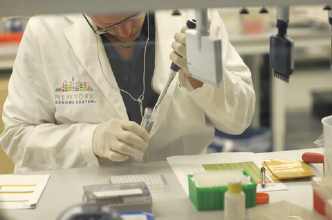
A New York Genome Center researcher works with a sample.

As Willa Appel, chief executive officer of the New York Structural Biology Center (NYSBC), shares the story of the city’s first major collaborative life science research center, which opened in 2002, she still marvels at the good fortune that landed the NYSBC at the abandoned South Campus of the City University of New York on Convent Avenue in Harlem. The gymnasium’s lower level, complete with an empty swimming pool sunk deep into the Manhattan schist, turned out to be an ideal site for housing the city’s most advanced nuclear magnetic resonance spectrometers—exquisitely sensitive equipment unable to tolerate the nonstop vibration of millions of New Yorkers and the subways that move them.

The NYSBC—along with dozens of universities, research institutions, nonprofit organizations, and start-ups that comprise New York’s burgeoning science sector—is a true product of the city: wildly ambitious, visionary, and undaunted by the challenges of the island E.B. White called “the greatest human concentrate on earth.”

The major players in New York’s science industry almost universally view what most residents perceive as obstacles—population density, intense competition, and premium real estate—as assets. They’ve succeeded not in spite of, but because of, the city’s singular makeup and layout. The secret behind the success of what has become one of the world’s best funded and most productive multidisciplinary science sectors is the kind of mold-breaking collaboration that is uniquely possible in a place like New York.

New York as a “Science Hub”

Speaking from the new downtown headquarters of the New York Genome Center, Bill Fair, vice president of strategic operations, recalls a time when joining the terms “New York” and “science hub” was more likely to generate questions than answers. As recently as 2002— despite having the most advanced medical infrastructure and largest healthcare workforce in the country—New York City was struggling to attract science talent and the funding dollars that often followed. At the first meeting to discuss what would become the NYSBC, Appel remembers, one participant joked that “the best recruiting tool in New York was a subway token and a bus pass. People weren’t moving here to work in science.”

The town long known as the capital of finance, media, and fashion took a turn toward technology when Mayor Bloomberg zeroed in on life sciences and entrepreneurship as ways to revitalize and diversify the post-9/11 economy. What would transpire over the following decade would vault New York into an elite position among bioscience and technology hubs, uniting the city in a way that would draw the attention of the world.

From Competition to a Competitive Edge

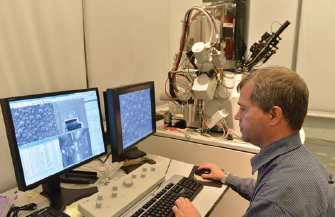
An employee at the New York Structural Biology Center collects data on a dual beam and scanning electron microscope.

“When we first proposed the idea of the Structural Biology Center in 1997, nobody believed this kind of collaboration could happen,” says Appel, describing the circumstances that prompted its nine founding institutions to put their competitive concerns aside and form a consortium. Structural biology—the study of the three-dimensional shape of biological macromolecules and how changes in shape can affect their function in both health and disease—was a hot field that required access to highly specialized research equipment no one institution could afford alone.

Pooling their resources, the consortium initially purchased four high- field nuclear magnetic resonance spectrometers at 800 megahertz—the most advanced instrumentation in the field—housing them at the renovated NYSBC facility and alternating access much like a time- share. On opening day, the NYSBC was the most advanced facility of its kind in the country, and it has since added cryoelectron microscopes, synchrotron beamlines for x-ray crystallography, and high throughput protein production facilities. Today, it’s the most advanced structural biology facility in the world.

A Transformative Paradigm

A new and transformative paradigm for New York’s research institutions and universities was born.

By 2004, the city was gaining competitive ground, garnering close to $1 billion in National Institutes of Health (NIH) funding. By 2007, New York’s colleges and universities would well surpass that number, leading the nation in NIH funding.

Despite that progress, the city was still home to, what one researcher quipped, “a lot of R, but almost no D.” Pharmaceutical giants like Pfizer had a presence limited to sales in New York City, but the crucial behind-the-scenes work took place in the kind of lab space that seemed unattainable in the five boroughs. Many researchers who made breakthroughs with commercial promise had to weigh the possibility of leaving academia to bring an innovation to market. Finding a solution that would allow them to translate local research into reality would be the next crucial step in New York’s transformation.

“A Complete Cultural Shift”

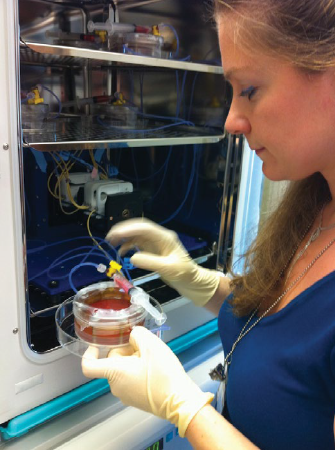
A New York Stem Cell Foundation researcher at work.

Private labs were one way to, as Susan L. Solomon says, “leave the politics at the door and take the science as far as the researchers were able to go.” Solomon, who founded the New York Stem Cell Foundation (NYSCF) in 2005 and serves as CEO, saw the potential for New York—with its 50 hospitals and diverse population— to become a leader in stem cell research. “Young researchers were being counseled out of pursuing stem cell work,” she says. “The thinking was that the real work wasn’t happening here.”

With a roster of healthcare luminaries as an advisory board and $1.1 million in private seed funding, Solomon and her team opened a lab in less than four months. “There was very exciting diabetes research coming out of Harvard, but too much red tape preventing it from moving forward. We brought the work here, and built the lab faster than the researchers could collect patient samples.”

Since then, NYSCF scientists, including 45 postdocs from New York’s elite research centers, have done “high-risk, high-reward” work, turning out five top medical breakthroughs including the first personalized bone intended for transplant. The organization has also designed software to automate the labor-intensive process of generating stem cell lines, producing a degree of uniformity that is key to advancing therapeutics. “We’ve saved years of time and millions of dollars through the openness of our scientists and partners, who go so far as to share pre-publication work at our conferences,” Solomon says. “It’s a complete cultural shift. At our first meeting, most of the researchers in the room—and they were the best in their fields—had never met each other.”

Testing and Breaking Barriers of Convention

The shift Solomon noted occurs several dozen times a year at the lower Manhattan offices of the New York Academy of Sciences. Jennifer Henry, director of life sciences at the Academy, presides over a program for local scientists that tests—and often breaks—the barriers of convention. “We set out to create a more united community of scientists working in New York—to introduce them to each other before they meet at major conferences,” Henry explains.

For nearly 50 years, scientists from across the region and around the world have convened at the Academy to attend one-off conferences and recurring Discussion Group symposia. Formalized as Frontiers of Science 12 years ago, this program unites academia, industry, nonprofits, and government to discuss progress and challenges in science, medicine, and technology. The Academy hosts over 60 such events each year, each with a different focus. “Everyone is on equal footing at these events,” says Henry. “It’s a neutral environment where people who don’t typically get together can interact in a personal way. It’s also an incredible opportunity for younger scientists to network with major players.”

The Discussion Groups bring sought-after speakers and smaller gatherings of scientists together in New York throughout the year. “Networking is a major benefit, but these groups have become so much more than that,” Henry explains. “The Discussion Groups are now safe spaces where what are, essentially, competing researchers have been known to enlist the group’s feedback on their work in progress. Can you imagine?”

Inspiring New Ventures

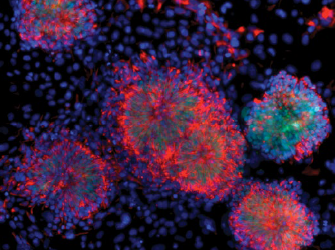
A research image of induced pluripotent stem cell neuron precursors from the New York Stem Cell Foundation.

The success of New York’s academic collaborations continues to embolden and inspire new ventures, continually expanding the city’s science capabilities. Manhattan’s foothold in the emerging field of genomics and bioinformatics lies in SoHo at the New York Genome Center. Ten local institutions founded the facility, which operates as an independent nonprofit, to speed advances in genomics and commercialize breakthroughs. Researchers gain access to valuable wet lab space and latest generation sequencing equipment, along with technical support. Demand for the Genome Center’s services—which include full human genome sequencing, bioinformatics analysis, and data storage— has been so high that it had to establish a 3,000 square- foot temporary lab at The Rockefeller University during construction of the new headquarters.

The Genome Center’s founding institutions are reaping more than scientific benefit from their investment. It has been a powerful recruiting tool, helping attract top-level talent to the area. “You can’t get this kind of genomics experience just anywhere,” says Fair. “New York has the most diverse patient population in the world.”

Cooperation and technology are transforming the region’s hospitals, too, offering a glimpse into a future of fully connected care. The New York eHealth Collaborative is leading the movement to make electronic health records for any patient available to any physician, anywhere in the state, instantly.  Currently under development is a portal that will also allow New York’s patients to access their own records electronically.

In less than a decade, New York’s scientific community norm moved from competition to collaboration, with positive results on the bench and at the bedside. Asked to describe the interactions of the Genome Center founders, Fair laughs. “Every Board meeting is like a 14-way pingpong match.”

A Contagious Collaboration

Two of the city’s premier science museums, the American Museum of Natural History (AMNH) and New York Hall of Science collectively host more than a million pairs of exploring young hands each year, drawing school groups and families with programs that are now, more importantly than ever, helping turn curiosity into careers. AMNH’s much-lauded science-enrichment initiative, the Urban Advantage Network, started in New York middle schools and is now serving as a model for schools across the country to partner with local science institutions.

Taking in the many vibrant organizations comprising New York’s current science scene, it’s clear that what began as an experiment among an elite group of New York’s research institutions has spawned a contagious collaboration that has touched every sector of the city, changing it for the better. This drive toward togetherness has inspired members of the scientific community to see the limitless possibilities for invention in this extraordinary city.

Today, the subway token has been replaced by the Metrocard, and much like the transit system that runs beneath them, New York’s science players are more connected than ever. As Appel says, in a sentiment that also characterizes New York itself, “in science, you can’t sit still for half a second.”

Also read: The Story of a 25-Year Collaboration


About the Author

Hallie Kapner is a freelance writer in New York City.

Changing the Game: Fighting Alzheimer’s Disease

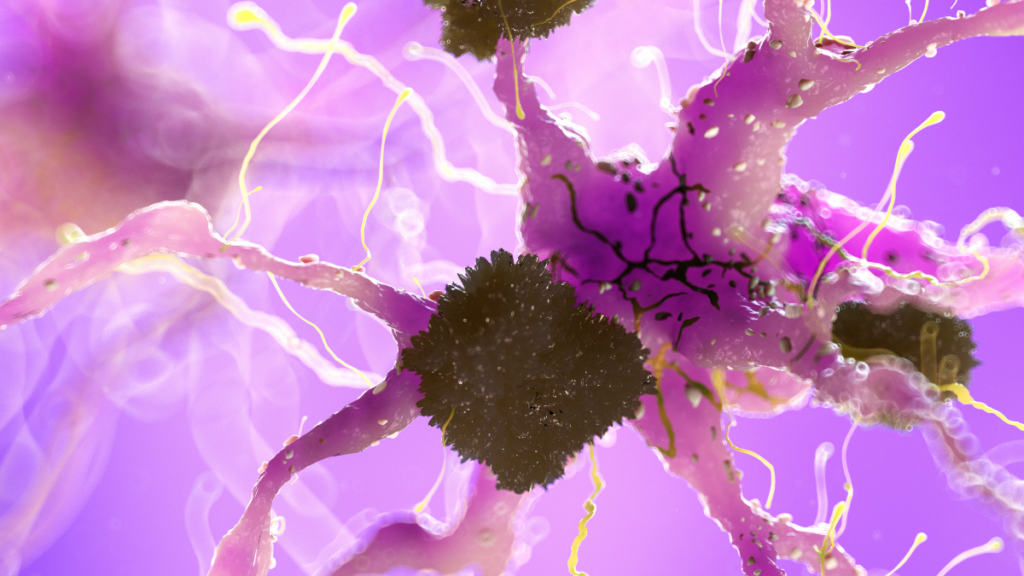
A graphic representation of a damaged nerve or cell.

Inspired by his mother-in-law’s courageous, but heartbreaking battle, George Vradenburg has teamed up with the Academy to take on Alzheimer’s disease.

Published August 1, 2013

By Noah Rosenberg

A 3D-rendered medically accurate illustration of amyloid plaques on a nerve cell (Alzheimer’s disease). Image courtesy of Sebastian Kaulitzki via stock.adobe.com.

George Vradenburg’s resume reads like a roadmap to prototypical business success. He was Phi Beta Kappa in college and attended Harvard Law School. He later co-published a magazine and brokered deals for media giants like CBS, Fox, and AOL, founding two charities in his spare time. George Vradenburg, to be sure, is a man who seized his life and career by the horns.

But then it all changed. In the early ’90s, as his mother-in-law faded with Alzheimer’s disease, Vradenburg could only sit back idly, helplessly. “I saw the progress from paranoia to hallucinations to falls to institutionalization to the late stage where she was physically immobile and totally unaware of her surroundings and her family,” Vradenburg remembers. “It is not a long goodbye, not the romanticized long farewell. It is a horrid disease.”

Of course, Vradenburg and his family weren’t alone. Today, 36 million people struggle with the disease worldwide, and that number is expected to grow to 115 million by 2050. So Vradenburg was shocked to realize that Alzheimer’s research and treatment had long been stagnant, frozen in a frustrating holding pattern.

True to form, Vradenburg decided he needed to do something about it. He enlisted his screenwriter wife to develop plays about her mother’s battle with Alzheimer’s, but it didn’t take Vradenburg long to understand that the level of zeal he brought to bear on curbing the disease was practically unparalleled.

“I thought, ‘Why in the heck is there not a national strategic plan on this?’” Vradenburg recalls, still incredulous. “I was frustrated by the absence of urgency and passion. Everyone seemed to be conducting business as usual.”

Taking Action

Vradenburg set out to change the nature of the game. He partnered with the Alzheimer’s Association and, for eight years, put on an Alzheimer’s fundraising gala. From there, he formed a political action committee, an Alzheimer’s study group, and, in 2010, co-founded USAgainstAlzheimer’s, an education and advocacy campaign for which he still serves as chairman.

And now, nearly two decades after his mother-in-law’s death, Vradenburg’s Global CEO Initiative—a newly-formed private-sector committee designed to collaborate with the public sector, non-profit community, and academia—has joined forces with The New York Academy of Sciences in a next-generation, cross-industry collaboration, called the Alzheimer’s Disease and Dementia Initiative (ADDI), that will attempt to effectively combat the disease once and for all.

The CEO Initiative’s goals, after all, are directly aligned with the Academy’s own efforts. Launched in 2011, the aim of the ADDI is the translation of basic research about disease mechanisms into the development of new methods for diagnosis, treatment, and prevention of Alzheimer’s disease and dementia. The Academy developed a Leadership Council of multi-sector stakeholders—academic researchers, industry scientists, patient advocates, and government and foundation representatives—to define priorities and develop action steps for progress in Alzheimer’s diagnosis, treatment, and prevention.

Creating an Agenda

The Holy Grail for the ADDI is the development and implementation of a comprehensive research agenda aimed at preventing and treating Alzheimer’s by 2025. It is a bold, ambitious, and lofty goal—Vradenburg is the first to admit that.

But, he says, “I can’t be giving up. You have to continue to push ahead no matter how many failures there are.”

And so Vradenburg decided to support the ADDI and, in turn, the many multi-sector experts comprising the collaborative working group that dedicates its time and expertise to define key action items around big challenges: gaining a better understanding of the pathophysiology of Alzheimer’s; developing innovative therapeutic approaches and strategies to engage patients in clinical trials; decreasing the time, cost, and risk of drug development; and increasing funding models, such as public-private co-investment, social impact investment, and new public funding mechanisms.

The CEO Initiative generously seeded its partnership with the Academy with a contribution of $325,000. Academy President and CEO Ellis Rubinstein considers the gift “a testament to the power of the partnerships being facilitated by The New York Academy of Sciences.”

“George is a visionary who realizes that the complexity of the grand challenges confronting humanity can only be addressed efficiently through alliance-building,” Rubinstein says. “For this reason, we at the Academy regard George as a role model for budding philanthropists: he uses his resources not for self-aggrandizement but to catalyze collective action.”

The Path to 2025

The joint research agenda, to be developed by the Academy and the CEO Initiative by late summer 2013, is simply the beginning. The working group’s results will feed into the Academy’s upcoming conference, “Alzheimer’s Disease Summit: The Path to 2025,” to be held on November 6 and 7 at its Lower Manhattan headquarters.

The gathering will build on the work of the National Institutes of Health’s biennial Alzheimer’s Disease Research Summit and, according to the Academy, “advance a research agenda that is informed by the needs, experience, perspectives, and lessons learned from industry, academic, and government research efforts.”

Following the November summit, the working group will produce a meta-analysis, including long-term plans for patient engagement in clinical trials, preventative measures, and future coordination efforts.

Not one to chase progress timidly, Vradenburg cautions that the Academy and the CEO Initiative must use the fall Alzheimer’s Summit “not as a conversation but actually an action-driver. We need to use it as a deadline for taking certain steps.” To that end, he explains that the working group is expecting to reveal breakthroughs in the area of biomarkers, data-sharing, clinical trial recruitment, and innovative financing mechanisms during the summit.

Synergies Across Organizations

Vradenburg sees his partnership with the Academy as the logical path forward between two organizations whose objectives, and even personnel, have overlapped in the past.

“What intrigued me about the Academy was their reach—into academia and geographically,” he says, commending the Academy’s visionary leadership. “They have a reputation for taking on challenging issues. They have the same spirit of innovation and drive that I think I have, so there’s been sort of a mind meld at the leadership level.”

The feeling is mutual. “George brings an incredible energy to all of his endeavors,” says Academy Executive Vice President and COO Michael Goldrich, “which, combined with his formidable business acumen, makes him a person who gets results.”

A Critical Time

On top of that, the ADDI is embarking at perhaps the optimal time in the war against Alzheimer’s. This year, for instance, President Obama mentioned the importance of Alzheimer’s research in his State of the Union address—a sign of what Vradenburg calls a “significant uptick” in government attention to the disease. As a result, there has been “enormous progress” in research, he says, notably in the area of enhanced imaging techniques that allow for the detection of the disease up to 20 years before symptoms appear.

Progress, however, has been largely one-sided. “On the treatment side,” Vradenburg laments, “there have been zero advances.” This leads to a cruel reality in which patients might learn of their fate decades before it sets in, and with no way to prevent the disease’s onset.

“It’s frustrating for the patient population out there,” Vradenburg stresses. “They get treated with the wrong drugs; they’re wrongly diagnosed and mistreated at earlier stages.”

“And there’s also the second-hand victims, the caregivers,” he adds. “People are going bankrupt or having to quit work or delay college to care for their loved ones. There’s an emotional, physical, health, and financial impact of this disease on families around the world today.”

Exceeds $600 Billion Worldwide

In fact, the annual burden of caring for the current number of Alzheimer’s patients and those with related dementia exceeds $600 billion worldwide and will only continue to grow in the absence of meaningful innovation.

Vradenburg is aware, though, that success doesn’t come easy. He explains that the ADDI is pushing to introduce first-generation disease-modifying treatment into the marketplace by 2020 and to foster a means of prevention and effective treatment in the marketplace by 2025, as well as to develop the critical intervention methods to get treatment into the hands of at-risk populations.

“All of my efforts,” he emphasizes, “have basically challenged people to identify the critical hurdles that would change the trajectory and speed, the velocity and volume of what we’re doing. I’ve always got to be optimistic,” Vradenburg says.

Also read: Resolving Neuro-Inflammation to Treat Alzheimer’s Disease and Pain


About the Author

Noah Rosenberg is a freelance journalist in New York City.

Supporting the NeXXt Generation of STEM

A graphic of five different women in various stages of work and school.

Professional role models help undergraduate women turn STEM aspirations into realities.

Published August 1, 2013

By Diana Friedman

Image courtesy of A-DIGIT via istockphoto.com.

“I grew up in a rural area [of the U.S.] with the ‘Fisher Price people’ jobs around me—most people built things or worked on a farm and if you went to college you could be a teacher, nurse, dentist, or doctor,” says Kristy Lamb, PhD, a Fellow in the NeXXt Scholars Program, through which she provides mentoring.

The program is a joint effort between The New York Academy of Sciences, the U.S. Department of State, and a consortium of U.S. women’s colleges that pairs professional women working in science, technology, engineering, and math (STEM) fields with undergraduate women from the United States and countries with predominantly Muslim populations who are majoring in STEM subjects.

“It wasn’t until I took AP biology in the 11th grade that someone told me that science was complicated and detailed and [that] we didn’t have it all figured out yet,” says Lamb, a postdoctoral associate in radiation oncology at Weill Cornell Medical College in New York. That uncertainty appealed to Lamb who enrolled in a science summer program targeting students from rural areas. “In three weeks—from just that taste of microbiology—I was hooked on research.”

Now, thanks in part to the summer program that got her started on the path to a research career, Lamb is reaching out to the next generation of researchers through mentoring.

The NeXXt Scholars Program: How It Works

The New York Academy of Sciences, in partnership with the U.S. Department of State and a consortium of women’s colleges, developed the NeXXt Scholars Program to support young women from countries with predominantly Muslim populations (International NeXXt Scholars) and college-appointed young American women (American NeXXt Scholars) as they pursue undergraduate degrees in STEM fields at U.S. women’s colleges.

The Program was inspired by a young woman from Egypt named Weam, who was accepted into a Master’s degree program in biological sciences at a U.S. women’s college. Weam’s father was initially resistant to the idea of allowing his daughter to live alone in a foreign country.  But, two factors gave him the courage to break strong cultural norms and allow Weam to pursue the degree: his high regard for science and the higher education system in the U.S. and the environment offered by a women’s college.

These two aspects—science education and a women’s college—provided the tipping point for Weam to seize an opportunity that changed her future. Weam’s mother proudly attended her graduation and, since then, her family has even allowed Weam to return to the U.S. for the pursuit of a doctorate degree at a co-educational institution.

Inspired by Weam’s experience, former U.S. State Department staffer Sandra Laney conceptualized the NeXXt Scholars Program to provide opportunities and support for women, 50% of the world’s potential workforce, who she feels are critical to future innovations in STEM fields. The Program was officially launched by Secretary of State Hillary Rodham Clinton in December 2011 and in fall 2012 the inaugural cohort of NeXXt Scholars began the Program.

Matched with STEM Professionals

All NeXXt Scholars are matched with women working in STEM professions (Fellows) who mentor the Scholars as they navigate their undergraduate careers, providing support regarding career paths and professional development. The Scholars have one-on-one relationships with their mentors, but are also linked to a wider network of STEM professionals through online resources and 5-year Academy memberships.

The first cohort of International NeXXt Scholars hail from Morocco, Nigeria, Pakistan, Palestinian Territories, Saudi Arabia, Tunisia, and Turkey. They were nominated through the State Department’s EducationUSA centers, which help promote cross-cultural understanding via academic exchange and study programs for international students. American NeXXt Scholars, accomplished young women who are selected by their colleges to partner with the International NeXXt Scholars, hail from across the United States.

NeXXt Scholars are currently attending Barnard College, Bryn Mawr College, Columbia College (SC), Douglass Residential College at Rutgers University, Mount Holyoke College, Smith College, Wellesley College, and Wilson College. Due to the success of the Program in its first year, a new class of Scholars and Fellows will be joining the program in the fall of 2013.

A Matter of Perspective

Fellows in the NeXXt Scholars Program interact with their assigned mentees on a regular basis. “We talk on the phone once a week and text at least every other day,” says student Sami Cahill, who is effusive about her mentor’s important role during her first year at Columbia College in South Carolina. “She gives me encouragement, but she also gives me the real-life perspective,” she says. “She’s really personally invested in me.”

Rabeb Layouni, a student at Mount Holyoke College in Massachusetts, also cites a strong personal connection with her mentor. “We talk every week for almost 2 hours, but it’s not just me asking for help—she tells me what’s going on her life too. She puts things in perspective in a way that my friends can’t.” Layouni, who is from Tunisia, got into medical school—a very typical career path for smart Tunisian students—in her home country, but she felt that being a medical doctor wasn’t necessarily her calling. “My mentor really makes me feel there are more possibilities out there,” says Layouni, who hopes to identify a career path that incorporates her love of problem-solving.

Mentors use a variety of techniques to show their STEM students what’s possible. “Together we explore STEM career paths and gather information so she can make choices,” says Dana Miloaga, PhD, R/D project engineer at PPG Industries, Inc. in Pennsylvania, of her mentee. Miloaga knows first-hand what a lack of choice feels like, having grown up in Romania where she didn’t have access to the foreign language texts that she hoped to study. “I help my mentee identify persons to interview so that she can learn directly about their work and experience,” she adds.

Connections Across Cultures

Fellow Majd Matta, a PhD candidate in astronomy at Boston University, grew up in the middle of civil war in Beirut and relished thinking about science as a child—a welcome mental escape from the hard realities of many days spent in bomb shelters. She has learned through the mentoring process “that some social and cultural challenges are timeless.”

Matta’s mentee, Layouni, has had to face the same issues upon coming to the U.S. as Matta did many years ago. Despite their different backgrounds, challenges such as coping with being far away from home and switching to a different verbal mode are common ground. “I must have lucked out to get such an admirable mentee,” says Matta, who has been impressed by the grace with which Layouni has handled such obstacles.

Fellow Connie Jeffery signed up for the NeXXt Scholars Program thinking that she might be able to help bridge some of the cultural gaps an international NeXXt Scholar might face, having worked closely with many women from countries with predominantly Muslim populations throughout the course of her academic life as an associate professor of biological sciences at the University of Illinois at Chicago.

But she has found the experience to be an excellent learning opportunity for her, too: “I’ve seen a lot in the news about [my mentee’s] country [the Palestinian Territories], but it has been interesting to learn more about what it is like to live there,” says Jeffery, who notes that she finds talks with her mentee an enjoyable way to fulfill her innate sense of volunteerism while creating lasting connections.

Unexpected Payback

Lamb, like her fellow NeXXt Scholar mentors, has found that paying it forward has payoffs of its own: “There’s something to sitting down and offering mentorship to someone younger…that helps you consolidate your knowledge about your career and reflect on the journey you have taken,” she says.

“Postdocs are often perceived to be in an odd limbo—part professional, part trainee—but I think participating in this program has helped me to better realize my professional self and to step away from thinking of myself as a trainee,” says Lamb. Working with young people also injects a sense of excitement and enthusiasm into her professional work, Lamb says. “It’s infectious.”

Jeffery and Matta both noted that they find the expanded NeXXt Scholar network—from the other mentors and mentees to the program organizers at the Academy—to be invigorating. “I have gained both a friend and great peer network,” says Matta.

A New Challenge A Mentor’s Worth

In April of this year, the NeXXt Scholars and their Fellows were invited to a special event at the United States Mission to the United Nations (USUN) in New York. At the event, the Scholars were able to practice their networking skills—honed through group activities at Barnard College and The Rockefeller University earlier in the day—with UN ambassadors and representatives from UN Women, the UN Secretariat, UNESCO, and other stakeholders interested in women and science.

Meghan Groome, PhD, executive director of Education and Public Programs at the Academy, gave a short talk, noting the overwhelming success of the inaugural cohort of the NeXXt Scholars Program, which is made possible by the generosity of the mentors who volunteer their time as well as the outstanding undergraduate Scholars.

She also issued a challenge to the students, tasking them with finding ways to mentor others, whether elementary or high school students, their peers, or next year’s incoming college first-years. Groome cited the importance of the Scholars in developing a continuous feedback loop in which mentees become mentors. “No matter what your age or experience, there’s always someone you can mentor.”

A Region on the Verge of Discovery

Three men have a conversation in a science research lab.

The NY tri-state area pulses with scientific progress and energy, changing the world far beyond its borders.

Published June 1, 2013

By Steven Barboza

The nursery rhyme about London Bridge falling down gives a fair assessment of the fate of bridges. Patch them up with wood and clay, and the wood and clay will wash away. Iron and steel would fare better, but eventually these bridges will bend and bow. But what about plastic?

Structural plastic—the stuff of recycled milk cartons, detergent bottles, and car bumpers—is actually a bridge-builder’s dream. It can be molded into T-beams then bolted into I-beams that are eight times stronger than steel at one-eighth the density. It can be drilled, screwed, sawed, pinned, and even sprayed with a fire-retardant coating.

Theoretically, a plastic George Washington Bridge is possible. “There’s no technical limit to how big a beam we can make out of plastic. All you need is bigger beams to make bigger bridges,” says Tom Nosker, professor of materials science and engineering, who developed structural plastic at Rutgers University’s Advanced Polymer Center in NJ.

A bridge made of recycled plastic lumber is built in Scotland.

The Material Advantages of Plastic

The engineering lesson is elementary. Even sturdy wooden or cement and steel bridges erode given enough time, traffic, and exposure to wind and weather. Plastic beams will not buckle; they’re impervious to rot; and they’re eco-friendly, providing a novel use for mountains of discarded milk containers.

But there’s a broader lesson here: the entire New York tri-state region is a kind of science and technology Grand Central, where researchers bustle to push back the boundaries of possibility. Structural plastic is only one of the region’s thousands of innovations bound to affect our lives in extraordinary ways in the not-so-distant future.

An incredible array of area research universities are bristling with a spirit of invention that extends New York’s science ecosystem into a much larger footprint—creating an entire region of unparalleled scientific excitement.

A New Frontier in Manufacturing

Connecticut is brewing a latter-day industrial revolution of its own, as it paves the way for digital manufacturing. The University of Connecticut (UConn) has built a sort of factory of the future—one of the most advanced additive manufacturing centers in the nation. Additive manufacturing is a breakthrough method of making things—from flight-proven rocket engines to individually tailored hearing aids. Instead of using lathes, drills, molding machines, and stamping presses, it uses software and digital 3D printers that build items layer by layer. There’s no waste, molds, or assembly of intricate parts

The new Pratt & Whitney Additive Manufacturing Innovation Center, a partnership of UConn and Pratt & Whitney, is the Northeast’s first such facility to work with metals. Techniques developed here might one day empower small and medium-sized firms and entrepreneurs to launch novel, incredibly complex products quickly, profitably, and more flexibly than ever, with minimal manual labor.

A 3D printer in UConn’s Pratt & Whitney Additive Manufacturing Innovation Center.

Imagine a new generation of intricate, lightweight, and durable custom products—printed in cost-efficient home factories.

At UConn’s center, which houses 3D manufacturing equipment and rapid prototyping technologies, two high-powered electron beam melting machines and lasers repeatedly melt layer upon layer of powdered material, such as titanium, into a single solid piece. The items are built to the exact specifications dictated by a 3D computer assisted design (CAD) model. Engineers are using the center to develop advanced fabrication techniques for production parts in aerospace, biomedical science, and other industries.

“The new center will allow us to push into new frontiers of manufacturing and materials science while training a new generation of engineers in some of the world’s most sophisticated manufacturing technology,” says UConn President Susan Herbst.

Bringing Cybernetics to Life

Scientists at Princeton University are also using 3D printing tools, not to crank out jet engines, but to print a fully functional organ—a bionic ear so sensitive it can tune into frequencies far beyond the limits of human hearing.

The bionic ear is a bold mixture of electronics and tissue. Researchers, led by Michael McAlpine, an assistant professor of mechanical and aerospace engineering, used an ordinary 3D printer purchased off the Internet to combine a matrix of hydrogel and bovine cells with silver nanoparticles. Using CAD software, the printer deposits layer upon layer of gel, silver, and cells, building the ear out of an array of thin slices. The nanoparticles form a working antenna, while the cells multiply and mature into cartilage.

The finished product is soft and squishy and looks remarkably like the real thing, except there’s a coil antenna in the center. Two wires wind around its electrical “cochlea,” where sound is sensed. The wires can be connected to electrodes.

The ear is a step toward a device that someday could be used to restore a person’s hearing, or improve it by connecting electrical signals to a human’s nerve endings, as is customary with cochlear implants. But additional research and testing is being done. “The design and implementation of bionic organs and devices that enhance human capabilities, known as cybernetics, has been an area of increasing scientific interest,” the researchers wrote in an article. “This field has the potential to generate customized replacement parts for the human body, or even create organs containing capabilities beyond what human biology ordinarily provides.”

Revolutionizing Computing Architecture

As Princeton scientists chart a new course in the brave new world of cybernetics, Yale University scientists are inventing a new cyber age. Three Yale physicists are laying the foundation for the warp-speed computers of the future—machines that will harness the power of atoms and molecules to store, process, and transfer colossal amounts of data at almost unimaginable speeds, and do it in spaces so miniscule they cannot be seen by the naked eye.

Two applied physics professors—Robert Schoelkopf and Michel Devoret—are building a quantum computer, one “artificial atom” at a time. The scientists are putting “microwave quantum optics” on a chip by squeezing microwave photons, or tiny packets of light energy, into ultra small cavities on a chip. They’re also squeezing in electrical circuit elements, which act as artificial atoms that can be used as quantum bits, units that process and store quantum information.

These small “atoms” interact with the packets of light energy from the microwaves at extremely high speeds. The small cavity acts as a quantum bus of sorts, transmitting quantum information to and from the atoms. The result: a radical new architecture that may usher in the end of computing as we know it. Scientists hope to one day use this approach to create a huge integrated circuit of quantum bits, resulting in a quantum computer.

Old Fuel, New Production Method

Lehigh University researchers are looking to forge a new path in fuel production—creating a solution to the world’s unsustainable levels of energy consumption. They’re turning to the simple but powerful process most kids learn about in grade school, photosynthesis, to harness sunlight and synthesize liquid fuel from dissolved carbon dioxide.

While the process is new and extremely efficient, the fuel has been around for decades: it’s methanol, which is a safe fuel that burns cleaner than gas and can reduce hydrocarbon emissions by as much as 80%. In fact, methanol actually consumes CO2.

Bryan Berger, assistant professor, chemical engineering; Steven McIntosh, associate professor, chemical engineering; and graduate student / research assistant Zhou Yang collaborate in the lab. Photo by Christa Neu/Lehigh University Communications + Public Affairs

Methanol is mainly produced using natural gas or coal. Nobody knew it was possible to photosynthesize it into existence—until now. In the 1990s, methanol was marketed as an alternative fuel for vehicles. It was never fully adopted because there was no economic incentive for continuing methanol production as petroleum fuel prices fell in the ‘90s.

Why turn to methanol again? Because it has a higher-octane level than gasoline, there are no technical hurdles for vehicle design and fuel distribution, and a methanol-based fuel economy would dramatically reduce energy dependence on dwindling fossil fuel sources.

Converting Sunlight into Methanol

By using a cross-disciplinary effort in catalysis, materials chemistry, and cellular engineering, Lehigh scientists have found a way to directly convert sunlight into methanol, bypassing the need to grow and process a plant.

The team replaced slow, natural photosynthesis with rapid, efficient, and selective artificial photosynthesis, using semiconductor quantum dots (QDs) as photocatalysts. QDs are nanocrystals that once promised to revolutionize display technologies, solar power, and biological imaging. A key barrier has been price; they cost up to $10,000 per gram, thus their use has been limited to special applications.

The Lehigh team discovered a novel way to produce QDs: by using an engineered bacterial strain to initiate and control their growth—essentially a batch fermentation process. “We are thus able to achieve a cost of less than $38 per gram for quantum dots,” says Bryan Berger, professor of chemical engineering and co-principal investigator.

The Lehigh team has projected production costs for their methanol to be 65% cheaper than current costs for producing biodiesel fuel. If they can develop a production method that can be scaled-up and is commercially feasible, photocatalytic methanol production could have a significant long-term impact on society and the economy.

“A low-cost, green fuel produced in large quantities from carbon dioxide, sunlight, and water could potentially meet our transportation needs. It would reduce oil imports without depleting our natural resources,” says Berger.

New Diagnostic Tools Target Tumors

The University of Pennsylvania (UPenn) technically sits outside the New York tri-state area and yet its extraordinary commitment to R&D (as exemplified by an annual budget of more than $800 million) and a legacy of discovery traced to Benjamin Franklin, the Founding Father with a knack for creating something out of nothing, makes it an important contributor to the region’s science ecosystem.

While UPenn created the first general-purpose electronic computer in the early 1940s, a 27-ton, 680-square-foot model that calculated ballistic trajectories during World War II, current UPenn scientists are leading explorers in the world of the infinitesimal. By developing nanotechnology as an effective diagnostic tool, researchers are hoping to revolutionize the prevention and treatment of disease.

While magnetic resonance imaging (MRI) can produce topographical maps of tissue, scan clarity isn’t always sufficient for diagnosis. To mitigate patients’ health risks and to improve imaging, UPenn researchers are coating an iron-based contrast agent so it interacts with the acidic microenvironments of tumors, making tumors stand out clearly from healthy tissue. The approach is both safer and less costly than other methods.

The coating of glycol chitosan—a sugar-based polymer that reacts to acids—allows nanoparticles to remain neutral when near healthy tissue but to become ionized in low pH. In the vicinity of acidic tumors, a change in charge causes the nanoparticles to be attracted to and retained by the tumors.

Delivering Drugs to Tumor Sites

“Having a tool like ours would allow clinicians to better differentiate the benign and malignant tumors, especially since there has been shown to be a correlation between malignancy and pH,” says Andrew Tsourkas, associate professor of bioengineering. The coated nanoparticles are not limited to imaging, he added. “They can also be used to deliver drugs to tumor sites.”

Developing Infection-Resistant Medical Implants Scientists at Stevens Institute of Technology are developing next generation, bacteria-resistant biomaterials that could become an implant staple for millions of patients. And as the population ages, the market for orthopedic implants will experience exponential growth; by 2017, the global market will reach $46 billion. But 1% of hip implants, 4% of knee implants, and 15% of implants associated with orthopedic trauma fail—due to infection.

“Usually the only way to resolve a biomaterials-associated infection is to remove the device, treat the infected tissue, and later implant a second device,” says Matthew Libera, professor of materials science at Stevens. “Not only does this bring really significant cost to the healthcare system; it forces the patient to undergo a lengthy and challenging surgical and rehabilitation process. We would like to eliminate that risk.”

Stevens faculty from numerous disciplines, including materials science, chemical biology, and biomedical engineering, developed technology that actually repels bacteria and promotes the growth of healthy bone cells on uncemented implants. The surface of the implants is treated with hydrogel because most bacteria, particularly the staphylococci common to implant infection, do not adhere to most hydrogels. As a result, patients won’t have to take antibiotics orally; the medicine will go to work at the surface of the implant.

A Local Home for the World’s Biosamples

Many of the biospecimens used in research projects across the region, and around the world, are provided by Rutgers University, a national leader in genetics. RUCDR Infinite Biologics, founded in 1998 as the Rutgers University Cell and DNA Repository, is the world’s largest university-based biorepository. It provides DNA, RNA, and cell lines with clinical data to research laboratories worldwide, which use them to study a host of diseases and disorders.

RUCDR contains more than 12 million biosamples, logs 100 million database entries per year, operates one of the nation’s largest stem cell programs, and facilitates a slew of research initiatives.

“This sort of advanced-technology, automated facility was sorely needed on the national level, and we anticipate a continual increase in use by Rutgers faculty,” says RUCDR CEO Jay A. Tischfield, director of the Human Genetics Institute of New Jersey and professor of genetics.

Last year, the repository received a $10 million grant from the National Institute on Alcohol and Alcoholism Abuse to provide DNA extraction, basic genetic testing, and repository services for more than 46,000 saliva samples for a national research effort to determine the genetic and environmental factors leading to alcoholism. Formerly, large-scale studies on the causes of alcoholism used sociological, behavioral, and limited biological data.

Members of the Rutgers RUCDR Infinite Biologics group maintain biosamples.

Robust Epidemiological and Biological Information

“For the first time, researchers will have robust epidemiological and biological information from large numbers of individuals so that they may correlate genetics to alcohol abuse behavior,” Tischfield says. “The results are used to formulate national policy and improve healthcare services.”

In 2013, RUCDR received $44.5 million from the Cooperative Agreement award from the National Institute of Mental Health (NIMH), which will allow RUCDR to support the NIMH Center for Collaborative Genomics Research on Mental Disorders by collecting, processing, and analyzing blood and tissue samples from NIMH-funded scientists nationwide.

“With the new funding, RUCDR Infinite Biologics will implement new meta-analytic approaches for combined analysis of clinical and genetic data in the NIMH Human Genetics Initiative,” says Tischfield.

Transforming Lives through Research

Research projects such as those detailed above represent just a fraction of the novel endeavors under way in labs across the tri-state region—probing mysteries that puzzle us, creating technologies that amaze us, and making discoveries that alter how we live and think. And in the process, Tri-State scientists are bringing robust new revenue streams to the local economy—creating both short- and long-term benefits.

While we may never see a plastic twin of the George Washington Bridge, plastic bridges are on the horizon, literally. Rutgers has partnered with the U.S. Army Corps of Engineers to build plastic lumber bridges that can tolerate punishing loads: 70-ton tanks and 120-ton locomotives.

Chances are, structural plastic has already touched your life. If you’ve ever traveled by train, you have probably glided along rails held in place by plastic railroad ties. With 212,000 miles of track in the U.S., ties are big business; 20 million are replaced each year for maintenance, and composite ties are rapidly gaining notice for their corrosion-resistance.

Leave it to scientists in the tri-state region to come up with an ingenious idea for what to do with the world’s rubbish: create everlasting building blocks.

Also read: Two New York Startup Companies Envision a Waste-Free Future


About the Author

Steven Barboza is a writer in New Jersey.
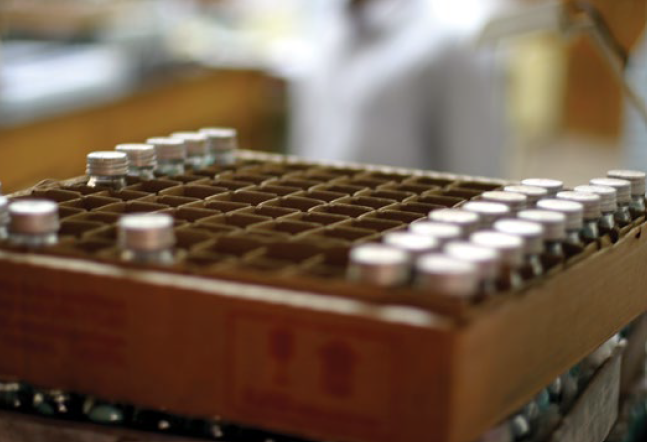
There’s A Star Man Waiting in the Sky

A man in astronaut gear poses for the camera. His helmet is in the foreground, with an American flag and mini replica space shuttle in the background.

NASA astronaut Charlie Camarda talks about his experiences in space, managing life or death situations, and the future of the U.S. space program.

Published June 1, 2013

By Tamara Johnson

Charlie Camarda

Astronaut Charlie Camarda was a mission specialist on NASA’s 2005 STS-114 Discovery flight, the Return to Flight Mission. He is now senior advisor for innovation to the Office of Chief Engineer, Johnson Space Center. Camarda recently visited The New York Academy of Sciences (the Academy) to address more than one hundred K-12 students.

*some quotes have been edited for length and clarity*

What’s it like to go to space?

It’s such an exciting ride! To tell you the truth, when we took off, it was so hyped up that I had actually expected there to be a lot more vibration and sound than there was. Whether it was the weather or I just had a really good flight, it was actually very smooth. You’re prepared for it.

We were the Return to Flight Mission after the Columbia accident, so we had lots of work to do. And we had lots of supplies to bring and lots of new technology to put in place and evaluate to make sure the rest of the crews would be safe. We were very busy, and that’s how typical flights are. Most of your time is tightly budgeted and controlled by the ground.

What did it mean to be the first crew to fly following the Columbia tragedy?

It was harder on our families. I grew up as a research engineer at NASA Langley Research Center, and my particular area of expertise was very close to what caused the accident. I worked on high temperature structures, heat transfer, and leading edges, so I was very aware of the dangers of things striking the thermal protection system and how fragile the thermal protection system was.

As far as being worried as to whether or not we were ready to fly, though, I was very confident we were. I felt very safe. The emotional significance of flying after three of my classmates and seven very close friends had passed away—that was a little tough. It takes a while to come to grips with that.

What were the aims of your mission?

We had several priorities. We were testing the new technology we’d developed to make sure that each successive mission (and our mission!) would be safe: how to inspect the vehicle and send the data down to Earth; how to make sure what we thought we were seeing was correct; and collaborating and coordinating to make sure the data aligned with our predictions. We developed a lot of inspection technology and also repair technology. But, we wanted to be sure, if we did get hit, astronauts could go outside and repair the vehicle. We did the first repair on orbit I believe.

How do you deal with anomalies in space?

One of the new procedures we did was what’s called an R-bar pitch maneuver. When we’re on the radius vector directly underneath the space station, about 600 feet below the station, the entire shuttle does a back flip. ISS Expedition 11 commander Sergei Krikalev and flight engineer John Phillips photographed the shuttle’s belly from Space Station to see if there was any damage. You have shuttle tiles, about 30,000 of them, with a black coating. If you get hit, it’s real easy to see because beneath the black tiles there are white silica materials.

As we were doing the back flip, they saw a small piece of what’s called the gap filler. It’s Nomex material, about the size of a very thin felt pad, about six pieces of paper. Two pieces of Nomex came out and were sticking out about an inch. So we had to inspect it and understand what it would mean. When we sent the image of the material down to the ground, the experts in aerothermodynamics said we had to go out and pull [the loose pieces] out of there. If we didn’t, they would trip the boundary layer, the layer of air that hugs the surface, and shed these vortices in a wedge type angle. Those vortices would hit the wing leading edge and burn us up. Can you imagine? You just had these very small pieces of material sticking out.

How do you train to manage life or death situations?

We fly in the back of a T38 and we learn what’s called crew resource management. It’s what pilots, navigators, and crew do on aircraft, so when they see emergencies, they know exactly what their jobs are. There’s an economy of words, a scripted procedure that each person has to follow. You know exactly what you have to do. We train like that as a team, doing navigation, flying the vehicle, talking to the ground, trying to make sense of what’s going on around you in all kinds of conditions. It gets you ready.

What do you think of the future of space science?

Well, I think we’ve started to lose our edge, to be honest, but all the commercial and private endeavors are great. The competition sparks innovation, and that’s what we need. NASA should be supporting these projects and working on basic research. Should we go to Mars? Definitely! Start working on asteroids? Yes!

The more people we have up there and the more ideas and challenges we think about, the more inspired people will be to come up with even more ideas and solutions, students and NASA scientists alike. It used to be that only test pilots could go up, but now it’s getting more popular. It’s still really expensive, but I hope soon it will be a more accessible experience. With a more diverse group of minds inspired to think and dream about space, we’ll start to see really great stuff happen.

Also read: Inspiring Scientists – Ready, Set, Robots!

How Do You Predict the Success of a Spinoff

A hand stacks wooden blocks with different logos on them.

Universities are fast becoming ground-zero for the commercialization of new technologies based on internal IP.

Published March 1, 2013

By Christopher S. Hayter, PhD

Universities have long been touted for their role in regional and state economic development, not only for their well-established role in education and research but, increasingly, the commercialization of new technologies. New spinoff companies, based on intellectual property stemming from university R&D, off er a promising vehicle for technology commercialization and have the potential to generate jobs, and even enhance the quality of traditional faculty responsibilities. Furthermore, university, state, and federal policymakers are increasingly seeking ways to encourage the establishment of university spinoff companies and support their growth.

A recent study examines factors of success among university spinoffs, offering practical insights for entrepreneurs, policymakers, and scholars alike. Spinoff success is defined as technology commercialization, measured by whether or not these early-stage companies have sales. The study, entitled “Harnessing University Entrepreneurship for Economic Growth: Factors of Success Among University Spinoffs,” appears in the February issue of Economic Development Quarterly, a peer-reviewed journal that focuses on economic development and revitalization, primarily in the United States. The study is based on a unique, nation-wide sample of faculty entrepreneurs at public universities who have established spinoff companies in a variety of technology areas and are at different stages of development.

Factors Affecting Sales

The study finds that a number of entrepreneur-, firm-, and university-specific factors significantly predict spinoff success. For the individual faculty member, consulting with industry provides insights and experiences that positively impact their ability to understand markets and technology development. At the firm-level, spinoffs that have research joint ventures with other companies, external sources of intellectual property, professional (non-faculty) management, and venture capital funding are more likely to commercialize their technology compared to those that do not.

Joint ventures and IP sourcing from other companies and universities provide valuable technical solutions while professional management addresses an important challenge recognized from other studies: academic researchers do not usually have the skills needed to effectively run and grow a company. And according to faculty entrepreneurs in the sample, venture capitalists are not only important sources of funding, they also provide mentoring and networking services and technical expertise important to spinoff performance.

Other factors in the study were shown to negatively impact spinoff success. Specifically, spinoffs attempting to commercialize technologies in the life science industry have an especially tough challenge: results show that these companies are approximately 40 percent less likely to commercialize their technology. Finally, spinoffs that rely primarily on a university for entrepreneurship services are less likely to commercialize their technology.

In short, these findings show that all spinoffs are not created equally. Spinoffs in the life sciences face especially acute challenges with staggering capital requirements, complex scientific issues involving the human body, and regulatory hurdles with the Food and Drug Administration. Beyond industry-specific considerations, spinoffs with access and strong external linkages to new technologies, ideas, funding, and management are more likely to commercialize their technology.

Need to Strengthen External Networks

Combined with the (negative) findings related to university entrepreneurship services, the study shows that networks are critical for spinoff success. In other words, if the findings are generalizable to broader populations of spinoffs, then policies and programs designed to spur academic entrepreneurship should establish and strengthen dense networks of funders, professional managers, support services, potential customers, and a variety of innovation sources to improve commercialization.

Entrepreneurial support networks have long existed in specific technology focus areas—like social networks to support the medical device industry in the Minneapolis, MN, metropolitan area. In other areas, these networks need to be built or strengthened, an acute challenge for most rural regions in the U.S. and beyond. This study shows that while university spinoffs may not automatically lead to new jobs and prosperity, policymakers will at least be better equipped to fashion policies and programs to improve the likelihood of commercialization and, therefore, economic development.

Also read: What Happens When Innovative Scientists Embrace Entrepreneurship?

Support is Key to Inspire Tomorrow’s Visionaries

A man in a suit and tie poses for the camera.

Ashok Vemuri and the Infosys USA Foundation place a premium on promoting STEM. Thus far these efforts have been immensely successful and have surpassed their goals. But how do we maintain this level of success?

Published December 1, 2012

By Noah Rosenberg

Ashok Vemuri

Ashok Vemuri’s professional achievements are no small feat. But he insists that neither were his mentors’ roles in helping him arrive at where he is today: the Head of Americas and Global Head of Financial Services & Insurance at Infosys, where he also serves as a member of the board.

“In my career, I have benefited from being mentored by some key individuals,” says Vemuri, who in 2008 was selected by Business Today as one of India’s 25 Hottest Young Executives, and the following year was elected to the Forum of Young Global Leaders by the World Economic Forum. “And I also make it a priority to offer advice and support to our employees under the aegis of the Infosys Leadership Institute.”

It turns out that Vemuri’s support and advice, and that of Infosys, extends well beyond the company’s hallowed halls. In 2010, a passionate conversation between Infosys Co-Founder and Executive Co-Chairman S. (Kris) Gopalakrishnan and leadership at The New York Academy of Sciences (the Academy) about the value of mentors, led to the Infosys USA Foundation’s first U.S. grant, which went to the Academy to help seed its Afterschool STEM (science, technology, engineering, and math) Mentoring Program.

Infosys’ involvement, Vemuri explains, enabled the company and its foundation to support “exploration and hands-on learning opportunities” for underprivileged students under the guidance of highly-skilled mentors—graduate students and post-docs who have successfully applied and trained to become Academy Education Fellows. Infosys employees find ways to get directly involved too; those who hold engineering degrees or Masters in science and math volunteer their time to engage students with cutting-edge subjects like robotics or space science, as well as the perennially vital fields of biology or earth science.

An Enormous Success

The first year of the Afterschool Mentoring Program was an enormous success, placing more than 120 mentors in 84 after-school and summer programs across all five boroughs of New York City. More than 2,100 elementary and middle school children benefited as a result and, Vemuri notes, the program continues to satisfy the Infosys USA Foundation’s mission of “fulfilling the social responsibility of the company by creating opportunities and working toward a more equitable society.”

Clearly, the Afterschool Mentoring Program, which initially partnered with the New York City Department of Youth and Community Development, is a win-win. The program is central to the Academy’s K-12 Education Initiative and its goal of encouraging higher achievement both in and out of the classroom with respect to STEM.

Fortunately, the Infosys USA Foundation was just getting started. The Foundation, which is financed by up to one percent of Infosys’ annual profits, recently expanded its challenge grant to the Academy to include a New Jersey partnership with the national non-profit organization Citizen Schools, effectively extending the Afterschool Program’s influence to low-income students in Newark via $50,000 in additional funding, bringing the cumulative total to $350,000.

Surpassing Goals

The additional funding support from the Infosys USA Foundation will allow the Academy to recruit, train, and support 30 new mentors in the 2011-2012 school year. The Afterschool Program will provide 180 hours of hands-on after-school activities for 450 fourth-through eighth-graders in New Jersey, as well as extend Academy membership to at least 300 teachers in the state.

“In today’s times when fewer students are graduating from high school than ever before, as responsible adult citizens of society, it is important for us to retain students in school beyond regular hours,” Vemuri says of Infosys’ decision to scale its involvement with the Academy’s Afterschool STEM Mentoring Program. He notes that participating students are immersed in subject areas that are “core to our business at Infosys.”

Naturally, Vemuri is pleased to have had a role in the Afterschool Program’s success, and he hopes the program continues to have an influence, churning out the next generation of science, technology, engineering, and math visionaries. “We are proud of our association with the Academy and the STEM Mentoring Program,” Vemuri says. “For me personally, it has been very satisfying to see the program surpass its goals.”

Learn more about the Academy’s educational programming.


About the Author

Noah Rosenberg is a journalist in New York City.