Celebrating 10 Years of the Blavatnik Awards

The shield for the Blavatnik Awards for Young Scientists.

Blavatnik Awardees advance the breakthroughs in science and technology that will define how our world will look tomorrow.

Chris Chang presents at the Blavatnik Science Symposium

Published May 1, 2017

By Victoria Cleave, PhD

The scientific equivalent of magic can happen when you put outstanding researchers together in a room. At the 2016 Blavatnik Science Symposium, a neuroscientist met a physicist, and they realized that the tool the neuroscientist needed to further his work was being developed within the physicist’s lab. Both were Blavatnik honorees, and they might never have met had it not been for the Blavatnik Awards for Young Scientists.

The Blavatnik Science Symposium is just one aspect of this distinctive awards program, established with the vision of Len Blavatnik, founder and Chairman of Access Industries and head of the Blavatnik Family Foundation, now celebrating its tenth anniversary.

The New York Academy of Sciences has administered the Awards since their inception, when they focused on the New York, New Jersey and Connecticut tri-state area. The basic tenets of the awards are simple: find brilliant researchers age 42 or under in chemistry, physical sciences and engineering, and life sciences, and award them financial support and exposure for their work.

“The Future of Scientific Thought”

Len Blavatnik explained the significance of that vision, “Young scientists represent the future of scientific thought. By honoring these young individuals and their achievements we are helping to promote the breakthroughs in science and technology that will define how our world will look in 20, 50, 100 years.”

In 2014, the Foundation supported the expansion from a regional to a national program, recognizing academic researchers across the United States every year with awards of $250,000, one of the largest unrestricted prizes ever created for researchers under the age of 42.

After seeing the success of the current Awards the Foundation was keen to support even more young innovators, so the program will expand with two new sets of Awards in the United Kingdom and Israel in early 2017. The Academy is delighted to be partnering with the Israel Academy of Sciences and Humanities to manage the Awards in Israel. Nominations for both new Awards will open in May 2017 and the first Blavatnik UK and Israel laureates will be honored in early 2018.

Amit Singer and Deborah Silver listen to a presentation during the 2016 Blavatnik Science Symposium

“World-Changing Discoveries”

“We know that this kind of recognition is particularly important because of the focus on scientists at the crucial juncture of their career when they are transitioning from trainee to independent researcher,” said Ellis Rubinstein, President and Chief Executive Officer at The New York Academy of Sciences. “Such recognition not only rewards past successes, it directly enables continued research—the kind of research that leads to world-changing discoveries.”

During the Awards’ first decade, more than 2,000 scientists and engineers were nominated from more than 200 institutions, with prizes totaling more than $4 million.

Michal Lipson, 2010 Blavatnik Awards Faculty winner and Given Foundation Professor at Cornell University, explained: “There are a few awards for young scientists, but almost all of them are based on proposals that you submit, and not on the actual work that you do as a young scientist. The Blavatnik Awards program is true recognition of the work of young scientists; it is unique in that sense. There is no equivalent.”

But it is the honorees themselves that are the most remarkable part of the Blavatnik Awards for Young Scientists. Chosen for both their achievements to date and the potential of what’s yet to come in their careers, the Awards aim to recognize truly outstanding scientists and engineers forging creative paths in research.

Trailblazing Science

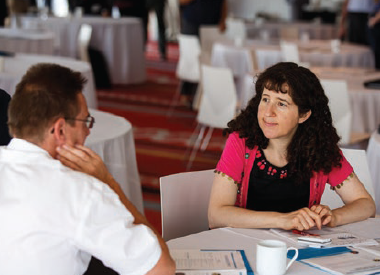
Yueh Lynn Loo enjoying a networking break at the 2016 Blavatnik Science Symposium

Beyond accolades, these brilliant young men and women carry out their trailblazing science across the breadth of the Awards categories. From deciphering how memories are formed and stored in the brain, to targeting genetic mutations that drive the growth of aggressive cancers. They have probed the complex physics of dark matter pulling galaxies apart, and designed nano-devices that can purify water or detect disease in low-resource settings.

The downstream impact of supporting such exceptional honorees is clear. As Anthony Guiseppi-Elie, Professor and Division Director at Texas A&M University, who serves on the jury for the Awards, said, “We are, in fact, just touching the lives of a few, but those few have the capacity to influence whole new vistas of enquiry, and so the ripple effect is quite substantial.”

Indeed, some immediate effects of the awards have arisen thanks to the generosity of two of the inaugural Blavatnik National Awards Laureates, who chose to donate part of their prize winnings to support even younger scientists: Adam Cohen and Marin Soljačić have established prizes of their own for talented students at Hunter College and high-schoolers in Croatia, respectively.

An Environment for Ideas and Collaborations

And of course, the Blavatnik Science Symposium has proven to be a fertile environment for ideas and collaborations, with almost 200 scientists and engineers in the Blavatnik community, and many nationalities represented.

“There are too few opportunities for scientists to actually come together and share the really big ideas. One of the really great things that we get out of the annual Blavatnik Symposium is that you have this community of young scientists that come together in many different fields,” said David Charbonneau, 2016 Blavatnik National Laureate and Professor of Astronomy at Harvard University.

“The best scientific research is collaborative and we want our Blavatnik Scholars to be able to tap into the best talent around the world,” said Len Blavatnik. “I look forward to the next ten years of finding and supporting exceptional young researchers and helping to promote transformative scientific discoveries.

Out of the Lab and Onto the Market

Researchers peer at a test tube inside a science lab.

A look inside an innovative program that encourages new business start-ups.

Published May 1, 2017

By Carina Storrs, PhD
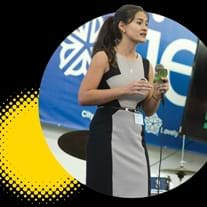
Jessica Akemi of Cornell presents on plans to commercialize CO2 conversion technologies at the NEXUS-NY demo day in Rochester, NY. Photo courtesy of doerrphoto.com

New York State policy makers and business leaders looking to encourage new business start-ups should take a look at an innovative program developed by New York State Energy Research & Development Authority (NYSERDA), an Academy program partner for nearly a decade.

NYSERDA’s mission is to identify next generation clean energy technology, and bring the best of those ideas out of the lab and into the marketplace through Proof of Concept Centers (POCC). POCCs work with research teams that have promising ideas, inventions and intellectual property. The teams gain access to business expertise that provides a market validation process to determine whether they are ready to create a viable business model.

Jeff Peterson, NYSERDA’s Program Manager, sees this as a viable way to encourage new business start-ups.

“Visualize a funnel. At the wide end of the funnel you have a lot of people with interesting ideas for prospective business enterprises. At the small end of the funnel you have a commercially viable scalable business,” he said. “The POCC programs are designed to help entrepreneurs with ideas around clean energy technology negotiate the funnel to success.”

Establishing Proof of Concept Centers

Four years ago, NYSERDA selected three outstanding groups and awarded them funding to start POCCs: a Columbia University-led group that includes Cornell Tech, Stony Brook University and Brookhaven National Laboratory; a joint NYU and CUNY group; and High Tech Rochester, a nonprofit business incubator.

The first two groups operate as a single POCC known as PowerBridgeNY (PBNY), while the High Tech Rochester POCC is called NEXUS-NY. The inclusion of NEXUS-NY helps cast an even wider net in the search for potentially game changing ideas. Although POCCs tend to focus on academic research Peterson said, “you hate to shut the door on people when they have an interesting idea, so that’s where the NEXUS-NY program came into play.”​

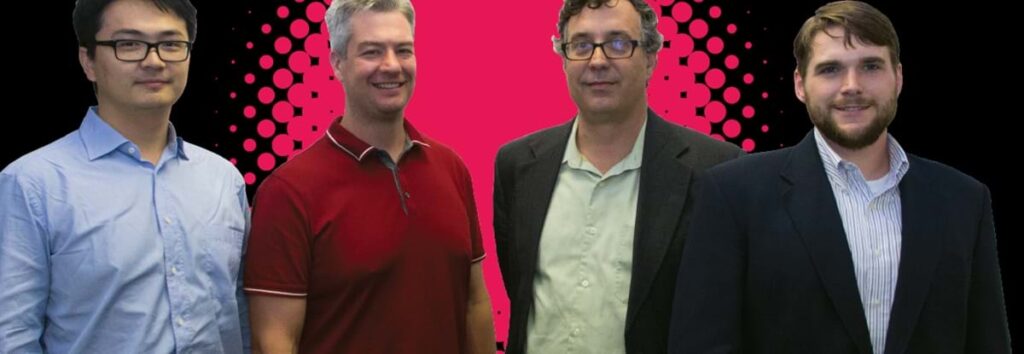
From left to right: Xiaozheng, Co-Principal Investigator Scott Banta, Co-Principal Investigator Alan West, Entrepreneurial Lead Tim Kernan

An Enviable Network of Innovation

Research universities have always been at the center of new technologies and New York State has one of the most enviable networks of innovation centers in the country. POCCs have been centers of innovations for several years. Similar to PBNY and NEXUS-NY, their aim has been to fund groups with promising early-stage research and advice about how to develop their research for commercialization. All of these efforts support Governor Andrew M. Cuomo’s energy goals to have 50 percent of the state’s energy come from renewable resources by 2030.

“Unlike the NYSERDA POCCs, many of these centers promote a range of technologies rather than focusing specifically on clean energy. However, clean energy technology, as compared with software technology for example, is particularly poised to benefit from the POCC model,” Peterson said.

For one, it is relatively capital inefficient to build and test multiple iterations of complex clean energy hardware, such as a transformer or wind turbine, requiring both more upfront market research and funding. In addition, the market for clean energy technology is constantly evolving so it may be more difficult to project the demand for a certain type of product.

To date, 52 teams have participated in the first three cycles of the program. These teams have gone on to start nearly 30 companies between them, many of which have also attracted private investment as well as grant funding from competitive state and federal programs.

Potential for Commercialization

During their time in the POCC, the teams tap into myriad business resources that many academic groups and groups conducting early-stage research, find critical for commercialization. As part of the application process for PBNY, teams participate in a two-day boot camp, during which they hear about lessons learned from previous PBNY classes.

They pitch their idea to a panel of judges from industry who provide guidance and feedback. Once teams are accepted into PBNY, they meet regularly with an assigned industry mentor, who helps them prepare to talk with potential customers, many of whom they connect with through PBNY networking events. In addition, the teams have monthly meetings with PBNY leadership to determine how well they are meeting the business and technical milestones they established at the beginning of the program.

A Two-Phase Process

The NEXUS-NY program involves two phases: In the first 12-week phase, teams make the case to the POCC leadership that their technology lends itself to creating a startup. If they advance, they spend the rest of the program working to demonstrate that their technology works in a way that is useful to potential customers, such as through building prototypes and developing investor presentations. Throughout the program, participants meet weekly with teaching teams, either virtually or in person, which help train them to have conversations with potential customers. The mentor network at NEXUS-NY is invaluable for introducing teams to key industry players.

Both NEXUS-NY and PBNY award research money to teams accepted into their program, but by the time they finish the program, teams usually say the most helpful part was everything else.

Christopher Schauerman, co-director of the Battery Prototyping Center at Rochester Institute of Technology, is part of a NEXUS-NY team that formed a company, called Cellec, for its technology, which involves using nanomaterials to build smaller and more energy dense batteries. The batteries have potential applications in drones and satellites and the Cellec team, which graduated last year, already has contracts lined up with customers in the aerospace and defense community.

“Through the NEXUS-NY program, we were able to talk to enough customers and get enough customer feedback that motivated us to form a company,” Schauerman said.

The Impact of the Program

For some teams, feedback from potential investors led them to substantially pivot their plan. Tim Kernan, GM of Ironic Chemicals and his partners at Columbia University were accepted into the first cohort of PBNY with the plan to use their genetically engineered bacteria to convert solar energy to liquid fuel. The negative response from investors, who questioned the need for this technology because fuel was so cheap, combined with input from a PBNY business mentor, led the team to instead develop the bacteria to break down sulfide waste from copper mining.

“Academics are not always experienced or familiar with the commercialization process,” Kernan said about the company he and his partners formed based on their technology. “Up until the existence of PBNY and similar types of centers, there was no support, you had to figure it out on your own or be lucky enough to have a technology that a company already wanted to buy. But with clean energy you’re creating technology that doesn’t have a market yet,” Kernan said.

Ironic Chemicals currently has a partner in the mining industry and a federal small business grant that will hopefully allow them to start testing bacterial tank reactors at a mining site by early 2018.

A Strong Advisory Board

Another important component to the program is the advisory board organized by the Academy. National thought leaders from academia, government and industry meet regularly to provide strategic advice to the POCC leadership.

“After a relatively short time, there have been many interesting success stories. Many companies have been formed. Some have raised private capital. A few have sold products. Even more have been awarded additional grant funding,” Peterson said. “The truly exciting part of the program, however, is that many of the research teams have become excited about entrepreneurship. NYSERDA committed to funding the POCCs for a five-year term. The hope is that the program will gain enough momentum and interest that grant and investment money will step in and NYSERDA and state funds would not be necessary at the scale they are at now.”
A Pioneer in Inflammation Resolution Research

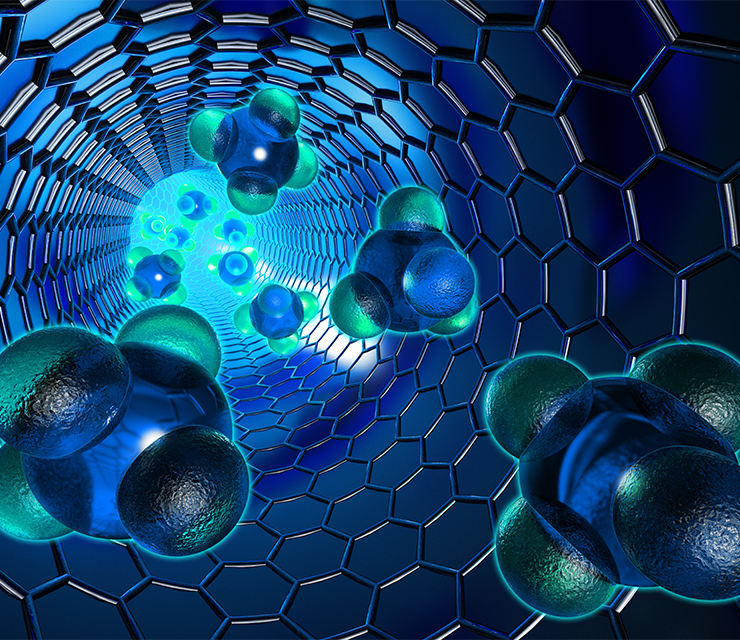
a 3D illustration as seen in a medical journal.

Charles Serhan’s groundbreaking research is changing the way we view inflammation and the strategies for its therapeutic resolution.

Published October 1, 2016

By Daniel Radiloff

The 2016 Ross Prize in Molecular Medicine was awarded to Charles N. Serhan, PhD, DSc, who serves as the Simon Gelman Professor of Anesthesia, Perioperative and Pain Medicine at Harvard Medical School and Professor of Oral Medicine, Infection and Immunity at Harvard School of Dental Medicine.

Dr. Serhan received the Award, which is conferred by the Feinstein Institute for Medical Research and Molecular Medicine, at a scientific symposium held at the Academy on June 13, 2016, in his honor. A pioneer in the field of inflammation resolution research, Dr. Serhan was the first researcher to identify anti-inflammatory cellular mediators, including resolvins and lipoxins, which are critical in regulating the pro-inflammatory pathway. These discoveries have paved the way for increased understanding of how the resolution of inflammation can be translated into therapies for a variety of human diseases.

We sat down with Dr. Serhan to discuss the award, the scope and impact of his research, and the importance of mentorship in developing the next generation of scientists.

What is the current research focus of your laboratory?

The main research focus of the lab is the elucidation of the mechanisms involved in the resolution of inflammation and structural elucidation of the mediators in order to understand organ protection and collateral tissue damage, as this is the basis of many diseases and the collateral stress and damage for surgical interventions.

How did you choose mediators of the inflammatory response as the basis of your work?

I have always been interested in chemistry and biochemistry. The notion of chemical mediators orchestrating the immune response intrigued me from learning about things like histamines and the early prostaglandin research. You could say I have stuck with this research through my entire career, as there were enough questions to ask to go deeper and deeper which led to resolution, which no one had really studied before in a mechanistic fashion.

What was the “eureka” moment, when you realized that your research on these pathway could be used for therapeutic purposes?

It has been a steady progression. I have to say that at one point I did have an epiphany about the whole system—that it was a straight line that has yet to be fully realized, and we could use each one of the mediators we have identified to serve as a backbone for therapeutics. I would say another moment was rewriting the errors in the biochemistry textbooks on how essential fatty acids were actually regulating inflammatory responses. Overall, it has been an incremental process and a lot of slow, hard work—more than one moment.

What will be the next injury whose treatment will be influenced by your and others’ research in the inflammation field?

The stress of surgery is well recognized among surgeons as an acute inflammatory response, as is reflow injury, when blood reflows to tissue. These are two areas we can have a big impact on. Demonstrations are currently underway at a clinical trial level focused on ocular dry eye inflammation using a resolvin E1 mimetic. This work is based on a company I was involved in starting in 2000, but I am no longer actively involved in this venture.

Additionally, an orphan disease of great public health importance focused on by my lab is periodontal disease, which is inflammation-induced bone loss around the peridontium. We were able to go from a mouse model to a rabbit model thanks to NIH funding and have been able to develop a GMP-synthesis and pro-resolving mouth rinse.

A trial is on, with more than sixty people enrolled at the Forsyth Institute, to see if we can stimulate resolution of inflammation in the early stages of periodontal disease. This is being done in collaboration with Tom Van Dyke and his colleagues at the Forsyth Institute, with support from NIH/NIDCR. So I have a focus in my lab on periodontal disease, thinking that if we control local inflammation, what would be the impact on systemic inflammation. There is evidence in a lot of papers showing links to all sorts of systemic diseases resulting from periodontal disease.

What do you hope will be the long-term impact of your research from a global perspective?

One aspect we haven’t really touched on, but which is really important, is having a better education about the role of nutrition in an appropriate innate immune response. Some of our work underscores how important fatty acid nutrition is—a different side of our work that is still very important.

Did you always envision yourself as a scientist, or did you dream of being something else as a youth?

As you know, no one really sees themselves as a geek growing up. I really enjoyed chemistry when I was younger, tinkering around with chemistry sets and microscopes, but as I got older really wanted to be a musician. I even spent time on the road touring with bands, but I had a very swift change of heart and went back to my roots, deciding to study biochemistry at Stony Brook, and had a great experience as an undergraduate. Today, I still don’t really see myself as a scientist but rather a biomedical investigator. I always have seen scientists as people who work on rocket ships.

Do you think your musical training has had any influence on how you approach scientific research?

Yes, most definitely, it does play a role in science. The way I organize the laboratory projects is analogous to orchestration of music. Also, I would compare developing patience, skill and rigor in the scientific process to developing musical skills through continual practice. The more proficient you become mastering scales and rudiments in music, the more confident you become in your skills, and I see scientific research the same way.

Were there any individuals in your life that steered you towards science or played an important role in you becoming a scientist?

Yes, I had great science teachers in elementary school and absolutely loved them and loved science. When I was at graduate school at NYU I frequently visited high school science classes and told them how exciting scientific research was.

Were there any major challenges you had to overcome in your career to becoming a successful scientist?

Oh yeah, trying to remain continually funded is a real challenge. Other than that, overall, I have been very lucky, having great mentors and a supportive family. I’ve also had great trainees over the years, with about 90% of them successfully moving on to the next steps in their career.

Speaking of mentors, what is the most valuable lesson that you have learned from your mentors over the course of your career?

Anyone that does reasonably well in science has to have not only one mentor but a half a dozen mentors. I was lucky enough to work with the Lasker Award Winner Michael Heidelberger, the father of immunochemistry, when I started graduate school at NYU, who was retired at the time and in his 80s.

I learned two things from him that made a large impact on me: 1. You have to work on something you love to get you through the difficult times, and 2. You have to write everything down and make observations, because you will get distracted and forget things. To this day, I make people in my lab have two notebooks—an electronic one for detailing their experiments and one for writing down their ideas.

What do you hope that your mentees will pass along to their own mentees one day?

Of course, almost everyone would say the passion for experiments, but I would say steadfastness, commitment, and rigor are the key, because there are many things that can lead you astray these days.

What does winning the 2016 Ross Prize in Molecular Medicine mean to you?

I can’t even find the words to express it, I am so humbled and makes me very proud. On a personal level it’s nice for the people in my lab as they can see something to aspire to.

As the Academy approaches its bicentennial, we’re reaching out to top minds in emerging fields to get their opinions on the future of the sciences. What emerging fields do you think are the most exciting?

That’s a hard one. There are a lot of emerging areas of science that are exciting. Science drives technology and technology drives science. Lately, I have been working on tissue regeneration, and am interested in nanotechnology and local drug delivery systems, and I believe these approaches will revolutionize medical treatment and improve life. Also, from my perspective, I would say personal metabolomics is another emerging field, which may help us to understand collective health and behavior as well as personalized medicine.

About the Ross Prize in Molecular Medicine

The annual Ross Prize in Molecular Medicine was established in 2013 in conjunction with the Feinstein Institute for Medical Research and Molecular Medicine. The winner is an active investigator who has produced innovative, paradigm-shifting research that is worthy of significant and broad attention in the field of molecular medicine.

This individual is expected to continue to garner recognition in future years, and their current accomplishments reflect a rapidly rising career trajectory of discovery and invention. The winner receives an honorarium of $50,000. Previous Award winners include: Lewis C. Cantley, PhD, Weill Cornell Medical College (2015); John O’Shea, MD, National Institute of Arthritis and Musculoskeletal and Skin Diseases (NIAMS), National Institutes of Health (2014); and Dan Littman, MD, PhD, New York University (2013).

For more information, please send an email to rossprize@molmed.org.

This 2016 Ross Prize and Symposium were made possible by the generosity of Jack and Robin Ross with support from

Read more about the Ross Prize and past awardees:

Life in the Junior Academy in the 1970s

A black and white shot of two teenagers in the 1970s.

A member of The New York Academy of Sciences’ Junior Academy reminisces about her involvement in the program, including as president, during the 1970s.

Published September 1, 2016

By W.M. Akers

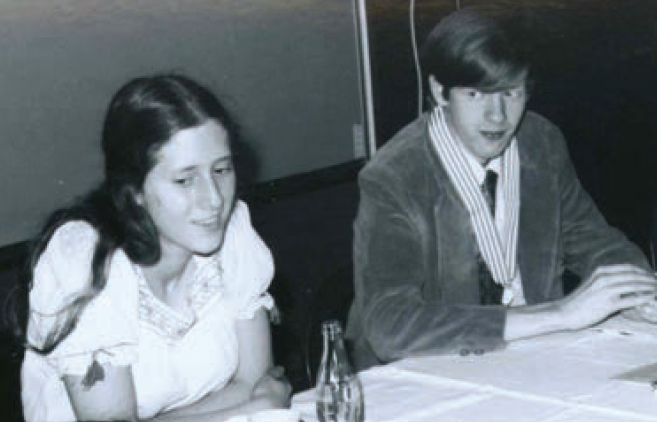
Junior Academy president Paul Sullivan passes the torch to Joy Hecht.

An environmental economist, Joy Hecht, PhD, has studied the economic impact of environmental damage everywhere from Lebanon to Malawi. But in 1974, she spent most of her free time somewhere less exciting: the Xerox room of The New York Academy of Sciences (the Academy). As president of the Junior Academy, Hecht oversaw an entirely student-run operation with members all over New York. We spoke to her recently to ask about her memories of the Junior Academy, and the special bond she and the other students formed.

How did you get involved with the Junior Academy?

I went to Hunter High School, which at that time was an all-girls school. My mother told me, “You should get involved with the Junior Academy of Sciences. You can meet boys that way.” I got involved with it, initially as a way to meet boys, and it became a part of my life.

I think a great deal of what made the Junior Academy awesome is that it was run by high school kids. We did all the work. No one else was telling us what to do.

What was the Junior Academy like then?

It was a place to hang out. The Junior Academy had its files at the Xerox room, so we all hung out at the Xerox machine. We were organizing events, we were doing mailings, we would get kids in after school to stuff envelopes. We always had a group of kids who were hanging around. It was very social.

We were often there after five o’clock, and we had free run of the place. I distinctly remember wandering in and out of the president’s conference room after everyone went home. These were really nerdy kids—a lot of big Trekkies—so we weren’t the type who were going to demolish the building, even though we did snoop around the place.

When you became president, how did you change things?

I started out doing the same stuff the Academy had been doing all along. That fall, my mother took me and my sister out to San Francisco, and I looked up the California Academy of Sciences, and I spent a bunch of time talking to the guy who ran their Junior Academy.

He asked me, “When you look back on this experience, what do you want to have accomplished? Do you want to feel like you did something new, or do you want to have just kept the Junior Academy what it was?”

So I went home, and I told the group: “We organize lectures, and we do field trips, but it doesn’t really make any difference. What we need to do is get these kids working in science, to see if they like it.”

We started calling up the Academy members who had labs, and asked if they were willing to take on high school kids during the summer. We put together what we called the summer opportunities booklet—we published it and distributed it. I assume there were kids who ended up working in labs because of it. That was the most important thing, to actually get kids doing stuff in science, instead of just going to lectures.

And did you meet boys?

Oh, yes. Paul Sullivan ended up being my first boyfriend. Mind you, I hated Paul at the beginning. He was the president the year before me, and I couldn’t wait for him to leave so I could take over, but then the summer before my senior year of high school, he called to tell me the Academy had hired him as the Junior Academy advisor. I was madder than hell, but I got over it.

Every June, one of the field trips would be a trip up to Mohonk. There was a trail there we always hiked, and it’s something my cohort at the Academy kept doing every summer for four or five years after high school. When Paul died in 1999, we all found each other again, and we went on the same trail at Mohonk, and we planted a tree in his memory. We didn’t stay boyfriend and girlfriend very long, but we stayed good friends throughout his life.

Bioelectronic Medicine Stimulates New Research

A line graph that shows heartbeat metrics.

It’s more than just “hacking health”—bioelectronic medicine has the potential to transform how we treat a range of conditions and disorders.

Published June 21, 2016

By Attila Szász

Image courtesy of teerapon via stock.adobe.com.

The term “bioelectronic medicine” may seem to be more science fiction than medical reality, but this field of science has recently made significant strides in translating research from the lab to the clinic with promising results. From implantable devices to treat autoimmune diseases without medication to microchips to help quadriplegics regain movement, bioelectronic medicine is quickly moving into the forefront of scientific applications.

The premise of bioelectronic medicine is that nearly all cells in the human body are in some way regulated via information communicated from electrical signals from the nervous system. Similar to how implantable artificial pacemakers emit electrical impulses to regulate a heartbeat, various technologies have been developed to block, stimulate, or regulate the body’s neural signals to control the underlying molecular targets of many diseases.

Bioelectronic Medicine: A Viable Therapeutic Field

Bioelectronic medicine would not have emerged as a viable therapeutic field without the work of Kevin J. Tracey, MD, President and CEO of The Feinstein Institute for Medical Research-specifically, a key discovery in May of 1998. At the time it was believed that there was no communication between the nervous system and the immune system, but Tracey devised an experiment to test his own hypothesis on a link between the two systems.

Kevin J. Tracey, MD

Tracey predicted that stimulation of the vagus nerve with electrical impulses would reduce production of tumor necrosis factor (TNF), a cell signaling protein linked to inflammation. Electrical impulses were delivered to an exposed vagus nerve in a rat and after the cut was closed, Tracey administered endotoxin to trigger inflammation.

Seventy-five percent of TNF production was blocked, through activation of what Tracey coined as “the inflammatory reflex.” Since these research findings were published in Nature in 2000, Tracey has co-founded SetPoint Medical to develop an implantable device to stimulate the vagus nerve as a treatment for rheumatoid arthritis (RA) that is intended to last for 10 years. Results from a pilot study reported that patients with this implant experienced symptom improvements comparable to those taking medications for RA and a long-term study is currently underway.

A Chip Implanted in the Brain

Chad Bouton, also from The Feinstein Institute for Medical Research, was recently the lead author in a landmark study appearing in Nature on a neuroprosthetic device that, for the first time in a 24-year-old man with quadriplegia, allowed a paralyzed man to move his hand using only his brain. First, functional magnetic resonance imaging (fMRI) scans of Ian Burkhart’s brain were taken while he attempted to complete a range of hand movements; once Bouton and his team identified from the fMRI the areas of the motor cortex associated with the movement attempts, a chip was implanted in Burkhart’s brain.

This chip is designed to note the electrical activity from the motor cortex that is linked to movement and to transmit this information to a computer, which eventually translates these signals and sends them to a flexible sleeve on Burkhart’s arm. The result? Burkhart’s muscles were stimulated, and over time with training he has been able to make isolated finger movements and complete six different wrist and hand motions. There are limitations to the technology, as it can currently only be used in a laboratory for a limited amount of time and requires recalibration before each use.

Regardless, Burkhart sees great value in bioelectronic medicine. “Even if it’s something that I can never take home in my lifetime, I’m glad I’ve had the opportunity to take part in this study. I’ve had lots of fun with it. I know that I’ve done a lot of work to help other people as well,” Burkhart told Nature.

Also read: Merging Modern and Ancient Medicines

Scientists: The Best Job in the World

Two women work together in a science research lab.

Women scientists on determination, success, and the secret they wish everyone knew.

Published June 1, 2016

By Hallie Kapner

There is no better time to be a woman in the sciences. Generations of advocacy and effort have helped usher more women into diverse scientific fields than ever before, and despite the challenges that remain, today’s women scientists are the largest and most influential cohort in history, their voices louder by the minute.

Ask any of the 34 women who are winners and finalists of the Blavatnik Awards for Young Scientists and they will readily volunteer that they have the best job in the world. The long years of schooling, competitive atmosphere, tight faculty job market, and difficult juggling act between work and family never diminish the joy and excitement that comes through in discussions of their work. For many in the group, becoming a scientist was the dream of a lifetime, even before they had the words to describe it.

Many Paths

For Kathryn Uhrich, it began with questions. “Even though, I didn’t know I wanted to be a scientist, but I knew I was curious,” the dean of natural and agricultural sciences at Rutgers University recalled of her childhood self. “I wanted to know how everything worked. I took everything apart.” A similar early curiosity found a young Laura Landweber parked at her family’s kitchen table on snow days, immersed in an anatomy coloring book or busy building models. One winter, without a hint of prescience, she painted a model of a paramecium—a ciliate from the same group as the organism on which her groundbreaking work in molecular evolution is based.

The notion that questioning, probing, assembling, and even destroying are all central to the scientific endeavor did not register for these women until later, most often when elementary or middle school science teachers noticed an aptitude for the subject. By the time particle physicist Mariangela Lisanti was in the eighth grade, she knew where her interests lay, even if she was still honing her experimental skills.

Laura Landweber

“My science fair project that year was an investigation of whether microwaves killed or damaged corn seeds,” she remembers fondly. “I knew they did, but I was trying to find out how much they could take before their growth was stunted, and at what point they died. I grew all these corn seeds and literally covered my parents’ dining room table with petri dishes.” With a reassuring laugh, she adds that the following year’s project investigated how to protect the seeds.

A Knack for Science

Sometimes a knack for science exists among other talents, and while it’s hard to imagine microbiologist Christine Jacobs-Wagner as anything but a scientist, science was not her first career choice. At a university open house during her final year of high school, she made a beeline for the law department. “I sat through exactly one class and that was it—I didn’t want to be a lawyer,” she says. “I had to pick a major, and even though I was really interested in business, I picked science because my favorite high school classes were biology and chemistry. I’m a scientist because of those teachers. They really had a tremendous influence on me.”

Discovering a love of science and a natural gift for the academic skills it requires, whether in math, biology, statistics, or chemistry, is only the first step. Even before the long road of advanced degrees, there is a choice: which field beckons loudest? Daphne Bavelier, a cognitive neuroscientist whose work on brain plasticity has upended conventional views of how learning takes place, started out pursuing molecular biology.

At an internship in her third year of undergraduate work, during some of her first hands-on molecular biology experiments, she had what she describes as “a real halt, a moment of ‘Wait, what am I doing?’” She was surprised that a field that thrilled her in books felt less exciting in real life. “I discovered it was more fun to read about Western blots than to do them,” she remembers. “And thankfully this all happened at a time when there was a revolution in our understanding of brain science. I was fascinated by that, and even though my field didn’t exist yet, that all changed quickly.”

The Road Ahead

Bavelier was fortunate to land in the lab of trailblazing psychologist Molly Potter, who had in the 1960s been one of the first women to join the faculty at the Massachusetts Institute of Technology, at a time when many of the school’s buildings had no women’s restrooms. Potter was not just one of Bavelier’s most influential scientific mentors; she epitomized a quality crucial to the success of any scientist: determination.

Today’s academic climate insists that faculty scientists wear many hats: grant writer, teacher, researcher, and sometimes even politician. Add the pressure to “publish or perish” and it is not hard to see why biological engineer Antje Baeumner tells her students, “If you want the easy route, don’t get a PhD.”

Choosing a life in academia means following the work you love into an environment that tests even the brightest and most confident, with the specter of rejection never far from mind. Whether it involves being turned down for a grant or having a paper rejected for publication, a life in science means learning to accept no for an answer. What separates the highest achievers seems to be the ability to balance the short-term difficulties with the promise of big-picture goals.

“We just had a grant rejected last night and a paper rejected this morning,” says Uhrich. “But that’s just 5 percent of the time. The other 95 percent of the time I’m thrilled. No matter what you do or how you do it, there will be difficulties, so you may as well do what you enjoy.”

Handling Rejection

The subject of rejection brings up a particular set of issues for women in science, many of whom approach the topic, and the perceived differences in how men and women process the experience, with an analytical precision befitting their occupation. Many have acknowledged that for women, who represent less than 25 percent of science faculty in the country, being rejected or overlooked can have larger resonance, and the effects can be more detrimental.

Carmala Garzione

“If you look at the culture of promotion and tenure, it really preys on insecurity,” says geologist Carmala Garzione. “You feel like your work is being evaluated until someone gives you the final nod and says ‘You’re good enough, you can stay.’” Garzione suspects that many women are hampered by notions of how they should behave in a tough competitive environment. “These perceptions feed women’s doubts in their ability to succeed,” she says. “I tell my students to worry less—keep their heads down, get their work done, and do what they love.”

Jacobs-Wagner posits that men in science may be able to push past insecurities and setbacks more easily than she and her female colleagues seem to do early in their careers because societal norms present men with more opportunities to face rejection early in life. She cites the typical roles of courtship, explaining, “This has been going on forever—both men and women flirt, but the men propose. The norm is the man in control, and men experience a ton of rejection in this area. If that’s what builds confidence, then maybe we can learn more from being rejected, maybe it can’t be such a big deal.”

The Role of Gender Roles

Gender roles never entered into Daniela Schiller’s process of becoming a neuroscientist. As a child growing up in Israel, she knew she would someday serve in the army. “Over the years I played the drums and parachuted and did a lot of things typically considered masculine,” she explains. “At one point, I wondered why. But I realized it’s not about male or female ability, it’s about choosing the human experience you wish to have. For me, I think it helps to not consider gender, and to just do it, no matter how hard it is.”

Refrains of just do it, keep trying, never give up, take it as far as you can are constant mantras for this group of elite women, and it’s advice that they never hesitate to share with peers and students. Cell biologist Agnel Sfeir’s passion for her field survived the difficulties of growing up amid the Lebanese Civil War, and her determination remains undiminished today.

“If you love science, you have to take it all the way to the end. There’s nothing more rewarding than having your own lab. This is the ultimate. It’s tough, but it’s doable, and there are plenty of women doing it,” she says.

The Best Life

Elza Erkip

For electrical engineer Elza Erkip, the best job in the world is one that allows her to pursue her passion—these days, much of her research is in wireless networking—and to have the flexibility to make her own hours, spend time with her two young daughters, present her research at major conferences, and mentor her students. It’s the job she has, and she cannot imagine any other life.

“Some women decide that the juggle of life after a PhD is just too much. But a faculty position is actually the best job for a woman to have a career and a family. Why is this still a secret?” she exclaimed. “I’m so flexible, and there’s nothing else like it. The hard part is getting here, but once you’re here, it’s the best,” says Erkip, who also serves as a mentor for The Junior Academy.

“Getting here” is unquestionably a different journey for men and women—if it were not, perhaps the stubbornly low rate of women scientists applying for faculty positions would rise. The simple, and at times frustrating, math that causes two major paths in the lives of many women in science—their childbearing years and their work toward tenure—to intersect, is a major factor that lures some away from academia.

Erkip does not deny the challenges, but she is determined to be living proof that they can be overcome. “Part of the problem is perception, and part of it is having more role models. One of my students got pregnant just as she was about to finish her PhD, and she told me that she looked at me and my family and knew that she could do it too.”

A Marketing Problem

But the dream career for Erkip and many of her peers still suffers from a marketing problem. Uhrich sees most of her doctoral students accept industry jobs, and she and others at her level find themselves working harder to promote the best aspects of faculty science to the next generation.

“I try to share my excitement—who wouldn’t want a job where you get paid to play detective, to try to figure out how nature works. Often, I can’t imagine a better job and I tell that to my students,” says Jacobs-Wagner. “I tell them that we all get rejected—I get slapped in the face all the time—and if we take it a little bit personally, which is natural, it only makes the quality of our science better.”

Bavelier echoes similar sentiments with the students she mentors, striving to show that the benefits of a career in science are too rich to ignore. “It doesn’t matter where you work, balancing work and family is never simple. But the flexibility and the rewards of committing to science are so great, I have to show them it’s worth accepting the difficult parts.”

Certainly institutional change will help, and many universities boast growing rosters of women in faculty positions, particularly at untenured ranks. Established senior scientists acknowledge that further systemic change will take a generation. “As a tenured woman in science, I’m definitely a role model for my students,” says Landweber. “But especially as a full professor at a small place like Princeton, with few senior women in science relative to competitor institutions, you might find yourself the only woman at that rank in your department. And then there’s another gender imbalance if the leaders in the department have had their PhDs for 50 years and you’ve had yours for 15.”

A Mid-Career Move

Landweber, who will soon move to Columbia University after more than two decades at Princeton, adds that “a mid-career move can bring refreshing and exhilarating change. Plus, the opportunity to be recruited as a senior colleague means that there is no more glass ceiling.”

Emily Hodges

The postdocs and new faculty who will become the deans and department heads of the future seem to be taking the messages of their mentors to heart, and many new faculty are experiencing refreshingly positive early days on the job. After just six months at Vanderbilt University, biochemist Emily Hodges reports that she is already taking on leadership roles. “I have to give my colleagues a lot of credit—it’s been very encouraging and I’m already being put on committees,” she says. “You’d have to be blind not to see that there are fewer women, but I’m finding opportunities to become a leader.”

Hodges and her contemporaries, just like the generations of women scientists that preceded them, are shattering misconceptions and creating new paradigms for women in science. They are also benefitting from cultural shifts that they hope will bring greater equality to their work. They’re fearless boundary-breakers, agents of change. They are living the best advice Erkip gives to her young students. “We cannot be afraid of what’s hard,” she says. “Love what you’re doing and you will succeed.”


About the Author

Hallie Kapner is a freelance writer in New York.

Providing the Best Role Models for STEM Students

A mentor works with two young students.

A new grant will help expand the Academy’s Afterschool STEM Mentoring Program, enabling members to have a greater impact on the next generation of scientists.

Published April 13, 2016

By Diana Friedman

As Ellis Rubinstein, President and CEO of The New York Academy of Sciences, said in his keynote earlier this week at the World Strategic Forum, “If all of us work together, we can better prepare today’s students to become tomorrow’s STEM innovators.”

In addition to bringing industry, academia, government, and philanthropy together, one of the key strategies that the Academy has focused on in its STEM education programs is bringing science professionals and students together. By providing young people with the chance to meet role models face-to-face and learn directly from those working in STEM, students get the chance to imagine new possibilities for pursuing lifelong careers in science, technology, engineering and math. This is particularly important for young people living in some of the poorest areas of New York, who particularly benefit from meeting younger scientists who look like them and with whom they can build friendships.

That’s why the Academy is so excited to announce the expansion of the Afterschool STEM Mentoring Program thanks to a grant from the Corporation for National and Community Service (CNCS). This grant, mentioned today in the White House’s annual Science Fair Fact Sheet, will build the capacity of our afterschool programming in New York and Newark, New Jersey.

A Flood of Applications

When the Academy first put out a call for mentors to members, the applications flooded in. And in the six years since the program started, interest has only grown. Many members have returned to the program year after year, demonstrating their deep desire to have an impact beyond their research by volunteering to serve as afterschool mentors.

“We would like to thank the Corporation for National and Community Service and are excited to be part of the AmeriCorps VISTA expansion,” said Rubinstein. “Over 1,000 Academy members have already volunteered to teach and mentor kids through the Afterschool STEM Mentoring Program. This generous grant from CNCS will build our capacity to bring this experience to thousands more.”

Learn more about our Afterschool STEM Mentoring Program:

Improving Survival Rates of Neuroblastoma

A man with his arms folded poses for the camera.

How John Maris, MD, got to the heart of the (genetic) matter through his research.

Published February 27, 2016

By Diana Friedman

Persistence paid off for John Maris, MD. Fifteen years after he began searching for genetic abnormalities linked to neuroblastoma during his post-doctoral fellowship, his research team discovered that mutations of the anaplastic lymphoma kinase (ALK) gene are associated with many neuroblastomas. Today, Maris’s work at The Children’s Hospital of Philadelphia (CHOP) continues to strive to translate basic and clinical research into improved therapies for patients.

Currently, neuroblastoma is the most common extracranial solid tumor in childhood, with an incidence rate of about 10.54 cases per 1 million per year in children younger than 15 years. Although overall incidence of pediatric cancer has declined since 1975, survival rates for children with neuroblastoma vary significantly based on age of diagnosis and risk classification. The five-year survival rates for patients range from 90% for those younger than 1 year to 66% for those age 10- 14 years; children in the low-risk group have a five-year survival rate at more than 95%, but the survival rates for children in the high-risk group are between 40- 50%.

Influenced to Study Neuroblastoma

These statistics, plus a research opportunity prior to attending medical school, played a significant role in shaping Maris’ career path in medicine. Working in the laboratories of noted pediatric oncologist Audrey Evans and biophysicist Britton Chance prior to attending the University of Pennsylvania School of Medicine, influenced his decision to study neuroblastoma.

“I was introduced to the disease, including patients and families, while a technician before medical school,” Maris told us. “I had great mentors and have stuck ever since to trying to solve the many enigmas associated with the disease.”

During his postdoctoral fellowship, Maris’s research was focused on determining genetic mutations associated with familial neuroblastoma—he didn’t discover it then, but fifteen years later his team found that the primary cause of familial neuroblastoma is a germline mutation in the ALK gene. Yael Mossé, MD was the post-doctoral trainee who made the actual discovery, and now she is an internationally recognized expert in translating ALK inhibition strategies to patients.

A Multifaceted Approach

For Maris, improving survival rates of neuroblastoma is promising when a multifaceted approach is applied.

Bridging the fields of genomics and immunotherapy together is our greatest hope,” he noted. “We will be increasingly individualizing therapy based on the unique features of the patients and their heritable genome and the evolving cancer genome/proteome. The road to translating research findings into novel therapies is long, but we’re working on it.”

Also read: The Quest to Find a Cure for Pediatric Cancer

Important Role of Communication in Advancing Science

Media members hold up a microphone while interviewing a man in a suit.

The actor, writer, and science advocate educates scientists in the elusive art of communication.

Published August 1, 2015

By Kellie M. Walsh

A headshot of a man smiling.

All he’d said was “Oh,” but I could hear in the shape of the vowel that the smile on his face was evaporating. I’d given Alan Alda a terrible answer, exactly the type of answer he has worked so hard to train out of others.

For more than 20 years, Alda, like The New York Academy of Sciences, has been on a mission to get people talking to one another. While the Academy brings scientists and non-scientists from different disciplines, sectors, and communities together through common goals and initiatives, Alda focuses on bringing them together through a common language.

As Visiting Professor at the Alan Alda Center for Communicating Science at Stony Brook University, he uses improvisational techniques and theater games to train scientists to distill and translate their work into language that officials, media, funders, the public, and scientists of other disciplines can all understand. This interest in aiding the sciences through the arts, in fact, inspired the founding of the Center for Communicating Science in 2009; it was renamed in his honor in 2013.

Alda’s objective is to transform scientists not into actors but rather into comfortable, empathetic conversationalists able to clearly express their work to anyone and everyone—and, consequently, help advance it forward. He has also hosted several notable science documentary series for public television; is an award-winning actor, writer, and director; and has received numerous science communications awards, including the National Science Board’s Public Service Award (2006), the Scientific American Lifetime Achievement Award (2013), the AAAS Kavli Science Journalism Award for The Human Spark (2010), and the Council of Scientific Society Presidents’ Carl Sagan Award for Public Understanding of Science (1998).

Talking Shop about Communications

In anticipation of our phone call, I’d prepared to talk about Alda’s long and credentialed career. I’d prepared to talk shop about communications. I’d even prepared a two-sentence introduction that I’d practiced reading aloud, hoping to convey to Alda that his communications work and mine paralleled in notable ways. I wanted to show that we spoke the same language.

I hadn’t prepared for him to actually be interested.

I’d just finished my introduction, explaining I was the then Associate Director of Web Content and Development for the Academy, which was a long way of saying that I helped people communicate online. Alda jumped on my last word so quickly I almost didn’t hear him ask, “How?” As in, how in my work do I help people communicate online?

It was a reasonable question; one I’d opened the door to even. Yet I bumbled. I stammered out a staccato of half-sentences, then topped them off with jargon. Rather than speaking his language, I found myself talking straight over his head. Without meaning to, I’d answered his interest and curiosity by shutting the door in his face.

Mine wasn’t the first disappointing answer Alda had ever encountered, however: during his 11-year tenure as host of Scientific American Frontiers, for one, Alda had interviewed hundreds of scientists, many whose thoughts he’d found stuck inside their own minds. But rather than allow his interview subjects to deflect, obfuscate, or drone through a rote script, he discovered that the way to break through this obstacle was to keep tapping interviewees with questions until their shells finally cracked.

Effective Interview Tactics

Image courtesy of wellphoto via stock.adobe.com.

“In most interviews,” explains Alda, “you already know the answer to the questions. I didn’t know what the questions were; nor did I know what the answers were. I just wanted to understand what their work was. And if I didn’t understand it, I’d badger them until I did.”

Alda’s persistence and desire to learn often helped his interviewees overcome both their nerves and their “curse of knowledge,” the cognitive bias that makes it difficult to think or talk about a familiar subject as if from a position of unfamiliarity. “They lost all interest in talking to the camera,” he says, “and really wanted me, personally, to understand it. It was just me and them. Their humor came out, their curiosity. It was an intimate interaction. That’s what we want and what we work hard to get scientists to do when they communicate. We invite them to tell stories, to let themselves be in the stories. Because that’s what audiences will respond to.”

Of course, that’s easy for Alda to say: he’s a famous, quick-witted raconteur with a smile you can hear through a phone line. Yet he says he, too, must consciously work at interaction, especially in unfamiliar social settings. “We often shrink from human contact because we feel naked out there sometimes,” he says. “I mean, I’m not comfortable with cocktail parties. I have to use what I’ve learned in communication to be comfortable, to realize that the person I’m talking to has probably the same uncertainty about the situation that I do.”

Making that Connection

That consideration of his audience’s state–that empathy–is how Alda transforms superficial small talk into meaningful communication. The key, he says, is to make an active effort “to connect with the people you’re talking to or writing for. What are they thinking when you say the first thing you’re saying? Who are they? What do they know already? That old thing of knowing your audience–it’s not just knowing your audience; it’s connecting to your audience. To be there with them in the same room.”

Alda means that last bit both literally and figuratively: to connect, we must recognize–relish even–that we are all allies, social animals with an innate desire to understand and to be understood. In this way, he says, art informs life. “You can’t achieve what you’re going onstage for unless you can make real contact with the fellow players,” he says.

“That’s the essence of what we’ve found about communication: that connection, that awareness of the other person, immediately relaxes you. When you address the audience directly, they become your fellow players. And there’s a big difference between thinking of them as your fellow players and thinking of them as people who are judging you…I’ve had so many young scientists say, ‘I overcome my fear by looking over the heads of the audience.’”

“[But] once you get used to the fact that they’re your playmates and not your adversaries, you overcome your fear by looking them in the eye. By enjoying their company. Then you actually can develop–it seems hard to believe–but you actually can develop a personal relationship with a group of strangers.”

An Experiential Learning Process

Breaking through our natural aversions to vulnerability to develop such relationships, however, takes practice. “It’s not an intellectual understanding,” says Alda. “It’s an experiential learning process,” one he says often requires fighting against lessons most scientists have had drilled into them.

To facilitate objectivity, he explains, “you have emotion trained out of you when you’re writing science for other scientists in your field.” But communicating science to broader audiences requires the opposite approach because, as he says, “people like me, ordinary people, rely on story and emotion.” Thus, the Alda Center aims to redesign the way scientists are educated, placing special emphasis on training science and healthcare graduate students while they’re still learning their fields of study so “when they leave as professional scientists, they’ll be good communicators as a matter of course.”

Alda cites Nobel Prize-winning physicist Richard Feynman, whom he played in QED on Broadway, as the preeminent example of a successful science communicator. “He didn’t wave his arms and get crazy about it,” he says, “[yet] he could talk in the most loving way about nature in all its complexity, and you could really follow him.” Alda wants the same for his workshop students: for them to leave able to use “everyday terms for complex things” in a way that is both compelling and easy to understand. So compelling and easy, perhaps, that even a child could understand.

The Flame Challenge

Since 2012, Alda and the Alda Center have posed to scientists an annual challenge: to explain (in words, graphics, or video) a common but complex scientific phenomenon in a manner acceptable to the average 11-year-old. Inspired by a disappointing childhood experience in which a teacher answered a young Alda’s curiosity with cool jargon, the challenge (called The Flame Challenge, for its first-year topic) requires scientists to think deeply about how best to engage this unique, likely unfamiliar audience.

This year’s challenge question: What is sleep? “The Flame Challenge is a great exercise for scientists because it is all about focusing on the people you’re talking to–in this case, 11-year-olds,” says Elizabeth Bass, Director of the Alda Center, via email. “What do they know? What do they care about? How can I express something important and complex in ways that will connect with them?”

That Bass’ questions echo Alda’s is unsurprising: their individual and collective goals are one and the same. “Connecting with your audience–trying to read their minds, in a sense–is at the heart of communication for Alan Alda and for the Alda Center at Stony Brook,” she says. “So the Flame Challenge fits perfectly with our approach.”

Challenge submissions are vetted, then released for judging to an international pool of tens of thousands of middle-school students. Winning entries are announced at the World Science Festival in New York City, which occurred in late May.

The challenge fosters the development not only of current scientists but of potential future scientists and science enthusiasts as well.

An Unconventional Approach

“The Flame Challenge was aimed at scientists,” Bass says, “but kids and teachers loved the contest right from the start. The kids get to judge the work of adults, and that doesn’t happen very often. They really appreciate being taken seriously. Also, kids get to hear different attempts at answering the same question. It’s a good way to learn. It helps them see that science isn’t a stock set of known facts: it’s a way of trying to know things.”

This unconventional approach to trying to know things underlies both the Alda Center’s mission and Alda’s vast successes as an actor, writer, director, teacher, and science and communications advocate.

And, it comes as no surprise, as a conversationalist. In our phone call, Alda was friendly, familiar, and disarmingly charming; the discussion flowed, with one exception, smoothly. Yet, as I put down my script to listen, I couldn’t help but feel quietly mortified. I’d allowed my nerves to trip me into curse-of-knowledge jargon and deflection, forcing me to work twice as hard to re-build the easy rapport I had disrupted. My one comfort was knowing, or at least hoping, that he was working as hard to make a connection as I was.

Also read: From Successful Actor to Impactful Science Advocate


About the Author

Kellie M. Walsh is a freelance writer, web producer, and content strategist in New Jersey.

A New Report On the “Global STEM Paradox”

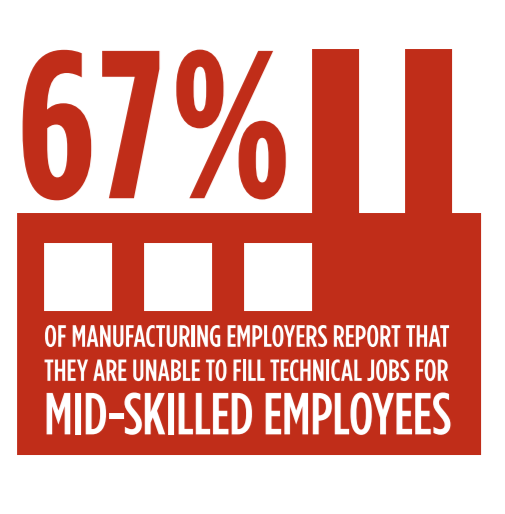
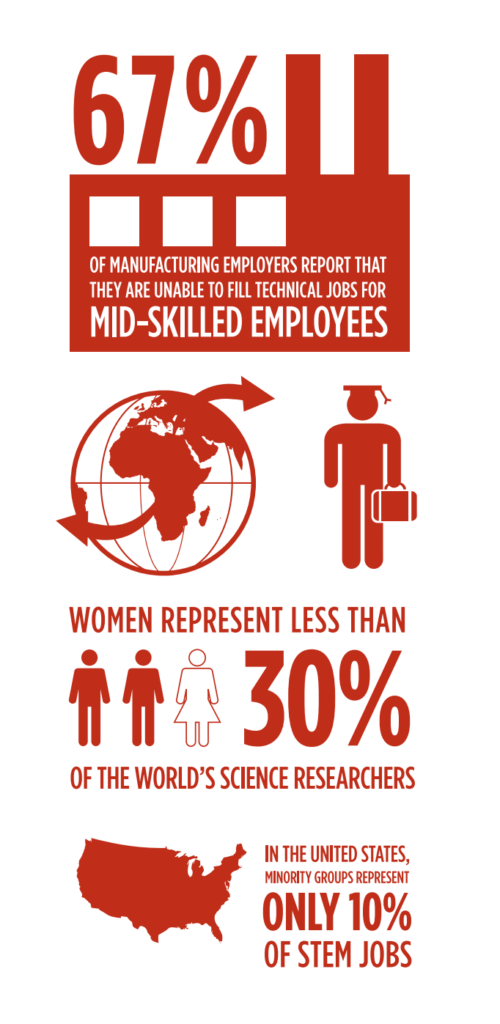
A graph showing 67% of manufacturing employers report that they are unable to fill technical jobs for mid-skilled employees.

This comprehensive report answers the recent paradoxical question: if we’re graduating record numbers of STEM students, why are STEM jobs still unfilled?

Published January 26, 2015

By Stacy-Ann Ashley

Today the New York Academy of Sciences (the Academy) released a new report, “The Global STEM Paradox,” in an effort to better define the state of science, technology, engineering and math (STEM) education and careers worldwide.

The report paints a shocking picture of the state of STEM education across the world: 67% of manufacturing employers in the United States report that they are unable to fill technical jobs for mid-skilled employees, while women represent less than 30% of the world’s science researchers. Furthermore, in the United States, people of color represent only 10% of STEM employees.

The Academy’s report demonstrates that while there are sufficient numbers of graduates in STEM, employers still report difficulty in filling STEM jobs – the global STEM paradox. The report identifies areas of concern that contribute to employers’ challenges: low numbers of graduates who have the skills needed to match actual job requirements, “brain drain” from developing countries, and the lack of women and people of color in STEM fields. The report also highlights a global disconnect between the developed and developing worlds, with mid and high-skill STEM jobs available in the Global South, but most of the candidates available to fill them living in the West.

“If we want to solve the global STEM paradox, we need to change the way we think about STEM education and careers worldwide, ” says Meghan Groome, PhD, Executive Director of Education at the Academy. “It’s not enough to churn out a small army of PhDs from our top institutions. We need a new class of skilled technicians, we need home-grown scientists in the developing world, and we need to make women and people of color feel welcome in STEM fields.”

Combatting the STEM Paradox

To combat the STEM paradox, the Academy recently launched the Global STEM Alliance of The New York Academy of Sciences (GSA), a worldwide partnership with governments, companies, NGOs, universities and schools to improve student access to STEM mentors and tools. At the UN in September, the GSA announced that it is investing millions of dollars in order to inspire over 1,000,000 children worldwide to become STEM leaders in more than 100 countries by 2020.

At the UN event, members of the Alliance proposed a solution to the STEM paradox: an ecosystem of government policies, strategic business incentives, and innovative Web-based and one-to-one and one-to-many mentoring approaches that, together, create the necessary incentives for students to seek, acquire, and employ STEM skills.

“In order to place STEM graduates in areas where they’ll be most effective, we need a global STEM ecosystem that can educate the next generation of STEM leaders to confront the biggest challenges of our time-climate change, malnutrition, global epidemics-through cross-generational, transnational collaboration,” says Groome.

The GSA launched with several Founding Partners: ARM, Cisco, and the Global Sustainability Foundation, as well as a group of Founding Nations and Regions, including Barcelona, Benin, Croatia, Malaysia, New York State, Rwanda, and the United States.

“We’re proud to have the support of esteemed dignitaries and business leaders on board with the Global STEM Alliance,” says Celina Morgan-Standard, Senior Vice President, Global Business Development, Global STEM Alliance. “With a ready and willing base of partners dedicated to building STEM skills and supporting global economic development, I have no doubt we can achieve our goals and solve the STEM paradox.”

Learn more about educational programming at the Academy.