Recognizing the STEM Teacher and Mentor of the Year

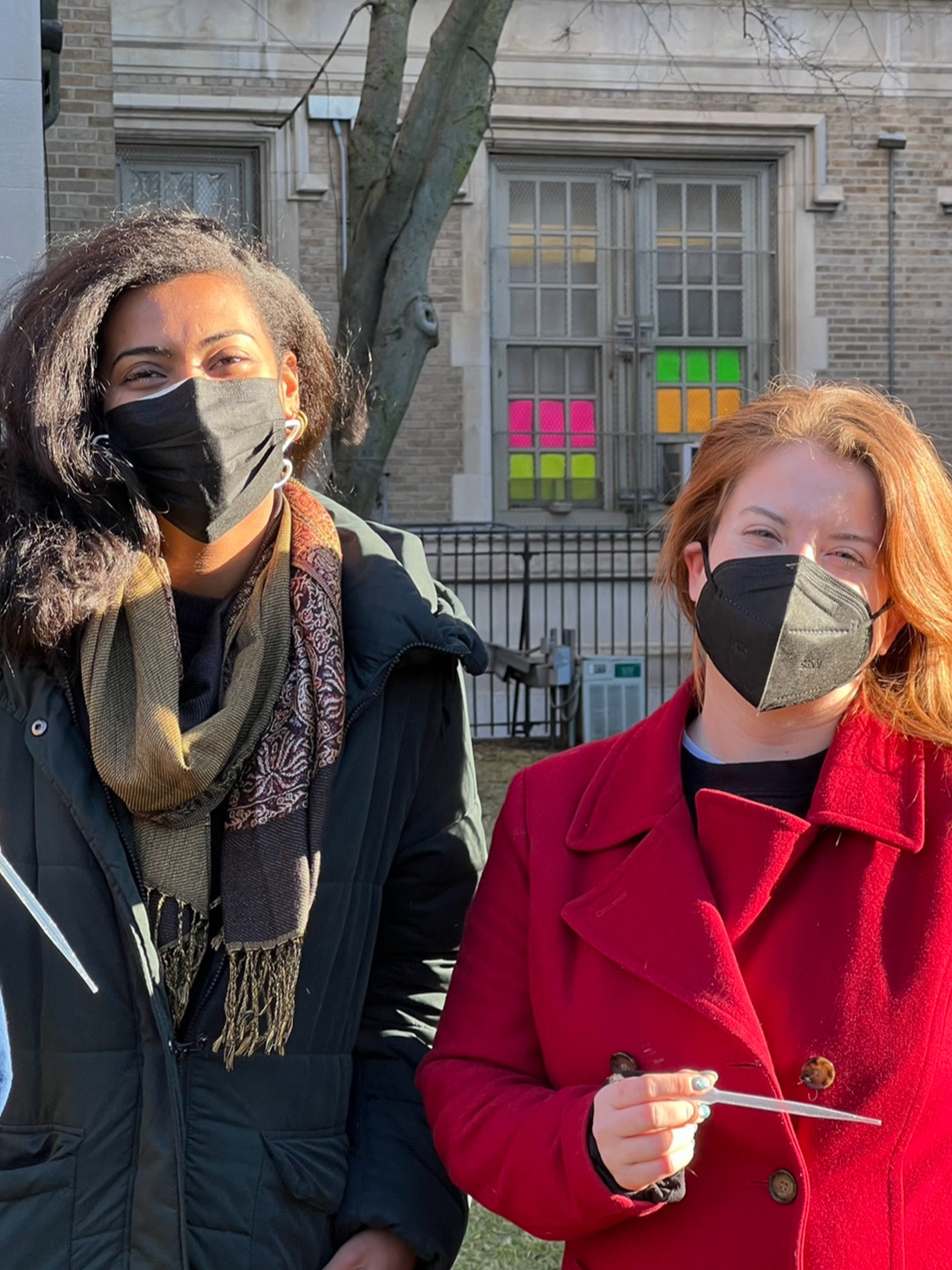
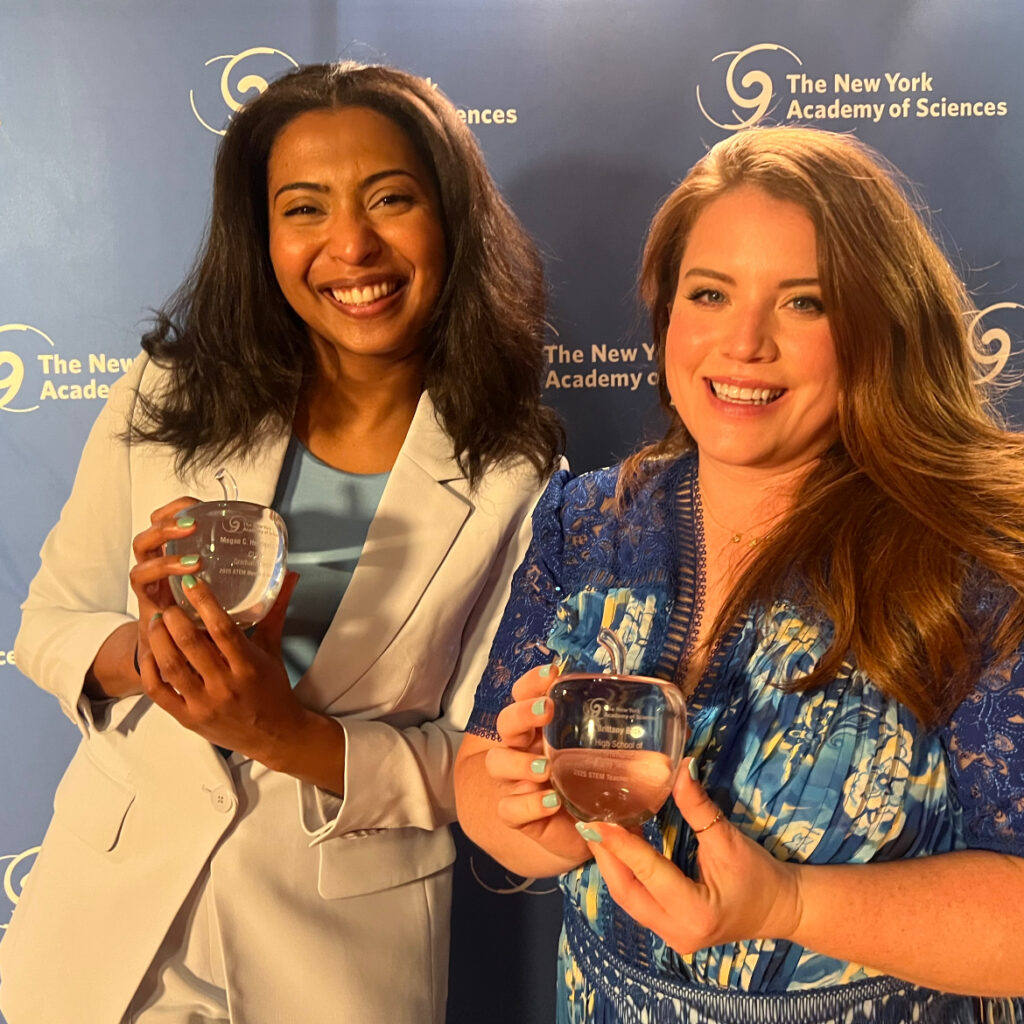
Two women pose with their awards trophies.

This year’s award-winning teacher-mentor duo has been inspiring young minds and promoting STEM education for three years. They were recently honored by The New York Academy of Sciences for their work.

Published April 30, 2025

By Brooke Elliott

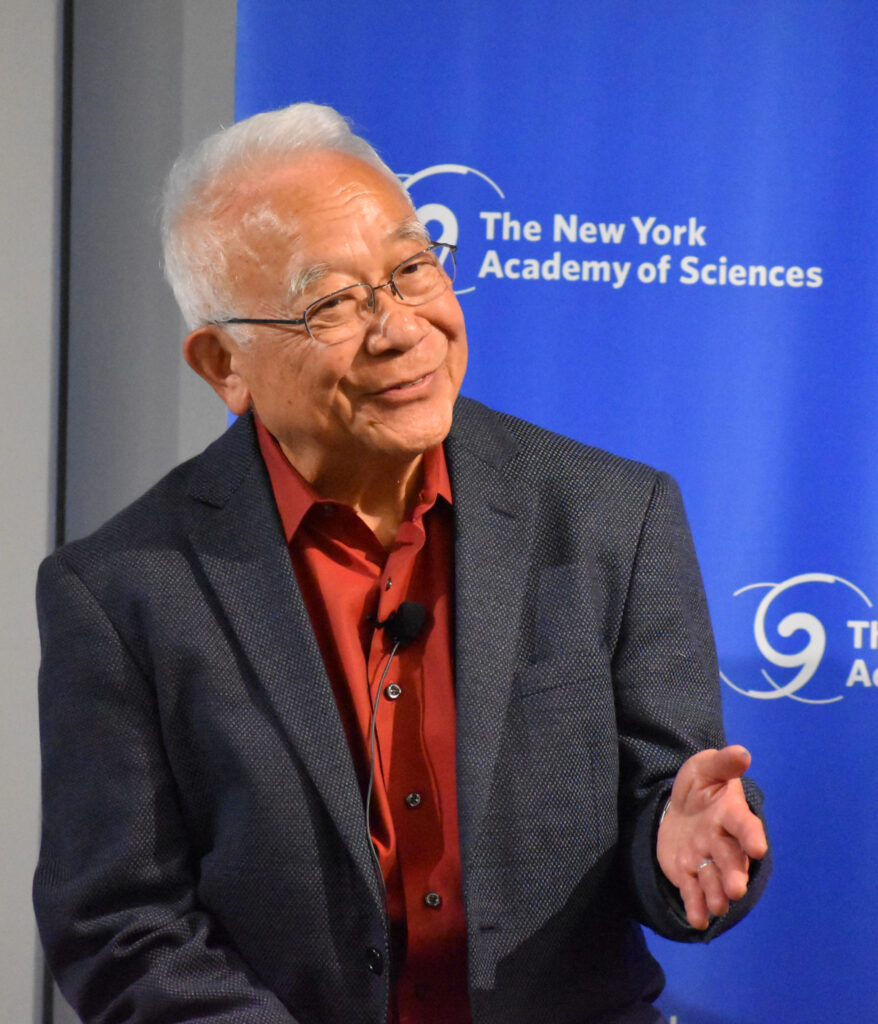
Megan C. Henriquez (left) and Brittany Beck pose with their awards during the Spring Soirée hosted at the University Club of New York on April 22, 2025.

The New York Academy of Sciences’ (the Academy’s) Scientist-in-Residence (SiR) program was proud to announce this year’s STEM Teacher of the Year: Brittany Beck, biology teacher at the High School of Telecommunication Arts and Technology; and Mentor of the Year: Megan C. Henriquez, who just defended her PhD in biological anthropology at the CUNY Graduate Center in April and will graduate in June.

A Queens native, Henriquez’s interest in STEM began when she was a kid. She remembers coming home from school and watching wildlife documentaries. “Those shows made studying wildlife seem so exciting and foreign, and yet so out of reach for a city kid like me” she recalled. “But through a network of mentorship and opportunity, I ended up becoming a wildlife ecologist doing field work in some of the most remote parts of the world.”

Brittany Beck grew up in rural Missouri. She completed her undergraduate degree in biology and her master’s in science education at Truman State University in Missouri. She has been teaching biology in NYC public schools for 14 years, with 13 of those years at the High School of Telecommunication Arts and Technology. Additionally, she serves as Coordinator of Student Activities, running the Student Government, managing over 30 clubs, and overseeing school events.

This is Beck’s fourth year as a teacher in the SiR program, working with scientists and building novel research projects with her students. Henriquez started working with the program about three years ago as a way to provide students with the same experiences and opportunities that inspired her interest in STEM in her youth.

Engaging Young Minds

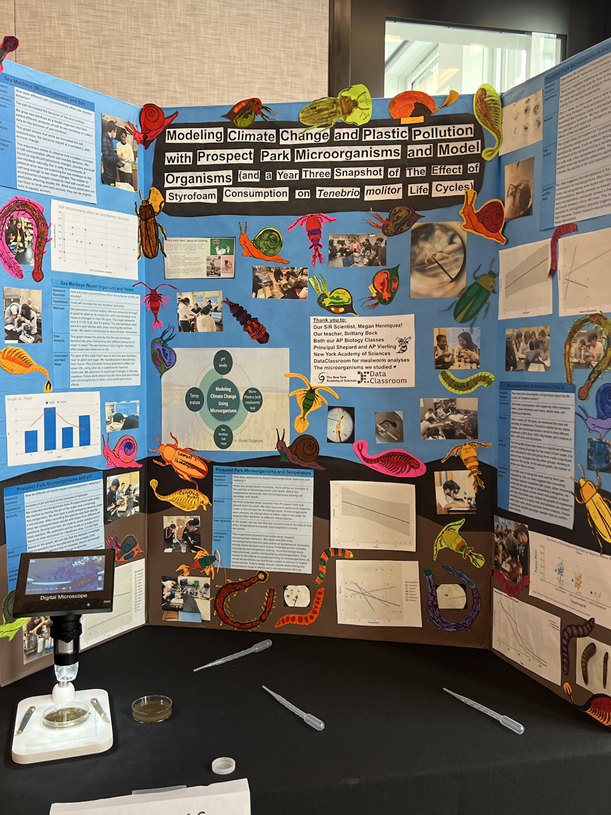
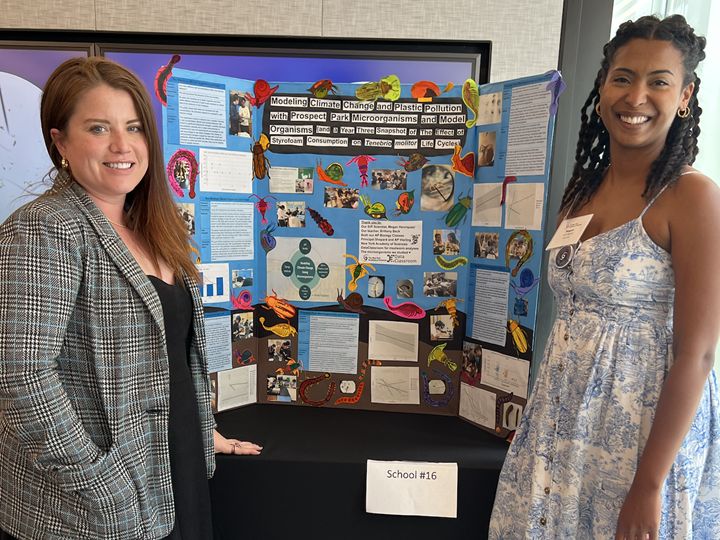
Beck considers herself both a scientist and a teacher. Before joining the Scientist-in-Residence program, she was a national Evolution Education fellow in a program where she developed live organism research experiments for her classes alongside scientists at the University of Virginia and the Mountain Lake Biological Station. During that program, she developed a protocol in which students spend a year caring for mealworms, pupae, and darkling beetles in different treatments of Styrofoam to see how these treatments affect their growth and development. When the formal evolution education program ended, she continued this important work with students through the Academy’s SiR program.
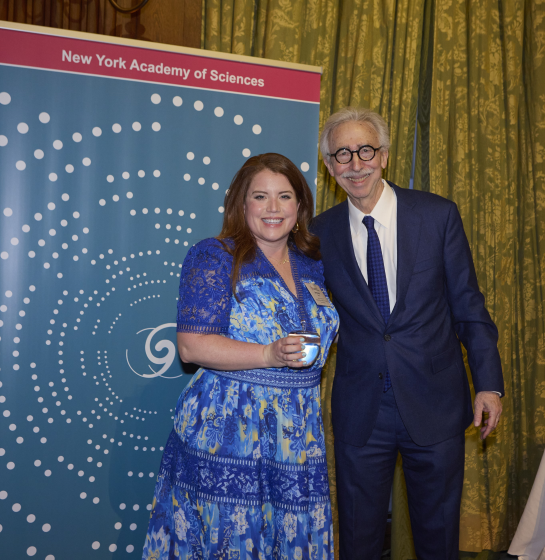
Brittany Beck poses with Nick Dirks, President and CEO of The New York Academy of Sciences, during the Spring Soirée hosted at the University Club of New York on April 22, 2025.

What makes Beck and Henriquez such a good team? Trust in not just each other, but in their students. The pair has always let students pick and develop their projects, come up with their research questions, design their experiments, collect data, and decide how they organize and visualize on their own. At times, this may also mean allowing them to learn from mistakes.

The “ABC+M Pedagogical” Model

In terms of teaching technique, Beck often cites the “ABC+M” pedagogical model, which was developed by Rhonda Bondie and Akane Zusho. It requires that all lessons should include an opportunity for student Autonomy and choice. Teachers should build classroom environments where students know they Belong. They should provide opportunities for students to build their Competence, and that all lessons should be Meaningful to students. The work that Beck and Henriquez do with their students exemplifies this thinking.

Henriquez began her work as a mentor for the Academy as a way to pay back the early help and inspiration she received from mentors. Her first experience doing any sort of field work or experimentation was in her high school AP biology class, which makes it all the more meaningful that she gets to work with Beck’s Advanced Placement (AP) Biology class.

This made such a lasting impression that she ended up pursuing a career in biology. “If I could inspire at least one other student to pursue a career in STEM by providing them with the opportunity to see themselves as creative, serious, and legitimate researchers, I feel as though I would have done my part,” she said, adding she feels her work with students makes her own research both more meaningful and impactful.

“I think it’s one thing to read about the scientific method in a textbook, and it’s a completely enhanced experience to go through the process yourself. To develop your research questions, learn about your study system, try something out, revise and draw conclusions,” said Henriquez. “It works a part of your brain that so many people don’t get the opportunity to access.”

Inspiration
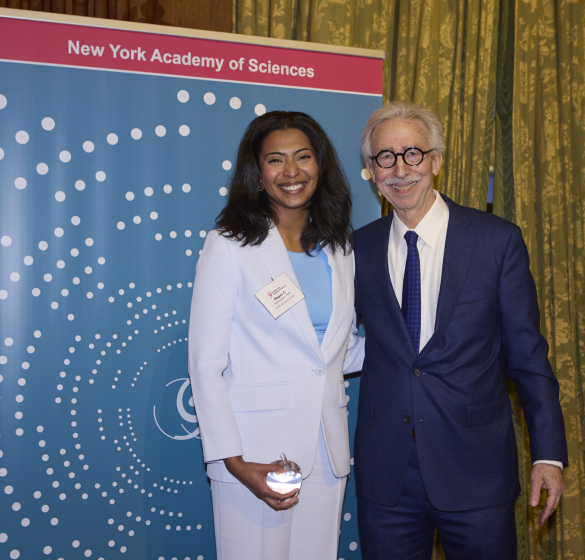
Megan C. Henriquez poses with Nick Dirks, President and CEO of The New York Academy of Sciences, during the Spring Soirée hosted at the University Club of New York on April 22, 2025.

Henriquez, who defended her PhD dissertation earlier in the month, feels the characteristics of a good mentor center around excitement and compassion. “No one is doing this for pay, so if you’re not going in excited about your work and what you’re going to share with your students, they’re going to sense that and not be excited either,” she said. She also loves providing interested students with additional opportunities. If a student is particularly interested in ecology fieldwork, she might find a program at the Bronx Zoo or the Junior Academy to keep the student engaged.

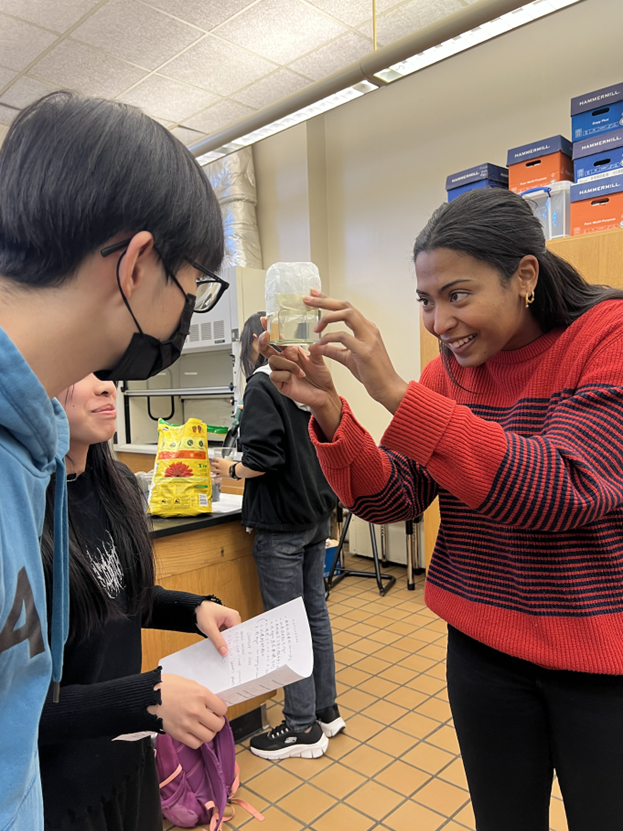
“Watching our SiR students make those connections and learn through experience has been one of the most rewarding parts of this program,” she continued, “Having students run up to us and say things like, ‘Look at what happened!’, ‘Look at how much our organisms have grown!’, ‘Our results are refuting or supporting our hypotheses!’ is just so exciting. Seeing them experience new things, overcome challenges, and grow confident in their skills and their problem-solving abilities has been amazing and so rewarding.”

Improvisation

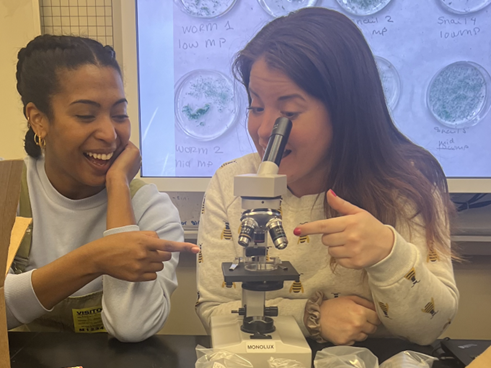
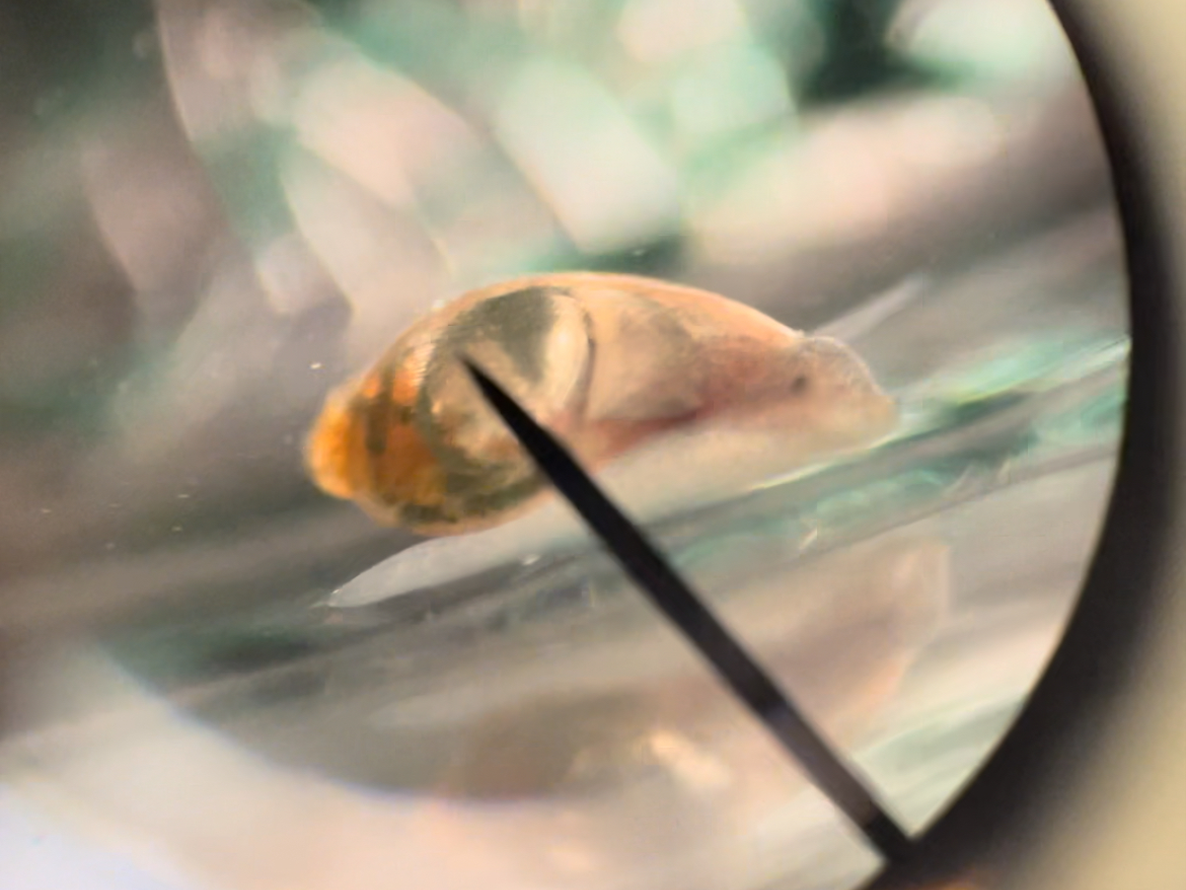
Being able to improvise is another important skill for the mentor and teacher team. “A memory that sticks out is how, during Megan’s and my second year, we had collected water from a local pond and were unsure if we would be able to keep the microorganisms within the water alive. We not only kept them alive, but we also discovered a colony of snail eggs had hatched and grew and which our students then did microplastics experiments on,” Beck recalls.

“There hasn’t been one visit where we haven’t laughed together or enthusiastically yelled about the progress of a group’s experimental organisms. The sea monkeys, the pitcher plants, the butterflies, and especially the snails. We like to challenge ourselves as well as the students, and each year we add a level of complexity to the experimental process,” Beck added.
A Celebration of Hard Work

Beck feels the Scientist-in-Residence program has strengthened her students’ scientific identity, and graduates have told her they have notably more experience in lab skills than their peers in college, especially in designing laboratory protocols. “My students love it when Megan comes in, and they have a deep sense of ownership over their experimental ‘babies,’ whether they are plants, microorganisms, or bugs,” Beck said.

The duo were formally honored for their hard work during the Academy’s Spring Soirée which took place at the University Club of New York on April 22. When she heard she was named Mentor of the Year, Henriquez said she was in disbelief. From “early mornings jumping fences to get pond water to late nights setting up pitfall traps to catch bugs,” Henriquez feels good that her hard work is acknowledged.

Likewise, when Beck heard the news, she was at the National Science Teachers Association national conference in Philadelphia. “I whooped out loud in the busy exhibit hall and immediately called Megan, and we got to celebrate together,” she said with a laugh.

Learn more about the Academy’s Scientist- in-Residence program.
The Junior Academy’s Impact on an Aspiring Engineer

A woman smiles for the camera.

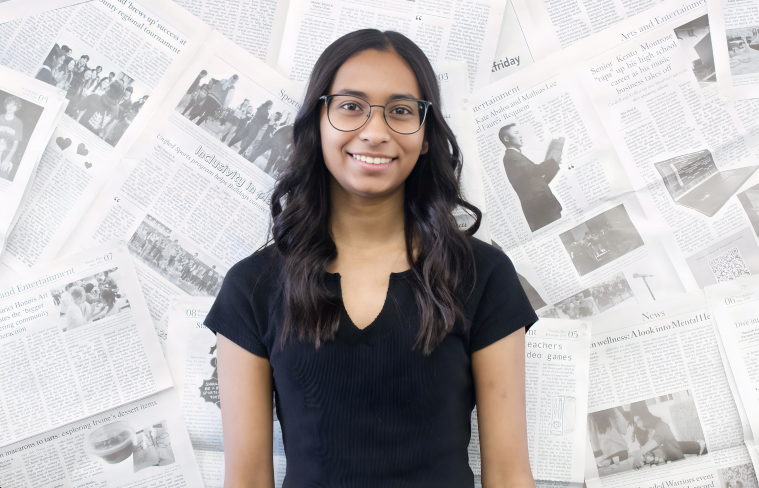
Ruhi Samudra is a high school senior in Irvine, California. She was involved in the Junior Academy, igniting her passion for environmental science and inspiring her to start her science website, Bubbles & Beakers. She is starting at UC Berkeley this fall as a Bioengineering Major.

Published April 25, 2025

By Brooke Elliott

Ruhi Samudra

Ruhi Samudra’s interest in STEM first began in eighth grade when she took part in her middle school’s Science Olympiad. Samudra tried out for the team and competed in the five main categories: Reach for the Stars, Water Quality, Dynamic Planet, Meteorology, and Rocks and Minerals. The events focused on environmental science, and though this wasn’t her initial interest, she and her team did well–advancing to regionals and placing second at nationals. “This (experience) gave me the motivation and encouragement to engage in science out of pure interest, way above the standard that was being taught in school,” Samudra said in reflection.

The Junior Academy

After her Science Olympiad season ended, Samudra learned about The New York Academy of Science’s Junior Academy. “It was a way for me to take what I learned at Science Olympiad to a larger and more research-oriented level,” she said.

Samudra knew science opportunities for high school underclassmen were relatively limited. She also had the misconception that most professional scientists are not willing to take a risk and work with high school students on a project. Being a member of the Junior Academy provided access to a global network of professionals and like-minded students around the world, jumpstarting her career. As part of the Academy, Samudra participated in The Flexible Use of Electricity, the Restoration of Aquatic Ecosystems, and Exploring the Extremes Challenge. Out of everything she did, the aquatic ecosystems challenge was her favorite because it fit well with what she had learned during the Science Olympiad program.

Mentors-Peer and Professional

As a participant in the Junior Academy, Samudra met like-minded peers from all over the world representing a disparate population of cultures and beliefs. This made for thought-provoking video calls and learning about new ways to approach science. She looked up to the upperclassmen of her cohort, “They really guided me because I was new to the research process, and they made sure everyone’s ideas were heard,” she said.

Samudra’s virtual colleagues provided practical direction on how to run a research project, as well as high school life in general. Hearing advice from students only a couple of years older than herself, but already years ahead on their science research journeys, provided both inspiration and encouragement.

The professional mentors at the Academy helped Samudra in a different way. From her perspective, what makes a good mentor is the ability to encourage students to question what they think they know. Considering all ramifications and considerations of a potential project is an important skill that she took with her throughout high school. “You have to struggle with the idea of trying to find something that you may think is perfect, but knowing that nothing is ever really a perfect pitch,” she explained.

Bubbles & Beakers

All of this led her to start her own scientific website: Bubbles & Beakers. With an interest in advocacy and communications, Samudra learned how to write, interview, and produce videos about science. This passion project quickly grew. “I write when I feel inspired or excited by something in the scientific community. I know I want to continue this path of scientific journalism when I’m in college.” Whether it’s writing for the Berkeley Engineering Magazine or the Daily Californian, she plans to incorporate her passion for writing in her college life.

“The Junior Academy really showed me the process of creating a methodology, research questions, testing it, and analyzing the results. I took that with me for all the other conferences and research I’ve done since,” she said.

To jump-start her career path in scientific journalism, Samudra serves as co-editor-in-chief of her high school newspaper and president of the Model UN and the Biomedical Engineering Society.  A lover of the outdoors, she frequently hikes, swims, and bikes.

The Junior Academy is now accepting applications for Fall 2025. Apply today!

Doomers, Bloomers, and Zoomers: Clinton & Hoffman Weigh in on AI’s Future

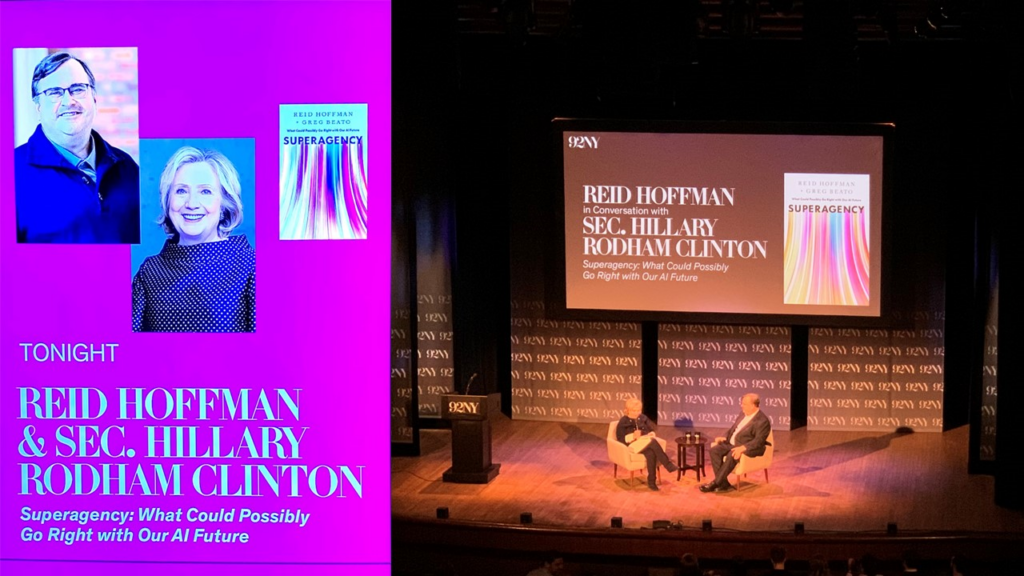
Two individuals on a stage during a book event in NYC.

Where do you stand on AI—optimist or skeptic? A high-stakes conversation on AI’s promise, risks, and the global race for leadership in this game-changing technology.

Published January 31, 2025

By Brooke Grindlinger, PhD

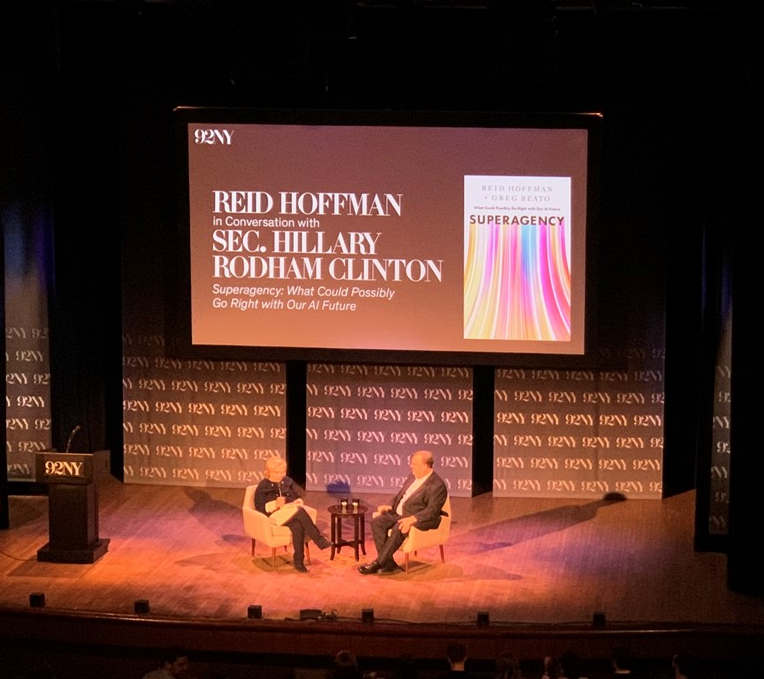
LinkedIn co-founder and bestselling author Reid Hoffman (right) in conversation with former Secretary of State Hillary Rodham Clinton (left) at 92NY in New York City on January 28, 2025, discussing his new book Superagency: What Could Possibly Go Right with Our AI Future.

The emergence of artificial intelligence (AI) is reshaping nearly every aspect of human life. From medicine to transportation, education to industry, AI is not just a tool; it’s an evolving partner in human progress. But what does this transformation mean for individuals, society, and the growing geopolitical tensions between nations vying for dominance in AI technology? These questions were at the heart of a recent conversation between former US Secretary of State Hillary Rodham Clinton and Reid Hoffman, co-founder of LinkedIn and co-author—with tech writer Greg Beato—of the new book Superagency: What Could Possibly Go Right with Our AI Future.

At its core, Superagency presents an optimistic vision of AI as a general-purpose technology that amplifies human agency. This concept was brought to life for the evening’s audience through a video appearance by Reid AI—Hoffman’s digital twin—who, with the enthusiasm of a tireless press agent, championed Superagency and its vision. “Superagency describes not only how we as individuals get these superpowers from technology, but also how we benefit from a society in which millions of others have these superpowers.” This perspective challenges alarmist narratives around AI, instead framing it as a transformative force, much like past technological revolutions such as the printing press and the automobile.

AI as an Opportunity: Learning from the Past

History teaches us that every major technological advancement—from the steam engine to the internet—has been met with both excitement and trepidation. AI is no different. Hoffman pointed out that skepticism surrounding AI today mirrors historical anxieties: “When, for example, you go back to the printing press, the dialogue around the printing press was actually very similar to the dialogue around AI. It was things like ‘This will spread a lot of misinformation. This will destroy our institutions and our ability to discern truth.’” And yet, despite the upheavals they caused, these innovations propelled society forward. The challenge, Hoffman argues, is to navigate AI’s development thoughtfully, ensuring its benefits reach the many rather than the few.

The AI Spectrum: Doomers, Gloomers, Bloomers, and Zoomers

In Superagency, Hoffman describes a spectrum of attitudes toward AI. On one end are the Doomers, who believe AI is an existential threat that could bring about catastrophic consequences. Next are the Gloomers, who are skeptical and advocate for stringent regulatory controls but stop short of outright rejection. The Zoomers, by contrast, are those who champion rapid AI expansion without much concern for potential risks and are often anti-regulation. Finally, Hoffman identifies himself among the Bloomers, a group that believes AI, when properly guided by intelligent risk management, can be an overwhelmingly positive force for humanity. “One of the things that we argue for, as part of the case for optimism—being Bloomers—is to say you don’t expect perfection in the beginning,” Hoffman explained.

During their conversation, Hoffman asked Secretary Clinton where she saw herself on this spectrum. Her response was thoughtful: “Well, I think I’m a Boomer who is somewhere between a Bloomer and a Gloomer, because on the one hand, I really appreciate the optimism. I find that very attractive. We should learn as we do, learn as we go, make adjustments…Although I do worry about all the people who don’t see the curb and drive off over the cliff.” Her remark underscores the need for both enthusiasm and caution—embracing AI’s potential while ensuring that adequate safeguards are in place to prevent harm. Clinton continued, “We know a lot now. We don’t know anywhere near what we’re going to know, and maybe there are some kinds of guardrails that we would want without losing the optimism, because I want this country to dominate AI.”

Guardrails for Progress: The Role of Regulation

While AI’s potential is vast, so are the risks. Secretary Clinton raised a crucial concern: “If you look at the aggregate, is it going to be more difficult, given our political and social and economic environment, to say, ‘Hey, wait a minute, we’ve learned enough that maybe we should put on this guardrail. Maybe this should be a certain standard we try to meet.’”

Hoffman acknowledged the difficulty of balancing innovation with regulation but emphasized that responsible AI development requires ongoing assessment rather than outright restriction. “The attempt to hold any kind of large system to zero error is an attempt to stop the future,” he noted. Instead, he advocates for an iterative approach—adjusting regulations as AI evolves, rather than stalling progress in the name of perfection.

Hoffman compared this process to the development of the automobile. Early cars lacked essential safety features, but over time, society introduced refinements—first bumpers, then seatbelts, then airbags—to make vehicles safer without halting progress. We have to start driving before we realize what safeguards we need. AI, he argued, should follow the same evolutionary path, improving with real-world use and responsive adjustments.

The Global AI Race: Maintaining US Leadership

One of the most urgent topics in the conversation was the global competition in AI development, particularly between the United States and China. Secretary Clinton emphasized that the US cannot afford to fall behind: “I do worry that if we don’t have an optimistic, full speed ahead approach to it, that we will get outmaneuvered, that we will find ourselves in a subordinate position and that subordinate position could be one of great risk and potential danger. I still would rather have us struggling to try to make the right decisions than seeding ground to rogue states, to highly organized states, to criminal organizations, to rogue technologists.”

Hoffman echoed this sentiment, stressing that America’s strength lies in its innovative culture and entrepreneurial spirit. “We do it by the American entrepreneurial networks and the creativity, but we have to go at that, and we have to be saying that’s what we want.”

Recent developments highlight the stakes of this competition. Just days before this conversation, Chinese AI company DeepSeek made headlines with its advancements in large language models, demonstrating China’s accelerating capabilities in AI development. The rise of DeepSeek underscores the urgency for the US to not only invest in cutting-edge AI research but also establish ethical frameworks that ensure responsible deployment of the technology. This competition is not just about economic dominance; it’s about setting standards for ethical AI use worldwide. The key to maintaining leadership, Hoffman argued, is to ensure that AI development remains aligned with democratic values and responsible governance. If the US leads with innovation and responsibility, it can shape AI’s trajectory for the benefit of society at large.

AI as a Catalyst for Global Stability

Beyond economic and technological dominance, AI could play a significant role in shaping global stability. Hoffman suggested that AI-driven economic and educational advancements could reduce geopolitical tensions by fostering growth in underdeveloped regions. “When people think their future is likely to be better than their present, in terms of building things, they tend to go to war less,” he noted. If AI can be harnessed to improve healthcare, education, and job opportunities in struggling economies, it has the potential to serve as a stabilizing force rather than a disruptive one. This approach shifts the conversation from AI as a competition to AI as a tool for global peace and cooperation.

In contrast, during the discussion, an audience member raised concerns about AI’s potential use in warfare. Secretary Clinton acknowledged the risks, stating, “A lot of weapons of war are becoming more and more autonomous. And so we’re going to see all kinds of very dangerous weapons in the hands of all kinds of people that may or may not have the values that they should to be entrusted with that kind of destruction.” Hoffman reinforced this point, cautioning that AI’s offensive capabilities could be destabilizing: “One of the challenges with AI is that it’s inherently a little bit more of an offensive weapon and has the tendency to say ‘use it or lose your advantage’”, which is most worrisome in terms of a potential arms race dynamic. The exchange highlighted the delicate balance of leveraging AI for progress while preventing its potential misuse in global conflicts.

A Call to be AI “Curious”

As AI continues to evolve, engagement and understanding are critical. Rather than passively observing its impact, scientists, policymakers, and the public must take an active role in shaping AI’s future. As Hoffman puts it: “Move to being AI curious. It doesn’t matter if you are also at the same time AI uncertain, AI skeptical, AI fearful—but add AI curiosity into it.” The AI revolution is here. The question is not whether AI will change our world, but how we choose to participate and shape that change. By fostering curiosity, implementing smart regulations, and ensuring equitable opportunities, we can make AI a tool for empowerment rather than disruption.

For those eager to deepen their understanding of AI technologies in the healthcare sector, including leveraging AI for drug discovery, medical imaging, mental health, equity, and affordability, we invite you to join us at the HealthNext AI Summit 2025, March 3-4, 2025 in New York City. Register now with promo code HLTHNXTNYAS for 10% off!

Interested in hearing more from Reid Hoffman? Tune in to Hoffman’s March 2024 conversation with Academy President and CEO Nicholas Dirks about Hoffman‘s prior book, ‘Impromptu: Amplifying Our Humanity Through AI‘. Available On-Demand until March 27, 2025.

Deepfakes and Democracy in the Digital Age

A woman presents during a panel event.

Combatting misinformation in the 2024 U.S. Presidential Election is crucial to ensuring democracy. It falls to science to address this challenge.

Published October 8, 2024

By Nick Fetty

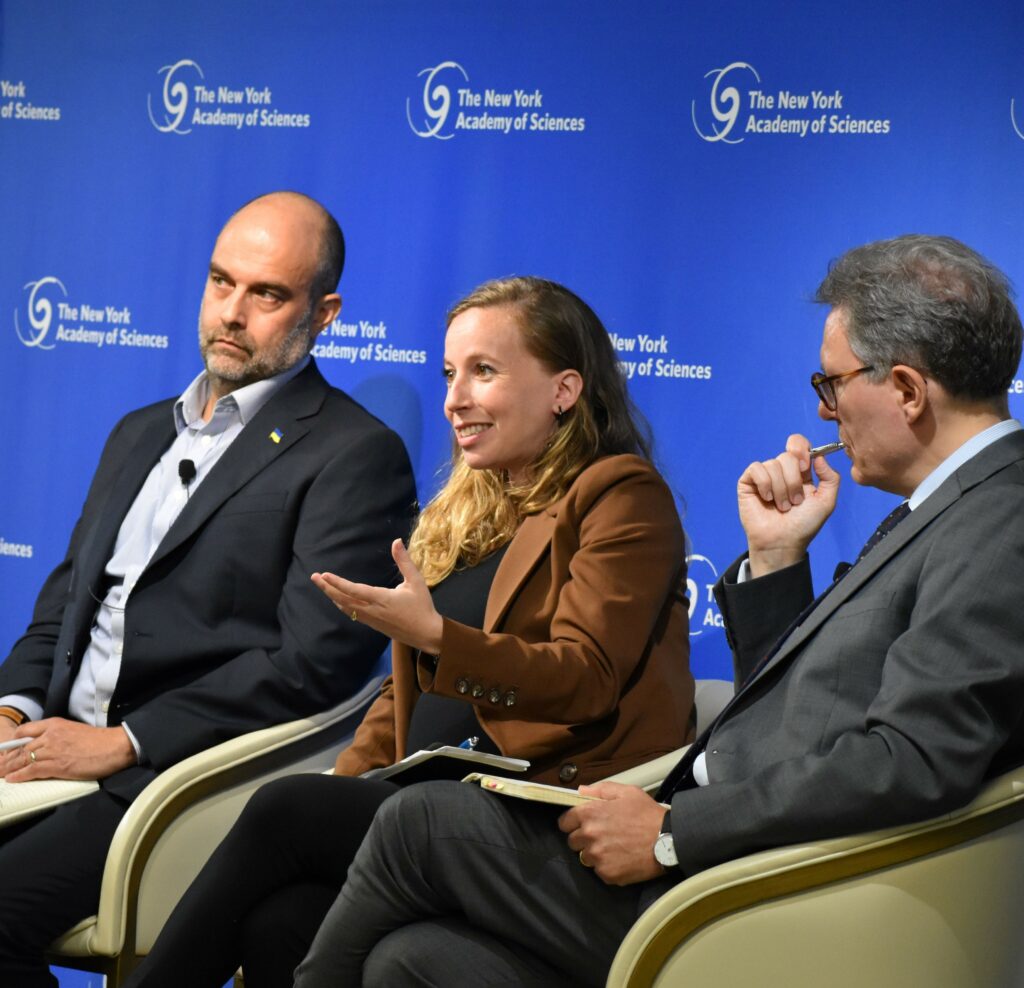
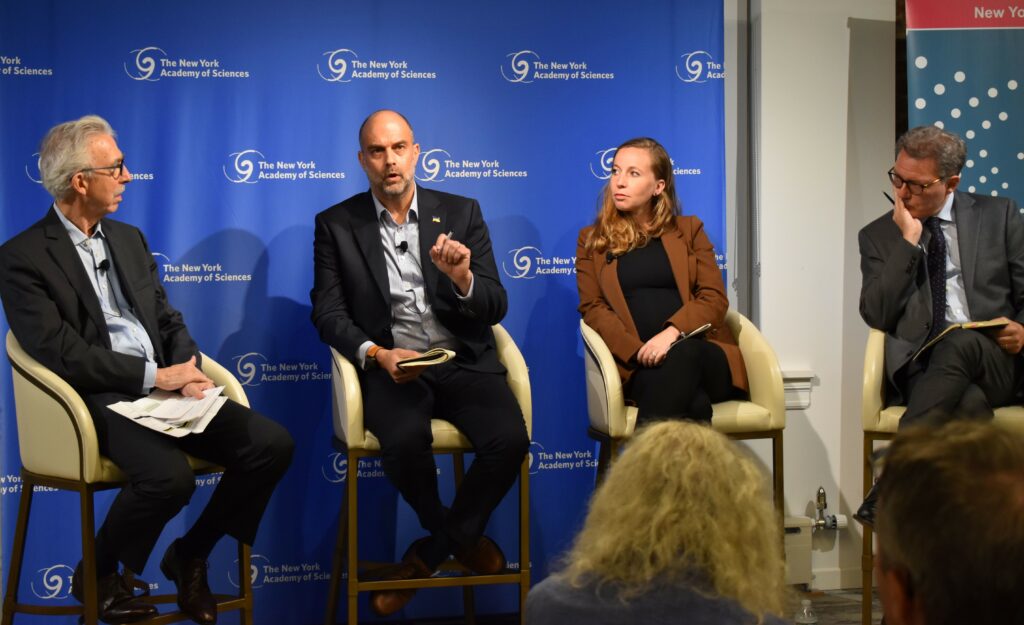
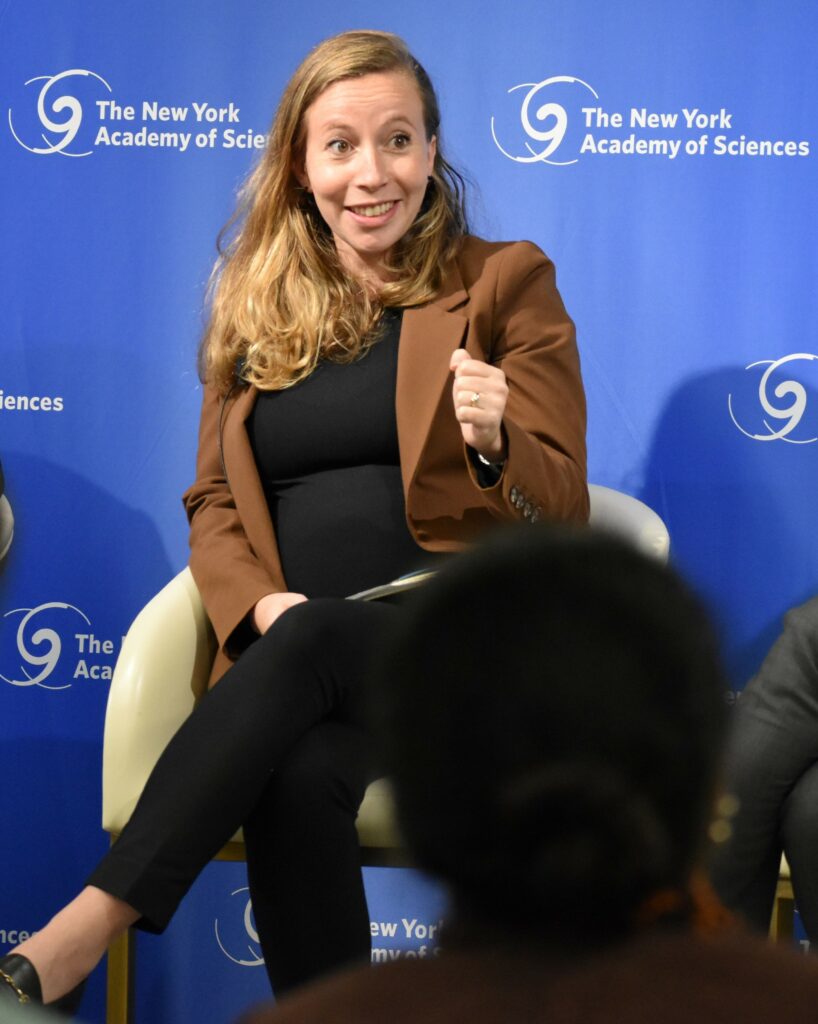
From left: Nicholas Dirks; Joshua Tucker, PhD, Maya Kornberg, PhD; and Luciano Floridi, PhD. Photo by Nick Fetty/The New York Academy of Sciences.

The complexities of artificial intelligence were discussed during the Deepfakes and Democracy in the Age of AI event, presented by The New York Academy of Sciences and Cure on September 17, 2024.

Seema Kumar, Chief Executive Officer of Cure, a healthcare innovation campus in New York City, set the stage for the discussion by emphasizing the impact of AI on healthcare. She cited a survey of nearly 2000 physicians who expressed concern about changes in behavior they’ve observed in patients as we move into a more digital age.

Nicholas Dirks. Photo by Nick Fetty/The New York Academy of Sciences.

“Patients are coming to them with misinformation and they’re not trusting physicians when physicians correct them,” said Kumar, who also serves on the Academy’s Board of Governors. “In healthcare, too, this is becoming an issue we have to tackle and address.”

Nicholas Dirks, president and CEO of the Academy introduced the panel of experts:

  • Luciano Floridi, PhD: Founding Director of the Digital Ethics Center and Professor in the Practice in the Cognitive Science Program at Yale University. His expertise covers the ethics and philosophy of AI.
  • Maya Kornberg, PhD: Senior Research Fellow and Manager, Elections & Government, at NYU Law’s Brennan Center for Justice. She leads work around information and misinformation in politics, congress, and political violence.
  • Joshua Tucker, PhD: Professor of Politics, Director of the Jordan Center for the Advanced Study of Russia, and Co-Director of the NYU Center for Social Media and Politics. His recent work has focused on social media and politics.

The Role of Deepfakes

Professor Tucker suggested that research can be an effective way to better protect information integrity.

“The question is, and I don’t know the answer to this yet, but this is something we want to get at with research,” he said. “Is there a meaningful difference across modes of communication?” adding that modes include text, images, and video.

Professor Tucker argued that the most impactful video so far in this U.S. election cycle wasn’t a deepfake at all. Instead, it was the unedited footage of President Joe Biden’s performance in the debate on June 27, 2024.

Not A New Phenomenon

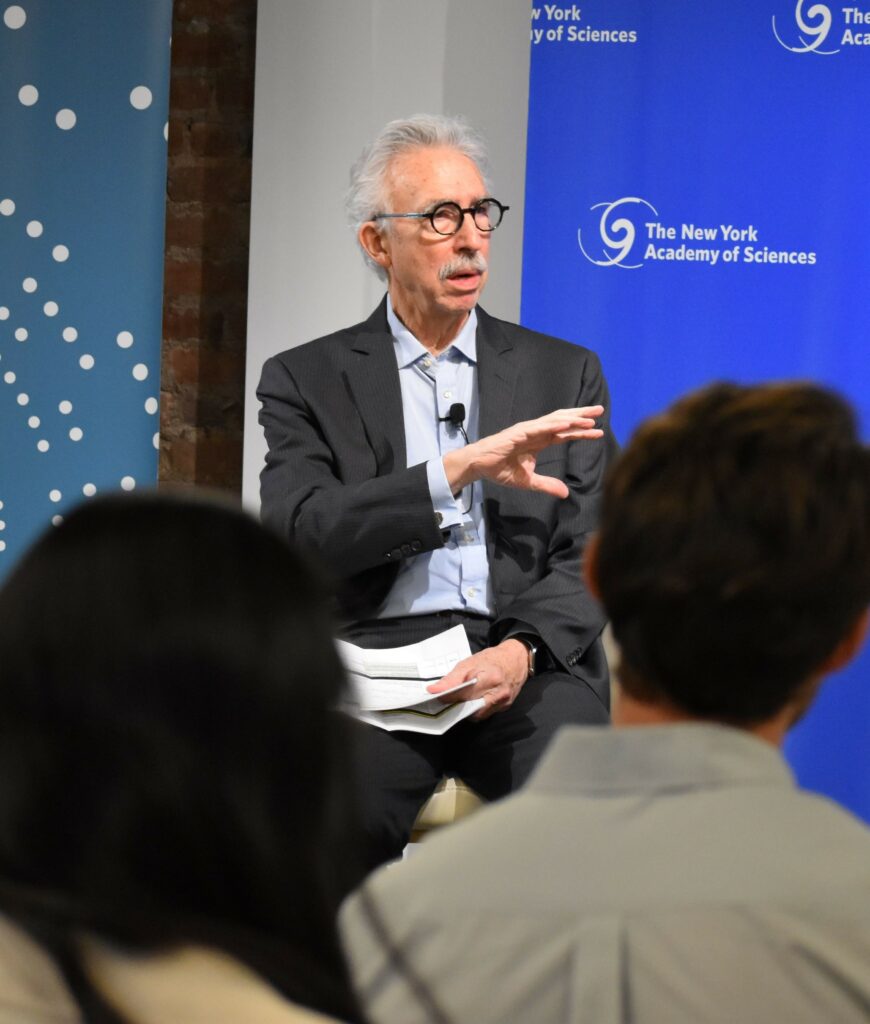
Luciano Floridi, PhD. Photo by Nick Fetty/The New York Academy of Sciences.

Dr. Kornberg agreed that misinformation is not a new phenomenon. However, she does recognize that because of the often-realistic nature of deepfakes, it may be more difficult for people today to differentiate fact from fiction. The lack of regulation in the tech sector in this regard further complicates the issue. She posed the example of an AI generated phone call impersonating an election official sent to misinform potential voters.

“It can be difficult to determine if this is a real call or a fake call,” said Dr. Kornberg. “It’s extremely important, I think, as a society for us to be doubling down in civic listening and civic training programs.”

The ease of producing realistic AI-generated content is also contributing to the issue, according to Professor Floridi. He cautioned that media can become so oversaturated with this content, that consumers begin questioning the legitimacy of everything.

Professor Floridi cited a research project that he and his team are currently working on with the Wikimedia Foundation. The team hopes to release their findings prior to the U.S. election, but at this point, they have not observed anything particularly worrisome in terms of deepfakes.

Maya Kornberg, PhD. Photo by Nick Fetty/The New York Academy of Sciences

“What we do see is call it ‘shallowfakes.’ The tiny little change [to otherwise authentic content],” Professor Floridi said. He added that these “shallowfakes” can almost be more dangerous than deepfakes because the slight manipulations are generally less obvious.

The Issue of Credibility

Dirks then shifted the focus of the conversation to credibility. With first order effects, a person sees something untrue, then forms an opinion based on that misinformation. Dirks invited Professor Tucker to talk about his research on second order effects, in which the political consequences can be more salient and destabilizing.

Professor Tucker and his lab studied the Russian misinformation on Twitter during the 2016 U.S. Presidential Election. However, counter to popular belief, the researchers did not observe a significant correlation to indicate that exposure to such misinformation influenced American voter opinion.

“Yet, we spent years talking about how the Russians were able to change the outcomes of the election. It was a convenient narrative,” said Professor Tucker. “But it worried me. And I wondered for a long time after this, did that sow the seeds of doubt in people’s minds?”

With the current hype surrounding generative AI as we enter the 2024 election, Professor Tucker expressed concern that it can be a new tool to further spread misinformation.

Combatting Voter Suppression

Dr. Kornberg and her colleagues at the Brennan Center study the impact of voter suppression efforts. The researchers are studying ways to debunk, or “pre-bunk,” certain misconceptions that may be on the minds of voters. She said that purveyors of misinformation deliberately focus on simple themes like malfunctioning voter machines, distrust of election officials, and dead people voting.

Joshua Tucker, PhD. Photo by Nick Fetty/The New York Academy of Sciences.

“We saw that in 2020. We saw that in 2022. There’s a lot of reason to believe we’re going to see that in 2024,” said Dr. Kornberg. “So, we’re working to proactively get resources out to election administrators [so they can better counteract these threats].”

She cited the role of AI in further amplifying misinformation, which will make deciphering fact from fiction even more difficult for the average voter. Dr. Kornberg and her colleagues aim to get ahead of these issues by offering training and other resources for election administrators. She also advocates for experts with technical expertise in AI to advise local election official offices, municipalities, state legislatures and even congress.

“There’s a lot of demystifying for the workers themselves that we’re trying to do with our trainings about how to deal with AI,” said Dr. Kornberg. “This will help us to come up with some intelligent and timely solutions about how to combat this.”

Academy members can access an on-demand video recording of the event. Click here to listen to or watch the full conversation.

Not a member? Sign up today.

Ready, Set, Respond: How Playing an Outbreak Simulation Game Helps Scientists Prepare for the Next Pandemic

A black and white headshot of a woman.

The International Science Reserve’s new “serious game” puts players in the hot seat to test their decision-making skills.

Published October 3, 2024

By Mila Rosenthal, PhD

Since COVID-19 hit in 2020, there have been hundreds of articles in journals and mainstream news outlets analyzing the shortcomings in the global response to the pandemic, and how we can learn from our collective mistakes. One of those articles last year, an op-Ed by Bill Gates for The New York Times, called on the world to think about what we can do now to better prepare the world for future outbreaks.  

His advice? Prepare for outbreaks like firefighters tackle blazes: run drills, have dedicated teams of volunteers on standby, and build on existing expertise across institutions and specialties. The International Science Reserve (ISR), an initiative of The New York Academy of Sciences, has been working to build this exact model.

We have spent the last few years cultivating a reserve of over 11,000 scientists across 100 countries in nearly three dozen specialties who want to prepare and act when the next big crisis hits. We support them for future crises by building tools that break down borders and help them collaborate before the fire starts.

Gaming for Good

This August, we proudly launched a new digital game that simulates a pathogen outbreak, just like a fire drill. The Pathogen Outbreak Game, available with free membership to the ISR, puts our network in the hot seat. In the game scenario, players act as a public health director as an unknown pathogen emerges. The game asks you to consider: What would you do differently if we experienced a crisis of the same scale and scope? What decisions would you make if you could call the shots during the next pandemic?

“The Pathogen Outbreak Game offers a compelling exploration of crisis management, challenging me to think critically, much like real-world situations.”

Hazm Talab, ISR Community Member

Developed in partnership with the Center for Advanced Preparedness and Threat Response Simulation (CAPTRS), the game challenges players to navigate an evolving, hypothetical public health crisis, evaluating new information that is shared as the game progresses. When a crisis hits, there are complex decisions that leaders must make to protect people and reduce the impact on society and the environment. To simulate real-world situations, players are presented with dynamic information and surveillance data about an unknown pathogen outbreak.

In a series of game rounds, players are asked to practice their decision-making skills using data to identify outbreak trends and better prepare for and reduce the public health threat. This trailer demonstrates the basics of the Pathogen Outbreak Game:

The Next Pandemic and Building a “Culture of Readiness”

So, why games? Our research found that simulating real-life scenarios or drills can improve the capacity to collaborate, communicate, and make informed decisions in high-pressure crisis situations. Gamification also makes the experience of learning crisis preparedness skills more engaging for participants, encouraging wider participation and contributing towards a culture of readiness.

“I learned the importance of carefully evaluating the credibility of information before making decisions. The game highlighted how my conclusions could change drastically based on the reliability of the sources, demonstrating the critical need to assess information accurately to identify the correct virus.”

Yury Lebedev, ISR Community Member

Our gamification-related literature review found that points, badges, and leadership boards are the best way to turn these drills into games. After they complete the game exercise, players are then encouraged to discuss their experiences with fellow scientists and experts in the ISR’s network and promote their achievements through digital badging on social media.

We do not know when another outbreak will happen, so in the meantime we need to quickly learn and grow from our mistakes, and better collaborate across disciplines and borders to save lives and reduce harm. The digital pathogen game can help build a “culture of readiness” and accustom policymakers to assessing different sources of scientific information to make decisions. It can also help scientists explore how their research could be prioritized and adapted when most needed. Together, we could build a more resilient future, one game at a time.

Are You Ready for the Challenge?

Ready to jump in? Then join us and play the ISR’s new Pathogen Outbreak Game! Earn badges, climb the leaderboard, and be recognized as a top player and top contributor in a global scientific community.  

Not a member of this inclusive and impactful community? Join the ISR today.

The New Age of the United States of Science

A man presents during a panel event.

Scientists, engineers, educators, policymakers, and the public must work together to ensure the United States remains globally competitive.

Published September 23, 2024

By Nick Fetty

Photo by Nick Fetty/The New York Academy of Sciences.

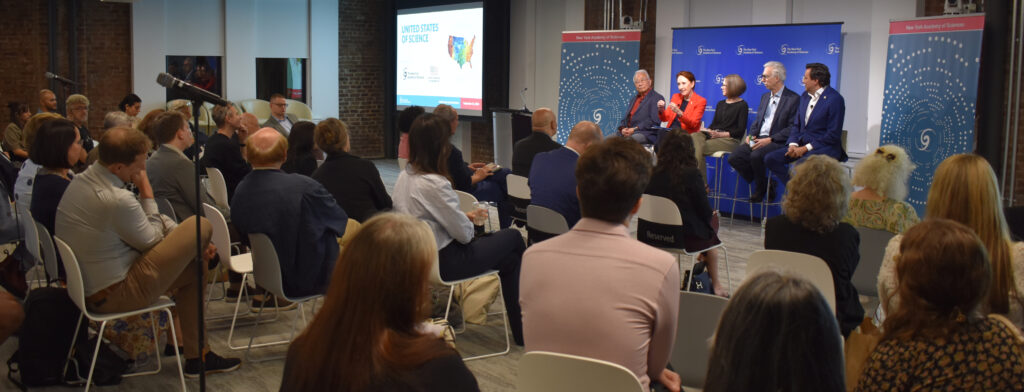
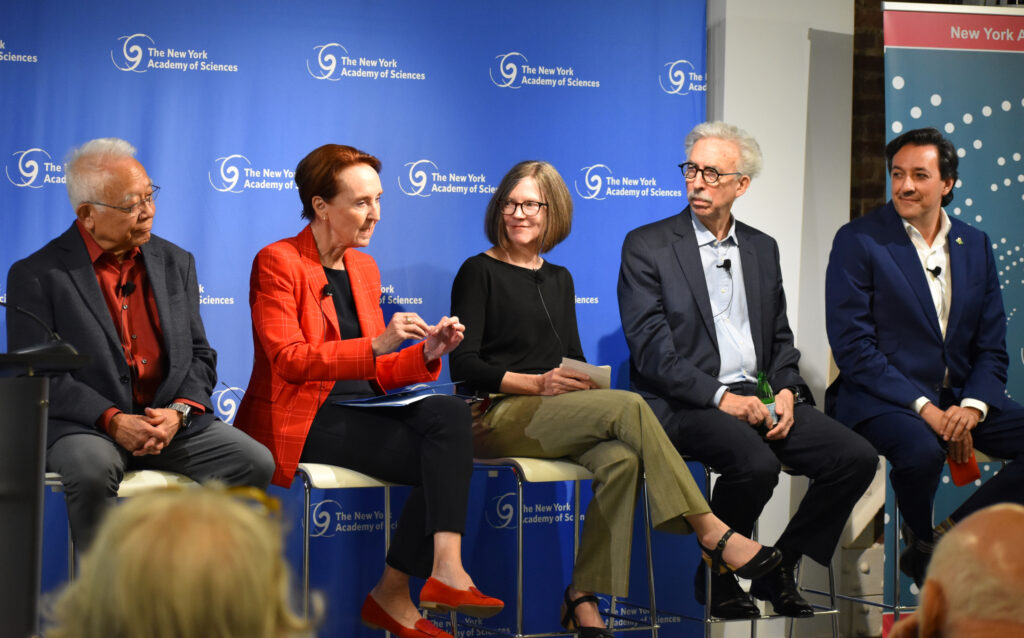
A panel of experts took a deep dive into science education, policy, economics, and more during the United States of Science event, hosted by The New York Academy of Sciences (the Academy) and the Science & Technology Action Committee (STAC) on September 16, 2024.

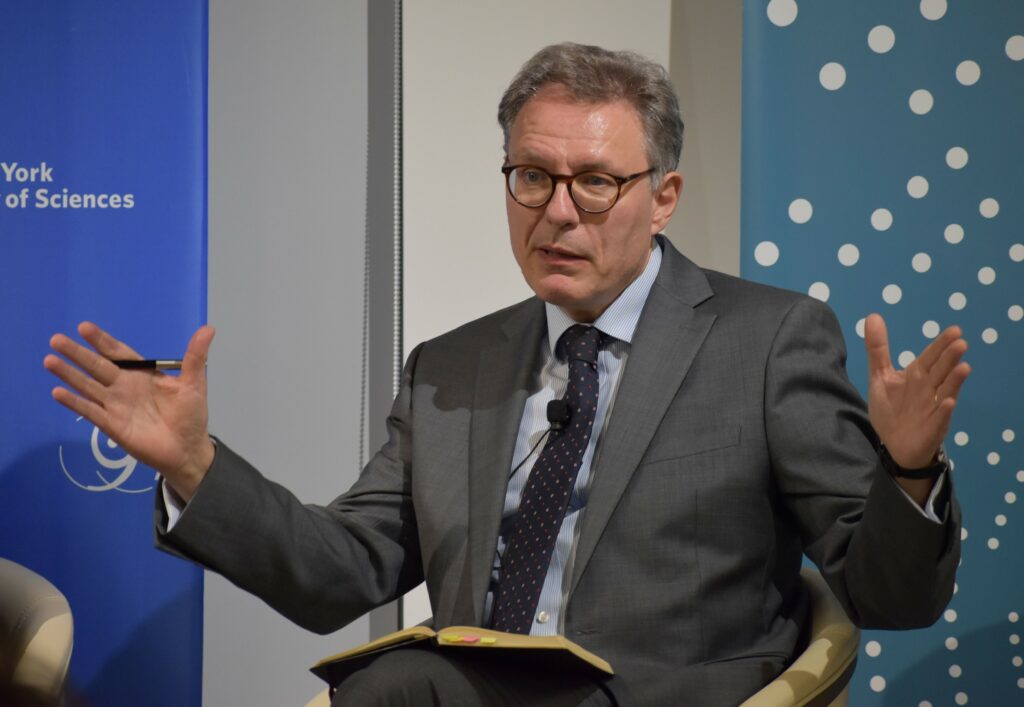
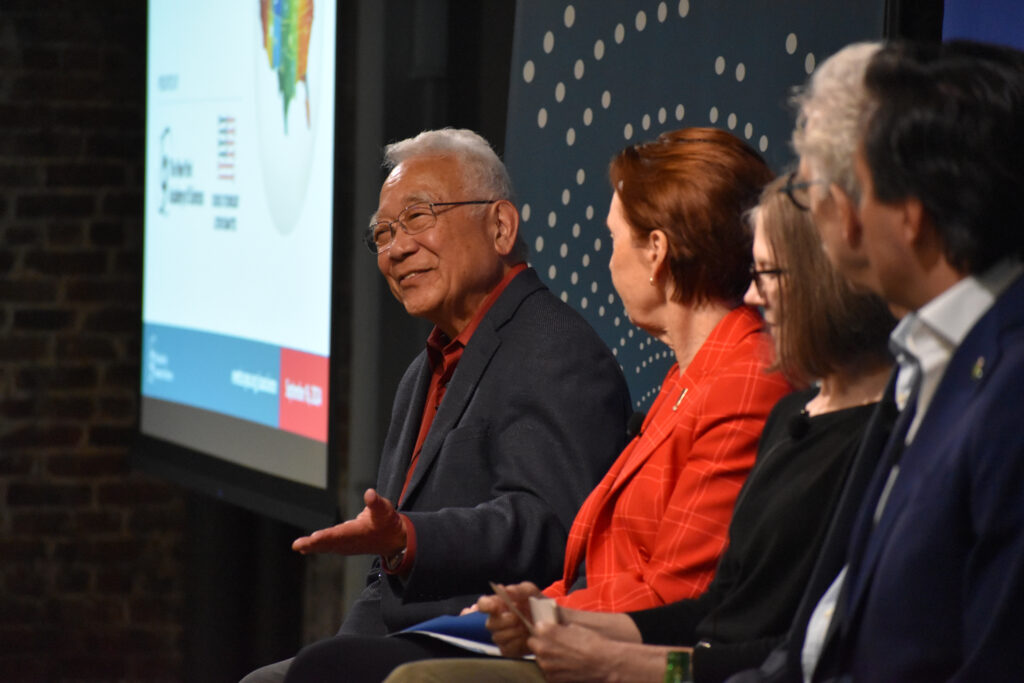
From left: Keith Yamamoto, PhD,; Mary Woolley; Jo Craven McGinty; Nicholas Dirks; and Darío Gil, PhD. Photo by Nick Fetty/The New York Academy of Sciences.

Moderator Jo Craven McGinty, science bureau chief for The Wall Street Journal, introduced the discussion by citing STAC’s State of Science Report in which more than 75 percent of respondents indicated that the United States is losing, or has lost, the competition to lead the world in science and technology. Furthermore, 60 percent predicted that in six years, China will be the leader.

She posed the question to Keith Yamamoto, PhD, vice chancellor for Science Policy and Strategy at the University of California San Francisco and co-chair of STAC if these perceptions reflect reality.

“The results reflect the fact that there’s been an erosion of trust in science. A lack of understanding of the societal impact of science,” said Dr. Yamamoto, calling it “disappointing.”

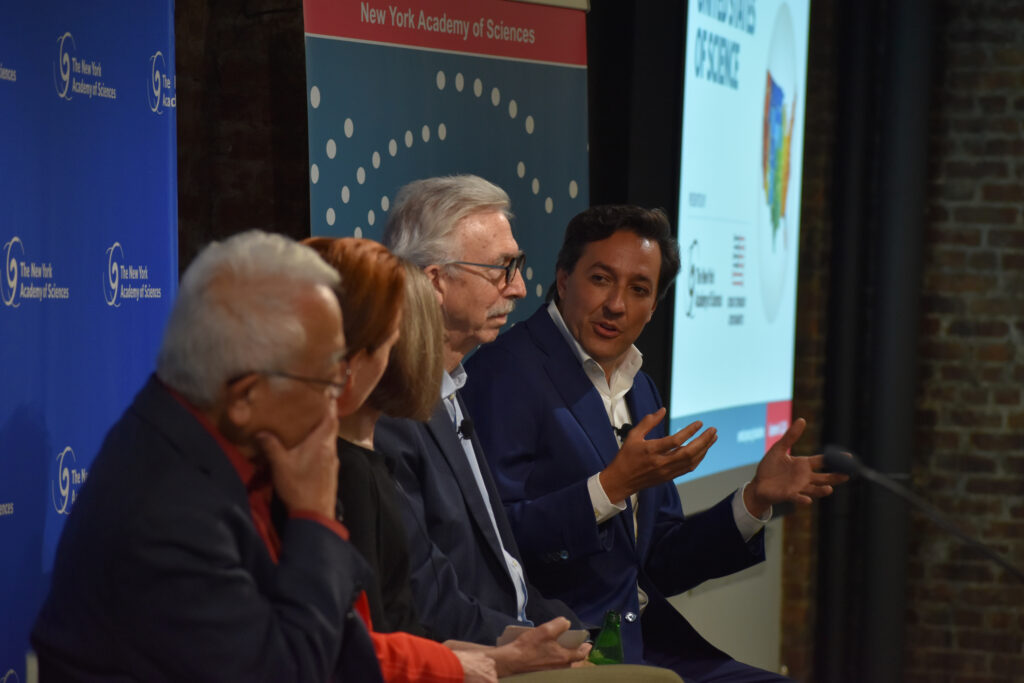
Darío Gil, PhD, IBM Senior Vice President and Director of Research, added that in terms of “absolute dollars spent,” the United States continues to lead the way. While the U.S. leads in funding, Dr. Gil did acknowledge that for the first time, the U.S. has been surpassed by China for the number of PhDs awarded, patents issued, and papers published.

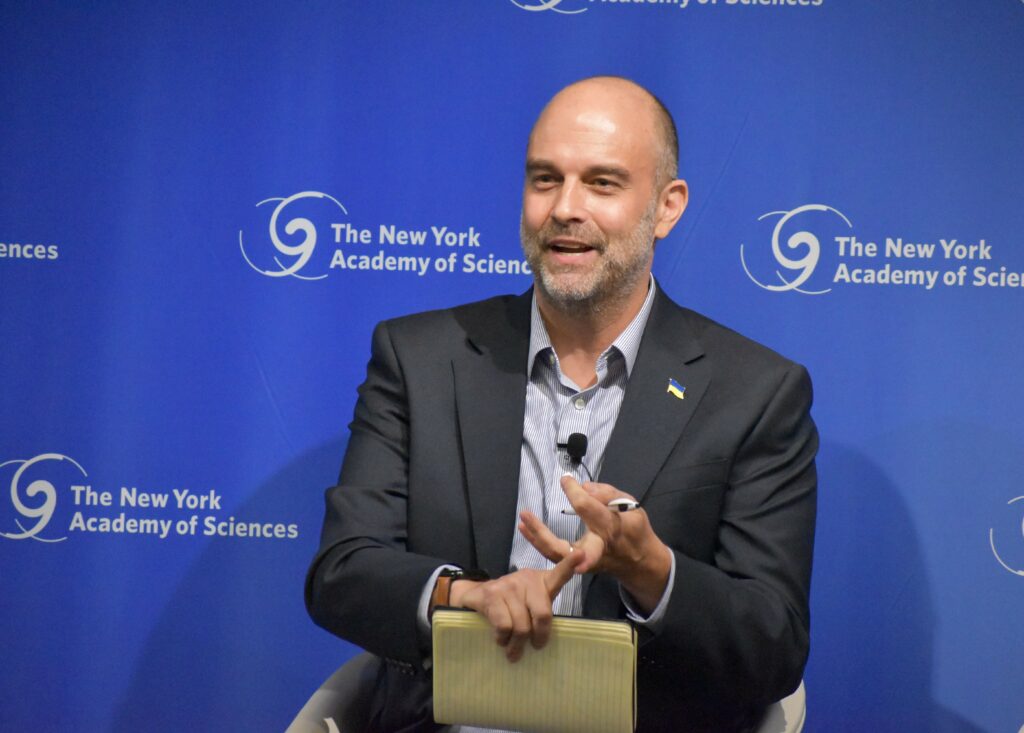
Panelist Darío Gil, PhD (right). Photo by Nick Fetty/The New York Academy of Sciences.

Areas of Strength, Room for Growth

“We have extraordinary strengths across the science and engineering enterprise, but we have areas of significant concern as well,” said Dr. Gil, who also serves on the Academy’s Board of Governors and the Executive Board for the International Science Reserve.

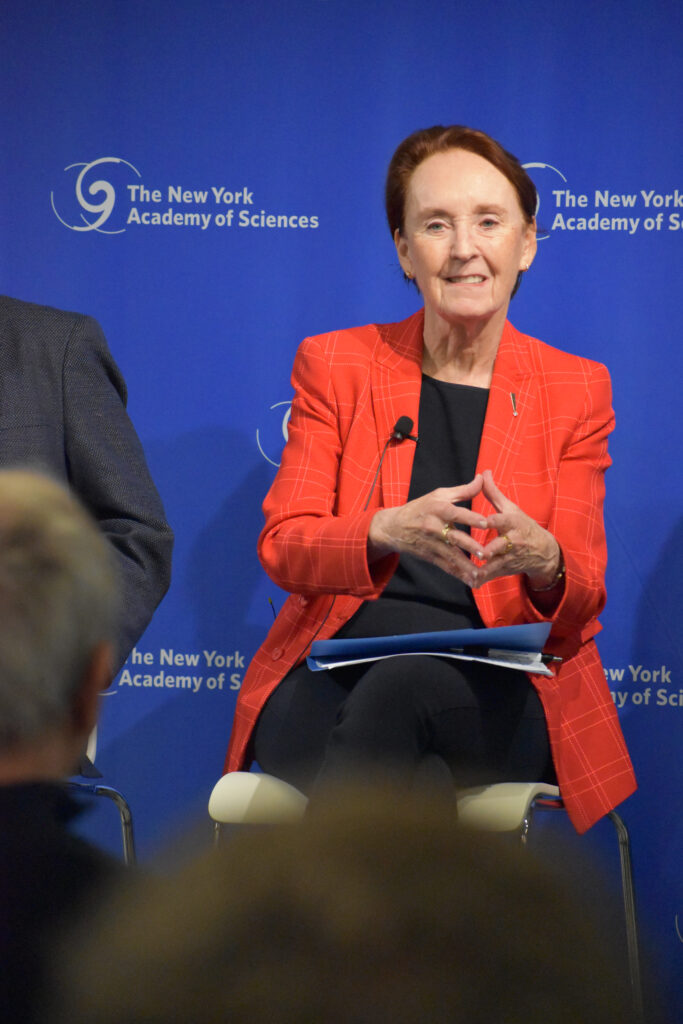
Craven McGinty, then shifted the focus to the potential cause of this perceived diminishment of science in the U.S. She asked Mary Woolley, president of Research!America and co-chair of STAC, whether it’s complacency on the part of Americans, or if the nature of competition has changed. Woolley stated that it’s a combination of the two.

“We’re taking science and technology for granted, and progress for granted, and we have for many years,” said Woolley. She added that while government officials are cutting budgets each year with little foresight to the future, private industry is leading the way.

Panelist Mary Woolley. Photo by Nick Fetty/The New York Academy of Sciences.

Dr. Gil said it’s important to understand the historical context to better comprehend how the nature of the competition has changed in recent years. He cited that 20 years ago the United States spent $300 billion annually in research and development. One-third came from the federal government, while the remainder came from the business sector. Fast forward 20 years, that number rises to $800 billion annually with $600 billion from the business sector.

Another contributing factor, according to Dr. Gil, is that the international scene has become more competitive as other countries have effectively imitated the success of U.S. institution building. He said China is perhaps the greatest example of this success. 

The Role of Higher Education in Research

Nicholas Dirks, president and CEO of the Academy, offered an education perspective. Prior to his role at the Academy, Dirks spent his career in higher education, first on faculty and later in administration. He said that historically, higher education has been reliant on the model set up by 20th century governmental investments in science.

This includes research funded by agencies like the National Institutes of Health (NIH) and the National Science Foundation (NSF). This funding framework was made possible because of the “efflorescence of great research universities,” according to Dirks, that occurred in the U.S. in the early 20th century, particularly after World War II.

“I worry that if you both look at basic research, but even applied research that’s done within the context of a university where the incentives are not necessarily short-term incentives around building usable products or medicines, you begin to lose the real dynamism that underlies the whole system of research in this country,” Dirks cautioned.

The Importance of Fundamental Research

Keith Yamamoto, PhD. Photo by Nick Fetty/The New York Academy of Sciences.

Electrical engineer Vannevar Bush was the nation’s first presidential science advisor, serving in the Franklin D. Roosevelt administration. When World War II ended, the president asked Bush about the role the federal government should continue to play in supporting science. In his report, Science —The Endless Frontier, Bush stated that the federal government should continue to support scientific advancement.

“[According to the report], the way that [the federal government] should stay involved is to support fundamental research, basic research, in universities and medical schools. And to support the training of the next generation of scientists,” said Dr. Yamamoto. “Which is really still the framework for federal science policy in this country.”

This fundamental research is crucial to support, according to Dr. Yamamoto, because through further investigation, scientists can discover practical applications for something that started as novel research. While this is important in theory, Dr. Yamamoto was critical that a commitment to this practice from the federal government has not been thoroughly maintained.

“The peak in federal research for science and technology in this country was reached in 1964, and it’s been sort of dribbling down ever since, from 1.9 percent to under 0.7 percent of GDP,” stated Dr. Yamamoto. He added that scientific research is “now a multisector enterprise that, in order to succeed, is going to need support across the board.”

The United States as a World Leader

From left: Keith Yamamoto, PhD,; Mary Woolley; Jo Craven McGinty; Nicholas Dirks, PhD; and Darío Gil, PhD. Photo by Nick Fetty/The New York Academy of Sciences.

Building off Dr. Yamamoto’s GDP statistics, moderator Craven McGinty went deeper into the data. She cited that microchip production in the U.S., has declined from 37 percent 30 years ago, to 12 percent today. In particular, demand “has grown exponentially in the last decade.” Furthermore, the 2023 International Student Assessment, which evaluates the academic performance of 15-year-old students, ranked the U.S. 28th out of 37 participating countries in math, 12th in science, and 6th in reading. She then asked the panelists how we got to this point.

Dr. Gil explained the complexities of this issue from an economic standpoint. He indicated that recent changes in globalization and supply chains are part of the reason the U.S. lost its status as a major manufacturer of microchips. Dirks then weighed in. While his professional career has been in higher education, he acknowledges that the issue must be addressed at the K-12 level for American students.

“We are not producing enough K through 12 students with requisite STEM skills to work at the highest level of what we’re going to need for the workforce of the future,” Dirks said. He expressed concern about neglecting STEM skill development in American K-12 schools and overly relying on international students to pursue STEM degrees from American universities.

Moderator Jo Craven McGinty. Photo by Nick Fetty/The New York Academy of Sciences.

Taking Action

Woolley emphasized the pervasiveness of these issues. She said it isn’t just scientists and industry leaders who have expressed concern about the strength of the STEM pipeline. It’s also the broader public, such as parents.

She cited data from STAC, which found that people generally gave low rankings when assessing the quality of education in their state. However, when asked about areas that they value most in their state, education ranks high. With K-12 education in the U.S. being largely unfederated, she suggests that action at the local policy level can be the catalyst to make these necessary changes.

“There’s plenty of room for not only improvement but figuring out what each individual already in the science community, or associated with it, universities for example, what can you do?” Wooley asked. “Can you personally encourage a science-trained friend to run for the local school board? Think of the difference that would make.”

Academy members can access an on-demand video recording of the event. Click here to listen to or watch the full conversation.

Not a member? Sign up today.

Assisting Dementia Patients with AI and AR

A photo of a man checking his smartwatch, with AI graphics over-imposed.

Winners of the Junior Academy Innovation Challenge Spring 2024: “Wearables”

Published August 14, 2024

By Nicole Pope

Sponsored by The New York Academy of Sciences

Team members: Riya K. (India) (Team Lead), Shreeniket B. (United States), Sysha R. (India), Prakul P. (India), Tisha S. (India), Medha T. (United States)

Dementia is a neurodegenerative condition that affects 55 million people worldwide and 1 in 10 people older than 65 in the United States, according to the World Health Organization. Alzheimer’s disease is the best-known form of this debilitating condition, which leads to memory loss and confusion. It gradually erodes individuals’ ability to perform simple functions or even recognize familiar faces.

The impact of dementia is not limited to the individuals affected by the condition. Caregivers, who are often family members, bear the burden of providing support, often at great personal cost.

Harnessing the power of wearable technology, the members of this enterprising team composed of high-schoolers from the U.S. and India, devised the VisionXcelerate glasses – an innovative device designed to provide personalized assistance to dementia patients and help them perform every-day tasks independently, thus lightening the burden of carers. Some of the sensors are contained in an eyeglass chain that also ensures users do not lose the device. The students reached out to patients, hospitals and nursing homes to identify specific needs.

“After contacting 90 dementia patients in total, I gained new research and critical thinking abilities. I was able to identify their needs by observing them and analyzing their responses,” explains Sysha, who also learned about coding while working on the image/facial recognition for the glasses. “I have gained more empathy for others by trying to find a solution for people suffering from Alzheimer’s.”

“Wonder Glasses”

The VisionXcelerate smart glasses and their numerous features, including collecting user health data, are the result of an intense group effort, with each team member contributing different skills and strengths. “Being the Team Lead for this project, I’ve witnessed firsthand how collaboration, hard work, new ideas, and obstacles have shaped our journey,” explains Team Lead Riya. “Each member of our team has contributed significantly, from ideation to prototyping. It’s been inspiring to see everyone’s passion and commitment to the project.”

The students used both Artificial Intelligence (AI) and Augmented Reality (AR) to develop the various functions of their “wonder glasses”, which provide real-time assistance, and help dementia patients overcome some of the challenges posed by memory loss and help wearers identify objects and faces. “I was mainly involved in the research and design aspects of the project, particularly surrounding the technologies we wanted to implement in our design and their practicality/viability,” explains Shreeniket, whose approach was partly shaped by observing elderly family members.

For example, the device includes a virtual personal assistant that prompts users to take medication at specific times and to eat or drink at regular intervals, in a voice that mimics the patients’ loved ones. This helps to foster trust and build emotional connection.

VirtualXcelerate also features an app that allows caregivers to monitor the patients and their activities from afar. “The experience of working with teammates sitting in different corners of the world has helped me gain new insights and think about solutions from a completely new perspective,” explains Tisha.

A Rewarding Journey

Working across time zones was not always smooth sailing. “There were a few hiccups. But at the end of the day, everything came together beautifully,” says Prakul. “Despite the obstacles, the journey was rewarding. It pushed me out of my comfort zone, taught me valuable skills in teamwork, problem-solving, and project management, and allowed me to contribute to a meaningful cause.”

This experience gave team members a new understanding of dementia and how it affects patients and those around them. “I learned about the difficulty dementia patients face on a daily basis, and how our solution was impactful to them,” says Medha. “During this process, I helped contribute to researching certain features on the glasses, such as the reminders. Additionally, I sketched out each feature on the glasses, in a variety of angles to demonstrate the importance of location. Overall, this experience was an outstanding opportunity for me.”

As dementia sufferers are prone to falling, the glasses have detection systems to alert caregivers in case of a mishap while GPS tracking and geofencing allows them to locate patients who have wandered beyond a safe area and are too confused to find their way home. These security features not only contribute to dementia patients’ well-being, but also provide carers and relatives peace of mind.

With user feedback, the team plans to continue to refine their solution and add more elements that will further enhance the quality of life of people living with dementia, help them retain their independence longer, and ease the pressure on caregivers.

Read about the other winner from the Spring 2024 Junior Academy Innovation Challenge:

Developing Circular Textile Practices Through Recyclable Fabrics and Reducing Color Dye Pollution

Students Make Sustainable Fashion Statement

Sustainable textiles hanged up on a tree outside.

Winners of the Junior Academy Innovation Challenge Spring 2024: “Circular Textiles”

Published August 14, 2024

By Nicole Pope

Sponsored by Royal Swedish Academy of Engineering Sciences (IVA)

Team members: Rachita J. (India) (Team Lead), Mariia H. (Ukraine), Sofía R. (Colombia), Alex B. (United States), Sylvia X. (United States), Altynay N. (Kazakhstan)

Textiles and fashion are important sectors for the world economy but as demand increases, so do the environmental and human costs – due to harmful production processes that degrade natural resources and the mountains of textile items that are discarded every year.

Estimates suggest that 87% of global textile waste ends up in landfills or incinerators. These environmental impacts apply not only to the clothes we wear in our daily life, but also to the textiles used in the medicine, agriculture, and manufacturing sectors.

For the Junior Academy Innovation Challenge “Circular Textiles”, this international team of students came up with new suggestions to improve environmental standards in textiles, each member sharing their own insights to the design of their solution. “Throughout the project, everyone contributed their unique ideas and leveraged their specialized skills to advance our goals,” explains Sylvia. “The synergy within the team was palpable, fostering an environment of creativity and productivity.”

Collaborating online through the Academy’s Launchpad platform, the students divided the tasks across the group to develop their comprehensive plan. “I did some research and produced tables that consisted of the information about the project,” says Mariia. “I also contacted some experts and I was working on Lean Canvas.” The team found that technical textiles – engineered and manufactured with specific functions in mind – was a rapidly growing sector that reached US$213 billion in 2023, a 5.6% increase in the previous year.

Replacing Non-Sustainable Synthetics

The group focused on finding a sustainable replacement for fossil fuel-based synthetic yarns, nature-based materials like Rayon (viscose) that are linked to deforestation, as well as fibers like cotton that require water-intensive cultivation. They landed on Biofabrics as a potential solution. The students proposed addressing the three main drawbacks of Biofabric clothing – the expensive cost, the susceptibility to microbes, and the poor resistance to repeated washing – to create a more affordable, longer lasting product.

Their solution was using agricultural waste to optimize the production of a synthetic cellulose fiber called Lyocell and relying on deep eutectic solvents (DES) as an alternative to the more expensive chemicals traditionally used in cellulose extraction to reduce the cost. Another ground-breaking innovation involves the application of silver nanostructures to the Lyocell fibers, which would confer both greater durability and antibacterial properties to the fabric, and last more than 20 washes.

To tackle the pollution caused by fabric coloration, the team members suggested employing Direct Laser Interference Patterning (DLIP), a cutting-edge technique that uses laser beams to create nano-texture surfaces with precise interference patterns to impart vibrant colors without the need of toxic dyes.

Throughout the competition, the team’s schedule was intense. Finding time to meet across time zones was not always easy. “There were some challenges during the entire duration of the project, the biggest being the time difference,” says Team Lead Rachita. “I however tried to manage this by dividing the team further into teams and distributing tasks after getting approved by the entire team.” Team member Alex, for his part, created a spreadsheet to keep track of availability. “This helped us schedule meetings with as many people able to attend as possible,” he says.

Striving for Sustainable Textile Production

The students realized that, in addition to using technology to make textile production less damaging to the ecosystem, promoting circularity and sustainability in the sector also required raising awareness of environmental impacts among consumers, particularly in low and middle-income groups, which account for an estimated 90 percent of the global population.

They developed “EcoFashion,” an app designed to educate users of all ages and engage with them, which includes age-specific games aimed at toddlers and teenagers, challenges to motivate adults, as well as mini courses and interactive modules that deliver a wealth of information and leverage psychology to change consumer behavior.

For nine weeks, the team members worked long hours to develop their innovative approach and outline their findings in a polished presentation. “With the abundance of information and the high quality of research done by each team member, condensing it into a concise presentation was daunting,” says Sofia. “To overcome this hurdle, we collectively decided to put in extra hours, working diligently to summarize our findings effectively while ensuring the essence of our work remained intact.”

Their success, and the skills they acquired along the way while developing friendships across borders, made it all worth it. “The experience was great as it was the first time I did such a thing,” says Altynay. “I think such experience will help me in the future in researching other things, and in communicating with different people.”

Read about the other winner from the Spring 2024 Junior Academy Innovation Challenge:

Using Artificial Intelligence and Augmented Reality to Assist Dementia Patients

Improving Classroom Accessibility with AI

A photo of a city skyline with an over-imposed graphic denoting different AI applications.

Winners of the Junior Academy Innovation Challenge Fall 2023: “Cognitive Classrooms”

Published August 14, 2024

By Nicole Pope

Sponsored by NEOM

Team members: Dawik D. (Team Lead) (Qatar), Atharv K. (India), Anoushka T. (India), Abhay B. (India), Asmit B. (India), Jefferson L. (United States)

Mentor: Aryan Chowdhary (India)

250 million children worldwide lack access to a decent education due to extreme poverty, child labor, or discrimination, according to data from the United Nations. A shortage of teachers, lack of resources and logistical constraints further undermine countless children’s educational outcomes.

This talented international team, comprising students from India, Qatar, and the United States, tackled this massive disparity with their project AI4Access. Tasked with devising innovative ways of harnessing the power of immersive technologies like artificial intelligence/machine learning (AI/ML) and virtual reality/augmented reality (VR/AR) to create a more inclusive, fair, and efficient environment in classrooms and improve students’ learning experience, the team more than met the challenge.

The team members learned that students respond to different learning styles (visual, auditory, and kinesthetic), but traditional teaching favors read/write learner types. 1 in 59 students, according to the UN, is affected by learning disabilities such as dyslexia, ADHD, dyscalculia and dyspraxia, which undermine their academic success in a rigid, one-size-fits-all education system. This is the aspect that the AI4Access team chose to focus on.

Advancing Education Through Digital Technology

The team developed an AI-led application designed to diversify the education experience, give students access to new visualized learning styles, and enable teachers to monitor individual students’ performance and provide support when needed.

The tool analyzes the students’ learner profile and enables teachers to provide them with a personalized teaching plan that considers their strengths and weaknesses. By providing visual learning features, such as 3D models and live simulations using VR/AR, the app enhances the learning experience and supports students with learning difficulties. The teacher can more easily track individual students’ progress, track their response, and identify when individuals need additional attention.

The team drew on individual members’ skills to build their app. “I’ve enjoyed working with the team, capitalizing on our respective strengths for the best possible outcome,” explains Anoushka. “This journey helped me truly appreciate the power of collaboration and teamwork!” Their end product—an elegant app that uses OpenAI API, Python and Eleven Labs API to improve the classroom experience for both students and teachers—won praise from the judges.

Their already impressive achievement is made even more outstanding by the difficulties they overcame to reach their solution. For six intense weeks, the team worked across time zones and at odd hours of the night to create their prototype app. “Even though we all had various commitments, whatever time I had spare, it would be dedicated to this even if it was midnight at my time!” explains Jefferson.

Sharpening Practical Skills

“Working countless hours at awkward times in the morning, just to meet up with your friends from halfway across the globe and work on something that truly motivates you is a feeling I cannot describe,” says Team Lead Dawik. “This project has taught me how to lead better, how to work with my peers and manage my time as well as the importance of meeting deadlines and staying committed to your work.”

Through the challenge, the team members were able to sharpen skills that will be essential in future endeavors, like teamwork and critical thinking. “My journey with this team has proven to be incredibly enriching. The team’s diverse skills and backgrounds, coupled with our unwavering unity, created an environment of continuous learning and personal growth,” believes Abhay. “We tackled challenges head-on, demonstrating resilience and innovative problem-solving.”

The Cognitive Classroom challenge was a wonderful learning opportunity for the members of the team and it left them hungry for more creative discoveries. “From late-night discussions to constructing prototypes and presentations, this environment taught me many things and opened new paths I never dreamed could exist,” explains Asmit.

His teammate Atharv concurs: “The diversity, unwavering support, and commitment to excellence of team members have pushed me to grow professionally and personally. I’m grateful to be part of this remarkable team, and I eagerly look forward to our next adventures.”

Read about other winners from the Fall 2023 Junior Academy Innovation Challenge:

Alternatives To Mineral Space Mining

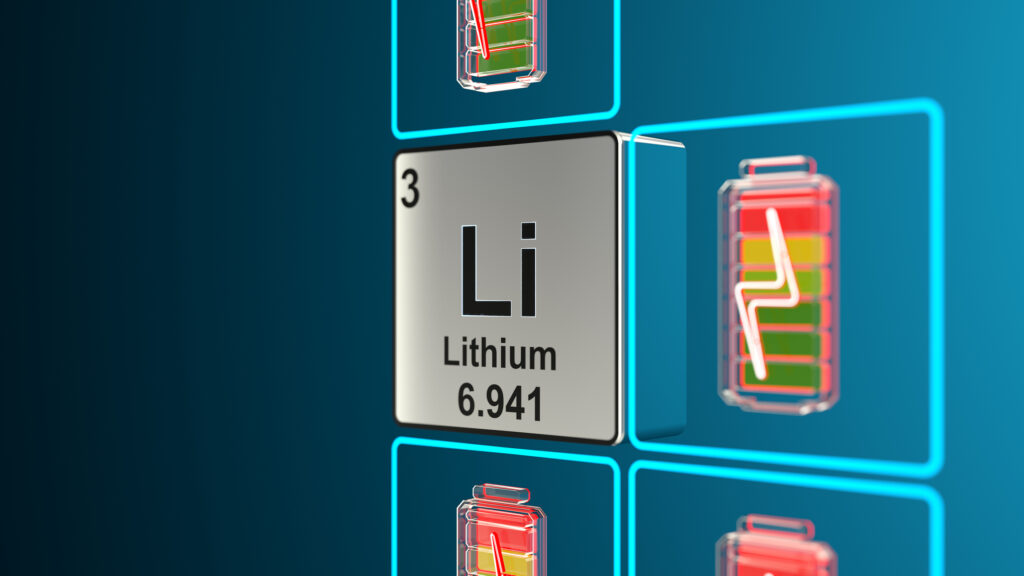
A shot of Lithium from the periodic table of elements.

Winners of the Junior Academy Innovation Challenge – Fall 2023 “Minerals of Technology”

Published August 14, 2024

By Nicole Pope

Sponsored by Royal Swedish Academy of Engineering Sciences (IVA)

Team members: Sriyash T. (Team Lead) (India), Radoslav K. (United States), Aarish K. (United States), Rehan S. (India), Aashritha T. (United States), Farhan M. (United States)

For the “Minerals of Technology” Junior Academy Innovation Challenge, high school students were asked to come up with an innovative approach to secure the supply of the critical minerals needed to support the transition to a fossil fuel-free society.

Critical minerals are used in the manufacture of cell phones, photovoltaic solar plants, electric vehicles and numerous other modern appliances. As a growing number of countries move away from fossil fuels to combat climate change and limit the global temperature rise to 1.5°, ensuring a sufficient supply of these critical minerals has become a global concern. The supply will need to increase six-fold by 2040 to support the shift to a more climate-friendly, fossil fuel-free world. Crucially, these rare minerals are not renewable, and must therefore be used efficiently and sustainably.

For their winning project, the MINnovator’s team members from the United States and India sought a solution to this issue in space. They proposed developing a fleet of autonomous asteroid mining drones, powered by hydrogen and solar energy. The drones would extract and process the resources they collected in space. The students’ plan would reduce the carbon emissions associated with conventional mining methods and mitigate the risk of mineral shortages on Earth.

Intrigued, Yet Skeptical

“Initially intrigued, yet skeptical about the idea of harvesting resources from asteroids for a cleaner alternative, I’ve witnessed the evolution of this concept into a tangible project,” says Aarish. “Our space droid, fueled by solar and hydrogen energy and employing 3D printing technology, promises to revolutionize resource acquisition. The droid’s ability to gather rare metals, silicon, oxygen, and water presents a promising solution to the scarcity of these vital resources on Earth.”

According to their ambitious solution, the drones would include a retractable drill to harvest materials through precision scraping or strip mining of resource-dense veins, as well as 3D printers and robotic assemblers to process them in situ. Only finished products would need to be transported back to Earth, in bulk shipments, to maximize cost efficiency and minimize environmental impact. Thanks to a modular design, the drones could be adapted and configured for optimal use during specific aspects of the mining cycle.

“One of my primary roles within the group was the creation of 3D models that visualized the intricate details of our proposed asteroid mining operations,” explains Farhan. “This involved a steep learning curve, but the opportunity to immerse myself in the technical aspects of space mining was both exciting and rewarding. The models not only enhanced our presentations but also provided a tangible visual aid that helped the team grasp the complexity of the project.”

Opening New Horizons

The topic of this Junior Academy challenge opened up new horizons for the team members. “Working with this team on the mineral conservation project through asteroid mining was an illuminating journey,” explains Aasritha. “Working with a diverse team has been a profound and enriching experience, one that has stretched my perspectives and broadened my understanding of collaboration in many ways I never anticipated.”

“It was both inspiring and incredibly satisfying to think that our study would open the door for asteroid mining to provide sustainable mineral conservation,” says Rehan. “The problem we faced was extremely complex and offered many difficulties, one of which was coordinating communication across time zones.”

Tackling a global issue that could shape the future of their generation, gave the participants a great sense of achievement. “This initiative underscores the potential of youth to wield significant influence, irrespective of age or background,” says Team Lead Sriyash. “I want to express profound gratitude to my exceptional teammates. The formation of MINnovators was driven by the intent to unite diverse individuals who share a common fervor for leveraging science to transform the world.”

His teammate Radoslav, echoes Sriyash’s sentiment: “Even when this challenge is over, I trust every one of us to go out into the world and continue to make the world a better place, one project at a time.”

Read about other winners from the Fall 2023 Junior Academy Innovation Challenge: