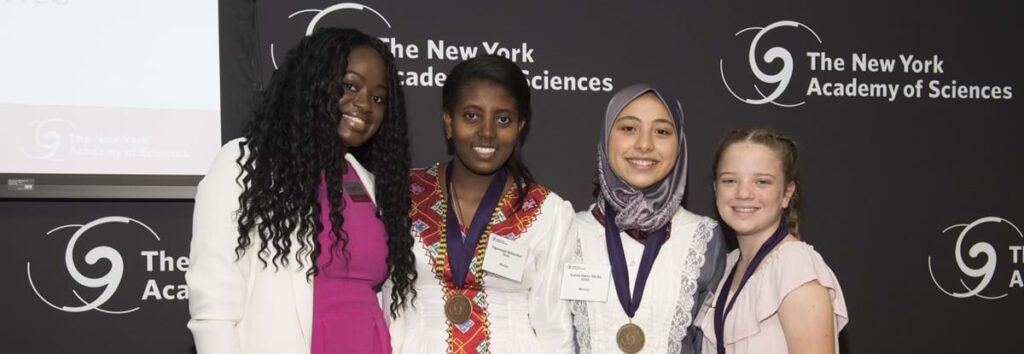
Junior Academy students develop an app that addresses the immediate mental health needs of those impacted by hurricanes and other traumatic natural crises, much of which is worsened because of the lack of centralized information during crisis scenarios.
Published May 1, 2019
By Mandy Carr
Four high school students from around the globe came together for the Junior Academy‘s Natural Disasters: Relief & Recovery Challenge to create a solution that could help reduce future devastation. The team designed a response model that could be used for many types of disasters, not just hurricane. They used Hurricane Katrina as their case study with a focus on addressing mental health needs for those impacted.
In their analysis, the lack of central information is a common struggle for those responding to disasters. To address that struggle, the team determined that gathering critical information in high-risk and disaster-prone areas before disasters happen would provide a useful baseline for responders. To that end, they created a smartphone-based community survey app that can regularly collect information about residents financial and employment status, mindset, living habits, and mental health. These same survey tools could then also be used after disasters to understand what has shifted. Additionally it might access how to tailor interventions and where critical needs and assets exist.
The team’s winning solution was one of 40 submitted. It garnered them a trip to New York City for the Global STEM Alliance Summit, held July-July 26, 2019.
Meet the students and learn about why they feel passionate about their idea:
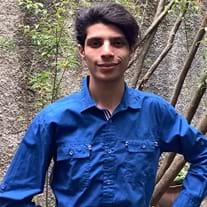
Luis G. Alvarez
Luis G. Alvarez
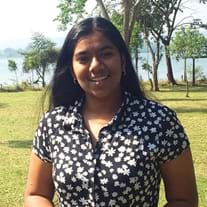
Luis G. Alvarez, 17, is from Colegio Integtral Mesoamericano Patzicia in Guatemala. He has personal experience with natural disasters following the eruption of Volcan de Fuego in 2018. He and his family were required to evacuate.
“I remember getting some tools and hearing something like rain falling on the fallen leaves,” said Alvarez. “At first, I didn’t recognize what it was, but once I put on my raincoat, I realized it was ashes and sand, not rain. I told my parents, and we quickly got into the car and left.”
This inspired him to participate in the Natural Disasters challenge.
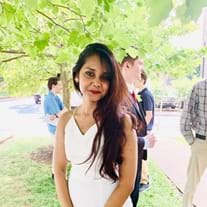
Samiksha Raviraja
Samiksha Raviraja
“Looking at the world around, there are events happening constantly,” said Samiksha Raviraja, 17, from Renaissance High School in Charlottesville, VA. “Some of the most haunting ones are those that happen in nature and result in great damage to communities. I wanted to be able to help in some way.”
It scared her to see the disasters that were happening across the globe on TV. The word “disaster” was what drew her to this challenge in particular.
“While procedures exist to help people in the best possible way to save their lives, not many procedures exist that look into the mental health of the patient after a disaster has happened,” said Raviraja. “With PTSD, it is possible for the trauma to be passed down to children.”
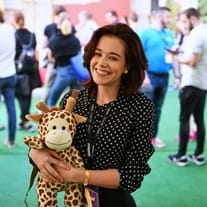
Eszter Varga
Eszter Varga
Natural disasters are something Eszter Varga, 19, from Szerb Antal High School in Budapest, Hungary has always wanted to help resolve, especially because they are “becoming an emerging issue with climate change.”
“The part that really touched me and my fellow teammates, was the fact that post-Katrina, PTSD claimed thousands of lives,” said Varga.
“We discovered the mental health aspect of disaster relief is typically an untreated issue.”
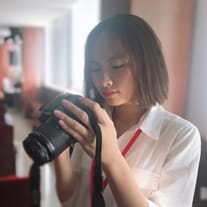
Thuy Tran
Thuy Tran, 16, from Le Hong Phong High School for the Gifted in Nam Dinh, Vietnam, echoed the team’s desire to focus on mental health when creating their solution.
“Hurricane Katrina claimed many lives post-disaster because of rushed treatment ideas, poorly planned information flow, as well as lack of education and data gathering,” said Tran.
Sthuthi Satish is exploring her interest in a variety of STEM fields through her participation in the Junior Academy, but her first experience with the wonders of science started very close to home.
Published May 1, 2019
By Mandy Carr
Sthuthi Satish
Sthuthi Satish can’t remember when she started dreaming of being a doctor. What she does remember is being seven years old and looking at her mother’s medical charts showing stage two cancer. Her mom underwent surgery and beat cancer and Sthuthi’s love for surgery began.
The 15 year-old, who attends Bangalore International School in India, admits to not understanding the complications of surgery then, but saw the possibilities of it. Today, she hopes to become a neurosurgeon.
“My love for the brain is rather recent,” she said. “I am fascinated by the fact that the brain controls pretty much all conscious actions in the human body, and yet we know so little about it.”
Building Upon Previous STEM Experience
Sthuthi had few opportunities to join STEM activities before participating in the New York Academy of Sciences’ Junior Academy program. She worked on many challenges focusing on sustainability and aerospace. She worked with other high school students from across the globe as part of the winning team for the Human-Wildlife Challenge.
Sthuthi was concerned that no one was addressing the negative effects of solar panels on wild birds. Her team believes that infrared sensors and speakers producing beeping noises at 3 kHz can deter birds from landing on solar panels.
During her first year in the Junior Academy, she saw a posting on Launchpad, the Academy’s virtual collaboration platform, about getting involved in a Girls in Science panel at the third annual International Day of Women and Girls in Science event at the United Nations Headquarters in New York City. She stayed in touch with one of the organizers, HRH Princess Dr. Nisreen El-Hashemite, Executive Director of the Royal Academy of Science International Trust which lead to an invitation from Dr. El-Hashemite to chair a panel at the 2019 event.
Finding What Drives Her
This is also how she became a Girls in Science Advocate for the Royal Academy of Science. Additionally, Sthuthi is one of the administrators on the Girls in Science 4 SDGs International platform, a program Dr. El-Hashemite made possible. For Sthuthi it’s all about priorities.
“I always believe that if I have enough time to watch Netflix, then I definitely have time to work on something I love,” she said. Sthuthi hopes to attend college either in the United States or Sweden.
Our showcase of the inspiring honorees breaking new ground in life sciences, chemistry and physical sciences.
Published May 1, 2019
By Carina Storrs, PhD
Life Sciences Laureate
Heather J. Lynch, PhD, Stony Brook University
A pursuit of penguins leads to new territories in technology
It may be hard for penguin enthusiasts to believe, yet Heather Lynch PhD says the “most fun part of the entire year” is not the four months a year she and her team spend in Antarctica, but rather the time spent pouring over the reams of data when she returns. Lynch was originally drawn to penguins as a post-doc at the University of Maryland because of the challenge of studying them.
Lynch, now an Associate Professor at Stony Brook University, is tackling the fundamental questions of how many penguins are there and where exactly are they? Those may seem like simple questions, but they are stymied by data shortcomings, such as not having precise location data from on-the-ground surveys of the flightless, tuxedo-donning birds.
To subvert the treacherous Antarctic environment, Lynch turned to the wealth of NASA satellite imagery of the Antarctic that dates back decades. She and a colleague developed algorithms that scan the thousands of coastal images for signs of penguins revealed by their pink-hued guano (bird feces). Then, when they get tipped off to the presence of a large colony of penguins, they bring glacial-ready drones to the areas to take high-resolution pictures for exact headcounts.
The Adélie penguins
One of the biggest finds was a supercolony of about 1.5 million Adélie penguins on the Danger Islands right off the tip of the Antarctic Peninsula, which stretches toward South America. No one knew this colony existed — Lynch didn’t believe the algorithm at first, until she could confirm it with other satellite imagery.
She and her lab have also discovered much smaller colonies of chinstrap and gentoo penguins on the nearby Aitcho Islands. Without Lynch’s mathematical techniques and use of satellite technologies to detect guano, these colonies of penguins may have never been discovered.
Thanks to this multi-pronged approach, Lynch can now pride herself on the ability to locate nearly all of the penguin colonies in the Antarctic and is excited about the possibility of discovering even more colonies. Lynch’s game-changing ability to apply mathematical modeling to ecological data collected from satellites, aerial drones and field work is what earned her the title of 2019 Blavatnik National Awards Laureate in Life Sciences.
Lynch has always had one foot in the technological side. She was close to getting her PhD in physics when she “came up for air,” decided she wanted to apply her problem-solving zest toward environmental issues, and switched to a PhD program in biology.
Developing Skills in Statistics and Programming
However, she thinks the expertise that she acquired in mathematical modeling while working on her physics PhD has been the secret to her success. She advises students interested in pursuing any STEM field to develop some statistical and programming abilities.
“[They] are that all-access pass,” Lynch says. “There is not a lab on the planet that does not need people with those skills.”
Although Lynch’s discoveries have been welcome news for ecologists and penguin lovers alike, they can appear to belie the peril facing these birds due to climate change.
“All of these other populations, even other Adélie penguins, are crashing,” Lynch says.
A big part of her research focuses on developing models to understand why the Danger Island colony is flourishing, while the Adélie penguins on the western side of the Antarctic Peninsula are declining.
Implications for Conservation and the Impact of the Award
It almost goes without saying that Lynch’s research has implications for conservation.
“When we found the Danger Island populations, the first email I sent was to the people who were designing the Marine Protected Area in the region,” Lynch recalls. The Danger Islands had not been considered an important area to protect, but in what Lynch calls a “dream scenario,” policy makers expanded the area to include the islands after she told them about the Adélie supercolony.
Lynch is excited that the Blavatnik Award will bring attention to the recent technological advances in the field of ecology. The synergistic effects of Lynch’s methods will have a wide-ranging and critical impact in the fields of ecology and conservation biology in the face of impending, human-induced mass extinctions. Lynch and her lab have already expanded her methods to evaluate Antarctic seal and whale populations, and scientists can use her methods in the hope of saving other species all over the world.
Chemistry Laureate
Emily Balskus, PhD, Harvard University
Cracking the mysteries of the human microbiome
The first time that Emily Balskus, PhD worked with a microbiome, the term for communities of bacteria that live in our bodies and all around us, she was knee-deep in the salt marshes off the southern coast of Cape Cod, collecting bacteria.
Things got pretty messy, but the experience helped convince Balskus — who was then conducting postdoctoral research in chemical biology at Harvard Medical School — that she wanted to bring her chemistry expertise to bear on the biggest questions about the human microbiome.
Up until those marshy waters, Balskus was doing, as she puts it, “pretty conventional” chemistry. But early on during her postdoctoral training she attended a seminar about the Human Microbiome Project, which would set out to catalogue the microbes living on and within us. It opened her eyes to the shocking fact that scientists knew almost nothing about what these bacteria were actually doing, and how they affected our health.
“I couldn’t believe that we could be living so closely with so many microbes, that we had shared evolutionary history with them, and there was so much we didn’t know about them,” Balskus recalls.
Understanding the Microbiome in our Gut
Much of what we now know about the goings-on of the microbiome in our gut — for example, how certain bacterial residents can increase the risk of heart disease or thwart the activity of the medications we take — is thanks to the research group that Balskus has been leading at Harvard University since 2011.
For her work getting to the bottom of microbial mysteries, Balskus was named the 2019 Blavatnik National Awards Laureate in Chemistry, which Balskus says is “wonderful” and “very humbling.”
One of the most exciting discoveries of the Balskus lab is connecting how bacteria in the gut microbiome may increase the risk of colorectal cancer. It had been known for more than a decade that certain strains of Escherichia coli (E. coli) make a toxic molecule, called colibactin, and that these bacterial strains are more likely to be found in the gut of people with colorectal cancer.
Understanding the Chemical Components
Balskus and her team focused on determining the chemical makeup of the mysterious colibactin molecule, which had been challenging for other chemists to isolate and characterize. The difficulty of studying this molecule using more conventional approaches made her consider whether her unique perspective might provide another path.
Balskus’ team explored how colibactin was produced in the gut without knowing its complete structure. They eventually discovered that the colibactin molecule contains a structure called a cyclopropane ring, which is known to cause DNA damage that can lead to cancer-causing mutations. Importantly, her team showed that exposing human cells in the lab to the toxic E. coli strain led to a specific type of cyclopropane-dependent DNA damage, whereas cells exposed to harmless strains of E. coli showed no signs of similar DNA damage.
In future studies, she hopes to determine whether this type of DNA damage can be seen in cells obtained from biopsies of colorectal cancer patients, to confirm whether this toxic E. coli is indeed responsible for increasing cancer risk.
Balskus credits her postdoctoral advisor, Christopher Walsh, MD, PhD for suggesting she take the fateful trip to the salt marshes, which was part of a summer microbiology course held at the Marine Biological Laboratory in Woods Hole, Mass. This course equipped her with the tools of microbiology and expertise that she continues to use to probe the human microbiome.
Combining Chemistry and Microbiome Research
Today, Balskus is a Professor of Chemistry and Chemical Biology at Harvard University, and a leader in bringing the worlds of chemistry and microbiome research together. This spring she helped organize the first scientific conference on the chemistry of the human and other microbiomes.
“Both [fields] are very excited about this intersection,” Balskus says. She is also venturing into other scientific fields, such as genetics, and exploring how chemistry’s tools can advance other areas of biological research.
Balskus hopes to use the Blavatnik Award funds to promote women and other underrepresented groups in science. She recognizes how much her female science teachers at the all-women’s high school and the small liberal arts college she attended encouraged her and were role models for her. Many young women are not so fortunate.
“It is not one thing that makes it hard, it is a bunch of things that make it difficult for women to feel like they belong in science,” Balskus says.
Physical Sciences & Engineering Laureate
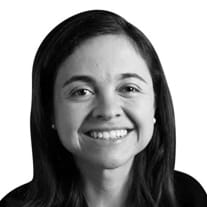
Ana Maria Rey, PhD, University of Colorado Boulder
Building the world’s most precise atomic clock
Ana Maria Rey, PhD fell for physics in high school, the moment she realized she could use mathematical equations to predict how a ball will move. It was an easy love affair, as Rey flew through physics problems for fun.
But at the university she attended in her native Colombia, a professor challenged the students with such long physics exams that students had no time to perform detailed calculations. This professor, who Rey considers her first role model, taught them to rely on intuition instead, which could only be acquired through intensive study of the subject.
It is a lesson that Rey has carried with her throughout her career. Over the course of her PhD studies at the University of Maryland, through two periods of postdoctoral training, and now as a Professor of Physics at the University of Colorado Boulder, Rey has delved deep into the world of quantum mechanics.
Diving into Quantum Mechanics
Quantum mechanics describes the behavior of the smallest particles of matter: the atoms and sub-atomic particles that make up balls and every other material on Earth. Just like her early days with physics, Rey is explaining the behavior of the quantum world using mathematical models. But now she is the one developing the models, in groundbreaking work that earned her the honor of being named the Blavatnik National Awards Laureate in Physical Sciences & Engineering this year.
“Understanding [atomic and sub-atomic] behavior is really, really important because it can lead to technological development,” Rey says.
Although her research is theoretical, its applications are tangible and far-ranging, from creating GPS (global positioning system) that can provide more accurate location data and quantum computers that would be thousands of times faster than today’s machines, to ultimately enabling the direct measurement of gravitational waves, which are ripples in the so-called fabric of the universe.
Building a More Precise Atomic Clock
At the heart of all these possibilities, and the crux of Rey’s models, is the ability to build a more precise atomic clock, which can measure much smaller units of time than modern clocks — as short as one billionth of a billionth of a second. As Rey explains, the pendulum of an atomic clock is laser light, and the thing that measures each swing of the pendulum is atoms.
The problem that scientists have to understand, and ideally control, is how the atomic timekeepers move when they are zipping around and colliding with each other. Because of Rey’s equations, they are getting closer to that goal. She credits the physicists she collaborates closely with at JILA, where she is a Fellow, for conducting the breakthrough experiments with ultra-cold atoms trapped by lasers, making them slower and easier to track, for informing her calculations.
Rey says the funding and recognition that come with the Blavatnik Award will allow her to push farther into what she calls “the most exciting part of the work.” Although her team has already given the world its most precise atomic clock, that is nothing compared to what they could achieve if they could entangle, or link together, atoms in such a way that they behave as one unit.
Entanglement, which has been shown by allowing atoms to interact and then separating them, would eliminate the noise that throws off atomic clocks.
“This is the holy grail,” Rey says, adding that, “we should be able to see what the universe is made of,” such as mysterious dark matter.
Driven By Passion
Rey believes the key to her success in theoretical physics is loving what she does and working hard at it.
“Things are not going to come to you. You might be very smart, but I don’t think it’s enough,” Rey says.
Her other great role model, renowned JILA fellow, Deborah Jin, PhD, who passed away in 2016, showed Rey that it is possible to have a successful scientific career and a happy family life, and generally to be there for people. Rey, who was also selected as a MacArthur Fellow in 2013 and the MOSI Early Career National Hispanic Scientist of the Year in 2014, says “I hope in some way, I can share the same type of help with young women scientists.”
The 2019 Blavatnik National Awards for Young Scientists Ceremony
Michal Rivlin, PhD, Senior Scientist and Sara Lee Schupf Family Chair, Weizmann Institute of Science
Dr. Michal Rivlin is a neuroscientist who has made the paradigm-shifting discovery that cells in the adult retina can exhibit plasticity in their selectivity and computations. One of the first demonstrations of neuronal plasticity outside the brain, this raises fundamental questions about how we see, and has implications for our understanding of the mechanisms underlying computations in neuronal circuits, the treatment of retinal diseases, blindness and development of computer vision technologies.
Chemistry Laureate
Moran Bercovici, PhD, Associate Professor, Faculty of Mechanical Engineering, Technion – Israel Institute of Technology
Dr. Moran Bercovici is an analytical chemist who studies microscale processes coupling fluid mechanics, electric fields, heat transfer and chemical reactions. His studies have potential implications in multiple fields, ranging from the detection of low concentrations of biomolecules for rapid and early disease diagnostics, to the creation of new microscale 3D printing technologies.
Physical Sciences & Engineering Laureate
Erez Berg, PhD, Associate Professor, Weizmann Institute of Science
Dr. Erez Berg is a theoretical condensed matter physicist who develops novel theoretical and computational tools to study long-standing and emerging questions in quantum materials. His research has provided important insights into the physics principles behind a wide variety of exotic phenomena in quantum materials, which will help to speed up the implementation of these materials in next generation electronics including quantum computing, magnetic resonance imaging and superconducting power lines.
Konstantinos Nikolopoulos, PhD, Professor of Physics, University of Birmingham
Experimental particle physicist, Prof. Konstantinos Nikolopoulos led a 100-physicist subgroup in ATLAS, a large scientific collaboration at CERN, which made key contributions to the discovery of the Higgs boson. This discovery, jointly announced by the ATLAS and CMS collaborations at CERN, is regarded as one of the biggest breakthroughs in fundamental physics this century. This discovery completed the experimental verification of the Standard Model of particle physics, the mathematical theory through which we understand nature at the fundamental level, and resulted in the Nobel Prize in Physics being awarded to the physicists who predicted the Higgs boson decades ago. Prof. Nikolopoulos’ work has significantly improved our understanding of the Higgs boson and explored potential new physics beyond the Standard Model.
Physical Sciences & Engineering Finalists
Gustav Holzegel, PhD, Professor of Pure Mathematics, Imperial College London
Prof. Gustav Holzegel is a mathematician, who develops rigorous mathematical proofs of physics questions related to Einstein’s general theory of relativity. He provided the first proof of a decades-old conjecture about the stability of black holes in the case of the simplest form of black holes in the universe, and has made significant progress towards completely proving this conjecture in the cases of more complicated types of black holes. The techniques he developed have also influenced the studies on other open fundamental questions in theoretical physics and astrophysics.
Máire O’Neill, PhD, Professor of Information Security; Principal Investigator, Centre for Secure Information Technologies; Director, UK Research Institute in Secure Hardware and Embedded Systems, Queen’s University Belfast
Prof. Máire O’Neill is an electrical engineer working in the area of cybersecurity. She has proposed novel attack-resilient computer hardware platforms and chip designs that have found immediate applications. Her solutions are orders of magnitude faster than prior security implementations while also being cost effective. Her achievements have already generated an enormous impact on society, which will continue to increase as cyberattacks costing the global economy hundreds of billions of dollars annually, continue to grow at an unprecedented scale.
Chemistry Laureate
Philipp Kukura, PhD, Professor of Chemistry, University of Oxford
Prof. Kukura is a physical chemist who is developing cutting-edge optical methodologies for the visualisation and analysis of molecules such as proteins that exist within the body. To accomplish this task, he takes advantage of the scattering of visible light, which is the universal process through which we see the world around us. On the macro-scale, this scattered light provides information on the size and shape of an object. What Prof. Kukura has shown is that when driven to the extreme by detecting this light scattering from tiny objects in a microscope, this approach not only works with single biomolecules, but can also be used to measure their molecular mass, introducing a new way of weighing objects. The macroscopic equivalent would be to know the mass of a loaf of bread to within a few grams just by looking at it. Prof. Kukura hopes that this approach will be used widely to discover how biomolecules assemble, interact and thus function, as well as understand what goes wrong in disease, and how it can be addressed at a molecular level.
Chemistry Finalists
Igor Larrosa, PhD, Professor of Organic Chemistry, The University of Manchester
Organic chemist, Prof. Igor Larrosa is a world-leader in a sub-field of organic chemistry called carbon-hydrogen bond activation, which is focused on finding ways to make these normally stable bonds reactive. Specifically, he has established new mechanistic insights into how C–H bonds can react with transition metals, and developed novel catalysts for the facile construction of molecules that previously were only accessible through multistep organic transformations.
Rachel O’Reilly, PhD, Chair of Chemistry & Head, School of Chemistry, University of Birmingham
Prof. Rachel O’Reilly is a polymer chemist that has pioneered the use of innovative chemical approaches in the fields of DNA nanotechnology, sequence-controlled synthesis of polymers and precision synthesis to foster the development of novel materials. The novel molecules and structures produced from these methodologies have potential applications in healthcare, energy-related fields and sustainable chemistry.
Life Sciences Laureate
Ewa Paluch, PhD, Chair of Anatomy, University of Cambridge; Professor of Cell Biophysics, MRC Laboratory for Molecular Cell Biology, University College London
Prof. Ewa Paluch’s novel discoveries are at the forefront of cell biology: she has elucidated key biophysical mechanisms of cell division and migration, and has established physiological roles of cellular protrusions known as “blebs.” Previously thought to exist only in sick or dying cells, she established that these protrusions on the cell surface are common in healthy cells, and that blebs have important functions in cell movement and division. Her work will influence treatment for diseases such as cancer, where cell shape and migration are key to disease pathology, and she is leading the field towards a complete understanding of how the laws of physics affect the behavior of cells.
Life Science Finalists
Tim Behrens, DPhil, Deputy Director, Wellcome Centre for Integrative Neuroscience, University of Oxford; Professor of Computational Neuroscience, University of Oxford; Honorary Lecturer, Wellcome Centre for Imaging Neuroscience, University College London
Prof. Timothy Behrens is a neuroscientist whose work has uncovered mechanisms used by the human brain to represent our world, make decisions and control our behavior. An understanding of how our neurons function in networks to control behavior is fundamental to our understanding of the brain, and has implications for neural network computing, artificial intelligence and the treatment of mental and cognitive disorders.
Kathy Niakan, PhD, Group Leader, The Francis Crick Institute
Dr. Kathy Niakan is a developmental biologist conducting pioneering research in human embryonic development, elucidating early cell-fate decisions in embryonic cells. To further these studies, she became the first person in the world to obtain regulatory approval to use genome-editing technologies for research in human embryos. Her research may provide new treatments for infertility and developmental disorders, and her work in scientific policy and advocacy is defining the ethical use of human embryos and stem cells in scientific research.
Learn more about the ceremony that celebrated this year’s Blavatnik Awards for Young Scientists in the United Kingdom.
Published May 1, 2019
By Kamala Murthy
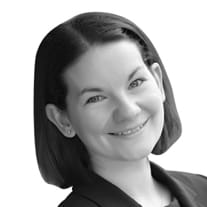
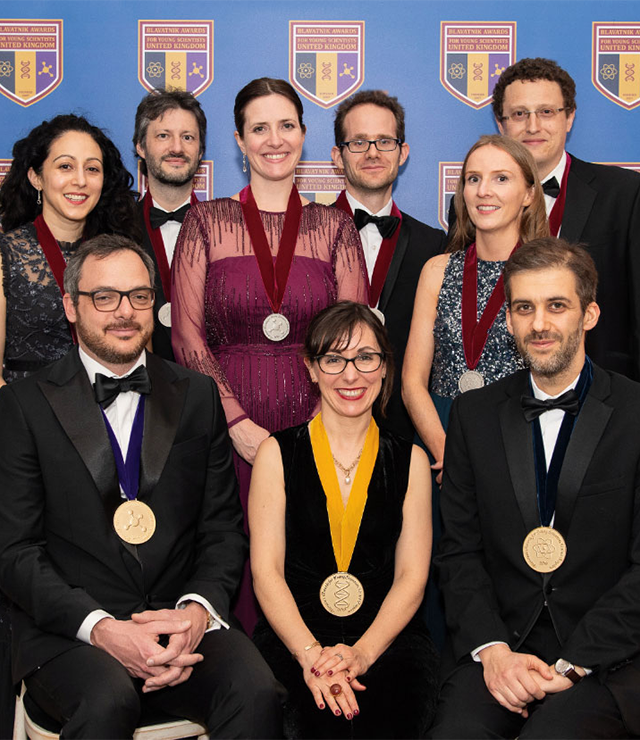
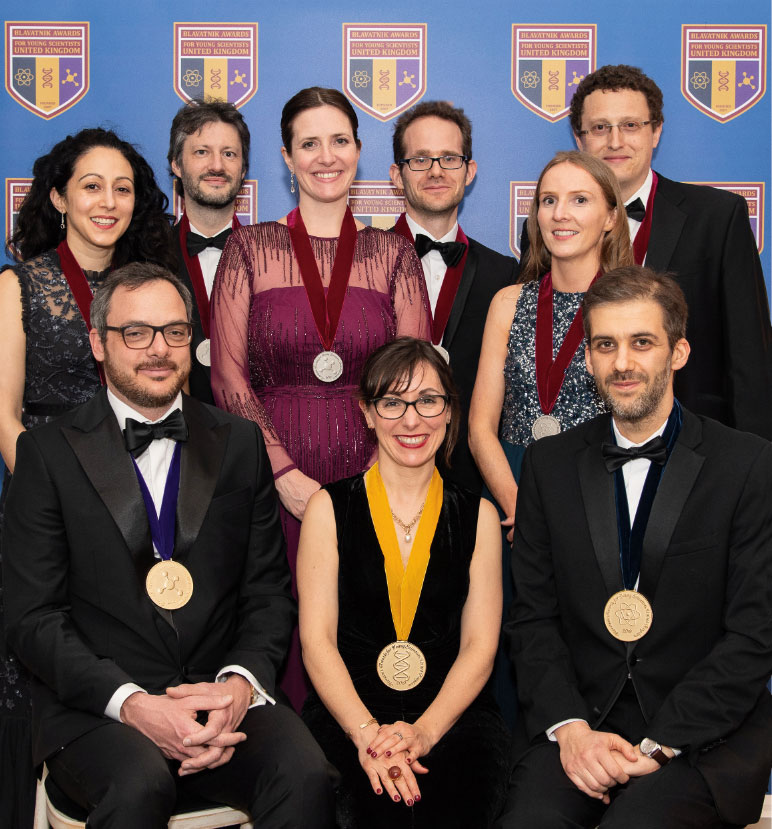
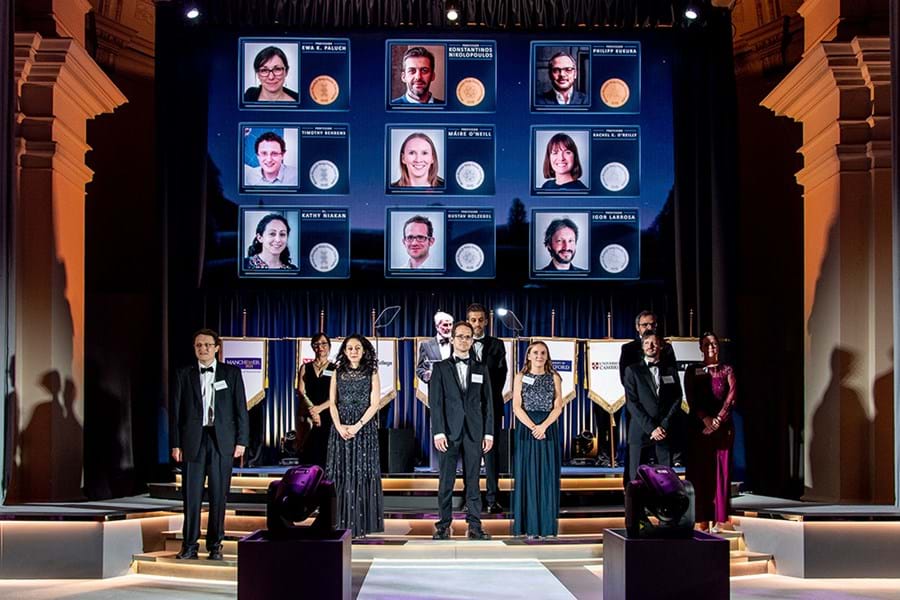
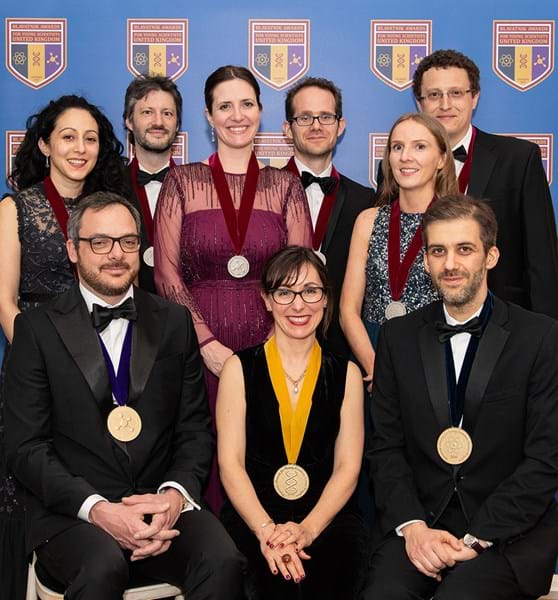
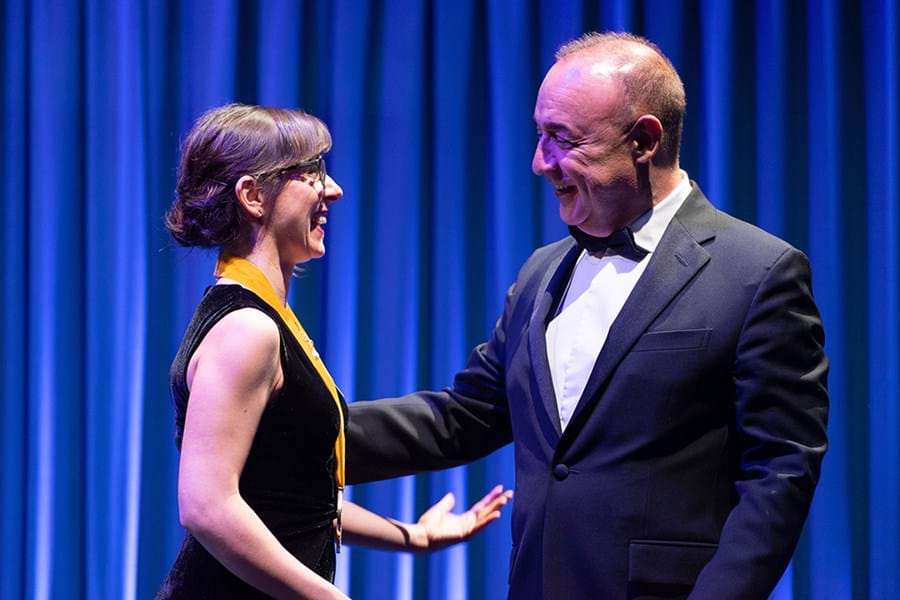
The 2019 honorees of the Blavatnik Awards for Young Scientists in the UK2019 Blavatnik Awards Laureate Professor Konstantinos Nikolopoulos Professor of Physics at the University of BirminghamBack Row (Left to right) The 2019 Finalists: Kathy Niakan, Igor Larrosa, Rachel O’Reilly, Gustav Holzegel, Máire O’Neill, Timothy Behrens; Front Row (Left to right) The 2019 Laureates: Philipp Kukura, Ewa Paluch and Konstantinos Nikolopoulos2019 Blavatnik Awards Laureate in Chemistry, Prof. Philipp Kukura, University of Oxford2019 Blavatnik Awards Laureate in Life Sciences, Prof. Ewa Paluch of UCL and University of Cambridge with Sir Leonard Blavatnik
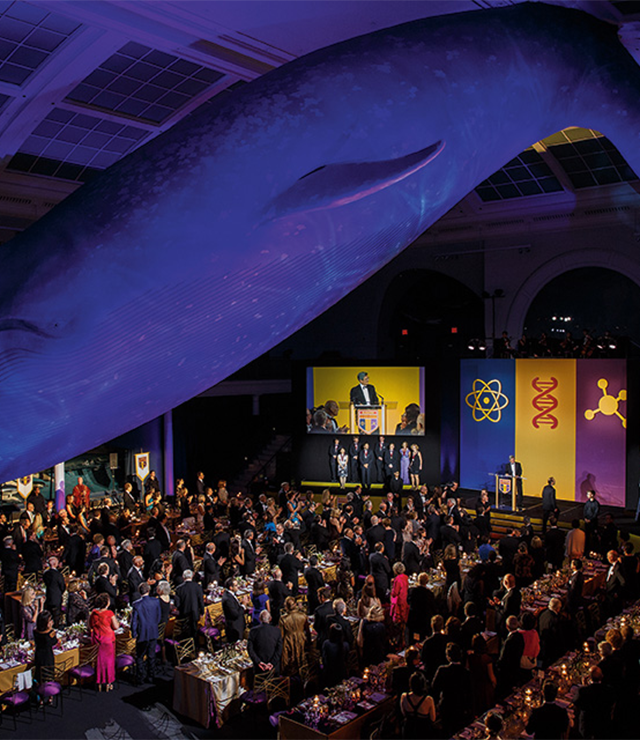
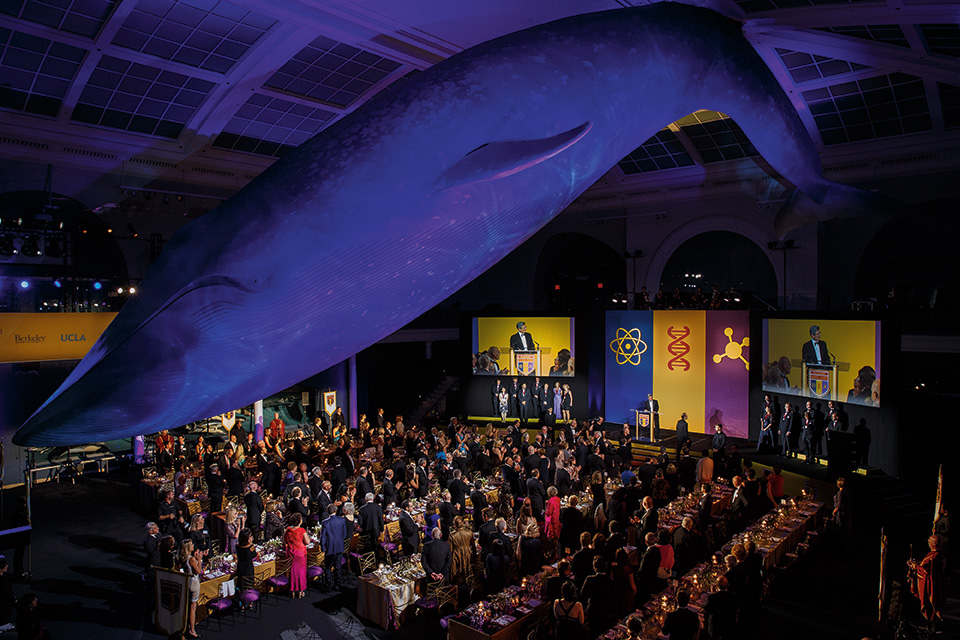
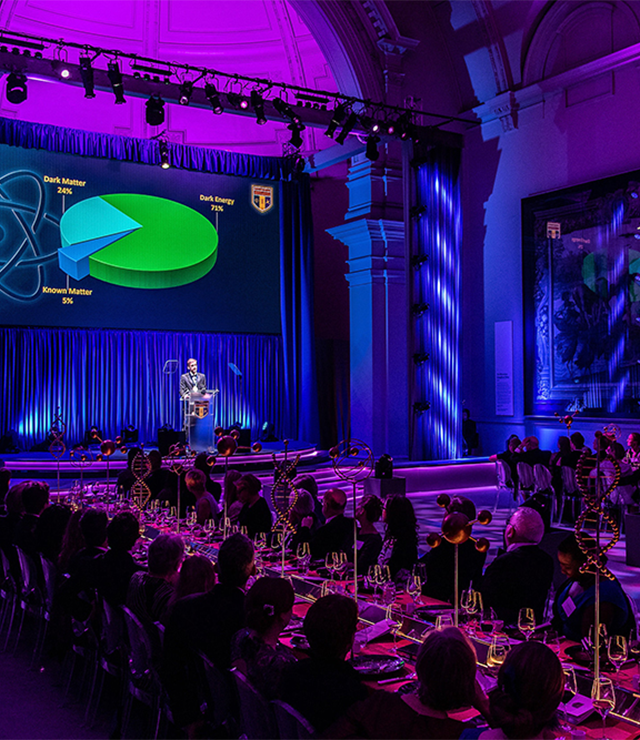
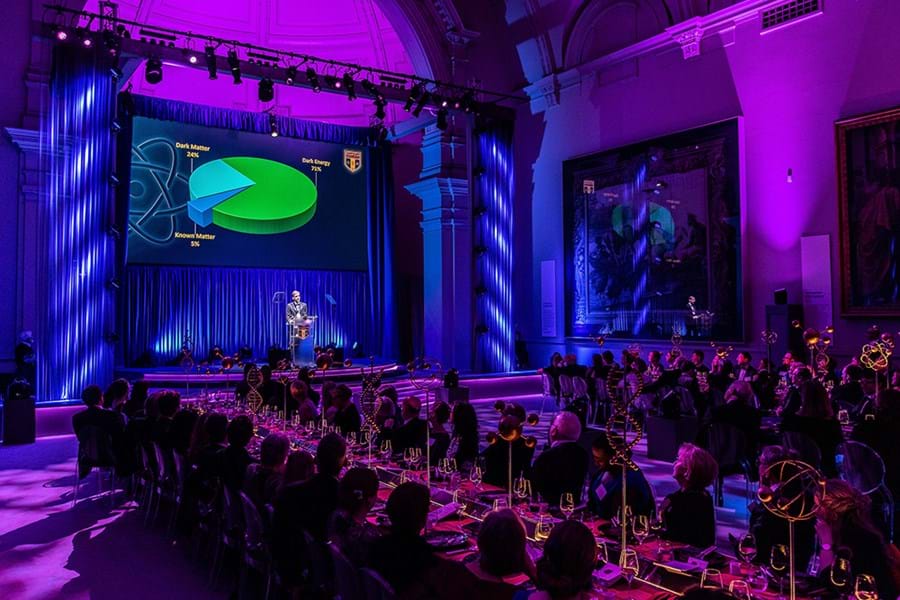
The Blavatnik Family Foundation hosted its annual ceremony celebrating the honorees of the 2019 Blavatnik Awards for Young Scientists in the United Kingdom at the Victoria and Albert Museum (V&A) in London.
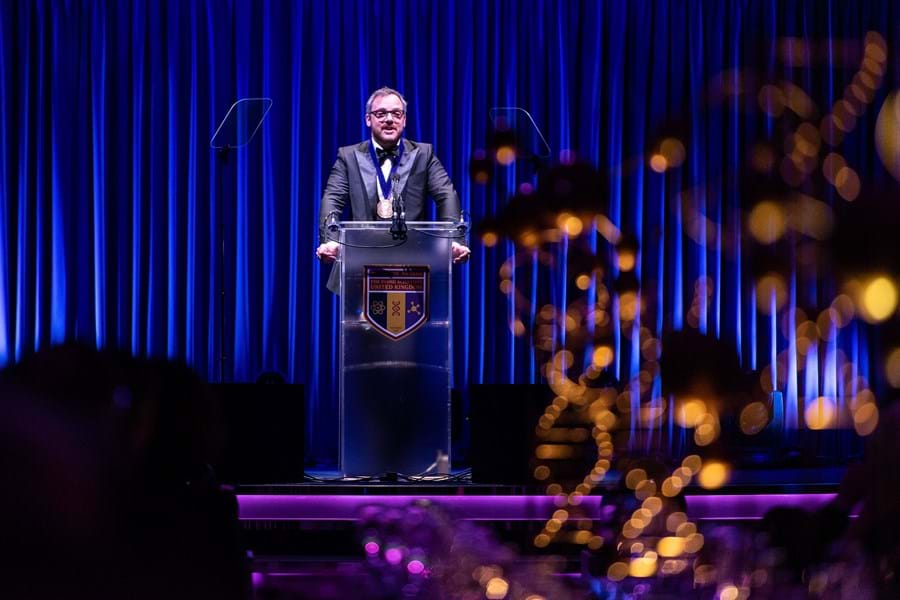
The Ceremony was attended by members of the UK’s scientific elite as well as key figures within the fields of government, academia, business and entertainment. Neuroscientist and 2014 Nobel Laureate Professor John O’Keefe of University College London, served as the Master of Ceremonies for the evening.
“The Blavatnik Awards are given not just for exceptional work already done, but in support of world-changing work that we believe is yet to be done by these young scientists,” says O’Keefe.
Academy President and CEO Ellis Rubinstein also gave remarks thanking the support of the scientific community within the United Kingdom and complimenting the outstanding group of scientists that make up the Blavatnik Awards’ UK Jury and Scientific Advisory Council.
Among the Most Dedicated and Original Thinkers in their Spheres
In commenting on the caliber of the nine honorees, Prof. O’Keefe mentioned “the young scientists and engineers are among the most dedicated and original thinkers in their spheres in the United Kingdom…They are making headlines across medical and tech communities for discoveries and innovations in human development and cognition; from novel ways to synthesize drugs and sustainable polymers, to advances in cybersecurity and radical breakthroughs in fundamental physics.”
In each scientific category (Chemistry, Physical Sciences & Engineering, Life Sciences), two Finalists were each awarded prizes of US$30,000, and one Laureate in each category was awarded US$100,000. The Awards’ founder, Sir Leonard Blavatnik, presented medals to the three Laureates and six Finalists at the ceremony.
Throughout the course of the evening, the audience watched three films featuring the honorees from the three Award categories. The ceremony concluded with a fireside chat and the Blavatnik Awards tradition of making a “Toast to Science.”
Learn more about the 2019 Blavatnik Awards ceremony in the UK here.
Whoever said, “Those who can, do; those who can’t, teach” never ventured into a lab at any American institute of higher education to speak to its graduate students.
Published April 25, 2019
By Marie Gentile, Robert Birchard, and Mandy Carr
Barbara Houtz
They’re not only expected to be research superstars but also teach the next generation of STEM learners. Unfortunately, this second responsibility can be overlooked by their institutions and PIs, who often fail to provide them with teaching support. We recently spoke with Barbara Houtz, a former teacher and current K–20 STEM specialist who runs an online Scientists Teaching Science course, about the challenges facing first-time teachers.
Why should scientists strive to improve their teaching skills?
Our country is losing a large number of people that have the interest and ability to succeed in STEM fields, but they drop out of STEM majors because of poor teaching, and a feeling that they’re unwelcome. This is especially problematic for minority and first-generation students, who come to college excited about a STEM major. They have the energy and the interest, but they’re faced with professors who sometimes think it’s their job to fail half of the class.
They teach in very traditional manners with lectures and very little interactions. ‘Are there any questions?’ is about the only interaction they have with students. This preferentially harms underrepresented minorities and first-generation college students. They need a little bit more support, they need more interaction, they need to feel that they belong in the class instead of just, ‘Here’s the information, learn it or don’t.’
What’s the most common mistake that first-time teachers make?
It’s my experience that when a graduate student get their first teaching position, they harken back to their graduate education and not their undergraduate education. This causes them to have unreasonably high, sometimes irrational, expectations of their students. They forget that they’ll be facing a class with hundreds of undergrads who don’t know anything.
They feel that as long as the lecture is interesting, they’re teaching students. They say, ‘If I have an interesting lecture, then that’s good enough.’ But it isn’t enough. I tell people that lecturing is not teaching. It can be an element of teaching, but just lecturing is not teaching.
Should the lecture be de-emphasized?
The lecture itself is not based on any kind of research on teaching and learning. Quite the opposite. All the research on teaching shows that lectures are a terrible way to teach. However, we persist at it because it’s traditional, even though it harms those students in the demographics that we’re trying to get into STEM fields. I always tell scientists, ’Your whole life is devoted to finding evidence for different ideas. Finding evidence to solve questions, to answer questions, solve problems. Why don’t you use evidence when you’re teaching?’
How do improved teaching skills make better scientists?
It helps them become better communicators. Whenever they’re giving a presentation, delivering a seminar, or going to a conference talk, it can help them organize and deliver the takeaways they want to give their audience. Instead of throwing out information hoping it will stick, they can think about every speaking opportunity as a teaching opportunity.
What’s your advice for scientists looking to improve teaching?
Don’t feel pressured to, ‘Make it fun’ or, ’Make it interesting’ because, that’s an unnecessary bonus. Learning doesn’t have to be fun, and it doesn’t have to be interesting as long as you’re engaging the mind and you’re showing the student the usefulness of this information. Learning is hard work. You can’t say you’re always having fun.
Science is very complex, STEM ideas can be extremely complex. It’s not a simple thing to learn how everything works. I don’t aim to try to teach people how to make learning fun or interesting. I aim to engage students.
Learn more about the Academy’s Educational programming.
Participants in The New York Academy of Sciences’ Interstellar Initiative discuss their work in the program, the power of effective mentors, and the need for cross-discipline collaboration.
Published February 28, 2019
By Marie Gentile, Mandy Carr, and Richard Birchard
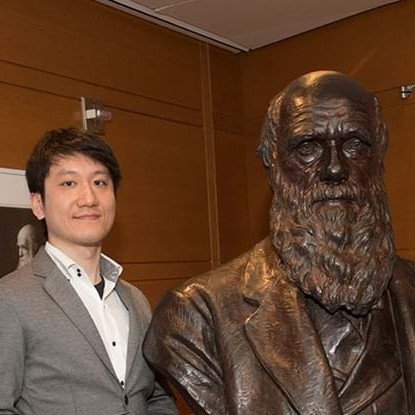
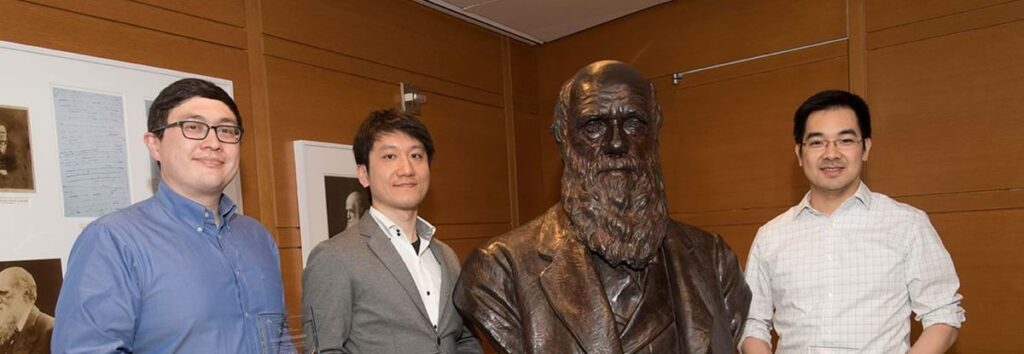
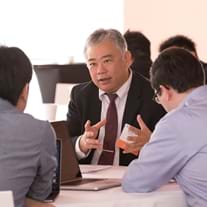
Mentors take part in the Academy tradition of posing next to the bronze bust of Charles Darwin.
A radiation oncologist, an immunologist, and a mechanical engineer walk into a room to consult with a brain tumor specialist. This may sound like the inauspicious start to a bad joke, but at the Interstellar Initiative—a mentoring workshop series presented by the Academy and The Japan Agency for Medical Research and Development—the payoff is a potential treatment for pancreatic cancer.
We recently sat down with a team of Interstellar participants to discuss how the Initiative’s emphasis on international collaboration and mentorship is helping to pave the way for innovative research. We caught up with them just as they were finalizing a grant proposal, developed over the course of two workshops with the guidance of their team mentor Noriyuki Kasahara, PhD.
What is your grant proposal’s focus?
Michael Pacold, MD, PhD, New York University: We’re studying pancreatic cancer—a nasty cancer with a five-year survival rate less than five percent. We’re interested in defining metabolic features of the pancreatic cancer environment that render these tumors insensitive to multiple therapies, including immune therapy. During preliminary experiments, we found that our initial proposal wouldn’t have worked.
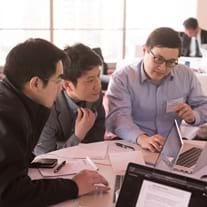
From left to right Edmond Young, Taisuke Kondo, and Michael Pacold work on their grant presentation.
Taisuke Kondo, PhD, Keio University: The therapy we were proposing was potentially very dangerous because of adverse effects for normal lung tissues.
MP: With this knowledge, we’re now focused on what metabolites are in the microenvironment of pancreatic cancer.
Edmond Young, PhD, University of Toronto: This new approach makes for a more focused grant. We’re answering a basic question that could have major impact across the board in basic science. This Initiative has been very helpful. The first workshop was a meet and greet, shaking hands and getting to know one another. Six months later we have met again to parse out further details and receive mentored feedback.
Why should senior scientists mentor their younger colleagues?
Noriyuki Kasahara, MD, PhD, University of California, San Francisco: There’s an earnest desire to ensure young, promising junior faculty do not make the same mistakes that we made, and that they benefit from our experiences. Also an experienced scientist can explain how to think about grant proposals in the way that critical reviewers think about them.
Why is mentorship for early career investigators important?
EY: Because it’s easy to make mistakes (as an early career investigator). Mistakes happen often, and sometimes they take a long time to fix. Having a mentor helps to avoid traps. PhD students have been trained to do good bench science, and they know how to design an experiment, but writing a grant is a new game.
MP: In science and medicine, the successful generally function at a level above where they actually are. Good graduate students act like postdocs, good postdocs act like primary investigators. Good junior faculty act like senior faculty and so forth. Mentors help you get there, if only by imitation.
Why is international collaboration in the sciences important?
Noriyuki Kasahara consults with the team on their proposal.
EY: When you’re doing science at a university surrounded by familiar people, you get siloed. Scientists need to step outside of their local environment once in a while. Hearing other people’s thoughts, getting their input, and having a global eye towards problems is extremely helpful.
MP: The beauty of science is that it should be true and reproducible. You should be able to do the same experiment in New York as you can in Tokyo, as you can in Toronto.
NK: I think that’s one of the wonderful aspects of science. Also, it’s a universal kind of language. Physical laws are universal and it doesn’t matter what your nation of origin is, or your ethnicity. They apply equally to everybody.
TK: This program is a great opportunity for young investigators to participate in international collaborations.
What advice do you have for young researchers?
MP: In science you have to be comfortable with the realization that you will be wrong. Often. Don’t be afraid of being wrong, look at what the data is telling you and adjust accordingly.
EY: Question everything, because a skeptical scientist is always a good scientist.
TK: Enjoy both success and failure. Positive and negative data are both useful.
NY: Being in science can be very immersive, very consuming. You think about your hypotheses and your experiments all the time. But don’t always let it consume you. Live your life and see your family.
It’s no secret that encouragement from a mentor can be critical to success, particularly for early-career STEM professionals. But what’s in it for the mentor?
We posed this question to a few of the scientists participating in the Academy’s Member-to-Member Mentoring program, and here’s what they had to say:
1) Mentoring Helps You Become a More Effective Leader
“My mentoring experience helped me develop my own leadership skills which I use to advise, coach, and develop my current staff.” – Paul-André Genest, PhD, Senior Publishing Editor at Wiley and Adjunct Professor at Stanford University
2) Think Your Experiences Are Ordinary? Think Again
“Participating in the Member-to-Member Mentoring program taught me that my experiences, no matter how ordinary they may seem to me, can be helpful to young people coming up in my profession.” – Katie Slade, VMD, Emergency Doctor at the Veterinary Specialty Center of Delaware
3) Mentoring Hones Your Transferable Skill-set
“I am happy that I could contribute to my mentee’s goals as an academician. Her expertise was somewhat familiar to me, but not completely. However, we managed to work together on general principles and I feel we succeeded. This program has further taught me how to accommodate others’ ways of thinking and working.” – Mirjana Maletic-Savatic, MD, PhD, Associate Professor, Department of Pediatrics at Baylor College of Medicine
4) Mentoring Gets You Out of Your Comfort Zone (and That’s a Good Thing)
“I learned how to assist somebody beyond academia and give advice on future work perspectives. This gives you the chance to get out of your comfort zone and use your expertise in other areas. The main skill I improved was listening. Listening and giving advice beyond instructing is key.” – Santiago Sole Domenech, PhD, Research Associate, Maxfield Lab and Leon Levy Research Fellow, Feil Family Brain and Mind Research Institute, both at Weill Cornell Medicine
5) The Rewards of a Mentoring Partnership Flow Both Ways
“I learned that I don’t have to be in the exact same discipline or area of science to be helpful to the mentee and I also learned that mentees have a lot to offer the mentor—it is a two way street.” – Gwendolyn Quinn, Vice Chair of Research and Professor (OB-GYN) at NYU School of Medicine
Recently, Vice President Pence laid out an ambitious plan to establish a new military “Space Force” as soon as 2020. NASA has already outlined its plans to send humans to Mars in the 2030s. Private companies like Boeing, SpaceX and Sierra Nevada Corp., are investing heavily in commercial spacecraft. And Orion Span, Bigelow Aerospace, Virgin Galactic and Blue Origin are just a few of the players testing the space tourism waters as the ultimate vacation destination for those who have lots of disposable income and have already been everywhere on Earth, twice.
But what impact might increased human activity have on the fragile space eco-system? How will space travelers grow enough food to sustain a trip of months or years? Already some experts are sounding the alarm about the amount of “space debris” in orbit around the Earth. Who gets to own space and how will commercial and military use of space be governed?
2019 will mark yet another milestone for space travel. As we celebrate the 50th anniversary of the moon landings, the first fleet of private “space taxis” will be deployed. If all goes as planned, SpaceX’s Crew Dragon capsule and Boeing’s CST-100 Starliner are both scheduled to blast off on test flights with NASA astronauts on board.
A Tremendous Expansion in Scientific Knowledge
We have had nearly sixty years of space travel, and almost fifty years since the iconic “giant leap for mankind.” Human exploration of space has resulted in a tremendous expansion in scientific knowledge about our solar system, and orbiting satellites have provided critical knowledge about the Earth itself — continuously collecting data on global climate, environmental change and natural hazards.
But the scientific benefits of space exploration are only the tip of the iceberg. Our activity in space has improved nearly every aspect of quality of life on Earth. Early satellites contributed critical knowledge and capabilities for communication and global positioning. The challenges of energy efficiency for space exploration drove the development of solar cells, batteries and fuel cells. The precision and reliability required of robots for space have advanced robotic capabilities on Earth, such as a robotic glove developed as a grasp assist device, first for astronauts and then factory workers.
The International Space Exploration Coordination Group recently published an overview of the benefits stemming from space exploration, listing the following technological innovations: implantable heart monitors, light-based anti-cancer therapy, cordless tools, light-weight high temperature alloys for jet engines, cell phone cameras, compact water purification systems, global search-and-rescue systems and biomedical technologies.
An Exciting New Phase of Space Exploration
We are poised on the edge of an exciting new phase of space exploration — what Bloomberg Businessweek recently called “The New Space Age.” This new phase is characterized not only by a new mission — Mars and beyond — but by a new focus on sustainability. With years in an enclosed environment and on a planet without oxygen, a long-haul space mission will not get replenishments of food, water, equipment, clothing or anything else.
As astronaut Cady Coleman put it, “Sustainability, for someone like myself planning to go to Mars, is a closed loop system, not being able to go home or bring supplies. The things we need to think about are exactly the things we need to think about for a sustainable Earth.”
Sustainable space exploration promises to be an essential driver for exciting and dynamic discoveries. The possibilities of providing solutions to some of our most urgent problems, creating ecosystems of innovation, fueling job creation, and inspiring new generations of young people toward careers in science, engineering and technology are limitless.
And by overcoming the challenges of sustainable space travel, we have an opportunity to realize a whole new set of benefits for the 7.5 billion people here on Earth.
Ellie Zillfleisch looks forward to the day where she might help others suffering from Chronic Recurrent Multifocal Osteomyelitis.
Published October 22, 2018
By Marie Gentile, Mandy Carr, and Richard Birchard
A hospital bed might not be where you’d expect to find a career revelation, but that’s where Ellie Zillfleisch, 14, discovered her love for STEM. She grew up in Julatten, a small, rural town in Queensland, Australia, home to just 1,000 people. At 11, doctors diagnosed her with Chronic Recurrent Multifocal Osteomyelitis (CRMO), a disease that develops bone lesions. CRMO affects 1 out of every 1,000,000 people.
“My bones look like honeycombs, which is kind of cool (even though it’s painful),” says Ellie.
There is no standard treatment for CRMO. She started having symptoms when she was eight, and doctors routinely misdiagnosed her with rheumatoid arthritis, cancer, and osteomyelitis. Going to hospitals in big cities intimidated Ellie, who was used to her small town life.
A First Foray into Medicine
After spending a month in a hospital in Brisbane, she started having acute anxiety attacks. Her fear of needles grew when she thought her IVs would fall out. To prove they’d stay in place, doctors let her take off the tape that held the tubes in place. Ellie thinks of this as her first foray into medicine.
To overcome CRMO, Ellie found inspiration from the superhero, Green Arrow, whose superpower involves using trick arrows to stop bad things from happening and who often refers to this Russian proverb: “the shark that doesn’t swim drowns.”
“If I did not beat this disease, it would swallow me,” she told us. “I often thank those doctors in the hospital all those years ago, as now I am hoping to pursue medicine as a career and say, ‘I shattered this disease.’”
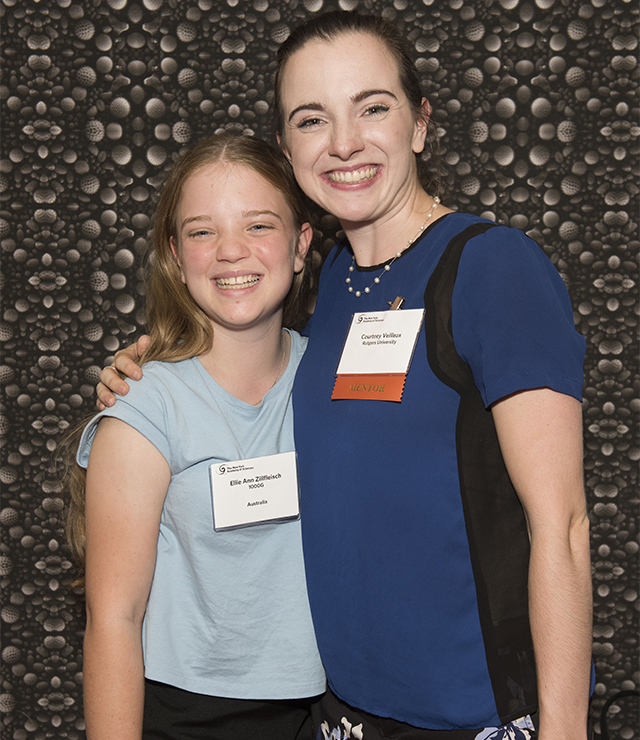
Ellie Zillfleisch met her mentor, Courtney Veilleux, at the GSA Summit.
Chasing a Dream
Despite her chronic disease and small-town roots, she looks for every opportunity to get closer to her dream. Ellie heard about The New York Academy of Sciences’ 1000 Girls, 1000 Futures program from a friend who took part. When she realized a STEM mentor could give her the edge in college and her future career, she applied immediately.
Ellie felt overwhelmed when she started 1000 Girls, 1000 Futures. She wasn’t sure if she would have enough time to participate while staying on track with school and other extracurricular activities. Her mentor reassured her she was capable of completing all her tasks and taught her to balance her busy schedule. Ellie believes she improved her work-life balance by setting manageable goals for each day.
One of the opportunities 1000 Girls, 1000 Futures provided her was attending the Global STEM Alliance Summit in New York City. She received an all-expense paid trip to New York because she was picked as a “Mentee of the Month.” Mentors nominate students for this award for being active and exemplary participants.
Interacting with a global community of students has shown Ellie a world outside her own in Julatten. She even wants to attend college in the United States because she believes there are more opportunities for women in STEM there.