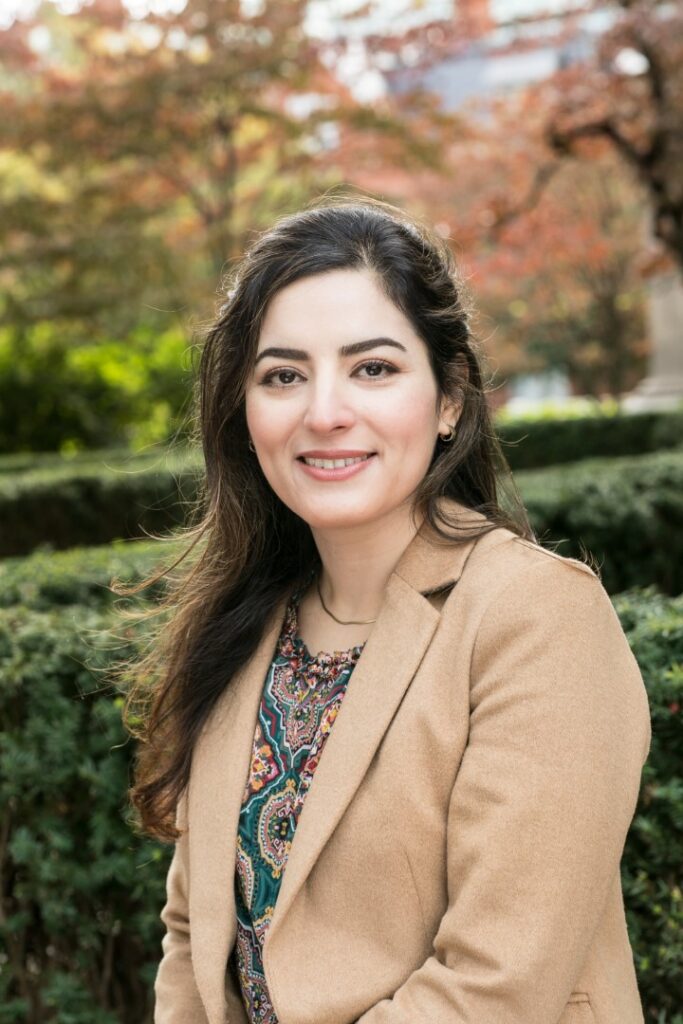
Associate Professor of Biological Sciences at UCLA (2022 Early-Career Scientist Award Winner)
Winning the Innovators in Science Award is a great privilege for me as an early-career scientist. Not only does it signal a welcome to new researchers to help advance the field, it also recognizes the discoveries made possible by my talented and inspiring colleagues in the lab who share my dedication to uncovering interactions between the gut, its native microbes, and the brain. This award will continue to motivate me to go where science leads.
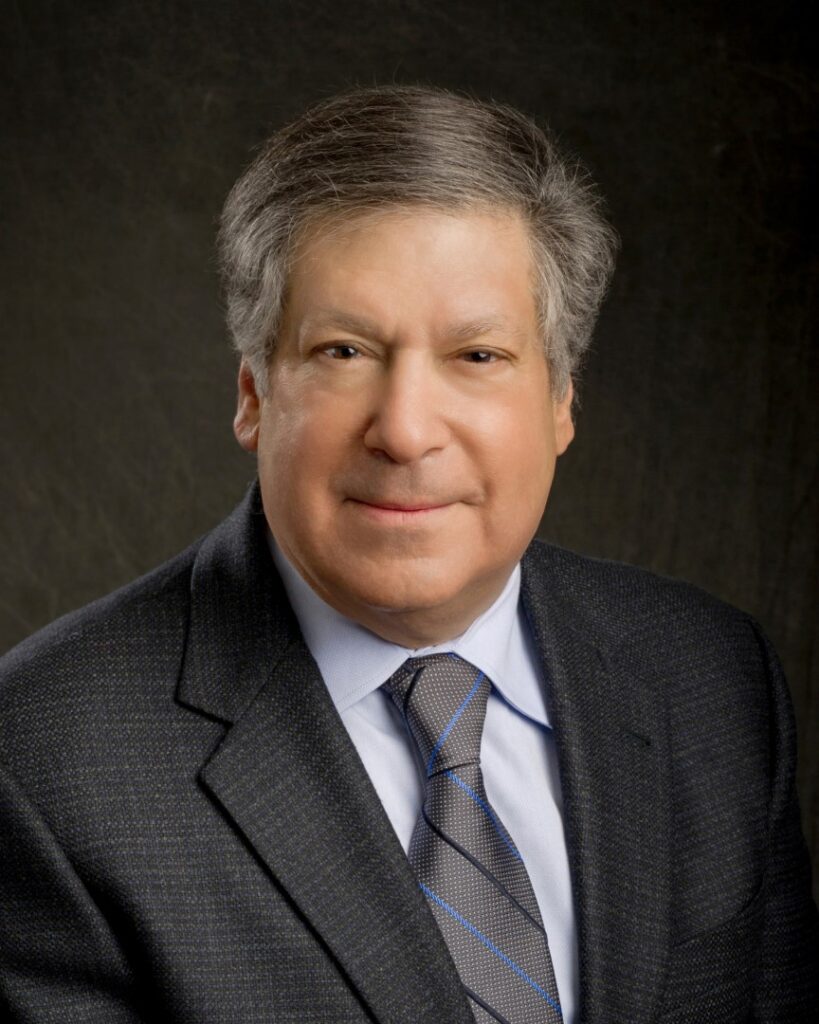
Distinguished University Professor at Washington University School of Medicine in St. Louis (2022 Senior Scientist Award Winner)
This award is a wonderful recognition of the excitement and promise that the field of microbiome research offers, and of the collective efforts of the inspiring group of talented students, staff, and collaborators who I’ve been privileged to work with as we strive to better understand how the gut impacts our health.
Assistant Professor of Cancer Data Research at Columbia University (2024 Early-Career Scientist Award Winner)
The Innovators in Science Award motivates me, my team and the broader community to continue on the path of blending multiple fields to find creative cancer immunology solutions. This award will allow me and my team to forge new collaborations and explore high-risk and ambitious directions in our mission to help patients.
Director of The Bursky Center for Human Immunology and Immunotherapy at Washington University in St. Louis (2024 Senior Scientist Award Winner)
I began researching the connection between the immune system and cancer more than 40 years ago…Scientific research is rewarding even when it takes decades to see results, which is why this award is so meaningful to me.
The 2024 Innovators in Science Awards recognize innovative science that has significantly advanced the field of research in cancer immunology.
2024 Award Celebrates Outstanding Research in Cancer Immunology
Winners Discovered Novel Connections Between the Immune System and Cancer
Recipients Each Receive Unrestricted USD 200,000 Awards
OSAKA, Japan, and CAMBRIDGE, Massachusetts | December 5, 2023 – Takeda (TSE:4502/NYSE:TAK) and The New York Academy of Sciences today announced the winners of the 2024 Innovators in Science Award for their excellence in, and commitment to, innovative science that has significantly advanced the field of research in cancer immunology. Each winner receives an unrestricted prize of USD 200,000.
Senior Scientist Winner: Robert D. Schreiber, Ph.D.
The 2024 Senior Scientist winner is Robert D. Schreiber, Ph.D., the Andrew M. and Jane M. Bursky Distinguished Professor of Pathology and Immunology and director of The Bursky Center for Human Immunology and Immunotherapy at Washington University in St. Louis. Dr. Schreiber is an international leader in the fields of tumor immunology and cytokine biology. His early work was foundational in characterizing the role of cytokines in promoting immune responses to cancer. Dr. Schreiber pioneered the concept of “cancer immunoediting,” which describes how the immune system can induce, promote and prevent cancer. He also identified a novel subset of immune cells that interfere with cancer immunotherapy.
“I began researching the connection between the immune system and cancer more than 40 years ago. Along the way my research has benefitted from the contributions of more than 70 colleagues, technicians and trainees who have helped build on both our small discoveries and setbacks to make connections that are now transforming cancer research and treatment,” said Dr. Schreiber. “Scientific research is rewarding even when it takes decades to see results, which is why this award is so meaningful to me.”
Early-Career Scientist Winner: Elham Azizi, Ph.D.
The 2024 Early-Career Scientist winner is Elham Azizi, Ph.D., assistant professor of biomedical engineering, and the Herbert and Florence Irving Assistant Professor of Cancer Data Research at Columbia University. Dr. Azizi is recognized for developing a suite of computational tools and models that leverage artificial intelligence and machine learning to characterize immune profiles in the tumor microenvironment. Her novel machine learning algorithms are applied to data from genomic and imaging technologies, guiding improved and personalized cancer therapies. Dr. Azizi’s work has helped identify immune components involved in anti-tumor responses and characterize immune states that promote tumor progression and response to immunotherapy. Her innovative models have identified, for the first time, determinants of immunotherapy response in leukemia.
“This award is a significant recognition of our efforts to push the boundaries of cancer immunology through innovations in statistical machine learning,” said Dr. Azizi. “The Innovators in Science Award motivates me, my team and the broader community to continue on the path of blending multiple fields to find creative cancer immunology solutions. This award will allow me and my team to forge new collaborations and explore high-risk and ambitious directions in our mission to help patients.”
Treating Cancer with Immunotherapies
“We are inspired by the groundbreaking work of Dr. Schreiber and Dr. Azizi to deepen our understanding of both the immune response to cancer and immunotherapies,” said Andrew Plump, M.D., Ph.D., president of research & development at Takeda. “There has been remarkable progress in treating cancer with immunotherapies, thanks to the advances of these researchers and others. Takeda proudly supports the Innovators in Science Award to honor researchers who share in our goal to improve lives through the relentless pursuit of science.”
“Cancer is the second-leading cause of death worldwide. We are proud to join Takeda to champion pioneering medical researchers around the world who seek to harness the power of the body’s own immune system to fight cancer,” said Nicholas B. Dirks, President and CEO of The New York Academy of Sciences. “The 2024 Innovators in Science Award winners are using AI, computational tools and groundbreaking methods to fight cancer and advance the field of cancer immunology. We congratulate the winners and eagerly await their future discoveries.”
The 2024 winners will be honored at the Innovators in Science Award ceremony and symposium in April 2024 in Boston. For more information, visit TakedaInnovators.com.
About the Innovators in Science Award
Established in 2016, the Innovators in Science Award grants two unrestricted prizes of USD 200,000 each award cycle: one to an early-career scientist and the other to a well-established senior scientist who have distinguished themselves for the creative thinking and impact of their research. The Innovators in Science Award is a limited submission competition in which research universities, academic institutions, government, or non-profit institutions, or equivalent from around the globe with a well-established record of scientific excellence are invited to nominate their most promising early-career scientists and their most outstanding senior scientists.
The therapeutic focus rotates each year. The 2024 focus is cancer immunology. Prize winners are determined by a panel of judges, independently selected by The New York Academy of Sciences, with expertise in these disciplines. The New York Academy of Sciences administers the Award in partnership with Takeda. For more information, visit TakedaInnovators.com.
About Takeda
Takeda is focused on creating better health for people and a brighter future for the world. We aim to discover and deliver life-transforming treatments in our core therapeutic and business areas, including gastrointestinal and inflammation, rare diseases, plasma-derived therapies, oncology, neuroscience and vaccines. Together with our partners, we aim to improve the patient experience and advance a new frontier of treatment options through our dynamic and diverse pipeline.
As a leading values-based, R&D-driven biopharmaceutical company headquartered in Japan, we are guided by our commitment to patients, our people and the planet. Our employees in approximately 80 countries and regions are driven by our purpose and are grounded in the values that have defined us for more than two centuries. For more information, visit www.takeda.com.
Three scientists were selected from 169 entries by an international jury of renowned experts for their innovations in food security, sustainability, and healthcare. Each winner will receive INR 2 crores (approximately US$240,000) and will be honoured at a ceremony in Mumbai in December 2023. The jury included distinguished scientists, clinicians, technologists, and engineers spanning six continents from a variety of organizations, including IBM Research, Indian Institute of Science Bangalore, Indian Institute of Technology Madras, International Centre for Genetic Engineering and Biotechnology, Public Health Foundation of India, and UN-Habitat.
The 2023 Tata Transformation Prize Winners are:
Food Security Winner: Shilpi Sharma, PhD, Indian Institute of Technology Delhi Professor Shilpi Sharma was selected by the jury for her work in the engineering of the soil microbiome using synthetic microbial communities, called microBIOme-based soil TRANSFORMation (BIOTRANSFORM). Plant diseases threaten crop productivity and, consequently, the global economy. Unlike conventional farming that uses agrochemicals and synthetic fertilizers, soil amended organically has the natural ability to suppress a wide range of plant pathogens. Starting from naturally suppressive soil, Shilpi will catalog the active microbial players and their mechanism of suppression of a range of phytopathogens. Her work will be the first to map the natural suppressive potential of soil across six states of India and to harness this potential by microbiome engineering to facilitate sustainable agriculture in the country and beyond.
Sustainability Winner: Purnananda Guptasarma, PhD, Indian Institute of Science Education and Research Mohali Professor Purnananda Guptasarma was selected by the jury for his breakthrough methods to degrade polyethylene terephthalate (PET), a common plastic pollutant, using enzymes. PET is currently produced and used at unsustainable levels, creating worldwide plastic pollution and micro-plastic contamination in the air, water, and soil, as well as in animal and human bodies. Only 9% of PET is actually recycled worldwide. Guptasarma’s enzyme-driven strategy uses engineered thermostable enzymes and reactions to demonstrate that solid PET can be broken up into its smallest molecular building blocks with high yield and ultra-high purity to enable PET’s degradation and recycling into virgin plastic. Building on this proof of concept at the laboratory-scale, Guptasarma will further identify and improve enzymatic reagents and reactions for PET degradation and attempt to produce the best enzymes in quantities allowing pilot-scale PET-waste degradation and recycling.
Healthcare Winner: Anurag S. Rathore, PhD, Indian Institute of Technology Delhi Professor Anurag S. Rathore is a healthcare pioneer aiming to reduce the manufacturing cost of biotherapeutics for treating cancer and autoimmune diseases, thus enabling equal access to these top-tier, expensive treatments currently out of reach for 90% of the Indian population. Rathore has established a state-of-the-art drug manufacturing facility with continuous processing that incorporates novel methods for real-time process monitoring and control. Rathore’s innovation is projected to reduce manufacturing costs by 50-75%, making best-in-class biotherapeutics for complex diseases significantly more affordable for Indian populations in need and further advancing India’s position at the forefront of global medical innovation.
N. Chandrasekaran, Chairman of the Board of Tata Sons, said, “We are extremely delighted to announce the first cohort of Tata Transformation Prize winners and their groundbreaking innovations aimed at solving India’s national problems in the areas of food security, sustainability, and healthcare. On behalf of Tata Sons, we are pleased to provide these scientists a global stage to take their technologies from India to the rest of the world.”
Nicholas Dirks, President and CEO of The New York Academy of Sciences, said, “Congratulations to the first Winners of the 2023 Tata Transformation Prize. From developing new soil enhancements to improve crop yield, creating methods to make critical medicines available to all, and developing techniques to tackle plastic pollution, these scientists are making important contributions to Indian society and the world. We also thank the jury for sharing their time and expertise in reviewing the submissions in the first year of the Tata Transformation Prize.”
About the Tata Transformative Prize
The Tata Transformation Prize was established in 2022 by Tata Sons and The New York Academy of Sciences to support breakthrough, innovative technologies that address India’s most significant challenges. By recognizing and supporting the implementation at scale of high-risk, high-reward research, the Prize will drive impactful innovation in scientific disciplines of importance to India’s societal needs and economic competitiveness. The Prize will leverage the exceptional potential of scientists in India to address critical national challenges in three categories—Food Security, Sustainability, and Healthcare—and generate improved life quality outcomes across India and beyond. The Tata Transformation Prize recognizes one Winner in each category, with INR 2 crores (approximately US$240,000) for each Winner. Click here for more information about the Tata Transformation Prize.
About the Tata Group
Founded by Jamsetji Tata in 1868, the Tata Group is a global enterprise, headquartered in India, comprising 30 companies across ten verticals. The group operates in more than 100 countries across six continents, with a mission ‘To improve the quality of life of the communities we serve globally, through long-term stakeholder value creation based on Leadership with Trust’.
Tata Sons is the principal investment holding company and promoter of Tata companies. Sixty-six percent of the equity share capital of Tata Sons is held by philanthropic trusts, which support education, health, livelihood generation and art and culture.
In 2022-23, the revenue of Tata companies, taken together, was $150 billion (INR 12 trillion). These companies collectively employ over 1 million people. Each Tata company or enterprise operates independently under the guidance and supervision of its own board of directors. There are 29 publicly listed Tata enterprises with a combined market capitalisation of $300 billion (INR 24 trillion) as on July 31, 2023. Companies include Tata Consultancy Services, Tata Motors, Tata Steel, Tata Chemicals, Tata Consumer Products, Titan, Tata Capital, Tata Power, Tata Communications, Indian Hotels, Tata Digital, Air India and Tata Electronics. Website: https://www.tata.com
The Tata Transformation Prize is the latest in a series of prominent awards and scholarship programs The New York Academy of Sciences and its partners present each year to accomplished early-career and established scientists worldwide. These initiatives, along with education and professional development programs for students and young scientists, reflect the Academy’s broader commitment to strengthening and diversifying the pipeline for skilled and talented scientists globally. Please visit us online at nyas.org.
Daniel Brandenburg, the 2022 Blavatnik Regional Awards Finalist in Physical Sciences & Engineering, offers tips on how to find a healthy work-life balance in the new age of hybrid work.
Published September 21, 2022
By Daniel Brandenburg
Daniel Brandenburg
For many of us, COVID ushered in an era of working from home. I was traveling for a scientific conference when Brookhaven National Laboratory first sent all employees home to work. It was an eerie experience returning from a trip and just never going back to my office. At first, I loved working from home, since every extra minute with my wife and two young daughters is a gift. As I tried to balance everything, I quickly realized that working from home is a double-edged sword. As much as I loved being seconds away from my family, I really benefit from a “work” routine—of getting out of the house and going to the office.
The change in external environment naturally helped change my internal focus, shifting it onto my research and work. Then, at the end of the day when I left my office, the change in environment helped my to-do list slip out of my mind. Working from home removed that routine overnight along with the environment switching that I relied on to kick-start my morning focus and my winding down each day. At first, I didn’t even have a home office, since we lived in a small apartment. So, I worked wherever I could find some peace and quiet. But when you train yourself to focus on work at your dinner table or in your living room, it is hard to ever forget about work in your own home.
If left unchecked, that turns into an unhealthy cycle: work, eat, sleep, work.
And that is not a good routine for life or for long-term quality and productivity. Whenever I catch myself getting too overwhelmed with my research or falling into a bad routine, my family is what helps me find balance. That help comes primarily in two ways:
1) Balance is hard work. My family gives me something outside of work I truly care about enough to invest the hard work needed to find balance.
2) They expect me to succeed in finding balance, and they celebrate with me when I do.
Daniel with his two children.
I think number one is easy to overlook. Anything that requires hard work needs to be compelled by something you value, otherwise it can be hard to stay motivated. Most scientists genuinely enjoy their research, so what is the harm in another hour or two? Having a daughter that is eagerly awaiting my free time puts that into sharp focus and gives me a reason to put healthy boundaries on my time. I enjoy physics and most of my daily work, so it’s even more important for me to recognize and remember that time spent on work, is time not spent on something else that’s important and good.
But number two is at least as important for me. “Balance” isn’t something that happens once; it is a process and a pattern with ups and downs at different periods. And academia is a competitive field. Even more, I work in a large scientific collaboration with over 700 members from across the globe—there’s really no concept of a nine-to-five. So sometimes I work a long day or, if a major conference is coming, maybe a long couple of weeks. Those are the times when it is easiest for it to become normal, to slip into an unhealthy work routine. But my family doesn’t operate on deadlines, so they are expecting me to make time for them every day, regardless of the day or week. And when I do, they are happier, and I am too. This expectation for successful balance is a kind of restorative force, preventing me from ever getting too unhealthy. I am glad for that kind of positive pressure in my life.
Daniel kayaking with his daughter.
So, practically speaking, I try to focus 100 percent on work when I am working. I set up my environment to remove distractions and unrelated interests. This lets me feel accomplished and honest with my time at the end of the day. Then, once the workday is done, I try to plan quality time with my family. For instance, my daughter and I have been making use of the hot summer to go kayaking together. She is still small enough to sit in my lap in a single kayak. We often spend hours together talking, exploring, and looking for fish. Even the more mundane parts of daily life can be planned for a better outcome. I acquired a love of cooking from my father, so often I’ll try to make dinner with my wife or daughter’s help. Since my older daughter is only three-and-a-half years old, I must find creative ways for her to help. Sometimes that means giving her an extra bowl and her own ingredients to mix. Sometimes it means making a mess—that’s my wife’s favorite 😉
These kinds of activities are my favorite because they engage my mind, they help me relax, and they often provide teachable moments for my daughters.
This piece was originally published on the National Postdoctoral Association member blog as part of 2022 National Postdoc Appreciation Week. Current Academy Members can receive a 20% discount on a National Postdoctoral Association postdoc individual membership by emailing info@nyas.org and requesting the NPA membership discount code
The Blavatnik Awards for Young Scientists in the United Kingdom are the largest unrestricted prize available to early career scientists in the Life Sciences, Physical Sciences & Engineering, and Chemistry in the UK. The three 2021 Laureates each received £100,000, and two Finalists in each category received £30,000 per person. The honorees are recognized for their research, which pushes the boundaries of our current technology and understanding of the world. In this event, held at the historic Banqueting House in London, the UK Laureates and Finalists had a chance to explain their work and its ramifications to the public.
Victoria Gill, a Science and Environment Correspondent for the BBC, introduced and moderated the event. She noted that “Science has saved the world and will continue to do so,” and stressed how important it is for scientists to engage the public and share their discoveries at events like this. This theme arose over and over again over the course of the day.
Symposium Highlights
Single-cell analyses can reveal how multicellular animals develop and how our immune systems deal with different pathogens we encounter over the course of our lives.
Viruses that attack bacteria—bacteriophages—may help us fight antibiotic resistant bacterial pathogens.
Fossils offer us a glimpse into what life on Earth was like for the millennia in which it thrived before mammals took over.
Stacking layers of single-atom-thick sheets can make new materials with desired, customizable properties.
Memristors are electronic components that can remember a variety of memory states, and can be used to build quicker and more versatile computer chips than currently used.
The detection of the Higgs boson, which had been posited for decades by mathematical theory but was very difficult to detect, confirmed the Standard Model of Physics.
Single molecule magnets can be utilized for high density data storage—if they can retain their magnetism at high enough temperatures.
When examining how life first arose on Earth, we must consider all of its requisite components and reactions in aggregate rather than assigning primacy to any one of them.
Speakers
Stephen L. Brusatte The University of Edinburgh
Sinéad Farrington The University of Edinburgh
John Marioni European Bioinformatics Institute and University of Cambridge
David P. Mills The University of Manchester
Artem Mishchenko The University of Manchester
Matthew Powner University College London
Themis Prodromakis University of Southampton
Edze Westra University of Exeter
Innovating in Life Sciences
Speakers
John Marioni, PhD European Bioinformatics Institute and University of Cambridge, 2021 Blavatnik Awards UK Life Sciences Finalist
Edze Westra, PhD University of Exeter, 2021 Blavatnik Awards UK Life Sciences Finalist
Stephen Brusatte, PhD The University of Edinburgh, 2021 Blavatnik Awards UK Life Sciences Laureate
How to Build an Animal
John Marioni, PhD, European Bioinformatics Institute and University of Cambridge, 2021 Blavatnik Awards UK Life Sciences Finalist
Animals grow from one single cell: a fertilized egg. During development, that cell splits into two, and then into four, and so on, creating an embryo that grows into the billions of cells comprising a whole animal. Along the way, the cells must differentiate into all of the different cell types necessary to create every aspect of that animal.
Each cell follows its own path to arrive at its eventual fate. Traditionally, the decisions each cell has to make along that path have been studied using large groups of cells or tissues; this is because scientific lab techniques have typically required a substantial amount of starting material to perform analyses. But now, thanks in large part to the discoveries of John Marioni and his lab group, we have the technology to track individual cells as they mature into different cell types.
Marioni has created analytical methods capable of observing patterns in all of the genes expressed by individual cells. Importantly, these computational and statistical methods can be used to analyze the enormous amounts of data generated from the gene expression patterns of many individual cells simultaneously. In addition to furthering our understanding of cell fate decisions in embryonic development, this area of research—single cell genomics—can also be applied to many other processes in the body.
One relevant application is to the immune system: single cell genomics can detect immune cell types that are activated by exposure to a particular pathogen. To illustrate this, Marioni showed many gorgeous, colorized images of individual cells, highlighting their unique morphology and function. Included in these images was histology showing profiles of different types of T cells elicited by infection with SARS-CoV-2 (the virus that causes COVID-19).
The cells were computationally grouped by genetic profile and graphed to show how the different cell types correlated with disease severity. There are many other clinical applications of his research into genomics. For instance, he said, if we know exactly which cell types in the body express the targets of specific drugs, we will be better able to predict that drug’s effects (and side effects).
In addition to his lab work, Marioni is involved in the Human Cell Atlas initiative, a global collaborative project whose goal it is to genetically map all of the cell types in healthy human adults. When a cell uses a particular gene, it is said to “transcribe” that gene to make a particular protein—thus, the catalog of all of the genes one cell uses is called its “transcriptome.” The Human Cell Atlas is using these single cell transcriptomes to create the whole genetic map.
This research is currently completely redefining how we think of cell types by transforming our definition of a “cell” from the way it looks to the genetic profile.
Bacteria and Their Viruses: A Microbial Arms Race
Edze Westra, PhD University of Exeter, 2021 Blavatnik Awards UK Life Sciences Finalist
All organisms have viruses that target them for infection; bacteria are no exception. The viruses that infect bacteria are called bacteriophages, or phages.
Edze Westra’s lab studies how bacteria evolve to defend themselves against infection by phage and, specifically, how elements of their environment drive the evolution of their immune systems. Like humans, bacteria have two main types of immune systems: an innate immune system and an adaptive immune system. The innate immune system works similarly in both bacteria and humans by modifying molecules on the cell surface so that the phage can’t gain entry to the cell.
In humans, the adaptive immune system is what creates antibodies. In bacteria, the adaptive immune system works a little bit differently—a gene editing system, called CRISPR-Cas, cuts out pieces of the phage’s genome and uses it as a template to identify all other phages of the same type. Using this method, the bacterial cell can quickly discover and neutralize any infectious phage by destroying the phage’s genetic material. In recent years, scientists have harnessed the CRISPR-Cas system for use in gene editing technology.
Westra wanted to know under what conditions do bacteria use their innate immune system versus their adaptive immune system: How do they decide?
In studies using the bacterial pathogen Pseudomonas aeruginosa, his lab found that the decision to use adaptive vs. innate immunity is controlled almost exclusively by nutrient levels in the surrounding environment. When nutrient levels are low, the bacteria use the adaptive immune system, CRISPR-Cas; when nutrient levels are high, the bacteria rely on their innate immune system. He recognized that this means we can artificially guide the evolution of bacterial defense by controlling elements in their environment.
When we need to attack pathogenic bacteria for medical purposes, such as in a sick or infected patient, we turn to antibiotics. However, many strains of bacteria have developed resistance to antibiotics, leaving humans vulnerable to infection.
Additionally, our antibiotics tend to kill broad classes of microbes, often damaging the beneficial species we harbor in our bodies along with the pathogenic ones we are trying to eliminate. Phage therapy—a medical treatment where phages are administered to a patient with a severe bacterial infection—might be a good way to circumvent antibiotic resistance while also attacking bacteria in a more targeted manner, harming only those that harm us and leaving the others be.
Although it is difficult to manipulate bacterial nutrients within the context of a patient’s body, we can use antibiotics to direct this behavior. Antibiotics that are shown to limit bacterial growth will induce the bacteria to use the CRISPR-Cas strategy, mimicking the effects of a low-nutrient environment; antibiotics that work by killing bacteria will induce them to use their innate defenses. In this way, it may be possible to direct the evolution of bacterial defense systems in order to reveal their weaknesses and target them with phage therapy.
The Rise and Fall of the Dinosaurs
Stephen Brusatte, PhD The University of Edinburgh, 2021 Blavatnik Awards UK Life Sciences Laureate|
Stephen Brusatte is a paleontologist, “and paleontologists”, he says, “are really historians”. Just as historians study recorded history to learn about the past, paleontologists study prehistory for the same reasons.
The Earth is four and a half billion years old, and humans have only been around for the last three hundred and fifty thousand of those years. Dinosaurs were the largest living creatures to ever walk the earth; they started out around the size of house cats, and over eighty million years they evolved into the giant T. rexes, Stegosauruses, and Brontosauruses in our picture books.
They reigned until a six-mile-wide asteroid struck the Earth sixty-six million years ago at the end of the Cretaceous period, extinguishing them along with seventy-five percent of the other species on the planet. Brusatte called this day “the worst day in Earth’s history.” However, the demise of dinosaurs paved the way for mammals to take over.
Fossils can tell us a lot about how life on this planet used to be, how the earth and its occupants respond to climate and environmental changes, and how evolution works over long timescales. Particularly, fossils show how entirely new species and body plans emerge.
Each fossil can yield new knowledge and new discoveries about a lost world, he said. It can teach us how bodies change and, ultimately, how evolution works. It is from fossils that we know that today’s birds evolved from dinosaurs.
Life Sciences Panel Discussion
Victoria Gill started the life sciences panel discussion by asking all three of the awardees if, and how, the COVID-19 pandemic changed their professional lives: did it alter their scientific approach or were they asking different questions?
Westra replied that the lab shutdown forced different, non-experimental approaches, notably bioinformatics on old sequence data. He said that they found mobile genetic elements, and the models of how they moved through a population reminded him of epidemiological models of COVID spread.
Marioni shared that he was inspired by how the international scientific community came together to solve the problem posed by the pandemic. Everyone shared samples and worked as a team, instead of working in isolation as they usually do. Brusatte agreed that enhanced collaboration accelerated discoveries and should be maintained.
Questions from the audience, both in person and online, covered a similarly broad of a range of topics. An audience member asked about where new cell types come from; Marioni explained that if we computationally look at gene transcription changes in single cells over time, we can make phylogenetic trees showing how cells with different expression patterns arise.
A digital attendee asked Brusatte why birds survived the asteroid impact when other dinosaurs didn’t. Brusatte replied that the answer is not clear, but it is probably due to a number of factors: they have beaks so they can eat seeds, they can fly, and they grow fast. Plus, he said, most birds actually did not survive beyond the asteroid impact.
Another audience member asked Brusatte if the theory that the asteroid killed the dinosaurs was widely accepted. He replied that it is widely accepted that the impact ended the Cretaceous period, but some scientists still argue that other factors, like volcanic eruptions in India, were the prime mover behind the dinosaurs’ demise.
Another viewer asked Westra why the environment impacts a bacterium’s immune strategy. He answered that in the presence of antibiotics that slow growth, infection and metabolism are likewise slowed so the bacteria simply have more time to respond. He added that the level of diversity in the attacking phage may also play a role, as innate immunity is better able to deal with multiple variants.
To wrap up the session, Victoria Gill asked about the importance of diversity and representation and wondered how to make awards programs like this more inclusive. All three scientists agreed that it is hugely important, that the lack of diversity is a problem across all fields of research, that all voices must be heard, and that the only way to change it is by having hard metrics to rank universities and departments on the demographics of their faculty.
Innovating in Physical Sciences & Engineering
Speakers
Artem Mishchenko, PhD The University of Manchester, 2021 Blavatnik Awards UK Physical Sciences & Engineering Finalist
Themis Prodromakis, PhD University of Southampton, 2021 Blavatnik Awards UK Physical Sciences & Engineering Finalist
Sinead Farrington, PhD The University of Edinburgh, 2021 Blavatnik Awards UK Physical Sciences & Engineering Laureate
Programmable van der Waals Materials
Artem Mishchenko, PhD The University of Manchester, 2021 Blavatnik Awards UK Physical Sciences & Engineering Finalist
Materials science is vital because materials define what we can do, and thus define us. That’s why the different eras in prehistory are named for the materials used: the Stone Age, the Bronze Age, the Iron Age, the Copper Age. The properties of the materials available dictated the technologies that could be developed then, and the properties of the materials available still dictate the technologies that can be developed now.
Van der Waals materials are materials that are only one or a few atoms thick. The most well-known is probably graphene, which was discovered in 2004 and is made of carbon. But now hundreds of these two-dimensional materials are available, representing almost the whole periodic table, and each has different properties. They are the cutting edge of materials innovation.
Mishchenko studies how van der Waals materials can be made and manipulated into materials with customizable, programmable properties. He does this by stacking the materials and rotating the layers relative to each other. Rotating the layers used to be painstaking, time-consuming work, requiring a new rig to make each new angle of rotation. But his lab developed a single device that can twist the layers by any amount he wants. He can thus much more easily make and assess the properties of each different material generated when he rotates a layer by a given angle, since he can then just reset his device to turn the layer more or less to devise a new material. Every degree of rotation confers new properties.
His lab has found that rotating the layers can tune the conductivity of the materials and that the right combination of angle and current can make a transistor that can generate radio waves suitable for high frequency telecommunications. With infinite combinations of layers available to make new materials, this new field of “twistronics” may generate an entirely new physics, with quantum properties and exciting possibilities for biomedicine and sustainability.
Memristive Technologies: From Nano Devices to AI on a Chip
Themis Prodromakis, PhD University of Southampton, 2021 Blavatnik Awards UK Physical Sciences & Engineering Finalist
Transistors are key elements in our electronic devices. They process and store information by switching between on and off states. Traditionally, in order to increase the speed and efficiency of a device one increased the number of transistors it contained. This usually entailed making them smaller. Smartphones contain seven billion transistors! But now it has become more and more difficult to further shrink the size of transistors.
Themis Prodromakis and his team have been instrumental in developing a new electronic component: the memristor, or memory resistor. Memristors are a new kind of switch; they can store hundreds of memory states, beyond on and off states, on a single, nanometer-scale device. Sending a voltage pulse across a device allows to tune the resistance of the memristor at distinct levels, and the device remembers them all.
One benefit of memristors is that they allow for more computational capacity while using much less energy from conventional circuit components. Systems made out of memristors allow us to embed intelligence everywhere by processing and storing big data locally, rather than in the cloud. And by removing the need to share data with the cloud, electronic devices made out of memristors can remain secure and private. Prodromakis has not only developed and tested memristors, he is also quite invested in realizing their practical applications and bringing them to market.
Another amazing application of memristors is linking neural networks to artificial ones. Prodromakis and his team have already successfully connected biological and artificial neurons together and enabled them to communicate over the internet using memristors as synapses. He speculates that such neuroprosthetic devices might one day be used to fix or even augment human capabilities, for example by replacing dysfunctional regions of the brain in Alzheimer’s patients. And if memristors can be embedded in a human body, they can be embedded in other environments previously inaccessible to electronics as well.
What Do We Know About the Higgs Boson?
Sinead Farrington, PhD The University of Edinburgh, 2021 Blavatnik Awards UK Physical Sciences & Engineering Laureate
In the Standard Model of particle physics, the bedrock of modern physics, fermions are the elementary particles comprising all of the stable matter in the universe, while bosons—the other collection of elementary particles—are the ones that transmit forces. The Higgs boson, whose existence was theoretically proposed in 1964, is a unique particle; it gives mass to the other particles by coupling with them.
Sinéad Farrington led the group at CERN that further elucidated the properties of the Higgs boson and thus bolstered the Standard Model. The Standard Model “effectively encapsulates a remarkably small set of particles that make up everything we know about and are able to create,” explained Farrington.
“The Higgs boson is needed to maintain the compelling self-consistency of the Standard Model. It was there in theory, but the experimental observation of it was a really big deal. Nature did not have to work out that way,” Farrington said.
Farrington and her 100-person international team at the Large Hadron Collider demonstrated that the Higgs boson spontaneously decays into two fermions called tau leptons. This was experimentally challenging because tau is unstable, so the group had to infer that it was there based on its own degradation products. She then went on to develop the analytical tools needed to further record and interpret the tau lepton data and was the first to use machine learning to trigger, record, and analyze the massive amounts of data generated by experiments at the LHC.
Now she is looking to discover other long-lived but as yet unknown particles beyond the Standard Model that also decay into tau leptons, and plans to make more measurements using the Large Hadron Collider to further confirm that the Higgs boson behaves the way the Standard Model posits it will.
In addition to the satisfaction of verifying that a particle predicted by mathematical theorists actually does exist, Farrington said that another consequence of knowing about the Higgs boson is that it may shed light on dark matter and dark energy, which are not part of the Standard Model. Perhaps the Higgs boson gives mass to dark matter as well.
Physical Sciences & Engineering Panel Discussion
Victoria Gill started this session by asking the participants what they plan to do next. Farrington said that she would love to get more precise determinations on known processes, reducing the error bars upon them. And she will also embark on an open search for new long-lived particles—i.e. those that don’t decay rapidly—beyond the Standard Model.
Prodromakis wants to expand the possibilities of memristive devices, since they can be deployed anywhere and don’t need a lot of power. He envisions machine-machine interactions like those already in play in the Internet of Things as well as machine-human interactions. He knows he must grapple with the ethical implications of this new technology, and mentioned that it will also require a shift in how electricity, electronics, and computational fabrics are taught in schools.
Mishchenko is both seeking new properties in extant materials and making novel materials and seeing what they’ll do. He’s also searching for useful applications for all of his materials.
A member of the audience asked Farrington if, given all of the new research in quantum physics, we have new data to resolve the Schrӧedinger’s cat conundrum? But she said no, the puzzle still stands. That is the essence of quantum physics: there is uncertainty in the (quantum) world, and both states exist simultaneously.
Another wondered why she chose to look for the tau lepton as evidence of the Higgs boson’s degradation and not any other particles, and she noted that tau was the simplest to see over the background even though it does not make up the largest share of the breakdown products.
An online questioner asked Prodromakis if memristors could be used to make supercomputers since they allow greater computational capacity. He answered that they could, in principle, and could be linked to our brains to augment our capabilities.
Someone then asked Mishchenko if his technology could be applied into biological systems. He said that in biological systems current comes in the form of ions, whereas in electronic systems current comes in the form of electrons, so there would need to be an interface that could translate the current between the two systems. Some of his materials can do that by using electrochemical reactions that convert electrons into ions. But the materials must also be nontoxic in order to be incorporated into human tissues, so he thinks this innovation is thirty to forty years away.
The last query regarded whether the participants viewed themselves as scientists or engineers. Farrington said she is decidedly a physicist and not an engineer, though she collaborates with civil and electrical engineers and relies on them heavily to build and maintain the colliders and detectors she needs for her work.
Prodromakis was trained as an engineer, but now works at understanding the physics of devices so he can design them to reliably do what he wants them to do. And Mishchenko summarized the difference between them by saying the engineering problems are quite specific, while scientists mostly work in darkness. At this point, he considers himself an entrepreneur.
Innovating in Chemistry
Speakers
David P. Mills, PhD The University of Manchester, 2021 Blavatnik Awards UK Chemistry Finalist
Matthew Powner, PhD University College London, 2021 Blavatnik Awards UK Chemistry Finalist
Building High Temperature Single-Molecule Magnets
David P. Mills, PhD The University of Manchester, 2021 Blavatnik Awards UK Chemistry Finalist
David Mills’ lab “makes molecules that have no right to exist.” He is specifically interested in the synthesis of small molecules with unusual shapes that contain metal ions, and using these as tiny molecular magnets to increase data storage capacity to support high-performance computing. Mills offers a bottom-up approach to this problem: he wants to make new molecules for high density data storage. This could ultimately make computers smaller and reduce the amount of energy they use.
Single-Molecule Magnets (SMMs) were discovered about thirty years ago. They differ from regular magnets, which derive their magnetic properties from interactions between atoms, but they still have two states: up and down. These can be used to store data in a manner similar to the bits of binary code that computers currently use. Initially, SMMs could only work at extremely cold temperatures, just above absolute zero. For many years, scientists were unable to create an SMM capable of operation above −259oC, only 10oC above the temperature of liquid helium, which makes them decidedly less than practical for everyday use.
Mills works with a class of elements called the lanthanides, sometimes known as the rare-earth metals, that are already used in smartphones and hybrid vehicles. One of his students utilized one such element, dysprosium, in the creation of an SMM that was dubbed, dysprosocenium. Dysprosocenium briefly held its magnetic properties even at a blistering −213oC, the warmest temperature at which any SMM had ever functioned. This temperature is starting to approach the temperature of liquid nitrogen, which has a boiling point of −195.8°C. If an SMM could function indefinitely at that temperature, it could potentially be used in real-world applications.
When developing dysprosocenium, the Mills group and their collaborators learned that controlling molecular vibrations is essential to allowing the single-molecule magnet to work at such high temperatures. So, his plan for the future is to learn how to control these vibrations and work toward depositing single-molecule magnets on surfaces.
The Chemical Origins of Life
Matthew Powner, PhD University College London, 2021 Blavatnik Awards UK Chemistry Finalist
The emergence of life is the most profound transition in the history of Earth, and yet we don’t know how it came about. Earth formed four-and-a-half billion years ago, and it is believed that the earliest life-forms appeared almost a billion years later. However, we don’t know what happened in the interim.
Life’s Last Universal Common Ancestor (LUCA) is believed to be much closer to modern life forms than to that primordial originator, so although we can learn about life’s common origins from LUCA, we can’t learn about the true Origin of Life. Where did life come from? How did the fundamental rules of chemistry give rise to life forms? Why did life organize itself the way that it did?
Matthew Powner thinks that to answer these vital existential questions, which lie at the nexus of chemistry and biology, we must simultaneously consider all of life’s components—nucleic acids, amino acids and peptides, metabolic reactions and pathways—and their interactions. We can’t just look at any one of them in isolation.
Since these events occurred in the distant past, we can’t discover it—we must reinvent it. To test how life came about, we must build it ourselves, from scratch, by generating and combining membranes, genomes, and catalysis, and eventually metabolism to generate energy.
In this presentation, Powner focused on his lab’s work with proteins. Our cells, which are highly organized and compartmentalized machines, use enzymes—proteins themselves—and other biological macromolecules to synthesize proteins. So how did the first proteins get made? Generally, the peptide bonds linking amino acids together to make proteins do not form at pH 7, the pH of water and therefore of most cells. But Powner’s lab showed that derivatives of amino acids could form peptide bonds at this pH in the presence of ultraviolet light from the sun, and sulfur and iron compounds, all of which were believed to have been present in the prebiotic Earth.
Chemistry Panel Discussion
Victoria Gill started this one off by asking the chemists how important it is to ask questions without a specific application in mind. Both agreed that curiosity defines and drives humanity, and that the most amazing discoveries arise just from trying to satisfy it. Powner says that science must fill all of the gaps in our understanding, and the new knowledge generated by this “blue sky research” (as Mills put it) will yield applications that will change the world but in unpredictable ways. Watson and Crick provide the perfect example; they didn’t set out to make PCR, but just to understand basic biological questions. Trying to drive technology forward may be essential, but it will never change the world the same way investigating fundamental phenomena for its own sake can.
One online viewer wanted to know if single-molecule magnets could be used to make levitating trains, but Mills said that they only work at the quantum scale; trains are much too big.
Other questions were about the origin of life. One wanted to know if life arose in hydrothermal vents, one was regarding the RNA hypothesis (which posits that RNA was the first biological molecule to arise since it can be both catalytic and self-replicating), and one wanted to know what Powner thought about synthetic biology. In terms of hydrothermal vents, Powner said that we know that metabolism is nothing if not adaptable—so it is difficult to put any constraints on the environment in which it arose.
He said that the RNA world is a useful framework in which to form research questions, but he no longer thinks it is a viable explanation for how life actually arose since any RNA reactions would need a membrane to contain them in order to be meaningful. And he said that synthetic biology—the venture of designing and generating cells from scratch, and even using non-canonical nucleic acids and amino acids beyond those typically used by life forms—is a complementary approach to the one his lab takes to investigate why biological systems are the way they are.
The Future of Research in the UK: How Will We Address the Biggest Challenges Facing Our Society?
Contributors
Stephen Brusatte, PhD The University of Edinburgh, 2021 Blavatnik Awards UK Life Sciences Laureate
Sinead Farrington, PhD The University of Edinburgh, 2021 Blavatnik Awards UK Physical Sciences & Engineering Laureate
Victoria Gill moderated this discussion with the Blavatnik laureates, Stephen Brusatte and Sinead Farrington. First, they discussed how COVID-19 affected their professional lives. Both of them spoke of how essential it was for them to support their students and postdocs throughout the pandemic. These people may live alone, or with multiple roommates, and they may be far from family and home, and both scientists said they spent a lot of time just talking to them and listening to them. This segued into a conversation about how the rampant misinformation on social media about COVID-19 highlighted the incredible need for science outreach, and how both laureates view it as a duty to communicate their work to the public by writing popular books and going into schools.
Next, they tackled the lack of diversity in STEM fields. Farrington said that she has quite a diverse research group—but that it took effort to achieve that. This led right back to public outreach and schooling. She said that one way to increase diversity would be to develop all children’s’ analytical thinking skills early on to yield “social leveling” and foment everyone’s interest in science. Brusatte agreed that increased outreach and engagement is an important way to reach larger audiences and counteract the deep-seated inequities in our society.
Lastly, they debated if science education in the UK is too specialized too early, and if it should be broader, given the interdisciplinary nature of so many breakthroughs today. Brusatte was educated under another system so didn’t really want to opine, but Farrington was loath to sacrifice depth for breadth. Deep expert knowledge is important.
This Year’s Blavatnik National Awards for Young Scientists Laureate in the Life Sciences is connecting the activity of cells and synapses to emotions and social behavior
Published October 21, 2021
By Roger Torda
Neuroscientist Kay Tye has challenged orthodoxy in her field by studying the connection between the brain and the mind. The work has led to breakthroughs in basic science. It also points to new approaches to mental illness, with significant potential impact.
Tye is a professor in the Systems Neurobiology Laboratory at the Salk Institute for Biological Studies. She and her research team work to identify the neural mechanism of emotional and social processing, in health and disease. Tye explained to the New York Academy of Sciences why this work is so important.
Impacts on Mental Health
“Mental health disorders have a prevalence of one in two. This is half the population. If we could understand how the brain gives rise to the mind, we could de-stigmatize mental health, and everyone would go and get the treatment that they need,” she says.
Current therapies for mental disorders are developed by trial-and-error, with drugs that have broad ranges of effects. Tye envisions a much different approach, with treatments that target specific mechanisms in the brain.
“Our insights could revolutionize our approach to mental health treatments, supporting individualized therapies that would be effective for everyone and have the precision to be free of side effects,” she says.
Tye is the daughter of two scientists—a biologist and a physicist—who met while travelling to the U.S. from Hong Kong to pursue their educations. From a young age, Tye says she was fascinated by subjective experiences, foreshadowing her studies on the connection between brain and mind.
“How do I feel the way I feel?” Tye recalls wondering as a child. “How can two people listen to the same song and one person loves it and one person hates it? What are emotions?”
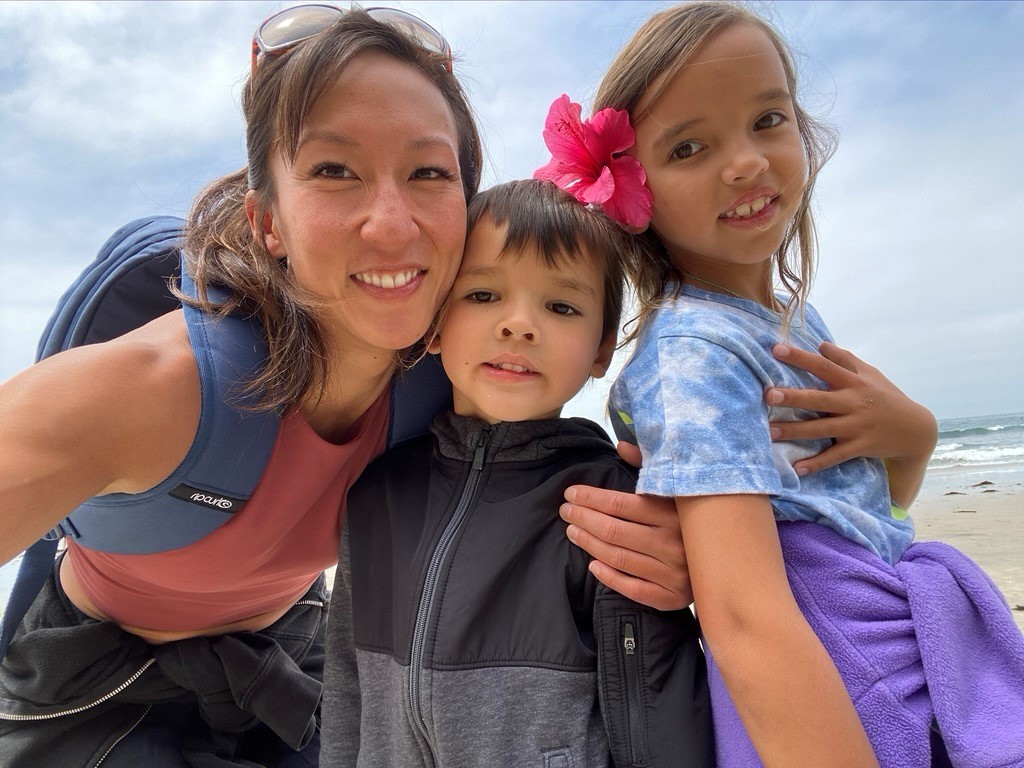
Tye with her children
Tye went to MIT for her undergraduate degree and received her Ph.D. from the University of California, San Francisco. After a postdoctoral fellowship at Stanford, she opened her lab as an assistant professor at MIT in 2012. In 2019, she moved across the country again, to the Salk Institute.
As Tye gained confidence as a young scientist, she took on a difficult professional challenge as she sought to examine questions that had not traditionally been the purview of her field.
“As a neuroscientist, I’m often told I am not allowed to study how internal states like anxiety, or craving, or loneliness are represented by the brain,” she recalled in a TED Talk. “And so, I decided to set out and do exactly that.”
Research in Optogenetics
In her research, Tye uses technology called “optogenetics,” which transfers the light sensitivity of certain proteins found in some algae to specific neurons in the brains of lab animals. Researchers can then use light to control signaling by the neuron, and they can establish links between the neuron and specific behavior. Tye developed an approach using this tool called “projection-specific optogenetic manipulation.”
“This permits scientists to dissect the tangled mess of wires that is our brains to understand where each wire goes and what each wire does,” Tye said.
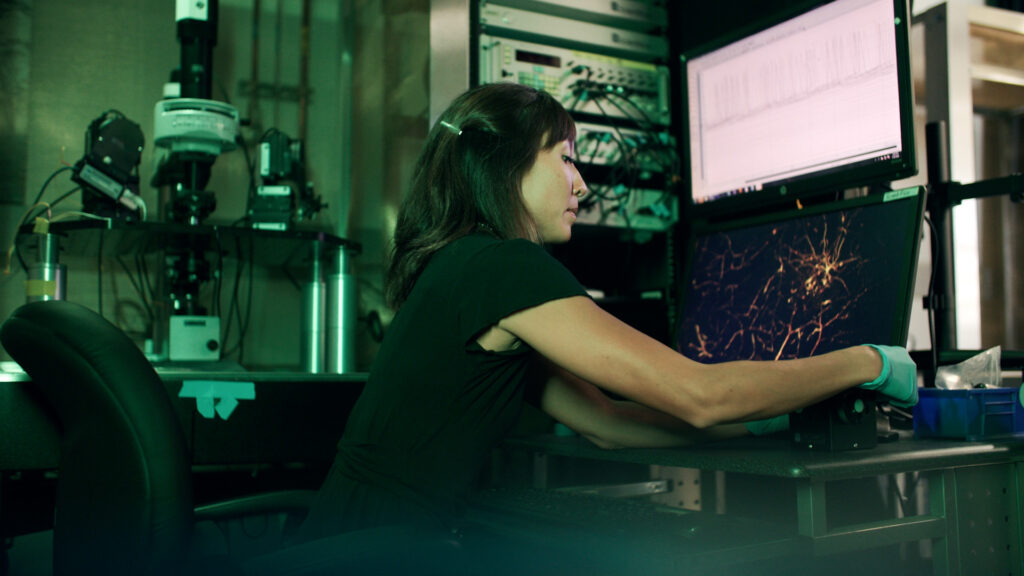
Kay Tye in the lab
Tye’s postdoctoral training was in the Stanford University lab of Karl Deisseroth, who had recently developed optogenetics. Many young neuroscientists wanted to be among the first to use optogenetics, and Tye was eager to use it to study behavior and emotion. Tye recalled that period.
“It was a very exciting time in neuroscience, and in 2009 I already felt like I had come late to the party, and knew I needed to push the field forward to make a new contribution,” Tye says. “I worked absurdly hard during my postdoc, fueled by the rapidly changing landscape of neuroscience, and feel like I did five years of work in that two-year period.”
Analyzing Neural Circuits
Tye’s research program initially focused on the neural circuits that process emotional valence, the degree to which the brain assigns positive or negative value to certain sensory information. Her lab has analyzed the neural circuits controlling valence processing in psychiatric and substance abuse disorders.
This work includes the discovery of a group of neurons connecting the cerebral cortex to the brainstem that can serve as a biomarker to predict whether an animal will develop compulsive alcohol drinking behavior. Recent research has focused on neurons activated when animals experience social isolation and enter “loneliness-like” states.
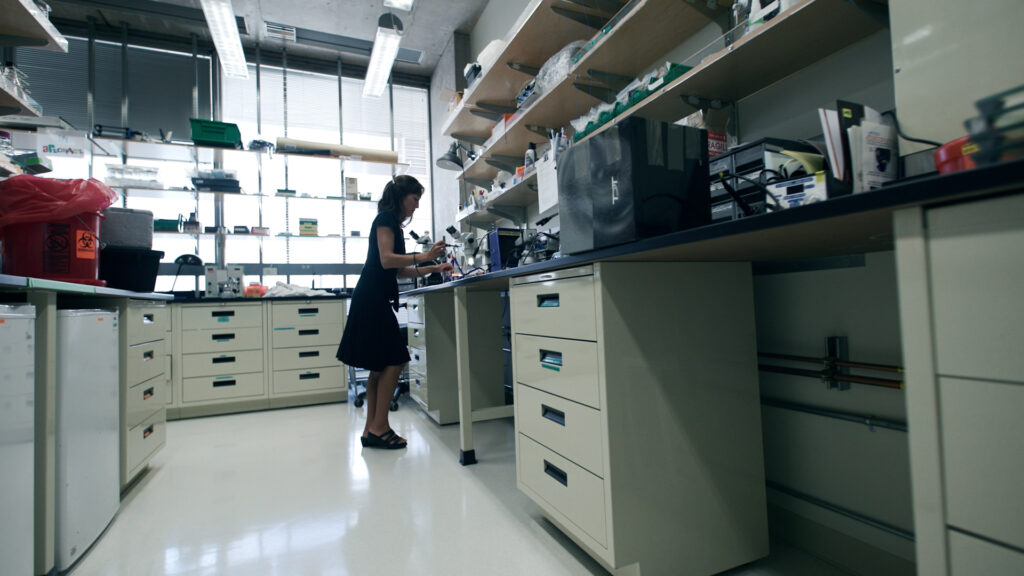
Kay Tye in the lab
Tye and her research team are also exploring how the brain represents “social homeostasis”— a new field of research which seeks to understand how individuals know their place within a social group and identify optimal amounts of social contact.
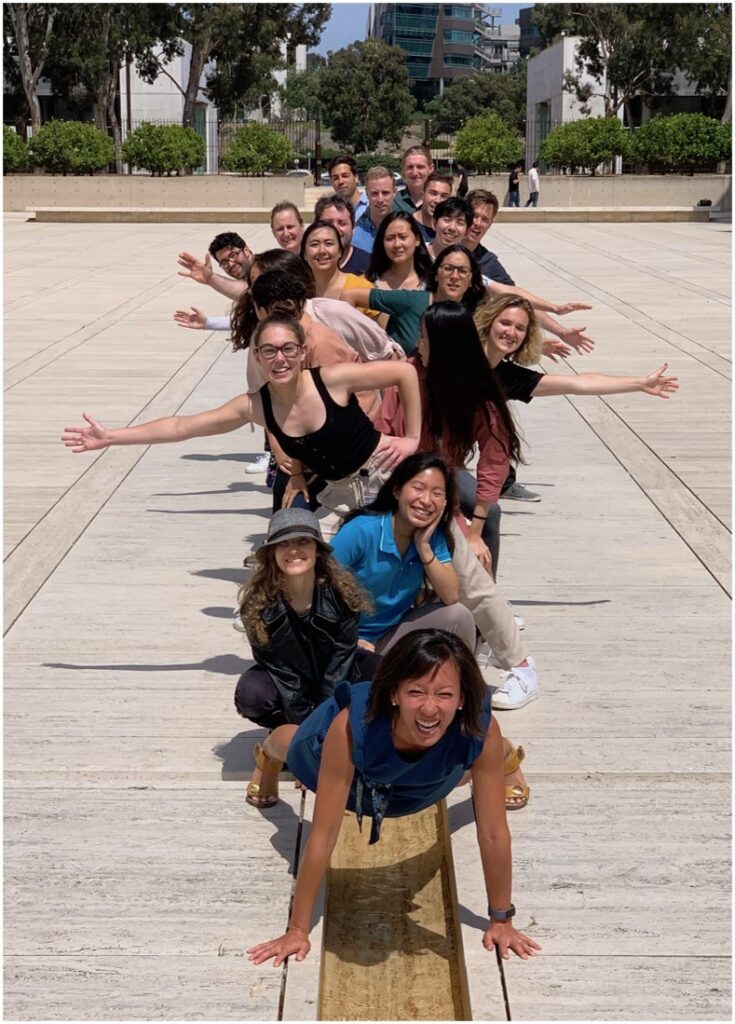
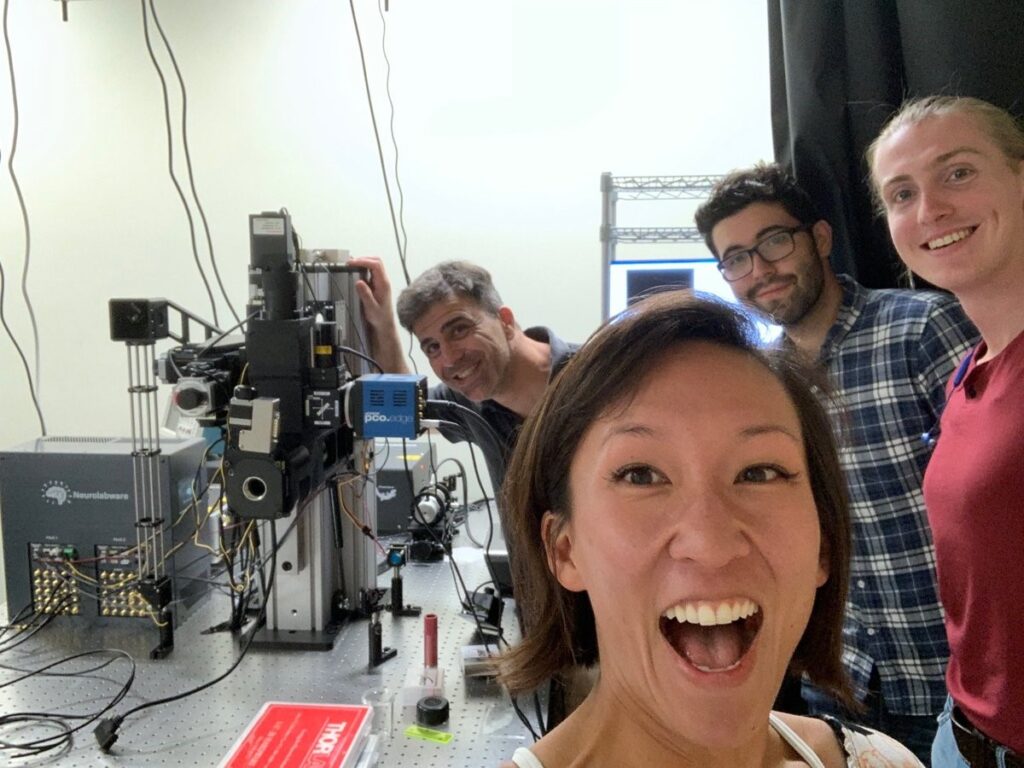
Kay Tye and her lab team
Pushing Boundaries in Her Field
Even after considerable success in her field, Tye says she still feels as though she is pushing boundaries of her discipline. In doing so, she is continuing to bring neuroscience rigor to the study of feelings and emotions. Referring to her recent work, Tye said:
We faced a lot of pushback with this line of research, just because “loneliness” isn’t a word that has been used in neuroscience until now. These types of processes, these psychological constructs didn’t belong in what people considered to be hardcore neuroscience.
We are now bringing rigorous neuroscience approaches to ideas that were purely conceptual before. And so we’re being quantitative. We are being mechanistic. We are creating biologically grounded, predictive dynamical models for these nebulous ideas like “feelings” and “emotions.” And this is something that I find extremely gratifying.
Growing up in Romania, Mircea Dincă’s was first exposed to science. Now he’s engineering an electric Lamborghini.
Published October 1, 2021
By Roger Torda
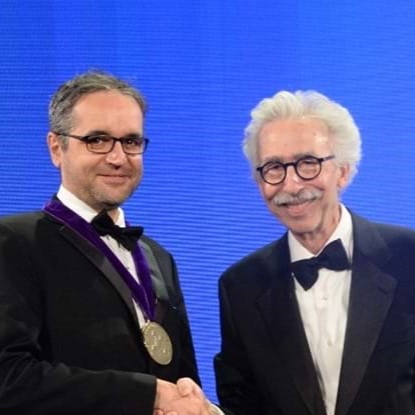
Mircea Dincă (left) poses with Nick Dirks, President and CEO of The New York Academy of Sciences.
Mircea Dincă creates materials in the lab with surface features that can’t be found in nature. He then makes variants with electrical properties that other scientists once thought impossible. This is groundbreaking basic research with many emerging applications. One is particularly exciting: a supercapacitor to power a Lamborghini supercar.
Dincă, a professor of chemistry at MIT, is this year’s Blavatnik National Awards for Young Scientists Laureate in Chemistry. He heads a lab that synthesizes novel organic-inorganic hybrid materials and manipulates their electrochemical and photophysical properties.
Dincă and his students work with metal-organic frameworks, or MOFs. “These are basically what I like to call sponges on steroids because they are enormously porous,” Dincă told the Academy in a recent interview. “They have fantastically high surface areas, higher than anything that humanity has ever known.”
Metal-Organic Frameworks (MOFs)
MOFs have a hollow, crystalline, cage-like structure, consisting of an array of metal ions surrounded by organic “linker” molecules. Scientists can “tune” their porosity, creating MOFs that can capture molecules of different properties and size.
To help conceptualize the large surface area of MOFs, Dincă says a gram of the material would, if flattened out, cover an entire football field. This means their pores can hold an almost unimaginably large number of molecules. One application capitalizing on this capacity is gas storage. For example, a canister filled with MOFs would hold nine times more CO2 than an empty canister. Other emerging uses have included devices to manage heat, antimicrobial products, gas separation, and devices for scrubbing emissions and carbon capture.
Dincă first encountered MOFs as a graduate student. Several years later, after considerable research on the electronic structure of materials, he started envisioning MOFs with properties that had not been widely considered before. “Previously, people thought that metal-organic frameworks are just ideal insulators,” Dincă said. “But we realized that there are certain types of building blocks that, when put together, would allow the free flow of electrical charges.” This was something of a paradigm shift in the field.
A Partnership with Lamborghini
Dincă and his students started synthesizing MOFs with a variety of organic ligands and metal combinations to create materials that are both porous and conducting. They also developed ways to grow MOF crystals so they can be more easily studied with imaging tools, permitting analysis of their structure, atom-by-atom. The new techniques and materials have led to MOFs that might prove valuable for batteries, fuel cells, and energy storage. Dincă’s lab and MIT have signed a partnership with Lamborghini to use MOF supercapcitors in the company’s planned Terzo Millennio sportscar.
Dincă and his students also study the use of MOFs as catalysts, and as chemical sensors. They explore how these materials interact with light, which could lead to smart windows that lighten or darken automatically. Better solar cells are yet another possible application.
More efficient air conditioning, with considerable environmental benefit, is another goal. Dincă has co-founded a start-up called Transaera to build MOF-based cooling equipment that pulls water molecules out of air so that the AC doesn’t work as hard. The key is tuning the pores of the MOFs to just the right size to capture water at just the right humidity.
Scaling up remains a challenge for many of these applications. “It’s one thing to make a few grams in a laboratory, it’s quite another to make hundreds of kilograms so you can take them out into the real world,” Dincă said.
“Thirsty for Knowledge”
Dincă grew up in Romania, and says he got his first taste of chemistry in 7th grade. An MIT departmental biography playfully suggests “that having a dedicated teacher that did spectacular demonstrations with relatively limited regard for safety” was the initial influence. One imagines awe-inspiring, semi-controlled explosions in the front of a classroom of 12 year olds. In the following years, Dincă started participating in the Chemistry Olympiads, and in 1998, when he was in high school, he won first place at an international competition in Russia.
At the time, Dincă found he was running up against limits to his education. “I think the biggest challenges to my becoming a scientist were, early on in Romania where I grew up, that we just didn’t have access to labs, to books,” Dincă said. “That made me thirsty for knowledge.” So Dincă was eager to travel to the U.S. when he was offered a scholarship for undergraduate studies at Princeton. He then earned a Ph.D. from UC Berkeley. He has been teaching and conducting research at MIT since 2008.
Dincă met his wife, who is also from Romania, while they were both students at Princeton. She is a lawyer, and the couple have two children, Amalia and Gruia. Dincă’s father is a retired Romanian Orthodox priest, and his mother, a retired kindergarten teacher.
When he is not with his family or at work, Dincă might be running, hiking, or taking photographs.
Constant Exposure to the Unknown
Dincă enjoys teaching, including freshmen chemistry. For his more advanced students and postdocs, Dincă says he fosters original thinking by giving them as much responsibility as possible. “As a Principal Investigator myself, I tend to be very hands-off,” Dincă explained. “And that’s good because it allows students to take ownership of their projects and become creative themselves. In fact, most of the best ideas in my lab come from the students, not myself.”
One of the best things about being a scientist, Dincă said, is constant exposure to the unknown, and he is pleased when his commitment to basic research is recognized. “Being a Blavatnik National Award Laureate is, of course, fantastic recognition of my research, of my group’s efforts,” Dincă said. “But also, most importantly for me, it is recognition of the fact that curiosity-driven research is still appreciated.”
While curiosity may drive Dincă’s scientific inquiries, he believes applied research with new classes of MOFs will help address important environmental challenges. At the same time, there can be no doubt that one application may prove especially thrilling. “Never in my wildest dreams did I believe that just thinking about electrical current in porous materials would take me on a path to helping make an electric Lamborghini,” Dincă said. “But that is where our research has led us.”