Ethics and Equity: Navigating Inclusive Excellence in Healthcare and Health Research

The event provided a collaborative platform among speakers and panelists across academia, industry, government, non-profits, and more to exchange knowledge on ethical responsibilities to improve equity within healthcare and biomedical research.

Published April 22, 2025

By Christina Szalinski

“We are living in a moment that desperately needs clarity of principle and deep moral courage.” And with that statement, Amy Ben Arieh, JD, MPH, executive director of the Fenway Institute, and nationally recognized authority on human research participant protection and inclusive research practices, opened the proceedings of a day-long conference that explored the pursuit of equity and ethical considerations in both healthcare delivery and research conduct. 

The New York Academy of Sciences brought together researchers and healthcare professionals for discussions on identifying systemic barriers, sharing best practices and strategies to advance inclusivity, ensuring that healthcare and research benefit all members of society.

Staying the Course: Centering Ethics and Equity in Health Care and Health Research

Opening keynote speaker, Lisa Cooper, MD, MPH, James F. Fries Professor of Medicine and the Bloomberg Distinguished Professor of Equity in Health and Health Care at the Johns Hopkins University Schools of Medicine, Nursing, and Public Health, said: “Health equity means that everyone should have a fair opportunity to obtain their full health potential, and that no one should be disadvantaged from achieving this potential because of socially determined circumstances.” Dr. Cooper is the founder and director of the Johns Hopkins Center for Health Equity.

She went on to say that health disparities originate from social norms, institutional economic policies, and environmental living conditions. To address this, two approaches are required: relationship-centered care, which considers the personhood of everyone involved in healthcare, and structural competence, which involves acknowledging and breaking down barriers such as poverty and racism.

Dr. Cooper expressed the need for improvements in healthcare, such as patient-centered communication; community engagement, including a shift from outreach to shared leadership; workforce diversity, which involves establishing a culture of trust through equitable and inclusive treatment and attracting and retaining a diverse group of participants.

In her workplace experience, Dr. Cooper noted that diversity and inclusiveness lead to innovation and creativity as well as overall organizational excellence. Integrating these efforts into the part of the goals leads to success. As far as she is aware, no diversity, equity, and inclusion efforts have led to the marginalization of any group or worsening of health or well-being for any group.

Finally, Dr. Cooper addressed the stumbling blocks to achieving health equity, including the social and political climate, lack of resources, and current uncertainties. She encouraged attendees to transform these challenges into opportunities for growth and innovation. Quoting Dr. Martin Luther King: “Injustice anywhere is a threat to justice everywhere,” Dr. Cooper closed by noting that we need empathy, self-care, and creativity in order to navigate these obstacles.

Building Trust through Representation: Community Engagement and Research Practices

A panel, moderated by Carol R. Horowitz, MD, professor of population health science and policy at Icahn School of Medicine at Mount Sinai, brought together Carl Streed, MD, associate professor of medicine and research lead for the GenderCare Center at Boston University; Consuela Wilkins, MD, senior associate dean for equity at Vanderbilt University; Randi Woods, executive director of Sisters Together Reaching; and Anhtuh Huang, PhD, deputy director of We Act for Environmental Justice in Harlem.

The central theme of the panel was engaging the local community beyond transactional interactions. The panelists discussed how some institutions have historically perpetuated harm against marginalized communities, which explains why communities have a justified skepticism of institutions and research. However, as Dr. Wilkins pointed out, when we talk about trust and building trust, it can put the burden on the community—the people who have been disenfranchised and harmed. Instead, she recommends focusing on demonstrating trustworthiness.

To build trust, Randi Woods recommended collaborating with the community and including community perspectives in research priorities and design, as well as moving closer to shared leadership.

One way to establish relationships within the local community, Dr. Streed said, is through Institutional Review Boards (IRBs), which can require researchers to consider how the community informs the research or how the research benefits the community. 

Dr. Huang noted the importance of community engagement, that considered other viewpoints, shared resources, and strategized partnerships, as well as a communications plan to navigate conflicts and challenges.

Building a Health Research Workforce that Centers Equity and Community

Brian Smedley, PhD, senior fellow in the health policy division at the Urban Institute, said that the current healthcare systems are designed to generate profit rather than health, which create structural inequities. He recommended increasing transparency throughout the research process and training professionals in community engaged practices. He stressed the importance of involving community members in every stage of research—from setting priorities and developing research questions to interpreting and disseminating results to rebuild trust in medical and public health institutions.  

Ethical and Equitable Strategies for Diversifying the Biomedical Research Workforce

Emma Benn, DrPH, associate professor in the Center for Biostatistics and Department of Population Health Science and Policy at the Icahn School of Medicine at Mount Sinai, moderated a panel that included Philip Alberti, PhD, founding director of the Association of American Medical Colleges; Hila Berger, MPH, assistant vice president of research regulatory affairs at Rutgers Research; and Linda Pololi, MBBS, distinguished research scientist at the Institute for Economic and Racial Equity at Brandeis University and Director of the National Initiative on Gender, Culture and Leadership in Medicine at Brandeis. The overarching message was that diversifying the biomedical research workforce is critical for improving scientific innovation and healthcare outcomes.

Dr. Pololi noted that research shows that while many faculty believe in the importance of diversity, only a third think that race and ethnicity should be considered in hiring and promoting diverse candidates. Yet it was pointed out by Dr. Benn, that diverse teams lead to higher productivity and accelerated innovation.

The panelists stressed that diversifying the workforce isn’t just about representation, but about fundamentally changing institutional cultures. They shared examples of progress, such as creating community advisory boards for research protocols and bringing up diversity and inclusion in the hiring process. Additionally, they recommended measuring the value of outcomes that diverse research teams provide, encouraging accrediting bodies to influence institutional change, and creating systems to elevate diverse voices. Dr. Alberti and Hila Burger also suggested that K-12 education is an important place to create equal opportunity in the STEM pipeline by encouraging all young people to see themselves as having a place in STEM.

Is AI a Threat or a Solution for Equity, Engagement, and Inclusion?

Bernard Lo, MD, emeritus professor of medicine and director emeritus of the Program in Medical Ethics at University of California, San Francisco presented on the complex relationship between artificial intelligence and equity, highlighting AI’s potential to be both a threat and potential solution for improving diversity and inclusion.

He explained that AI systems can perpetuate existing biases when they are trained on historically skewed datasets. AI can discriminate in areas like hiring, the legal system, loan procurement, and healthcare by replicating biases embedded in training data.

However, he also outlined several ways generative AI could make positive changes by detecting bias in text, analyzing large data sets from healthcare records, improving patient communication, simplifying the process by which people access services for housing or financial insecurity, and developing easier-to-understand consent protocols in research. Dr. Lo noted that AI could also make certain healthcare screens cheaper and more accessible, like eye scans for diabetic retinopathy. Rather than allowing AI to perpetuate inequalities, he said that we need a collaborative, community-engaged approach for it to become a tool for empowerment.

Ensuring Equity and Ethical Practices in Clinical Trials

Giselle Corbie, MD, professor of social medicine at the University of North Carolina School of Medicine, moderated a panel exploring inclusive research practices, and emphasized the critical importance of trust and community engagement.  Ebony Boulware, MD, dean of Wake Forest School of Medicine and health equity researcher; and Maggie Alegria, PhD, chief of the Disparities Research Unit at Mass General Hospital participated.

A fundamental problem, Dr. Corbie noted, is that previous poor treatment of minorities and women by institutions, may be why they are reluctant to participate in research. A solution is to engage marginalized communities and populations in the research design.

Drs. Boulware and Corbie suggested using recruitment tools that ensure that there is no discrimination in the selection of participants, such as AI screening of health records, which can increase diversity in clinical trials. Also, by ensuring racial, ethnic and linguistic concordance in research studies, Dr. Alegria said, it can make participants feel safe and heard.

The panelists stressed the importance of returning research results to communities, providing fair compensation, and making sure that interventions don’t end when a study is over. They also emphasized the need for institutional accountability and sensitivity on the part of researchers when it comes to previous historical inequities. They also highlighted the critical need for meeting with policymakers to help keep successful interventions going by involving communities and community-based organizations, as well as a commitment to creating research practices that are inclusive to diverse populations.

Looking to the Future: Ensuring a Healthier America for All

David Williams, PhD, professor of public health and professor of African and African-American studies at Harvard T.H. Chan School of Public Health, gave the closing keynote, highlighting that all Americans should have better health. The U.S. spends the most on medical care globally, but has an average lower life expectancy than more than 60 industrialized countries.

Dr. Williams noted that a recent study showed that because of racial disparities in health, 203 Black people die prematurely every day. This isn’t just a loss of life, he said, it is also $15.8 trillion in loss every year. And because of racial inequities in health, Black children are three times more likely to lose a mother by age 10, and Black adults are ten times more likely to lose a child by age 30.

Programs that create equity help everyone, he said, citing the example of the State of Delaware, which implemented colorectal cancer screening and treatment regardless of health insurance while combining it with outreach. The program eliminated racial inequities in screening and nearly eliminated the mortality difference for African-Americans. The initiative provided care to all, and a net savings of $1.5 million per year due to reduced incidence and earlier diagnosis.

Dr. Williams said that we need to reduce implicit bias in care. He explained that short anti-bias interventions don’t always reduce bias, according to the evidence. Dr. Patricia Divine, professor of psychology at the University of Wisconsin-Madison, developed a 12-week program that teaches providers multiple strategies and reduces bias. Initial research shows that it works.

Dr. Williams also emphasized the importance of diversifying the healthcare workforce. A study from Northern California gave African-American males a coupon to go to a nearby hospital for screening. Once at the hospital, they were randomly assigned to a doctor of their own race or another doctor. Men who saw a doctor of their own race were more likely to talk about other health problems, get screened for diabetes, receive the flu vaccine, and be screened for cholesterol. Additionally, studies show that when there are more Black primary care providers in a county, the higher the life expectancy for Black people in that area.

“Most Americans are unaware studies show that racial inequities in health even exist. We need to pay attention to how we talk and frame the policy solutions,” Dr. Williams said. “We cannot be silent…we need to redouble efforts to work together to build a healthier America for all.”

The New York Academy of Sciences hosts a diverse array of events year-round. Check out our upcoming events.
Exploring 100 Years of Artificial Intelligence

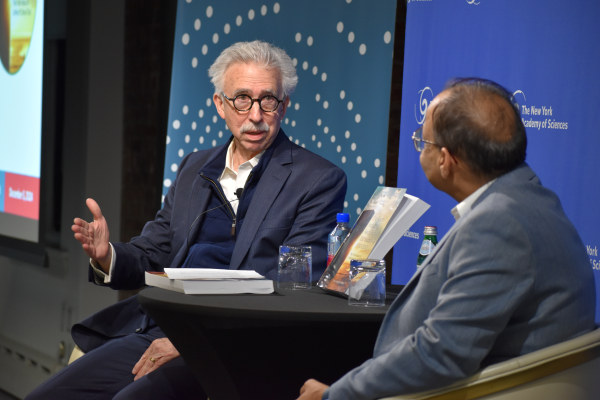
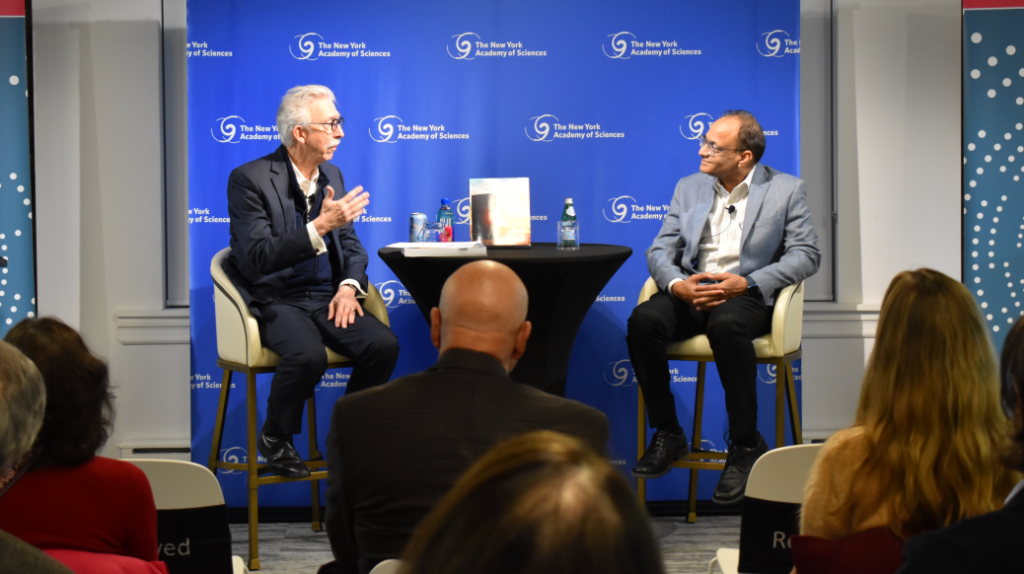
A Q&A between two men during an Academy event.

The past, present, and future of artificial intelligence (AI) were discussed as part of the latest installment in the Tata Knowledge Series on AI & Society.

Published April 18, 2025

By Nick Fetty

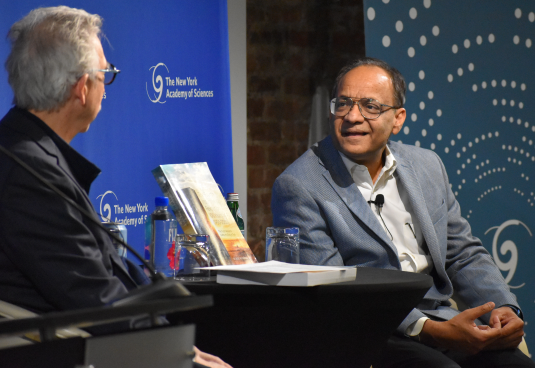
Nick Dirks (left), President and CEO of The New York Academy of Sciences, and Alok Aggarwal, PhD, CEO and Chief Data Scientist of Scry AI. Photo by Nick Fetty/The New York Academy of Sciences.

The future implications for the growth of AI and its impact on our society was the topic of a fireside chat between renowned computer scientist, Alok Aggarwal, PhD, and Nick Dirks, President and CEO of The New York Academy of Sciences (the Academy). 

Dr. Aggarwal is CEO and Chief Data Scientist at Scry AI, which he founded in 2014. The company “focuses on research and advanced development (R&D) in Artificial Intelligence, Data Science, and related disciplines.” In an attempt to demystify AI for the public, he published the book, The Fourth Industrial Revolution & 100 Years of AI (1950-2050), which focuses on demystifying AI for lay audiences.

In discussing the motivation for his book, Dr. Aggarwal explained how AI is part of “the Fourth Industrial Revolution” which started in 2011 and is projected to run through 2050.

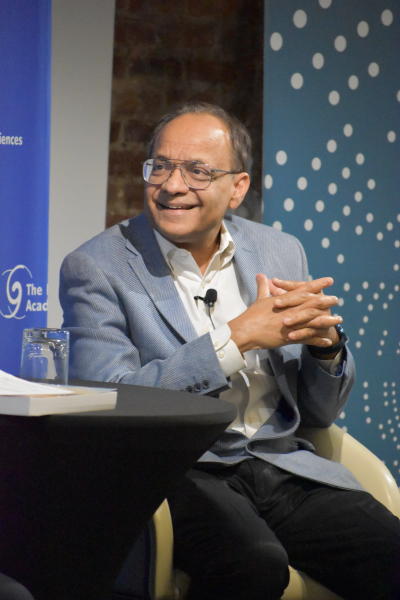
Photo by Nick Fetty/The New York Academy of Sciences.

He points out that the recently published book “doesn’t have a single piece of software code and almost no math.” Instead, he focuses on what AI is, and what it will be, the “good, bad, and ugly.” Separately, he is also working on a follow-up book for students studying business analytics and other similar programs.

AI and the Business World

Dirks then shifted the conversation to focus on the business applications of AI. Dr. Aggarwal said he sees AI being most useful in pattern-recognition tasks.

“That pattern-recognition aspect is much faster because electrons are moving at the speed of light, unlike humans, where the ions are moving slowly,” he says. “Definitely in the long run, that pattern recognition aspect alone will make AI be extremely beneficial for humans in pretty much all areas.”

Dr. Aggarwal continued by saying “it’s not a matter of ‘if’, but ‘when’ AI is more fully embraced by society. He compared it to public acceptance of the internet, and its associated hype, in the late 1990s.

“I think, in many ways, hype is very good…because it leads to monetary support and makes the passionate inventors even more passionate,” Dr. Aggarwal says, adding that “it will take time.”

The Challenge of Driverless Cars for AI

Photo by Nick Fetty/The New York Academy of Sciences.

Dirks pointed out that Google recently reduced investments into its driverless car program. He also referenced Yann LeCun, Turing Award winner and Chief AI Scientist at Meta, who mentioned that driverless car technology has much room for improvement during another Academy fireside chat sponsored by Tata in March 2024.

Dr. Aggarwal shared that driverless car technology goes back to the late 1970s in Japan. The technology was further developed in Germany, and then at American institutions including Carnegie Mellon University and the University of California, Berkeley. Despite this effort, Dr. Aggarwal admits successfully integrating AI and driving has been a challenge. However, he pointed out several areas in which AI shows great potential.

For example, he said AI can be applied to laborious, mundane activities, where humans are prone to making mistakes like sifting through invoices to reconcile financial records or submitting the proper documentation for a mortgage loan. Furthermore, AI has been just as effective in preventative healthcare, such as detecting skin cancer, which Dr. Aggarwal has said has proven to be as accurate as a radiologist.

“A lot of the problem right now is [demonstrating] these benefits rather than just inflating the hype,” says Dr. Aggarwal. “We need to actually show that it works in disparate cases.”

Curating Accurate Training Sets

Photo by Nick Fetty/The New York Academy of Sciences.

Dirks pointed out that some AI systems are informed by various sources on the internet, which have varying levels of accuracy. He asked what can be done to curate accurate training sets to develop these technologies.

Dr. Aggarwal said the issue here isn’t so much the AI, as it’s the “human mirror” effect considering many of the inputs from the training sets are merely reflecting reality, which can sometimes be outdated, inaccurate, or biased. He used the example of countries with data sets that do not treat women and men as equals, so inputs from these countries can train the AI to have misinformed biases between genders and their associated roles.

“It’s no different from how we train our children,” said Dr. Aggarwal.

He then referred to “the imitation game” developed by computer pioneer Alan Turing. In this exercise, a human judge blindly assesses whether the answer to the judge’s question was provided by another human or by a computer. The judge needs to determine whether it was the human or the computer. The idea was that eventually the computer technology would be smart enough that the judge wouldn’t be able to differentiate.

Dr. Aggarwal stressed the need for humans to be diligent and balanced in training these AI systems. Because of the strong processing power of these AI systems, they can quickly amplify biases, misinformation, and other negative inputs through which it was informed.

Closing Thoughts

Photo by Nick Fetty/The New York Academy of Sciences.

Dirks and Dr. Aggarwal also discussed additional topics including the history of neural networks, the origin of the term “artificial intelligence,” the hype around advancements in computing in the mid-20th century, the definition of artificial general intelligence (AGI), companionship, job displacement, drug development, and more. After taking questions and comments from those in attendance, Dr. Aggarwal closed his talk by soliciting feedback from those who read his book and welcomed readers to contact him with their commentary.

This article provides a preview of the talk. Video of the full talk is available on-demand for Academy members. Sign up today if you aren’t already part of our impactful network.

This series is sponsored by Tata, a global enterprise, headquartered in India, comprising 30 companies across ten verticals. Read about other Academy events supported by Tata:

The Lasting Impact of the Junior Academy

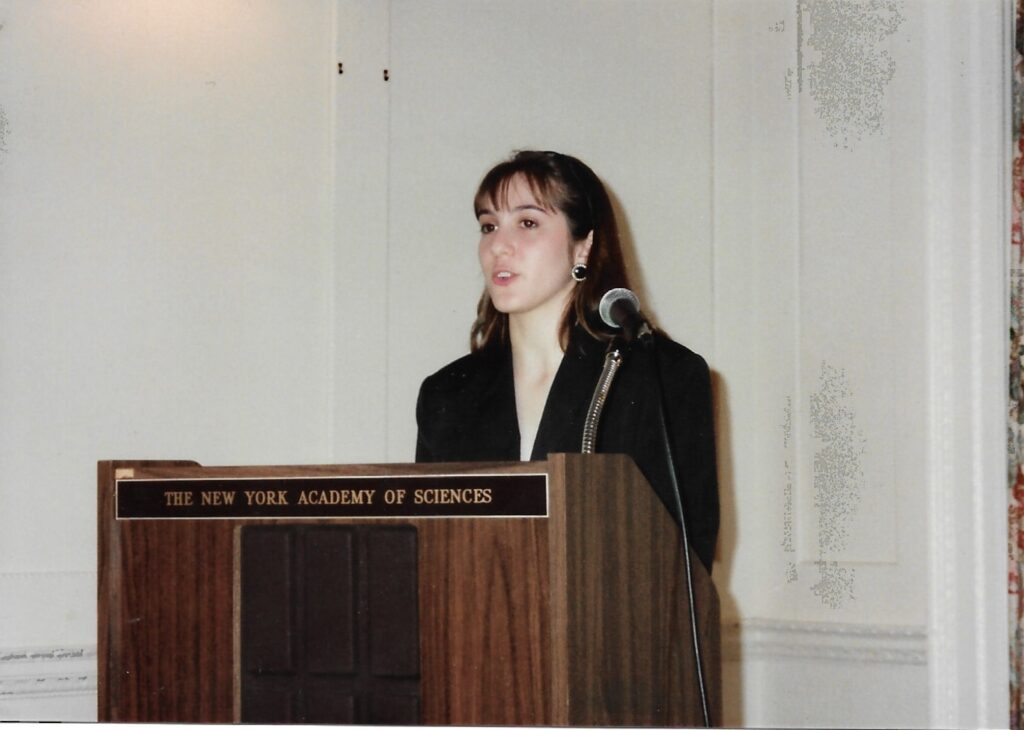
A young woman stands at a podium.

Rebecca Zolotor, PharmD, currently serves as dean and vice president for the School of Health Sciences at Purdue Global. Her passion for public health can be traced back to her time at the Junior Academy more than 30 years ago.

Published April 16, 2025

By Brooke Elliott

Rebecca Zolotor gives a presentation as a member of the Junior Academy in 1992.

Dr. Rebecca Zolotor’s passion for science was ignited in ninth grade when she read The Double Helix by James D. Watson, his account of the discovery of DNA’s structure. This piqued an interest that led her to join The New York Academy of Science’s Junior Academy. There she was partnered with David Crandell, PhD, a researcher within the cardiovascular division of Lederle Labs.

Under the guidance of Dr. Crandall she quickly discovered a deep interest in research. At just 18 years old, she was included as a co-author on publications from her time working at Lederle Labs. Dr. Crandall also connected Rebecca to his mentor, the late Mario DiGirolamo, MD, a professor and researcher in the medical school, who was conducting research at Emory University. That connection was instrumental in her decision to attend Emory, where she continued to assist with research. “Their support allowed me to ask questions, make mistakes, and learn through observation and hands-on experience, shaping my growth and confidence in those formative years,” she said in reflection.

Applying Individual Skills to Team Success

Dr. Zolotor then worked under Keith Smith, EdD, for 15 years, who showed her how to combine diverse individual strengths to build a strong, cohesive team. He emphasized the importance of having a clear mission, where everyone understands how their contributions help drive the team’s success. “His guidance had a lasting impact on my professional growth and leadership approach,” she said.

The passion for science of the mentors and participants of the Junior Academy left a lasting impression on Dr. Zolotor. “I remember attending sessions at the beautiful building on 2 East 63rd Street (the home of the Academy from 1949 to 2006), surrounded by others who were just as eager to learn and make a difference,” said Dr. Zolotor, adding that it was “incredibly inspiring to be in that environment.”

Working Across the Globe

Dr. Zolotor’s time at the Junior Academy sparked a domino effect in her career. Her early experience with cardiovascular research opened her eyes to the critical role nutrition plays in overall health and quality of life, which inspired her to pursue an MS in nutritional science. This led to a post-graduate opportunity at the Australian Institute of Sport (AIS), where she co-led initiatives, including nutrition talks, supermarket tours, and cooking nights. From there, new opportunities led her to New Zealand, then Mexico, where she taught science courses at a university.

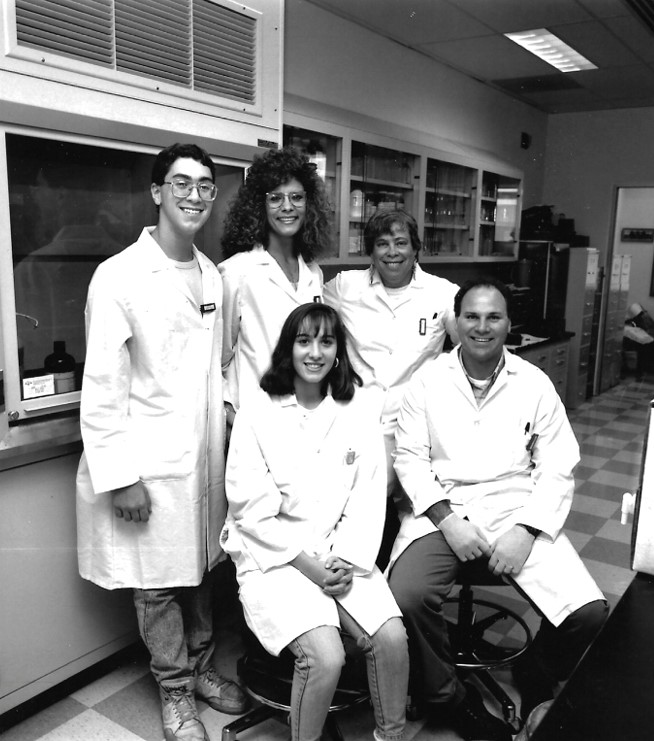
Rebecca Zolotor (seated, center) poses with her lab mates and Dr. David Crandell in the Lederle Lab in 1991.

Dr. Zolotor’s earliest research stayed with her throughout these experiences. When she returned to the U.S., she worked at the Miami Veterans Administration Hospital, managing a clinical trial focused on diabetes while earning her doctorate in pharmacy. As a pharmacist, she advanced her career in leadership roles in pharmacy management, where she gained valuable skills in team building, operations, and strategic leadership. Still, she was seeking a role where she could make a broader impact, prompting her return to academia.

A Passion for Education and Online Learning

As dean and vice president of the School of Health Sciences at Purdue Global, Purdue University’s online university for working adults, she helps students develop the knowledge and skills needed to make meaningful contributions to diverse communities.

Her commitment to scale and using technology to reach more learners aligns with her current role at Purdue Global. Their work, especially with veterans and military leaders resonated with her work on clinical trials at the VA hospital.

Career Advice from Dr. Zolotor

“Whether pursuing research, teaching, or administration, the most impactful careers are shaped by a willingness to explore new ideas, adapt to change, and learn from every experience, even ones that do not turn out as you might have desired,” said Dr. Zolotor. “Ground yourself in empathy, good communication skills, and a clear sense of purpose.”

Some of Dr. Zolotor’s career-defining moments came from people who believed in her while challenging her, which she says helped her grow. Though her initial career goals of being a researcher for a pharmaceutical company did not go as expected, she feels grateful for the many opportunities that have come her way. She advises others to remain open to possibilities even if they do not directly align with their original plan. “There was no online education when I started out, so I never could have imagined my current career. But my path has led me to incredibly meaningful work,” she said.

Outside of STEM, Dr. Zolotor enjoys staying active, whether it be working out or spending time outdoors. A native of Brooklyn, NY, she also loves cooking and baking bread and has recently begun creating a cookbook with her children’s favorite recipes, exploring food plating and food photography.

Dr. Zolotor’s experience exemplifies the value of the Junior Academy. The connections and experiences made through the Junior Academy continue today.

The Junior Academy is now accepting applications for Fall 2025. Apply today!

From Neural Networks to Reinforcement Learning to Game Theory

An overhead shot of a man giving a presentation with dozens of attendees.

Academics and industry experts shared their latest research and the broader potential of AI during The New York Academy of Sciences’ 2025 Machine Learning Symposium.

Published November 14, 2024

By Nick Fetty

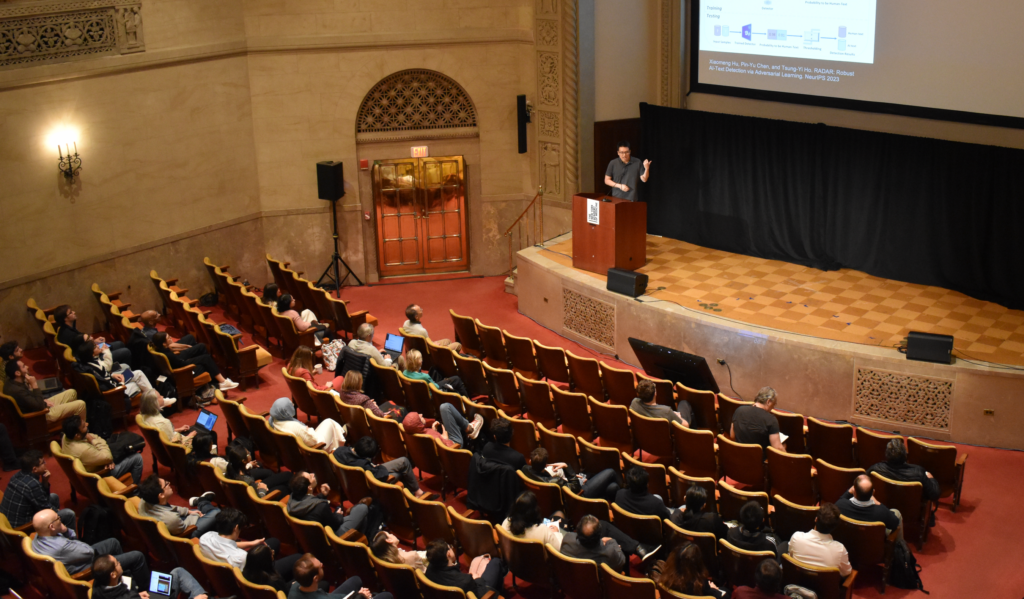
Pin-Yu Chen, PhD, a principal research scientist at IBM Research, presents during the Machine Learning Symposium at the New York Academy of Medicine on Oct. 18, 2024. Photo by Nick Fetty/The New York Academy of Sciences.

The New York Academy of Sciences (the Academy) hosted the 15th Annual Machine Learning Symposium at the New York Academy of Medicine on October 18, 2024. This year’s event, sponsored by Google Research and Cubist Systematic Strategies, included keynote addresses from leading experts, spotlight talks from graduate students and tech entrepreneurs, and opportunities for networking.

Exploring and Mitigating Safety Risks in Large Language Models and Generative AI

Pin-Yu Chen, PhD, a principal research scientist at IBM Research, opened the symposium with a keynote lecture about his work examining adversarial machine learning of neural networks for robustness and safety.

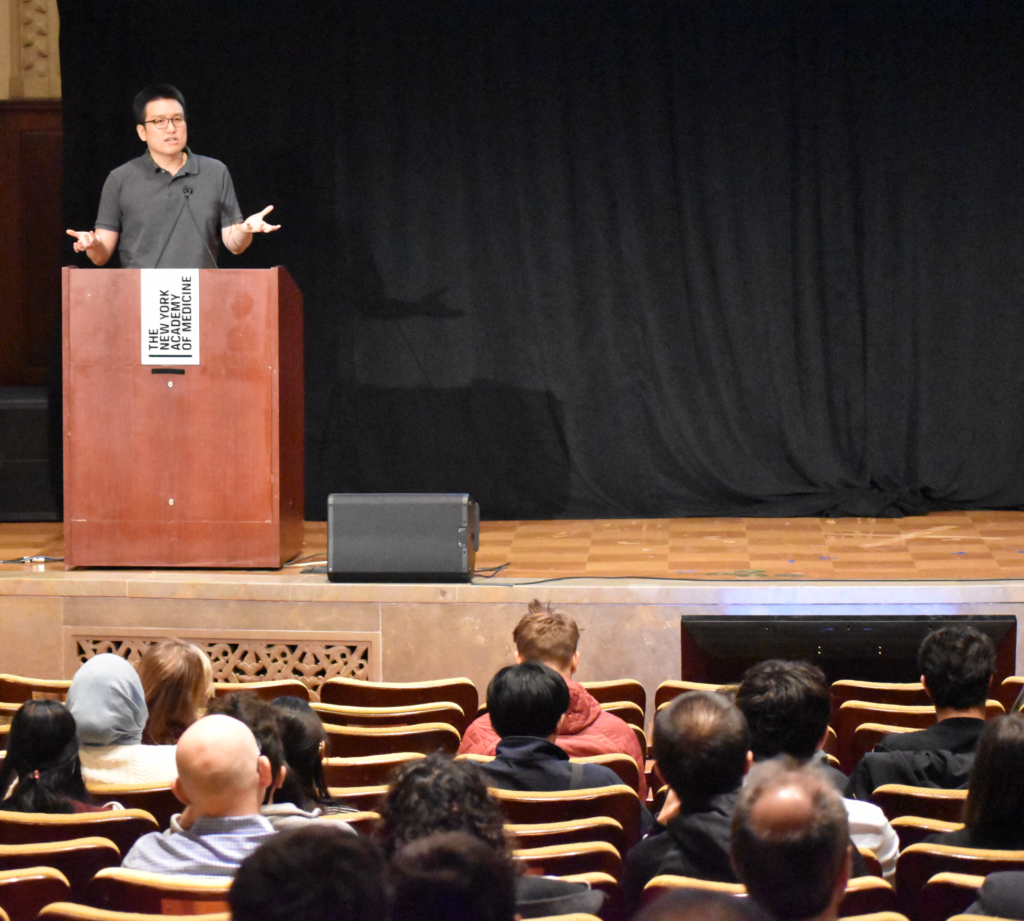
Pin-Yu Chen, PhD. Photo by Nick Fetty/The New York Academy of Sciences.

Dr. Chen presented the limitations and safety challenges facing researchers in the realm of foundation models and generative AI. Foundation models “mark a new era of machine learning,” according to Dr. Chen. Data sources, such as text, images, and speech, help to train these foundation models. These foundation models are then adapted to perform tasks ranging from answering questions to object recognition. ChatGPT is an example of a foundation model.  

“The good thing about foundation models is now you don’t have to worry about what task you want to solve,” said Dr. Chen. “You can spend more effort and resources to train a universal foundation model and fine-tune the variety of the downstream tasks that you want to solve.”

While a foundation model can be viewed as an “one for all” solution, according to Dr. Chen, generative AI is on the other side of the spectrum and takes an “all for more” approach. Once a generative AI model is effectively trained with a diverse and representative dataset, it can be expected to generate reliable outputs. Text-to-image and text-to-video platforms are two examples of this.

Dr. Chen’s talk also brought in examples of government action taken in the United States and in European Union countries to regulate AI. He also discussed “hallucinations” and other bugs occurring with current AI systems, and how these issues can be further studied.

“Lots of people talk about AGI as artificial general intelligence. My view is hopefully one day AGI will mean artificial good intelligence,” Dr. Chen said in closing.

Morning Short Talks

The morning session also included a series of five-minute talks delivered by early career scientists:

  • CoLoR-Filter: Conditional Loss Reduction Filtering for Targeted Language Model Pre-training
    David Brandfonbrener, PhD, Harvard University
  • On the Benefits of Rank in Attention Layers
    Noah Amsel, BS, Courant Institute of Mathematical Sciences
  • A Distributed Computing Lens on Transformers and State-Space Models
    Clayton Sanford, PhD, Google Research
  • Efficient Stagewise Pretraining via Progressive Subnetworks
    Abhishek Panigrahi, Bachelor of Technology, Princeton University
  • MaxMin-RLHF: Towards Equitable Alignment of Large Language Models with Diverse Human Preferences
    Souradip Chakraborty, PhD, University of Maryland

Revisiting the Exploration-Exploitation Tradeoff in the Era of Generative Sequence Modeling

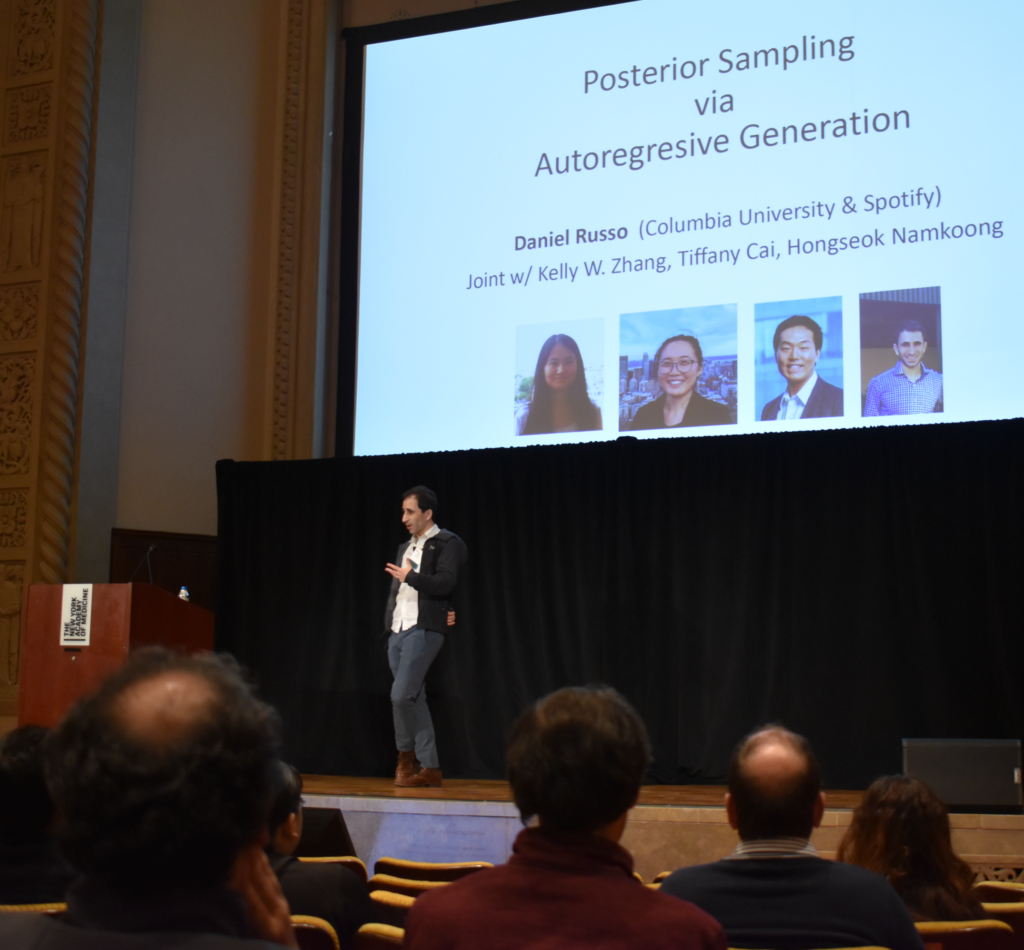
Daniel Russo, PhD. Photo by Nick Fetty/The New York Academy of Sciences.

Daniel Russo, PhD, the Philip H. Geier Jr. Associate Professor of Business at Columbia University, delivered a keynote about reinforcement learning. This field combines statistical machine learning with online decision-making. Prof. Russo covered the work that has taken place in his lab over the past year.

He pointed out that today, “humans have deep and recurring interactions with digital services that are powered through versions of AI.” This includes everything from platforms for dating and freelance work, to entertainment like Spotify and social media, to highly utilitarian applications such as for healthcare and education.

“The thing I deeply believe is that decision making among humans involves information gathering,” said Prof. Russo. “It involves understanding what you don’t know about the world and figuring out how to resolve it.”

He said medical doctors follow a similar process as they assess what might be affecting a patient, then they decide what tests are needed to better diagnose the issue. MDs must weigh the costs versus the benefits. Prof. Russo pointed out that in their current state, it’s difficult to design machine learning agents to effectively make these assessments.

He then discussed major advancements in the field that have occurred over the past decade and did a deep dive into his work on generative modeling. Prof. Russo closed his talk by emphasizing the difficulty of quantifying uncertainty in neural networks, despite his desire to be able to program them for decision-making.

“I think what this [research] is, is the start of something. Definitely not the end,” he said. “I think there’s a lot of interesting ideas here, so I hope that in the years to come this all bears out.”

Award-Winning Research

Researchers, ranging from high schoolers to industry professionals, shared their projects and work with colleagues during the popular poster session. Graduate students, postdocs, and industry professionals delivered a series of spotlight talks. Conference organizers assessed the work and presented awards to the most outstanding researchers. Awardees include:

Posters:

  • Aleksandrs Slivkins, PhD, Microsoft Research NYC (his student, Kiarash Banihashem, presented on his behalf)
  • Aditya Somasundaram, Bachelor of Technology, Columbia University
  • R. Teal Witter, BA, New York University

Spotlight Talks:

  • Noah Amsel, BS, Courant Institute of Mathematical Sciences
  • Claudio Gentile, PhD, Google
  • Anqi Mao, PhD, Courant Institute of Mathematical Sciences
  • Tamalika Mukherjee, PhD, Columbia University
  • Clayton Sanford, PhD, Google Research
  • Yutao Zhong, PhD, Courant Institute of Mathematical Sciences
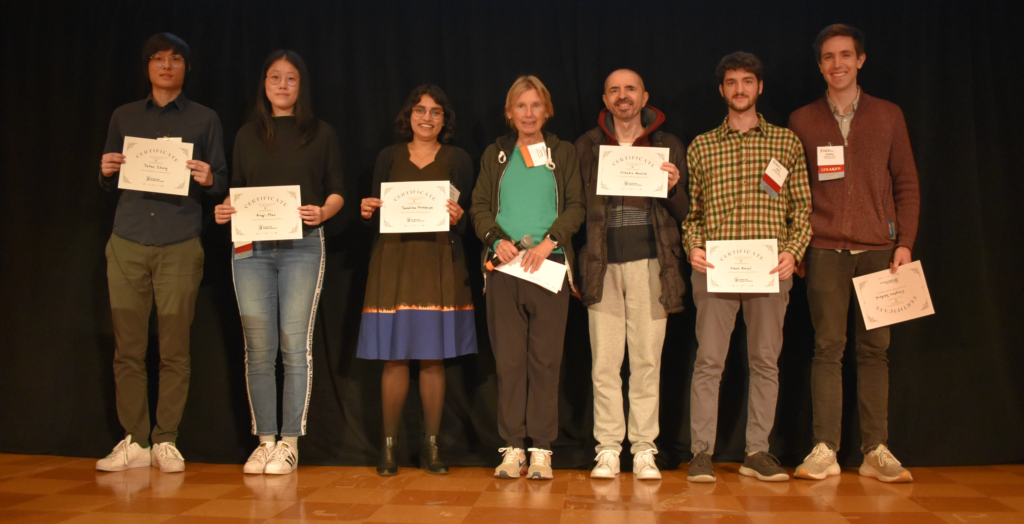
The Spotlight talk award winners. From left: Yutao Zhong, PhD; Angi Mao, PhD; Tamalika Mukherjee, PhD; Corinna Cortes, PhD (Scientific Organizing Committee); Claudio Gentile, PhD; Noah Amsel, BS; and Clayton Sanford, PhD.

Playing Games with Learning Agents

Jon Schneider, PhD. Photo by Nick Fetty/The New York Academy of Sciences.

To start the afternoon sessions, Jon Schneider, PhD, from Google Research New York, shared a keynote covering his research at the intersection of game theory and the theory of online learning.

“People increasingly now are offloading their decisions to whatever you want to call it; AI models, learning algorithms, automated agents,” said Dr. Schneider. “So, it’s increasingly important to design good learning algorithms that are capable of making good decisions for us.”

Dr. Schneider’s center of expertise and research involves decision-making in strategic environments for both zero-sum (rock-paper-scissors) and general-sum games (chess, Go, StarCraft). He shared some examples of zero-sum games serving as success stories for the theories of online learning and game theory. In this realm, researchers have observed “tight connections” between the economic theory and the theory of learning, finding practical applications for these theoretical concepts.

“Thinking about these convex objects, these menus of learning algorithms, is a powerful technique for understanding questions in this space. And there’s a lot of open questions about swap regret and the manipulative-ability of learning algorithms that I think are still waiting to be explored,” Dr. Schneider said in closing.

Afternoon Short Talks

Short talks in the afternoon by early career scientists covered a range of topics:

  • Improved Bounds for Learning with Label Proportions
    Claudio Gentile, PhD, Google
  • CANDOR: Counterfactual ANnotated DOubly Robust Off-Policy Evaluation
    Aishwarya Mandyam, MS, Stanford University
  • Cardinality-Aware Set Prediction and Top-k Classification
    Anqi Mao, PhD, Courant Institute of Mathematical Sciences
  • Cross-Entropy Loss Functions: Theoretical Analysis and Applications
    Yutao Zhong, PhD, Courant Institute of Mathematical Sciences
  • Differentially Private Clustering in Data Streams
    Tamalika Mukherjee, PhD, Columbia University

Towards Generative AI Security – An Interplay of Stress-Testing and Alignment

Furong Huang, PhD. Photo by Nick Fetty/The New York Academy of Sciences.

The event concluded with a keynote talk from Furong Huang, PhD, an associate professor of computer science at the University of Maryland. She recalled attending the Academy’s Machine Learning symposium in 2017. She was a postdoctoral researcher for Microsoft Research at the time, and had the opportunity to give a spotlight talk and share a poster. But she said she dreamt of one day giving a keynote presentation at this impactful conference.

“It took me eight years, but now I can say I’m back on the stage as a keynote speaker. Just a little tip for my students,” said Prof. Huang, which was met by applause from those in attendance.

Her talk touched on large language models (LLMs) like ChatGPT. While other popular programs like Spotify and Instagram took 150 days and 75 days, respectively, to gain one million users, ChatGPT was able to achieve this benchmark in just five days. Furthermore, Prof. Huang pointed out the ubiquity of AI in society, citing data from the World Economic Forum, which suggests that 34% of business products are produced using AI, or augmented by AI algorithms.

AI and Public Trust

Despite the ubiquity of the technology (or perhaps because of it), she points out that public trust of AI is lacking. Polling shows a strong desire from Americans to make AI safe and secure. She went on to explain that for public trust to be gained, LLMs and visual language models (VLMs) need to be better calibrated to avoid behavioral hallucinations. This happens when the AI misreads situations and infers behaviors that aren’t actually occurring. Prof. Huang concluded by emphasizing the utility of stress-testing when developing AI systems.

“We use stress-testing to figure out the vulnerabilities, then we want to patch them. So that’s where alignment comes into play. Using the data we got from stress-testing, we can do training time and test time alignment to make sure the model is safe,” Prof. Huang concluded, adding that it may be necessary to conduct another round of stress-testing after a system is realigned to further ensure safety.

Want to watch these talks in their entirety? The video is on-demand for Academy members. Sign up today if you aren’t already part of our impactful network.

The Ethics of Developing Voice Biometrics

A writer conducts an interview with an AI researcher.

Various ethical considerations must be applied to the development of artificial intelligence technologies like voice biometrics to ensure disenfranchised populations are not negatively impacted.

Published August 29, 2024

By Nitin Verma, PhD

Nitin Verma, PhD, (left) conducts an interview with Juana Caralina Becerra Sandoval at The New York Academy of Sciences’ office in lower Manhattan.
Photo by Nick Fetty/The New York Academy of Sciences.

Juana Catalina Becerra Sandoval, a PhD candidate in the Department of the History of Science at Harvard University and a research scientist in the Responsible and Inclusive Technologies initiative at IBM Research, presented as part of The New York Academy of Sciences’ (the Academy) Artificial Intelligence (AI) & Society Seminar series. The lecture – titled “What’s in a Voice? Biometric Fetishization and Speaker Recognition Technologies” – explored the ethical implications associated with the development and use of AI-based tools such as voice biometrics. After the presentation, Juana sat down with Nitin Verma, PhD, a member of the Academy’s 2023 cohort of the AI & Society Fellowship, to further discuss the promises and challenges society faces as AI continues to evolve.

*Some quotes have been edited for length and clarity*

Tell me about some of the big takeaways from your research so far on voice biometrics that you covered in your lecture?

I think some of the main takeaways from the history of the automation of speaker recognition are, first, really trying to understand what are the different motivations or incentives for investing in a particular technology and a particular technological future. In the case of voice biometrics, a lot of the interesmyt is coming from different sectors like the financial sector, or the security and surveillance sector. It’s important to keep those interests in mind and observe how they inform the way in which voice biometrics get developed or not.

The other thing that’s important is that even though we have a notion of technological progress, some of the underlying ideas and assumptions are very old. This includes ideas about the body, about what the human body is, and how humans have the ability to change, or not, their body and the way they speak. In the case of voice biometrics, these ideas date back to 19th-century eugenic science, and they continue informing research, even as we have new technologies. We need to not just look at this technology as new, but ask what are the ideas that remain, or that sustain over time, and in which context did those ideas originate.

So, in your opinion, what role does, or would, AI play in your historical accounting of voiceprint technology?

I think, in some way, this is the story of AI. So, it’s not a separate story. AI doesn’t come together in the abstract. It always comes along in relation to a particular application. A lot of the different algorithmic techniques we have today were developed in relation to voice biometrics. Really what AI entails is a shift in the logic of the ontology of voice where you can have information surface from the data or emerge from statistical methods, without needing to have a theory of what the voice is and how it relates to the body or identity and illness. This is the kind of shift and transformation that artificial intelligence ushers.

What would you think is the biggest concern regarding the use of AI in monitoring technologies such as voice biometrics?

Well, I think concerns are several. I definitely think that there’s already inscripted within the history of voice biometrics an interest in over-policing, and over-surveilling of Black and Latinx communities. There’s always that inherent risk that technology will be deployed to over-police certain communities and voice biometrics then enter into a larger infrastructure where people are already being policed and surveilled through video with computer vision or through other means.

In the security sector, I think my main concern is that there’s a presumption that the relationship between voice and identity is fixed and immutable, which can create problems for people who want to change their voice and or for people whose voice changes in ways outside of their control, like from an injury or illness. There are numerous reasons why people might be left out of these systems, which is why we want to make sure we are creating infrastructures that are equitable.

Speaking to the other side of this same question, in your view, what would be some of the beneficial or ethical uses of this technology going forward?

Rather than starting from the point of ‘what do corporations or institutions need to make their job easier or more profitable?’, we should instead focus on ‘what are the kinds of tools and techniques that people want for themselves and for their lives?’, and ‘in what ways can we leverage the current state of the art towards those ends?’. I think it’s much more about the approach and the incentive.

There’s nothing inherent to technology that makes it cause irreparable harm or be inherently unethical. It’s more about: what is the particular ontology of voice?; what’s the conception of voice that goes into the system?; and towards whose ends is it being leveraged? I’m hopeful and optimistic about anything that is driven by people and people’s desires for a better life and a better future.

Your work brings together various threads of research or inquiry, such as criminology, the history of technology, inequality, and the history of biometric technology as such. What are some of the challenges and benefits that you’ve encountered on account of this multidisciplinary approach to studying the topic?

I was trained as a historian, and originally my idea was to be a professor, but once I started working at IBM Research and the Responsible and Inclusive Tech team, I think I got much closer to the people who very materially and very concretely wanted to make technology better, or, more specifically, to improve the infrastructures and the cultures in which technology is built.

That really pushed me to take a multidisciplinary approach and to think about things not just from a historical lens, but be very rooted in the technical, as well as present day politics and economic structures. I think of my own immigrant background. I’m from Colombia and I naturally already had this desire to engage with humanities and social science scholarship that was critical of these aspects of society, but this may not be the same for everyone. I think the biggest challenge is effectively engaging different audiences.

In the lecture you described listening as a political process. Can you elaborate on that?

I’m really drawing on scholars in sound studies and voice studies. The Sonic Color Line, Race as Sound, and Black Linguistics, are three of the main theoretical foundations that I am in conversation with. The point they try to make is that when we attend to listening, rather than voice itself as a sort of thing that stands on its own, we can see and almost contextualize how different voices are understood, described, interpreted, classified, and so on.

The political in listening is what makes people have reactions to certain voices or interpret them in particular ways. Accents are a great example. Perceptions of who has an accent and what an accent sounds like are highly contextual. The politics of listening really emphasizes that contextuality and how we’ve come to associate things like being eloquent through particular ways of speaking or with how particular voices sound, and not others.

Is there anything else you’d like to add?

Well, I think something that strikes me about the story of voice biometrics and voiceprints is how little the public knows about what’s happening. A lot of decisions about these technologies are made in contexts that are not publicly shared. So, there’s a different degree of awareness in the kind of different public discourses around the ethics of AI and voice. It’s very different from facial recognition, computer vision, or even toxic language.

Also read: The Ethics of Surveillance Technology

Assisting Dementia Patients with AI and AR

A photo of a man checking his smartwatch, with AI graphics over-imposed.

Winners of the Junior Academy Innovation Challenge Spring 2024: “Wearables”

Published August 14, 2024

By Nicole Pope

Sponsored by The New York Academy of Sciences

Team members: Riya K. (India) (Team Lead), Shreeniket B. (United States), Sysha R. (India), Prakul P. (India), Tisha S. (India), Medha T. (United States)

Dementia is a neurodegenerative condition that affects 55 million people worldwide and 1 in 10 people older than 65 in the United States, according to the World Health Organization. Alzheimer’s disease is the best-known form of this debilitating condition, which leads to memory loss and confusion. It gradually erodes individuals’ ability to perform simple functions or even recognize familiar faces.

The impact of dementia is not limited to the individuals affected by the condition. Caregivers, who are often family members, bear the burden of providing support, often at great personal cost.

Harnessing the power of wearable technology, the members of this enterprising team composed of high-schoolers from the U.S. and India, devised the VisionXcelerate glasses – an innovative device designed to provide personalized assistance to dementia patients and help them perform every-day tasks independently, thus lightening the burden of carers. Some of the sensors are contained in an eyeglass chain that also ensures users do not lose the device. The students reached out to patients, hospitals and nursing homes to identify specific needs.

“After contacting 90 dementia patients in total, I gained new research and critical thinking abilities. I was able to identify their needs by observing them and analyzing their responses,” explains Sysha, who also learned about coding while working on the image/facial recognition for the glasses. “I have gained more empathy for others by trying to find a solution for people suffering from Alzheimer’s.”

“Wonder Glasses”

The VisionXcelerate smart glasses and their numerous features, including collecting user health data, are the result of an intense group effort, with each team member contributing different skills and strengths. “Being the Team Lead for this project, I’ve witnessed firsthand how collaboration, hard work, new ideas, and obstacles have shaped our journey,” explains Team Lead Riya. “Each member of our team has contributed significantly, from ideation to prototyping. It’s been inspiring to see everyone’s passion and commitment to the project.”

The students used both Artificial Intelligence (AI) and Augmented Reality (AR) to develop the various functions of their “wonder glasses”, which provide real-time assistance, and help dementia patients overcome some of the challenges posed by memory loss and help wearers identify objects and faces. “I was mainly involved in the research and design aspects of the project, particularly surrounding the technologies we wanted to implement in our design and their practicality/viability,” explains Shreeniket, whose approach was partly shaped by observing elderly family members.

For example, the device includes a virtual personal assistant that prompts users to take medication at specific times and to eat or drink at regular intervals, in a voice that mimics the patients’ loved ones. This helps to foster trust and build emotional connection.

VirtualXcelerate also features an app that allows caregivers to monitor the patients and their activities from afar. “The experience of working with teammates sitting in different corners of the world has helped me gain new insights and think about solutions from a completely new perspective,” explains Tisha.

A Rewarding Journey

Working across time zones was not always smooth sailing. “There were a few hiccups. But at the end of the day, everything came together beautifully,” says Prakul. “Despite the obstacles, the journey was rewarding. It pushed me out of my comfort zone, taught me valuable skills in teamwork, problem-solving, and project management, and allowed me to contribute to a meaningful cause.”

This experience gave team members a new understanding of dementia and how it affects patients and those around them. “I learned about the difficulty dementia patients face on a daily basis, and how our solution was impactful to them,” says Medha. “During this process, I helped contribute to researching certain features on the glasses, such as the reminders. Additionally, I sketched out each feature on the glasses, in a variety of angles to demonstrate the importance of location. Overall, this experience was an outstanding opportunity for me.”

As dementia sufferers are prone to falling, the glasses have detection systems to alert caregivers in case of a mishap while GPS tracking and geofencing allows them to locate patients who have wandered beyond a safe area and are too confused to find their way home. These security features not only contribute to dementia patients’ well-being, but also provide carers and relatives peace of mind.

With user feedback, the team plans to continue to refine their solution and add more elements that will further enhance the quality of life of people living with dementia, help them retain their independence longer, and ease the pressure on caregivers.

Read about the other winner from the Spring 2024 Junior Academy Innovation Challenge:

Developing Circular Textile Practices Through Recyclable Fabrics and Reducing Color Dye Pollution

Students Make Sustainable Fashion Statement

Sustainable textiles hanged up on a tree outside.

Winners of the Junior Academy Innovation Challenge Spring 2024: “Circular Textiles”

Published August 14, 2024

By Nicole Pope

Sponsored by Royal Swedish Academy of Engineering Sciences (IVA)

Team members: Rachita J. (India) (Team Lead), Mariia H. (Ukraine), Sofía R. (Colombia), Alex B. (United States), Sylvia X. (United States), Altynay N. (Kazakhstan)

Textiles and fashion are important sectors for the world economy but as demand increases, so do the environmental and human costs – due to harmful production processes that degrade natural resources and the mountains of textile items that are discarded every year.

Estimates suggest that 87% of global textile waste ends up in landfills or incinerators. These environmental impacts apply not only to the clothes we wear in our daily life, but also to the textiles used in the medicine, agriculture, and manufacturing sectors.

For the Junior Academy Innovation Challenge “Circular Textiles”, this international team of students came up with new suggestions to improve environmental standards in textiles, each member sharing their own insights to the design of their solution. “Throughout the project, everyone contributed their unique ideas and leveraged their specialized skills to advance our goals,” explains Sylvia. “The synergy within the team was palpable, fostering an environment of creativity and productivity.”

Collaborating online through the Academy’s Launchpad platform, the students divided the tasks across the group to develop their comprehensive plan. “I did some research and produced tables that consisted of the information about the project,” says Mariia. “I also contacted some experts and I was working on Lean Canvas.” The team found that technical textiles – engineered and manufactured with specific functions in mind – was a rapidly growing sector that reached US$213 billion in 2023, a 5.6% increase in the previous year.

Replacing Non-Sustainable Synthetics

The group focused on finding a sustainable replacement for fossil fuel-based synthetic yarns, nature-based materials like Rayon (viscose) that are linked to deforestation, as well as fibers like cotton that require water-intensive cultivation. They landed on Biofabrics as a potential solution. The students proposed addressing the three main drawbacks of Biofabric clothing – the expensive cost, the susceptibility to microbes, and the poor resistance to repeated washing – to create a more affordable, longer lasting product.

Their solution was using agricultural waste to optimize the production of a synthetic cellulose fiber called Lyocell and relying on deep eutectic solvents (DES) as an alternative to the more expensive chemicals traditionally used in cellulose extraction to reduce the cost. Another ground-breaking innovation involves the application of silver nanostructures to the Lyocell fibers, which would confer both greater durability and antibacterial properties to the fabric, and last more than 20 washes.

To tackle the pollution caused by fabric coloration, the team members suggested employing Direct Laser Interference Patterning (DLIP), a cutting-edge technique that uses laser beams to create nano-texture surfaces with precise interference patterns to impart vibrant colors without the need of toxic dyes.

Throughout the competition, the team’s schedule was intense. Finding time to meet across time zones was not always easy. “There were some challenges during the entire duration of the project, the biggest being the time difference,” says Team Lead Rachita. “I however tried to manage this by dividing the team further into teams and distributing tasks after getting approved by the entire team.” Team member Alex, for his part, created a spreadsheet to keep track of availability. “This helped us schedule meetings with as many people able to attend as possible,” he says.

Striving for Sustainable Textile Production

The students realized that, in addition to using technology to make textile production less damaging to the ecosystem, promoting circularity and sustainability in the sector also required raising awareness of environmental impacts among consumers, particularly in low and middle-income groups, which account for an estimated 90 percent of the global population.

They developed “EcoFashion,” an app designed to educate users of all ages and engage with them, which includes age-specific games aimed at toddlers and teenagers, challenges to motivate adults, as well as mini courses and interactive modules that deliver a wealth of information and leverage psychology to change consumer behavior.

For nine weeks, the team members worked long hours to develop their innovative approach and outline their findings in a polished presentation. “With the abundance of information and the high quality of research done by each team member, condensing it into a concise presentation was daunting,” says Sofia. “To overcome this hurdle, we collectively decided to put in extra hours, working diligently to summarize our findings effectively while ensuring the essence of our work remained intact.”

Their success, and the skills they acquired along the way while developing friendships across borders, made it all worth it. “The experience was great as it was the first time I did such a thing,” says Altynay. “I think such experience will help me in the future in researching other things, and in communicating with different people.”

Read about the other winner from the Spring 2024 Junior Academy Innovation Challenge:

Using Artificial Intelligence and Augmented Reality to Assist Dementia Patients

Improving Classroom Accessibility with AI

A photo of a city skyline with an over-imposed graphic denoting different AI applications.

Winners of the Junior Academy Innovation Challenge Fall 2023: “Cognitive Classrooms”

Published August 14, 2024

By Nicole Pope

Sponsored by NEOM

Team members: Dawik D. (Team Lead) (Qatar), Atharv K. (India), Anoushka T. (India), Abhay B. (India), Asmit B. (India), Jefferson L. (United States)

Mentor: Aryan Chowdhary (India)

250 million children worldwide lack access to a decent education due to extreme poverty, child labor, or discrimination, according to data from the United Nations. A shortage of teachers, lack of resources and logistical constraints further undermine countless children’s educational outcomes.

This talented international team, comprising students from India, Qatar, and the United States, tackled this massive disparity with their project AI4Access. Tasked with devising innovative ways of harnessing the power of immersive technologies like artificial intelligence/machine learning (AI/ML) and virtual reality/augmented reality (VR/AR) to create a more inclusive, fair, and efficient environment in classrooms and improve students’ learning experience, the team more than met the challenge.

The team members learned that students respond to different learning styles (visual, auditory, and kinesthetic), but traditional teaching favors read/write learner types. 1 in 59 students, according to the UN, is affected by learning disabilities such as dyslexia, ADHD, dyscalculia and dyspraxia, which undermine their academic success in a rigid, one-size-fits-all education system. This is the aspect that the AI4Access team chose to focus on.

Advancing Education Through Digital Technology

The team developed an AI-led application designed to diversify the education experience, give students access to new visualized learning styles, and enable teachers to monitor individual students’ performance and provide support when needed.

The tool analyzes the students’ learner profile and enables teachers to provide them with a personalized teaching plan that considers their strengths and weaknesses. By providing visual learning features, such as 3D models and live simulations using VR/AR, the app enhances the learning experience and supports students with learning difficulties. The teacher can more easily track individual students’ progress, track their response, and identify when individuals need additional attention.

The team drew on individual members’ skills to build their app. “I’ve enjoyed working with the team, capitalizing on our respective strengths for the best possible outcome,” explains Anoushka. “This journey helped me truly appreciate the power of collaboration and teamwork!” Their end product—an elegant app that uses OpenAI API, Python and Eleven Labs API to improve the classroom experience for both students and teachers—won praise from the judges.

Their already impressive achievement is made even more outstanding by the difficulties they overcame to reach their solution. For six intense weeks, the team worked across time zones and at odd hours of the night to create their prototype app. “Even though we all had various commitments, whatever time I had spare, it would be dedicated to this even if it was midnight at my time!” explains Jefferson.

Sharpening Practical Skills

“Working countless hours at awkward times in the morning, just to meet up with your friends from halfway across the globe and work on something that truly motivates you is a feeling I cannot describe,” says Team Lead Dawik. “This project has taught me how to lead better, how to work with my peers and manage my time as well as the importance of meeting deadlines and staying committed to your work.”

Through the challenge, the team members were able to sharpen skills that will be essential in future endeavors, like teamwork and critical thinking. “My journey with this team has proven to be incredibly enriching. The team’s diverse skills and backgrounds, coupled with our unwavering unity, created an environment of continuous learning and personal growth,” believes Abhay. “We tackled challenges head-on, demonstrating resilience and innovative problem-solving.”

The Cognitive Classroom challenge was a wonderful learning opportunity for the members of the team and it left them hungry for more creative discoveries. “From late-night discussions to constructing prototypes and presentations, this environment taught me many things and opened new paths I never dreamed could exist,” explains Asmit.

His teammate Atharv concurs: “The diversity, unwavering support, and commitment to excellence of team members have pushed me to grow professionally and personally. I’m grateful to be part of this remarkable team, and I eagerly look forward to our next adventures.”

Read about other winners from the Fall 2023 Junior Academy Innovation Challenge:

Alternatives To Mineral Space Mining

A shot of Lithium from the periodic table of elements.

Winners of the Junior Academy Innovation Challenge – Fall 2023 “Minerals of Technology”

Published August 14, 2024

By Nicole Pope

Sponsored by Royal Swedish Academy of Engineering Sciences (IVA)

Team members: Sriyash T. (Team Lead) (India), Radoslav K. (United States), Aarish K. (United States), Rehan S. (India), Aashritha T. (United States), Farhan M. (United States)

For the “Minerals of Technology” Junior Academy Innovation Challenge, high school students were asked to come up with an innovative approach to secure the supply of the critical minerals needed to support the transition to a fossil fuel-free society.

Critical minerals are used in the manufacture of cell phones, photovoltaic solar plants, electric vehicles and numerous other modern appliances. As a growing number of countries move away from fossil fuels to combat climate change and limit the global temperature rise to 1.5°, ensuring a sufficient supply of these critical minerals has become a global concern. The supply will need to increase six-fold by 2040 to support the shift to a more climate-friendly, fossil fuel-free world. Crucially, these rare minerals are not renewable, and must therefore be used efficiently and sustainably.

For their winning project, the MINnovator’s team members from the United States and India sought a solution to this issue in space. They proposed developing a fleet of autonomous asteroid mining drones, powered by hydrogen and solar energy. The drones would extract and process the resources they collected in space. The students’ plan would reduce the carbon emissions associated with conventional mining methods and mitigate the risk of mineral shortages on Earth.

Intrigued, Yet Skeptical

“Initially intrigued, yet skeptical about the idea of harvesting resources from asteroids for a cleaner alternative, I’ve witnessed the evolution of this concept into a tangible project,” says Aarish. “Our space droid, fueled by solar and hydrogen energy and employing 3D printing technology, promises to revolutionize resource acquisition. The droid’s ability to gather rare metals, silicon, oxygen, and water presents a promising solution to the scarcity of these vital resources on Earth.”

According to their ambitious solution, the drones would include a retractable drill to harvest materials through precision scraping or strip mining of resource-dense veins, as well as 3D printers and robotic assemblers to process them in situ. Only finished products would need to be transported back to Earth, in bulk shipments, to maximize cost efficiency and minimize environmental impact. Thanks to a modular design, the drones could be adapted and configured for optimal use during specific aspects of the mining cycle.

“One of my primary roles within the group was the creation of 3D models that visualized the intricate details of our proposed asteroid mining operations,” explains Farhan. “This involved a steep learning curve, but the opportunity to immerse myself in the technical aspects of space mining was both exciting and rewarding. The models not only enhanced our presentations but also provided a tangible visual aid that helped the team grasp the complexity of the project.”

Opening New Horizons

The topic of this Junior Academy challenge opened up new horizons for the team members. “Working with this team on the mineral conservation project through asteroid mining was an illuminating journey,” explains Aasritha. “Working with a diverse team has been a profound and enriching experience, one that has stretched my perspectives and broadened my understanding of collaboration in many ways I never anticipated.”

“It was both inspiring and incredibly satisfying to think that our study would open the door for asteroid mining to provide sustainable mineral conservation,” says Rehan. “The problem we faced was extremely complex and offered many difficulties, one of which was coordinating communication across time zones.”

Tackling a global issue that could shape the future of their generation, gave the participants a great sense of achievement. “This initiative underscores the potential of youth to wield significant influence, irrespective of age or background,” says Team Lead Sriyash. “I want to express profound gratitude to my exceptional teammates. The formation of MINnovators was driven by the intent to unite diverse individuals who share a common fervor for leveraging science to transform the world.”

His teammate Radoslav, echoes Sriyash’s sentiment: “Even when this challenge is over, I trust every one of us to go out into the world and continue to make the world a better place, one project at a time.”

Read about other winners from the Fall 2023 Junior Academy Innovation Challenge:

The Environmental Benefits of Vertical Farming

A shot of people picking up litter at an outdoor park.

Winners of the Junior Academy Innovation Challenge – Fall 2023 “Green Homes, Green Schools, Green Communities”

Published August 14, 2024

By Nicole Pope

Sponsored by The New York Academy of Sciences

Team members: Iga P. (Team Lead) (Poland), Eliska B. (Slovakia), Alfiya K. (Kazakhstan), Ivanna V. (Ukraine), Linda M. (Slovakia), Nouha O. (Tunisia)

Mentor: Adeola Akinsulure (Nigeria)

In Fall 2023, The New York Academy of Sciences invited high school students from around the world to select an environmental issue they encounter at school, at home, or within their community, and devise a creative solution to address it, as part of a Junior Academy Innovation Challenge.

Working in virtual teams through the platform Launchpad, over 800 students responded to the invitation and offered novel approaches to specific environmental issues they had identified.

The six members of the winning team, Destination: Green, honed their focus on urban farming, which can increase the resilience of city dwelling communities to the impacts of climate change and reduce excessive pressure on fragile land resources.

“The existing food system faces vulnerabilities,” says Nouha. “It is susceptible to weather and economic changes, leading to a rise in the number of people experiencing food shortages. Conventional farming practices cause environmental harm, polluting the natural resources and damaging ecosystems.”

Increasing Resilience Through Vertical Farming

Vertical farming enables individuals living in urban environments to cultivate nutritious fresh food, in spite of limited access to land. Having decided to focus on this practice as a way to improve the sustainability of food supplies, the team first conducted a survey to assess overall knowledge of this cultivation method and identify the obstacles that currently limit the growth of urban food production.

The results revealed poor awareness of farming opportunities in urban settings and highlighted the need for educational efforts: while 64% of respondents weren’t familiar with the concept of vertical farming, 95% of people surveyed expressed an interest and 92% said they would start a farm if they had the necessary information.

The team members used these results to craft their solution. To address the knowledge gap, the team designed an app that guides users through the launch and development of a vertical farm, providing educational resources to make urban farming more accessible.

“Each of us had different strengths; some of us were better with finding ideas for [our] project, some with completing specific tasks,” explains Linda. “My main contribution to the project was probably [the] creation of all the designs of an app in Canva. Apart from that, I wrote some of the milestone texts, participated in meetings, discussed what the app should look like, and found information about some specific topics.”

The app will feature easy-to-follow vertical farming techniques, with tutorials and tips to support aspiring urban farmers. Other features include an AI chatbot that provides assistance and recommendations, a progress tracker, a shopping page for supplies, and a discussion forum to promote community engagement.

Overcoming Unique Challenges

Eliška admits she initially had doubts about working as part of a team. But her misgivings evaporated rapidly when she started collaborating virtually with her fellow team members.

“Right after the first online meeting, we immediately decided when we would meet and planned our work,” she says. “Overall, I liked working with my team. We organized it very well and I never felt like I had to do everything by myself.”

To devise a comprehensive solution and complete their project on time, the team participants had to overcome some unique challenges. Alfiya joined her teammates online from Kazakhstan, across multiple time zones.

“Usually when we met, it was pretty late for me, around 10 or 11 pm, but I wanted to put my efforts into this project,” she says, expressing her pride at having contributed to the solution. “During this challenge, I took different tasks like creating a Google form to ask people about vertical farming, gathering information about microgreens, and much more.”

Destination: Green team members are delighted that their collective efforts have been recognized. The challenge provided an enriching learning experience for the participants, who developed new skills in the course of the project. As Team Lead, Iga guided discussions and shared relevant research, as well as contributing botanical expertise.

“Learning to lead and efficiently delegate tasks were pivotal skills I acquired, enhancing my ability to communicate and motivate the team effectively,” she says. “I realized that collective success is built on trust and collaboration.”

Read about other winners from the Fall 2023 Junior Academy Innovation Challenge: