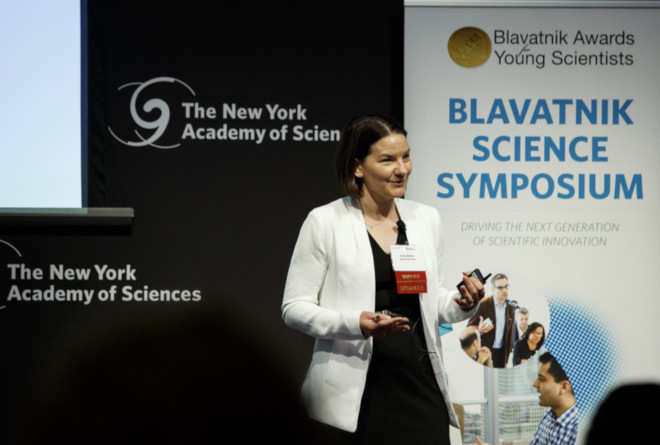
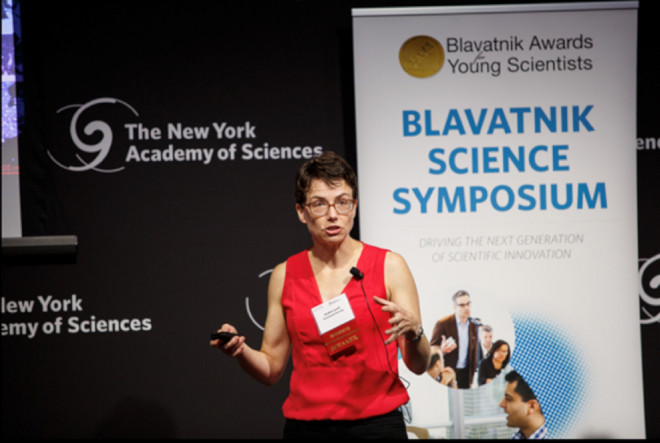
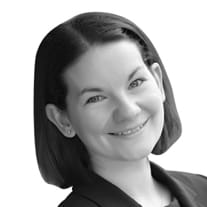
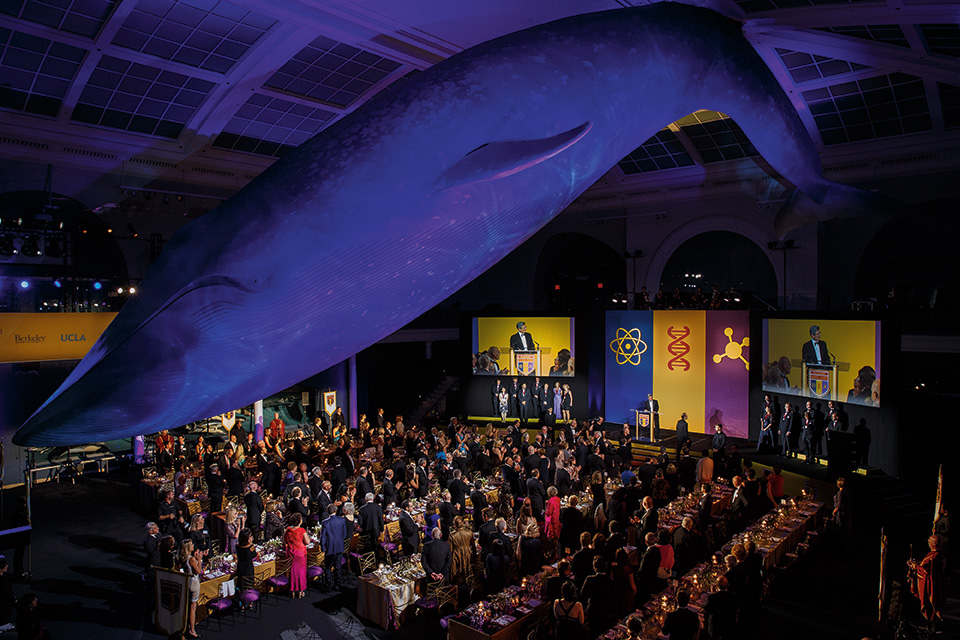
Dr. Emily Balskus, Professor of Chemistry and Chemical Biology at Harvard University, has been named a Laureate of the 2019 Blavatnik National Awards for Young Scientists in the chemistry category. The $250,000 prize is awarded by the Blavatnik Family Foundation and The New York Academy of Sciences.
Published September 10, 2019
By Kamala Murthy
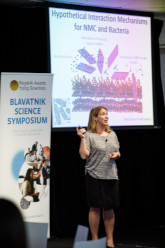
Dr. Balskus is leading breakthrough research on the human gut microbiome and deciphering its role in health and disease. At the Blavatnik Science Symposium in New York City this past July, Balskus discussed her thoughts on winning the prestigious title and what advice she would give to rising scientists.
This interview has been condensed and edited for clarity.
What’s been the response from your colleagues, friends, and family on being recognized for the Award?
It’s been wonderful. My family has always been proud and encouraging. No one in my family has a science background or works in science, but they think it’s amazing to see my work recognized.
My high school chemistry teacher—who has been a pivotal figure in my life helping me realize science was the career path for me—is coming to the ceremony in September, which is very exciting.
Is the recognition a motivator for the whole lab, as well?
Yes! I really see it as a team recognition because we’re such an interdisciplinary group. I try to recruit scientists from multiple disciplines to work together and bring unique perspectives. That way, we can do more than what any of us could do individually.
A lot of things happen in my lab that aren’t standard for a typical chemistry lab, so to see our approach get recognized is a real validation for all of us.
Can you talk a little bit about how the award will help you to expand your research?
One way it will help is by allowing us to move in directions where I currently don’t have much experience. This sort of unrestricted financial support is rare in science and can be incredibly beneficial if we want to try out new, really different ideas or projects.
I’d like to use some of the award to help encourage other women to be involved in science. I’m not sure how exactly I might do that yet, but I’d like to devote part of it to that, whether it’s finding a way to get involved in a project that studies career paths in science or actually supporting young female students or researchers to help more people get involved.
Speaking of women in science, this is the first year that all three Blavatnik National Awards Laureates are women. Is that significant for you?
That was very meaningful to me. I ended up going into science because I was surrounding by amazing mentors at an all-female high school. All my science teachers were women so there was nothing unusual about being a woman in science, and I was surrounded by wonderful peer role models as well. For me, being intellectually engaged and wanting to be a scholar or a leader was normal. I think that experience was critical in building confidence for the rest of my scientific training.
It is wonderful to see three female scientists being recognized this year across the three disciplines. It’ll be fun and I’m looking forward to getting to know the other awardees too, because their science is so fascinating, and really different from my own.
There are top scientists from all fields at the Blavatnik Science Symposium. Can you talk about the benefit of engaging with other scientists in and out of your field?
I learned a lot from interacting with other scientists and researchers when I was invited to attend the Blavatnik Science Symposium last year as a 2018 Blavatnik National Finalist and it’s great to be back again this year.
I really love events like these where you’re bringing in scientists from different disciplines. It’s fascinating to see the tools and approaches that are becoming prominent in other disciplines and to think about how they could be leveraged in the context of my research.
And it’s interesting to see what the problems are, what the big questions other disciplines are trying to answer, and how other scientists communicate.
When you talk about how they communicate, do you mean like how they present their theories and their work?
Yes. I like to see how presenters can distill these complex concepts down to a message that anyone can understand. I look for the different ways people can engage an audience during their presentation. I’ve always liked that aspect of scientific communication and presentation. It’s fascinating to see how people from different fields communicate their discoveries.
In my presentation, I talk about ideas by using chemical structures. When talking to a broader audience, I must find a way to make information more accessible to people who aren’t used to looking at chemical structures and thinking about chemical reactivity in the way I do.
What advice would you give to other rising scientists?
There’s a couple of things. I think it’s important to embrace your own unique perspective on science, and your own unique vision and path through science. I think many of the most impactful discoveries come when people can view a problem in a new way or bring a technique or expertise into a field where they haven’t been before.
It’s important for young scientists to follow the path where their interests lead them. They should not be worried if that path seems like an unconventional approach or an unusual trajectory. Young scientists must have the confidence—and support—to follow their interests and pursue what they are most excited about.
Also, there’s so much that we can learn by working together. That’s something that I learned pretty late in my career. The branch of chemistry I studied as a graduate student was very solitary. Now, I enjoy getting to work with other people, learning from them, and bringing together different expertise to solve tough problems. So that’s how my lab is now, a diverse group bringing unique perspectives to the table.
What legacy do you hope to leave behind in your field once your career is completed many years from now?
I hope to show the field that the human microbiome is (and microbes more broadly are) an amazing source of chemistry, and that my work on the microbiome will have contributed to the development of new treatments to help patients.
I also hope to leave behind a legacy of trainees who are pursuing their own unique scientific visions and who aren’t afraid to venture into new areas and fields.
Finally, I hope that I can help to make the field of chemistry and my university a more diverse and inclusive place, both by helping to support the careers of younger scientists and by making larger institutional changes.
To learn more about the Blavatnik Awards for Young Scientists, visit blavatnikawards.org.
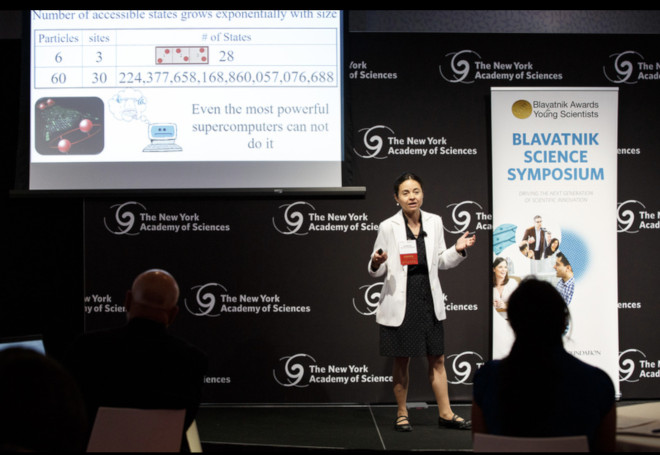
Ana Maria Rey, a physics professor at the University of Colorado Boulder, has been named a Laureate for the 2019 Blavatnik National Award for Young Scientists in Physical Sciences & Engineering.
Published August 22, 2019
By Marvin L. Cummings Jr., PhD
In June, The Blavatnik Family Foundation and The New York Academy of Sciences announced the 2019 Blavatnik National Awards Laureates in three disciplines — Life Sciences, and Chemistry.
The award includes a US$250,000 unrestricted prize for Rey’s development of a new understanding of atomic collisions, with direct applications to timekeeping and quantum simulation. Her theory provided a paradigm shift in the precise measurements of time that led directly to the development of the world’s most accurate atomic clock.
We spoke with her at the Blavatnik Science Symposium in New York City in July.
How has being named a laureate personally impacted you?
My family, friends, and colleagues have been extremely excited. For my family, it was a really wonderful surprise. Back in Colombia, where I am from originally, they have always been incredibly supportive of my work, so I was eager to share this news with them.
For my colleagues, it was like we were all getting the award. My research lab is a continuous collaborative effort, and so it is fantastic for the entire team to be recognized.
How will the Blavatnik Award motivate your ongoing work?
It’s a major motivation for me and my students. We work very hard, and we spend countless hours in the lab, which requires much sacrifice from other important aspects of our lives. As a result, any recognition is a stimulus to ensure we keep up with that work ethic.
More specifically, I hope this recognition motivates other women in science, and it shows that we can make significant contributions to our fields. If anything, it demonstrates that hard work and perseverance can result in achievements. I hope aspiring female students see that.
This is the first year all three laureates are women. Can you expand on how that is significant for you?
It is quite meaningful for me. I think it’s an inspiration because we’re in different fields, and we do different things, but ultimately, we are all women trying to create an impact in the world. It says to me that being a woman—being a mother and having a family—isn’t incompatible with succeeding in your career. I think that message needs to be broadcasted more and more until we have equal representation of women studying and leading in scientific fields.
How will you “pay it forward” from winning the Blavatnik Award?
I want use some of the prize money to start broader discussions about science. I’d like to host seminars every week for students and colleagues to convene, eat pizza, and discuss what is happening in the field.
In the past, I have found that some of the best ideas result from casual conversations rather than in the lab. Continuing to create a comfortable environment for scientists to explore bold ideas is a priority for me.
Why is it important that scientists from other fields collaborate with one another?
We need to bring people together from different fields because science should not be completely siloed, but instead cross-collaborative, in order to achieve the most knowledge. At University of Colorado, we have a Center for Theory of Quantum Matter where we not only have atomic physicists but also high-energy nuclear theorists, so I would like to contribute a seminar series there where scientists can collaborate and learn from each other.
As a Laureate, you were invited to participate in this invite-only Blavatnik Symposium with other leading scientists across all fields. What are you taking away from this experience?
I find it fascinating. I think it’s great to know your field is just a tiny part of science globally, and to hear all these exciting talks on penguins, for example, is just fantastic. Even though I’m an atomic physicist, I am always talking to cosmologists, and that’s important because it allowed me to combine what we know from cosmology to my research. At the Symposium, I want to explore further ways to incorporate research that’s even farther from my work into my own studies.
Of course, there are many young and mid-career scientists who hope to be a Laureate one day. Do you have any advice for those scientists?
I think the key to being successful is to work very hard at something that you like a lot. Nothing comes for free, but passion, curiosity, and hard work can lead to wonderful results. You can be very intelligent, but I don’t think that’s enough. You must put time and effort into your goals.
What legacy do you hope to leave behind in your field?
Intellectually, my hope is to develop a new generation of quantum sensors that will have real practical applications. This includes creating the most precise atomic clocks, which should be able to keep exact track of time and impact state-of-the-art navigation and communication technologies. Also, this allows us to explore the secrets of the quantum world and answer fundamental questions about our universe and how nature behaves.
More broadly, I hope to serve as a role model for the next generation of physicists, with particular emphasis on women and Hispanic minorities. I hope to show that they can make a dream come true. It requires hard work and dedication but is possible.
To learn more about the Blavatnik Awards for Young Scientists, visit blavatnikawards.org.
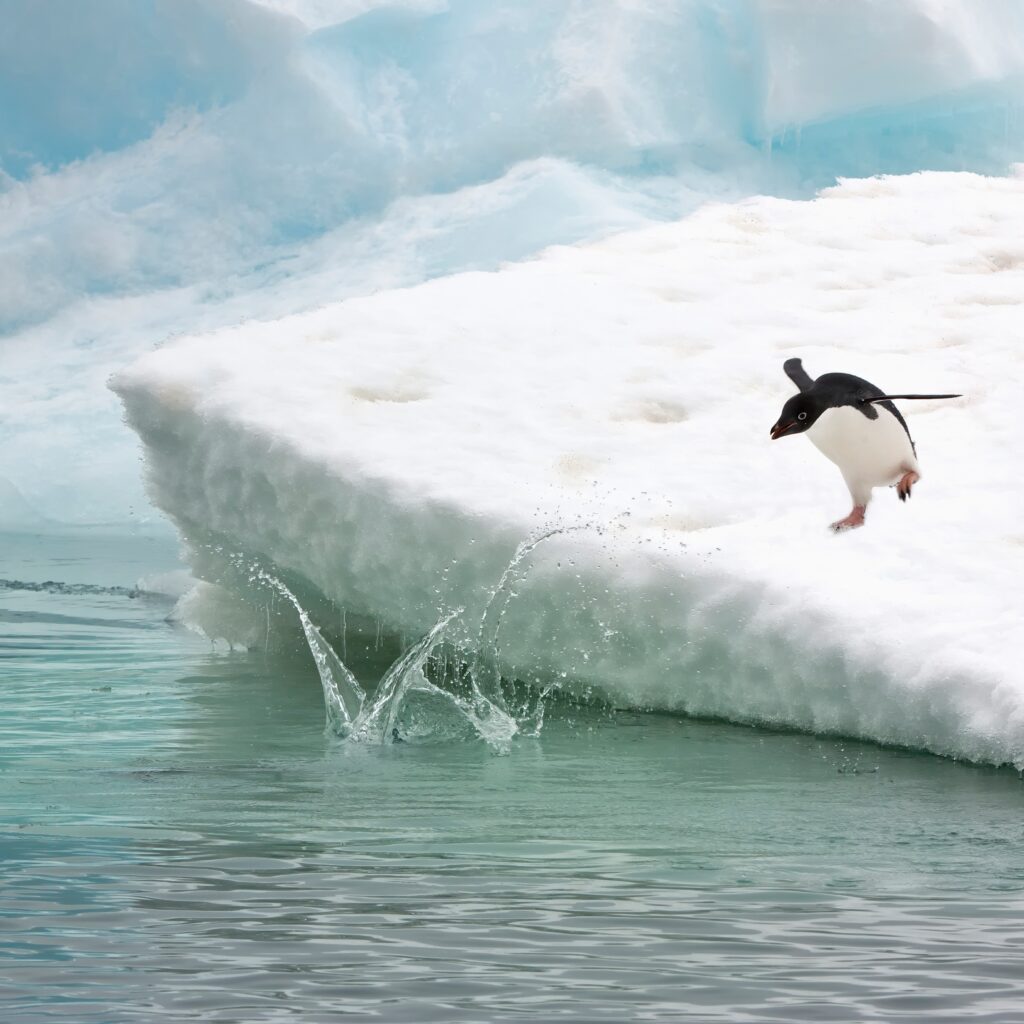
Heather J. Lynch, Associate Professor of Ecology and Evolution at Stony Brook University, has been named a Laureate for the 2019 Blavatnik National Awards for Young Scientists in the Life Sciences category.
Published August 19, 2019
By Marvin L. Cummings Jr., PhD
In June, the Blavatnik Family Foundation and The New York Academy of Sciences announced the 2019 Blavatnik National Awards Laureates in three disciplines—Life Sciences, Physical Sciences & Engineering and Chemistry.
The award includes a US$250,000 unrestricted prize for Lynch’s synthesis of cutting-edge mathematical models, satellite remote sensing plus field biology to understand the spatial and temporal patterns of penguin colonies in Antarctica. With the growing threat of climate change, her research provides insights into the population growth, collapse and possible extinction of various species of penguins and other species on the verge of extinction.
We spoke with her at the annual Blavatnik Science Symposium in New York City in July.
How has being named a Laureate for the Awards personally impacted you so far?
It’s all still quite new, and it’s been really exciting to read everyone’s congratulatory messages. I’ve been really surprised by how many people have heard about the Award and I think that’s a credit to all the outreach that the Blavatnik Family Foundation has done.
And, it’s been nice that people that I know in other contexts—like parents of my daughter’s friends or people in our community—know a little bit more about what it is I actually do every day. They might know that I’m a scientist, and they may know that I study penguins, but beyond that not much more. So, the Award and some of the coverage of the Award has given them a little more information about the kind of research my lab does, which has been nice.
Funding for scientific research is notoriously difficult to get. Why are unrestricted prizes like the Blavatnik Award so valuable in the field of academic research?
Some of the hardest things to fund in my area are the miscellaneous expenses, like some of the travel and some of the sample costs, and the ability to kickstart projects that don’t have a grant or funding but are cutting-edge research work. Unrestricted funding can facilitate project needs that fall between the cracks of other projects but are really important to either the field work that we’re doing, or to move student projects forward, or allow students to travel to conferences that they wouldn’t otherwise be able to. With unrestricted funding you don’t need approval or justification to spend the money a certain way. The money is available to spend as the laureate chooses.
As you know, this is the first year all three Blavatnik National Awards Laureates are women. Does that fact hold any significance for you?
I think it’s great! While biology has made great strides in diversifying, on the computing side—which is the other half of where I live—it’s still extremely male-dominated and I think it’s nice to see women and their research being recognized.
There are many areas where we’re not even close to parity, so this is a nice opportunity to showcase great science and assert the fact that we need to broaden our definition of what we think of when we think of a scientist.
As a Blavatnik Award honoree you were invited to participate in this invite-only Blavatnik Symposium with some leading scientists across all fields. What are you taking away from this experience?
This kind of an event is all too rare because as a scientist, you go to conferences where you talk to other people who do exactly what you do, and the conferences themselves get more and more specialized.
It’s a real treat to go to an event where you can listen to a talk about quantum computers or chemical biology that ordinarily you’d have no exposure to at all, because I feel like as your career progresses it becomes more and more myopically focused on your own specialty.
And, more often than not, you’re organizing events—which are almost by definition only focused on your own research. So, this is a chance to kind of step back and look at all the different STEM fields and see where people are struggling with common challenges and where there’s common opportunities.
Is it helpful to see how other scientists present complex research into digestible information?
Absolutely, I’ve learned so much both here and last week when I was at National Geographic’s Explorer Festival. Events like these, where you’re exposed to other researchers that are really at the top of their game, are just fantastic. Learning new things—even things like how to structure a narrative, what fonts did they use, how did they tell the story about what they do and the use of animation—has been terrific.
I’m sure there are a lot of other rising scientists who one day would hope to become a Laureate for this Award. Do you have any topline advice to pass down?
I think success in science is a careful balance of being stubborn and being humble. You have to be stubborn enough to keep going, even when everyone tells you that you’re wrong or that what you’re doing is not interesting. At the same time, have a learner’s mindset; you can take constructive criticism and you can pick up new ideas and realize that maybe you don’t always know what the right answer is.
It’s difficult to balance the stubbornness and the humbleness and the openness to new ideas; I often find students that get it wrong and are too heavily weighted towards one way or the other. But eventually you do find that balance and you know when to fight the good fight, and you know when to start all over again.
In the face of climate change, what legacy do you hope to leave behind once your career is completed many years from now?
Penguin science has advanced largely on the basis of a small number of individuals who have been obsessed, as I am, with surveying penguin colonies. It’s a tradition going back to the early 1970s.
As a penguin scientist, I’m so grateful for the care and attention to detail from those old expedition reports, and I really hope that future researchers will look back and appreciate the care I’ve put into documenting the distribution and abundance of Antarctic penguins.
To learn more about the Blavatnik Awards for Young Scientists, visit blavatnikawards.org.
This year, multiple finalists are recognized for their breakthrough research addressing today’s most pressing sustainability issues.
Here, three finalists discuss how their leading research could result in more wood-powered energy, cleaner chemicals and the preservation of penguins in Antarctica.
Prof. Heather Lynch
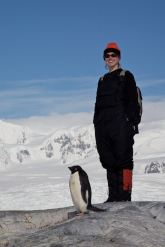
Prof. Heather Lynch with an Adelie penguin at Petermann Island in 2006.
Prof. Heather Lynch, Associate Professor, Stony Brook University is a finalist for using satellite imagery, field work, and advanced mathematical modeling and data to detect population declines predictive of penguin colony collapse.
As a graduate student at Harvard, Heather Lynch made a bold decision. After spending her entire academic career in pursuit of a PhD in experimental physics, she requested a transfer to the biology department – a move that had never been done before.
While physics was enriching and a great challenge, Prof. Lynch became increasingly interested in environmental issues and she wanted to become a part of the solution.
“I saw an opportunity to apply my training in quantitative methods to ecology and conservation biology,” she said. “I continue to be interested in how we can overlap the research methods of different scientific disciplines.”
Prof. Lynch’s transfer request was approved, and she completed all the requirements for a PhD in Organismic and Evolutionary Biology in two and a half years.
Her first major work focused on insect outbreaks and forest fires in places like Yellowstone National Park. That led her to a post-doctorate fellowship where working with a nonprofit she managed an unusual census data project – of penguins. The topic has been the focus of her research lab ever since.
“For the last 15 years, I have tried to incorporate the best available research methods and technology to understand seabird populations in the Antarctic,” she said. “I am particularly interested in how penguin populations are impacted by climate change, the fishing industry, and tourism.”
The study of penguins has mostly relied on field surveys, and much research is limited to studying one penguin colony at a time. But Prof. Lynch is an early adopter of incorporating satellite imagery to study how the entire Antarctic penguin population is impacted by changes in climate and the increased presence of humans on the continent.
“We have more access to satellite technology than ever before, and we are still figuring out how much new research we can explore with the technology,” she said. “In 10 years, I bet we will look back and wonder how we were ever able to study ecology without this crucial technology.”
Now, Prof. Lynch is as much a computer scientist as an ecologist. Half of her academic appointment at Stony Brook is at the Institute for Advanced Computational Science.
“I am always thinking about what information do policymakers need to preserve the Antarctic and protect the organisms living on it,” Prof. Lynch said. “By using satellite technology, artificial intelligence, and other tools – we can provide more accurate information at a faster rate than ever before.”
On being an Award finalist, Prof. Lynch said: “I am happy to see ecology being recognized. There are so many researchers in the field conducting important work, and I hope more of their work is recognized in the future.”
Prof. Liangbing Hu
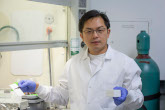
Prof. Liangbing Hu in his lab at University of Maryland.
Prof. Liangbing Hu, Assistant Professor, University of Maryland is a finalist for exploring the use of wood-derived nanocellulose as a solution to the sustainability challenges in energy, water and the environment.
Human evolution has been closely tied to wood for food, fuel and shelter. But in the last century, there has been a greater reliance on concrete, steel, aluminum and brick building materials, which exponentially increases fossil fuel consumption and global carbon dioxide emissions.
Liangbing Hu is trying to do his part to solve that problem through groundbreaking research.
Early in his academic career, Prof. Hu worked with Professor George Gruner at UCLA on nanoelectronics with carbon nanotubes. At that time, Prof. Hu never thought he would get into wood research. But during a three-year period at a nanotechnology company in Silicon Valley, he recognized the immense power technology can have to help solve some of the most serious problems that we face today.
“During my post-doctoral research, and for some time after, I have been involved in studying and applying nanotechnology to wood as a method to create more sustainable and bio-degradable products,” Prof. Hu said.
Since 2011, he has been investigating the use of wood-based materials for a range of emerging technologies to help drive sustainability efforts. Some of his work has focused on creating lightweight structural materials, building systems for energy storage and conversion, environmental remediation, green electronics, and energy-efficient buildings.
Hu and his team have invented a range of emerging wood nanotechnologies, including a transparent wood, low cost wood batteries, exceptionally strong wood, super thermal insulating wood, and a wood-based water purifier.
“In U.S., about 40 percent of our energy is consumed by buildings, which is greater than any other industry or transportation,” he said.
“Cost-effective and efficient energy can substantially lower our carbon footprint and at the same time provide more uniform building temperatures.”
When asked what sustainability means to him, Prof. Hu said, “Sustainability for me as a human being means the same as for everyone else: the ability to exist constantly and to maintain change in a balanced environment.”
“For me as a materials scientist, sustainability means the use of natural materials in the continued development of modern society. Once used, these materials can be fully recyclable or biodegradable and cause no negative impact.”
Prof. Ive Hermans
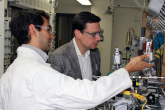
Prof. Ive Hermans in his lab at University of Wisconsin-Madison.
Prof. Ive Hermans, Professor, University of Wisconsin-Madison is a finalist for leading breakthrough discoveries in chemistry that help to reduce our environmental footprint.
Being the first in the family to go to college was a huge accomplishment for Ive Hermans. He wanted to make his parents proud and at the same time work towards creating a positive impact in the world. The only way he knew to do this was through his work in chemistry.
He completed his PhD from KU Leuven in Belgium and began his research work in sustainable chemistry. A few years later, he had the opportunity to come to the U.S., where he focused his work on finding solutions to minimize greenhouse gasses while creating more sustainable consumer products.
Hermans strives to design more energy efficient and less wasteful processes for chemical resources that are used in products and services.
“Much of my research involves designing sustainable chemical reactions that generate less waste, consume less energy, or produce fewer greenhouse gas emissions, while still meeting consumer demands for the everyday products that rely on these reactions,” Prof. Hermans said.
Among his most significant achievements is the discovery of a more sustainable method for the synthesis of C2-C4 alkenes from natural gas, as compared to traditional oil-based technologies. C2-C4 alkenes are some of the most important chemical building blocks and are integral for the synthesis of value-added chemicals found in materials that help to create products that define our standard of living.
Prof. Hermans is working towards developing cleaner processes that use biomass or natural gas, moving away from energy-consuming oil-based technologies.
“We develop materials that can selectively speed up chemical reactions that lead to desired products while avoiding the formation of undesired by-products like the greenhouse gas CO2.”
Prof. Hermans and his team recently began working on the chemical recycling of plastic waste back into building-block molecules, closing the lifecycle.
Plastic waste has adverse effects on the environment and the entrance of micro- and nano-plastics is increasingly apparent in our food chain.
“Chemical recycling poses tremendous challenges, but students are very excited to work towards the goal of sustainability because as chemists we have a responsibility to use our understanding of the molecular world to design new pathways that can make a difference for society,” he said.
To learn more about the Blavatnik Awards for Young Scientists, visit blavatnikawards.org.
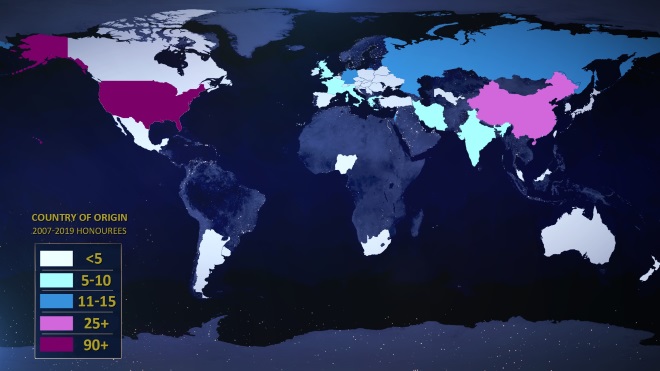
60% of Blavatnik Awards honorees are immigrants to the country in which they were recognized (U.K., U.S., Israel)
This year, many finalists are foreign-born, continuing a long history of the U.S. providing academic opportunity to large numbers of scientists and engineers from abroad. These finalists are now working on advances across multiple disciplines that are destined to impact populations around the world.
Here, some of the finalists discuss their journey, what inspired them to come to the U.S., and how their contributions will impact science for decades to come.
Dr. Jure Leskovec
Dr. Jure giving a talk at Stanford
Dr. Jure Leskovec, Associate Professor, Stanford University is a finalist for developing machine-learning methods to predict safety and potential adverse side effects of pharmaceuticals.
“It felt very real.” That’s how Jure Leskovec describes his first visit to Silicon Valley in 1998.
As a 17-year-old boy from Slovenia, he was fascinated to see such a large swath of high-tech companies in one area, and he felt privileged to step inside labs that were conducting cutting-edge research and producing the world’s most innovative products.
“I instantly knew that I had to be a part of this,” he said.
Leskovec went on to earn a doctorate in machine learning (the scientific study of algorithms and statistical models that computer systems use to perform a task without using explicit instructions) from Carnegie Mellon University and received post-doctoral training at Cornell University.
Today, he holds dual citizenship in the U.S. and Slovenia, and is a full-time, assistant professor of computer science at Stanford University while also acting as the chief scientist at Pinterest.
Dr. Jure giving a talk at Jozef Stefan Institute in Slovenia
Reflecting on his journey, Leskovec said he wanted to train at a university that offered the best machine-learning research program and go back to Slovenia once it was complete. But the opportunities and support he received in the U.S. kept pulling him back until he finally decided to settle here.
He is grateful for that and wants to do the same for other deserving students. He founded the American Slovenian Education Foundation that works to unite Slovenian scholars and educators globally and grants fellowship to talented Slovenian undergraduates.
“Living in the U.S. opened my mind and helped me appreciate the diversity of our world,” he said.
Leskovec and his team are building an artificial intelligence system for predicting, not simply tracking, potential side effects from drug combinations. This could help physicians make better decisions about what drugs to prescribe, help researchers find better combinations of drugs to study complex diseases and assist the FDA in its drug approval process.
His research also will help regulators overcome what he described as a long and complex recall process.
“Outside of a clinical study, the way we learn more about a drug’s potential side effects is to have patients report their experience to their physician, the manufacturer or directly to the FDA,” Leskovec said.
“Depending on the number of reports or the severity of the side effect, the FDA may ask the manufacturer to investigate. Once the investigation is completed, the FDA may consider new labeling, or even have the drug removed from the market.”
Dr. Andrea Alù
Dr. Alù giving a lecture at the Advanced Science Research Center at CUNY (photo credit ASRC, CUNY)
Dr. Andrea Alù, Professor, City University of New York (CUNY) is a finalist for leading breakthrough research in metamaterials with exotic optical and acoustic properties, including scattering suppression, giant nonlinearities and nonreciprocity.
During his undergraduate studies in Rome, Andrea Alù won a competition to visit the U.S. for a research internship at University of Pennsylvania (UPenn). Once the internship was complete, he returned to Rome to earn his doctorate, but the pull of opportunity in the U.S. brought him back to finish his post-doctoral studies at UPenn.
“My first trip to the U.S. and the opportunity to work in complete freedom with my research mentor, Professor Engheta, during my internship at UPenn had a profound impact on my life,” Alù said.
“I got the opportunity to get myself immersed in an up and coming research area with tremendous opportunities and work with the top scientists in the field. I knew I wanted to come back and do advanced research here in the U.S. and am glad I made that decision.”
Alù’s decision has proven to be a great success. His research team is implementing new concepts for sensors that provide enhanced sensitivity and resolution for biomedical devices and have been collaborating with groups working on brain and health issues to build better ways of sensing and imaging.
Dr. Alù receiving the Alan T. Waterman Award in 2015
Alù is also actively working to improve the technology that makes computing faster, more accurate and helps create more energy efficient devices.
He believes the use of light instead of electrons in working with quantum regime can enhance computing dramatically. And that would help to meet energy needs to operate IT infrastructure in a more sustainable manner.
Alù’s work has received international attention. Among his numerous awards, one that stands out is being named a Vannevar Bush Faculty Fellow – the department’s most prestigious single-investigator award that aims to advance transformative, university-based fundamental research.
“This is a country that welcomes talent from other countries and gives them the opportunity to live their best lives and do their best work,” Alù said.
He now holds dual citizenship in the U.S. and Italy.
Dr. Mohammad R. Seyedsayamdost
Dr. Seyedsayamdost during his postdoc at Harvard Medical School
Dr. Mohammad R. Seyedsayamdost, Assistant Professor, Princeton University is a finalist for exploring ways to extract hidden drug-like molecules encoded in bacteria that can be used to address the global shortage of antibiotics.
It was the peak of the Iran-Iraq war in 1987 when Mohammad Seyedsayamdost’s family fled from Iran to Germany. He was eight years old.
“The trigger for my parent’s life-changing decision came when a hospital right next to my elementary school was bombed,” he said.
Since then, Seyedsayamdost has lived in three countries – Germany, Australia and the U.S.
Growing up in a family where education was prioritized, Seyedsayamdost always wanted to come to the U.S. for his higher education. He attended Brandeis University in Massachusetts for his undergraduate studies and ultimately received his doctorate in Chemistry under the guidance of Professor JoAnne Stubbe at MIT, followed by postdoctoral work at Harvard Medical School with Professor Jon Clardy and Professor Roberto Kolter.
“Every step of the way, I missed my family and wanted to return home. But I also knew the best way to honor the sacrifices my parents made for my future was to do exceptional work that would create a positive impact in the world,” he said.
Dr. Seyedsayamdost during middle school in Australia
Seyedsayamdost is working on a groundbreaking method for accessing a previously hidden realm of drug-like molecules encoded in bacteria called secondary metabolites.
Genome sequencing has shown that most biosynthetic genes that produce these metabolites are not expressed under normal laboratory conditions. But Seyedsayamdost’s method, called High Throughput Elicitor Screening (HiTES), unlocks these novel compounds, some of which have shown much enhanced bioactivity.
He and his research team at Princeton University are using this method to isolate novel antibiotic molecules, which could help develop antibiotics to meet market shortages.
“A high risk, high reward kind of study” is how he describes his work.
Like his fellow scientists, Seyedsayamdost is thankful for the opportunities he received studying and working in the U.S. and plans to apply for citizenship when he is eligible in four years.
“One thing I have always appreciated about science in the U.S. is that it provides an even playing field,” he said.
“Once you are in, you are judged by your talent and capabilities and not by where you are from or the color of your skin. The can-do attitude and the innovative mindset of people in this country, is what makes it so desirable for the world’s best scientists to come here and do their best work.”
To learn more about the Blavatnik Awards for Young Scientists, visit blavatnikawards.org.
The Blavatnik Family Foundation and The New York Academy of Sciences recently announced finalists for the 2019 Blavatnik National Awards for Young Scientists in Chemistry, Physical Sciences & Engineering, and Life Sciences. Of the 31 finalists, 9 or nearly a third are women, up 80% from the National Awards inception in 2014.
Published June 19, 2019
By Kamala Murthy
For some of these women, their passion for science blossomed early, nurtured by caring relatives and teachers, while professors and colleagues later provided inspiration and guidance for them to fulfill their academic ambitions. Now, they are among the nation’s rising stars in their respective fields.
Here, some of these women share their early discovery of science, the importance of mentorship, and what it means to be a Blavatnik National Awards finalist.
Prof. Christy Haynes
Prof. Haynes presenting at the 2017 Blavatnik Science Symposium at the New York Academy of Sciences
Prof. Christy Haynes, Professor, University of Minnesota is innovating ways to assess the toxicology of nanoparticles for safer drugs and consumer products.
Christy Haynes remembers – with terror – her first chemistry class. One day, her teacher surprised the students with a combustion test, shooting flames from a laboratory table.
It was the first time she had seen that kind of fiery experiment, and she nearly ran out the classroom for safety. Instead, it laid the groundwork for a lifelong career.
“No one in my family had a scientific background, so I didn’t know what to expect from chemistry,” she said. “But in high school, I quickly learned to love the challenges the subject offered, and the impact a scientist could make.”
While pursuing her doctorate, Prof. Haynes had a series of inspiring mentors and she credits Dr. Hilary Godwin (now dean of the University of Washington’s School of Public Health) as an influence. But it wasn’t until after her education that she realized the value of seeing other women balance the responsibilities of a family and a challenging career.
“Throughout my education, I did not consciously think about whether my mentors and colleagues were men or women since both can do great science,” Prof. Haynes said. “But I started a family during my tenure period, and that is when I wished I had seen more women do it before.”
As a result, Prof. Haynes coordinated a group for women in nanoscience as a platform for support and collaboration.
On the Blavatnik Awards, Prof. Haynes is most excited about the cross-fertilization of ideas with other finalists.
“It’s an exciting honor and a great way to learn how other scientists think even if they are in a different field,” she said. “I am happy to be included with many thoughtful people who can influence my thought paradigm.”
Prof. Emily Balskus
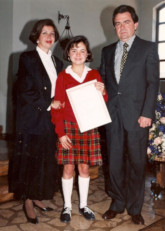
Prof. Balskus with her high school chemistry teacher
Prof. Emily Balskus, Professor, Harvard University is leading breakthrough research on the human gut microbiome and deciphering its role in health and disease.
Emily Balskus jumped at the chance to be a lab assistant in high school. It got her closer to the kinds of experiments that went beyond normal coursework – and helped her to earn money to pay tuition.
“I remember being thrilled by how things worked and understanding this on a molecular level presented a whole new perspective on how everything around me worked,” she said. “Being a lab assistant was one of my first jobs, and it planted a seed in my mind that you could do this as a career.”
What also cemented that ambition were the many strong role models at her all-female school who promoted the value of hard work and academic achievement.
At the top of that list: her chemistry teacher, who recognized Prof. Balskus’ talent and made extra time to help her.
“Her guidance made me realize that I could take my interest in chemistry far beyond my high school classroom. She gave me the opportunity to become a lab assistant, and that is a major part of why I am here today.”
Outside of her research, Prof. Balskus is focused on helping the field of science become more diverse. Prof. Balskus said there has been significant progress in attracting women and minorities to science, but there needs to be more help for students to stick with it.
She said Harvard has some graduate classes where the majority of students entering are women but, “We should talk about how to also retain that talent because we do not always see all those students finish the program.”
Prof. Balskus is thrilled to be a finalist, but she cannot take all the credit.
“This recognition is a result of our lab’s continuous hard work and commitment to create a collaborative culture,” she said. “We are most successful when we respect all perspectives and foster each other’s development.”
Prof. Ana Maria Rey
Prof. Rey as a high school student in Colombia
Prof. Ana Maria Rey, Adjoint Professor, University of Colorado Boulder is exploring some of the most challenging and fundamental problems in quantum mechanics.
As a primary school student in Colombia, Ana Maria Rey learned that the entire universe can be explained by a mathematical equation. And with that understanding, she was hooked on physics.
By high school, she was focused on pursuing a career in physics even though engineering provided more promising opportunities in her home country.
“I did not know any physicists when I was young, but I did know that hard work would lead to new opportunities for me,” Prof. Rey said. “I am an example of what one can achieve in science no matter the path.”
In addition, two female mentors played a major role in helping her to become the physicist she is today.
“My undergraduate quantum theory professor was the first female physicist I had ever met,” she said. “She was inspiring and incredibly challenging. My professor would make us throw away our notes at the end of each class, forcing us to absorb the material rather than record it. She gave me confidence to pursue the field even though I did not see a lot of people like me doing it.”
Her other great inspiration was the late Dr. Deborah Jin, an award-winning physicist at the University of Colorado who passed two years ago.
“Her enormous accomplishments at such an early age continues to inspire me,” Prof. Rey said. “I still use her advice to this day.”
Being named as a finalist for an award in not new for Prof. Rey, who is a former MacArthur Fellow, but this is more than an individual honor for her.
“I am excited to share this honor with my family back in Colombia,” she said. “They are always supportive of my work, and that is a major part of my success.”
Prof. Viviana Gradinaru
Prof. Gradinaru as a graduate student at Stanford University
Prof. Viviana Gradinaru, Professor, Caltech is inventing methods to track and modulate intact neural circuitry.
In Romania, Viviana Gradinaru and her fellow students were regularly nudged toward science over humanities.
“In Eastern Europe, science was the focus of everyone’s education,” Prof. Gradinaru said. “At a very young age, I would participate in Science Olympiads with other students, so I quickly found science to be fun and it felt like a sense of community.”
Throughout childhood, Prof. Gradinaru had many great mentors, but not all of them were teachers. Her grandparents first inspired her inclination towards science.
“I grew up in a small, remote village where everyone was a ‘maker.’ My grandparents and the rest of the village often had to come together to create solutions to public problems, and they quickly included me in that process. I learned the value of problem-solving and self-sufficiency from them.”
Prof. Gradinaru said she always benefited from the full representation of men and women in Romania’s workforce.
“In Romania, the emphasis on science required full participation from men and women,” she said. “I grew up with many examples of brilliant women teaching and practicing science in my home country.”
Prof. Gradinaru is grateful to be recognized as a finalist for the Blavatnik National Awards, which includes scientists from every field.
“Many fellowships and grant programs are focused on one specialty, but I am happy to be a part of this group of scientists conducting all forms of scientific research,” she said. “I’m excited to meet new colleagues and learn from their work.”
To learn more about the Blavatnik Awards for Young Scientists, visit blavatnikawards.org.
Our showcase of the inspiring honorees breaking new ground in life sciences, chemistry and physical sciences.
Published May 1, 2019
By Carina Storrs, PhD
Life Sciences Laureate
Heather J. Lynch, PhD, Stony Brook University
A pursuit of penguins leads to new territories in technology
It may be hard for penguin enthusiasts to believe, yet Heather Lynch PhD says the “most fun part of the entire year” is not the four months a year she and her team spend in Antarctica, but rather the time spent pouring over the reams of data when she returns. Lynch was originally drawn to penguins as a post-doc at the University of Maryland because of the challenge of studying them.
Lynch, now an Associate Professor at Stony Brook University, is tackling the fundamental questions of how many penguins are there and where exactly are they? Those may seem like simple questions, but they are stymied by data shortcomings, such as not having precise location data from on-the-ground surveys of the flightless, tuxedo-donning birds.
To subvert the treacherous Antarctic environment, Lynch turned to the wealth of NASA satellite imagery of the Antarctic that dates back decades. She and a colleague developed algorithms that scan the thousands of coastal images for signs of penguins revealed by their pink-hued guano (bird feces). Then, when they get tipped off to the presence of a large colony of penguins, they bring glacial-ready drones to the areas to take high-resolution pictures for exact headcounts.
The Adélie penguins
One of the biggest finds was a supercolony of about 1.5 million Adélie penguins on the Danger Islands right off the tip of the Antarctic Peninsula, which stretches toward South America. No one knew this colony existed — Lynch didn’t believe the algorithm at first, until she could confirm it with other satellite imagery.
She and her lab have also discovered much smaller colonies of chinstrap and gentoo penguins on the nearby Aitcho Islands. Without Lynch’s mathematical techniques and use of satellite technologies to detect guano, these colonies of penguins may have never been discovered.
Thanks to this multi-pronged approach, Lynch can now pride herself on the ability to locate nearly all of the penguin colonies in the Antarctic and is excited about the possibility of discovering even more colonies. Lynch’s game-changing ability to apply mathematical modeling to ecological data collected from satellites, aerial drones and field work is what earned her the title of 2019 Blavatnik National Awards Laureate in Life Sciences.
Lynch has always had one foot in the technological side. She was close to getting her PhD in physics when she “came up for air,” decided she wanted to apply her problem-solving zest toward environmental issues, and switched to a PhD program in biology.
Developing Skills in Statistics and Programming
However, she thinks the expertise that she acquired in mathematical modeling while working on her physics PhD has been the secret to her success. She advises students interested in pursuing any STEM field to develop some statistical and programming abilities.
“[They] are that all-access pass,” Lynch says. “There is not a lab on the planet that does not need people with those skills.”
Although Lynch’s discoveries have been welcome news for ecologists and penguin lovers alike, they can appear to belie the peril facing these birds due to climate change.
“All of these other populations, even other Adélie penguins, are crashing,” Lynch says.
A big part of her research focuses on developing models to understand why the Danger Island colony is flourishing, while the Adélie penguins on the western side of the Antarctic Peninsula are declining.
Implications for Conservation and the Impact of the Award
It almost goes without saying that Lynch’s research has implications for conservation.
“When we found the Danger Island populations, the first email I sent was to the people who were designing the Marine Protected Area in the region,” Lynch recalls. The Danger Islands had not been considered an important area to protect, but in what Lynch calls a “dream scenario,” policy makers expanded the area to include the islands after she told them about the Adélie supercolony.
Lynch is excited that the Blavatnik Award will bring attention to the recent technological advances in the field of ecology. The synergistic effects of Lynch’s methods will have a wide-ranging and critical impact in the fields of ecology and conservation biology in the face of impending, human-induced mass extinctions. Lynch and her lab have already expanded her methods to evaluate Antarctic seal and whale populations, and scientists can use her methods in the hope of saving other species all over the world.
Chemistry Laureate
Emily Balskus, PhD, Harvard University
Cracking the mysteries of the human microbiome
The first time that Emily Balskus, PhD worked with a microbiome, the term for communities of bacteria that live in our bodies and all around us, she was knee-deep in the salt marshes off the southern coast of Cape Cod, collecting bacteria.
Things got pretty messy, but the experience helped convince Balskus — who was then conducting postdoctoral research in chemical biology at Harvard Medical School — that she wanted to bring her chemistry expertise to bear on the biggest questions about the human microbiome.
Up until those marshy waters, Balskus was doing, as she puts it, “pretty conventional” chemistry. But early on during her postdoctoral training she attended a seminar about the Human Microbiome Project, which would set out to catalogue the microbes living on and within us. It opened her eyes to the shocking fact that scientists knew almost nothing about what these bacteria were actually doing, and how they affected our health.
“I couldn’t believe that we could be living so closely with so many microbes, that we had shared evolutionary history with them, and there was so much we didn’t know about them,” Balskus recalls.
Understanding the Microbiome in our Gut
Much of what we now know about the goings-on of the microbiome in our gut — for example, how certain bacterial residents can increase the risk of heart disease or thwart the activity of the medications we take — is thanks to the research group that Balskus has been leading at Harvard University since 2011.
For her work getting to the bottom of microbial mysteries, Balskus was named the 2019 Blavatnik National Awards Laureate in Chemistry, which Balskus says is “wonderful” and “very humbling.”
One of the most exciting discoveries of the Balskus lab is connecting how bacteria in the gut microbiome may increase the risk of colorectal cancer. It had been known for more than a decade that certain strains of Escherichia coli (E. coli) make a toxic molecule, called colibactin, and that these bacterial strains are more likely to be found in the gut of people with colorectal cancer.
Understanding the Chemical Components
Balskus and her team focused on determining the chemical makeup of the mysterious colibactin molecule, which had been challenging for other chemists to isolate and characterize. The difficulty of studying this molecule using more conventional approaches made her consider whether her unique perspective might provide another path.
Balskus’ team explored how colibactin was produced in the gut without knowing its complete structure. They eventually discovered that the colibactin molecule contains a structure called a cyclopropane ring, which is known to cause DNA damage that can lead to cancer-causing mutations. Importantly, her team showed that exposing human cells in the lab to the toxic E. coli strain led to a specific type of cyclopropane-dependent DNA damage, whereas cells exposed to harmless strains of E. coli showed no signs of similar DNA damage.
In future studies, she hopes to determine whether this type of DNA damage can be seen in cells obtained from biopsies of colorectal cancer patients, to confirm whether this toxic E. coli is indeed responsible for increasing cancer risk.
Balskus credits her postdoctoral advisor, Christopher Walsh, MD, PhD for suggesting she take the fateful trip to the salt marshes, which was part of a summer microbiology course held at the Marine Biological Laboratory in Woods Hole, Mass. This course equipped her with the tools of microbiology and expertise that she continues to use to probe the human microbiome.
Combining Chemistry and Microbiome Research
Today, Balskus is a Professor of Chemistry and Chemical Biology at Harvard University, and a leader in bringing the worlds of chemistry and microbiome research together. This spring she helped organize the first scientific conference on the chemistry of the human and other microbiomes.
“Both [fields] are very excited about this intersection,” Balskus says. She is also venturing into other scientific fields, such as genetics, and exploring how chemistry’s tools can advance other areas of biological research.
Balskus hopes to use the Blavatnik Award funds to promote women and other underrepresented groups in science. She recognizes how much her female science teachers at the all-women’s high school and the small liberal arts college she attended encouraged her and were role models for her. Many young women are not so fortunate.
“It is not one thing that makes it hard, it is a bunch of things that make it difficult for women to feel like they belong in science,” Balskus says.
Physical Sciences & Engineering Laureate
Ana Maria Rey, PhD, University of Colorado Boulder
Building the world’s most precise atomic clock
Ana Maria Rey, PhD fell for physics in high school, the moment she realized she could use mathematical equations to predict how a ball will move. It was an easy love affair, as Rey flew through physics problems for fun.
But at the university she attended in her native Colombia, a professor challenged the students with such long physics exams that students had no time to perform detailed calculations. This professor, who Rey considers her first role model, taught them to rely on intuition instead, which could only be acquired through intensive study of the subject.
It is a lesson that Rey has carried with her throughout her career. Over the course of her PhD studies at the University of Maryland, through two periods of postdoctoral training, and now as a Professor of Physics at the University of Colorado Boulder, Rey has delved deep into the world of quantum mechanics.
Diving into Quantum Mechanics
Quantum mechanics describes the behavior of the smallest particles of matter: the atoms and sub-atomic particles that make up balls and every other material on Earth. Just like her early days with physics, Rey is explaining the behavior of the quantum world using mathematical models. But now she is the one developing the models, in groundbreaking work that earned her the honor of being named the Blavatnik National Awards Laureate in Physical Sciences & Engineering this year.
“Understanding [atomic and sub-atomic] behavior is really, really important because it can lead to technological development,” Rey says.
Although her research is theoretical, its applications are tangible and far-ranging, from creating GPS (global positioning system) that can provide more accurate location data and quantum computers that would be thousands of times faster than today’s machines, to ultimately enabling the direct measurement of gravitational waves, which are ripples in the so-called fabric of the universe.
Building a More Precise Atomic Clock
At the heart of all these possibilities, and the crux of Rey’s models, is the ability to build a more precise atomic clock, which can measure much smaller units of time than modern clocks — as short as one billionth of a billionth of a second. As Rey explains, the pendulum of an atomic clock is laser light, and the thing that measures each swing of the pendulum is atoms.
The problem that scientists have to understand, and ideally control, is how the atomic timekeepers move when they are zipping around and colliding with each other. Because of Rey’s equations, they are getting closer to that goal. She credits the physicists she collaborates closely with at JILA, where she is a Fellow, for conducting the breakthrough experiments with ultra-cold atoms trapped by lasers, making them slower and easier to track, for informing her calculations.
Rey says the funding and recognition that come with the Blavatnik Award will allow her to push farther into what she calls “the most exciting part of the work.” Although her team has already given the world its most precise atomic clock, that is nothing compared to what they could achieve if they could entangle, or link together, atoms in such a way that they behave as one unit.
Entanglement, which has been shown by allowing atoms to interact and then separating them, would eliminate the noise that throws off atomic clocks.
“This is the holy grail,” Rey says, adding that, “we should be able to see what the universe is made of,” such as mysterious dark matter.
Driven By Passion
Rey believes the key to her success in theoretical physics is loving what she does and working hard at it.
“Things are not going to come to you. You might be very smart, but I don’t think it’s enough,” Rey says.
Her other great role model, renowned JILA fellow, Deborah Jin, PhD, who passed away in 2016, showed Rey that it is possible to have a successful scientific career and a happy family life, and generally to be there for people. Rey, who was also selected as a MacArthur Fellow in 2013 and the MOSI Early Career National Hispanic Scientist of the Year in 2014, says “I hope in some way, I can share the same type of help with young women scientists.”
The 2019 Blavatnik National Awards for Young Scientists Ceremony
Michal Rivlin, PhD, Senior Scientist and Sara Lee Schupf Family Chair, Weizmann Institute of Science
Dr. Michal Rivlin is a neuroscientist who has made the paradigm-shifting discovery that cells in the adult retina can exhibit plasticity in their selectivity and computations. One of the first demonstrations of neuronal plasticity outside the brain, this raises fundamental questions about how we see, and has implications for our understanding of the mechanisms underlying computations in neuronal circuits, the treatment of retinal diseases, blindness and development of computer vision technologies.
Chemistry Laureate
Moran Bercovici, PhD, Associate Professor, Faculty of Mechanical Engineering, Technion – Israel Institute of Technology
Dr. Moran Bercovici is an analytical chemist who studies microscale processes coupling fluid mechanics, electric fields, heat transfer and chemical reactions. His studies have potential implications in multiple fields, ranging from the detection of low concentrations of biomolecules for rapid and early disease diagnostics, to the creation of new microscale 3D printing technologies.
Physical Sciences & Engineering Laureate
Erez Berg, PhD, Associate Professor, Weizmann Institute of Science
Dr. Erez Berg is a theoretical condensed matter physicist who develops novel theoretical and computational tools to study long-standing and emerging questions in quantum materials. His research has provided important insights into the physics principles behind a wide variety of exotic phenomena in quantum materials, which will help to speed up the implementation of these materials in next generation electronics including quantum computing, magnetic resonance imaging and superconducting power lines.
Konstantinos Nikolopoulos, PhD, Professor of Physics, University of Birmingham
Experimental particle physicist, Prof. Konstantinos Nikolopoulos led a 100-physicist subgroup in ATLAS, a large scientific collaboration at CERN, which made key contributions to the discovery of the Higgs boson. This discovery, jointly announced by the ATLAS and CMS collaborations at CERN, is regarded as one of the biggest breakthroughs in fundamental physics this century. This discovery completed the experimental verification of the Standard Model of particle physics, the mathematical theory through which we understand nature at the fundamental level, and resulted in the Nobel Prize in Physics being awarded to the physicists who predicted the Higgs boson decades ago. Prof. Nikolopoulos’ work has significantly improved our understanding of the Higgs boson and explored potential new physics beyond the Standard Model.
Physical Sciences & Engineering Finalists
Gustav Holzegel, PhD, Professor of Pure Mathematics, Imperial College London
Prof. Gustav Holzegel is a mathematician, who develops rigorous mathematical proofs of physics questions related to Einstein’s general theory of relativity. He provided the first proof of a decades-old conjecture about the stability of black holes in the case of the simplest form of black holes in the universe, and has made significant progress towards completely proving this conjecture in the cases of more complicated types of black holes. The techniques he developed have also influenced the studies on other open fundamental questions in theoretical physics and astrophysics.
Máire O’Neill, PhD, Professor of Information Security; Principal Investigator, Centre for Secure Information Technologies; Director, UK Research Institute in Secure Hardware and Embedded Systems, Queen’s University Belfast
Prof. Máire O’Neill is an electrical engineer working in the area of cybersecurity. She has proposed novel attack-resilient computer hardware platforms and chip designs that have found immediate applications. Her solutions are orders of magnitude faster than prior security implementations while also being cost effective. Her achievements have already generated an enormous impact on society, which will continue to increase as cyberattacks costing the global economy hundreds of billions of dollars annually, continue to grow at an unprecedented scale.
Chemistry Laureate
Philipp Kukura, PhD, Professor of Chemistry, University of Oxford
Prof. Kukura is a physical chemist who is developing cutting-edge optical methodologies for the visualisation and analysis of molecules such as proteins that exist within the body. To accomplish this task, he takes advantage of the scattering of visible light, which is the universal process through which we see the world around us. On the macro-scale, this scattered light provides information on the size and shape of an object. What Prof. Kukura has shown is that when driven to the extreme by detecting this light scattering from tiny objects in a microscope, this approach not only works with single biomolecules, but can also be used to measure their molecular mass, introducing a new way of weighing objects. The macroscopic equivalent would be to know the mass of a loaf of bread to within a few grams just by looking at it. Prof. Kukura hopes that this approach will be used widely to discover how biomolecules assemble, interact and thus function, as well as understand what goes wrong in disease, and how it can be addressed at a molecular level.
Chemistry Finalists
Igor Larrosa, PhD, Professor of Organic Chemistry, The University of Manchester
Organic chemist, Prof. Igor Larrosa is a world-leader in a sub-field of organic chemistry called carbon-hydrogen bond activation, which is focused on finding ways to make these normally stable bonds reactive. Specifically, he has established new mechanistic insights into how C–H bonds can react with transition metals, and developed novel catalysts for the facile construction of molecules that previously were only accessible through multistep organic transformations.
Rachel O’Reilly, PhD, Chair of Chemistry & Head, School of Chemistry, University of Birmingham
Prof. Rachel O’Reilly is a polymer chemist that has pioneered the use of innovative chemical approaches in the fields of DNA nanotechnology, sequence-controlled synthesis of polymers and precision synthesis to foster the development of novel materials. The novel molecules and structures produced from these methodologies have potential applications in healthcare, energy-related fields and sustainable chemistry.
Life Sciences Laureate
Ewa Paluch, PhD, Chair of Anatomy, University of Cambridge; Professor of Cell Biophysics, MRC Laboratory for Molecular Cell Biology, University College London
Prof. Ewa Paluch’s novel discoveries are at the forefront of cell biology: she has elucidated key biophysical mechanisms of cell division and migration, and has established physiological roles of cellular protrusions known as “blebs.” Previously thought to exist only in sick or dying cells, she established that these protrusions on the cell surface are common in healthy cells, and that blebs have important functions in cell movement and division. Her work will influence treatment for diseases such as cancer, where cell shape and migration are key to disease pathology, and she is leading the field towards a complete understanding of how the laws of physics affect the behavior of cells.
Life Science Finalists
Tim Behrens, DPhil, Deputy Director, Wellcome Centre for Integrative Neuroscience, University of Oxford; Professor of Computational Neuroscience, University of Oxford; Honorary Lecturer, Wellcome Centre for Imaging Neuroscience, University College London
Prof. Timothy Behrens is a neuroscientist whose work has uncovered mechanisms used by the human brain to represent our world, make decisions and control our behavior. An understanding of how our neurons function in networks to control behavior is fundamental to our understanding of the brain, and has implications for neural network computing, artificial intelligence and the treatment of mental and cognitive disorders.
Kathy Niakan, PhD, Group Leader, The Francis Crick Institute
Dr. Kathy Niakan is a developmental biologist conducting pioneering research in human embryonic development, elucidating early cell-fate decisions in embryonic cells. To further these studies, she became the first person in the world to obtain regulatory approval to use genome-editing technologies for research in human embryos. Her research may provide new treatments for infertility and developmental disorders, and her work in scientific policy and advocacy is defining the ethical use of human embryos and stem cells in scientific research.
Learn more about the ceremony that celebrated this year’s Blavatnik Awards for Young Scientists in the United Kingdom.
Published May 1, 2019
By Kamala Murthy
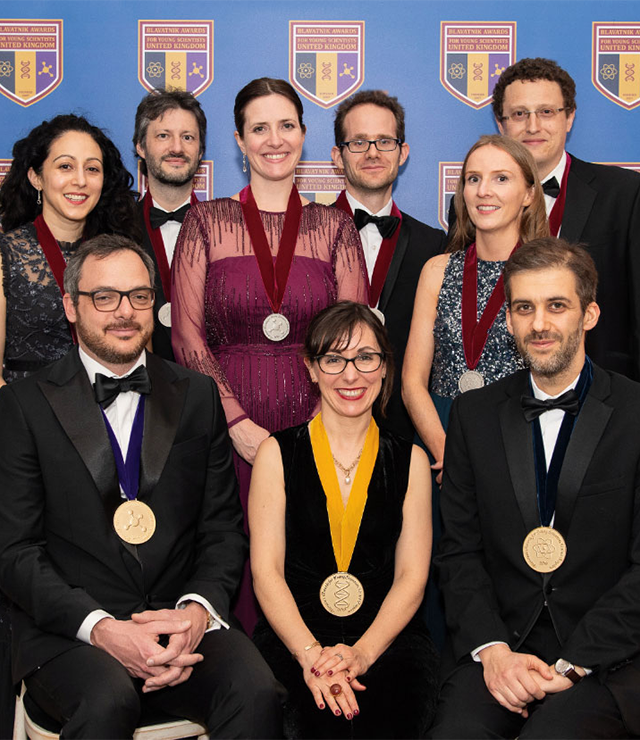
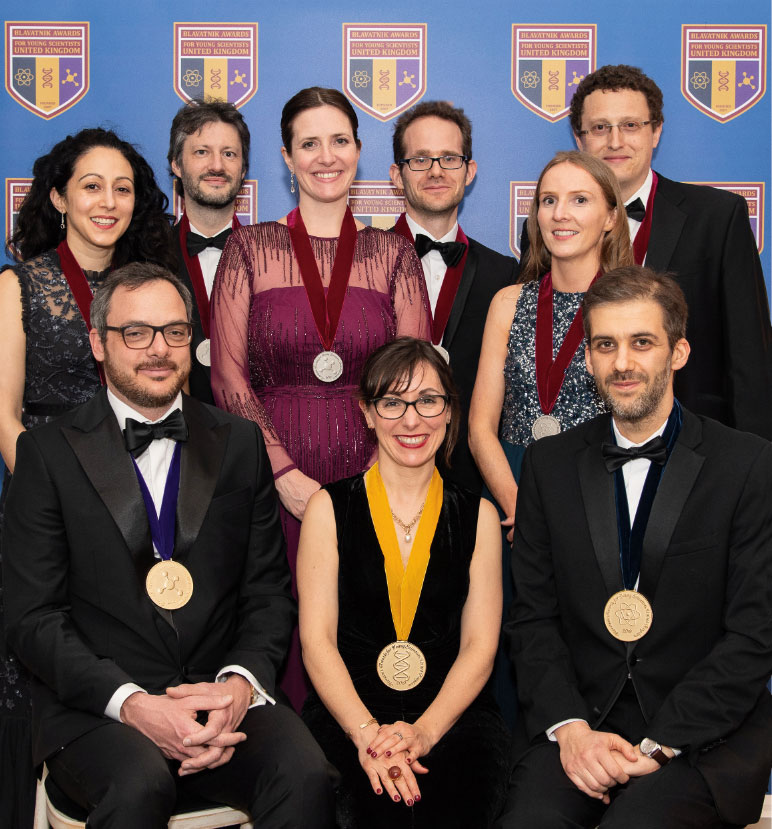
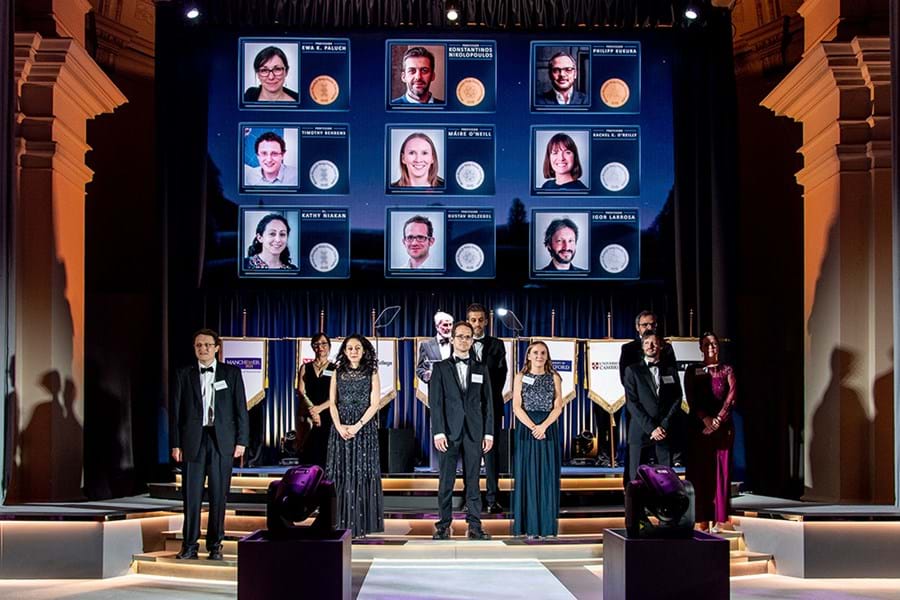
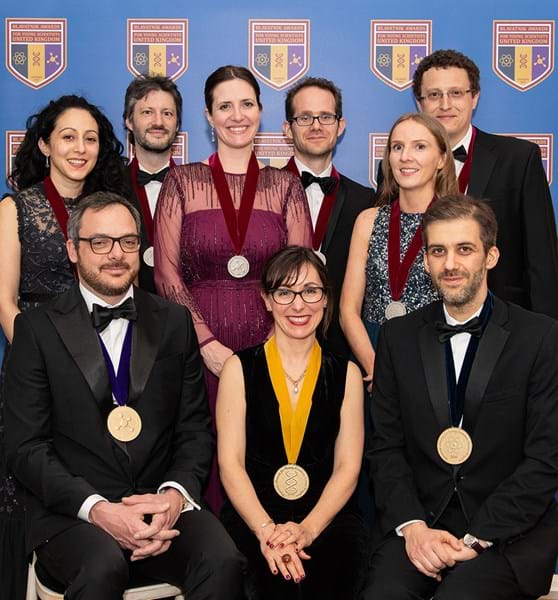
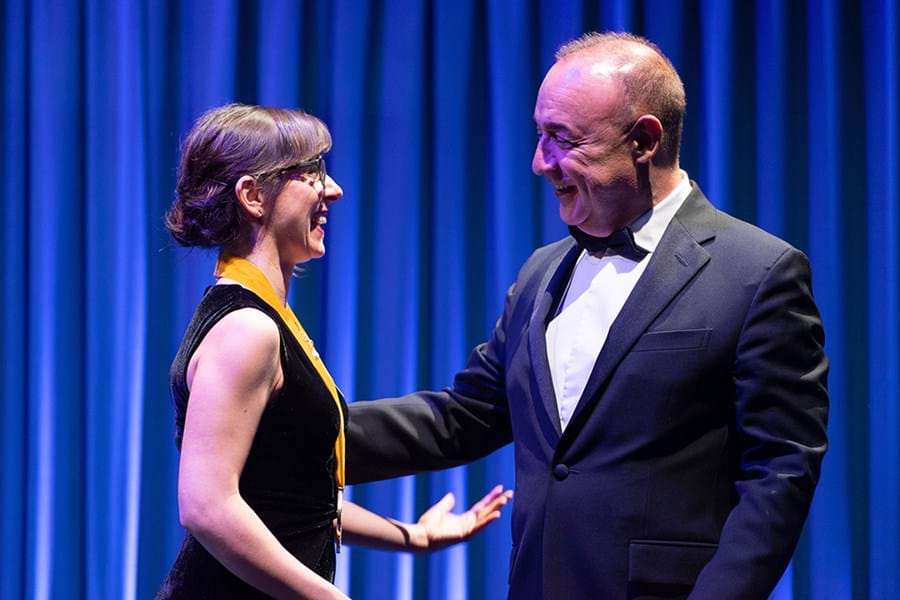
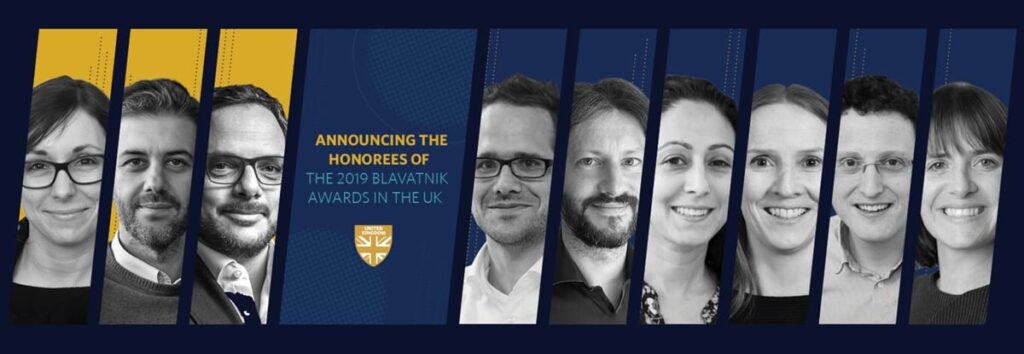
The 2019 honorees of the Blavatnik Awards for Young Scientists in the UK2019 Blavatnik Awards Laureate Professor Konstantinos Nikolopoulos Professor of Physics at the University of BirminghamBack Row (Left to right) The 2019 Finalists: Kathy Niakan, Igor Larrosa, Rachel O’Reilly, Gustav Holzegel, Máire O’Neill, Timothy Behrens; Front Row (Left to right) The 2019 Laureates: Philipp Kukura, Ewa Paluch and Konstantinos Nikolopoulos2019 Blavatnik Awards Laureate in Chemistry, Prof. Philipp Kukura, University of Oxford2019 Blavatnik Awards Laureate in Life Sciences, Prof. Ewa Paluch of UCL and University of Cambridge with Sir Leonard Blavatnik
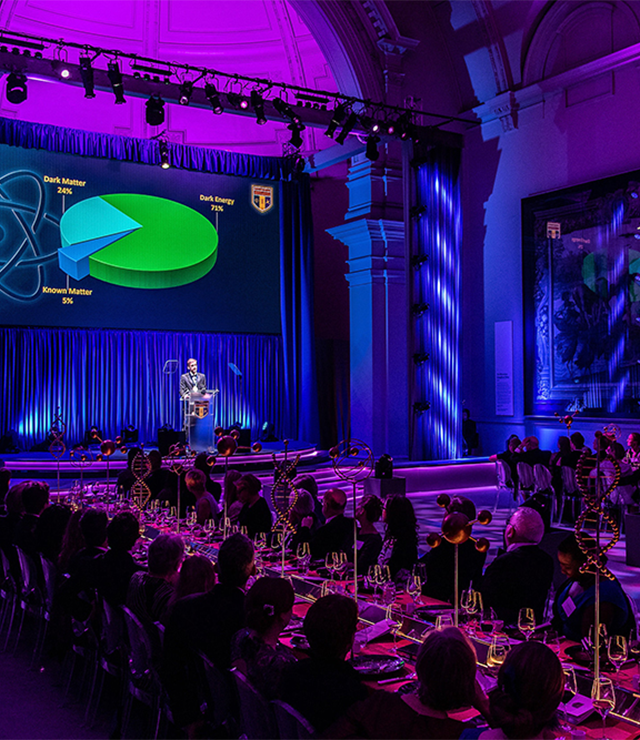
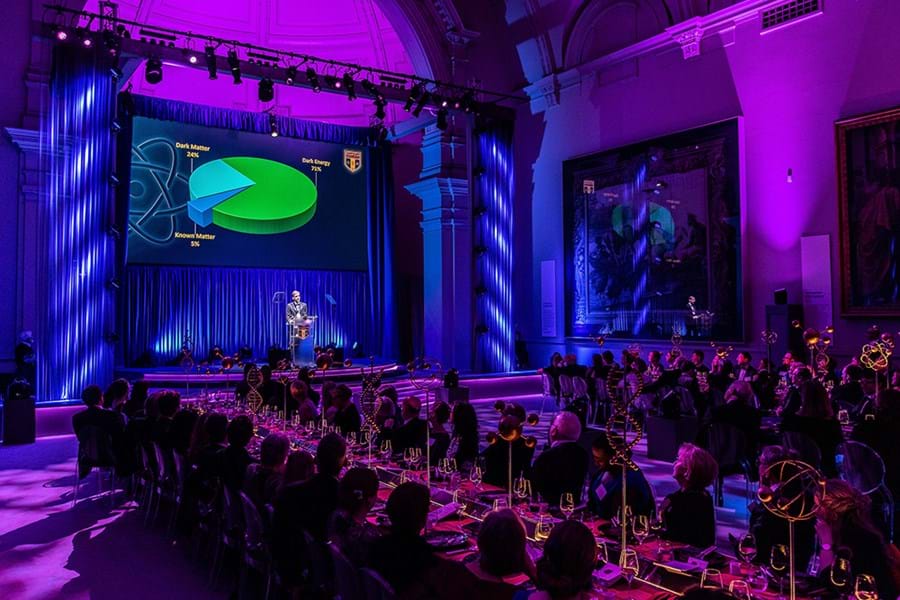
The Blavatnik Family Foundation hosted its annual ceremony celebrating the honorees of the 2019 Blavatnik Awards for Young Scientists in the United Kingdom at the Victoria and Albert Museum (V&A) in London.
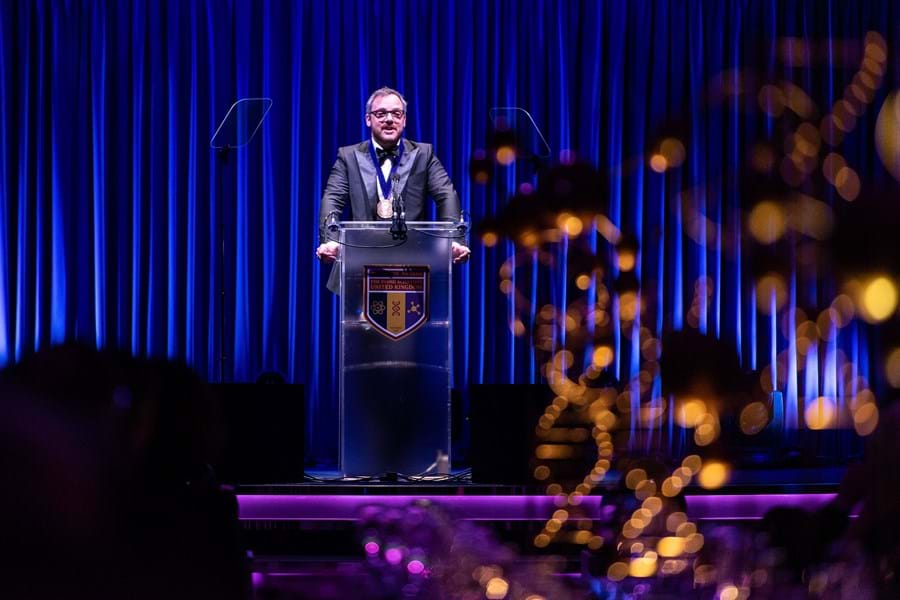
The Ceremony was attended by members of the UK’s scientific elite as well as key figures within the fields of government, academia, business and entertainment. Neuroscientist and 2014 Nobel Laureate Professor John O’Keefe of University College London, served as the Master of Ceremonies for the evening.
“The Blavatnik Awards are given not just for exceptional work already done, but in support of world-changing work that we believe is yet to be done by these young scientists,” says O’Keefe.
Academy President and CEO Ellis Rubinstein also gave remarks thanking the support of the scientific community within the United Kingdom and complimenting the outstanding group of scientists that make up the Blavatnik Awards’ UK Jury and Scientific Advisory Council.
Among the Most Dedicated and Original Thinkers in their Spheres
In commenting on the caliber of the nine honorees, Prof. O’Keefe mentioned “the young scientists and engineers are among the most dedicated and original thinkers in their spheres in the United Kingdom…They are making headlines across medical and tech communities for discoveries and innovations in human development and cognition; from novel ways to synthesize drugs and sustainable polymers, to advances in cybersecurity and radical breakthroughs in fundamental physics.”
In each scientific category (Chemistry, Physical Sciences & Engineering, Life Sciences), two Finalists were each awarded prizes of US$30,000, and one Laureate in each category was awarded US$100,000. The Awards’ founder, Sir Leonard Blavatnik, presented medals to the three Laureates and six Finalists at the ceremony.
Throughout the course of the evening, the audience watched three films featuring the honorees from the three Award categories. The ceremony concluded with a fireside chat and the Blavatnik Awards tradition of making a “Toast to Science.”
Learn more about the 2019 Blavatnik Awards ceremony in the UK here.
From cybersecurity and genome-editing to unraveling the mysteries of the atom and deciphering the complexities of the human brain, these nine young scientists are making a positive impact on our world.
A distinguished jury of leading UK senior scientists and engineers selected the nine 2019 Blavatnik Awards honorees from 83 nominations submitted by 43 academic and research institutions across England, Northern Ireland, Scotland, and Wales, as well as the Awards’ own Scientific Advisory Council.
These young scientists and engineers are already making headlines across the UK’s scientific community for discoveries and innovations in research ranging from the mechanics of human cells to new ways to weigh biomolecules, advances in cyber security and radical breakthroughs in fundamental physics. Their discoveries are transforming our understanding of the world and improving human lives.
One Laureate from each of the three categories of Life Sciences, Physical Sciences & Engineering, and Chemistry will receive an unrestricted prize of $100,000 — one of the largest unrestricted prizes available to early-career scientists in the UK.
“Last year, our first year of administering the Blavatnik Awards for Young Scientists in the United Kingdom, we were touched by the reaction of leaders of the UK’s scientific community who agreed that there is no other prize in the UK that honors the achievements and, most especially, future promise of young scientists,” said Ellis Rubinstein, President and CEO of The New York Academy of Sciences and Chair of the Awards’ Scientific Advisory Council. “On behalf of our global Academy we have been thrilled to see so many institutions recognized through their fantastic honorees. And we are enormously proud to collaborate with the UK’s esteemed jury and Scientific Advisory Council members.”
The 2019 Blavatnik Awards Laureates and Finalists in the UK will be honored at a gala dinner and ceremony at the prestigious Victoria and Albert Museum in London on March 6, 2019. The following day, the honorees will present their research in a symposium open to the public entitled “Cure, Create, Innnovate: 9 Young Scientists Transforming Our World,” to be held at the Science Museum, London—a free event to all Academy Members.
To learn more about the Blavatnik Awards and its cohort of Awards programs in the US, UK and Israel please visit the Blavatnik website here.