Screens were ubiquitous before, but during the COVID-19 pandemic they became a lifeline for everyone’s professional and personal lives. Children spend more time on electronic devices than ever before—with virtual school, video streaming, social media, and multiplayer games. Many parents are concerned about the impact excessive screen time might have on the developing brain. In this e-Briefing experts discuss the pros and cons of screen time as well as its effects on the developing brain, and give practical tips for parents navigating the digital world with their children during the COVID-19 pandemic.
In this eBriefing, You’ll Learn:
The content of digital media matters; parents should differentiate between types of screen time.
Shared engagement with digital media is important.
There are resources available to help parents navigate the digital world.
“Real-world” parenting strategies can and should be extended into the digital world.
Speakers
Sonia Livingstone, DPhil London School of Economics and Political Science
Michael Preston, PhD Sesame Workshop
Jenny Radesky, MD Department of Pediatrics, University of Michigan Medical School
Michael Robb, PhD Common Sense Media
COVID-19: Screen Time and the Developing Brain
Sonia Livingstone, DPhil
London School of Economics and Political Science
Dr. Livingstone is a Professor of Social Psychology in the Department of Media and Communications at the London School of Economics and Political Science. She received her DPhil in Psychology from the University of Oxford. She has published 20 books on media, especially children’s rights, risks, and opportunities in the digital world and media literacy, including “The Class: Living and Learning in the Digital Age” (New York University Press, with Julian Sefton-Green) and most recently “Parenting for a Digital Future: How hopes and fears about technology shape children’s lives” (Oxford University Press, with Alicia Blum-Ross). Recipient of many honors, she has advised the UK and European government and the United Nations on children’s internet safety and rights in the digital environment. Dr. Livingstone currently directs the Digital Futures Commission (with the 5Rights Foundation) and the Global Kids Online project (with UNICEF). She is Deputy Director of the UKRI-funded Nurture Network and leads work packages for two European H2020-funded projects: ySKILLS (Youth Skills) and CO:RE (Children Online: Research and Evidence). Founder of the EC-funded 33 country EU Kids Online research network, she is a #SaferInternet4EU Ambassador for the European Commission.
Michael Preston, PhD
Joan Ganz Cooney Center at Sesame Workshop
Michael Preston is the Executive Director of the Joan Ganz Cooney Center at Sesame Workshop, a research and innovation lab that focuses on the challenges of educating children in a rapidly changing media landscape. The Cooney Center conducts original research on emerging education technologies and collaborates across sectors to put this research into action. Prior to joining Sesame Workshop, Michael’s work focused on using technology to improve teaching and learning, drive student agency and interest, and create models for systemic change in K-12 and university contexts. He is a co-founder of CSforALL, the hub for the national Computer Science for All movement. He designed and led digital learning initiatives at the NYC Department of Education and at Columbia University’s Center for Teaching and Learning. He earned a PhD in Cognitive Science in Education from Teachers College, Columbia University and a BA in East Asian Studies from Harvard University.
Jenny Radesky, MD
University of Michigan
Dr. Radesky is a Developmental Behavioral Pediatrician and Assistant Professor of Pediatrics at the University of Michigan Medical School. She received her M.D. from Harvard Medical School, trained at Seattle Children’s Hospital and Boston Medical Center, and her clinical work focuses on developmental and behavioral conditions in low-income and underserved populations. Her NIH-funded research focuses on the use of mobile/interactive technology by parents and young children and how this relates to child self-regulation and parent-child interaction. She was the lead author of the American Academy of Pediatrics (AAP) policy statements Media and Young Minds in 2016 and Digital Advertising to Children in 2020.
Michael Robb, PhD
Common Sense Media
Michael Robb is senior director of research at Common Sense, overseeing the research program, evaluation of organization impact, and program development research. Dr. Robb has been involved in issues involving media and children for over 20 years. He has published research on the impact of electronic media on young children’s language development, early literacy outcomes, and problem-solving abilities in a variety of academic journals. He also has supervised community educational outreach efforts, helping parents and teachers make the most of quality children’s programming. His work has been featured in the New York Times, Washington Post, Wall Street Journal, Huffington Post, and many other news outlets. Dr. Robb received his B.A. from Tufts University and M.A. and Ph.D. in psychology from UC Riverside
On March 5, 2020, the New York Academy of Sciences celebrated the Laureates and Finalists and winners of the 2020 Blavatnik Awards for Young Scientists in the United Kingdom. The one-day symposium featured fast-paced, engaging research updates from nine scientists working in diverse fields within life sciences, chemistry, and physical sciences and engineering. This year’s Blavatnik UK honorees are probing the deepest mysteries ranging from the universe to the human mind, tackling longstanding questions that have occupied scientists and philosophers for millennia. Is there life beyond our Solar system? How is knowledge organized in the brain? What is the fundamental nature of gravity? Find out how this game-changing group of young scientists is working to answer these questions in this summary of the symposium.
Symposium Highlights
Environmental factors can influence the defense strategies bacteria use to fend off invading viruses. Insights into this process are advancing the potential for phage therapy as an alternative to antibiotics.
New analytical and computational tools are revealing the neural machinery that allows the brain to create models of the world and facilitates decision-making and behavior.
Chemists can exploit chirality to create novel molecules with a wide variety of applications in drug design, consumer electronics, and catalysis.
The scientific community is closer now than ever to realizing the commercial potential of nuclear fusion as a source of clean energy.
The first viable theory of massive gravity might help explain some of the biggest mysteries in physics, including the accelerated expansion of the universe.
Hosted By
Victoria Gill Science Correspondent BBC News
Speakers
Tim Behrens, DPhil University of Oxford and University College London
Ian Chapman, PhD UK Atomic Energy Authority
Matthew J. Fuchter, PhD Imperial College London
Stephen M. Goldup, PhD University of Southampton
Kirsty Penkman, PhD University of York
Claudia de Rham, PhD Imperial College London
Eleanor Stride, PhD University of Oxford
Amaury Triaud, PhD University of Birmingham
Edze Westra, PhD University of Exeter
Program Supporter
Changing the Game in Life Sciences
Speakers
Eleanor Stride, PhD University of Oxford
Edze Westra, PhD University of Exeter
Tim Behrens, DPhil University of Oxford & University College London
Engineering Bubbles
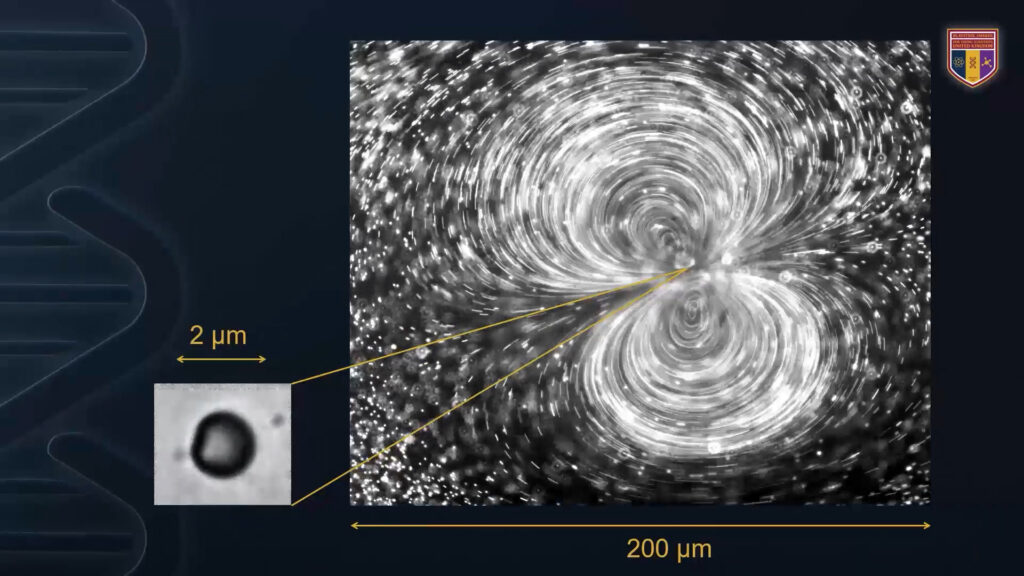
Mechanical engineer Eleanor Stride never planned to design drug delivery systems. She was “convinced I wanted to spend my career designing Aston Martins,” until a chance discussion with a supervisor piqued her interest in therapeutic applications of engineered microbubbles. Just two microns in diameter, microbubbles can be used as ultrasound contrast agents, but Stride sees a role for these tiny tools in the fight against cancer. “In many cases, the problem with cancer drugs [is] how we deliver them,” she said, explaining that systemic chemotherapy agents often cannot penetrate far enough into tumors to be effective. These drugs can also cause side effects and damage healthy tissues.
Microbubbles can help sidestep these challenges, safely encapsulating drug molecules within a stabilizing shell. The shell can be functionalized with magnetic nanoparticles, allowing clinicians to direct the bubbles’ aggregation at tumor sites and visualize them with ultrasound. As the bubbles compress and release in response to the ultrasound beam, the oscillation helps the bubbles penetrate into the surrounding tissue. “If we increase the ultrasound energy, we can destroy the bubble, allowing us to release the drugs on demand,” said Stride, noting that molecules released from a single 2-micron microbubble can circulate up to 100 times that diameter, pumping drugs deep into tumor tissues. This approach is highly localized—drugs are only released at the tumor site—which eliminates the potential for systemic toxic effects.
Ultrasound-stimulated oscillation of microbubbles creates a vortex in surrounding fluids. The vortex pumps drug molecules deep into tumor sites.
In 2019, Stride and a team of collaborators published the results of trials using oxygen-loaded magnetic microbubbles to treat malignant pancreatic tumors. In animal models, tumors treated with microbubble-delivered drugs showed dramatic spikes in cell death and also shrank in size, “which can mean the difference between a surgeon being able to remove a tumor or not,” said Stride. Additional experiments have helped hone techniques for external magnetic control of microbubbles within blood vessels to ensure precise, targeted drug delivery—a critical step toward tailoring this method for use in humans. Stride and her collaborators aim to launch a clinical trial in pancreatic cancer patients “in the very near future.”
Insights From Bacteria-Phage Interactions
As the fight against viruses dominates the news cycle, 2020 Blavatnik Awards UK Finalist Edze Westra shared an update from the front lines of a viral war billions of years in duration: the “evolutionary arms race” between bacteria and the viruses that infect them, called phages. The interactions between bacteria and phages—the most abundant biological entities on Earth—have profound implications for the development of phage-based therapies as alternatives to antibiotics.
Phages are often successful killers, but bacteria have evolved sophisticated immune strategies to resist attacks. Understanding how and when bacteria deploy each of these defensive tactics is key to designing phage therapies to treat bacterial infections.
Like humans, bacteria utilize both innate and adaptive immune responses to invading pathogens. In bacteria, innate immunity relies on the modification of surface structures to prevent phages from attaching. This system is effective, yet it creates no “record,” or memory, of which phages it encounters. The adaptive immune system, however, allows bacteria to build a database of previously encountered pathogens in the form of bits of genetic material snipped from invading phages and incorporated into the bacterium’s own DNA. The adaptive immune system, known as CRISPR immunity, forms the basis of CRISPR-Cas genome editing techniques. “There’s a critical balance between these two systems, and both are critical for survival,” said Westra, whose research aims to determine the factors that influence whether a bacterium mounts an innate or adaptive immune defense against a particular phage.
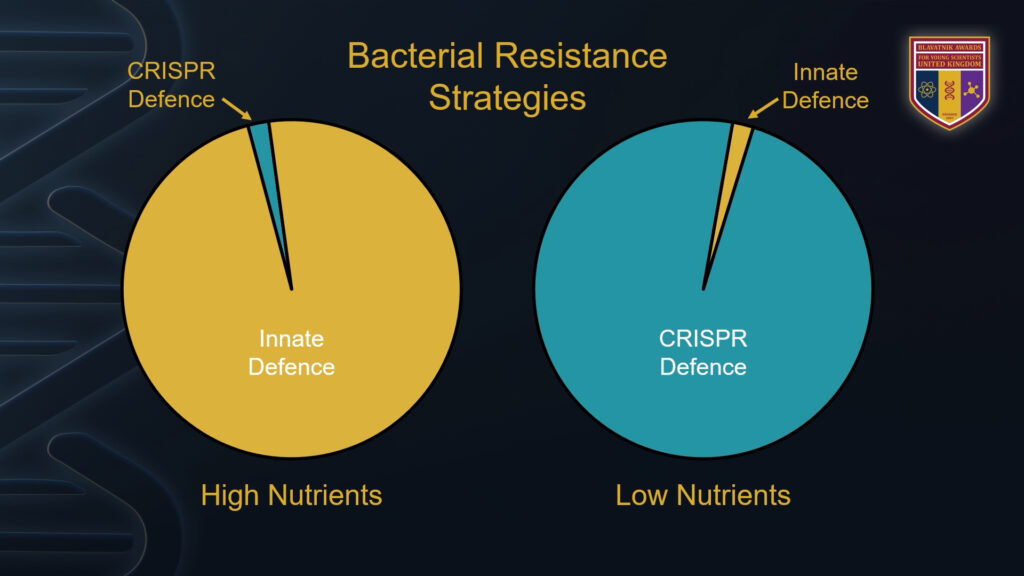
Using Pseudomonas aeruginosa, an antibiotic-resistant pathogen that often infects cystic fibrosis patients, Westra determined that a bacterium’s environment—specifically, the level of available nutrients—determined which defensive strategy was utilized. In high-nutrient environments, almost all bacteria deployed an innate immune response to phage attacks, whereas in lower nutrient settings, CRISPR immunity dominated.
The level of available nutrients influences which immune strategy bacteria use to defend against phage attacks.
In experiments using moth larvae, Westra discovered that infections were more severe when bacteria utilized CRISPR immunity, whereas bacteria that evolved innate immunity often caused less aggressive infections. “If we can manipulate how bacteria evolve resistance to phages, this could potentially revolutionize the way we approach antimicrobial resistance, with major benefits to our healthcare,” Westra said.
Building Models of the World
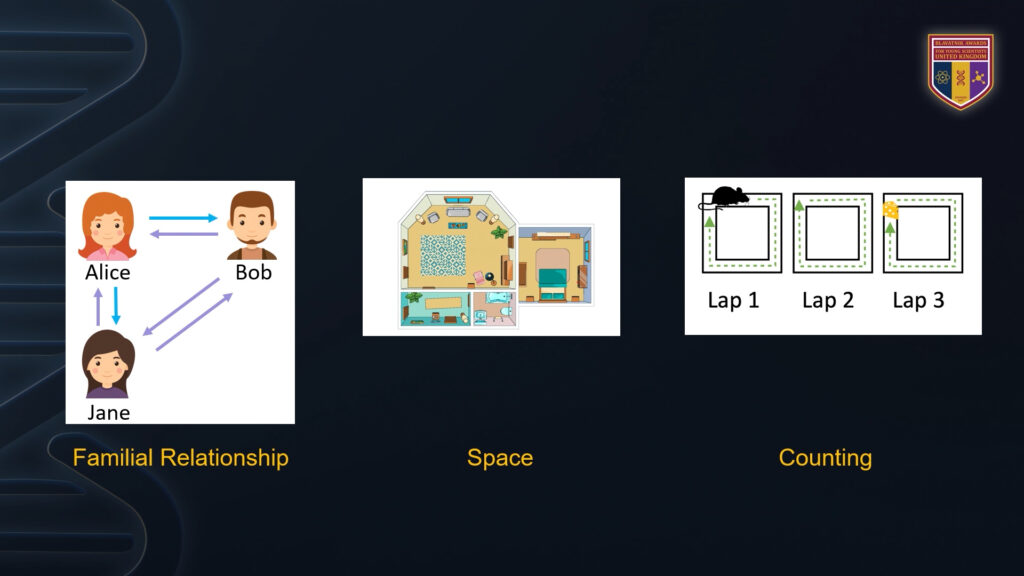
Computational neuroscientist Timothy Behrens is fascinated with the basic functions and decisions of everyday life—the process of navigating our home or city, the steps involved in completing household tasks, the near-subconscious inferences that inform our understanding of the relationships between people and things. Behrens designs analytical tools to understand how neuronal activity in the brain gives rise to these thought processes and behaviors, and his research is illuminating how knowledge is organized in the brain.
The activities of grid cells and place cells are well understood. By creating spatial maps of the world, grid and place cells allow us to navigate familiar spaces and locate items, such as car keys. Behrens explained that much less is known about how the brain encodes non-spatial, abstract concepts and sequence-based tasks, such as loading, running, and emptying a dishwasher. Over the past several years, Behrens and his collaborators have demonstrated that abstract information is similarly mapped as grid-like codes within the brain. “On some level, all relational structures are the same, and all are handled by the same neural machinery,” he said. This insight helps explain the effects of diseases like Alzheimer’s, which targets grid and place cells first and impacts both spatial and non-spatial knowledge.
Relational information is encoded by the same neural machinery that encodes spatial and navigational maps.
In another line of research, Behrens is probing a phenomenon called replay, during which the brain revisits recent memories as a means to consolidate knowledge about current events and anticipate future ones. Behrens illustrated the concept by showing patterns of neuronal activity as a rat runs around a track, then rests. Even at rest, the rat’s brain displays millisecond-long flashes of neuronal activity that mimic those that take place during running. “He’s not running down the track anymore, but his brain is,” said Behrens. Replay also underlies the human ability to understand a simple story even when it’s told in the wrong order. “Our knowledge of the world tells us…what the correct order is, and replay will rapidly stitch together the events in the correct order.”
Computational tools developed in Behrens’ lab have been shared with thousands of scientists around the globe as they pursue new hypotheses about the neural computations that control cognition and behavior. “It’s an exciting time to be thinking about the brain,” Behrens said.
Exploiting Molecular Shape to Develop Materials and Medicines
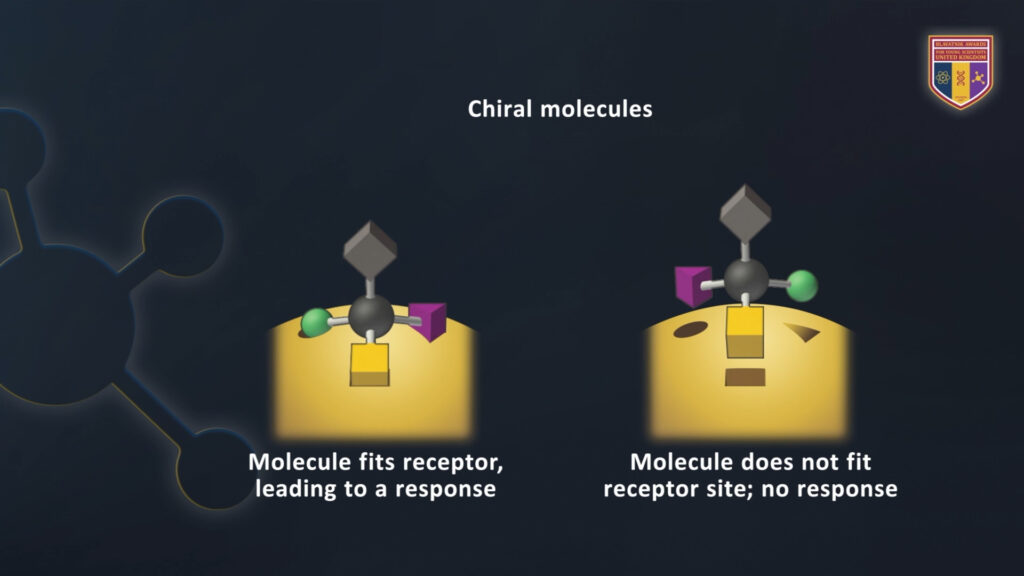
Consider the handshake: a greeting so automatic it takes place without thinking. Two right hands extend and naturally lock together, but as Matthew Fuchter explained, that easy connection becomes impossible if one party offers their left hand instead. The fumbling that ensues stems from a type of asymmetry called chirality. Chiral objects, such as hands, are mirror-image forms that cannot be superimposed or overlapped, and when one chiral object interacts with another, their chirality dictates the limits of their interaction. Chirality can be observed throughout nature, from the smallest biological molecules to the structures of skyscrapers.
In organic chemistry, molecular chirality can be exploited to tremendous advantage. Fuchter explained that the shape of molecules “is not only critical for their molecular properties, but also for how they interact with their environment.” By controlling subtle aspects of molecular shape, Fuchter is pioneering new strategies in drug design and devising solutions to technological problems that plague common electronic devices.
The notion of pairing complementary molecular geometries to achieve a specific effect is not unique to drug design—such synchronicities can be found throughout nature, including in the “lock and key” structure of enzymes and their substrates. Fuchter’s work aims to invent new drug molecules with geometries perfectly suited to bind to specific biological targets, including those implicated in diseases such as malaria and cancer.
Only one of these two chiral molecules has the correct orientation, or “handedness” to bind to the receptor site on the target protein.
Fuchter is also exploring applications for chirality in a field where the concept is less prominent—consumer electronics. Organic LED, or OLED, technology has “revolutionized the display industry,” allowing manufacturers to create ultra-thin, foldable screens for smartphones and other displays. Yet these features come at a steep efficiency cost—more than half of the light generated by OLED pixels is blocked by anti-glare filters added to the screens to minimize reflectiveness. A novel solution, in the form of chiral molecules bound to non-chiral OLED-optimized polymers, induces a chiral state of light called circularly polarized light. These circularly polarized, chiral light molecules are capable of bypassing the anti-glare filter on OLED screens. Fuchter noted that displays are far from the only technology that stands to be impacted by the introduction of chiral molecules. “Our research is generating new opportunities for chiral molecules to control electron transport and electron spin, which could lead to new approaches in data storage,” he said.
Making Use of the Mechanical Bond
Most molecules are bound by chemical bonds—strong, glue-like connections that maintain the integrity of molecules, which can be both simple, such as hydrogen, and highly complex, such as DNA. 2020 Blavatnik Awards UK Finalist Stephen Goldup’s work focuses on a less familiar bond. Mechanical bonds join molecules in a manner akin to an interconnected chain of links—the components retain movement, yet cannot separate.
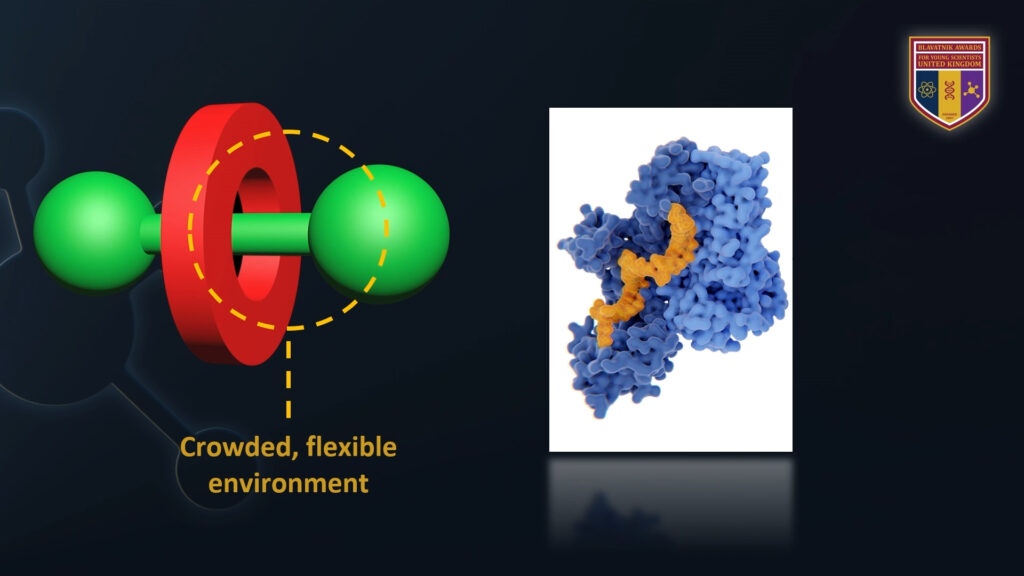
Mechanically interlocked molecules have the potential to yield materials with “exciting properties,” according to Goldup, but in the decades since they were first synthesized, they have largely been regarded as “molecular curiosities.” Goldup’s lab is working to push these molecules beyond the laboratory bench by characterizing the properties of interlocked molecules and probing their potential applications in unprecedented ways. His work focuses on two types of mechanically bound molecules—catenanes, in which components are linked together like a chain, and rotaxanes, which consist of a ring component threaded through a dumbbell-shaped axle.
Goldup’s lab has taken cues from nature to introduce additional elements into rotaxanes, resulting in novel molecules with a variety of potential applications. For example, much as enzymes contain “pockets” within which small molecules can bind, rotaxanes too contain a space that can trap a molecule or ion of interest. Rotaxanes that bind metal ions have unique magnetic and electronic properties that could be used in memory storage devices or medical imaging. Inspired by proteins and enzymes that bind DNA, Goldup’s lab has also designed rotaxanes in which DNA itself is the “axle.” In theory, these molecules can be used to effectively “hide” portions of DNA and alter its biological behavior.
Just as enzymes bind small molecules with their structures, rotaxanes can bind molecules in the cavity between the ring and the axle.
Perhaps most significantly, Goldup’s lab has solved a longstanding obstacle to studying rotaxanes: the difficulty of making them. The problem lies in the fact that rotaxanes can be chiral even when their components are not, making it extremely challenging to synthesize a distinct “hand,” or version, of the molecule. Recalling Matthew Fuchter’s example of how an awkward left-hand/right-hand handshake differentiates the “handedness” of two chiral objects, Goldup explained how his lab developed a technique for synthesizing distinctly “left” or “right” handed rotaxanes by utilizing a chiral axle to build the molecules. “Our insight was that by making the axle portion chiral on its own, when we thread the axle into the ring, the rotaxanes we make are no longer mirror-images of each other. They have different properties, and they can now be separated,” he said. Once separate, the chiral portion of the axle can be chemically removed and replaced with other functional groups.
Goldup’s lab is conducting experiments with new mechanically-locked molecules—including chiral rotaxane catalysts— to determine where they may outperform existing catalysts.
Amino Acids as a Portal to the Past
Scientists have multiple methods for peering into the history of Earth’s climate, including sampling marine sediment and ice cores that encapsulate environmental conditions stretching back millions of years. “But this is an incomplete picture—akin to a musical beat with no notes,” said Kirsty Penkman, the 2020 Blavatnik Awards UK Laureate in Chemistry. The records of life on land—fossil records—provide “the notes to our tune, and if we know the timing, that gives us the whole melody,” she said. Archaeologists, paleontologists, and climate scientists can harmonize fossil records with climate history to understand the past, yet their efforts stall with fossils older than 50,000 years—the limit of radiocarbon dating.
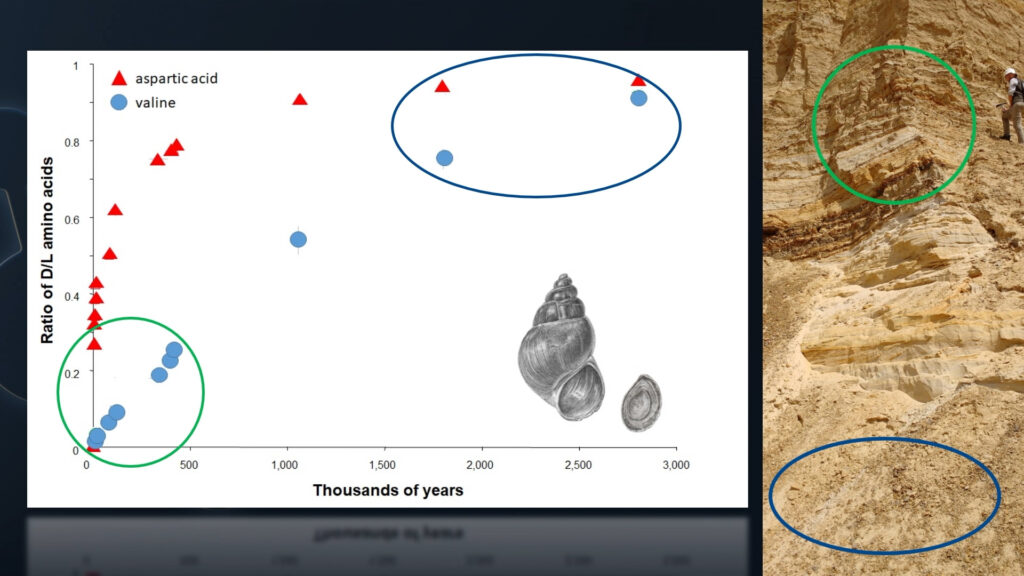
Penkman’s lab is developing dating methods for organic remains that reach far deeper into the history of life on Earth. Their strategy relies not on the decay of carbon, but the conversion of amino acid molecules from one form to another. Continuing the theme of chirality from previous presentations, Penkman explained that amino acids exist in two mirror-image forms. However, the body only synthesizes amino acids in the “left-handed,” or L-form. This disequilibrium shifts after death, when a portion of L-amino acids begins a slow, predictable conversion to the right-handed, or D-form. The older the fossil, the greater the balance between D and L isomers. This conversion process, called racemization, was first proposed as a dating method in the 1960s. Yet, it became clear that some of the fossil amino acids were vulnerable to environmental factors that impact the racemization rate, and therefore the date.
About 15 years ago, Penkman discovered that minute stores of proteins within the remains of snail shells are entrapped in intracrystalline voids. These tiny time capsules are unaffected by environmental factors. Studies have since confirmed that shells found in older horizons, for example deeper underground, contain higher ratios of D-amino acids versus those found at younger sites, thus validating the technique.
Calcitic snail shells found at older horizons have higher ratios of D-amino acids than those found at younger horizons.
Snail shells are often found in archeological sites, a serendipity that has led to astonishing findings about early human migration. Shells found alongside several Paleolithic tools “dated as far back as 700,000 years,” according to Penkman. “We’ve successfully shown that early humans were living in Northern Europe 200,000 years earlier than previously believed,” she said.
Penkman’s team has analyzed remains of ostrich eggshells at some of the earliest human sites in Africa, discovering fully preserved, stable sequences of proteins in shells dating back 3.8 million years. Mammalian remains are the next frontier for Penkman’s lab. They have analyzed amino acids in ancient tooth enamel—including that of a 1.7-million-year-old rhinoceros—and are developing microfluidic techniques to sample enamel from early human remains.
Changing the Game in Physical Sciences and Engineering
Speakers
Amaury Triaud University of Birmingham
Ian Chapman UK Atomic Energy Authority and Culham Centre for Fusion Energy
Claudia de Rham Imperial College London
Worlds Beyond Our Solar System
For millennia, humans have wondered whether life exists beyond our planet. Amaury Triaud, 2020 Blavatnik Awards UK Finalist believes we are closer to answering that question now than at any other time in history. The study of exoplanets—planets that orbit stars other than the Sun—offers what Triaud believes is “the best hope for finding out how often genesis happens, and under what conditions.”
The search for exoplanets has revealed remarkable variety among stars and planets in our galaxy. “The universe is far more surprising and diverse than we anticipated,” said Triaud. Astronomers have identified thousands of exoplanets since 1995, and now estimate that there are more planets in the Milky Way than stars—”something we had no idea about ten years ago,” Triaud said. Many exoplanets orbit stars so much smaller than the Sun that these stars cannot be seen with the naked eye. Yet these comparatively small stars provide “optimal conditions” for exoplanet hunters.
Exoplanets are often detected using the transit method—as an orbiting planet passes in front of a star, its shadow temporarily dims the star’s brightness. The larger the planet relative to the star, the greater its impact on the brightness curve and the easier for astronomers to detect. While monitoring a small star 39 light-years from Earth, TRAPPIST-1, a team of astronomers, including Triaud, discovered an exoplanet system comprised of seven rocky planets similar in size to Earth, Venus, and Mercury.
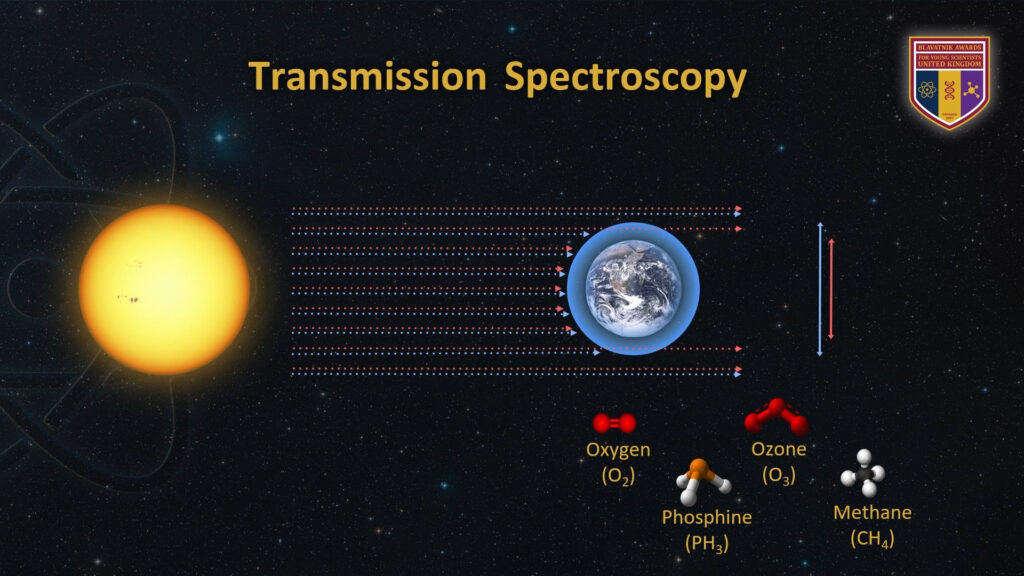
“The next question is to find out whether biology is happening out there,” said Triaud, joking that the biology of interest is not little green men, but rather green algae or microbes similar to the ones that fill our atmosphere with oxygen. The presence of oxygen “acts like a beacon through space, broadcasting that here on Earth, there is life,” said Triaud, explaining that the only way to gauge the presence of life on exoplanets is through atmospheric analysis. Using transmission spectroscopy, Triaud and other astronomers will look for exoplanets that possess an atmosphere and chemical signatures of life, such as oxygen, ozone, or methane, in the atmospheric composition of exoplanets.
Measurements of spectral signatures in a planet’s atmosphere can reveal the presence of gases associated with life, including oxygen and methane.
Such analyses will begin with the launch of the James Webb telescope in 2021. In the meantime, a land-based mission called Speculoos, based partially in Chile’s Atacama desert, is monitoring 1,400 stars in search of additional exoplanets. “It’s rather poetic that from one of the most inhospitable places on Earth, we are on the path to investigating habitability and the presence of life in the cosmos,” Triaud said.
The Path to Delivering Fusion Power
“There’s an old joke that nuclear fusion is 30 years away and somehow always will be,” said 2020 Blavatnik Awards UK Finalist Ian Chapman, but he insists that the joke will end soon. According to Chapman, the “ultimate energy source” is entering the realm of reality. “We’re now in the delivery era, where fusion lives up to its potential,” he said. Low-carbon, low-waste, capable of producing tremendous amounts of energy from an unlimited fuel source—seawater—and far safer than nuclear fission, fusion power has a long list of desirable qualities. Chapman is the first to acknowledge that fusion is “really hard,” but his work is helping to ease the challenges and bring a future of fusion into focus.
Nuclear fusion relies on the collision of two atoms—deuterium, or “heavy” hydrogen, and tritium, an even heavier isotope of hydrogen. Inside the Sun, these atoms collide and fuse, producing the heat and energy that powers the star. Replicating that process on Earth requires enough energy to heat the fuel. of deutrium and tritium gases to temperatures ten times hotter than the Sun, a feat that Chapman admits “sounds bonkers, but we do it every day.”
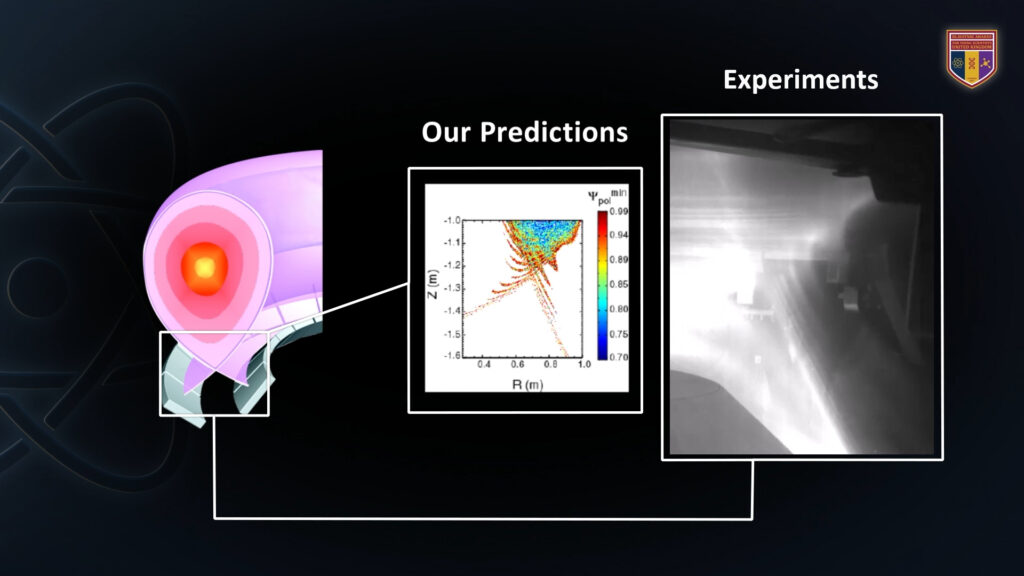
Within fusion reactors called tokamaks, this superhot fuel is trapped between arrays of powerful magnets that “levitate” the jet as it spins around a central magnetic core, preventing the fuel from melting reactor walls. Yet this is an imperfect process, explained Chapman, and due to fuel instabilities, eruptions akin to “throwing a hand grenade into the bottom of the machine” happen as often as once per second. Chapman devised a method based on his numerical calculations for preventing these eruptions using additional magnet arrays that induce three-dimensional perturbations, or “lobes” at the edge of the plasma stream. Just as a propped-open lid on a pot of boiling water allows steam to escape, these lobes provide a path to release excess pressure.
An array of magnets near the plasma edge creates perturbations in the fuel stream, allowing pressure to escape safely.
Chapman’s technique has been incorporated into the “the biggest scientific experiment ever undertaken by humankind”—a massive tokamak called ITER, roughly the size of a football stadium and equipped with a central magnet strong enough to lift an aircraft carrier. Scheduled to begin producing power in 2025, ITER aims to demonstrate the commercial viability of nuclear fusion. “We can put 50 megawatts of power into the machine, and it produces 500 megawatts of power out,” said Chapman. “That’s enough to power a medium-sized city for a day.”
Even before ITER’s completion, Chapman and others are setting their sights on designing less expensive fusion devices. Late last year, the UK committed to building a compact tokamak that offers the benefits of fusion with a smaller footprint, and Chapman is the leader of this project.
The Nature of Gravity
Claudia de Rham, the 2020 Blavatnik Awards UK Laureate in Physical Sciences and Engineering, concluded the day’s research presentations with an exploration of nothing less than “the biggest mystery in physics today.” For decades, cosmologists and physicists have grappled with discrepancies between observations about the universe—for example, its accelerated expansion— and Einstein’s general theory of relativity, which dictates that gravity should gradually slow that expansion. “The universe is behaving in unexpected ways,” said de Rham, whose efforts to resolve this question stand to profoundly impact all areas of physics.
Understanding the fundamental nature of gravity is key to understanding the origin and evolution of the universe. As de Rham explained, gravity can be detected in the form of gravitational waves, which are produced when two black holes or neutron stars rotate around each other, perturbing the fabric of spacetime and sending rippling waves outward like a stone tossed into a pond. But gravity can also be represented as a fundamental particle, the graviton, similar to the way light can be considered as a particle, the photon, or an electromagnetic wave. Unlike the other fundamental particles such as the photon, the electron, the neutrino, or even the famously elusive Higgs boson, the graviton has never been observed. In theory, the graviton would, like all fundamental particles, exist even in a perfect vacuum, a phenomenon known as vacuum quantum fluctuation. Unknown in Einstein’s day, vacuum quantum fluctuations, when factored into the general theory of relativity, do predict an accelerated expansion of the universe. “That’s the good news,” said de Rham. “The bad news is that the predicted rate of expansion is too fast by at least 28 orders of magnitude.”
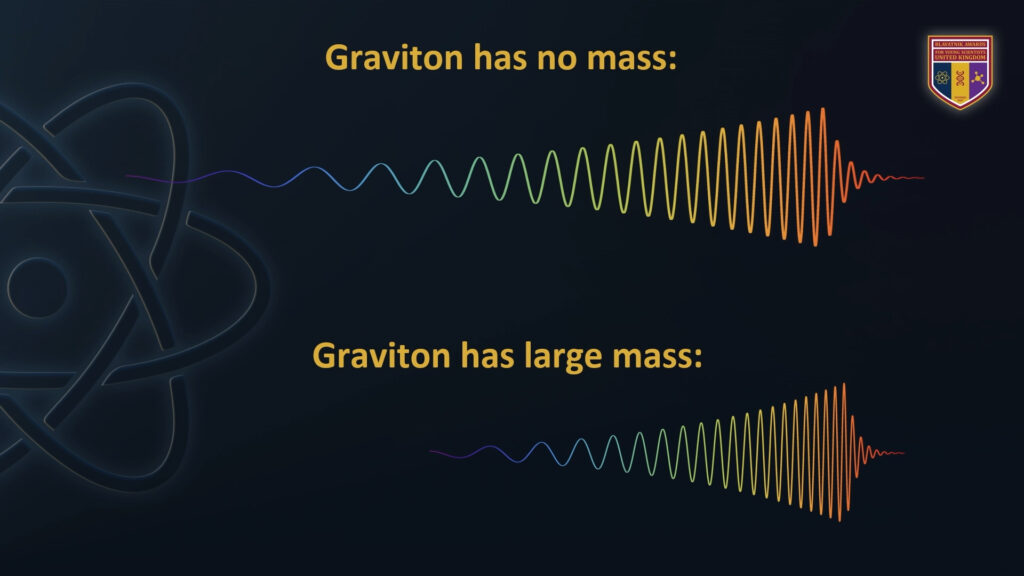
This raises the possibility that “general relativity may not be the correct description of gravity on large cosmological scales,” said de Rham. If the graviton had mass, however, it would impact the behavior of gravity on the largest scales and could explain the observed rate of expansion.
Signal patterns from gravitational wave events can serve as models for estimating the mass of the graviton. By comparing the expected signals produced by either a massless particle or a high-mass particle with actual signal patterns from detected events, physicists can place an upper and lower boundary on the graviton’s potential mass.
The idea of a massive graviton has been considered—and refuted—by physicists as far back as the 1930s. Several years ago, de Rham, along with collaborators Andrew Tolley and Gregory Gabadadze, “realized a loophole that had evaded the whole community.” Together, they derived the first theory of massive gravity. “Through gravity, we can now connect small vacuum fluctuations with the acceleration of the universe, linking the infinitely small with the infinitely large,” de Rham said.
Determining the mass of the graviton requires the most precise scale imaginable, and de Rham believes that gravitational wave observatories are perfectly suited to the task. Whether her theory will hold up in future tests remains to be seen, but when it comes to solving this epic mystery, “the possibility is now open.”
Several Laureates and Finalists of the 2020 Blavatnik Awards in the UK joined BBC science reporter Victoria Gill for the final session of the day, a wide-ranging panel discussion that touched on issues both current and future-looking.
Two themes—fear and opportunity— emerged as powerful forces shaping science and society, especially as it relates to climate change and the threat of emerging infectious disease. Gill noted that climate change is “the biggest challenge ever to face humanity,” and that many efforts to raise awareness of its impacts focus on bleak projections for the future. Asked for insights on shifting the tone of climate change communications, Kirsty Penkman acknowledged that “there needs to be a certain level of fear to get people’s attention.” She then advocated for a solutions-oriented plan rooted in the fast pace of scientific progress in clean energy, among other areas. “This is an amazing opportunity,” she said. “Humans are ingenious….in the last 120 years we’ve moved from a horse-drawn economy to a carbon-based economy, and in 5 or 20 years we could be in a fusion-based economy. We have the potential to open up a whole new world.” Eleanor Stride suggested combatting complacency by emphasizing the power of small changes in mitigating the impact of climate change. “One billion people making a tiny change has a huge impact,” she said.
The specter of a coronavirus pandemic had not yet become a reality at the time of the symposium. But Edze Westra presciently detailed the challenges of containing a highly contagious emerging pathogen in a “tightly connected world.” He commented that detecting and containing emerging diseases hinges on the development of new diagnostics, and that preventing future outbreaks will require cultural shifts to limit high-risk interactions with wildlife. For zoonotic diseases such as the novel coronavirus, “it’s all about opportunity,” Westra said.
Panelists also looked to the future of science, touching on issues of equality, discrimination, and diversity, and emphasizing the importance of raising the bar for science education. Stride noted that children are natural scientists, gravitating toward problem-solving and puzzles regardless of nationality or gender. “But something happens later,” she said, lamenting the drop in interest in science as children progress in school. “One of the things that gets lost is that creativity, which is what science really is—we’re coming up with a guess and trying to gather evidence for it—we’re not just learning a huge number of facts and regurgitating them,” she said.
In the wake of Brexit, panelists expressed concern about potential difficulties in attracting international students to their labs. “Diversity is so important,” said Penkman. “Getting ideas from all around the world from people with different backgrounds is essential to making science in the UK—and the world—the best it can be.” In her closing comments, Penkman said that ultimately, the trajectory of science comes down to the people in the field. “My eternal optimism is in the people I work with and the people I talk to when I visit schools—it’s that innate interest and curiosity. Whenever I see it, I feel that is the future of science,” she said.
The New York Academy of Sciences’ work in nutrition science aims to address global issues such as food security which affects infants, adolescents and the aging population.
According to the United Nations, malnutrition is “a trap from which people cannot easily escape.” And it is a trap that affects every country in the world. In 2015, ending hunger and ensuring access to nutritious food was named one of the U.N.’s 17 Sustainable Development Goals (SDG) for 2030. Efforts to reduce malnutrition stretch back decades and have taken many forms. These include global initiatives that increase access to nutritious foods; government policies that promote healthy diets and set nutrition standards; nonprofit groups that operate food pantries and kitchens; and researchers who study malnutrition and evaluate interventions.
Within the vast landscape of approaches to combat malnutrition, The New York Academy of Sciences Nutrition Science Program has been focusing on where it can make the greatest contributions to nutrition science research. Over the last four years, it has focused on important nutrition science interventions, including the control and prevention of thiamine and micro-nutrient deficiencies and bolstering evidence-based nutrition models.
These activities support a priority for the Academy — addressing global issues such as food security that affect infants, adolescents and the aging population. “Today we can say that the Nutrition Program at the New York Academy of Sciences has become a center of reference on a number of those issues,” said Gilles Bergeron, PhD, Senior Vice President for Nutrition Science at the Academy.
The Academy’s reputation as a neutral convener of experts representing all sides of an issue, makes it the ideal catalyst to assess current scientific evidence writ large. In the case of the Nutrition Program, it also actively evaluates data, and participates in ongoing research needed to design future large-scale programmatic activities.
Filling Knowledge Gaps
For its research on thiamine deficiency, a problem that mainly occurs in low and middle-income countries (LMIC) due to insufficient dietary intake of the B1 vitamin, the Academy’s nutrition science team, together with the Bill & Melinda Gates Foundation, convened a task force in 2017 to take stock of existing data. The team is now collaborating with researchers internationally on several projects to fill in knowledge gaps, determine best solutions to tackle this public health problem, and to assess the prevalence of thiamine deficiency in understudied regions of Africa, such as Madagascar and The Gambia.
Thiamine deficiency can easily go unrecognized, as it did for decades in parts of Asia such as Bhutan and Northern India, because the symptoms are so vague, ranging from the loss of appetite in infants and children, to tingling in hands and feet in adults. But left untreated, thiamine deficiency can rapidly lead to death, and there is increasing evidence that sub-clinical cases — which almost never get detected — can cause long-term cognitive delays and motor skill problems. “We are starting to work on strategies to prevent thiamine deficiency and to raise awareness of its prevalence, which is much, much broader than I think anyone expected,” said Megan Bourassa, PhD, a biochemist and the Academy’s Associate Director of Nutrition Science.
The Academy’s Nutrition Science Program has brought much-needed attention to the issue of thiamine deficiency, according to Frank Wieringa, MD, PhD, senior researcher at the Institut de Recherche pour le Développement (IRD) in Montpellier, France. “In 2012, we knew as much about thiamine deficiency as we did in 1950, there was hardly any progress in those 60, 70 years,” said Wieringa, who served on the Program’s task force and is part of its Scientific Advisory Group.
A High Prevalence of Thiamine Deficiency in Cambodia
Wieringa found a high prevalence of thiamine deficiency in Cambodia, even though the problem has generally been less well recognized by the medical community there than in other parts of Southeast Asia such as Laos. He and his collaborators, including the Academy nutrition team, are currently testing the optimal dose of thiamine to give lactating women in Cambodia. Early data will be available this spring and the hope is to eventually fortify salt with the optimal thiamine dose, much like salt is already iodine-fortified.
On a separate but related front, the Academy has taken on the challenge of trying to improve the myriad of computer models that can guide policy makers, researchers and aid groups in deciding how to tackle malnutrition despite limited resources. The models, which have been developed by academic, governmental and humanitarian groups, can make predictions about important policy questions such as:
Which nutrition issue is the most pressing in a particular setting?
Should attention be directed at certain micronutrient deficiencies or on bigger issues of stunting and underweight populations?
Which intervention(s) would be most cost-effective?
What is the best mix of interventions to achieve multiple concurrent objectives?
With competing models, policy makers may only use the tools that are promoted by the donor they work with (be it The World Bank, USAID or other); and not necessarily the one that is most appropriate for their goals. There needs to be a greater recognition of the diversity of needs and the fit-for purpose of specific modeling tools to the specific task.
The Nutrition Modeling Consortium
Over the last three years, the Academy, with funding from the Bill & Melinda Gates Foundation, has brought together various modelers and launched the Nutrition Modeling Consortium to try to increase awareness of the models in LMIC. Such a partnership was developed to foster collaborations and shared experiences between countries regarding the use of models in decision making.
The Consortium has given modelers the “unique opportunity to sit down and really dig into what these models can do,” said Stephen Vosti, PhD, Adjunct Professor at University of California, Davis, and member of the Consortium. Vosti and his colleagues created MINIMOD, a tool to help plan and manage the most cost-effective micronutrient interventions in LMIC.
So far, the researchers have identified strategies for reducing vitamin A deficiency in Cameroon and plan to deploy the tool to look at other micronutrient deficiencies in countries such as Malawi and Nigeria. MINIMOD could also be used to assess the risk of interventions leading to overconsumption of micronutrients, which is a particular concern in the United States and other developed countries, according to Vosti.
Undernourishment Impacts More than 800 million Globally
With more than 800 million people around the world experiencing undernourishment in 2017, the stakes for the Nutrition Science Program, as well as the many other efforts featured in this issue, could not be higher. Ensuring that all the world’s people have access to adequate nutrition achieves multiple societal objectives. Healthy people are productive people who can work and contribute to long-term economic sustainability.
And a proper diet is foundational in enabling people to fight off disease. It is arguably a gender issue as well. In societies where male children are often more valued than females, girls may not receive adequate nutrition in their formative years, which will impact their ability to bear healthy children of their own.
“Access to nutritious food is a common thread to all population segments,” said Bergeron. “What we do at the Academy is not just about starving children in remote parts of the world, although we recognize the need. Obesity, antibiotics in animal food production, adolescent women nutrition as well as nutrition for the aging, are issues that need to be addressed in developed countries as well.
Here in the United States, it is estimated that one in every 10 adults who are 20 years or older has diabetes. For seniors (65 years and older), that figure rises to more than one in four. The cost of diagnosed diabetes is an estimated $245 billion — money that could go to crucial nutrition programs both in the U.S. and around the world for a healthier society at large.”
With his newly released book The World According to Physics as a point of reference, Jim Al-Khalili offers an illuminating look at what physics reveals about the world. Shining a light on the most profound insights revealed by modern physics, he invites us to reflect on what this crucially important science can tell us about the universe and the nature of reality itself. Educational and enlightening, this talk illustrates why physics is indispensable to understanding the world around us and invites us all to share in the profound adventure of seeking truth.
In This eBriefing, You’ll Learn:
How the three pillars of modern physics ― quantum theory, relativity, and thermodynamics ― must come together if we are ever to have a full understanding of reality
Relatable examples and thought-provoking analogies that elucidate the speculative frontiers of the field, and the physics that underpin our everyday experiences and technologies
Jim Al-Khalili, PhD
University of Surrey
Jim Al-Khalili is a British theoretical physicist, author and broadcaster. He is Professor of Theoretical Physics at the University of Surrey, a regular broadcaster and presenter of science programs on BBC radio and television, and the author of numerous books, including The World According to Physics,Quantum: A Guide for the Perplexed; and Life on the Edge: The Coming of Age of Quantum Biology.
He received his PhD in theoretical nuclear physics in 1989 and has published over a hundred research papers on quantum physics. He is a recipient of the Royal Michael Faraday medal and the Institute of Physics Kelvin Medal. In 2016 he received the inaugural Stephen Hawking Medal for Science Communication. He is a fellow of the Royal Society and lives in Southsea, England.
Researchers are improving crop traits by conserving their undomesticated relatives.
Published May 1, 2020
By Carina Storrs, PhD
In the 1960s, some wild beans were collected from the sides of roads and other patches of wild land in Mexico and stored in aluminum pouches in freezers at one of the seed banks maintained by the United States Department of Agriculture (USDA), in Pullman, Wash. There they stayed for the next four decades until 2012 when Paul Gepts, Ph.D., a professor of plant sciences who had just taken over the grain legume breeding program at the University of California, Davis, exhumed them.
Gepts reasoned that the archival beans, originating from plants growing in dry regions, might be more drought tolerant than their domestic cousins, an important trait considering that most of the farmed beans in the world face drought stress. After growing the seedlings in a greenhouse in the dead of winter to simulate the long nights where the plants grow in Mexico — and crossing the wild plants with domestic varieties — Gepts and his colleagues hit upon a new line that thrived and produced high levels of seed even under the stingiest of irrigation conditions.
An “Insurance” Policy
It’s just one example of the desirable traits that food crops we depend on can derive from the wild relatives they descended from. But much depends on collecting and properly preserving those wild relatives in one of the nearly 2,000 seed banks around the world. “I call it insurance. You don’t know when you are going to need [a crop wild relative], but once you have it you are pretty glad,” says Gepts.
Paul Gepts, Ph.D., in the greenhouse at UC Davis.
In another example, during the 1980’s, scientists at CIAT, a research organization in Colombia that also maintains a seed bank, realized that wild beans collected from a different part of Mexico in the 1960s, harbored resistance to weevils, a serious pest that can decimate dried bean seeds. “When you put these kinds of stories together … it paints a picture of diversity that is still present in the wild types, but that has been left behind in the domesticated types,” Gepts says.
Farmers have been selecting plants for qualities such as high crop yield for thousands of years. Exactly what kind of diversity a wild relative has is impossible to know until researchers working with the seed banks start growing it, and examining such traits as crop yield, drought resistance or taste. Increasingly in recent decades, researchers have also been studying the seeds using single nucleotide polymorphism (SNP) analysis.
Deposits to the Seed Bank
To bring more diversity into those seed banks, the USDA and governments of many countries with high agricultural production, as well as international groups, fund trips to collect crop wild relatives, often targeting parts of the world that have not been well explored. In many cases, they are racing to get there before plant habitat is lost to development and climate change related threats.
Although collection trips have been widespread since the 1960s, researchers have typically focused on locating wild ancestors and taking a few individual specimens from accessible areas — hence the popularity of roadside collections. In the early 1990s, Gepts participated in a USDA-sponsored trip to collect wild beans in Bolivia, but the team was forced to leave some terrain un-sampled because it was too difficult to traverse. “In many parts of the world, researchers need to return to the same locations repeatedly to do more thorough collections of plant tissue as well as study the impact of local environments upon the plants,” said Gepts.
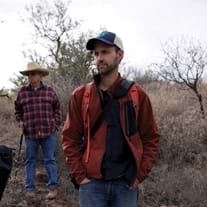
Colin Khoury, Ph.D., participates in a trip to document wild chile peppers in southern Arizona. Photo: The Lexicon and the Global Crop Diversity Trust
Researchers have put some rough numbers on how well crop wild relatives are represented in seed banks, and generally they support the assertion that we need to collect more. Out of the approximately 1,000 taxa, or broad categories, of wild ancestors in the world, an estimated 30 percent of relatives of a total of 63 crops cannot be found in any of the plant repositories; another 24 percent are only represented by samples from fewer than 10 different populations.
An Unexpected Silver Lining
An unexpected silver lining of the research, however, is the finding that crop wild relatives might be a bit better conserved in nature than in seed banks because much of their habitat is within national parks and other protected areas. “[But] a plant being in a protected area does not actually mean that a particular type of plant is all that protected. [Unless these plants are managed], people not paying attention to them, might think they are weeds [and] try to eradicate them,” says Colin Khoury, Ph.D., who studies crop diversity for CIAT, (International Center for Tropical Agriculture) part of an international agriculture research network called CGIAR, (Consultative Group for International Agricultural Research).
Khoury was involved in studies estimating conservation of crop ancestors. Along with stepping up efforts to collect and store plant materials in seed banks, Khoury says that we need active management programs to ensure conservation of crop wild relatives in protected areas.
Fewer Farmers Growing Fewer Crops
Another source of crop diversity is the crops themselves, both the commonly farmed varieties that acquire mutations as they grow and the so-called landraces, or ancestral varieties of domesticated crops that some farmers still cultivate. Unlike their wild relatives, many of these varieties have been stored in seed banks by researchers and farmers, as their importance for breeding crops with new traits has long been recognized, whereas the traits that wild relatives can lend crops is comparatively unchartered territory.
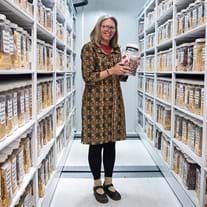
Denise Costich, Ph.D., in the CIMMYT vault where they store the corn seeds. Photo: Teake Zuidema
Although it might seem reasonable that farmers could handle conservation of these crops just by growing them in the field season after season, seed banks play an important role because there are “fewer farmers growing a smaller number of plants,” says Denise Costich, Ph.D., a senior scientist and head of the maize collection at the germplasm bank, which archives seeds and other plant tissue, at International Maize and Wheat Improvement Center (CIMMYT), a Mexico-based CGIAR center.
Research by Costich and her colleagues found that many farmers in Morelos, a state in central Mexico, stopped cultivating landrace varieties of corn over the last half century in favor of hybrid varieties, which are less genetically diverse but often produce higher yield and have other economically advantageous traits. In addition to conserving germplasm, CIMMYT and the other CGIAR seed banks, as well as certain government-operated seed banks including the USDA system, share plant materials internationally with academic researchers and private companies working to breed varieties with new traits.
The Need for Seed Banks and Experimental Field Stations
Seth Murray, Ph.D., harvests new inbred lines of maize with his undergraduate and graduate student researchers. These inbred lines have been selected directly from corn varieties from South and Central America (tropical varieties) and from crosses with germplasm from elite varieties from the Midwestern U.S. (temperate varieties). Credit: Texas A&M AgriLife Research. Photo: Beth Ann Luedeker
As important as it is to collect germplasm from crops and their wild relatives and maintain them in seed banks, it is only half the story. It is critical to grow these seeds in experimental field stations and characterize them so researchers know which ones have desirable traits and have them at the ready to breed with crops, in case of an emergency such as southern corn leaf blight, which wiped out much of the U.S. corn in 1970, says Seth Murray, Ph.D., professor of soil and crop sciences at Texas A&M University.
“Otherwise it’s just like having a library where nobody is reading the books,” he says. These efforts are happening to some extent. For instance, Costich’s team at CIMMYT has characterized most of the corn samples they have added to the germplasm bank vault in the last decade. The USDA does some characterization, but “given the value of agriculture and crop diversity, there is definitely not enough money spent on that,” Murray says.
Computer Algorithms to Study Corn
The work of trying to breed new varieties can quickly grow to an unmanageable scale. In his applied breeding program, Murray crosses U.S. corn varieties with crops that were collected in Mexico and South America, but then has to test their progeny in many different field conditions over several years to understand how they behave under different environments before they are ready for farmers.
In research that earned him the recognition of Finalist for the 2019 Blavatnik National Awards for Young Scientists, Murray and his collaborators have been using drones to photograph plants as they grow, and developing computer algorithms to analyze the images to make predictions about the crop’s yield and other properties. According to Gepts, who has also turned to drone surveillance to monitor bean plant traits, it is not enough to have an ever-expanding font of crop genetic diversity to scour for new traits.
“The other trend is making breeding more efficient whether it is through the use of drones or different ways of phenotyping progenies,” he says.
Adequate intake of essential vitamins and minerals is critical for a healthy pregnancy. Unfortunately, many women in low- and middle-income countries (LMICs) struggle to meet the increased dietary demands for a healthy pregnancy through diet alone. Inadequate nutritional intake frequently leads to poor maternal health and adverse birth outcomes, such as maternal mortality; preeclampsia; insufficient gestational weight gain; stunting; low birth weight (LBW); small for gestational age (SGA); and neonatal mortality. Currently, the World Health Organization (WHO) recommends iron-folic acid supplements (IFA) as the routine standard of care in antenatal care programs. However, strong evidence is now available demonstrating the superiority of multiple micronutrient supplements (MMS) over IFA. To help countries determine if they should transition from IFA to MMS in antenatal care, the New York Academy of Sciences assembled a task force. Charged with taking a closer look at MMS, the task force considered several factors, including benefits, risks, and cost-effectiveness. On June 25, 2019, the task force’s findings were presented at the launch of the Special Issue, published in the Annals of the New York Academy of Sciences.
Highlights
Data from the 2019 Cochrane Review and the 2017 individual patient data (IPD) meta-analysis demonstrate that MMS has significant added benefits to birth outcomes compared with IFA.
The task force concluded that countries where nutritional deficiencies are prevalent should consider MMS, as it is a cost-effective and safe alternative to IFA.
The MMS technical advisory group is translating this evidence into practice by assisting in the rollout of MMS demonstration projects in several countries.
When compared to IFA, routine MMS supplementation does not increase the risk of adverse effects.
During pregnancy, the risk of exceeding the UL with a micronutrient-rich diet and daily micronutrient supplementation is very low.
Speakers
Robert E. Black, MD, MPH Johns Hopkins University
Megan Bourassa, PhD The New York Academy of Sciences
Gilles Bergeron, PhD The New York Academy of Sciences
Emily R. Smith, ScD, MPH The Bill & Melinda Gates Foundation and Harvard T.H. Chan School of Public Health
Alison Gernand, PhD Penn State University
Reina Engle-Stone, PhD University of California, Davis
Sponsors
For Policy Makers and Program Implementers
Speakers
Robert E. Black, MD, MPH Johns Hopkins University
Gilles Bergeron, PhD The New York Academy of Sciences
Megan Bourassa, PhD The New York Academy of Sciences
Micronutrient Status and the Benefits of MMS on Birth Outcomes
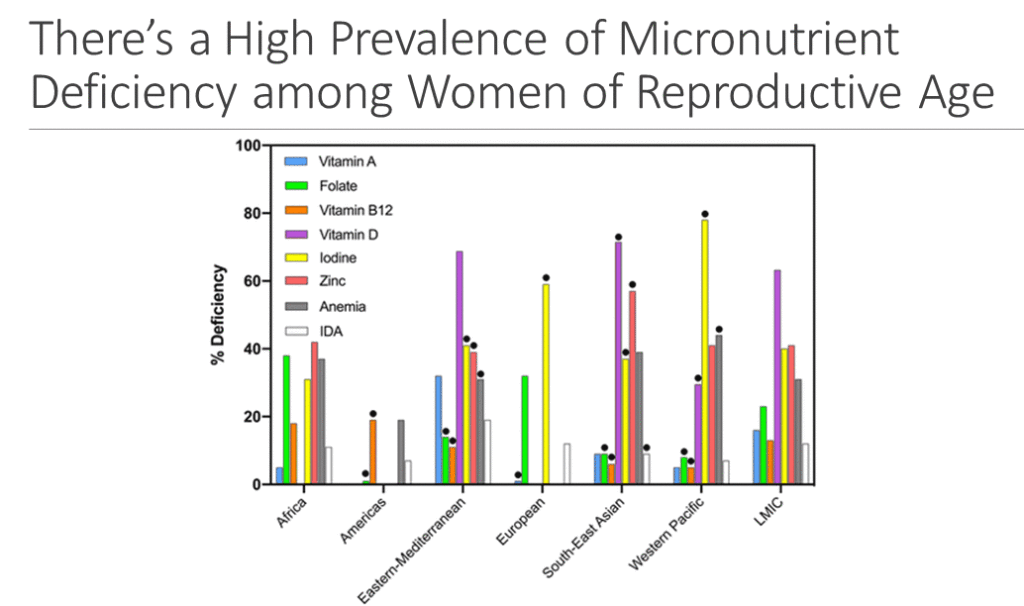
Robert Black discussed the benefits of MMS on birth outcomes. While the 2016 WHO antenatal care guidelines recommend IFA for routine use, the guidelines also state that countries “might consider the benefits of MMS on maternal health to outweigh the disadvantages and may choose to give MMS that include iron and folic acid.” New evidence on MMS has since emerged, and after a thorough review, the Academy’s task force found strong research in support of prenatal MMS. The data showed a high prevalence of multiple micronutrient deficiencies in women of reproductive age (WRA) and pregnant women in LMICs, suggesting that these women could significantly benefit from MMS during pregnancy. A Cochrane review (updated in 2019) demonstrated that MMS was superior to IFA in reducing important adverse birth outcomes, including small for gestational age (SGA) and low birth weight (LBW).
Micronutrient deficiencies among WRA not only exist in LMIC, but in women around the world.
An IPD meta-analysis of several MMS trials conducted in pregnant women provides additional evidence in support of prenatal MMS. Published after the WHO antenatal care guidelines, the analysis showed that women receiving MMS, compared with those receiving IFA, had a significant reduction of SGA and LBW births, very low birth weight (VLBW) births, preterm births, and very preterm births. It also identified a number of subgroups that benefitted from MMS. Additionally, women who were underweight at the onset of pregnancy had a greater reduction in preterm births. Given that complications from preterm births are the leading cause of death in children under five years of age in LMICs, Black stressed the significance of these findings that highlight the potential benefits of MMS and the substantive effects that it can have on birth outcomes. Ultimately, Black concluded that the data from both systematic reviews suggest that countries with high rates of nutritional deficiencies should consider the switch from prenatal IFA to MMS.
Task Force Conclusions and Guidance on MMS in Pregnancy
Megan Bourassa explained that during their review of the evidence, the task force took a closer look at the prevalence of micronutrient deficiencies, cost-effectiveness, and the safety of MMS. They concluded that populations with a high prevalence of nutritional deficiencies might have a greater benefit from MMS. The task force also found that MMS is highly cost-effective in comparison to other antenatal care interventions, such as micronutrient fortification or balanced protein energy supplementation for pregnant women. And after examining the safety considerations, they found no serious side effects associated with the use of MMS. Thus, they concluded that MMS is a cost-effective and safe alternative to IFA, and should especially be considered by countries where nutritional deficiencies are prevalent.
The task force outlined a few questions for countries to consider when making their decision on whether or not to switch from IFA to MMS. The first question is whether the country has a high prevalence of nutritional deficiencies, said Bourassa. Since the WHO did not explain how to define a nutrient deficiency, the task force suggested a list of indicators that might be useful to consider, such as dietary intake, underweight prevalence, and biomarker data, among others. Countries can use these indicators to compile and assess available data to decide whether there is sufficient evidence to make the switch.
To successfully transition from IFA to MMS, countries should consider several factors during the planning process. First, MMS should be built into the existing antenatal care program rather than creating a standalone intervention. Second, policymakers should consider taking the opportunity to assess and strengthen their respective antenatal care programs, including the coverage and adherence to supplementation. If the current program has inadequate coverage, MMS likely will not reach the target population, thus yielding insubstantial results. Countries may also want to consider taking on a small demonstration project to test this in a smaller region to identify any potential issues with the supply and distribution chain. Lastly, as with all public health interventions, it is essential to develop a monitoring and evaluation system to ensure the continued coverage and success of a prenatal MMS intervention.
The Future Direction of the Task Force
Since the release of the Special Issue, the task force has made strides in translating evidence into policy and practice in real world-settings, said Gilles Bergeron. For example, a Technical Advisory Group (TAG) on MMS was formed this year to spearhead the development of a series of technical reference materials. The materials are designed to provide countries with more information on MMS and assist interested countries with the transition from IFA to MMS, and much more. Currently, the TAG is in the process of using the Child Health and Nutrition Research Initiative (CHNRI) methodology to inform the direction of research and investments needed to support the implementation of MMS interventions for pregnant women in LMICs. Bergeron also discussed future directions of the TAG, specifically its partnership with UNICEF and multiple stakeholders, to promote the rollout of MMS through demonstration activities in four countries—Bangladesh, Madagascar, Tanzania, and Burkina Faso—as well as in other potential countries considering the switch.
For Research Scientists and Clinicians
Speakers
Emily R. Smith, ScD, MPH The Bill & Melinda Gates Foundation and Harvard T.H. Chan School of Public Health
Reina Engle-Stone, PhD University of California, Davis
Alison Gernand, PhD Penn State University
Clinical Trials, MMS Adherence, and Adverse Birth Outcomes
The second session focused primarily on information for researchers and clinicians. Emily Smith took a closer look at the results of the clinical trials and discussed the available evidence on side effects and adherence. Her presentation aimed to answer a key question: Is MMS is better than IFA alone for ensuring a positive pregnancy experience? Smith shared results from the most recent and comprehensive reviews on MMS, specifically the 2019 Cochrane Review and the 2017 IPD meta-analysis. The recently updated Cochrane Review evaluated the effects of MMS compared with IFA on pregnancy outcomes, using a total of 20 clinical trials with data from over 140,000 women. Findings showed that MMS resulted in a 12% reduction in LBW and an 8% reduction in SGA births, compared with IFA. While the Cochrane review focused on the overall effects of all available trials, the IPD meta-analysis was primarily aimed at conducting subgroup analyses. This meta-analysis included data from 17 randomized controlled trials from over 100,000 pregnancies in LMICs and found that MMS not only reduces the risk of SGA and LBW, but also reduces the risk of stillbirth, very LBW, early preterm birth, and preterm birth when compared with IFA. The findings from the IPD meta-analysis—26 subgroup analyses were conducted to identify individual characteristics that may further modify the effect of MMS—also showed specific subgroups have a greater benefit from MMS. When compared with IFA, the effects of MMS resulted in a more significant benefit for undernourished women, specifically those who were anemic or underweight (BMI <18.5 kg/m2) or women who gave birth to female infants.
The WHO antenatal care guidelines raised an important point of concern regarding the potential risk of increased neonatal mortality. This concern arose from a subgroup analysis comparing those receiving MMS with 30mg of iron to those in the control group receiving IFA with 60mg of iron. When reviewing the analysis, it was apparent that a few errors and omissions were made. A recent reanalysis of these data, performed by Sudfeld and Smith, included all eligible studies and corrected point estimates and found no increased risk of neonatal mortality associated with MMS. Though limited evidence was available, six of the seven clinical trials (which reported on this outcome) showed no significant differences in the side effects between IFA and MMS. Similarly, differences in adherence rates between IFA and MMS were minimal, with no more than a 2% difference between the intervention groups in 10 trials that reported on adherence. Smith concluded that routine MMS supplementation does not increase the risk of adverse effects, and has a number of additional benefits for mortality and birth outcomes compared with IFA, especially in areas where nutritional deficiencies exist.
The Upper Level: Antenatal Supplements and the Risk of Excess Micronutrient Intake
While understanding the global prevalence of micronutrient deficiencies in LMICs and the substantial benefit MMS can provide to alleviate the burden, there can be health risks when intake regularly exceeds a high amount of nutrients, otherwise known as the upper intake level (UL). Alison Gernand outlined what is known about these risks in pregnancy. The WHO defines UL as the “maximum intake from food, water, and supplements that is unlikely to pose the risk of adverse health effects”. It is important to note that the UL values are set for healthy people with good baseline micronutrient status, not for those with deficiencies or medical conditions. Since the prevalence of deficiencies is high in LMICs countries, an intake higher than the UL may be warranted for a limited timeframe to correct the deficits. Little is known about pregnancy-specific risks, so the ULs are the same for pregnant and non-pregnant women, except vitamin A, due to the possibility of birth defects. In general, there is little to no risk of excessive intake for several vitamins—including thiamin, riboflavin, vitamin B12, and vitamin C—from large supplemental doses. Potential adverse effects from excess micronutrients such as niacin, folate, and iron are only due to supplement intake.
Potential adverse effects from daily supplement intake include an excess of niacin, folic acid, and iron.
To assess the risk of reaching the UL with an adequate diet, Gernand compared the Reference Daily Intake (RNI) or Recommended Dietary Allowance (RDA), and compared the amount in the UNIMMAP supplement to both the Institute of Medicine (IOM) and WHO UL values. The results showed that folate intake reached the UL, while iron and niacin slightly exceeded it, with known risks of each nutrient to be mild. For folate, an excess can mask vitamin B12 deficiency; otherwise, toxicity due to excess intake has not been known. Risks due to excess iron intake, specifically nausea and vomiting, can be eliminated if the supplement is taken with food. Finally, for niacin, the risk of flushing resulting in skin reddening and itchiness is due to nicotinic acid, found only in supplements, not in food. Gernand said that limited information on pregnancy-specific risk from excess intake is available, stressing the urgency for more published data. Overall, the risks of exceeding the UL during pregnancy from a micronutrient rich diet and daily MMS are very low and should not result in adverse effects.
Cost Analyses: Replacing IFA with MMA During Pregnancy
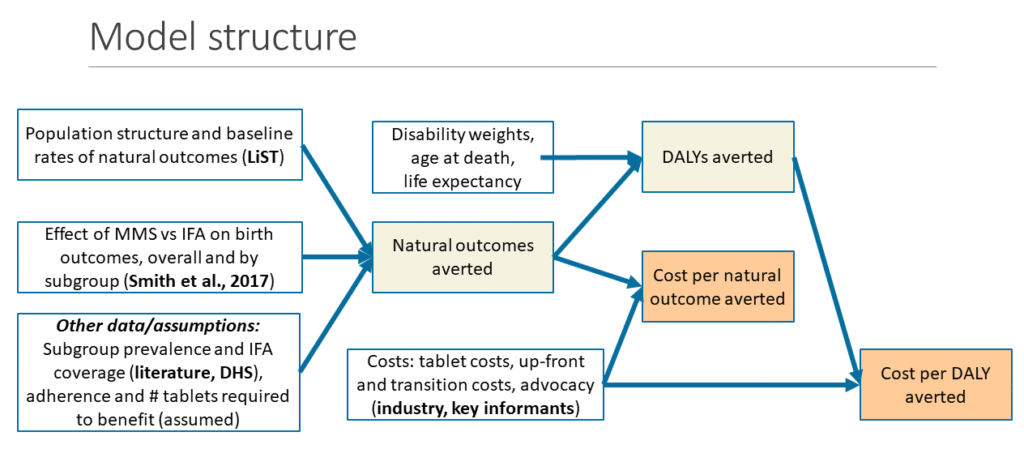
According to new evidence compiled by the task force, MMS has additional benefits over IFA, but the tablets are more costly. While there is sufficient evidence to support the transition of IFA to MMS, policymakers need to consider not just the benefits, but also the associated costs. In her presentation, Reina Engle-Stone asked if MMS is a worthwhile investment. With her team at UC Davis, Engle-Stone developed a model to estimate the effects, cost, and cost-effectiveness of replacing IFA with MMS within the context of a supplementation distribution program in Bangladesh and Burkina Faso. A hypothetical one-year scenario with 100% coverage was also applied to both countries using their current national levels of IFA coverage, assuming complete adherence to the recommended regimen (i.e., consumption of 180 supplements per pregnancy). The model used baseline demographic characteristics from the Lives Saved Tool (LiST) and effect sizes from the IPD meta-analysis to generate the marginal effects of replacing IFA with MMS on mortality, adverse birth outcomes, and disability-adjusted life years (DALYs) averted, in both rural and urban settings.
A team at UC Davis created a model structure to calculate the cost effectiveness of MMS in the context of an ongoing supplement distribution program.
The results showed replacing IFA with MMS could avert over 15,000 deaths and 30,000 cases of preterm birth annually in Bangladesh, and over 5,000 deaths and 5,000 cases of preterm birth in Burkina Faso, assuming 100% coverage and adherence. The cost per death averted was estimated to be $175-$185 in Bangladesh and $112-$125 in Burkina Faso. Lastly, the cost per DALY averted ranged from $3-$15, depending on the country and consideration of sub-groups. Engle-Stone noted that the estimate is very sensitive to the cost of the tablet. For one, the costs associated with shifting from IFA to MMS will be significant, given that MMS are approximately 35% more costly than IFA tablets. Based on the hypothetical scenario, a complete switch to MMS in Bangladesh given current coverage levels (50% nationally) would cost approximately $1.7 million. In a scenario assuming 100% coverage, where all women receive and consume 180 tablets, the additional cost to replace the IFA with MMS would increase to $2.7 million. A complete switch in Burkina Faso with current coverage levels (10.2% nationally) would cost approximately $60,000 and would rise to $600,000 for 100% coverage.
In sum, the switch would come at an added cost, and if the cost of the supplement rises, so will the cost-effectiveness. However, an increase in demand of MMS with improvements in program delivery and supplement adherence could improve the cost-effectiveness. Engle-Stone noted that further research is needed to provide a more realistic scenario for the transition from IFA to MMS, specifically on the delivery platform performance and supplement adherence. Nonetheless, the cost-effectiveness of this short, one-year analysis suggests that policymakers should consider adopting the underlying model with necessary modifications to fit their context and use it to better inform policy discussions around the shift from IFA to MMS.
The New York Academy of Sciences and the Blavatnik Family Foundation hosted the annual Blavatnik Science Symposium on July 15–16, 2019, uniting 75 Finalists, Laureates, and Winners of the Blavatnik Awards for Young Scientists. Honorees from the UK and Israel Awards programs joined Blavatnik National and Regional Awards honorees from the U.S. for what one speaker described as “two days of the impossible.” Nearly 30 presenters delivered research updates over the course of nine themed sessions, offering a fast-paced peek into the latest developments in materials science, quantum optics, sustainable technologies, neuroscience, chemical biology, and biomedicine.
Symposium Highlights
Computer vision and machine learning have enabled novel analyses of satellite and drone images of wildlife, food crops, and the Earth itself.
Next-generation atomic clocks can be used to study interactions between particles in complex many-body systems.
Bacterial communities colonizing the intestinal tract produce bioactive molecules that interact with the human genome and may influence disease susceptibility.
New catalysts can reduce carbon emissions associated with industrial chemical production.
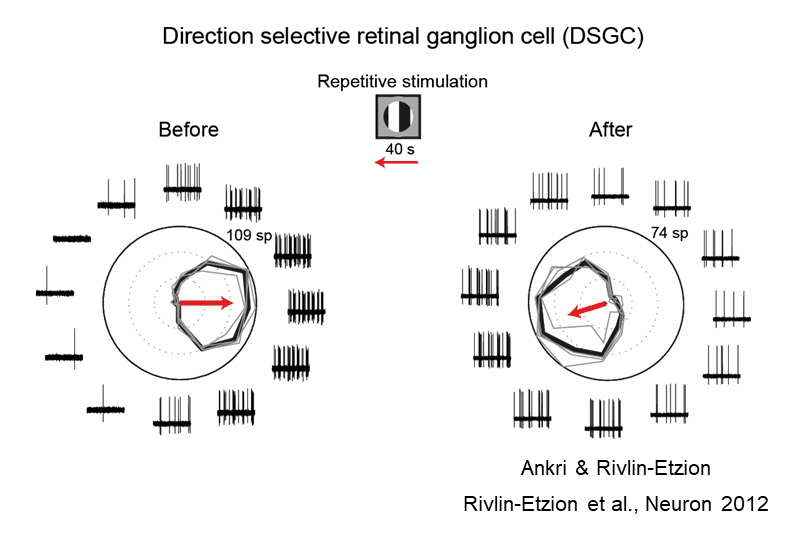
Retinal neurons display a surprising degree of plasticity, changing their coding in response to repetitive stimuli.
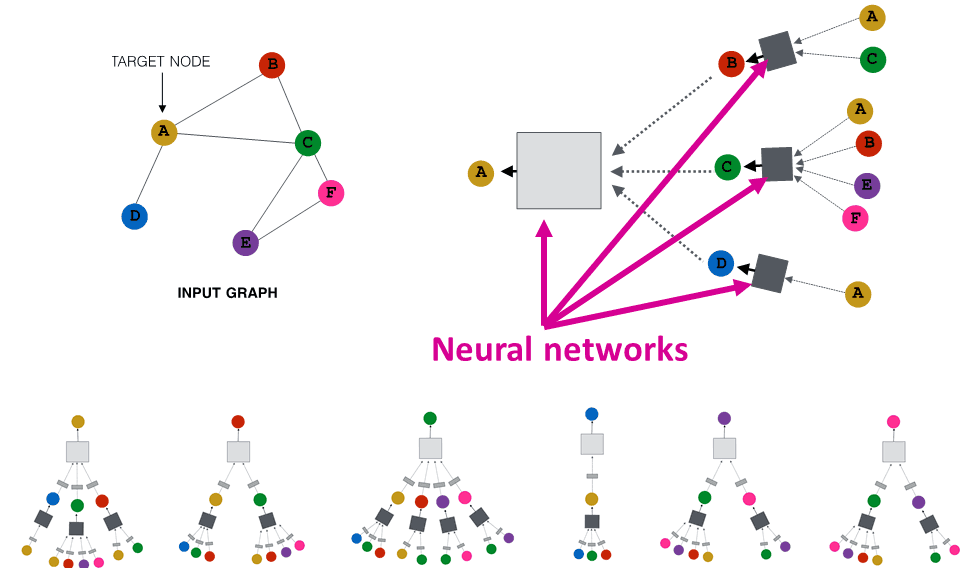
New approaches for applying machine learning to complex datasets is improving predictive algorithms in fields ranging from consumer marketing to healthcare.
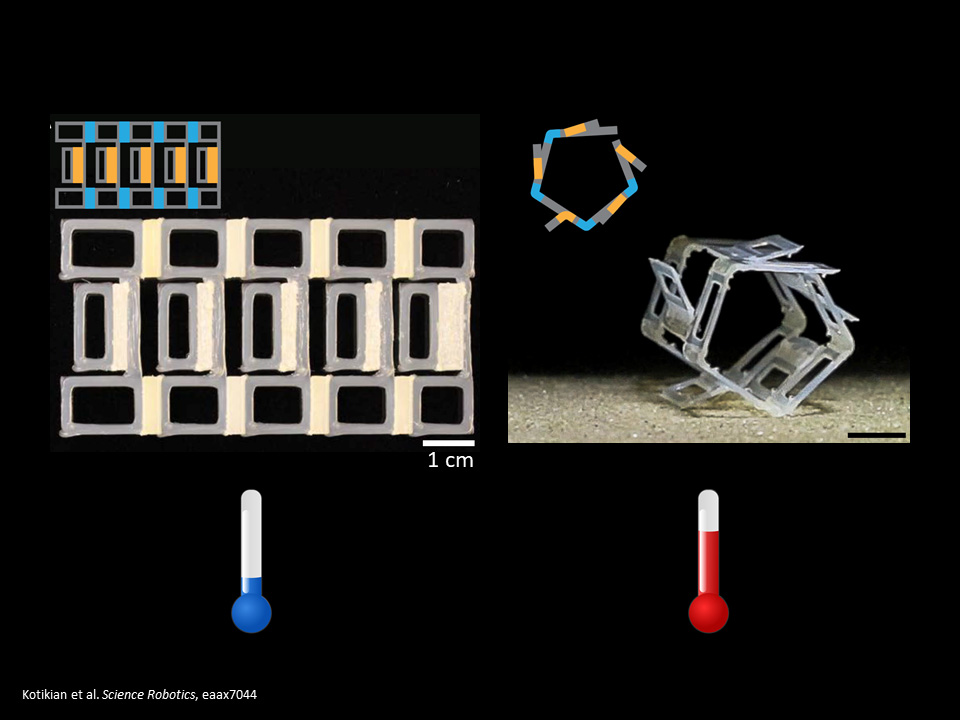
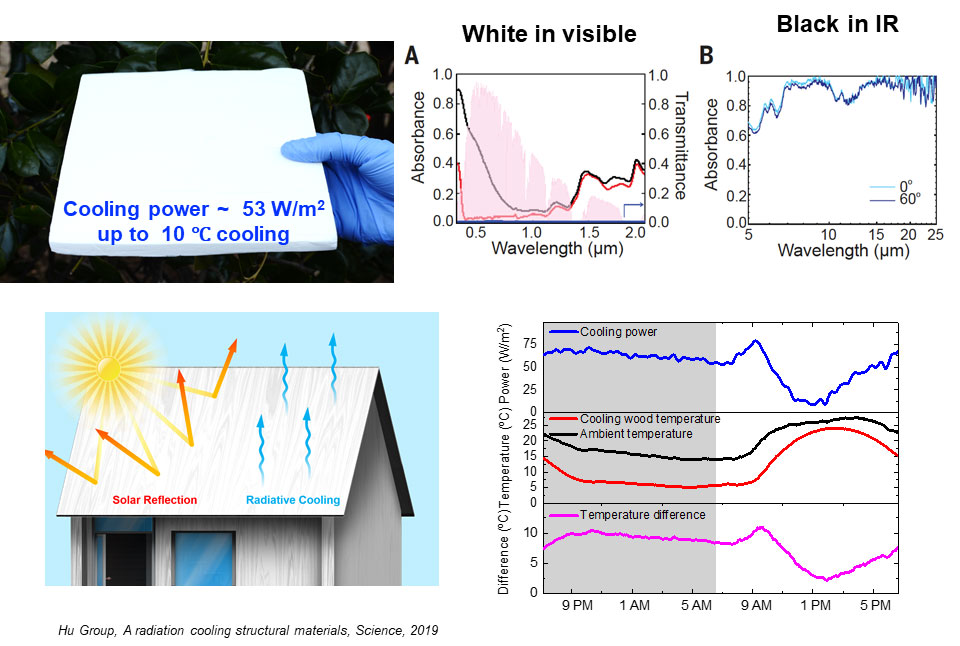
Breakthroughs in materials science have resulted in materials with remarkable strength and responsiveness.
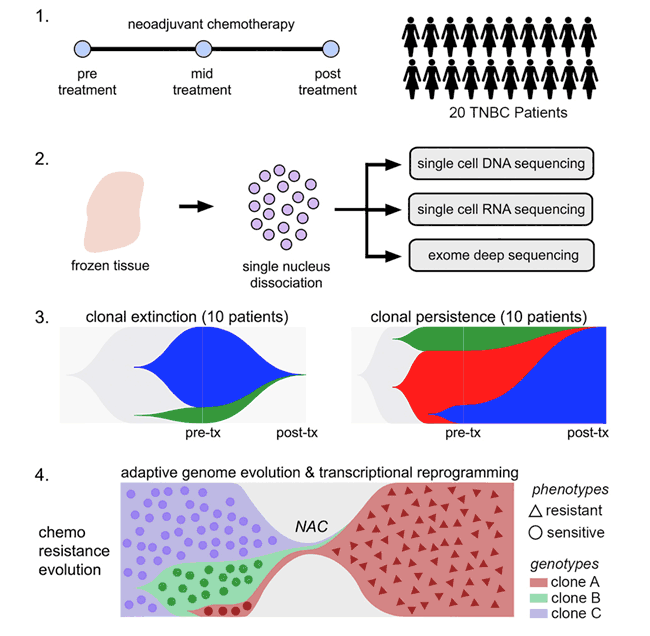
Single-cell genomic studies are revealing some of the mechanisms that drive cancer development, metastasis, and resistance to treatment.
Speakers
Emily Balskus, PhD Harvard University
Chiara Daraio, PhD Caltech
William Dichtel, PhD Northwestern University
Elza Erkip, PhD New York University
Lucia Gualtieri, PhD Stanford University
Ive Hermans, PhD University of Wisconsin – Madison
Liangbing Hu, PhD University of Maryland, College Park
Jure Leskovec, PhD Stanford University
Heather J. Lynch, PhD Stony Brook University
Wei Min, PhD Columbia University
Seth Murray, PhD Texas A & M University
Nicholas Navin, PhD, MD MD Anderson Cancer Center
Ana Maria Rey, PhD University of Colorado Boulder
Michal Rivlin, PhD Weizmann Institute of Science
Nieng Yan, PhD Princeton University
Event Sponsor
Technology for Sustainability
Speakers
Heather J. Lynch Stony Brook University
Lucia Gualtieri Stanford University
Seth Murray Texas A & M University
Highlights
Machine learning algorithms trained to analyze satellite imagery have led to the discovery of previously unknown colonies of Antarctic penguins.
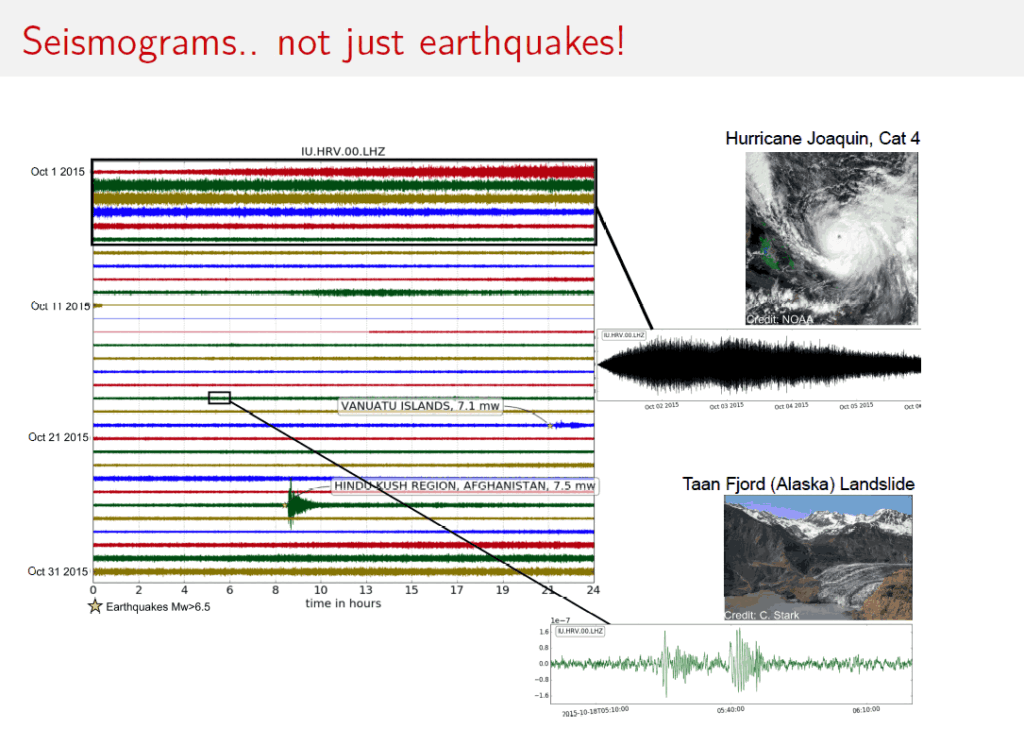
Seismographic data can be used to analyze more than just earthquakes—typhoons, hurricanes, iceberg-calving events and landslides are reflected in the seismic record.
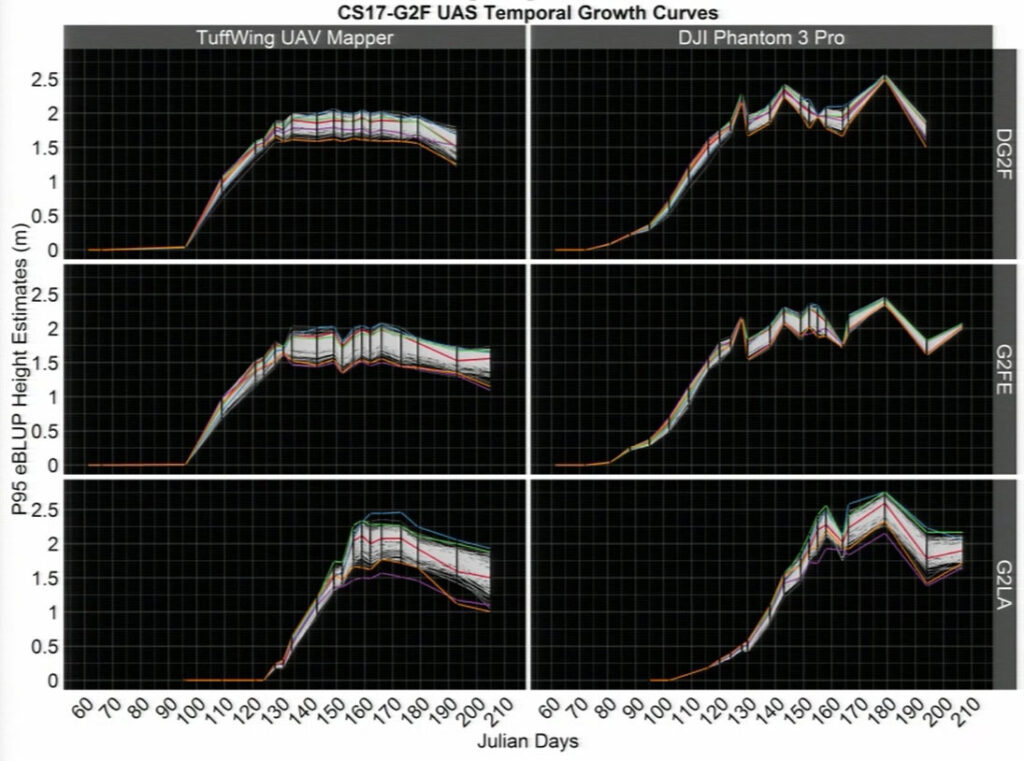
Unmanned aerial systems are a valuable tool for phenotypic analysis in plant breeding, allowing researchers to take frequent measurements of key metrics during the growing season and identify spectral signatures of crop yield.
Satellites, Drones, and New Insights into Penguin Biogeography
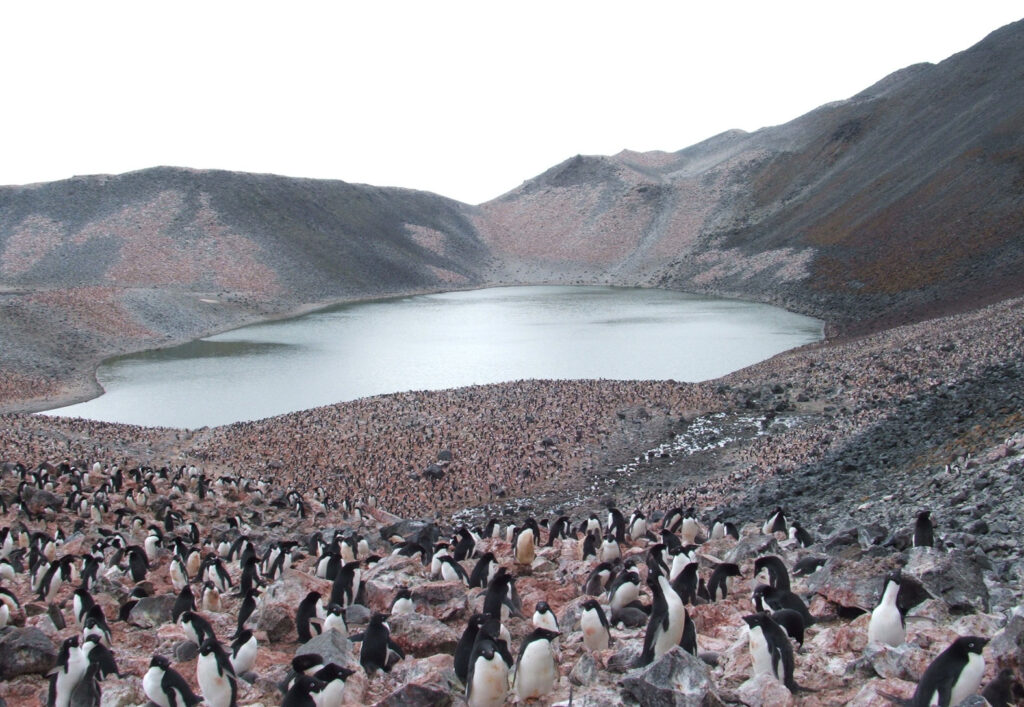
Satellite images have been used for decades to document geological changes and environmental disasters, but ecologist and 2019 Blavatnik National Awards Laureate in Life Sciences, Heather Lynch, is one of the few to probe the database in search of penguin guano. She opened the symposium with the story of how the Landsat satellite program enabled a surprise discovery of several of Earth’s largest colonies of Adélie penguins, a finding that has ushered in a new era of insight into these iconic Antarctic animals.
Steady streams of high quality spatial and temporal data regularly support environmental science. In contrast, Lynch noted that wildlife biology has advanced so slowly that many field techniques “would be familiar to Darwin.” Collecting information on animal populations, including changes in population size or migration patterns, relies on arduous and imprecise counting methods. The quest for alternative ways to track wildlife populations—in this case, Antarctic penguin colonies—led Lynch to develop a machine learning algorithm for automated identification of penguin guano in high resolution commercial satellite imagery, which can be combined with lower resolution imagery like that coming from NASA’s Landsat program. Pairing measurements of vast, visible tracts of penguin guano—the excrement colored bright pink due to the birds’ diet—with information about penguin colony density yields near-precise population information. The technique has been used to survey populations in known penguin colonies and enabled the unexpected discovery of a “major biological hotspot” in the Danger Islands, on the tip of the Antarctic Peninsula. This Antarctic Archipelago is so small that it is doesn’t appear on most maps of the Antarctic continent, yet it hosts one of the world’s largest Adélie penguin hotspots.
Satellite images of the pink stains of Antarctic penguin guano have been used to identify and track penguin populations.
Lynch and her colleagues are developing new algorithms that utilize high-resolution drone and satellite imagery to create centimeter-scale, 3D models of penguin terrain. These models feed into detailed habitat suitability and population-tracking analyses that further basic research and can even influence environmental policy decisions. Lynch noted that the discovery of the Danger Island colony led to the institution of crucial environmental protections for this region that may have otherwise been overlooked. “Better technology actually can lead to better conservation,” she said.
Listening to the Environment with Seismic Waves
The study of earthquakes has dominated seismology for decades, but new analyses of seismic wave activity are broadening the field. “The Earth is never at rest,” said Lucia Gualtieri, 2018 Blavatnik Regional Awards Finalist, while reviewing a series of non-earthquake seismograms that show constant, low-level vibrations within the Earth. Long discarded as “seismic noise,” these data, which comprise more than 90% of seismograms, are now considered a powerful tool for uniting seismology, atmospheric science, and oceanography to produce a holistic picture of the interactions between the solid Earth and other systems.
In addition to earthquakes, events such as hurricanes, typhoons, and landslides are reflected in the seismic record.
Nearly every environmental process generates seismic waves. Hurricanes, typhoons, and landslides have distinct vibrational patterns, as do changes in river flow during monsoons and “glacial earthquakes” caused by ice calving events. Gualtieri illustrated how events on the surface of the Earth are reflected within the seismic record—even at remarkably long distances—including a massive landslide in Alaska detected by a seismic sensor in Massachusetts. Gualtieri and her collaborators are tapping this exquisite sensitivity to create a new generation of tools capable of measuring the precise path and strength of hurricanes and tropical cyclones, and for making predictive models of cyclone strength and behavior based on decades of seismic data.
Improving Crop Yield Using Unmanned Aerial Systems and Field Phenomics
Plant breeders like Seth Murray, 2019 Blavatnik National Awards Finalist, are uniquely attuned to the demands a soaring global population places on the planet’s food supply. Staple crop yields have skyrocketed thanks to a century of advances in breeding and improved management practices, but the pressure is on to create new strategies for boosting yield while reducing agricultural inputs. “We need to grow more plants, measure them better, use more genetic diversity, and create more seasons per year,” Murray said. It’s a tall order, but one that he and a transdisciplinary group of collaborators are tackling with the help of a fleet of unmanned aerial systems (UAS), or drones.
Drones facilitate frequent measurement of plant height, revealing variations between varietals early in the growth process.
Genomics has transformed many aspects of plant breeding, but phenotypic, rather than genotypic, information is more useful for predicting crop yield. Using drones equipped with specialized equipment, Murray has not only automated many of the time-consuming measurements critical for plant phenotyping, such as tracking height, but has also identified novel metrics that can accelerate the development of new varietals. Spectral signatures obtained via drone can be used to identify top-yielding varietals of maize even before the plants are fully mature. Phenotypic features distilled from drone images are also being used to determine attributes such as disease resistance, which directly influence crop management. Murray’s team is modeling the influence of thousands of phenotypes on overall crop performance, paving the way for true phenomic selection in plant breeding.
Quantum mechanics underlies the technologies of modern computing, including transistors and integrated circuits.
Most quantum insights are derived from studies of single quantum particles, but understanding interactions between many particles is necessary for the development of devices such as quantum computers.
Atoms cooled to one billionth of a degree above absolute zero obey the laws of quantum mechanics, and can be used as quantum simulators to study many-particle interactions.
Atomic Clocks: From Timekeepers to Quantum Computers
The discovery of quantum mechanics opened “a new chapter in human knowledge,” said 2019 Blavatnik National Awards Laureate in Physical Sciences & Engineering, Ana Maria Rey, describing how the study of quantum phenomena has revolutionized modern computing, telecommunications, and navigation systems. Transistors, which make up integrated circuits, and lasers, which are the foundation of the atomic clocks that maintain the precision of satellites used in global positioning systems, all stem from discoveries about the nature of quantum particles.
The next generation of innovations—such as room temperature superconductors and quantum computers—will be based on new quantum insights, and all of this hinges on our ability to study interactions between many particles in quantum systems. The complexity of this task is beyond the scope of even the most powerful supercomputers. As Rey explained, calculating the possible states for a small number of quantum particles (six, for example) is simple. “But if you increase that by a factor of just 10, you end up with a number of states larger than the number of stars in the known universe,” she said.
Calculating the number of possible states for even a small number of quantum particles is a task too complex for even the most powerful supercomputer.
Researchers have developed several experimental platforms to clear this hurdle and explore the quantum world. Rey shared the story of how her work developing ultra-precise atomic clocks inadvertently led to one experimental platform that is already demystifying some aspects of quantum systems.
Atomic clocks keep time by measuring oscillations of atoms—typically in cesium atoms—as they change energy levels. Recently, Rey and her collaborators at JILA built the world’s most sensitive atomic clock using strontium atoms instead of cesium and using many more atoms that are typically found in these clocks. The instrument had the potential to be 1,000 times more sensitive than its predecessors, yet collisions between the atoms compromised its precision. Rey explained that by suppressing these collisions, their clock became “a window to explore the quantum world.” Within this framework, the atoms can be manipulated to simulate the movement and interactions of quantum particles in solid-state materials. Rey reported that this clock-turned-quantum simulator has already generated new findings about phenomena including superconductivity and quantum magnetism.
The human gut is colonized by trillions of bacteria that are critical for host health, yet may also be implicated in the development of diseases including colorectal cancer.
For over a decade, chemists have sought to resolve the structure of a genotoxin called colibactin, which is produced by a strain of E. coli commonly found in the gut microbiome of colorectal cancer patients.
By studying the specific type of DNA damage caused by colibactin, researchers found a trail of clues that led to a promising candidate structure of the colibactin molecule.
Gut Reactions: Understanding the Chemistry of the Human Gut Microbiome
The composition of the trillions-strong microbial communities that colonize the mammalian intestinal tract is well characterized, but a deeper understanding of their chemistry remains elusive. Emily Balskus, the 2019 Blavatnik National Awards Laureate in Chemistry, described her lab’s hunt for clues to solve one chemical mystery of the gut microbiome—a mission that could have implications for colorectal cancer (CRC) screening and early detection.
Some commensal E. coli strains in the human gut produce a genotoxin called colibactin. When cultured with human cells, these strains cause cell cycle arrest and DNA damage, and studies have shown increased populations of colibactin-producing E. coli in CRC patients. Previous studies have localized production of colibactin within the E. coli genome and hypothesized that the toxin is synthesized through an enzymatic assembly line. Yet every attempt to isolate colibactin and determine its chemical structure had failed.
Balskus’ group took “a very different approach,” in their efforts to discover colibactin’s structure. By studying the enzymes that make the toxin, the team uncovered a critical clue: a cyclopropane ring in the structure of a series of molecules they believed could be colibactin precursors. This functional group, when present in other molecules, is known to damage DNA, and its detection in the molecular products of the colibactin assembly line led the researchers to consider it as a potential mechanism of colibactin’s genotoxicity.
In collaboration with researchers at the University of Minnesota School of Public Health, Balskus’ team cultured human cells with colibactin-producing E. coli strains as well as strains that cannot produce the toxin. They identified and characterized the products of colibactin-mediated DNA damage. “Starting from the chemical structure of these DNA adducts, we can work backwards and think about potential routes for their production,” Balskus explained.
A proposed structure for the genotoxin colibactin, which is associated with colorectal cancer, features two cyclopropane rings capable of interacting with DNA to generate interstrand cross links, a type of DNA damage.
Further studies revealed that colibactin triggers a specific type of DNA damage that requires two reactive groups—likely represented by two cyclopropane rings in the final toxin structure—a pivotal discovery in deriving what Balskus believes is a strong candidate for the true colibactin structure. Balskus emphasized that this work could illuminate the role of colibactin in carcinogenesis, and may lead to cancer screening methods that rely on detecting DNA damage before cells become malignant. The findings also have implications for understanding microbiome-host interactions. “These studies reveal that human gut microbiota can interact with our genomes, compromising their integrity,” she said.
The chemical industry is a major producer of carbon dioxide, and efforts to create more efficient and sustainable chemical processes are often stymied by cost or scale.
Boron nitride is not well known as a catalyst, yet experiments show it is highly efficient at converting propane to propylene—one of the most widely used chemical building blocks in the world.
Two-dimensional polymers called covalent organic frameworks (COFs) can be used for water filtration, energy storage, and chemical sensing.
Until recently, researchers have struggled to control and direct COF formation, but new approaches to COF synthesis are advancing the field.
Boron Nitride: A Surprising Catalyst
Industrial chemicals “define our standard of living,” said Ive Hermans, 2019 Blavatnik National Awards Finalist, before explaining that nearly 96% of the products used in daily life arise from processes requiring bulk chemical production. These building block molecules are produced at an astonishingly large scale, using energy-intensive methods that also produce waste products, including carbon dioxide.
Despite pressure to reduce carbon emissions, the pace of innovation in chemical production is slow. The industry is capital-intensive — a chemical production plant can cost more than $2 billion—and it can take a decade or more to develop new methods of synthesizing chemicals. Concepts that show promise in the lab often fail at scale or are too costly to make the transition from lab to plant. “The goal is to come up with technologies that are both easily implemented and scalable,” Hermans said.
Catalysts are a key area of interest for improving chemical production processes. These molecules bind to reactants and can boost the speed and efficiency of chemical reactions. Hermans’ research focuses on catalyst design, and one of his recent discoveries, made “just by luck,” stands to transform production of one of the most in-demand chemicals worldwide—propylene.
Historically, propylene was one product (along with ethylene and several others) produced by “cracking” carbon–carbon bonds in naphtha, a crude oil component that has since been replaced by ethane (from natural gas) as a preferred starting material. However, ethane yields far less propylene, leaving manufacturers and researchers to seek alternative methods of producing the chemical.
Boron nitride catalyzes a highly efficient conversion of propane to propylene.
Enter boron nitride, a two-dimensional material whose catalytic properties took Hermans by surprise when a student in his lab discovered its efficiency at converting propane, also a component of natural gas, to propylene. Existing methods for running this reaction are endothermic and produce significant CO2. Boron nitride catalysts facilitate an exothermic reaction that can be conducted at far cooler temperatures, with little CO2 production. Better still, the only significant byproduct is ethylene, an in-demand commodity.
Hermans sees this success as a step toward a more sustainable future, where chemical production moves “away from a linear economy approach, where we make things and produce CO2 as a byproduct, and more toward a circular economy where we use different starting materials and convert CO2 back into chemical building blocks.”
Polymerization in Two Dimensions
William Dichtel, a Blavatnik National Awards Finalist in 2017 and 2019, offered an update from one of the most exciting frontiers in polymer chemistry—two-dimensional polymerization. The synthetic polymers that dominate modern life are comprised of linear, repeating chains of linked building blocks that imbue materials with specific properties. Designing non-linear polymer architectures requires the ability to precisely control the placement of components, a feat that has challenged chemists for a decade.
Dichtel described the potential of a class of polymers called covalent organic frameworks, or COFs—networks of polymers that form when monomers are polymerized into well-defined, two-dimensional structures. COFs can be created in a variety of topologies, dictated by the shape of the monomers that comprise it, and typically feature pores that can be customized to perform a range of functions. These materials hold promise for applications including water purification membranes, energy and gas storage, organic electronics, and chemical sensing.
Dichtel explained that COF development is a trial and error process that often fails, as the mechanisms of their formation are not well understood. “We have very limited ability to improve these materials rationally—we need to be able to control their form so we can integrate them into a wide variety of contexts,” he said.
Two-dimensional polymer networks can be utilized for water purification, energy storage, and many other applications, but chemists have long struggled to understand their formation and control their structure.
A breakthrough in COF synthesis came when chemist Brian Smith, a former postdoc in Dichtel’s lab, discovered that certain solvents allowed COFs to disperse as nanoparticles in solution rather than precipitating as powder. These particles became the basis for a new method of growing large, controlled crystalline COFs using nanoparticles as structural “seeds,” then slowly adding monomers to maximize growth while limiting nucleation. “This level of control parallels living polymerization, with well-defined initiation and growth phases,” Dichtel said.
More recently, Dichtel’s group has made significant advances in COF fabrication, successfully casting them into thin films that could be used in membrane and filtration applications.
Further Readings
Hermans
Zhang Z, Jimenez-Izal E, Hermans I, Alexandrova AN.
The 80 subtypes of retinal ganglion cells each encode different aspects of vision, such as direction and motion.
The “preferences” of these cells were believed to be hard-wired, yet experiments show that retinal ganglion cells can be reprogrammed by exposure to repetitive stimuli.
Sodium ion channels control electrical signaling in cells of the heart, muscles, and brain, and have long been drug targets due to their connection to pain signaling.
Cryo-electron microscopy has allowed researchers to visualize Nav 7, a sodium ion channel implicated in pain syndromes, and to identify molecules that interfere with its function.
Retinal Computations: Recalculating
The presentation from Michal Rivlin, the Life Sciences Laureate of the 2019 Blavatnik Awards in Israel, began with an optical illusion, a dizzying exercise during which a repetitive, unidirectional pattern of motion appeared to rapidly reverse direction. “You probably still perceive motion, but the image is actually stable now,” Rivlin said, completing a powerful demonstration of the action of direction-sensitive retinal ganglion cells (RGCs), whose mechanisms she has studied for more than a decade. The approximately 80 subtypes of RGCs each encode a different aspect, or modality of vision—motion, color, and edges, as well as perception of visual phenomena such as direction. These modalities are hard-wired into the cells and were thought to be immutable—a retinal ganglion cell that perceived left-to-right motion was thought incapable of responding to visual signals that move right-to-left. Rivlin’s research has challenged not only this notion, but also many other beliefs about the function and capabilities of the retina.
Rather than simply capturing discrete aspects of visual information like a camera and relaying that information to the visual thalamus for processing, the cells of the retina actually perform complex processing functions and display a surprising level of plasticity. Rivlin’s lab is probing both the anatomy and functionality of various types of retinal ganglion cells, including those that demonstrate selectivity, such as a preference for movement in one direction or attunement to increases or decreases in illumination. By exposing these cells to various repetitive stimuli, Rivlin has shown that the selectivity of RGCs can be reversed, even in adult retinas.
Direction-selective retinal ganglion cells that prefer left-to-right motion (Before) can change their directional preference (After) following a repetitive visual stimulus.
These dynamic changes in cells whose preferences were believed to be singular and hard-wired have implications not just for understanding retinal function but for understanding the physiological basis of visual perception. Stimulus-dependent changes in the coding of retinal ganglion cells also have downstream impacts on the visual thalamus, where retinal signals are processed. This unexpected plasticity in retinal cells has led Rivlin and her collaborators to investigate the possibility that the visual thalamus and other parts of the visual system might also display greater plasticity than previously believed.
Targeting Sodium Channels for Pain Treatment
Nature’s deadliest predators may seem an unlikely inspiration for developing new analgesic drugs, but as Nieng Yan, 2019 Blavatnik National Awards Finalist, explained, the potent toxins of some snails, spiders, and fish are the basis for research that could lead to safer alternatives to opioid medications.
Voltage-gated ion channels are responsible for electrical signaling in cells of the brain, heart, and skeletal muscles. Sodium channels are one of many ion channel subtypes, and their connection to pain signaling is well documented. Sodium channel blockers have been used as analgesics for a century, but they can be dangerously indiscriminate, inhibiting both the intended channel as well as others in cardiac or muscle tissues. The development of highly selective small molecules capable of blocking only channels tied to pain signaling seemed nearly impossible until two breakthroughs—one genetic, the other technological—brought a potential path for success into focus.
A 2006 study of families with a rare genetic mutation that renders them fully insensitive to pain turned researchers’ focus to the role of the gene SCN9A, which codes for the voltage-gated sodium ion channel Nav 1.7, in pain syndromes. Earlier studies showed that overexpression of SCN9A caused patients to suffer extreme pain sensitivity, and it was now clear that loss of function mutations resulted in the opposite condition.
A powerful natural toxin derived from corn snails blocks the pore of a voltage-gated sodium channel, halting the flow of ions and inhibiting the initiation of an action potential.
As Yan explained, understanding this channel required the ability to resolve its structure, but imaging techniques available at that time were poorly suited to large, membrane-bound proteins. With the advent of cryo-electron microscopy, Yan and other researchers have not only resolved the structure of Nav 1.7, but also characterized small molecules—mostly derived from animal toxins—that precisely and selectively interfere with its function. Developing synthetic drugs based on these molecules is the next phase of discovery, and it’s one that may happen more quickly than expected. “When I started my lab, I thought resolving this protein’s structure would be a lifetime project, but we shortened it to just five years,” said Yan.
A novel approach to developing machine learning algorithms has improved applications for non-linear datasets.
Neural networks can now be used for complex predictive tasks, including forecasting polypharmacy side effects.
5G wireless networks will expand the capabilities of internet-connected devices, providing dramatically faster data transmission and increased reliability.
Tools used to design wireless networks can also be used to understand vulnerabilities in the design of online platforms and social networks, particularly as it pertains to user privacy and data anonymization.
Machine Learning with Networks
“For the first time in history, we are using computers to process data at scale to gain novel insights,” said Jure Leskovec, a Blavatnik National Awards Finalist in 2017, 2018, and 2019, describing one aspect of the digital transformation of science, technology, and society. This shift, from using computers to run calculations or simulations to using them to generate insights, is driven in part by the massive data streams available from the Internet and internet-connected devices. Machine learning has catalyzed this transformation, allowing researchers to not only glean useful information from large datasets, but to make increasingly reliable predictions based on it. Just as new imaging techniques reveal previously unknown structures and phenomena in biology, astronomy, and other fields, so too are big data and machine learning bringing previously unobservable models, signals, and patterns to the surface.
This “new paradigm for discovery” has limitations, as Leskovec explained. Machine learning has advanced most rapidly in areas where data can be represented as simple sequences or grids, such as computer vision, image analysis, and speech processing. Analysis of more complex datasets—represented by networks rather than linear sequences—was beyond the scope of neural networks until recently, when Leskovec and his collaborators approached the challenge from a different angle.
The team considered networks as computation graphs, recognizing that the key to making predictions was understanding how information propagates across the network. By training each node in the network to collect information about neighboring nodes and aggregating the resulting data, they can use node-level information to make predictions within the context of the entire network.
Each node within a network collects information from neighboring nodes. Together, this information can be used to make predictions within the context of the network as a whole.
Leskovec shared two case studies demonstrating the broad applicability of this approach. In healthcare, a neural network designed by Leskovec is identifying previously undocumented side effects from drug-drug interactions. Each network node represents a drug or a protein target of a drug, with links between the nodes emerging based on shared side effects, protein targets, and protein-protein interactions. This type of polydrug side effects analysis is infeasible through clinical trials, and Leskovec is working to optimize it as a point-of-care tool for clinicians.
A similar system has been deployed on the online platform Pinterest, where Leskovec serves as Chief Scientist. It has improved the site’s ability to classify users’ preferences and suggest additional content. “We’re generalizing deep learning methodologies to complex data types, and this is leading to new frontiers,” Leskovec said.
Understanding and Engineering Communications Networks
Elza Erkip has never seen a slide rule. In two decades as a faculty researcher and electrical and computer engineer, Erkip, 2010 Blavatnik Awards Finalist, has corrected her share of misconceptions about her field, and about the role of engineering among the scientific disciplines. She joked about stereotypes portraying engineers—most of them men—wielding slide rules or wearing hard hats, but emphasized the importance of raising awareness about the real-life work of engineers. “Scientists want to understand the universe, but engineers use existing scientific knowledge to design and build things,” she explained. “We contribute to discovery, but mostly we want to solve problems, to find solutions that work in the real world.”
Erkip focuses on one of the most impactful areas of 21st century living—wireless communication—and the ever-evolving suite of technologies that support it. She reviewed the rapid progression of wireless device capabilities, from phones that featured only voice calling and text messaging, through the addition of Wi-Fi capability and web browsing, all the way to the smartphones of today, which boast more computing power than the Apollo 11 spacecraft that landed on the moon. She described the next revolution in wireless—5G networks and devices—which promises higher data rates and significant increases in speed and reliability. Tapping the millimeter-wave bands of the electromagnetic spectrum, 5G will rely on different wireless architectures featuring massive arrays of small antennae, which are better suited to propagating shorter wavelengths. The increased bandwidth will enable many more devices to come online. “It won’t just be humans communicating—we’ll have devices communicating with each other,” Erkip said, describing the future connectivity between robots, autonomous cars, home appliances, and sensors embedded in transportation, manufacturing, and industrial equipment.
Despite efforts to anonymize data, many social media sites and online databases remain vulnerable to efforts to match users’ identities across platforms.
Erkip also discussed the application of tools used to understand and build wireless networks to gain insight into privacy issues within social networks. De-anonymization of user data has long plagued online platforms. Studies have shown that it’s often possible to identify and match users across multiple social platforms or databases using publicly available information—a breach that has greater implications for a database of health or voting records than it does for a consumer-oriented site such as Netflix. Erkip is working to understand the fundamental properties of these networks to elucidate the factors that predispose them to de-anonymization attacks.
IEEE International Symposium on Information Theory. 2018.
Materials Science
Speakers
Chiara Daraio Caltech
Liangbing Hu University of Maryland, College Park
Highlights
Computer-aided manufacturing is enabling researchers to design materials with precisely tuned properties, such as responsiveness to light, temperature, or moisture.
Structured materials can mimic robots or machines, changing shape and form repeatedly in the presence of various stimuli.
Ultra-strong, lightweight wood-based materials made of nanocellulose fibers may one day resolve some of the world’s most pressing challenges in water, energy and sustainability, replacing transparent plastic packaging, window glass, and even steel and other alloys in vehicles and buildings.
Mechanics of Robotic Matter
Chiara Daraio’s work challenges the traditional definition of words like material, structure, and robot. Working at the intersection of physics, materials science, and computer science, she designs materials with novel properties and functionalities, enabled by computer-aided design and 3D fabrication. Rather than considering a material as the foundation for assembling a structure, Daraio, 2019 Blavatnik National Awards Finalist, designs materials with intricate structures in unique and complex geometries.
Daraio demonstrated a series of responsive materials—those that morph in the presence of stimuli such as temperature, light, moisture, or salinity. In their simplest forms, these materials change shape—a piece of heat-responsive material folds and unfolds as air temperature changes, or a leaf-shaped hydro-sensitive material opens and closes as it transitions from wet to dry. In more complex forms, materials can display time-dependent responses, as shown in a video demonstration of a row of polymer strips changing shape at different rates, depending on their thickness. Daraio showed how computer-graphical approaches allow researchers to design a single material with different properties in different regions, allowing complex actuation in a time-dependent manner, such as a polymer “flower” with interconnecting leaves taking shape and a polymer “ribbon” slowly interweaving a knot.
A thin foil elastomer comprised of materials with alternating temperature-sensitivity (heat and cold) folds up and “walks” across a table as the temperature varies.
Conventional ideas dictate that a robot is a programmable machine capable of completing a task. “But what if the material is the machine?” asked Daraio, showing the remarkable capabilities of a thin liquid crystal elastomer foil composed of one heat-sensitive and one cold-sensitive material. At room temperature, the foil is flat. Heat from a warm table causes it to curl upward, turn over, and “walk” forward. “As long as there’s some kind of external environmental stimulus, we can design a material that can repeatedly perform actions in time,” Daraio said. Similar responsive materials have been used in a self-deploying solar panel that [remove folds and] unfolds in response to heat.
Materials have been “the seeds of technological innovation” throughout human history, and Daraio believes that structured materials will enable new functionalities at the macroscale—for use in wearables such as helmets as well as in smart building technologies—and at the microscale, where responsive materials could be used for medical diagnostics or drug delivery.
Sustainable Applications for Wood Nanotechnologies
Wood, glass, plastic, and steel are among the most ubiquitous materials on Earth, and Liangbing Hu, 2019 Blavatnik National Awards Finalist, is rethinking them all. Inspired by the global need to develop sustainable materials, Hu turned to the most plentiful source of biomass on Earth— trees—to create a new generation of wood-based materials with astonishing properties. Hu relies on nanocellulose fibers, which can be engineered to serve as alternatives to commonly used unsustainable or energy-intensive materials.
Hu introduced a transparent film that could pass for plastic and can be used for packaging, yet is ten times stronger and far more versatile. This transparent nanopaper, made of nanocellulose fibers, could also be used as a display material in flexible electronics or as a photonic overlay that boosts the efficiency of solar cells by 30%.
Hu has also tested transparent wood—a heavier-gauge version of nanopaper made by removing lignin from wood and injecting the channels with a clear polymer—as an energy-saving building material. More than half of home energy loss is due to poor wall insulation and leakage through window glass. By Hu’s calculations, replacing glass windows with transparent wood would also provide a six-fold increase in thermal insulation. Pressed, delignified wood has also proven to be a superior material for wall insulation. Used on roofs, it is a highly efficient means of passive cooling—the material absorbs heat and then re-radiates it, cooling the surface below it by about ten degrees.
White delignified wood is pressed to increase its strength. It can be used on roofs to passively cool homes by absorbing and re-radiating light, cooling the area below it by about ten degrees.
Comparisons of mechanical strength between wood and steel are almost laughable, unless the wood is another of Hu’s creations—the aptly named “superwood.” Delignified and compressed to align the nanocellulose fibers, even inexpensive woods become thinner and 10-20 times stronger. Superwood rivals steel in strength and durability, and could become a viable alternative to steel and other alloys in buildings, vehicles, trains, and airplanes. Sustainable sourcing would eliminate pollution and carbon dioxide associated with steel production, and its lightweight profile could drastically improve vehicle fuel efficiency.
Tumor cells are genetically heterogeneous, complicating efforts to sequence DNA from tumor tissue samples.
Techniques for isolating and sequencing single-cell samples have transformed the study of cancer genetics.
Stimulated Ramen scattering, a non-invasive imaging technique, can visualize processes including glucose uptake and fatty acid metabolism within living cells.
Single Cell Genomics: A Revolution in Cancer Biology
Nicholas Navin, 2019 Blavatnik National Awards Finalist, doesn’t use the word “revolution” lightly, but when it comes to the field of single-cell genomics and its impact on cancer research, he stands by the term. Over the past ten years, DNA sequencing of single tumor cells has led to major discoveries about the progression of cancer and the process by which cancer cells resist treatment.
Unlike healthy tissue cells, tumor cells are characterized by genomic heterogeneity. Samples from different areas of the same tumor often contain different mutations or numbers of chromosomes. This diversity has long piqued researchers’ curiosity. “Is it stochastic noise generated as tumor cells acquire different mutations, or could this diversity be important for resistance to therapy, invasion, or metastasis?” Navin asked.
Answering that question required the ability to do comparative studies of single tumor cells, a task that was long out of reach. DNA sequencing technologies historically required a large sample of genetic material—a tricky proposition when sampling a highly diverse population of tumor cells. Some mutations, which could drive invasion or resistance, may be present in just a few cells and thus not be represented in the results. Navin was part of the first team to develop a method for excising a single cancer cell from a tumor, amplifying the DNA, and producing an individualized genetic sequence. As amplification and sequencing methods have improved, so too have the insights gleaned from single-cell genomic studies, which Navin likens to “paleontology in tumors”—the notion that a sample taken at a single point in time can allow researchers to make inferences about tumor evolution.
Single-cell genomic studies reveal that some cancer cells have innate mechanisms of resistance to chemotherapy, and undergo further transcriptional changes that enhance this resistance.
Single-cell studies have contradicted the idea of a stepwise evolution of cancer cells, with one mutation leading to another and ultimately tipping the scales toward malignancy. Instead, Navin’s studies reveal a punctuated evolution, whereby many cells simultaneously become genetically unstable. Longitudinal studies of single-cell samples in patients with triple-negative breast cancer are beginning to answer questions about how cancer cells evade treatment, showing that cells that survive chemotherapy have innate resistance, and then undergo further transcriptional changes during treatment, which increase resistance.
Translating these findings to the clinic is a longer-term process, but Navin envisions single-cell genomics will significantly impact strategies for targeted therapy, non-invasive monitoring, and early cancer detection.
Chemical Imaging in Biomedicine
Wei Min, a Blavatnik Awards Finalist in 2012 and 2019, concluded the session with a visually striking glimpse into the world of stimulated Raman scattering (SRS) microscopy. This noninvasive imaging technique provides both sub-cellular resolution and chemical information about living cells, while transcending some of the limitations of fluorescence-based optical microscopy. The probes used to tag molecules for fluorescent imaging can alter or destroy small molecules of interest, including glucose, lipids, amino acids, or neurotransmitters. Rather than using tags, SRS builds on traditional Raman spectroscopy, which captures and analyzes light scattered by the unique vibrational frequencies between atoms in biomolecules. The original method, first pioneered in the 1930s, is slow and lacks sensitivity, but in 2008, Min and others improved the technique.
SRS has since become a leading method for label-free visualization of living cells, providing an unprecedented window into cellular activities. Using SRS and a variety of custom chemical tags—“vibrational tags,” as Min described them—bound to biomolecules such as DNA or RNA bases, amino acids, or even glucose, researchers can observe the dynamics of biological functions. SRS has visualized glucose uptake in neurons and malignant tumors, and has been used to observe fatty acid metabolism, a critical step in understanding lipid disorders. Imaging small drug molecules is notoriously difficult, but Min reported the results of experiments using SRS to tag therapeutic drug molecules and study their activity within tissues.
Stimulated Raman scattering microscopy uses chemical tags to image small biological molecules in living cells. The technique can visualize cellular processes including glucose uptake in healthy cells and tumor cells.
A recent breakthrough in SRS technology involves pairing it with Raman dyes to break the “color barrier” in optical imaging. Due to the width of the fluorescent spectrum, labels are limited to five or six colors per sample, which prevents researchers from imaging many structures within a tissue sample simultaneously. Min has introduced a hybrid imaging technique that allows for super-multiplexed imaging—up to 10 colors in a single cell image—and utilizes a dramatically expanded palette of Raman frequencies that yield at least 20 distinct colors.
Award-winning science writer Carl Zimmer explains the “creation” of the organ so complex that it baffled even Darwin.
Published October 1, 2019
By Carl Zimmer
“The eye to this day gives me a cold shudder,” Charles Darwin once wrote to a friend.
If his theory of evolution was everything he thought it was, a complex organ such as the human eye could not lie beyond its reach. And no one appreciated the beautiful construction of the eye more than Darwin—from the way the lens was perfectly positioned to focus light onto the retina to the way the iris adjusted the amount of light that could enter the eye. In The Origin of Species, Darwin wrote that the idea of natural selection producing the eye “seems, I freely confess, absurd in the highest possible degree.”
For Darwin, the key word in that sentence was seems. If you look at the different sort of eyes out in the natural world and consider the ways in which they could have evolved, Darwin realized, the absurdity disappears. The objection that the human eye couldn’t possibly have evolved, he wrote, “can hardly be considered real.”
Dozens of Different Kinds of Eyes
Today evolutionary biologists are deciphering the origins of not just our own eyes but the dozens of different kinds of eyes that animals use. Fly eyes are built out of columns. Scallops have a delicate chain of eyes peeking out from their shells. Flatworms have simple light-sensitive spots. Octopuses and squids have camera eyes like we do, but with some major differences. The photoreceptors of octopuses and squids point out from the retina, towards the pupil. Our own eyes have the reverse arrangement. Our photoreceptors are pointed back at the wall of the retina, away from the pupil.
For decades, most scientists argued that these different eyes evolved independently. The earliest animals that lived over 600 million years ago were thought to be eyeless creatures. As their descendants branched out into different lineages, some of them evolved their own kinds of eyes. It now turns out, however, that this is not really true.
All eyes, in all their wonderful variety, share an underlying unity in the genes used to build them. By tracing the history of these shared genes, scientists uncovering the steps by which complex eyes have evolved through a series of intermediate steps.
Opsins in Common
When light enters your eye, it strikes a molecule known as an opsin. Opsins sit on the surface of photoreceptor cells, and when they catch photons, they trigger a series of chemical reactions that causes the photoreceptor to send an electrical message towards the brain.
Biologists have long known that all vertebrates carry the same basic kind of opsin in their eyes, known as a c-opsin. All c-opsins have the same basic molecular shape, whether they’re in the eye of a shark or the eye of a hummingbird. All c-opsins are stored in a stack of disks, each of which grows out of a hair-like extension of the retina called a cilium.
In all vertebrates, c-opsins relay their signal from the stack of disks through a pathway of proteins called the phosphodiesterase pathway. All of these homologies suggest that c-opsins were present in the common ancestor of all living vertebrates.
Vertebrates belong to a much larger group of species known as bilaterians—in other words, animals that develop a left-right symmetry. The main lineage of these other bilaterians, known as protostomes, includes millions of species, ranging from insects to earthworms and squid.
Protostome eyes don’t have the c-opsins found in vertebrates. Instead, protostomes build another molecule, known as an r-opsin. Instead of keeping r-opsins in a stack of disks, they store r-opsins in foldings in the membranes of photoreceptors. R-opsins all send their signals through the same pathway of proteins (not the same pathway as c-opsins send signals in vertebrates).
Humans Also Make R-Opsins
These similarities in the r-opsins suggest they evolved in the common ancestor of protostomes, only after their ancestors had branched off from the ancestors of vertebrates. Likewise, vertebrates only evolved c-opsins in their eyes after the split. In recent years, however, evolutionary biologists have discovered opsins where they weren’t supposed to be.
It turns out, for example, that humans also make r-opsins. We just don’t make them on the surfaces of photoreceptors where they can catch light. Instead, r-opsins help to process images captured by the retina before they’re transmitted to the brain.
In 2004, Detlev Arendt of the European Molecular Biology Laboratory and his colleagues also found c-opsins where they weren’t supposed to be. They were probing the nervous system of an animal known as a ragworm, which captures light with r-opsins. Arendt and his colleagues discovered a pair of organs atop the ragworm’s brain that grew photoreceptors packed with c-opsins.
Arendt sequenced the gene for the ragworm c-opsins and compared it with genes for other opsins. He found that it is more closely related to the genes for c-opsins in our own eyes than it is to the genes for r-opsins in the ragworm’s own eyes. These findings have led Arendt and other researchers to revise their hypothesis about the origin of opsins: the common ancestor of all bilaterians must already have had both kinds of opsins.
Clues from Cnidarians
But Todd Oakley, a biologist at the University of California at Santa Barbara, wondered if opsins might be even older. To find out, Oakley and his colleagues turned to the closest living relatives of bilaterians. Known as the cnidarians, this lineage includes jellyfish, sea anemone, and corals.
Biologists have long known that some cnidarians can sense light. Some jellyfish even have eye-like organs that can form crude images. In other ways, though, cnidarians are radically different from bilaterians. They have no brain or even a central nerve cord, for example. Instead, they have only a loose net of nerves. These dramatic differences had led some researchers to hypothesize that bilaterians and cnidarians had evolved eyes independently. In other words, the common ancestor of cnidarians and bilaterians did not have eyes.
In recent years, scientists have sequenced the entire genomes of two species of cnidarians, the stellar sea anemone (Nematostella vectensis) and a freshwater hydra (Hydra magnipapillata). Scanning their genomes, Oakley and his colleagues discovered that both species cnidarians have genes for opsins—the first time opsin genes had ever been found in a nonbilaterian. The scientists carried out experiments on some of these genes and discovered that they are expressed in the sensory neurons of the cnidarians. Oakley’s research suggests that, as he had suspected, opsins evolved much earlier than bilaterians.
How Opsins Evolved
With discoveries from scientists such as Oakley and Arendt, we can start to get a sense of how opsins evolved. Opsins belong to a family of proteins called G-protein coupled receptors (GPCRs). They’re also known as serpentine proteins, for the way they snake in and out of cell membranes. Serpentine proteins relay many different kinds of signals in the cells of eukaryotes. Yeast cells use them to detect odorlike molecules called pheromones released by other yeast cells. Early in the evolution of animals, a serpentine protein mutated so that it picks up a new kind of signal: light.
At some point, the original opsin gene was duplicated (Figure 8.13). The two kinds of opsins may have carried out different tasks. One may have been sensitive to a certain wavelength of light, for example, while the other tracked the cycle of night and day. When cnidarians and bilaterians diverged, perhaps 620 million years ago, they each inherited both kinds of opsins. In each lineage, the opsins were further duplicated and evolved into new forms. And thus, from a single opsin early in the history of animals, a diversity of light-sensing molecules has evolved.
The Crystalline Connection
The earliest eyes were probably just simple eyespots that could only tell the difference between light and dark. Only later did some animals evolve spherical eyes that could focus light into images. Crucial to these image-forming eyes was the evolution of lenses that could focus light. Lenses are made of remarkable molecules called crystallins, which are among the most specialized proteins in the body. They are transparent, and yet can alter the path of incoming light so as to focus an image on the retina. Crystallins are also the most stable proteins in the body, keeping their structure for decades. (Cataracts are caused by crystallins clumping late in life.)
It turns out that crystallins also evolved from recruited genes. All vertebrates, for example, have crystallins in their lenses known as α-crystallins. They started out not as light-focusing molecules, however, but as a kind of first aid for cells. When cells get hot, their proteins lose their shape. They use so-called heat-shock proteins to cradle overheated proteins so that they can still carry out their jobs.
Scientists have found that α-crystallins not only serve to focus light in the eye, but also act as heat-shock proteins in other parts of the body. This evidence indicates that in an early vertebrate, a mutation caused α-crystallins to be produced on the surface of their eyes. It turned out to have the right optical properties for bending light. Later mutations fine-tuned α-crystallins, making them better at their new job.
The Evolution of the Vertebrate Eye
Vertebrates also produce other crystallins in their eyes, and some crystallins are limited to only certain groups, such as birds or lizards. And invertebrates with eyes, such as insects and squid, make crystallins of their own. Scientists are gradually discovering the origins of all these crystallins. It turns out that many different kinds of proteins have been recruited, and they all proved to be good for bending light.
In 2007, Trevor Lamb and his colleagues at Australian National University synthesized these studies and many others to produce a detailed hypothesis about the evolution of the vertebrate eye. The forerunners of vertebrates produced light-sensitive eyespots on their brains that were packed with photoreceptors carrying c-opsins. These light-sensitive regions ballooned out to either side of the head, and later evolved an inward folding to form a cup.
Early vertebrates could then do more than merely detect light: they could get clues about where the light was coming from. The ancestors of hagfish branched off at this stage of vertebrate eye evolution, and today their eyes offer some clues to what the eyes of our own early ancestors would have looked like.
The Evolution Doesn’t Stop
After hagfish diverged from the other vertebrates, Lamb and his colleagues argue, a thin patch of tissue evolved on the surface of the eye. Light could pass through the patch, and crystallins were recruited into it, leading to the evolution of a lens. At first the lens probably only focused light crudely. But even a crude image was better than none. A predator could follow the fuzzy outline of its prey, and its prey could flee at the fuzzy sight of its attackers. Mutations that improved the focusing power of the lens were favored by natural selection, leading to the evolution of a spherical eye that could produce a crisp image.
The evolution of the vertebrate eye did not stop there. Some evolved the ability to see in the ultraviolet. Some species of fish evolved double lenses, which allowed them to see above and below the water’s surface at the same time. Vertebrates adapted to seeing at night and in the harsh light of the desert. Salamanders crept into caves and ended up with tiny vestiges of eyes covered over by skin. But all those vertebrate eyes were variations on the same basic theme established half a billion years ago.
About the Author
Carl Zimmer is a lecturer at Yale University, where he teaches writing about science and the environment. He is also the first Visiting Scholar at the Science, Health, and Environment Reporting Program at New York University’s Arthur L. Carter Journalism Institute.
Zimmer’s work has been anthologized in both The Best American Science Writing series and The Best American Science and Nature Writing series. He has won numerous fellowships, honors, and awards, including the 2007 National Academies Science Communication Award for “his diverse and consistently interesting coverage of evolution and unexpected biology.”
His books include Soul Made Flesh, a history of the brain; Evolution: The Triumph of an Idea; At the Water’s Edge, a book about major transitions in the history of life; The Smithsonian Intimate Guide to Human Origins; and Parasite Rex, which the Los Angeles Times described as “a book capable of changing how we see the world.”
His newest book, The Tangled Bank: An Introduction to Evolution, will be published this fall to coincide with the 150th anniversary of the publication of The Origin of Species.
The Academy works with partners in industry, academia and government to develop solutions for everyday challenges.
Published October 1, 2019
By Robert Birchard
Matthew Friedman
For more than a decade the Academy has worked with partners in industry, academia and government to identify solutions to every day challenges through its innovation challenges.
“These challenges provide a platform for people to hone their STEM skills on a level playing field — no lab, credentials or financial commitment required — and apply them in an interdisciplinary, real world environment,” explains Chenelle Bonavito Martinez, MS, Vice President, STEM Talent Programs.
Challenges are not just about working on a solution to a problem. They also provide an opportunity for students to practice time and project management, as well as communication and presentation skills.
Lessening the Impact of Wildfires
In one such challenge, a team of five students from The Junior Academy in five different countries devised a solution to lessen the impact of wildfires.
Not only do [wildfires] destroy homes, they also halt local economies, raze whole habitats, injure and kill many, send carcinogens into the air, and so much more,” says Matt Friedman, 16, United States, a member of the winning Wildfire team. “Understanding the factors related to real-world problems can help us solve them.”
Rubi Lopez
The team looked at how to best counter the wildfire embers and maintain adequate water supply in pumping stations without electricity. In addition to the scientific and engineering questions, the group also grappled with questions of cost-effectiveness and how to implement their solution in already existing communities.
“I think it is really easy to fall into the trap of putting science into neat little boxes where each idea or development belongs in its own discipline,” says Wildfire team member Isabelle Robertson, 18, New Zealand. “But the real world isn’t like that and global problems require us to use collaborative approaches and tie aspects of different disciplines into one solution.”
Devising Healthier Snack Options
Rubi Lopez, Monterrey Institute of Technology and Higher Education and Bianka Martinez, Technological Institute of Morelia were completing their undergraduate degrees, when they won the Pepsico Healthy Snack Challenge, devising a healthy snack that would appeal to children. Their solution required not just extensive nutrition research, but also thorough market research.
Bianka Martinez
“My experience with this challenge expanded my vision of the food industry and focused my attention on creating bigger impact in the world,” says Martinez, a biochemical engineer who recently finished a Master’s degree in Food Technology and Innovation at the Polytechnic School of Design in Milan, Italy.
“The best way to solve worldwide problems is by applying scientific skills combined with creative and design skills. Science lays the foundations, the procedures and the means to solve problems, while the design thinking helps us create innovative and unique solutions by focusing on people,” says Martinez.
“Scientific skills are like a yellow brick road that lead you to the truth. You don’t know if Oz is near or far, but you know you’re on the right path,” echoes Lopez an international business major. “I participated in this challenge despite it not being directly related to my major. I thought my skills could be useful and that this challenge offered the opportunity to learn new things. It’s not necessary to have a science degree to generate solutions to real problems, but critical thinking and constant curiosity are always necessary to make a positive change.”
Isabelle Robertson
“The tools and techniques of science helps people make breakthrough discoveries in understanding phenomena,” says Bhavna Mehra, General Manager, Infosys Science Foundation. “Therefore, science and its pursuers and practitioners have the responsibility, along with the vision, to solve these problems.”
A Real-World Scenario
This belief in the responsibilities of a scientist led to the development of the Infosys Science Foundation Nutrition Challenge. Originally envisioned as a way to raise awareness about the number of deaths attributed to malnutrition in children under the age of five, the challenge also gave participants a platform to develop.
“The skills of observing, experimenting, data collection and applying a concept in a real-world scenario were all tested as the solvers worked on the nutrition challenge,” explains Mehra.
The top two teams — team Podible and team Nutri-APP — came up with their own hypotheses, collected data and applied the results to come up with executable plans to tackle malnutrition.
“Cultivating an understanding and practice of scientific thinking in all fields will go a long way in helping solve social, economic and civic issues, says Mehra.”
Apps and other digital platforms have become part of our daily lives for everything from social interaction to ordering dinner. These technologies are also providing intriguing opportunities to accelerate the use of science to improve our daily lives.
Published June 1, 2019
By Jennifer L. Costley and Chenelle Bonavito Martinez
According to the Pew Research Center, 77 percent of all Americans own smartphones. For the 18 through 29 set this number increases to 93 percent and continues to rise. According to analysts who track such things, the number of apps downloaded daily across iOS and Google Play has reached 300 million, and the average number of apps downloaded to every iPhone/iPod touch and iPad is more than 60.
So it is safe to say that we are increasingly living in an app-driven world and that digital technology is now an integral part of how most of us manage our time and lives. Science is no exception — digital technologies are providing intriguing opportunities to accelerate the use of science to improve our daily lives.
This exciting trend is underlined by recent 5G announcements from Verizon and AT&T. The impact of 5G (fifth-generation wireless connectivity) has yet to be felt, but with transmission speeds much faster than current capabilities and a capacity for many more devices to connect simultaneously, it is clear that 5G is poised to transform our world.
A Network of “Solvers” from Around the Globe
Here at the Academy, the transformation has already begun. Virtual, cloud-based innovation challenges — sponsored by some of the world’s most dynamic companies — are enabling us to tap into a network of “solvers” from around the globe. Thus far, Academy challenges have generated potentially groundbreaking ideas on topics ranging from future aircraft design, to wildfire management, alternative energy sources and sustainable urban development, just to name a few.
One recent example, sponsored by aerospace giant Lockheed Martin, was “Disruptive Ideas for Aerospace and Security”. In this challenge, researchers were invited to submit ideas for novel innovations utilizing autonomy, human augmentation or block-chain technologies. The entries include an extraordinary range of truly game-changing ideas, some with the potential to upend the aerospace industry.
And researchers are not the only ones getting involved. In the “Future of Buildings and Cities Challenge,” young people from around the world were invited to develop sustainable building concepts for future urban landscapes. The winners, six gifted teens from five countries, collaborated virtually to develop an ingenious “green” building design that incorporated a water recycling system, solar roof panels and “green walls” (a collection of vines, leaf twiners and climbers on a grid-like support to help purify the air and provide additional insulation). The concept also featured an ingenious “home assistant,” leveraging a series of indoor sensors to detect occupancy, light intensity, temperature, humidity and air quality, an idea that 5G connectivity could soon enable.
Artificial Intelligence
But 5G is not the only game-changing technology at play. The field of artificial intelligence (AI) has also made astounding progress over the past decade. Machine learning and natural language are particularly dynamic subfields of AI, with the potential to revolutionize critical elements of the economy, including the media, finance, and healthcare sectors.
That’s why the Academy will be building upon the success of our annual Machine Learning Symposium to launch a new symposium series on natural language, dialog and speech in November of this year. We’re also thrilled that Yann LeCun, Chief AI Scientist at Facebook, and Manuela Veloso, Head of AI Research at J.P. Morgan, have agreed to serve as honorary chairs for the launch of a new initiative on applications of AI to critical sectors of the New York City economy.
We stand at the forefront of a massive shift in how society compiles, shares and learns from massive data sets. But there are serious obstacles to overcome before we can unlock the potential of digital technology, AI, and big data to drive positive change. As advocates of evidence-based policy and decision-making, we in the scientific community must be at the forefront of efforts to ensure these new technologies are used to the benefit of humankind, and the planet upon which we live.