Continuing a long-running collaboration between Ann NY Acad Sci and the community of scientists in the cross-domain fields of neuroscience and music, this collection presents papers invited from participants of the 2021 Neurosciences and Music conference in Aarhus, Denmark, organized by the Mariani Foundation. Several previous collections of papers have been published in Ann NY Acad Sci, including volumes 1423, 1337, 1252, 1169, 1060, and 999. See https://nyaspubs.onlinelibrary.wiley.com/doi/toc/10.1111/(ISSN)1749-6632.neuroscience-music-vii.
“One of the characteristics of these awards is that they support the work of scientists who look beyond the walls of their labs, and beyond geographical boundaries, to solve global problems and improve life for us all.”
Published May 3, 2022
By Kamala Murthy
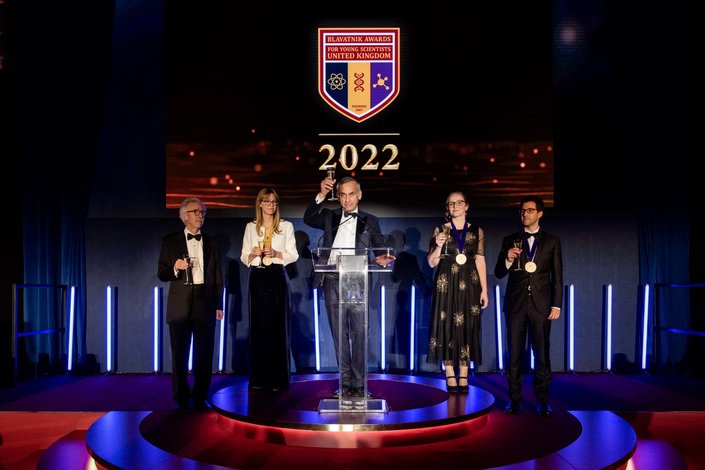
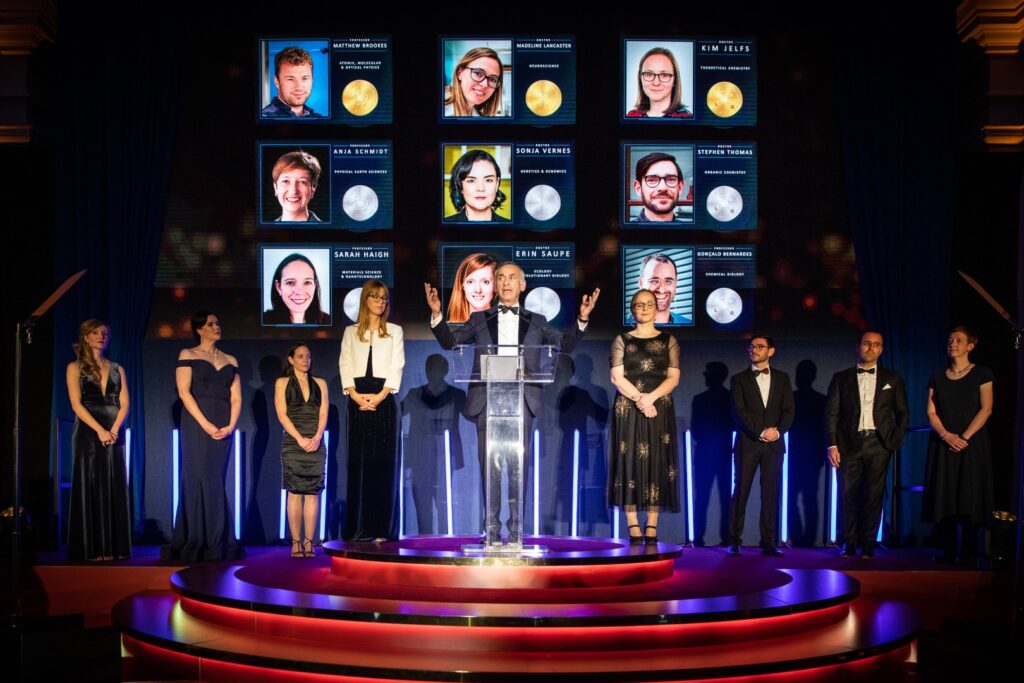
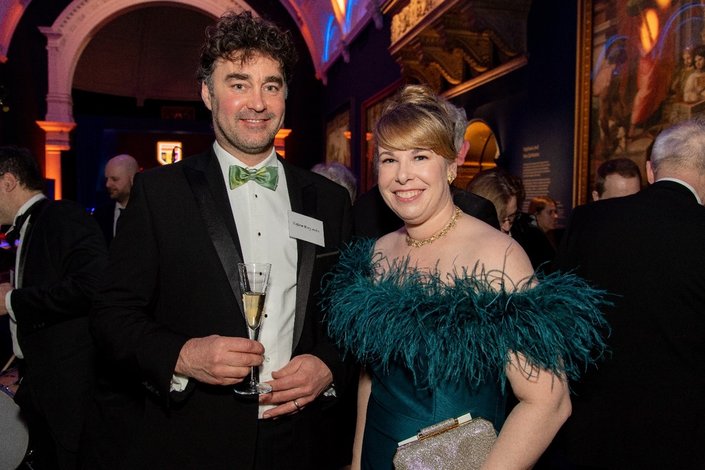
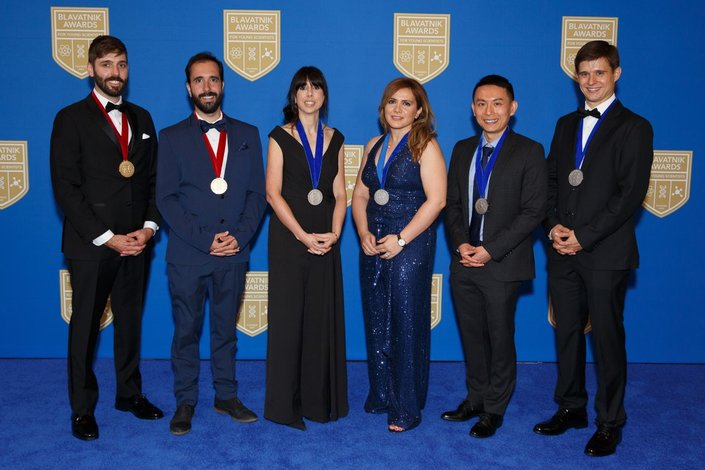
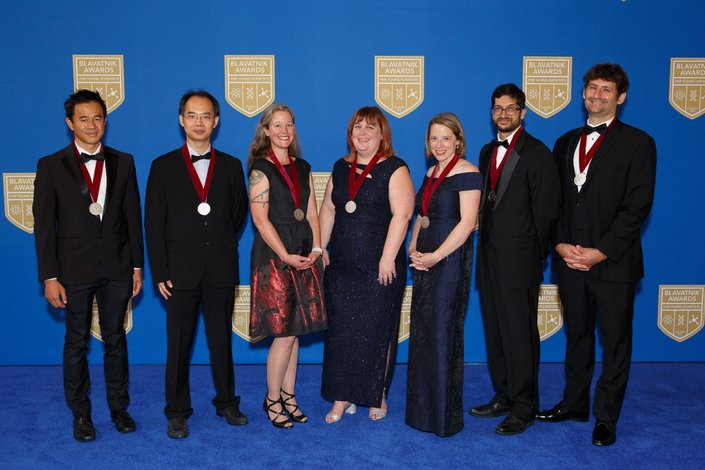
The Blavatnik Family Foundation and The New York Academy of Sciences hosted its fifth annual awards ceremony and gala dinner on February 28, 2022, to celebrate the nine honorees of the 2022 Blavatnik Awards for Young Scientists in the United Kingdom. After extensive museum renovations, the ceremony returned to the Raphael Gallery at London’s Victoria and Albert Museum, where the first two Blavatnik Awards in the UK ceremonies were held in 2018 and 2019.
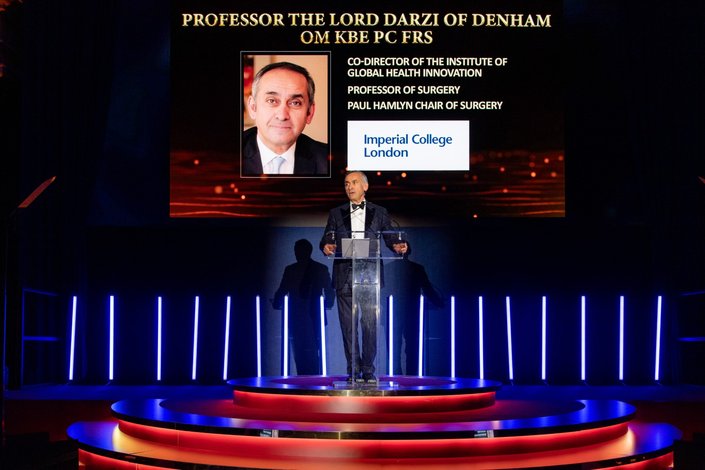
World-renowned surgeon, researcher, and leader of health care reform in the UK’s National Health Service, Professor the Lord Darzi of Denham, OM, KBE, PC, FRS served as the presenter for the ceremony. Lord Darzi is the Co-Director of the Institute of Global Health Innovation and the Paul Hamlyn Chair of Surgery at Imperial College London. 132 respected guests attended the 2022 ceremony comprising of leaders in British science, academia, business, and past Blavatnik Awards UK Laureates. Attendees included:
Nobel Laureates Professor John O’Keefe from University College London and Professor Didier Queloz from the University of Cambridge;
Breakthrough Prize Winners Professor Martin Hairer of Imperial College London, Emeritus Professor Michael B. Green from the University of Cambridge, and Professor Dame Jocelyn Bell Burnell from the University of Dundee;
Royal Medallist, Sir John Pendry;
President of the Royal Society of Chemistry, Professor Tom Welton;
Editor in Chief of Nature Magazine, Magdalena Skipper;
From the British Antarctic Survey, Professor Dame Jane Francis;
Author, philanthropist, and Professor of History, Peter Baldwin;
From the Campaign for Science and Engineering, Professor Sarah Main;
Former CEO of British Petroleum and the Past President of the Royal Academy of Engineering, Lord John Browne;
From the Victoria & Albert Museum Board of Trustees, Mr. Marc St John and from the Science Museum Board of Trustees Dame Mary Archer;
From the Foundation for Science and Technology, Mr. Gavin Costigan.
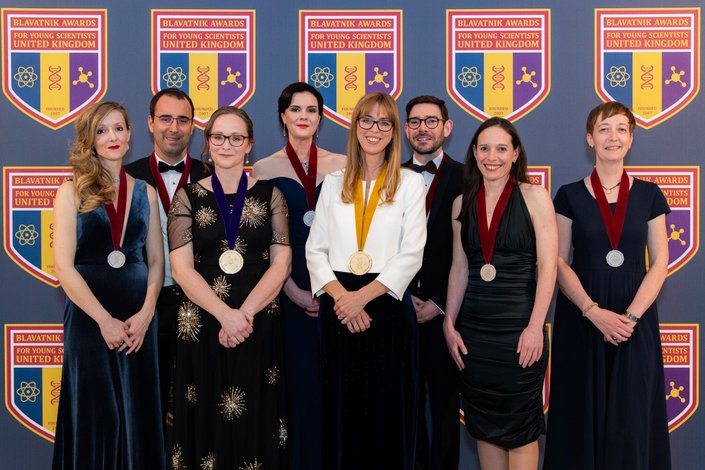
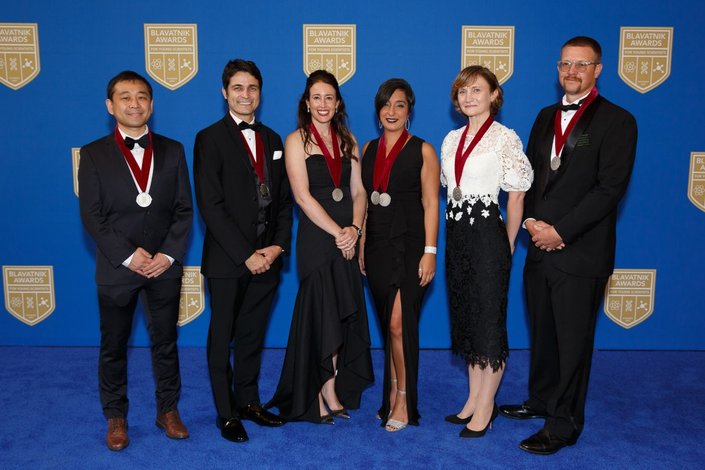
Honorees of the 2022 Blavatnik Awards for Young Scientists in the UK.
University leadership from the following institutions were represented: the Blavatnik School of Government at Oxford University, University of Cambridge, City University of London, King’s College London, University of Sussex, The Royal Veterinary College, Imperial College London, University College London, University of St Andrews, and University of Surrey.
During his opening remarks, Lord Darzi commented on the achievements of the 2022 Blavatnik Awards in the UK Laureates and Finalists: “Their accomplishments show we have the capacity to address many of the challenges we face as a global community if we have the imagination to develop new approaches, the drive to implement them, and the humility to pursue true collaborations. My message to you as the new generation of scientists working in a world in which progress depends increasingly on the convergence of knowledge bases is to continue to be bold, to be unafraid of leaving your comfort zones, to be ready and eager to cross boundaries, to bolster your self-confidence, and to do the right thing.”
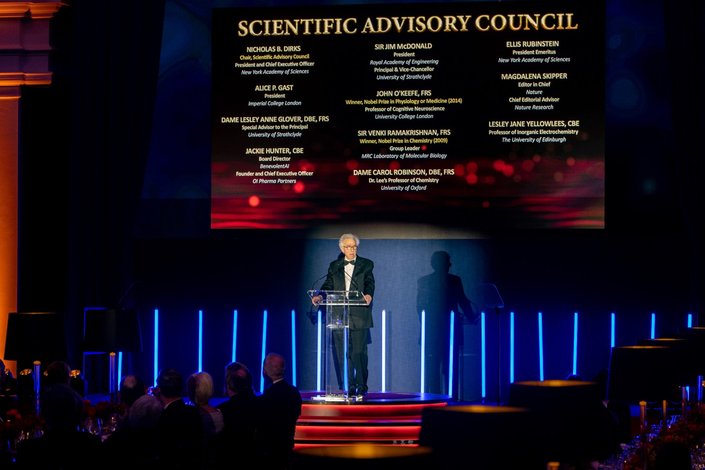
He concluded by introducing the President of The New York Academy of Sciences, Nicholas B. Dirks. Prof. Dirks spoke about the Academy’s privilege of being entrusted to administer the Blavatnik Awards on behalf of the Blavatnik Family Foundation. He said, “One of the characteristics of these awards is that they support the work of scientists who look beyond the walls of their labs, and beyond geographical boundaries, to solve global problems and improve life for us all.” Prof. Dirks also introduced the Awards Scientific Advisory Council and thanked the esteemed Awards jury.
Matthew Brookes, PhD (Physical Sciences & Engineering) – University of Nottingham
Kim Jelfs, PhD (Chemistry) – Imperial College London
Finalists
Erin Saupe, PhD (Life Sciences) – University of Oxford
Sonja Vernes, DPhil (Life Sciences) – University of St Andrews
Sarah Haigh, DPhil (Physical Sciences & Engineering) – The University of Manchester
Anja Schmidt, PhD (Physical Sciences & Engineering) – Nominated by University of Cambridge
Gonçalo Bernardes, DPhil (Chemistry) – University of Cambridge
Stephen Thomas, PhD (Chemistry) – The University of Edinburgh
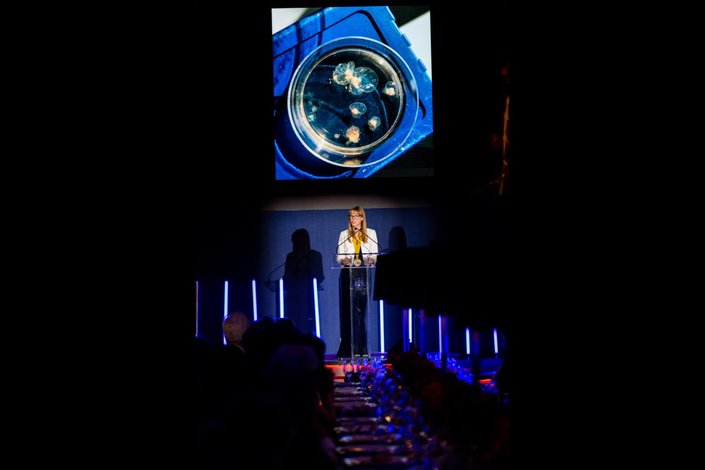
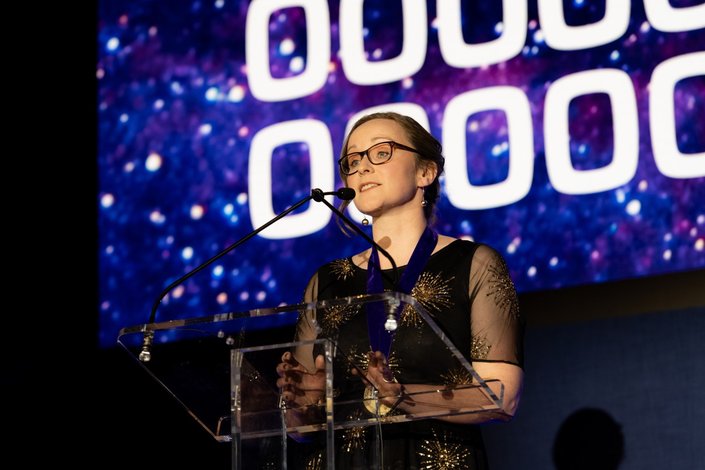
Lord Darzi introduced each of the Finalists and Laureates by each scientific category—Life Sciences, Physical Sciences & Engineering, and Chemistry. Prof. Dirks bestowed medals upon each honoree as they walked to the stage. Prize monies were increased this year across all honors—Finalists were each awarded £30,000, and each Laureate was awarded £100,000. Life Sciences Laureate Madeline Lancaster and Chemistry Laureate Kim Jelfs both gave short scientific talks after receiving their medals.
Physical Sciences & Engineering Laureate, Matthew Brookes, unable to attend, was honored in absentia. Brookes pre-recorded his scientific presentation which was played for the audience. 2021 Laureate in Chemistry, Prof. Daniele Leonori, nominated by the University of Manchester, and today at RWTH Aachen University in Germany, who was unable to attend the 2021 ceremony, received his 2021 Laureate medal on stage.
The ceremony concluded with the Blavatnik Awards tradition of making a “Toast to Science.” The following day, the honorees presented their award-winning research at the Blavatnik Awards public symposium entitled Discover, Design, and Diagnose: 9 Young Scientists Transforming Our World.
To learn more about the Blavatnik Awards for Young Scientists, visit blavatnikawards.org.
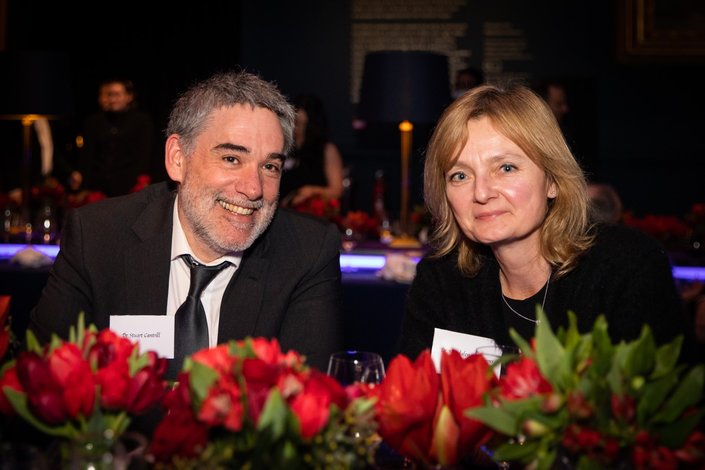
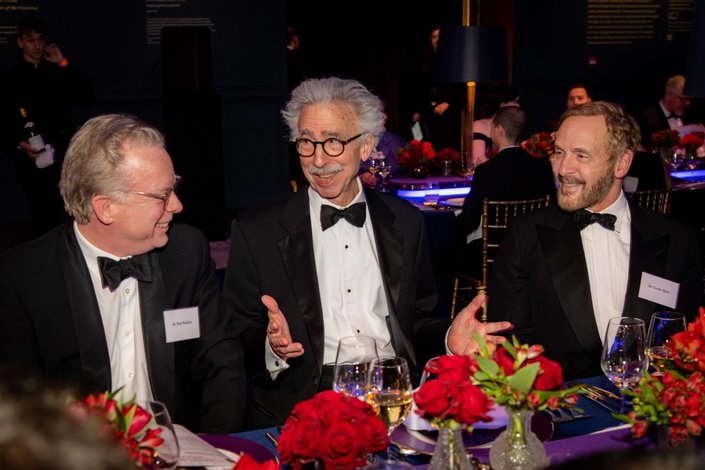
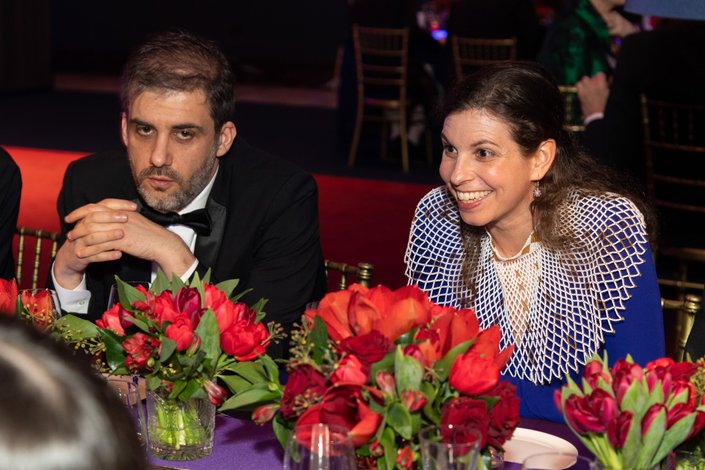
Dr. Madeline Lancaster.Prof. Henry Snaith and Dr. Brooke Grindlinger.Dr. Kim Jelfs.Prof. the Lord Darzi of Denham.2022 “Toast to Science”.Prof. Nicholas Dirks.Dr. Stuart Cantrill and Dr. Magdalena Skipper.From left: Prof. Peter Baldwin, Prof. Nicholas Dirks President and, Mr. Lincoln Benet.Prof. Konstantinos Nikolopoulos and Prof. Claudia de Rham.
The International Science Reserve, in coordination with The New York Academy of Sciences, is an ambitious future-proofing initiative for the public good.
Published April 14, 2022
By Nicholas B. Dirks
With its long history of championing science-based solutions to global challenges, the Academy is ideally situated to establish the International Science Reserve (ISR). The ISR will be a network of networks: of communities of experts across scientific disciplines, across sectors, and across borders. The Academy is building the ISR on the model of collaboration we have embodied throughout our 200+ year history as a trusted global convener of scientists across public, private, and academic domains. The ISR reaches across those domains to speed up research and solutions to help prepare for and then ameliorate the effects of complex global crises, such as a great earthquake, a water-borne pandemic, or a cyber-attack.
The goal of the ISR is to quickly connect scientists to scientific resources for faster and better crisis preparedness to help people and protect communities from further disaster. To do this, the ISR fosters collaborative networks and builds experience and expertise within those networks by rehearsing what would happen in a real crisis. These scenario-planning or readiness exercises will help scientists be well equipped in advance to respond to urgent challenges (as this video describes) that are not only possible but likely in future years. Filling an important gap in existing crisis response mechanisms, the ISR will not replace those mechanisms but strengthen them and make them more effective.
In working to prepare communities of scientists and scientific resource providers to respond to many crises, The ISR will be guided by our Executive Board. The ISR builds on the design of the High-Performance Computing Consortium (HPCC) whose work during the Covid-19 outbreak provided enormous and immediate benefits. The ISR expands that work by leveraging not just high computational resources but also specialized talent, labs, databases, and networks of researchers and institutions. It, therefore, relies on our communities of scientific experts, our relationships with industry, federal agencies, and global institutions, our ISR founding partners, as well as ISR members.
The ongoing pandemic and the range of responses around the world have shown us all the value of good preparation. In the scenario planning exercises that are a key step in pre-preparing the ISR science communities, different stakeholders can role-play what they would and could do in the event of a global crisis. The first ISR pilot exercises focus on wildfires, a phenomenon of increasing frequency and magnitude both in the United States and across the world, a direct result of climate change.
The success of the pilot will be measured by the extent to which we can test current wisdom about the resources that scientists need to help protect people and nature during wildfires and to set them up for faster and more equitable recovery afterwards. We can use the valuable information coming out of the wildfire pilot to keep improving processes to identify needed resources in advance, to match scientists to those resources, and to track the projects and lessons that result.
Indeed, science is a process and develops in real-time as we iterate in a constant improvement process, fine-tuning our systems of communication and collaboration. We expect to have the results of our pilot ready in mid-2022 and will announce our next ISR crisis focus areas soon after.
While we have just begun, we are satisfied to see strong indications that a wide range of people and partners are energized by the ISR’s ideas and ambition. We have in place an Executive Board, generous funding partners including IBM, Google, UL, and Pfizer, collaborators such as the National Science Foundation, and we have already recruited over 1,000 scientists into our engaged ISR community.
The wide range of responses we’ve seen to the COVID-19 pandemic, as well as the associated skepticism about scientific expertise, have shown a real need for science-informed leadership in the service of the public good – at both a national and global scale. The pandemic also revealed the need for a scientific appreciation of how existing disparities and inequalities will be worsened by these kinds of crises if public policy does not start by protecting the most vulnerable first. The ISR at The New York Academy of Sciences is stepping up to help drive evidence-based change.
It is only by heeding the hard lessons from the pandemic that the world can truly prepare to respond more effectively when the next global crisis comes. It is the Academy’s ambition for the ISR to strengthen response and recovery efforts to save lives, restore services, and offer hope for better outcomes in the future. The ultimate measure of our success is not the impact of the ISR on the scientific community. The measure of success is the impact on the lives of all people and the health of our planet.
The ISR’s executive board includes professionals from Google, IBM, Pfizer, UL, The Rockefeller Foundation, and NYU.
New York, NY | April 14, 2022 – The New York Academy of Sciences (NYAS) and its founding partners — including Google, IBM, Pfizer, and UL — today announced the official activation of the International Science Reserve (ISR). Recognizing that our world’s scientific capacity exists across borders, institutions, and sectors, the ISR brings together global scientists across government, academia, and industries to collaborate across geographies and sectors to prepare for and help mitigate potential global crises – from future pandemics to the consequences of climate change.
As part of its ongoing mission, the ISR will facilitate access to specialized scientific and technical resources around the world; conduct scenario planning readiness exercises to increase preparation and anticipation of global impacts, and convene scientists from a wide range of countries to build institutional memory in crisis management and response. This initiative builds on the success of the IBM-led High Performance Computing Consortium (HPCC), which was established in March 2020 in response to the COVID-19 pandemic.
At the helm of the organization is a newly created Executive Board with recognized science leaders from multiple sectors:
Nicholas Dirks, PhD, President and Chief Executive Officer, New York Academy of Sciences and Co-Chair, ISR Executive Board
Darío Gil, PhD, Senior Vice President and Director, IBM Research and Co-Chair, ISR Executive Board
Aida Habtezion, MD, MSc, FRCPC, AGAF, Senior Vice President, Chief Medical Officer, and Head of Worldwide Medical & Safety, Pfizer Inc.
Philip Nelson, Research Lead, Google
Robert Slone, PhD, Senior Vice President and Chief Scientist, UL
Rick Bright, PhD, CEO, Pandemic Prevention Institute and Senior Vice President, The Rockefeller Foundation
Lorna Thorpe, PhD, Professor and Director of the Division of Epidemiology, NYU Grossman School of Medicine in the Department of Population Health
The Board will conduct detailed research and analysis to advise on the nature and scope of the crisis area that the ISR will address. When a crisis of transnational scale and sufficient urgency occurs, the Executive Board mobilizes the ISR. Additionally, Mila Rosenthal, PhD, was recently announced as the Executive Director for the ISR.
“Science in the time of crisis is rapid, requiring quick decisions, on the basis of limited information,” says President and CEO of NYAS, Nicholas Dirks.“Scientists should and indeed must play a critical role in the development of effective strategies for responding to crises — from evaluating the multiple effects of different kinds of crises to providing possible solutions and directions for mitigation, immediate and short term as well as long term. We are creating a collaborative entity in the International Science Reserve that will help us to anticipate and prepare for what might be needed to respond to the next global crisis in the best possible way.”
“The world needs the International Science Reserve,” says IBM Senior Vice President and Director of IBM Research, Darío Gil. “Great crises have often been catalysts for institutional innovation in science and technology. The National Science Foundation and the U.S. National Laboratories were created after WWII. NASA and DARPA emerged during the Cold War. Our current crises demand that we innovate again, and this time, an international network of scientists spanning the private sector, academia, non-profits, and government, all united in a commitment to share expertise, prepare, and serve, is the right recipe to meet the needs of the world.”
“Pfizer applauds the creation of the International Science Reserve (ISR). The Covid-19 pandemic and climate change have demonstrated the urgent need for crisis-preparedness in the scientific community. We believe that the principles of “science without borders,” “pre-wired circuitry,” and open cross-collaboration will allow scientists to come together, provide innovative solutions and move “at the speed of science,” says Aida Habtezion, Senior Vice President,Chief Medical Officer and Head of Worldwide Medical & Safety, Pfizer Inc. “Pfizer has been at the forefront of the pandemic response, aligning with ISR’s focus on preparing and mobilizing scientists to augment existing response organizations in times of crisis. We are proud to be among the founding partners of this important initiative.”
“The work of the International Science Reserve aligns with UL’s mission of working for a safer world,” says Senior Vice President and Chief Scientist at UL, Robert Slone. “We believe that anticipating and planning for high-risk events such as wildfires, pandemics and electrical grid failures are key to responsible corporate citizenship.”
The structure of the ISR is flexible and able to adapt to needs before, during, and after a complex global crisis. To explore and plan responses to possible crisis scenarios, a widespread network of 1000+ scientists is engaged in the ISR community. In addition to the scientists, executive board and funders, the ISR is building a global network of collaborators and members to augment and accelerate crisis response.
For the first readiness exercise, the ISR has engaged scientists to address the increasing devastating wildfires around the world. Recently, a first-ever United Nations scientific assessment on wildfire risks concluded that crippling wildfires could grow by nearly 60% by the end of this century – largely due to consequences of climate change. In the last two decades, there has been a sharp increase in wildfire season length, wildfire frequency and acreage burned.
The network of scientists directly recruited by the ISR are well-equipped to rise to this challenge due to their deep expertise and knowledge around crisis resolution. As a first test of the operating model of the ISR, the ISR Readiness Exercises for its pilot crisis area, Wildfires, has begun, and the ISR team has been synthesizing findings which will be shared with the scientific community at a later date.
About The International Science Reserve
The International Science Reserve is an open network of scientists and scientific institutions, bringing together specialized technical resources for scientists to collaborate on preparing and responding to complex and urgent global crises. In transnational health emergencies and climate-related disasters, researchers in the ISR network will work together to help people and protect communities. Learn more about joining us: www.isr.nyas.org
In June 2020, we were all in one of the first waves of the still-ongoing COVID-19 pandemic, which had crippled our world. And back then, neither I nor anyone else could anticipate just how much damage and dread this disease would bring – and for many, feelings of uncertainty and nervousness about the future just wouldn’t go away.
But many of us were already thinking ahead. This crisis would eventually end, we assumed. But it most likely wouldn’t be the last one. In my conversations with leaders across governments and industries, there was a common thread from us all: we wanted the world to be ready for the next crisis ahead of time.
Today, this vision is becoming a reality with the International Science Reserve (ISR), powered by The New York Academy of Sciences with participation from IBM and other public and private sector leaders. This new organization intends to become a nimble network of academia, industry, and government, blurring geographical borders to collaboratively prepare for the next global emergency. Although ISR is at the very dawn of our journey – I am confident we will make a difference when the next crisis strikes.
Early at the start of the pandemic, our teams at IBM rapidly mobilized thousands of researchers to help fight the deadly virus. We weren’t working in a vacuum – a few months earlier, IBM, the White House, and the US Department of Energy had launched a new global body called the COVID-19 HPC Consortium. This organization rapidly expanded to include many partners from academia, industry, and US national labs, pooling together the world’s most powerful high-performance computing resources to offer to scientists fighting the disease.
Working together, the HPC Consortium (HPCC) was able to quickly aggregate and open unfettered access to the power of dozens of supercomputers to scientists searching for a vaccine or treatment against the virus. The success of the HPCC demonstrated the power of what’s possible when we break down borders and red tape to quickly collaborate and accelerate science in times when it’s needed most.
Ultimately, the HPCC delivered steady results thanks to the efforts of our members and the researchers worldwide using its computing resources. With partners including Google Cloud, IBM, Intel, Microsoft, Amazon Web Services, NASA, MIT, NSF, the Department of Energy’s national labs, as well as government and academic organizations from beyond the US, the Consortium has so far helped more than 100 research teams to come up with new treatments, better understand the spread of COVID-19, and much more. Every milestone has been a testament to the crucial importance of global collaboration – and for the establishment of a new, broader, organization that would go beyond computing and enable us to prepare for future catastrophes from multiple fronts.
Ready for “Known Unknowns”
At IBM, we soon began to think about how we could make this broader vision a reality. An organization… a global body… always ready for ‘known unknowns’ and large-scale emergencies we could anticipate and prepare for ahead of time… similar to a military reserve always ready to defend in case of war.
Our world needs a reserve of scientists, of experts in different fields that would always be ready to address any future global crisis. An organization with the bottom-up nature of the reserve concept, comprised of researchers using the power of the network to prepare for a new emergency.
We know that another pandemic is very likely, possibly with some new, unknown pathogen. That the world will continue to have more devastating wildfires and deadly earthquakes. Cyberattacks could take out infrastructure on a massive scale and asteroids could threaten the Earth. That such ongoing problems as antibiotic resistance and climate change could trigger a catastrophe at any time. And if we start preparing for the next crisis early – unlike with COVID-19, scrambling in haste and panic – then we will be much more likely to save lives.
Over the past year, IBM has been working with The New York Academy of Sciences (NYAS) to establish the International Science Reserve (ISR) to execute this vision. The ISR is still a very young organization, but we are gathering steam. We have a vision. Together with global talent from various scientific and technological fields, we will have an invaluable reserve of expertise – much-needed to tackle a future emergency.
Alondra Nelson and Nicholas Dirks discuss the priorities for the Biden-Harris Administration’s Office of Science and Technology Policy.
Published December 23, 2021
By Roger Torda
Alondra Nelson
Alondra Nelson, at The New York Academy of Sciences’ (the Academy’s) recent Annual Meeting, told an audience of Academy Members that science, like representative government, is always a work-in-progress. “There’s an interesting parallel between scientific research and democracy in the sense that they both are never quite realized, never quite finished, never quite perfected,” said Nelson, a sociologist who serves as the inaugural Deputy Director for Science and Society in the White House Office of Science and Technology Policy (OSTP). She recently joined Academy President Nicholas Dirks for a virtual discussion titled “Renewed Investment in STEM.”
Nelson is a Professor at the Institute for Advanced Study in Princeton, New Jersey. Nelson’s earlier positions include President of the Social Science Research Council, an international research nonprofit organization, professor of sociology at Columbia University, and Columbia’s dean of social science. She has an extensive record of research on issues at the intersection of science, technology, and society.
“I have always been interested in race and racism and social inequality,” she said in her conversation with Dirks. “I’m particularly interested in how new and emerging technologies impact, for good and for bad, vulnerable communities…So that really has, I think, forged the experience that I brought into public service, this conviction that science and technology are inherently social things, and that when they enter the world, they do social things, they do political things.”
The Promise of Science and Technology
Nelson’s PhD dissertation at New York University grew into her first book, Body and Soul, about the Black Panther Party’s health activism in the late 1960s, especially its use of newly-available genetic screening tests for sickle cell anemia. “This new technology allowed a social movement to do these tests in the park and in auditoriums,” Nelson said. “It was really a new technology, SICKLEDEX, introduced in 1968, that allowed all of these social possibilities to happen around it, and allowed what we would call today ‘patient advocacy’ around a genetic disease.”
In her second book, The Social Life of DNA, Nelson was one of the first social scientists to write about direct-to-consumer genetic testing. The approach reflected her interests in inequality, the empowerment of communities, and the way communities make use of new technologies. As she told Dirks, the book explores complex issues in genetic genealogy, including how African Americans who are descendants of slavery can “use these technologies to try to look back to the past and … complete genealogical stories about themselves and about their families.” She said these new technological and scientific points in history are opportunities to think about how science and technology can “make our lives safer, better, fairer, more just.”
The Interplay of Science and Community
Nelson suggests that an awareness of the interplay of science and community is historically necessary and especially important right now:
[T]he Biden-Harris administration [faced] … some pretty pronounced crises, all of which have something to do with science and technology…There was this-once-in-a-century pandemic that’s still raging all around us. We’re obviously in the middle of a climate emergency…There’s a complex set of national security threats…ransomware attacks and cyber security issues…and then issues around injustice and inequity throughout society. Health outcomes during the pandemic, educational outcomes, and sort of everything in between.
Later in the discussion, Nelson used a campaign slogan of President Biden’s to frame this critical moment: “What does it mean to do science, and science and technology policy, in a way that ‘builds back better’?”
The answer, Dr. Nelson suggests, includes the recognition that hard science alone cannot do the job:
“It was amazing that we had SARS-CoV-2 decoded, the genome, in less than a month. And wow, it was like earth shattering and incredible that we had in 313 days, 314 days, a viable vaccine…[yet] we’ve spent all of the rest of the time trying to get people to use it…So, it was clear that social science, social issues, thinking about inequality, was going to have to be a course. And we had the…incredible, tragic disparities around race, around ethnicity, and immigration status, with regard to rates of people perishing.”
Reframing How We Think About the World
Nelson pointed out that her boss, Eric Lander, is the first Director of OSTP whose work has been in the life sciences, and that this is helping focus the Office’s work on healthcare issues, including pandemic preparedness. Nelson also described the value of the administration’s proposed ARPA-H agency, designed to fund advanced research projects to improve healthcare capabilities and platforms. She said this approach can support research in maternal health, maternal mortality rates, and behavioral science.
Nelson and Lander are also tackling problems resulting from bias in artificial intelligence data sets that can lead to discrimination in housing, employment, and healthcare. They are calling on the public to submit information about biometric technologies that might support a new “AI Bill of Rights.”
Amid global challenges and crises, Nelson seems optimistic. She refers to President Biden’s belief that difficult moments can lead to “promise and possibility” rather than peril. And she said of her own goals: “I really want to challenge folks in industry, folks in academia, to think about upstream issues, and to think about equity and justice, and safety in science and technology, as a kind of ‘innovation’, and to reframe how we think about that word.”
Nicholas Dirks used the occasion of the Academy’s Annual Meeting to outline plans for the International Science Reserve (ISR), a collaboration with IBM and other stakeholders to mobilize scientific communities to respond to global crises.
Do you want to be part of this impactful network of scientists? Join the ISR today
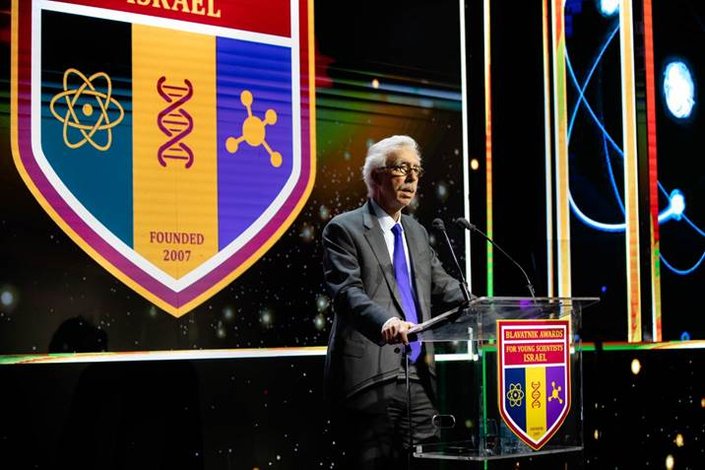
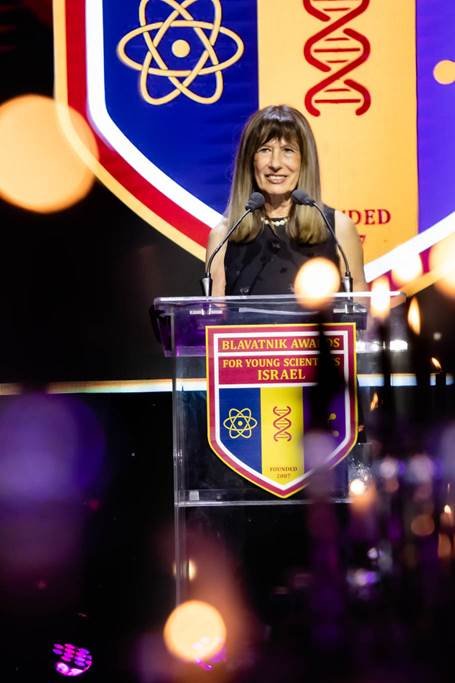
The Blavatnik Awards for Young Scientists in Israel is one of the largest prizes ever created for early-career researchers in Israel. Given annually to three outstanding, early-career faculty from Israeli universities in three categories—Life Sciences, Physical Sciences & Engineering, and Chemistry—the awards recognize extraordinary scientific achievements and promote excellence, originality, and innovation.
On August 2, 2021, the New York Academy of Sciences celebrated the 2020 and 2021 Laureates at the Israel Academy of Sciences and Humanities in Jerusalem, Israel. The multidisciplinary symposium, chaired by Israel Prize winners Adi Kimchi and Mordechai (Moti) Segev, featured a series of lectures on everything from a new class of RNA to self-assembling nanomaterials.
In this eBriefing, you’ll learn:
The secret life of bats, and how the brain shapes animal behavior
How genetic information in unchartered areas of the human genome—known as long noncoding RNA—could be used to develop treatments for cancer, brain injury, and epilepsy
Creative ways of generating light, X-rays, and other types of radiation for practical applications such as medical imaging and security scanners
The intricate choreography of protein assembly within cells, and how this dance may go awry in disease
Speakers
Yossi Yovel, PhD Tel Aviv University
Igor Ulitsky, PhD Weizmann Institute of Science
Emmanuel Levy, PhD Weizmann Institute of Science
Ido Kaminer, PhD Israel Institute of Technology
Life Sciences of Tomorrow
Speakers
Yossi Yovel, PhD Tel Aviv University
Igor Ulitsky, PhD Weizmann Institute of Science
From Bat Brains to Navigating Robots
Yossi Yovel, PhD, Tel Aviv University
In this presentation, Yossi Yovel describes his studies on bats and their use of echolocation to perceive and navigate through the world. To monitor bats behaving in their natural environment, he has developed miniaturized trackers—the smallest in the world—capable of simultaneously detecting location, ultrasonic sounds, movement, heart rate, brain activity, and body temperature changes.
By attaching these small sensors to many individual bats, Yovel is able to monitor large groups of free-flying bats—a task which would be almost impossible in other mammals. His current and future studies include applying bat echolocation theory to engineering acoustic control of autonomous vehicles.
Further Readings
Yovel
Moreno, K. R., Weinberg, M., Harten, L., Salinas Ramos, V. B., Herrera M, L. G., Czirják, G. Á., & Yovel, Y.
Igor Ulitsky outlines his investigation of the biology of a subtype of genetic material—long non-coding RNA (lncRNA)—an enigmatic class of RNA molecules. Similar to other classes of RNA molecules, lncRNAs are transcribed from DNA and have a single-strand structure; however, lncRNAs do not encode proteins. Even though non-coding regions of the genome comprise over 99% of our genetic material, little is actually known about how these regions function.
Ulitsky’s work has shown dynamic expression patterns across tissues and developmental stages, which appear to utilize diverse mechanisms of action that depend on their sub-cellular positions. These discoveries have unlocked the potential of using lncRNAs as both therapeutic agents and targets with promising leads for the treatment of diseases such as cancer, brain injury, and epilepsy.
Further Readings
Ulitsky
H. Hezroni, D. Koppstein, M.G. Schwartz, A. Avrutin, D.P. Bartel, I. Ulitsky.
Chemistry and Physical Sciences & Engineering of Tomorrow
Speakers
Emmanuel Levy, PhD Weizmann Institute of Science
Ido Kaminer, PhD Israel Institute of Technology
Playing LEGO with Proteins: Principles of Protein Assembly in Cells
Emmanuel Levy, PhD, Weizmann Institute of Science
In this presentation, Emmanuel Levy describes how defects in protein self-organization can lead to disease, and how protein self-organization can be exploited to create novel biomaterials. Levy has amassed a database of protein structural information that helps him to predict, browse, and curate the structural features—charged portions, hydrophobic and hydrophilic pockets, and point mutations—within a protein that govern the formation of quaternary structures. By combining this computational approach with experimental data Levy is able to uncover new mechanisms by which proteins operate within cells.
Further Readings
Levy
H. Garcia-Seisdedos, C. Empereur-Mot, N. Elad, E.D. Levy.
M. Meurer, Y. Duan, E. Sass, I. Kats, K. Herbst, B.C. Buchmuller, V. Dederer, F. Huber, D. Kirrmaier, M. Stefl, K. Van Laer, T.P. Dick, M.K. Lemberg, A. Khmelinskii, E.D. Levy, M. Knop.
Shining Light on the Quantum World with Ultrafast Electron Microscopy
Ido Kaminer, PhD, Israel Institute of Technology
Ido Kaminer discusses his research on light-matter interaction that spans a wide spectrum from fundamental physics to particle applications. Part of his presentation addressed the long-standing question in quantum theory over the predictability of motions quantum particles. He also demonstrated the first example of using free electrons to probe the motion of photons inside materials. Finally, he talked about the potential applications of tunable X-rays generated from the compact equipment in his lab, for biomedical imaging and other applications.
Further Readings
Kaminer
R. Dahan, S. Nehemia, M. Shentcis, et al., I. Kaminer.
“Again and again, science saves humanity with a combination of obstinate optimism and relentless realism.”
Published October 11, 2021
By Kamala Murthy
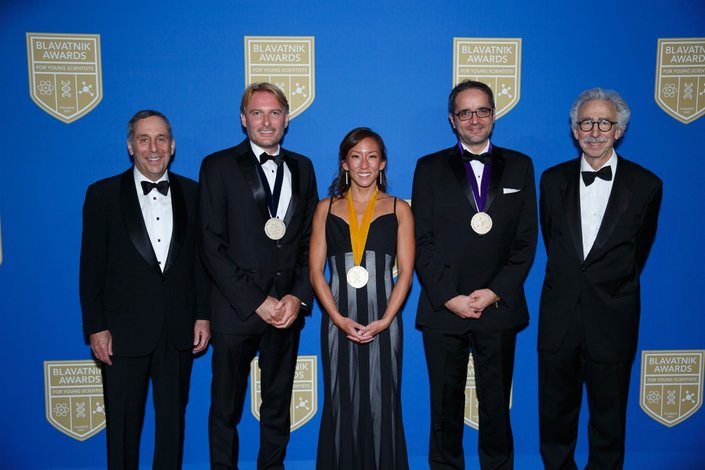
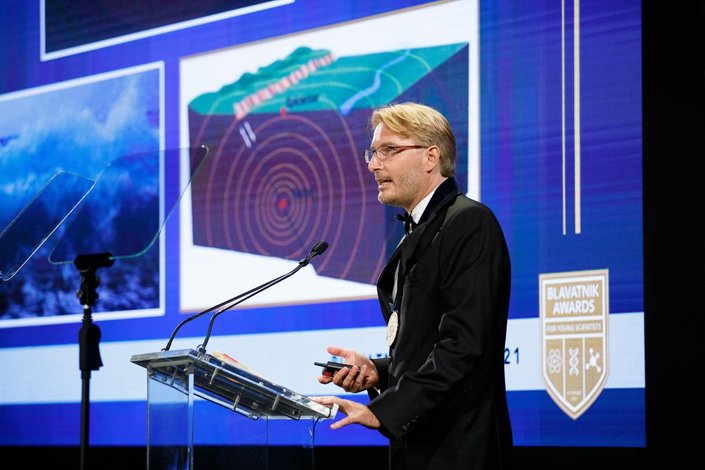
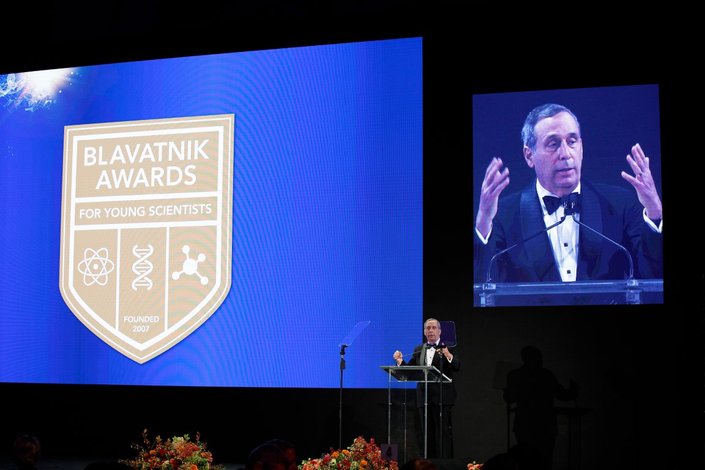
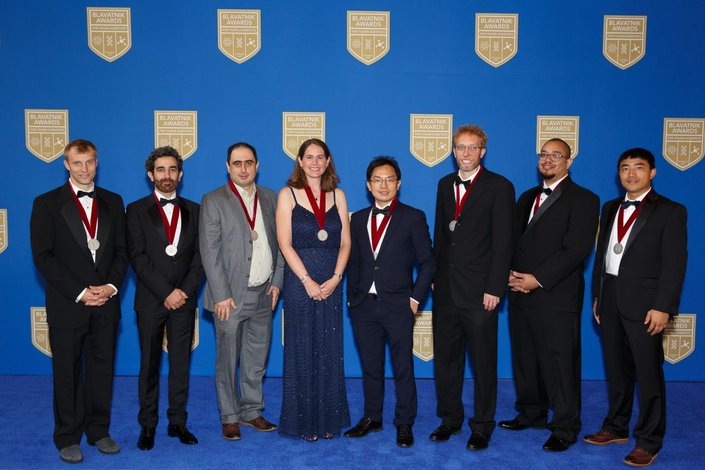
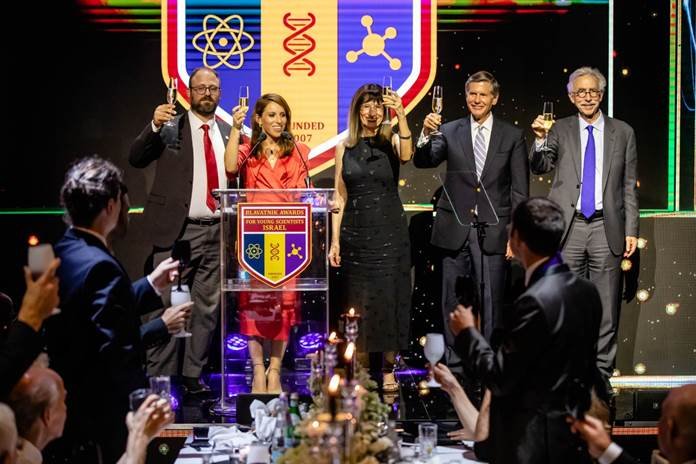
On Tuesday September 28, 2021, the Blavatnik Family Foundation hosted the seventh annual Blavatnik Awards for Young Scientists Ceremony at the American Museum of Natural History in New York City. This event honored the 2020 and 2021 Blavatnik National Awards Finalists and Laureates, along with the 2020 Blavatnik Regional Awards honorees, who are postdoctoral researchers in New York, New Jersey, and Connecticut. Some of New York’s leading figures in science, academia, and philanthropy attended, along with 138 guests. Larry Bacow, President of Harvard University, served as the Master of Ceremonies.
In reflecting on the past year and events related to the COVID pandemic, Bacow remarked “Science is a constant source of humility and an endless wellspring of achievement. This year—more than any other in my lifetime—has reminded me of that fact…Again and again, science saves humanity with a combination of obstinate optimism and relentless realism.” He concluded by introducing the President of The New York Academy of Sciences, Nicholas B. Dirks.
Prof. Dirks gave a brief history of The New York Academy of Sciences, the organization’s connection to the Blavatnik Awards and Len Blavatnik’s inspiration to create a unique science prize that honored scientists early in their career, where money and recognition could propel scientific achievement and innovation.
The Tri-State Area’s Most Talented Postdoctoral Scientists
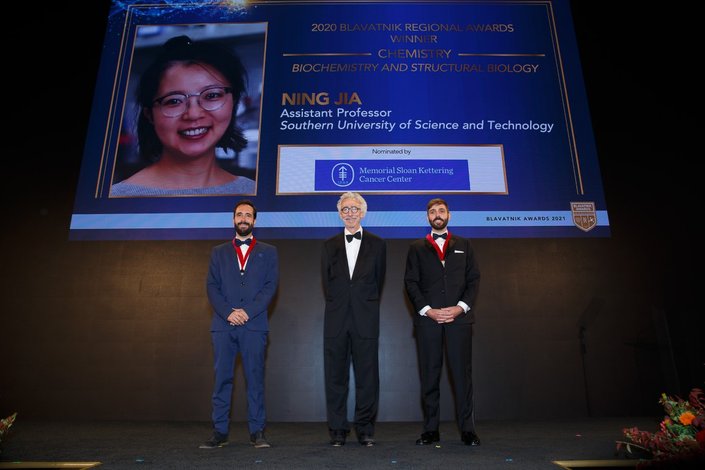
Prof. Dirks went on to introduce the nine 2020 Blavatnik Regional Awards Finalists and Winners, the Blavatnik Awards’ original prize honoring the Tri-state area’s most talented postdoctoral scientists. He introduced a film featuring the three 2020 Regional Winners, followed by the Winner’s receiving their medals on stage.
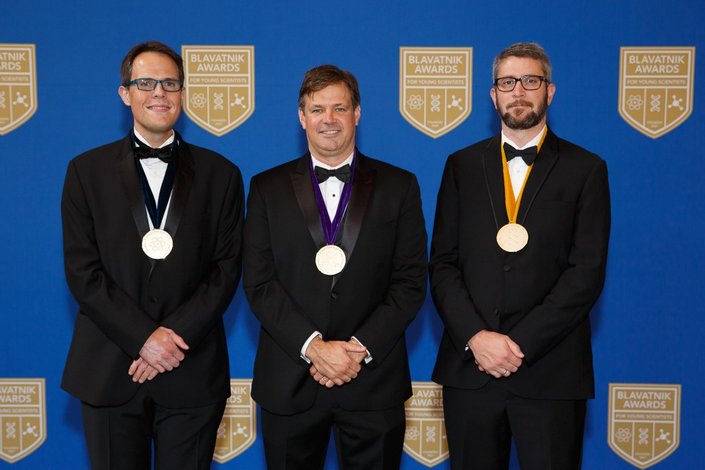
When the Master of Ceremony, Larry Bacow, returned to the stage, he announced on-stage the esteemed cohort of 2020 National Finalists and 2021 National Finalists in the awards categories of Life Sciences, Chemistry, and Physical Sciences & Engineering. The achievements of these incredible scientists were roundly lauded by the audience. A video highlighting the extraordinary work of the three 2020 Blavatnik National Awards Laureates, William R. Dichtel, Brian Metzger, and Cliff Brangwynne, was shown and each scientist was called to the stage to receive their medal.
Shortly afterwards, Bacow recognized the 2021 Blavatnik National Awards Laureates by introducing a film on each Laureate, followed by calling them to the stage to receive their medal by Prof. Dirks. Then each Laureate gave a scientific presentation at the podium.
Life Sciences
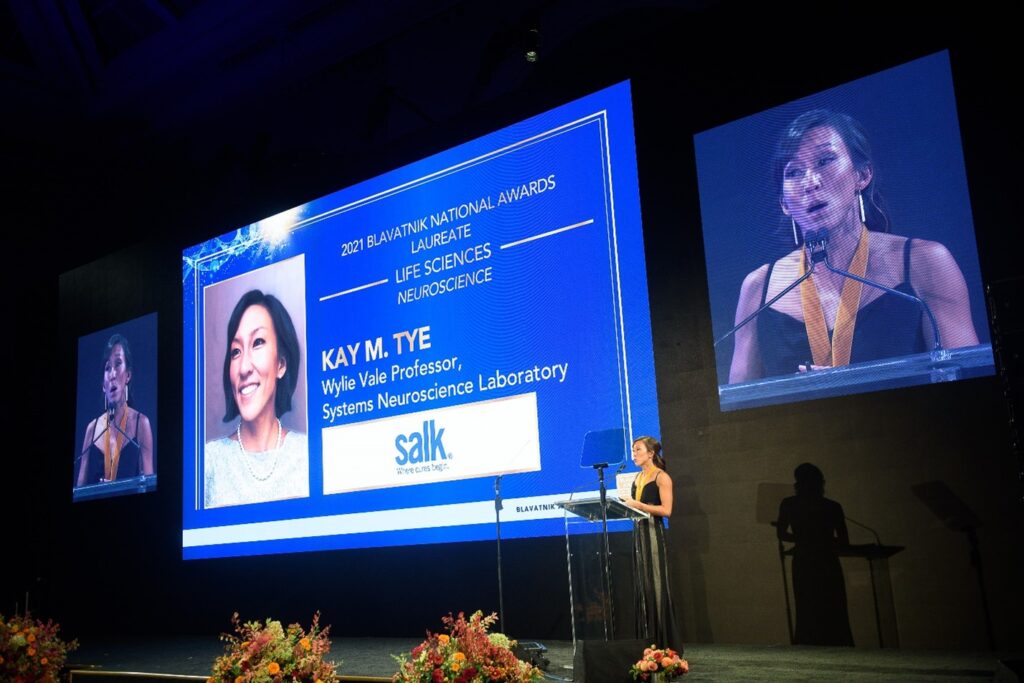
2021 Laureate in Life Sciences, Kay M. Tye from the Salk Institute of Biological Sciences spoke about her research focused on the neural circuitry driving emotions, cognition, addiction, and depression. She discussed how their team pivoted their research to study the effects of social isolation as a result of the COVID pandemic.
Chemistry
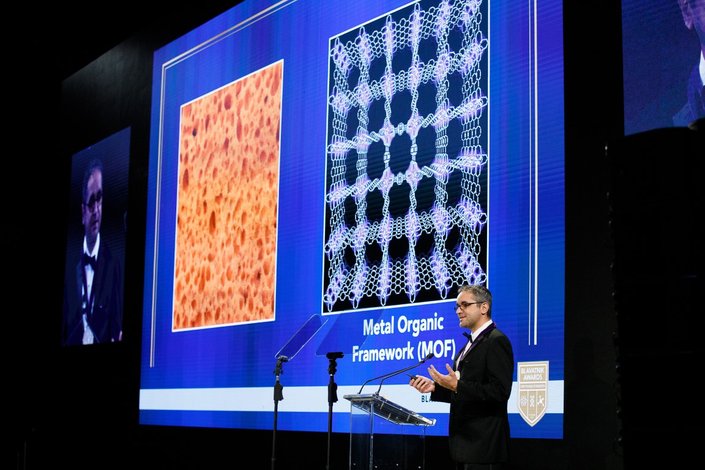
After receiving his medal, 2021 Laureate in Chemistry, Mircea Dincă from MIT, gave a talk on metal-organic frameworks (or MOFs) which he coined “sponges on steroids.” He discussed his discovery—conducting electricity through MOFs—and how these materials could be useful as supercapacitors for energy storage and new green technology systems; he also discussed his partnership with Lamborghini.
Physical Sciences & Engineering
Next, 2021 Laureate in Physical Sciences & Engineering, Andrea Alù from The City University of New York presented his latest research on nano-structured metamaterials which could lead to new, enhanced materials technologies that have applications in areas such as cellular communications, energy harvesting, radar cloaking, optical computing, and nano-optics.
The evening concluded with Bacow’s Toast to Science: “With deepest gratitude and affection to the Museum of Natural History, to The New York Academy of Sciences, to all of our inspiring Young Scientists and to the great institutions where they have found homes, to the whale and to everyone who’s walked this hall under its gaze in search of knowledge and wisdom…To Science!”
To learn more about the Blavatnik Awards for Young Scientists, visit blavatnikawards.org.
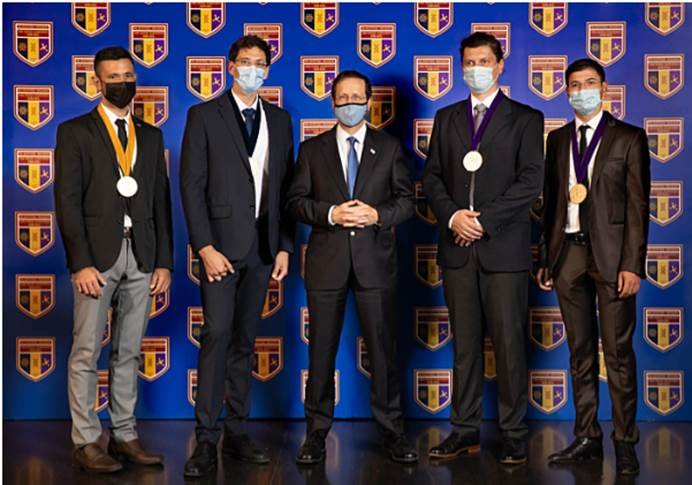
The honorees, listed below, were each awarded US$100,000:
Physical Sciences & Engineering
Prof. Ido Kaminer, Technion – Israel Institute of Technology, 2021 Laureate
Prof. Guy Rothblum, Weizmann Institute of Science, 2020 Laureate (in absentia)
Chemistry
Prof. Rafal Klajn, Weizmann Institute of Science, 2021 Laureate
Prof. Emmanuel Levy, Weizmann Institute of Science, 2020 Laureate
Life Sciences
Prof. Yossi Yovel, Tel Aviv University, 2021 Laureate
Prof. Igor Ulitsky, Weizmann Institute of Science, 2020 Laureate (in absentia).
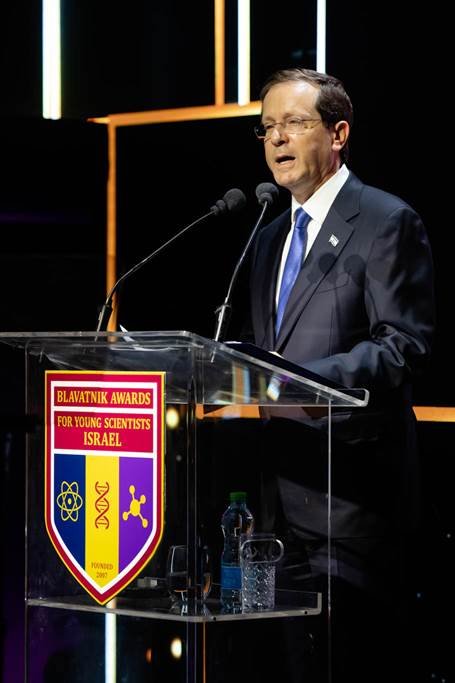
Israel’s newly-appointed President, Isaac Herzog, graced the ceremony with an appearance and a short speech. Herzog thanked Len Blavatnik for his philanthropy and support of scientific research, and praised scientists and their role in fighting COVID-19 in Israel, saying “Just as Pasteur’s experiments 150 years ago were the torch that illuminated the path to modern vaccines, the young scientists receiving the Blavatnik Awards tonight are illuminating the path to the future.”
Anchor of Israel TV’s Reshet 13, Dr. Hila Korach, served as Emcee. The President of the Israel Academy of Sciences and Humanities, Prof. Nili Cohen, gave opening remarks and introduced President Herzog. Afterward, The New York Academy of Sciences President and CEO, Nicholas B. Dirks, spoke about the importance of science to help humanity tackle the challenges ahead, and congratulated the Laureates.
Kfir Damari, Co-Founder of SpaceIL, was the keynote speaker and inspired the audience by sharing the story behind the inception of the Beresheet spacecraft and the creation of SpaceIL. Equally inspirational were Israeli Singer Marina Maximillian, youth performer Lia Schapira, and dancer Liron Ozery, who gave notable performances during the evening.
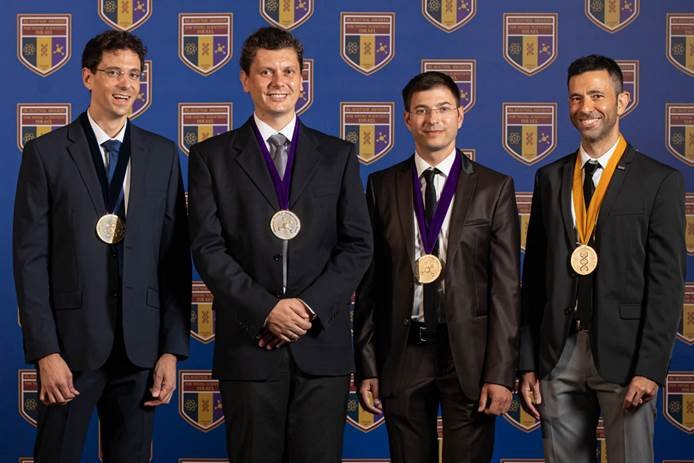
2020 and 2021 Laureates of the Blavatnik Awards in Israel. (L to R) Ido Kaminer, Rafal Klajn, Emmanuel Levy and Yossi Yovel.
VIP Guests at the event included:
Peter Thorén, Executive Vice President, Access Industries; Member of the Board of Governors, The New York Academy of Sciences
Avi Fischer, Chairman & CEO of Clal Industries
Uri Sivan, President of Technion – Israel Institute of Technology
Alon Chen, President of Weizmann Institute of Science
Ariel Porat, President of Tel Aviv University
Robert John Aumann, 2005 Nobel Laureate in Economics
Roger Kornberg, 2006 Nobel Laureate in Chemistry
Ambassador Neil Wigan, United Kingdom Ambassador to Israel
Ami Appelbaum, Chairman of Israel Innovation Authority;
Yulia Berkovich Shamalov, former Israeli politician
Ron Levkowitz, Chairman of First International Bank of Israel
To learn more about the Blavatnik Awards for Young Scientists, visit blavatnikawards.org.
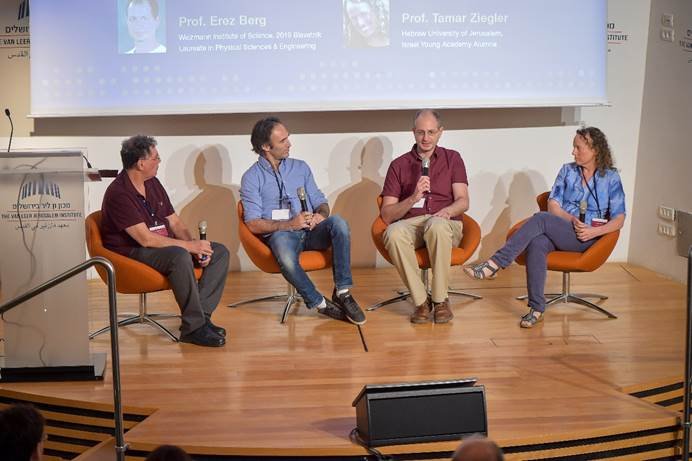
Israel President Isaac Herzog.The New York Academy of Sciences President, Prof. Nicholas B. Dirks.Israel Academy of Sciences and Humanities President Prof. Nili Cohen.The 2021 Toast to Science. From left: Kfir Damari, Hila Korach, Nili Cohen, Peter Thorén, and Nick Dirks.“Science of Tomorrow” Panel Discussion. (L to R) Moti Segev, Oded Rechavi, Erez Berg, Tamar Ziegler.Israeli Singer and Songwriter, Marina Maximillian and youth performer Lia Schapira.Full-scale model of the Beresheet Spacecraft built by SpaceIL, on display at the Ceremony reception.
In this pilot episode of the webinar series STEM Supremes: Conversations with Women in Science, the Academy’s Chief Scientific Officer, Dr. Brooke Grindlinger, interviewed the ‘queen of telomeres,’ Australian-American scientist Dr. Elizabeth Blackburn. Light years on from her early work sequencing the DNA of the pond scum protozoan Tetrahymena, Blackburn unraveled our understanding of the function of telomeres—the protective caps on the ends of chromosomes—and the role they play in aging and diseases such as cancer. She has pioneered a path for women scientists, and received the pinnacle of scientific achievement—the Nobel Prize—for unlocking secrets about how we age at a fundamental level. The conversation spanned Blackburn’s teenage fascinations with science, the anxieties of transitioning from student to independent investigator, cultural and gender barriers she navigated along the way, and what excites her on the horizon of aging research.
In this eBriefing, You’ll Learn:
How sleep quality, exercise, diet, and chronic stress impact the length of human telomeres and, in turn, our genetic heritage
Studies underway to understand the effect of severe stress on how individuals will respond, long-term, to COVID-19 vaccination
Tactics for managing the transition from PhD student to post-doctoral fellow, and from post-doc to junior faculty member
Tangible actions academic leaders can take to better support parents, particularly women, as they navigate the competing demands of family and a research career
Goals of the Lindau Declaration 2020 on Sustainable Cooperative Open Science
Moderator
Brooke Grindlinger, PhD The New York Academy of Sciences
In Conversation with Elizabeth Blackburn
Speaker
Elizabeth Blackburn University of California San Francisco
A full transcript of this conversation is available for download here.
Elizabeth Blackburn, PhD
University of California San Francisco
Dr. Blackburn earned her BSc and MSc degrees from the University of Melbourne, and her PhD from the University of Cambridge in England. She was a postdoctoral fellow in the Molecular and Cellular Biology Department at Yale University, and later joined the faculty at the University of California at Berkeley in the Department of Molecular Biology. She was Chair of the Department of Microbiology and Immunology at UC San Francisco, and later served as the first female president of the Salk Institute for Biological Sciences. Among her many career honors, Blackburn shared the 2009 Nobel Prize in Physiology or Medicine with collaborators Carol Greider and Jack Szostak for the discovery of how chromosomes are protected by telomeres and the enzyme telomerase. Blackburn is currently Professor Emerita, Biochemistry and Biophysics, UC San Francisco.
Brooke Grindlinger, PhD
New York Academy of Sciences
Read more about Dr. Grindlinger, the Academy’s Chief Scientific Officer, here.