The Key to Balancing a Research Career and Parenting

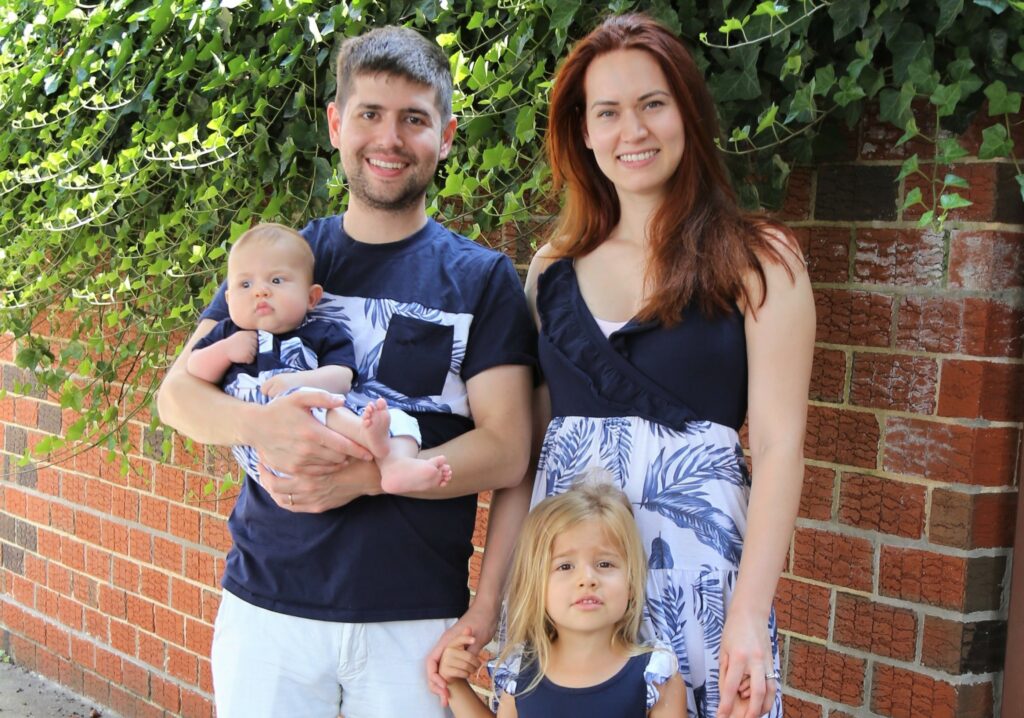
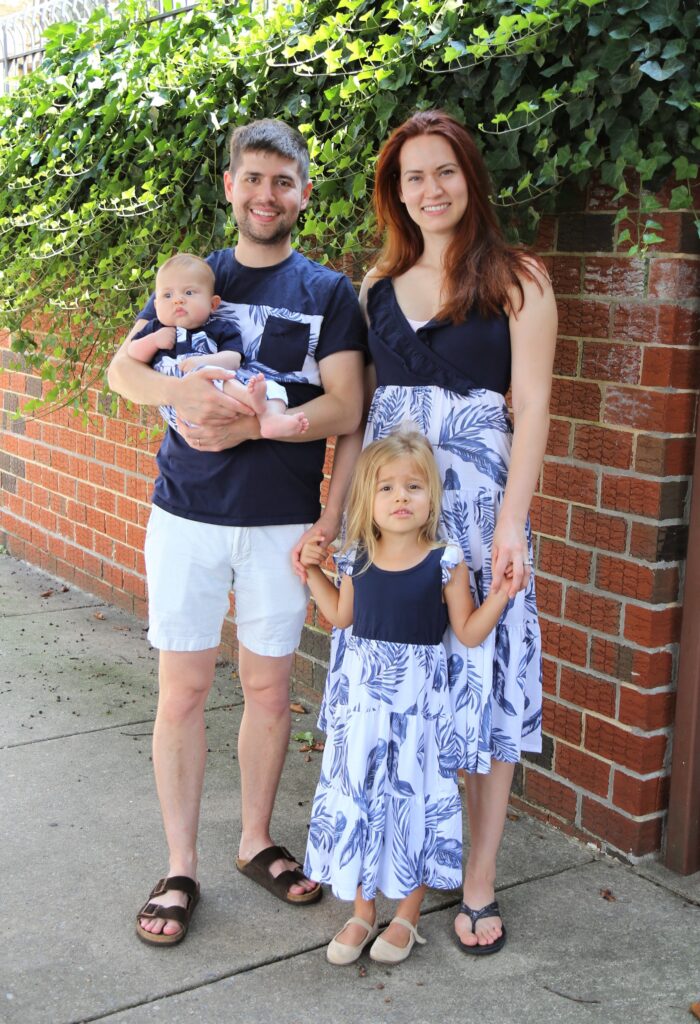
A family consisting of a man, women, toddler daughter, and newborn baby.

Much like being a parent, science never stops. Daniel Straus, 2021 Blavatnik Regional Awards Winner in Chemistry, provides insight on how to balance these two responsibilities.

Published September 23, 2021

By Daniel Straus

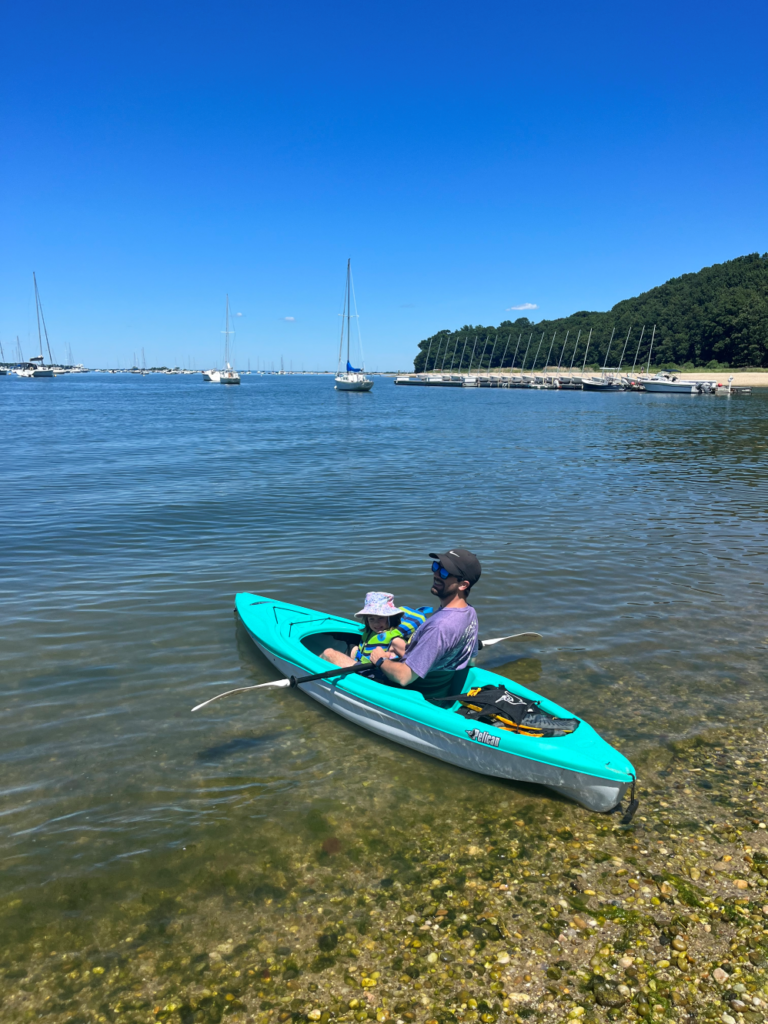
Daniel Straus with his family

Science never stops, for better or for worse. I am a competitive person. A constant fear of mine is being “scooped” by another lab, rendering months or years of research unpublishable for a lack of novelty. Taking time off work exacerbates this risk—people in other labs will keep working while I am not. This fear preoccupied me when I took time off after my first child was born.

When my daughter Elizabeth was born in 2016, I was a graduate student at the University of Pennsylvania. Graduate students at Penn are not considered employees, so I did not have access to the 12 weeks of protected unpaid leave under the Family and Medical Leave Act. I was fortunate that Penn offered eight paid weeks to graduate students after the birth of a child—paternity leave is often overlooked, and many graduate schools do not provide any paternity leave.

After Elizabeth was born, I took the first two weeks off to take care of her, bond with her, and support my wife. I then went back to work for ten more weeks while my wife stayed home with Elizabeth. Then, my wife returned to work, and I took the remaining six weeks of my leave. My productivity at work in the ten weeks I was back was poor and I don’t remember much of this time because I barely slept. I can only imagine how unproductive I would have been had I gone back to work immediately after her birth.

During the last six weeks of my leave I was more relaxed because I realized my time was much better spent with my daughter. There was nothing as spectacular as watching my child learn and do new things every day. Nothing can replace family—I enjoy my work and doing science, but I work to live and to support my family. The time spent at home did not impede my science anyway; rather, it helped me bond with my daughter and rest so that when I did go back to work full-time, I could maximize my productivity and not fall asleep at my desk.

Being a parent has improved my science. I have learned to be more productive in the time I spend in lab so I can spend as much time as possible with my family at home. I am much better at planning my days in lab in advance and also at saying “no” to non-essential things for which I do not have time, such as reviewing manuscripts during busy times.

My mentoring skills have also improved from being a parent. Elizabeth loves doing things herself—even as a one-year-old, she hated having things done for her. When I would try to buckle her into her highchair, for instance, she would scream “SELF” or “LIZZY DO IT.” She couldn’t buckle herself the first few times she tried, and she relented to letting me help after five minutes of struggling. But by trying so many times, she eventually figured out how to do it herself. No student has ever screamed “SELF” when I would “help” (they would probably say “interfere”) with something they were doing, so Elizabeth taught me that when someone is figuring out how to do something, many times the most helpful thing is to do nothing until asked.

Being a scientist has also improved my parenting. In the lab, I reason through questions on my own or with the help of my mentors—there usually isn’t an immediately correct answer because if there were, it would not be novel research. When Elizabeth asks me a question, being a scientist has taught me to first ask her, “what do you think?” so she can develop her own reasoning skills. Curiosity is better satisfied through discovery than through answers. She also loves science and likes to learn new things—her favorite YouTube channel is SciShow Kids, where she watches age-appropriate videos about topics in science, and after watching one she is so excited to share the new things she learned with me. Much of my postdoctoral work involves solving the crystal structures of materials, so when she saw me looking at a crystal structure on my laptop, she wanted to “do crystals” too because she thinks that I drag around a 3D model of a crystal structure all day at work (she’s not entirely wrong…).

My son Noah was born in April, and thankfully Princeton provides employees (including postdocs) 12 paid weeks of parental leave. Parenting is hard work, and people who are not parents may not understand this. While on parental leave, I received emails from multiple people saying, “I hope you’re enjoying your vacation.” Being with Noah is more exhausting than being in lab, but also more rewarding.  Science still never stops—I had to submit a manuscript revision while home to meet a deadline—but I am trying to enjoy every minute with Noah before going back to work full-time, because parenting never stops either.

This piece was originally published on the National Postdoctoral Association member blog as part of 2021 National Postdoc Appreciation Week. Current Academy Members can receive a 20% discount on a National Postdoctoral Association postdoc individual membership by emailing info@nyas.org and requesting the NPA membership discount code

Learn more about the 2021 Blavatnik Regional Awards for Young Scientists


About the Author

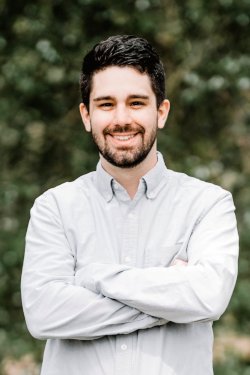
Daniel B. Straus is the Chemistry Winner of the 2021 Blavatnik Regional Awards for Young Scientists. You can learn more about him and the Blavatnik Awards at Blavatnikawards.org

The Exciting, Unchartered World of Nanomaterials

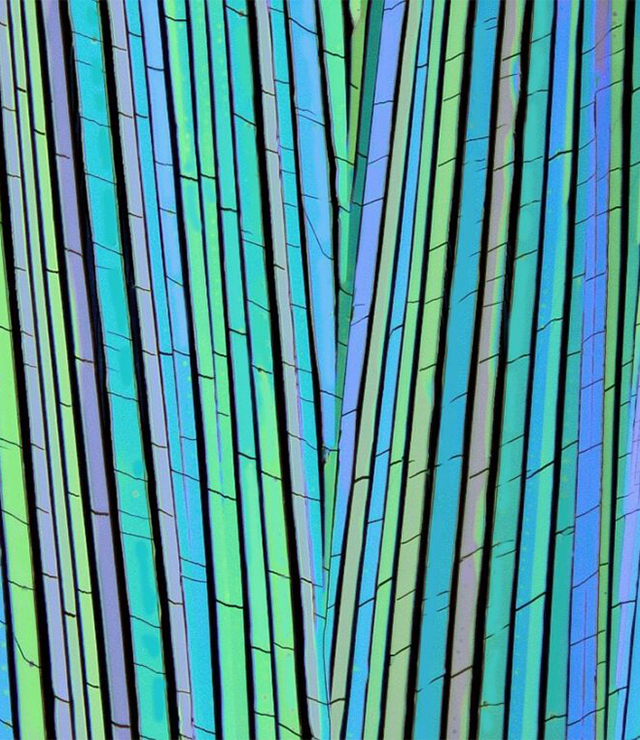
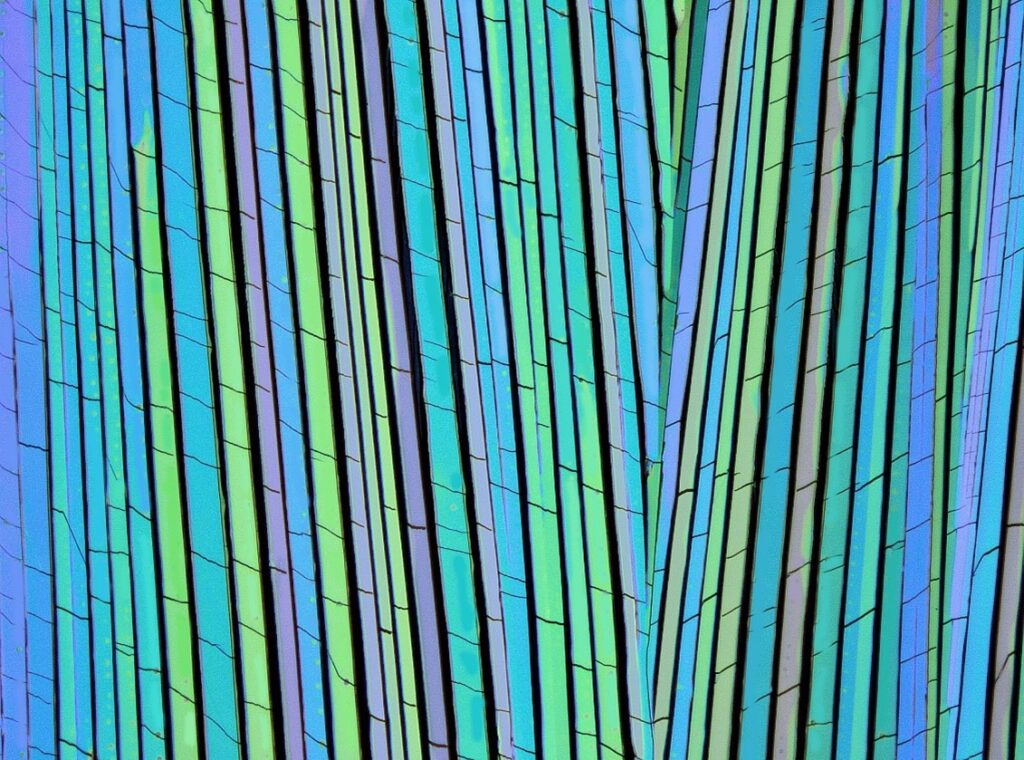
Crystalline nanomaterials viewed under a microscope.

Imagine if we could detect health problems before they become life-threatening.

Published June 04, 2021

By Benjamin Schroeder, PhD

Imagine if we could charge our cell phones by plugging them into our backpack, or if we could build a biocompatible probe that could interface with our cells and detect health problems before they become life-threatening.

Working at nanoscale, scientists are now capable of assembling molecules and atoms into structures that have exactly the desired properties they want a new material to possess. The prefix “nano” is used in the metric system to describe 10-9 parts of a whole, or 0.000000001—an exceedingly small number. But the term is also used to define an entire field of new and exciting research at a very, very, tiny scale.

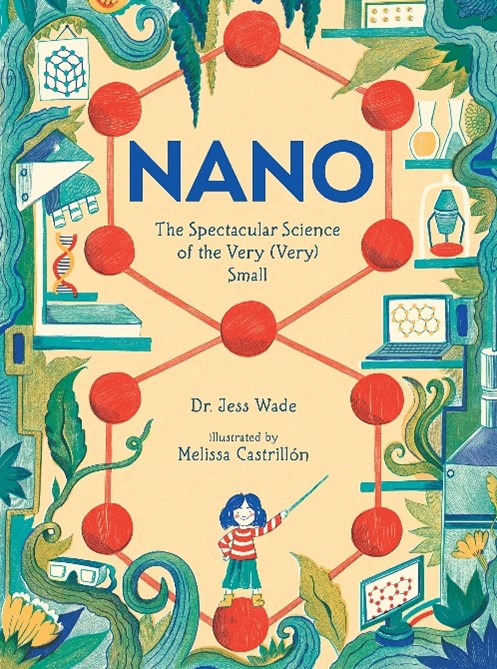
We recently interviewed Jess Wade, PhD, a Research Fellow at Imperial College London, about all things nano. Her research is focused on new materials for optoelectronic devices, with a particular emphasis on chiral organic semiconductors. She has also recently written a children’s book entitled Nano: The Spectacular Science of the Very (Very) Small,  illustrated by Melissa Castrillon and published by Candlewick.

This interview has been condensed and edited for clarity.

Many researchers in your field of materials science are drawing inspiration from nature to design new nanomaterials with novel shapes and functions. Why is that such an important consideration?

Because nature has been nailing this for a really long time. We look around and see naturally occurring structures that are super-strong, super-efficient, and in some cases capable of generating clean energy from the sun. I think we—as physicists, chemists, and materials scientists—can learn a lot from looking at natural, biological forms and trying to recreate their desirable properties in our labs.

Nature has evolved to be as efficient and streamlined as it can be, and we’re learning from that and applying it in areas like renewable energy and electronic display research. It is important for us to study those systems because nature has been getting it right for much longer than we have!

Crystalline nanomaterials viewed under a microscope. Photo Credit: Dr. Jess Wade

If nature has perfected processes like photosynthesis and cellular respiration, is it really possible to improve on nature’s design when creating new nanomaterials?

Molecules like proteins and peptides and similar compounds are essential in biological processes, but often have very strict operating requirements: they don’t behave normally when they get too hot or when they get very, very cold or when we put them in electromagnetic fields. So we can look at biological systems, examine what gives rise to their important properties, and ask, for example, “how can we design more resilient materials for technological purposes?”

I think even though nature has really perfected certain materials and processes, it has only really done so for a specific function.  We can still improve these natural materials by tailoring them to what we want.

In terms of discoveries that will potentially have a major influence on our daily lives, what are some of the breakthroughs in nano that you anticipate seeing in the next 15-20 years?

In 15-20 years more of us will have solar technologies that result from manipulation of the nanoscale properties of materials. For example, take materials like perovskites: hybrid organic/inorganic crystals that are incredibly efficient at generating electricity when they absorb light from the sun. Once scientists have optimized their nanostructures and fabrication protocols, perovskites will allow us to have flexible, integrated power supplies that can be incorporated into our clothing, our backpacks, and any surface that might be beneficial. I think there will also be a more concerted effort for scientists to work closely with designers to create wearable devices and other technologies that combine aesthetics with cutting-edge science.

You’ve just published a beautifully-illustrated children’s book entitled, Nano: The Spectacular Science of the Very (Very) Small.  What was your inspiration to write such a book, and can we expect to see additional children’s books from you covering different topics in science?

I find the science that you’re covering in the upcoming webinar “Finding Inspiration for Functional Nanomaterials from Nature,” and the nanoscience that I get to do in my day job extraordinarily exciting. Parents, students, and teachers don’t get quite as excited about it as they could because it’s not on their radar, and they get intimidated by jargon and buzzwords they do not really understand.

I wanted to write a book that young people read and then think, “chemistry is really cool! materials science is awesome! we can solve the global challenges by thinking from the atom up!,” but also a book that their parents read and think, “hey, maybe I was wrong to hate that so much when I was in school.”

I would absolutely love to create additional children’s books. There are a lot more areas of science that could have kid’s books. Dinosaurs are covered, space is covered, but there could be more and better coverage in physics and other areas, and I am excited about the possibilities.

Making STEM Education Accessible for All

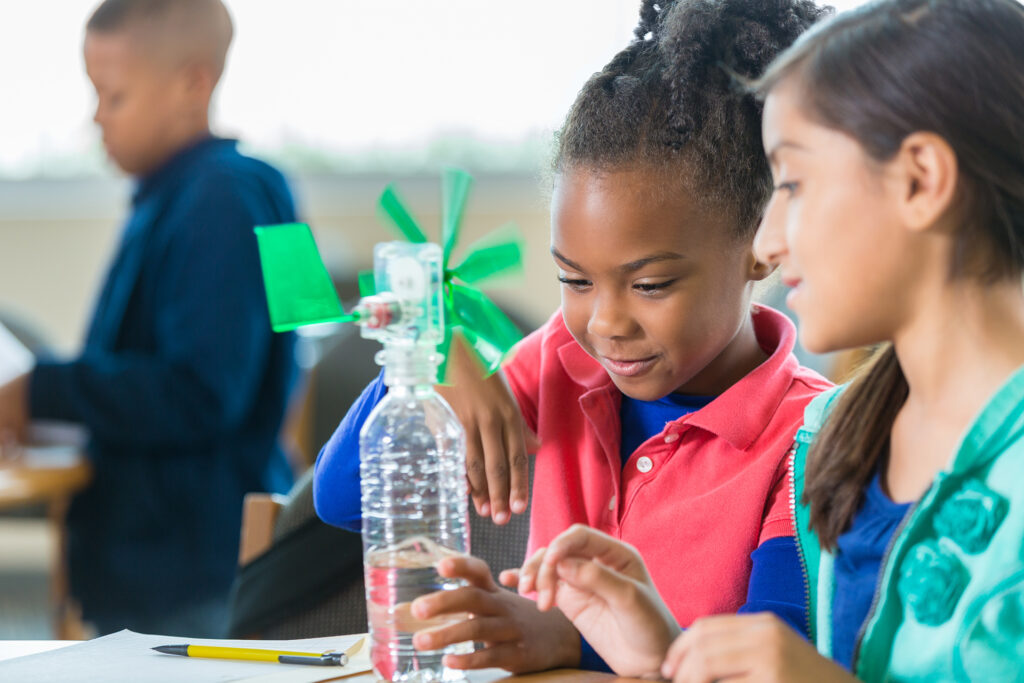
Two young students participate in a simple science experiment.

STEM education is more important than ever. In our ever-changing, technology-driven world, students must be equipped with the knowledge and skills afforded by STEM learning—problem solving, critical thinking, curiosity, and persistence, among many others. STEM expertise is also desperately needed to address the many challenges facing our world, particularly those identified by the UN Sustainable Development Goals. Yet in many places throughout the world—in developed and developing countries alike—students lack access to meaningful STEM learning.

On February 23, 2021, The New York Academy of Sciences hosted a discussion between Chief Learning Officer Hank Nourse and Mmantsetsa Marope, Executive Director of the World Heritage Group. They explored the impacts of STEM education on individual, national, and global development.

In this eBriefing, you will learn:

  • What high-quality STEM education looks like
  • How STEM learning benefits individuals
  • The importance of STEM education to national and global development
  • How we might ensure equitable access to STEM learning, particularly in the face of growing inequities exacerbated by the COVID-19 pandemic

Advancing STEM Education for All

Speakers

Mmantsetsa Marope
World Heritage Group

Hank Nourse
The New York Academy of Sciences

Mmantsetsa Marope, PhD
World Heritage Group

Mmantsetsa Marope is widely regarded as a thought leader on education, the future of education and work, and learning systems capable of preparing students for rapidly changing and unpredictable futures. She is Executive Director of the World Heritage Group, an organization dedicated to building resilient, agile, and future-forward education systems. She is Honorary President of the Indian Ocean Comparative and International Education Societies and Lead Global Advisor for China’s Education and Innovation for Development EXPO.

Prior to founding the World Heritage Group, Dr. Marope spent four decades in the civil service and the nonprofit sectors, including senior roles at the World Bank and, most recently, UNESCO, where she served as Director of the International Bureau of Education. Dr. Marope holds a PhD in education from the University of Chicago, an MEd from Penn State University, and BA and CDE degrees from the University of Botswana and Swaziland.

Hank Nourse
The New York Academy of Sciences

Hank Nourse leads the Academy’s Global STEM Alliance (GSA), a bold initiative to advance science, technology, engineering, and mathematics education worldwide. With hundreds of partners, and reaching participants in over 100 countries, the GSA directly engages tens of thousands of students and teachers annually, providing mentorship, skill building, and professional development spanning K-12 and higher education.

Prior to joining the Academy in 2015, Hank spent more than 15 years developing online learning and assessment programs for the K–12 market, primarily at Scholastic, a global children’s publishing and media company. He holds a Master’s degree in International Educational Development from Teachers College, Columbia University, and a Bachelor’s degree from Gonzaga University.

Avoiding Bias and Conflict of Interest in Science

A dramtically lit gold justice scale backlit an a dark background - 3D render

“[C]onflict of interest is about more than money….it can come from political pressures and ideological pressures.”

Published February 18, 2021

By Melanie Brickman Borchard, PhD, MSc

Arthur Caplan, PhD
Professor, NYU Grossman School of Medicine

Arthur Caplan, PhD, says scientists, physicians, and their employers, must be on guard to ensure that quality research and good patient care remain front-and-center in a healthcare system rife with rewards for bias. Dr. Caplan is a professor of medical ethics at the NYU Grossman School of Medicine. He advises presidents, government agencies, patient groups, and international organizations on bioethics.

He is a prolific researcher and author. We spoke with Dr. Caplan recently, and he shared five things doctors and medical researchers should keep in mind to help guard against bias in their work.

1) Demand transparency and be transparent.

As an employer or administrator, there are steps you can take to guard against bias in members of your staff. You can reward behavior that reduces opportunities for conflicts of interest.

There are a number of things we can do to manage conflict of interest. One is to demand transparency. Make sure that people tell us what their jobs are, what their responsibilities are, so you can assess whether they’re overworked or not doing enough of what they’re supposed to be doing. Many schools require those disclosures. Some prohibit taking a second job, some don’t let doctors moonlight, because they think it makes them too tired or it distracts them from their primary responsibilities.

In other situations, you can simply rule out certain relationships and say, ‘look, if you have a relationship with a company or a startup, and you think you’re making a useful medicine or vaccine, then you shouldn’t study whether it works or not. Farm that out to a third party.’ The process will be more independent and objective. If possible, you shouldn’t study what you own.

2) Recognize that transparency about ties to industry is important, now more than ever.

You can’t do anything with vaccines unless you’re talking to industry. They have the manufacturing capabilities. Plus, most of the basic science gets done in areas like vaccines with industry support, not through public or academic grants, or the work of academic institutions. So, in some sectors, there is no escaping the industry tie. You have to be transparent about that. You have to teach people how to manage that. You have to make sure that scientists and doctors understand they are going to be evaluated on the legitimacy of their work, not telling happy news to their funders. I think also we need more oversight. There should be more systematic review and challenging questioning by administrators, for more accountability. And you’ve got to beef up peer review. It is your best weapon against subtle, unconscious bias or deliberately fudging things to make them look good for increasing your salary or enhancing equity.

3) And speaking about peer review…. strengthening it must be a priority.

We need to bolster peer review. Peer review is getting weak. People don’t spend enough time teaching junior academics how to do it. The amount of resources and reward that come from doing peer review is somewhere between non-existent and nothing. But peer review is biomedicine and science’s best protection in looking at whether studies, evidence and information can be trusted. But if it’s just done pro forma, or people pass it off to ill prepared, overworked graduate students, or no one actually rewards you in terms of promotion for getting involved with it, then the best protection we have to verify evidence and verify that claims being made are true, is weakened significantly. And I do worry that the peer review system is not doing the job anymore to control for bias because it’s under-resourced.

4) Be cognizant of small favors, and factors other than money. As a doctor or scientist, don’t kid yourself about susceptibility to bias resulting from small incentives. And be aware that conflict is not always about money.

You have situations where doctors are prescribing medicine, and they say, ‘well, I prescribe the best medicine. I don’t believe that just because people take me to lunch, I’m going to start prescribing their medicine.’ But in fact, study after study shows that, subtly, small gifts, free lunches, free gas, and tickets to sporting or cultural events, have influence that really drive behavior. So, we may deny that small gifts can influence us, but time and again, psychology and behavioral science proves that they do.

Also, conflict of interest is about more than money. I know we ‘follow the money’ in thinking about conflict of interest and we tend to see people saying, ‘well, it’s money that generates conflict of interest problems.’ But I think it can come from other forces, too. I think it can come from political pressures and ideological pressures. I think we can see conflicts generated in the drive to succeed, the drive to be first, the drive for fame and honors. These things can create conflicts, too. So, in managing conflict of interest, it isn’t just figuring out where the money’s going, although that’s probably 85% of it. There are other forces we need to pay attention to as well.

5) Help the public understand how science works, with better science communication and with better teaching.

I think people will be more alert for conflicts of interest if they understand how science works. They won’t necessarily just say, ‘okay, I trust what you were telling me.’ They may want to get more than one opinion. They may want to go to more independent and trustworthy sources, and not just accept the views of somebody who’s trying to sell them a particular potion or nostrum.

There needs to be more effort made in the medical and scientific communities to train people to be communicators, and if you are good at it, you should be encouraged and make that part of your career. And we’ve got to get better science teaching into our schools. We need elementary and secondary school teachers who can communicate effectively about science. The public is not going to make good decisions about how to weigh opinion and evidence if we don’t have good communicators in the classroom.


Read more about Dr. Caplan’s work: The Need to Accelerate Therapeutic Development: Must Randomized Controlled Trials Give Way?

Fostering Diversity and Inclusion in STEM

Overview

Diverse top leaders and problem-solvers are critical to fostering and accelerating creativity and innovation in STEM. This diversity is impossible unless we invest in making the STEM workforce more inclusive for women and those from underrepresented populations.

To achieve this, we need to promote diversity at all stages of the STEM pipeline and increase the number of people participating in scientific endeavors, inside and outside academia, as well as those who will help address the most pressing challenges of the 21st century.

This panel discussion, presented by the New York Academy of Sciences and Hudson River Park, features diverse STEM experts as they discuss their career paths and the importance of supporting diversity in the STEM workforce.

In this eBriefing, You’ll Learn:

  • The traditional and non-traditional routes panelists took into STEM and the nature of their work
  • The importance of mentorship and how to best leverage these relationships throughout your career
  • How individuals, especially people of color and members of other minority groups, can find and cultivate supportive communities
  • Why conversations about diversity and inclusion are meaningful in STEM
  • How both individuals and large organizations can address systemic inequality to create work environments where everyone can succeed

Speakers

Moderator:

Wanjiku “Wawa” Gatheru
Environmental Justice Advocate, Writer, and Rhodes Scholar

Mandë Holford, PhD
Hunter College/AMNH/Killer Snails, LLC

Ronald E. Hunter, Jr, PhD
Mérieux NutriSciences

Megan Lung
NYS DEC Hudson River Estuary Program & NEIWPCC

Tepring Piquado, PhD
RAND Corporation

Diversity and Inclusion in STEM: Leveraging Your Network and Skills

Wanjiku “Wawa” Gatheru

Wanjiku “Wawa” Gatheru is a 21-year-old environmental justice advocate passionate about creating a more inclusive environmental movement. As an emerging climate writer, she has bylines in VICE News and Glamour magazine. Wawa is also the first Black person in history to receive the Rhodes, Truman, and Udall Scholarships.

Megan Lung

NYS DEC Hudson River Estuary Program & NEIWPCC

Megan Lung is an Environmental Analyst at NEIWPCC serving the The New York State Department of Environmental Conservation Hudson River Estuary Program in stream restoration. Megan coordinates the Culvert Prioritization Project, which seeks to restore stream habitat for migratory fishes and reduce localized flooding through field work, community engagement, and implementation.

Megan hails from the Great Lakes of Michigan and earned a BS in History and Ecology and Evolutionary Biology from the University of Michigan.

Ronald E. Hunter, Jr, PhD

Mérieux NutriSciences 

Dr. Ronald E. Hunter, Jr. is the Technical Director of Chemistry for North America at Mérieux NutriSciences. In this role, he directs quality control and technical functions of chemistry labs throughout North America to ensure performance meets corporate standards. Previously, Dr. Hunter was a scientist at The Coca-Cola Company, where he served as a subject-matter expert in beverage analyses, method development, and mass spectrometry.  He has over ten years of experience as an analytical chemist in the public, private, and academic sectors.

Dr. Hunter holds BAs in chemistry and Spanish from Mercer University and a PhD in analytical chemistry from Emory University.

Tepring Piquado, PhD

RAND Corporation

Dr. Piquado is a senior policy researcher at RAND Corporation, professor at Pardee RAND Graduate School, chief policy director at California Issues Forum, and CEO of The TMP Group.  Through her work, she leads complex, multi-site and multi-disciplinary projects to provide evidence-based guidance to federal, state and local decision-makers; provides advisory guidance and analysis on active bills and major issues being considered by state legislators; and works with institutional leaders to provide outcome-based solutions that advance diversity, equity, and inclusion.

Dr. Piquado earned her MS and PhD in neuroscience from Brandeis University and BS in computer science from Georgetown University.

Mandë Holford, PhD

Hunter College/AMNH/Killer Snails, LLC

Dr. Mandë Holford is an Associate Professor in Chemistry at Hunter College and CUNY-Graduate Center.  Her laboratory investigates the power of venom to transform lives when it is adapted to create novel therapeutics for treating human diseases and disorders. Dr. Holford is also actively involved in science education, advancing the public understanding of science, and science diplomacy. She is co-founder of KillerSnails.com, an award-winning EdTech company that uses tabletop, digital, and XR games about extreme creatures in nature to advance scientific learning in K-12 classrooms.

Dr. Holford received her PhD in Synthetic Protein Chemistry from The Rockefeller University.

Resources

Gibbs K Jr.

Diversity in STEM: What It Is and Why It Matters

Scientific American. 2014 Sept 10.

Forrester N.

Diversity in science: next steps for research group leaders

Nature. 2020 Sep 23;585: S65-S67.

Urbina-Blanco CA, Jilani SZ, Speight IR, et al.

A diverse view of science to catalyse change

Nat Chem. 2020 Sep;12(9):773-776.

Empowering Girls in STEM, Improving Futures for All

An engineering from Google gives a presentation.

The New York Academy of Sciences empowers young women to pursue STEM-related careers.

Published November 10, 2020

By Roger Torda

The New York Academy of Sciences and its Global STEM Alliance partners want to grow the STEM pipeline, and engage and retain more young women in STEM-related careers. Our programs connect motivated, enthusiastic female mentors with smart, STEM-focused high school girls from around the world to help them develop essential 21st century skills.

In this video meet some of the amazing girls in the 1000 Girls, 1000 Futures program committed to a future in STEM.

NYC Teacher Brings STEM to Her Social Studies Class

A woman poses for the camera with NYC's Brooklyn Bridge in the background.

Servena Narine, who teaches at a New York City public school in Brooklyn, uses science, technology, engineering, and math (STEM) skills to help her elementary school students master their social studies curriculum.

Published November 2, 2020

By Roger Torda

This summer, Narine used time made available because of the COVID-19 shutdown to take The New York Academy of Sciences’ online course STEM Education in the 21st Century. During the eight-week course, she designed a curriculum for fourth-grade students. One of the units called for students to use data analytics in creating an infographic to “tell a story about the effects of immigration on New York City’s industrial growth in the 1900s.”

The Seven Essential STEM Skills

Servena Narine outside her classroom at PS 307 in Brooklyn

“It was a course where we incorporated seven essential STEM skills into our teaching,” Narine said in a recent phone interview. “I think sometimes as teachers we do that naturally, but through the course I was able to more deeply integrate the STEM skills into my lesson plans.”

Narine was referring to seven skills Identified by the Academy’s STEM Education Framework. critical thinking, problem solving, creativity, communication, collaboration, data literacy, and digital literacy and computer science. These skills form the foundation of the course.

“The Academy developed its Framework back in 2016 as a research-based tool that can be used to ensure students receive high-quality STEM learning,” said Chris Link, the Academy’s Director of Education. “Our online course coaches teachers on strategies they can use to help their students build critical 21st-century skills.”

“Eight years ago, my school became a magnet school for STEM studies,” Narine explained, referring to PS 307, which serves pre-K through fifth grade in the Vinegar Hill neighborhood of Brooklyn. “I’m always looking to learn more about what it means to be a STEM school, and what it means to integrate the principles of STEM into the classroom. When I saw that this course was available, and that it was free, and that I had time on my hands because everyone was self-isolating because of COVID-19, I jumped right into it.”

Continuing Teacher and Leader Education

Narine was one of 100 New York City teachers enrolled in the course through the sponsorship of Medidata, which has supported several Academy STEM programs. Narine and other teachers who completed the course received 30 Continuing Teacher and Leader Education (CTLE) credits required by New York State to maintain certification.

“I loved that the course was asynchronous, so I could set a schedule for myself,” Narine said. “The participants, the other teachers, all reviewed each others’ work, and offered feedback. That was a great benefit. And I loved that for each of the seven skills there was an expert in the field who was able to share information.

Narine’s course not only incorporated STEM skills, but aligned closely with the state’s Passport to Social Studies curriculum. To develop critical thinking skills, one of her units calls on students to analyze documents from the Colonial and Revolutionary War periods. A unit on problem solving asks students to develop solutions to clashes between Native Americans and colonists.

Cross-Interdisciplinary Skills for Students

A unit on the geography of New York calls for creativity in designing maps to promote tourist destinations. Yet another unit is designed to promote collaboration skills as teams make a game to test knowledge of material covered in earlier units. These cross-disciplinary skills serve students in their social studies classes, their STEM classes, and beyond.

“The curriculum asks students to look at Native Americans as the first inhabitants of New York State,” Narine said, explaining how she started thinking about a unit that would focus on communication skills, another area of focus in the Academy’s online course.

“I remember thinking that we’d be learning about Native Americans in the region around the time we’d be celebrating Thanksgiving,” she continued. “And I thought it would be nice to have the children create a public service announcement to give thanks to Native Americans for the contributions they have made to New York State and to our society, rather than the other way around, where we pretty much look at the European influence and teach that it is because of the Europeans that we have Thanksgiving. I said, ‘Let’s turn it around and say thank you to the first inhabitants of New York for their contributions.’”

Building Bridges in the Humanities and Sciences

Academy President and CEO Nicholas Dirks smiles for the camera.

To understand how Nicholas B. Dirks is leading The New York Academy of Sciences, it may be helpful to learn more about three of his passions: the liberal arts, interdisciplinary studies, and southern India.

Published May 28, 2020

By Roger Torda

Nicholas Dirks is a historian, anthropologist and accomplished university administrator. To understand the arc of his career—and how he will lead The New York Academy of Sciences—it may be helpful to understand three of his passions: the liberal arts, interdisciplinary studies, and southern India. The southern India story begins when Dirks was quite young.

A Magical Year

Dirks’ father, then a professor at the Yale Divinity School, took his family to South India in 1963, when Nicholas was a young boy. J. Edward Dirks had received a Fulbright grant to teach at a college in Chennai, then known as Madras, and the experience came at an impressionable time for his young son.

“I read a lot as a kid,” Dirks recalled in a recent interview. “And here all of a sudden, it was almost as if a book opened up, and the pages that I was reading felt alive and real in a way that nothing really had quite done before.”

This is the way Dirks put it in an introduction to a collection of his essays:

“I had no way of knowing I was going to miss out on the emergence of the Beatles, though I had the usual concerns about leaving my junior high school friends and the eighth grade. But I was excited by the prospect of adventure… and, as it turned out, the year was magical. The college campus did have acres of jungle, and there were peacocks, cobras, and leopard cats, much to my mother’s horror. I attended school in a khaki uniform; studied the south Indian drum, the mridangam… and learned how to negotiate the extremely efficient bus system of the city of Madras.”

Dirks would go back to India many times throughout his life, and he anchored much of his scholarship there.

Wesleyan University

Back in the U.S. with his family after a year, Dirks was influenced by visiting speakers at church services at Yale, and by the University’s chaplain, William Sloan Coffin, a prominent supporter of the Civil Rights movement and critic of the war in Vietnam. In high school, Dirks devoured books on philosophy and the social sciences assigned by an influential teacher, who also recommended that Dirks apply to Wesleyan University. Wesleyan famously was open to diverse interests and liberal studies, and Dirks was sold when he discovered Wesleyan had a group of South Indian musicians and a program in ethnomusicology; he could study mridangam —the south Indian drum—there.

Dirks arrived at Wesleyan’s campus in Middletown, CT in the fall of 1968. He could not help but be influenced by all the unrest around the war in Vietnam, which was at its peak:

“Initially I thought I was going to major in philosophy, because I was interested in ideas. I think a combination of my experience in India and the war in Vietnam led me increasingly, however, to think that I needed to study Asia…. It was important to me personally, and it was also important to all of us politically. And I felt I needed to understand not so much Asia’s philosophy and religion, but instead, its history and politics and economics.”

Dirks majored in Asian and African Studies. For a senior thesis, he traveled back to the state of Tamil Nadu, and learned to speak Tamil in the city of Madurai. It was a difficult six months, amid crowds and poverty, but Dirks was writing about Gandhi and the anti-caste movement in southern India, and became very interested in connections between all this and the Civil Rights movement back home. Dirks decided to study the history of southern India in graduate school, and he applied to the University of Chicago.

The University of Chicago

When Dirks arrived in Chicago in 1972, he came to a university that had built a major South Asian studies program, with faculty from across the full range of the humanities and social sciences. Dirks took good advantage of the opportunity: “You could do just about anything in this kind of area studies program.  You could study ideas, literature, social change, economics, or the role of science in society.  Area studies drew on multiple disciplines and tapped into some of the most central concerns of top thinkers at the university.”

The University of Chicago was also an important center for cultural anthropology, and Dirks found anthropology helped him in “trying to come to grips with how to study India from the point of view of an American by birth and upbringing.”  Dirks was also drawn to the types of questions anthropologists were asking, especially about cultural relativism:

“It seemed to me that anthropology was taking on some of the big questions of the time…. What is the nature of cultural difference? Are fundamental beliefs—in terms of judgement, in terms of fundamental common sense and orientation toward the world—determined by culture?  Or are they determined by biology? Are there universal laws that allow you to understand “difference” in all of its complexity? These were not issues at the time that historians were thinking about a great deal. But it was very much part of the milieu of the anthropology group there.”

Dirks continued: “The interdisciplinary mix of these first years of professional scholarship not only built on the interdisciplinary base of my undergraduate days but also launched a lifelong conversation in my own work, teaching, and thought about the relationships among history, anthropology, and critical theory.”

For his dissertation topic, Dirks turned to the social, political, and economic relationships within the “little kingdoms” of southern India, regions of varying size ruled by local chiefs dating back to the thirteenth century. Dirks used historical approaches, with archival research in London, New Delhi, and in the small city of Pudukkottai. Dirks then spent a year in Pudukkottai, the former capital of one of the “little kingdoms,” doing the kind of field study that is at the heart of cultural anthropology.

As he was writing his dissertation, Dirks gained teaching experience at a small, nearby college, and then, at 27, headed west to Pasadena when he was offered his first fulltime job.

California Institute of Technology

In 1978, Dirks began what would be eight years at Caltech. He taught Introduction to Asian Civilization, a distribution course. He made another trip to India to research his first book, The Hollow Crown, a study of Pudukkottai using approaches from both ethnography and history. And Dirks also got to know accomplished scholars in the hard sciences.

“They had this wonderful, storied, faculty club called The Athenaeum,” Dirks recalled. “And they had these round tables that facilitated random seating. The idea was that you would go and meet faculty outside of your department or division. And it turned out that a number of the senior scientists were the ones most interested in talking to a young faculty member who had just arrived to teach courses in humanities and the social sciences.”

To Dirks, these seemed like Renaissance figures, interested in everything. The group included Max Delbrück, a Nobel Laureate who was a pioneer in the study of molecular genetics. He got to know Richard Feynman, the colorful Nobel Laureate in theoretical physics. “And I got to know Murray Gell-Mann, the inventor of the quark, because he had a great interest in Indian philosophy,” Dirks recalled. “And you know, it was world opening, eye opening in every way, to be there with somebody who invented the quark who wanted to ask you about some esoteric eleventh century Indian philosopher.”

Dirks said he started seeing connections between the hard sciences and his own fields of study. “You know, until I went to Caltech, I thought that in academia, one went into science and engineering, or you went into humanities and social science,” Dirks said. “And so for me, being at Caltech was, in effect, an opportunity to live across the two cultures.”

The conversations at the round tables, Dirks said, mirrored in some ways what he experienced in India. The hard sciences were strange and familiar at the same time. Strange because they were built on foundations of knowledge he never studied.  “But they were also familiar because some of the core questions that people were asking were things I was interested in as well,” Dirks continued, adding:

“And anthropology was an interesting point of connection, because you began with discussions, for example, concerning the debate between nature and culture, of relevance to science as well as social science.  But you were also attuned to debates about different world views.  And it was an easy move from there to ask questions about the meaning of the universe, and then, say, to cosmology.  Astrophysicists were naturally drawn to questions that bridged science and philosophy.  And, as we talked about a wide range of subjects, we all realized that even the ways we use metaphors to understand the world are similar, whether you’re thinking in terms of history or whether you’re thinking in terms of natural laws.”

The University of Michigan

From Caltech, Dirks moved to the University of Michigan, where he would have graduate students for the first time. He assumed a joint appointment in the history and anthropology departments and, with a colleague, built an interdepartmental PhD program in both disciplines. It was a good time to start a program formalizing a relationship between the two fields.

Many historians at the time were de-emphasizing politics and intellectual history, focusing instead on social and cultural phenomena, perspectives that aligned with touchpoints in cultural anthropology. And scholars in anthropology were placing more emphasis on political and economic forces, the traditional frameworks of historical research.

Columbia University

The historical turn in anthropology, in addition to Dirks’ work in founding the interdepartmental PhD program at Michigan, led to an offer in 1997 to chair the oldest department of anthropology in the country, at Columbia University.

Dirks broadened the department, recruiting new faculty from Asia and Africa, and supported research in colonial and postcolonial studies, increasingly popular areas of focus at the time.  And in 2001, Dirks published his second book, Castes of Mind, in which he demonstrated the extent to which the caste system had changed under British colonial rule, and was changing still as it became the social base of many postcolonial political movements.  The book won several major awards and is still widely taught in graduate curricula in the U.S. and India.

Earlier, at the University of Michigan, Dirks started honing administrative skills, having discovered that bridging the anthropology and history departments would require that he drive institutional change. In 2004, at Columbia, Dirks stepped into administration full time, giving him opportunities to promote interdisciplinary study across all of the liberal arts and sciences. He became Vice President (later, Executive Vice President) of the Arts and Sciences and Dean of the Faculty.

In his new roles at Columbia, Dirks oversaw 6 schools, 29 departments, and a number of special programs and labs. Dirks channeled his learnings from Caltech and made special efforts to reach out to the chairs of the science departments.  He committed to renovating science buildings and laboratories, and commenced planning for a new science building. Even there, Dirks says he “built on his interdisciplinary interests” by creating a building plan that located the laboratories of scientists from different disciplines adjacent to each other “so that they would have to interact.”

Of his new role at Columbia, Dirks said:  “That’s where I really began to understand not just the intellectual interests of scientists, but, also the needs that they have, what it takes to allow great research to take place in the natural and physical sciences.”

Dirks also stepped up fundraising at Columbia, and in 2008, he helped the university establish a Global Center in Mumbai.

University of California, Berkeley

In 2013, Dirks moved back to California, to become the tenth chancellor of the University of California, Berkeley. As with Columbia, he would have responsibilities across all the arts and sciences, including engineering, law, and business, but now at a public research university with a $2.4 billion budget.

At his inauguration ceremony, Dirks, in charge of a world-renowned university dependent on public funding, said he wanted to “re-assert the value of research and higher education for the public good.” And reflecting his long interest in interdisciplinary approaches to the humanities and sciences, he promised leadership to build bridges—rather than barriers—in academia:

“I resist the stark divide between teaching and research, between general and professional education, between basic and applied research, between the arts and the sciences, between private interests and public good, between our local obligations and our global ambitions, between disciplinary specialization and multidisciplinary collaboration, between our commitment to diversity and to academic excellence, between the goals of a college and the aspirations of a university.”

Dirks’ accomplishments as chancellor include significant improvements in undergraduate facilities and programs, such as a new initiative in data science and data analytics that serves students across all majors.

Dirks also strengthened alumni relations and reorganized the fundraising system. This led to large increases in donations—almost $500 million in 2016 alone—which helped offset ongoing reductions in public funding.

Dirks built connections to institutions around the world, establishing partnerships with Cambridge University and the National University of Singapore. Dirks also helped develop a joint research and educational partnership with Tsinghua University in the Chinese city of Shenzhen. And, with Lawrence Berkeley National Laboratory, Dirks partnered with Tsinghua University in Beijing on a joint research center focusing on energy and climate change.

In the US, Dirks invested in research collaborations in neuroscience and genomics, and strengthened ties with the University of California San Francisco (UCSF) medical school. Dirks also guided Berkeley’s participation in the $600 million Chan Zuckerberg BioHub, a partnership with Stanford and UCSF, to develop technologies to improve healthcare.

The New York Academy of Sciences

Dirks’ most recent scholarship has been on the history and future of the American university.  After being recruited to lead The New York Academy of Sciences, Dirks noted that, “As I see it, The New York Academy of Sciences is a very fitting culmination to all the things that I’ve been doing in my career…. it promotes scientific research, it aims to connect scientific expertise with policy discussions more broadly, and it is committed to science education. I intend to build on its long and venerable history of connecting science with the core issues and challenges of our time.”

Dirks returned to New York with plans to marshal the resources of the Academy, which he describes as a “learned society open to everybody,” to help address the most pressing questions and problems facing the world:  Instead, he accepted the position just before the pandemic, which brought the entire world’s attention to the role of science in combating disease.  In his first few months at the helm, he launched a series of webinars to address scientific questions having to do with the nature of the virus, the development of vaccines and other therapies, and the broader impact of the pandemic, including the rise of skepticism about science itself.  And yet, as he wrote at the time:

“Almost every major issue we’re confronting today is of central concern to the Academy: whether it’s climate change, the pandemic or infectious disease more broadly, the relationship of inequality to health outcomes, or the whole set of questions that arise with technology— for example, machine learning, artificial intelligence and robotics as they promise new kinds of scientific solutions while at the same time threatening our traditional understandings of the difference between machines and humans.  In my view, the Academy can and should play a critical role in enabling our city, our nation, and the globe to take on these issues with the requisite commitment to scientific knowledge, perspective, education, and advocacy.”

The world has changed a great deal since Dirks was a junior high school student in Madras. “When I first went to India I was fascinated by cultural difference,” Dirks said. “But gradually I became more struck by our human commonality — and by the forces of modernity that link us all closer and closer together.” That deep understanding of commonality, coupled with his long history of building bridges not just across cultures but across the disciplines of the arts and the sciences, will help Nicholas Dirks effectively lead The New York Academy of Sciences as it enters its third century.


Nicholas Dirks lives in New York City and Berkeley, with his wife, Janaki Bakhle, a Professor of History at UC Berkeley and author of Savarkar: The Making of Hindutva.  Dirks himself has recently published the quasi autobiographical book, City of Intellect: The Uses and Abuses of the University.

Photos by: Keegan Houser

Teaming Up to Advance Brain Research

An illustrated graphic of two brains working together.

The New York Academy of Sciences and Aspen Brain Institute celebrate a decade of collaboration.

Published May 1, 2020

By Melanie Brickman Borchard, PhD, MSc

Glenda Greenwald President and Founder, Aspen Brain Institute

Bringing together some of the world’s greatest thinkers is no small accomplishment. But a decade ago, a seemingly chance meeting in Aspen led to a partnership that would bring some of the world’s leading figures from science, politics and entertainment to landmark events in the field of neuroscience, early childhood development and STEM education.

Such innovators as Edward Boyden (MIT), George Church (Harvard), Christof Koch (Allen Institute for Brain Science), Philip Low (NeuroVigil), Helen Mayberg (Emory University), Andrew Schwartz (University of Pittsburgh), Nora Volkow (NIH) as well as former Secretary of State Hillary Rodham Clinton, former Congressman Patrick Kennedy, First Lady of New York City Chirlane McCray, and iconic film star Goldie Hawn, Founder, The Goldie Hawn Foundation, have all been guest speakers at programs developed by the New York Academy of Sciences and the Aspen Brain Institute.

Teaming Up to Advance Brain Research

The partnership began when President Emeritus of the New York Academy of Sciences, Mr. Ellis Rubinstein, attended a dinner hosted by Aspen Brain Institute Founder and President, Glenda Greenwald at her Aspen home in the spring of 2009. They quickly discovered their mutual passion for bringing scientific knowledge to the wider community, so when Mrs. Greenwald asked President Rubinstein if he would like to partner on a global brain research conference, he promptly said yes and a partnership was born.

Since that meeting the New York Academy of Sciences and Aspen Brain Institute have brought together the most innovative, important and inspiring individuals together to discuss topics on the cutting edge of science.

“The seeds were planted between the Aspen Brain Institute (ABI) and the New York Academy of Sciences at that dinner,” said Glenda Greenwald, “and the partnership is still very much blossoming and bearing fruit.”

The Most Important Advancements in Science

In the years that followed, the two organizations developed scores of scientific symposia, public programs, podcasts, and e-Briefing multimedia reports that highlighted the most important advancements in science.

“Thanks to Glenda Greenwald’s personal participation as well as the generous support of the Aspen Brain Institute, we jointly convened a number of significant conferences that engaged some of the greatest innovators in science today,” said Ellis Rubinstein.

These joint symposia have focused on such notable topics as:

  • Cracking the Neural Code: Exploring how the activity of individual neurons and neuronal circuits gives rise to higher order cognition and behavior, with talks on areas like mapping neural networks;
  • Accelerating Translational Neurotechnology: Exploring innovative scientific, clinical, and organizational models for advancing the translation of neuroscience research into technologies for neurological and psychiatric disease;
  • Shaping the Developing Brain: Exploring the latest discoveries from cognitive neuroscience and experimental psychology regarding typical and atypical development of human learning and memory, emotion, and social behavior in early life; and
  • The Enhanced Human — Risks and Opportunities: Exploring existing and emerging enhancement technologies, with a focus on gene editing and artificial intelligence as examples of technologies with broad capabilities and ethical concerns.

“These conferences and public programs were not only scientifically outstanding, but also often awe-inspiring,” Rubinstein commented. “For me, the most moving moment was in the Bionic Skeletons and Beyond program. Watching Amanda Boxtel — a long-time paraplegic — walk across the stage thanks to a wearable bionic exoskeleton, was truly remarkable.”

Part of the Academy’s Global STEM Alliance

In 2017 the ABI began supporting the Academy’s Global STEM Alliance (GSA), a coalition of more than 250 organizations united in their commitment to increase the number and diversity of students in the STEM pipeline. For two years, the ABI sponsored a Social Impact Challenge for young, high-achieving STEM students from around the world.

“I fell in love with the GSA concept of a global, online peer network of high school students collaborating on solving world problems,” said Greenwald. “The global aspect, the STEM aspect, and the brilliant innovation of the kids were all phenomenal.”

“In working with The New York Academy of Sciences, I have appreciated their wide open vision — the ability of the organization to stay topical and timely so that we could highlight the most current and exciting research, as well as bring in the highest level scientists at our conferences,” said Greenwald.

Both organizations anticipate that their decade-long partnership will extend well into the future, with many more years of progressive and collaborative programs to come.

Good Teachers Yield Promising Returns for Confident Students

A teacher and students inside a high school science lab.

Developing a strong future workforce starts with training teachers to be confident in their instruction of computer science, starting in students’ early school years.

Published May 1, 2020

By Ravi Kumar S.

Ravi Kumar S
President, Infosys Ltd. and Chairperson Infosys Foundation USA

Over the past few years, there has been growing acknowledgment that it is important to make computer science a core component of K-12 education. And how could there not be? With 500,000 jobs currently available in the computing sector and projections that these jobs will grow at twice the rate of others, there is no ignoring that computer science is not just the future of work, but very much the present.

K-12 education should be setting our children up for postsecondary success, but multiple studies show that if students are not meaningfully exposed to STEM subjects by middle school, especially girls, they will never take an interest in them later on. How do we ensure that our children study these subjects early and continue them into their careers?

The answer is training teachers. Too often we bypass these critical members of our workforce, but that is a mistake. The average teacher will reach thousands of students throughout their career so their potential for impact in the classroom is huge. Developing a strong future workforce starts with learning computer science at a young age, and that means training and retaining confident teachers.

Here are five ways to make computer science professional development effective for teachers:

1. Offer multi-day trainings through multiple channels

Computer science can be challenging and intimidating. In order to get teachers more comfortable and familiar with the material, professional development should be sustained for multiple days rather than a one-day meeting or a single intervention seminar so they gain the confidence and competence to stand in front of their classes and teach the subject. Additionally, in-person trainings should be supplemented by online resources and coursework so teachers can continue to develop their skills and increase their facility with these concepts. The Every Student Succeeds Act (ESSA) outlines specific requirements for professional development and underscores the importance of sustained Professional Development (PD).

2. Create a community

Creating a community is key when it comes to teaching computer science, especially for teachers who are new to the subject. Successful PD should foster peer networks through online forums that encourage teachers to connect with one another, ask questions and share best practices so that success is shared across schools and states, and pain points can be worked through collaboratively.

3. Keep it collaborative and hands-on

Computer science is collaborative, so learning how to teach it should be as well. Beyond the hard-technical skills that are gained from the subject, students and teachers alike will benefit from a wide array of soft-skills — creativity, critical thinking, problem solving and collaboration. And these skills are necessary for all disciplines, so the applications are much wider than just the computing space. Furthermore, group learning helps to strengthen the community that teachers will walk away with once the PD is over.

4. Offer variety

Just like math, science or history, computer science covers a multitude of skills and subject areas, so there is no one-size-fits-all course when it comes to PD. In order to successfully integrate computer science principles across grade-levels and skill-levels, there needs to be a diverse offering so every teacher can find something that is relevant to their grade, ability and comfort-level.

5. Make it classroom relevant and contextual

PD should go beyond abstract theories and concepts, and the content should be relevant for the context in which it will be used. This means teachers should receive tools, such as lesson plans, teaching guides and other resources to support classroom instruction, and the materials should be adaptable to real-life scenarios and common core subjects so all students can take interest in what they are learning.

Underinvesting in the PD of teachers hinders the growth of our students. But if we ensure that teachers have the confidence and tools they need to bring the principles of computer science into the classroom, it will reverberate through to their students and help to light a spark in all students and build a healthy pipeline of tech talent for the future.

Read more about the Academy’s learning initiatives.