To the Moon with Human Endurance and Innovation

A rocket with the moon in the background.

The Artemis II mission carries four brave souls on a historic ten-day voyage around the Moon, proving that human courage and our brightest dreams can reach the deep stars. This journey transforms space from a distant government frontier into a shared home for all, inviting every heart on Earth to follow the light of discovery in real-time.

Published February 11, 2026

By Malmi Kiriwandalage, MSc, BA

The Ultimate Test of Grit

Four astronauts sit atop the most powerful rocket ever built. This March, the Artemis II mission launches from Florida. The crew includes Commander Reid Wiseman and Pilot Victor Glover. Mission Specialists Christina Koch and Jeremy Hansen join them. They represent a new chapter in lunar history.

Artemis II pushes these four explorers to the edge of human limits. They travel farther from Earth than any crew in fifty years. This ten-day flyby tests deep-space survival for the first time since Apollo. There is no quick return and no nearby safe haven. Unlike the space station, this capsule offers no regular resupply.

The crew relies entirely on their training and onboard systems. Communication delays remind them of their total isolation. This distance places immense mental pressure on every team member. The crew selection is a deliberate strategic move. These experts bring skills in engineering, piloting, and long-duration flight.

They simulate the multidisciplinary teams needed for Mars. Their ability to solve problems under stress remains vital. Physical strain defines this lunar journey. The crew leaves the protection of Earth’s magnetic field. They face high radiation levels and prolonged microgravity. This mission gathers critical data on human biology in deep space.

The Orion spacecraft faces its first real human trial. It is a validation of life-support systems in extreme conditions. Astronauts live in confined quarters while managing complex hardware. They function as part of the engineering experiment itself.

Finally, this crew carries the weight of human history. Their success determines the future of lunar bases. They prove that sustained exploration beyond Earth is possible again. This flyby is a rehearsal for our deep-space future. We are watching the next era of discovery begin.

A Mission for All Humanity

Space is no longer just a “government project.” NASA now leads a vast global coalition. This mission includes the Canadian Space Agency and European partners. It relies on private companies like SpaceX and Lockheed Martin. This shift creates a sustainable space economy for everyone.

We are moving toward a shared human endeavor. Private firms now build habitats and lunar landers. Governments provide the vision and safety standards. This model lowers costs and invites rapid innovation. It turns the Moon into a place for research and industry.

The goal is a permanent human presence. We are not just visiting the Moon again. We are learning to live there. This requires a diverse global workforce. Engineers, artists, and doctors all have a role. Space belongs to the pioneers, not just the agencies.

Small businesses now contribute critical components for the Orion capsule. Universities run experiments that fly alongside the crew. This commercial ecosystem creates jobs across many sectors. It ensures that space exploration remains a common goal. We share the risks and the rewards of discovery.

The Artemis Accords establish a framework for peaceful cooperation. Over forty nations sign on to these principles. They agree to share scientific data and protect heritage sites. This prevents a new space race and fosters global unity.

Transparency is the hallmark of this new era. Private-public partnerships make space travel more accessible. We see more launches and more breakthroughs than ever before. This collective effort ensures that we stay in deep space for good. We are building a bridge to the stars together. The Moon is just the first step in our journey.

Join the Lunar Journey

You do not need an astronaut suit to participate. Local science centers offer real-time mission tracking for everyone. Many museums host live watch parties for the launch and flyby. These hubs provide high-definition feeds and expert commentary. They bring the lunar far side directly to your neighborhood.

Digital platforms offer an intimate look at the flight. NASA streams live views from the Orion capsule cameras. You can watch the Earth rise over the lunar horizon. Social media creators share behind-the-scenes updates every single day. Science enthusiasts join the global conversation using official mission hashtags.

Interactive apps let you see what the astronauts see. You can track the spacecraft’s exact speed and position. Virtual reality experiences allow you to sit inside the cockpit. These tools bridge the gap between Earth and deep space. They turn a distant mission into a local event.

Schools can download official STEM toolkits for their classrooms. These resources allow students to solve real mission flight problems. Students calculate trajectories and study lunar geology from their desks. Teachers use live data to inspire the next generation of explorers. This mission belongs to the classroom as much as the cockpit.

Families can use mobile apps to spot the Moon together. Every person on Earth can witness this journey as it happens. We invite you to look up and join us. This is a shared human moment for all people. Your curiosity fuels the future of space exploration.

Stay informed about the latest mission news, launch dates, and public engagement opportunities by subscribing to the NASA newsletter.

From the Shaping Science Podcast: Ariel Ekblaw on the Intersection of Physics, AI, Philosophy, and Ethics in Space Exploration

When the Research Lab Meets Change Capital: Impact and Outlook of PE in Health Innovation

A colorful blue graphic.

March 26, 2026 | 12:00 PM – 1:15 PM ET

While the desirability of change in the health care system is well accepted, how it is to be achieved is not. One flashpoint has been the involvement of private capital firms in healthcare. In theory, private equity brings capital and discipline to firms in a manner that should be helpful to the healthcare industry. But popular accounts and academic studies have raised troubling questions.

As technology-driven advancements and clinical innovation accelerate the evolution of the life sciences, can PE play a constructive role to enable life sciences firms to better position themselves for success in a competitive and rapidly evolving environment? Or are the temptations to profit at the expense of the customer too great in these settings?

This session will explore the evidence about these important and controversial issues. In particular, this program will focus on two issues:

  • How advances in information and communication technologies, which have transformed everything from urban transport to payments to navigation, can address the effectiveness of medical delivery, and the role of venture capital in facilitating this transformation.
  • The role of private capital in financing the “white spaces” in the delivery of medical services: e.g., the areas where consumers are underserved, whether geographic, demographic, or class of care (e.g., primary care).

Series Moderator

Josh Lerner

The Jacob H. Schiff Professor, Harvard Business School; Director, Private Capital Research Institute

Panelists

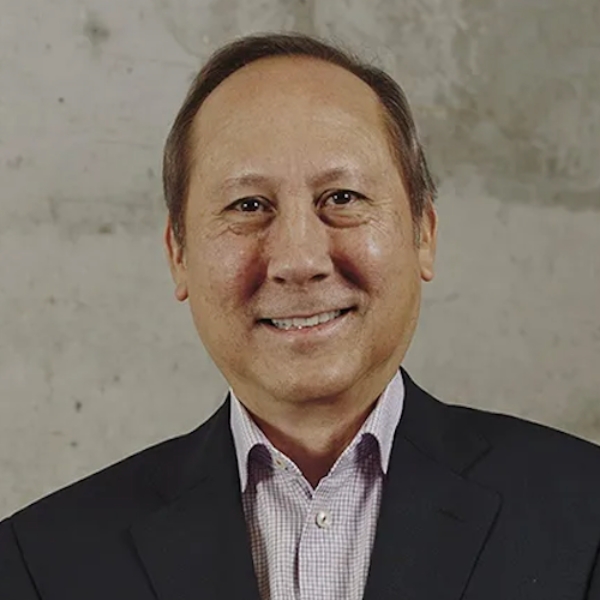
Abrar Mir

Co-founder and Managing Partner,
Quadria Capital

Charles Ruprecht

Principal,
GHO Capital

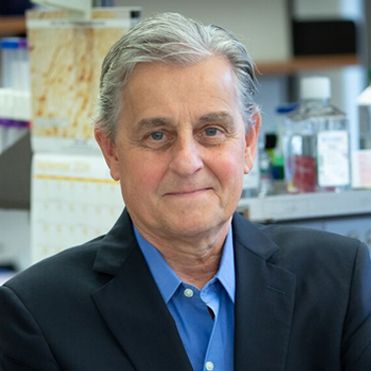
Kevin Tracey

Karches Family Distinguished Chair in Medical Research,
The Feinstein Institutes for Medical Research

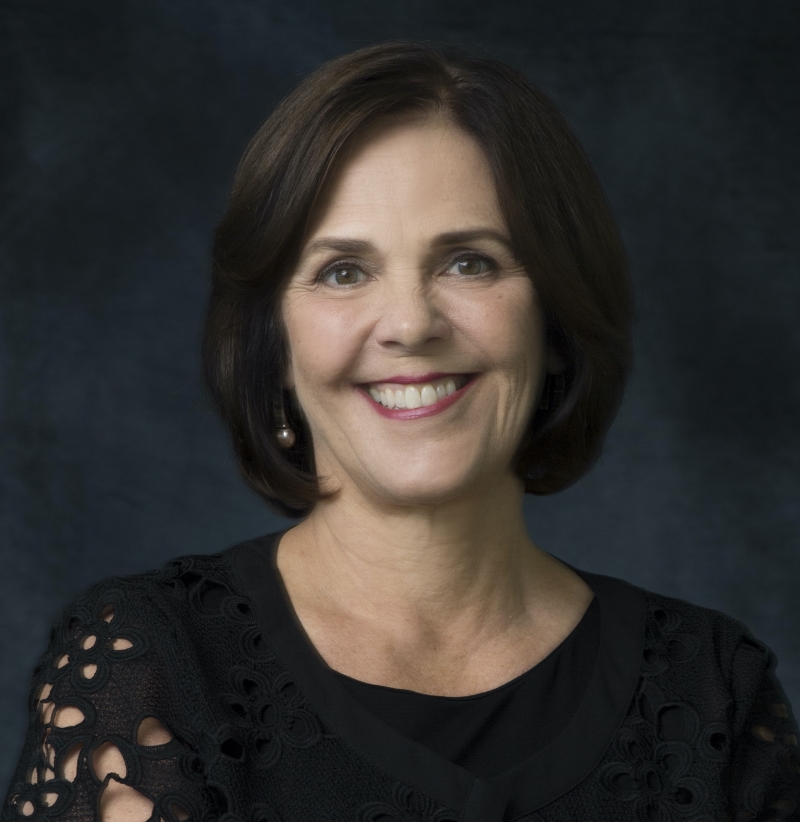
Paula Volent
Paula Volent

VP & Chief Investment Officer,
The Rockefeller University

Sponsors

Series Sponsor

Presented By

The New York Academy of Sciences logo

Pricing

All: Free

About the Series

The “Private Capital and Discovery: Strategic Investing in Scientific Innovation” series is brought to you by The New York Academy of Sciences and The Private Capital Research Institute. Through expert panels and thought-provoking discussions, the series examines how private equity is uniquely positioned to drive transformative advancements—while also exploring the ethical and strategic dilemmas that can arise when financial incentives influence the trajectory of science. Learn more about the series.

Lyceum Society: Alchemy, AI and Snow’s Two Cultures in Historical Perspective

An abstract graphic.

February 2, 2026 | 11:30 AM – 2:30 PM ET

Presented by the Lyceum Society

To attend, click the “Register” button at the time of the presentation. It will take you directly to the Zoom call.

Welcome and Introductions: 11:30 AM to 11:45 AM

Main Presentation: 11:45 AM to 2:30 PM

Alchemy, AI and Snow’s Two Cultures in Historical Perspective

Farzad Mahootian

I will explore the imaginal space between four themes: alchemy, Jung, the history of science, and AI. The talk will interweave these themes in ways that reflect my mind since early adulthood. I am recently energized by support from NYU’s IT office and library in my efforts to render my mode of investigation consistent with its subject matter, as I consider chemists and historians of chemistry. Chemists have benefited greatly by integrating computational tools to exponentially expand chemical space. By contrast, historians of chemistry and alchemy have been somewhat less enthusiastic about applying computational methods to their domain. This is not a question of technophobia exclusively, it’s a cultural issue. I believe that AI can efface some of the structural barriers between C.P. Snow’s “two cultures.”

Speaker

Farzad Mahootian has been a Clinical Associate Professor of Global Liberal Studies at New York University since 2010. He has an interdisciplinary background (PhD Philosophy, Fordham; MS Chemistry, Georgetown). His research focuses on interactions between philosophy, science and society within the mythological imagination. His interests include process philosophy, coupled systems, artificial intelligence, and premodern sciences. Recent publications include “Jung and Whitehead: An Interplay of Psychological and Philosophical Perspectives,” “Kant, Cassirer, and the Idea of Chemical Element.”

Pricing

All: Free

About the Series

The Lyceum Society is a collegial venue promoting fellowship, education, and discussion among retired members of The New York Academy of Sciences. Learn more and explore other events hosted by the Lyceum Society.

The interface among physiological, behavioral and communicative rhythms in humans and other animals

Through a series experiments, reviews, and perspectives, this collection of papers explores the wide prevalence, impact, and utilization of rhythm in humans and other animals. These papers address the importance of rhythm and how it is involved in language, cognition, physiology, communication, and medical interventions. The wide range of topics and methods include communication in sperm whales, infant development, mathematical modeling, music perception, and electrophysiology. The virtual issue is edited by Andrea Ravignani (Sapienza University of Rome) and Teresa Raimondi (Sapienza University of Rome).

The Roller Coaster of Climate Tech Investing

Learn about the economics behind investments in climate technology.

New York, NY (January 12, 2026) – As investment in climate technology faces growing headwinds, questions are emerging not about the urgency of decarbonization, but about the financial durability of the companies seeking to deliver it. Are today’s climate tech ventures positioned to generate sustainable returns, or are investors once again confronting the risk of a boom and bust cycle reminiscent of the cleantech era of the late 2000s and early 2010s?  These issues will be explored further by an expert panel during an upcoming event hosted by The New York Academy of Sciences and The Private Capital Research Institute (PCRI).

The panel will dive into the nuances of climate tech investing during a free, virtual webinar at 12 p.m. ET on January 22, 2026. Josh Lerner, PhD, Director of PCRI, will moderate a four-person panel to explore how investors are evaluating climate tech opportunities in the current market, including capital allocation strategies, risk and return profiles, and lessons learned from prior investment cycles. The discussion will center on the economic viability of new ventures, investor confidence, and what it will take for climate tech companies to succeed at scale in today’s financial environment.

Panelists include:

  • Reuben Munger | Vision Ridge
  • Ron Gonen, MBA | Closed Loop Partners
  • Emily A. Carter, PhD | Princeton University
  • Patrick Lynch, MBA | Featherlight Capital

Reuben Munger, a leader in sustainable investing and a former Partner at The Baupost Group, LLC, is an expert in electrified mobility, renewable electricity generation, and the built environment. He founded Vision Ridge in 2008 to shed light on financial opportunities associated with sustainable solutions.

Ron Gonen, MBA, served as Deputy Commissioner of Sanitation, Recycling and Sustainability in New York City during the Bloomberg Administration and is the author of The Waste-Free World. He founded and currently serves as CEO of Closed Loop Partners, a firm at the forefront of building the circular economy.

Emily A. Carter, PhD, is the Gerhard R. Andlinger Professor in Energy and the Environment in the Department of Mechanical and Aerospace Engineering at Princeton University. Her research combines applied physics, materials science, and propulsion and energy sciences.

Patrick Lynch, MBA, is a Co-Founder and Managing Partner of Featherlight Capital. He has over 25 years of private markets experience at some of the most sophisticated institutional investors. He has led over 60 investments ($6.7bn) and acted on investment committees that oversaw $40bn of commitments in private markets.

This session is the third in a four-part series titled “Private Capital and Discovery: Strategic Investing in Scientific Innovation,” presented by The New York Academy of Sciences and PCRI. The series, sponsored by Ropes & Gray, is focused on fostering a broader understanding of the recent scientific and technological trends and their implications for private capital investors. These roundtables emphasize opportunities and challenges associated with marshaling the capital required to translate cutting-edge technologies into marketplace solutions. 

Each roundtable brings together a combination of scientific, investment, and business perspectives on a challenge associated with the commercialization of breakthrough science. These webinars are conducted and covered under Chatham House rule. Proceeding summaries will be made available to attendees after each event.

While the Academy excels in fostering scientific discovery and interdisciplinary collaboration, PCRI focuses on enhancing the understanding and impact of private capital investments. This collaboration allows for a unique intersection where cutting-edge scientific research meets strategic investment insights.

Both non-profit organizations seek to present substantive, fact-based research in a form that maximizes broad accessibility of these ideas and their applicability to the concerns of investors, business leaders, and policymakers, as well as influential intermediaries.

The first two events in the series covered “Entrepreneurship in AI” and “Quantum Computing in Business and Private Equity.” The series’ final event, to take place on March 26, will focus on “The Public Sector and ‘Tough Tech.’”

Registration for the January 22 event is free and open to all. Reserve your spot today!


About The Private Capital Research Institute

Based at Harvard Business School, the Private Capital Research Institute’s mission is to encourage research about private capital’s potential to be a constructive force to power economic development, innovation, and business transformation. 

Lyceum Society: FDA & New Drug Approvals

An abstract graphic.

January 5, 2026 | 11:30 AM – 2:30 PM ET

Presented by the Lyceum Society

To attend, click the “Register” button at the time of the presentation. It will take you directly to the Zoom call.

Welcome and Introductions: 11:30 AM to 11:45 AM

Main Presentation: 11:45 AM to 2:30 PM

New Drug Approvals in 2025: How did the FDA fare?

2025 has been a tumultuous year in Washington. Notwithstanding DOGE layoffs and the government shutdown, the Food and Drug Administration (FDA) has approved 41 drugs and biologicals this year. While some will likely be blockbusters with sales above a billion dollars a year by 2030, some of the rest might be considered bespoke biologicals—exquisitely-targeted drugs for smaller populations (e.g., hereditary angioedema, which affects about 1/50,000 people across all ethnicities). But, when there are fewer potential patients, the research and development cost has to be spread across patients receiving the therapy. When data is available, we’ll talk about cost and, with drug price controversy embedded in the ongoing health insurance crisis, who should or can or might pay, and how much.

Speaker

Clif Hotvedt‘s diverse scientific background reflects his experience in the pharmaceutical industry, as a medical writer in the regulatory and clinical affairs departments of Ives Laboratories and at leading public relations firms including Robert Marston & Associates, Manning Selvage & Lee, and Ketchum, where he served as vice president and global director of medical & scientific affairs. For 46 years, he has counseled companies on over 100 small molecule drugs, biologicals and devices for indications including cardiovascular disease, rheumatology, metabolic disease, dermatology, central nervous system disease, vaccines, infectious disease, and cancer.

A New Mexico State University graduate in secondary education and journalism, Clif continues to use his teaching background to develop and present courses on the FDA approval process, pharmacokinetics, pharmacodynamics, and biostatistics among other topics for coworkers and clients. Clif is a member of the Lyceum Society and has been a frequent presenter at our meetings. His previous topics have included: “The FDA Drug Approval Process”(November 2015); “How the new PCSK9 Cholesterol-Lowering Drugs work” (May 2016); “How to read a Drug Label” (April 2017); “Biosimilars: the New ‘Generics’?(June 2018); “The Human Microbiome” (May 2019); “Drug Pricing” (June 2020); “Artificial Intelligence (AI) and Health Care” (October 2020); “Drug Pricing Revisited” (November 2020); and “The Nobel Prize in Physiology or Medicine 2022” (December 2022).

Pricing

All: Free

About the Series

The Lyceum Society is a collegial venue promoting fellowship, education, and discussion among retired members of The New York Academy of Sciences. Learn more and explore other events hosted by the Lyceum Society.

Lyceum Society: Data Center Boom: High Cost/Benefit

An abstract graphic.

December 1, 2025 | 11:30 AM – 2:30 PM ET

Presented by the Lyceum Society

To attend, click the “Register” button at the time of the presentation. It will take you directly to the Zoom call.

Welcome and Introductions: 11:30 AM to 11:45 AM

Main Presentation: 11:45 AM to 2:30 PM

AI Data Center Boom: High Cost/Benefit, Locally & Environmentally

Tech companies are racing to expand data center capacity to win the competition for commercial dominance, most prominently through the AI path. This surge has been encouraged by the current business and political environment including new federal industrial policies, abundant capital, disregulation, and hype of AI.

Business tactics prioritizing immediate business interests over the public interest may include:

  • Bending/breaking some constraints, including legal ones
  • Building fast before anyone can react
  • Minimizing disclosure of critical data center features
  • Obfuscation of site ownership via complex LLCs, trusts, etc.
  • Externalizing environmental costs, GHG emissions, e-waste generation

I will present brief summaries of findings from technical journals, newspapers, and magazines. Informative YouTube video segments will be included to elicit group discussion.

Speaker

Philip W. Apruzzese (BE Chem. E., MS Technology Mgmt., CHMM) graduated from Stevens Institute of Technology, Hoboken, NJ. He was employed in the pharmaceutical industry (Squibb, Beecham, Schering-Plough) for nearly 40 years, holding manufacturing operations, project, research pilot plant startup, and environmental compliance management positions. From 2010 to 2019 he was employed part-time as a Chem Eng/Environmental, health and safety consultant in addition to working seasonally as a Level C Official for USA Cycling racing events.

Since relocating to the Seattle area he has begun volunteer work with several non-profit community cycling/Recycling resources and advocacy organizations. Additionally he volunteers online with the Summit Old Guard, an organization for retired business and professional men.

In April, 2015, he spoke on Tour de France cycling performance enhancements – Post Lance/Post Drugs and in 2019 he presented on The Nobel Prize in Chemistry for the development of lithium ion batteries. In 2021 he presented on The Nobel Prize in Chemistry for the development of asymmetric organocatalysis. In April 2025 he spoke along with Stuart Kurtz on Becoming a Chemical Engineer: Two Stories.

Pricing

All: Free

About the Series

The Lyceum Society is a collegial venue promoting fellowship, education, and discussion among retired members of The New York Academy of Sciences. Learn more and explore other events hosted by the Lyceum Society.

Exploring Quantum Computing in Business and Private Equity

The logo for The New York Academy of Sciences.

Upcoming event will cover market impact, quantum’s evolution, industry influence, and more.

New York, NY (November 11, 2025) – As quantum computing has evolved from theory into practical applications, the business and private equity worlds are taking notice.

This will be the focus of a one-hour webinar, featuring experts from science and business, to take place beginning at 12 p.m. EDT on November 17.  This expert panel will cut through the hype to explore where the technology stands, how it’s being applied in sectors like logistics and cybersecurity, and what to expect going forward. They will also examine how private equity and venture capital are investing in quantum and which industries are poised to benefit most.

Josh Lerner, Jacob H. Schiff Professor at Harvard Business School and Director of The Private Capital Research Institute (PCRI), will moderate the four-person panel. Panelists include:

  • Matthew Kinsella | CEO, Infleqtion
  • Reed Sturtevant | General Partner, The Engine Ventures
  • Bill McMahon, PhD | Co-Founder and Managing Partner, Minnow Venture Partners
  • Shahin Farshchi, PhD | Partner, Lux Capital

The roundtable will cover three pertinent matters within the realm of business and private equity:

  • Market impact: How the pace of development is influencing global markets and the role of private equity and venture capital in accelerating quantum breakthroughs.
  • Quantum’s evolution: Moving rapidly from theoretical physics to a transformative technology with real-world impact.
  • Industry influence: Reshaping sectors, driving innovation, and attracting major investment.

This session, sponsored by HMC Capital, is the second in a four-part series titled “Private Capital and Discovery: Strategic Investing in Scientific Innovation,” presented by The New York Academy of Sciences and PCRI. The series, sponsored by Ropes & Gray, is focused on fostering a broader understanding of the recent scientific and technological trends and their implications for private capital investors. These roundtables emphasize opportunities and challenges associated with marshaling the capital required to translate cutting-edge technologies into marketplace solutions. 

Each roundtable will bring together a combination of scientific, investment, and business perspectives on a challenge associated with the commercialization of breakthrough science. These webinars are conducted and covered under Chatham House rule. Proceeding summaries will be made available to attendees after each event.

While the Academy excels in fostering scientific discovery and interdisciplinary collaboration, PCRI focuses on enhancing the understanding and impact of private capital investments. This collaboration allows for a unique intersection where cutting-edge scientific research meets strategic investment insights.

Both non-profit organizations seek to present substantive, fact-based research in a form that maximizes broad accessibility of these ideas and their applicability to the concerns of investors, business leaders, and policymakers, as well as influential intermediaries.

The final two events in the series will cover “The Roller Coaster of ClimateTech Investing” and “The Public Sector and ‘Tough Tech.’”

Registration for the November 17 event is free and open to all. Reserve your spot today!


About The Private Capital Research Institute

Based at Harvard Business School, the Private Capital Research Institute’s mission is to encourage research about private capital’s potential to be a constructive force to power economic development, innovation, and business transformation. 

Lyceum Society: Lithium Processing

An abstract graphic.

November 3, 2025 | 11:30 AM – 2:30 PM ET

Presented by the Lyceum Society

To attend, click the “Register” button at the time of the presentation. It will take you directly to the Zoom call.

Welcome and Introductions: 11:30 AM to 11:45 AM

Main Presentation: 11:45 AM to 2:30 PM

Lithium Processing: Challenges for Refining and Recycling

In the late twentieth century, lithium changed from a metal of limited economic importance to an essential component of the modern economy. The distribution of lithium resources on Earth and the technology for its recovery have implications for geopolitics, the economy, and the environment. Join us as we explore the connections between the properties of this unique metal, the challenges in its extraction and recycling, and its role in the modern world.

Speaker

Dr. Mark Kobrak received his BA degree in Chemistry and Integrated Science from Northwestern University, and his PhD in Chemistry from University of Chicago.  He joined the faculty of Brooklyn College in 2001, serving as Chair from 2009-2011 and again from 2020-2023.  His work centers on the physical chemistry of ionic liquids, a class of salts that are molten at room temperature.  Recent efforts have included the development of novel metal extraction technologies.  He has received multiple fellowships supporting research work at Brookhaven National Laboratory, and was a visiting researcher at University of Groningen in the Netherlands in 2017.

As a faculty member, Kobrak has pursued an eclectic collection of projects.  Examples include establishing the department’s industrial internship program, co-authoring a science education article on the physics of solar sails, and serving as a scientific consultant on a film featuring Paracelsian alchemy.  He has also revised the laboratory curricula of five different undergraduate courses and written a 480 page free textbook to help students transition from general to organic chemistry.

Pricing

All: Free

About the Series

The Lyceum Society is a collegial venue promoting fellowship, education, and discussion among retired members of The New York Academy of Sciences. Learn more and explore other events hosted by the Lyceum Society.

Quantum Computing in Business and Private Equity

November 17, 2025 | 12:00 PM – 1:00 PM ET

Quantum computing is moving from theory to real-world impact. In this one-hour webinar, experts from science and business will cut through the hype to explore where the technology stands, how it’s being applied in sectors like logistics and cybersecurity, and what to expect next. We will also examine how private equity and venture capital are investing in quantum—and which industries are poised to benefit most from its breakthroughs.

This roundtable discussion will explore:

  • Market impact: How the pace of development is influencing global markets and the role of private equity and venture capital in accelerating quantum breakthroughs.
  • Quantum’s evolution: Moving rapidly from theoretical physics to a transformative technology with real-world impact.
  • Industry influence: Reshaping sectors, driving innovation, and attracting major investment.

Series Moderator

Josh Lerner

The Jacob H. Schiff Professor, Harvard Business School; Director, Private Capital Research Institute

Panelists

Matthew Kinsella

CEO, Infleqtion

Reed Sturtevant

General Partner, The Engine Ventures

Bill McMahon, PhD

Co-Founder and Managing Partner, Minnow Venture Partners

Shahin Farshchi, PhD

Partner, Lux Capital

Sponsors

Session Sponsor

Series Sponsor

Presented By

The New York Academy of Sciences logo

Pricing

All: Free

About the Series

The “Private Capital and Discovery: Strategic Investing in Scientific Innovation” series is brought to you by The New York Academy of Sciences and The Private Capital Research Institute. Through expert panels and thought-provoking discussions, the series examines how private equity is uniquely positioned to drive transformative advancements—while also exploring the ethical and strategic dilemmas that can arise when financial incentives influence the trajectory of science. Learn more about the series.