The Blavatnik Awards for Young Scientists seek to identify and honor exceptional young scientists and engineers 42 years of age and younger. Honorees are selected based on the quality, novelty, and impact of their research and their potential for further significant contributions to science. For previous issues of awardee papers, see Ann NY Acad Sci (2012) 1260 and Ann NY Acad Sci (2013) 1293. Or click https://nyaspubs.onlinelibrary.wiley.com/doi/toc/10.1111/(ISSN)1749-6632.blavatnik-awards.
Blog Archives
2022 Blavatnik Awards for Young Scientists in the UK Ceremony
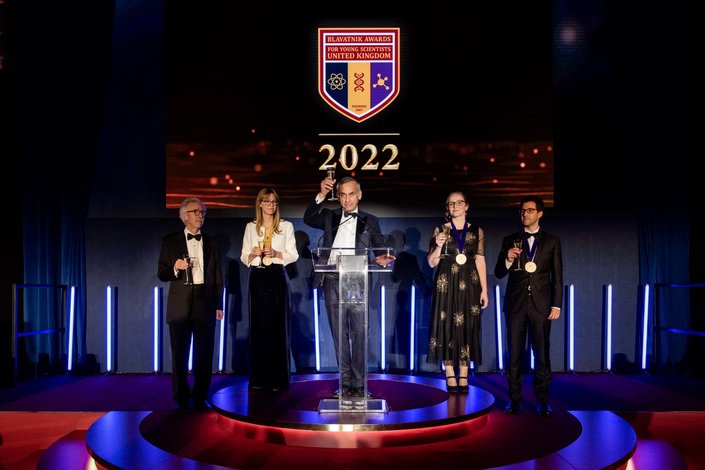
“One of the characteristics of these awards is that they support the work of scientists who look beyond the walls of their labs, and beyond geographical boundaries, to solve global problems and improve life for us all.”
Published May 3, 2022
By Kamala Murthy
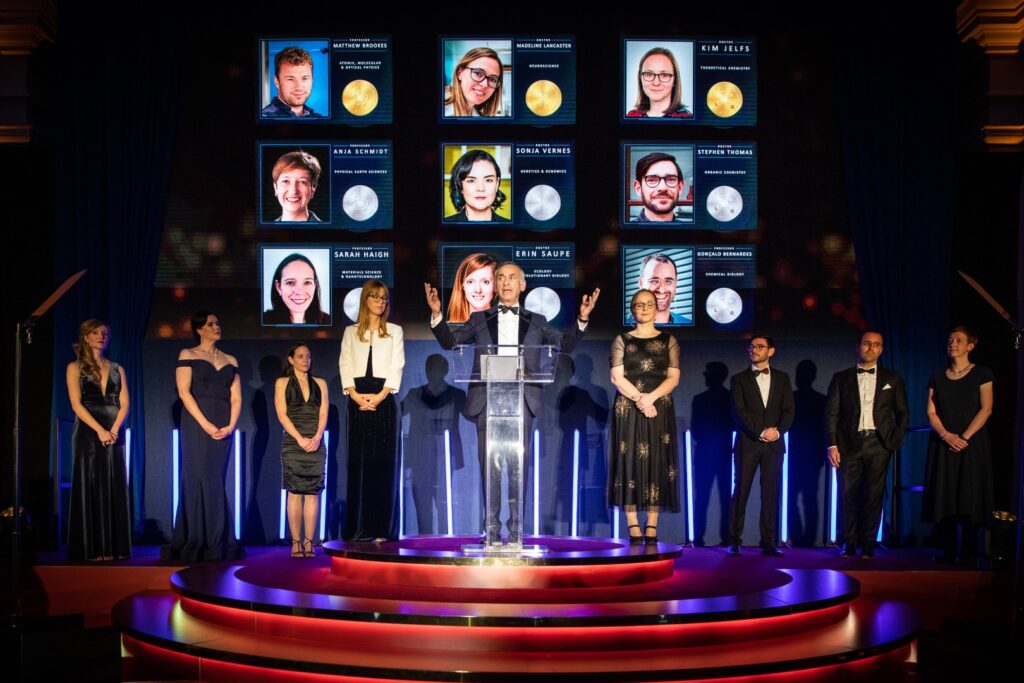
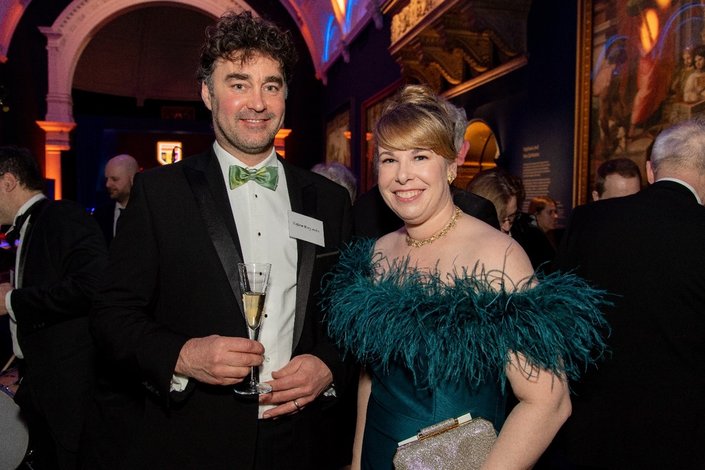
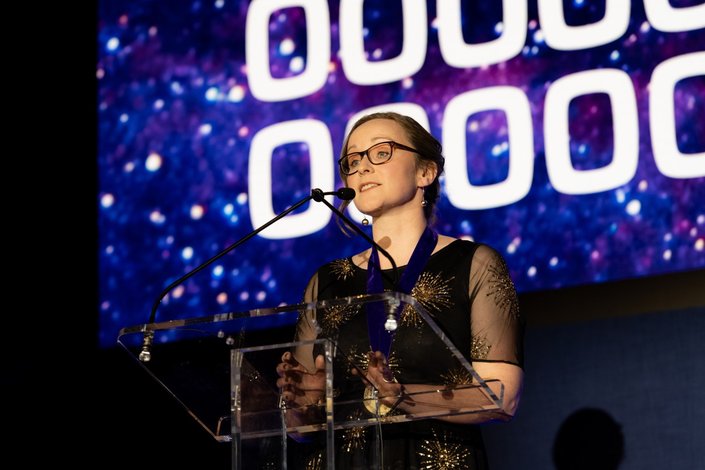
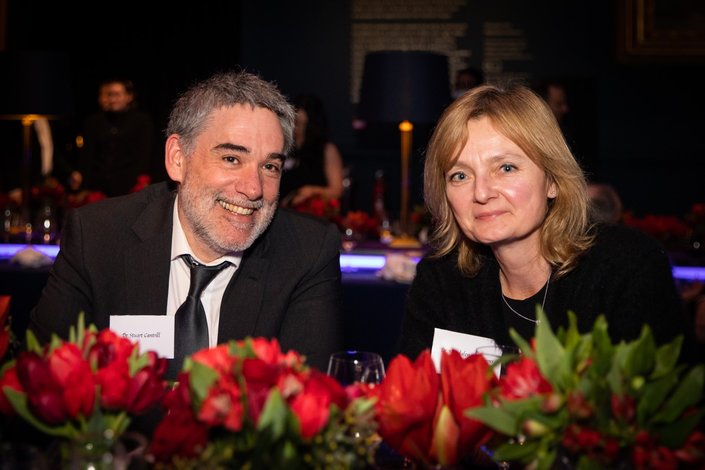
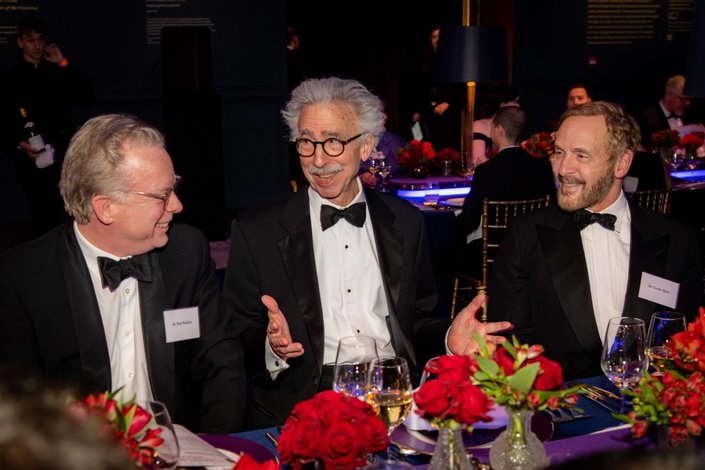
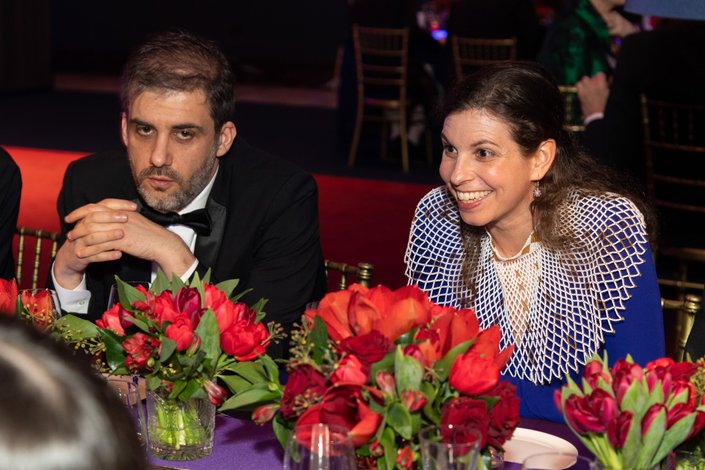
The Blavatnik Family Foundation and The New York Academy of Sciences hosted its fifth annual awards ceremony and gala dinner on February 28, 2022, to celebrate the nine honorees of the 2022 Blavatnik Awards for Young Scientists in the United Kingdom. After extensive museum renovations, the ceremony returned to the Raphael Gallery at London’s Victoria and Albert Museum, where the first two Blavatnik Awards in the UK ceremonies were held in 2018 and 2019.
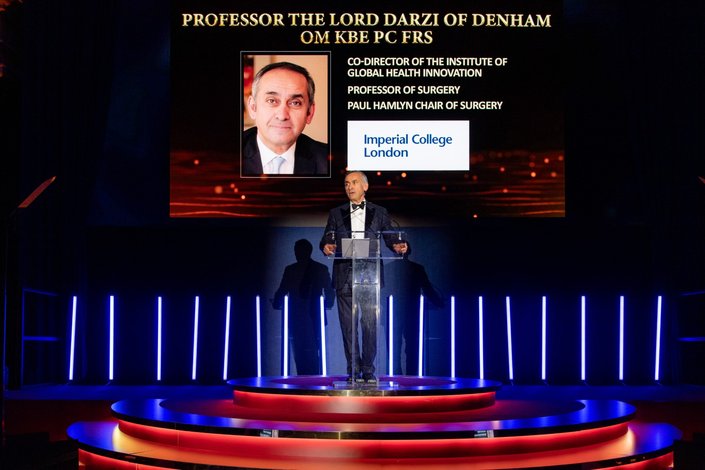
World-renowned surgeon, researcher, and leader of health care reform in the UK’s National Health Service, Professor the Lord Darzi of Denham, OM, KBE, PC, FRS served as the presenter for the ceremony. Lord Darzi is the Co-Director of the Institute of Global Health Innovation and the Paul Hamlyn Chair of Surgery at Imperial College London. 132 respected guests attended the 2022 ceremony comprising of leaders in British science, academia, business, and past Blavatnik Awards UK Laureates. Attendees included:
- Nobel Laureates Professor John O’Keefe from University College London and Professor Didier Queloz from the University of Cambridge;
- Breakthrough Prize Winners Professor Martin Hairer of Imperial College London, Emeritus Professor Michael B. Green from the University of Cambridge, and Professor Dame Jocelyn Bell Burnell from the University of Dundee;
- Royal Medallist, Sir John Pendry;
- President of the Royal Society of Chemistry, Professor Tom Welton;
- Editor in Chief of Nature Magazine, Magdalena Skipper;
- From the British Antarctic Survey, Professor Dame Jane Francis;
- Author, philanthropist, and Professor of History, Peter Baldwin;
- From the Campaign for Science and Engineering, Professor Sarah Main;
- Former CEO of British Petroleum and the Past President of the Royal Academy of Engineering, Lord John Browne;
- From the Victoria & Albert Museum Board of Trustees, Mr. Marc St John and from the Science Museum Board of Trustees Dame Mary Archer;
- From the Foundation for Science and Technology, Mr. Gavin Costigan.
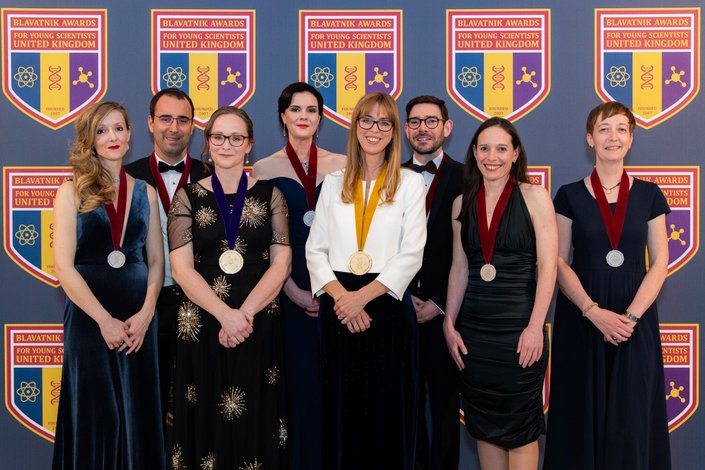
University leadership from the following institutions were represented: the Blavatnik School of Government at Oxford University, University of Cambridge, City University of London, King’s College London, University of Sussex, The Royal Veterinary College, Imperial College London, University College London, University of St Andrews, and University of Surrey.
During his opening remarks, Lord Darzi commented on the achievements of the 2022 Blavatnik Awards in the UK Laureates and Finalists: “Their accomplishments show we have the capacity to address many of the challenges we face as a global community if we have the imagination to develop new approaches, the drive to implement them, and the humility to pursue true collaborations. My message to you as the new generation of scientists working in a world in which progress depends increasingly on the convergence of knowledge bases is to continue to be bold, to be unafraid of leaving your comfort zones, to be ready and eager to cross boundaries, to bolster your self-confidence, and to do the right thing.”
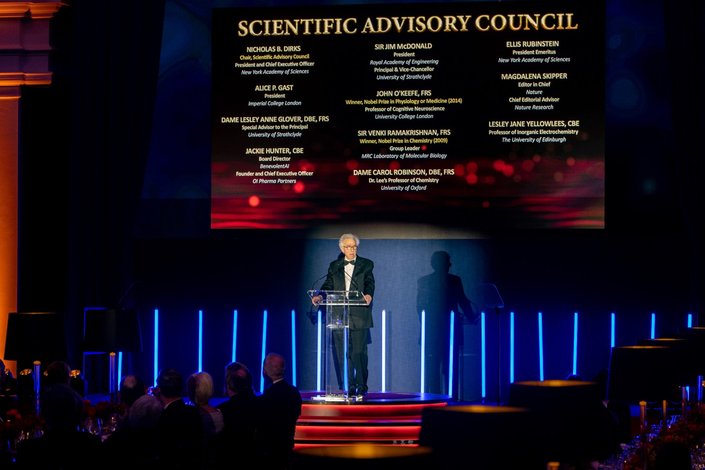
He concluded by introducing the President of The New York Academy of Sciences, Nicholas B. Dirks. Prof. Dirks spoke about the Academy’s privilege of being entrusted to administer the Blavatnik Awards on behalf of the Blavatnik Family Foundation. He said, “One of the characteristics of these awards is that they support the work of scientists who look beyond the walls of their labs, and beyond geographical boundaries, to solve global problems and improve life for us all.” Prof. Dirks also introduced the Awards Scientific Advisory Council and thanked the esteemed Awards jury.
Laureates
Madeline Lancaster, PhD (Life Sciences) – MRC Laboratory of Molecular Biology (LMB)
Matthew Brookes, PhD (Physical Sciences & Engineering) – University of Nottingham
Kim Jelfs, PhD (Chemistry) – Imperial College London
Finalists
Erin Saupe, PhD (Life Sciences) – University of Oxford
Sonja Vernes, DPhil (Life Sciences) – University of St Andrews
Sarah Haigh, DPhil (Physical Sciences & Engineering) – The University of Manchester
Anja Schmidt, PhD (Physical Sciences & Engineering) – Nominated by University of Cambridge
Gonçalo Bernardes, DPhil (Chemistry) – University of Cambridge
Stephen Thomas, PhD (Chemistry) – The University of Edinburgh
Lord Darzi introduced each of the Finalists and Laureates by each scientific category—Life Sciences, Physical Sciences & Engineering, and Chemistry. Prof. Dirks bestowed medals upon each honoree as they walked to the stage. Prize monies were increased this year across all honors—Finalists were each awarded £30,000, and each Laureate was awarded £100,000. Life Sciences Laureate Madeline Lancaster and Chemistry Laureate Kim Jelfs both gave short scientific talks after receiving their medals.
Physical Sciences & Engineering Laureate, Matthew Brookes, unable to attend, was honored in absentia. Brookes pre-recorded his scientific presentation which was played for the audience. 2021 Laureate in Chemistry, Prof. Daniele Leonori, nominated by the University of Manchester, and today at RWTH Aachen University in Germany, who was unable to attend the 2021 ceremony, received his 2021 Laureate medal on stage.
The ceremony concluded with the Blavatnik Awards tradition of making a “Toast to Science.” The following day, the honorees presented their award-winning research at the Blavatnik Awards public symposium entitled Discover, Design, and Diagnose: 9 Young Scientists Transforming Our World.
To learn more about the Blavatnik Awards for Young Scientists, visit blavatnikawards.org.
A Breakthrough in High-Dimensional Geometry
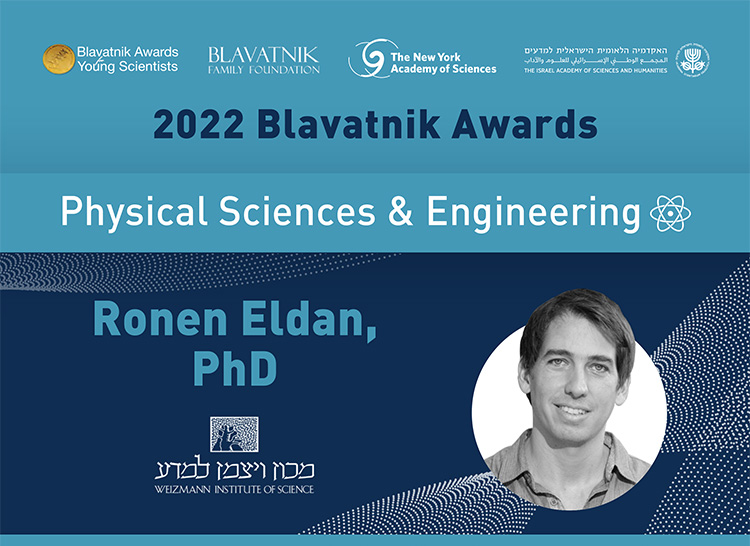
Ronen Eldan’s breakthrough in high-dimensional geometry solved a long-standing mathematical problem and improved the field of machine learning.
Published February 8, 2022
By Assaf Uni
An idea that, in retrospect, led to the solution of several problems in high-dimensional geometry, including a riddle that has preoccupied mathematicians for many years, popped into the mind of Prof. Ronen Eldan, 41, on his way to buy falafel in Tel Aviv. “I came back from university on my bike,” he recalls, “and on the corner of King George and Zamenhof streets there was a moment when I said to myself, ‘Hey, maybe I should try to check if this method leads to something’”. It was not a eureka moment, he explains, but more of a preliminary idea in a direction that might yield something.
“As a mathematician, a big part of the work and research is to try to find insights in unrelated theory and weave them into your theory,” he says. The idea that Prof. Eldan incorporated into his field of study—high dimensional geometry and probability—is based on the mathematical principles that explain Brownian motion (diffusion of particles). It was only when he began to further develop the idea later that evening and in the days that followed, that Prof. Eldan realized that this idea seems to lead to a breakthrough in the field he was researching, regarding a question that has important implications in the field of data science.
The First Pure Mathematician to Win the Israel Award
Nine years later, it was this breakthrough that contributed to the selection of Prof. Eldan as the Physical Sciences & Engineering Laureate of the 2022 Blavatnik Awards for Young Scientists in Israel. Prof. Eldan will receive US$100,000 in unrestricted funds, join the prestigious list of Blavatnik Awards honorees in Israel and around the world, and participate in meetings and symposia with other winners of the Blavatnik Awards for Young Scientists, which operates in the United States, the United Kingdom, and Israel. He is the first pure mathematician to win the Israel Award, which was launched in 2017 in a collaboration between the Blavatnik Family Foundation, the Israel Academy of Sciences and Humanities, and The New York Academy of Sciences.
The field of theoretical mathematics that Prof. Eldan is researching—phenomena in high-dimensional systems—is almost impossible to explain in a short text, he says, but he is willing to try nonetheless. Prof. Eldan says that, in short, his research deals with the geometry and probability of objects in high-dimensional spaces.
Higher Dimensional Spaces
We are all familiar with a circle (two-dimensional body) or a sphere (three-dimensional body), but what about objects in higher dimensional spaces? “Most of the geometric objects we know have multidimensional versions,” explains Prof. Eldan, “and they can be very relevant to our world. Imagine, for example, all the blood test results of insureds in a particular health care plan, each of which consists of 50 different results. They can be treated as a dataset in a space where there are 50 dimensions—the number that indicates the number of ‘coordinates’ required to place a point in space.”
“Within this group of objects,” says Prof. Eldan, “one can speak of a subset consisting of the results of tests that indicate a particular medical condition, such as diabetes. Understanding the geometry of such a subset has direct implications for our ability to identify diabetes from all the tested insureds in the future, because this understanding gives insights into the question of whether I can study this subset using machine learning.”
“Understanding its geometry allows me to give the algorithm some features that actually tell what kind of objects to look for, and in what class,” says Prof. Eldan, but adds that this understanding is not only practical, but has pure mathematical importance.
“Basically, ‘big data’ is statistics that operate in high-dimensional spaces,” explains Prof. Eldan, “but instead of coordinates, we enter data. In fact,” he adds, “almost everything we do in data science and machine learning—developing algorithms that allow a computer to learn from examples—can be phrased as a mathematical problem regarding high-dimensional objects.”
The Theory of Brownian Motion
Using Prof. Eldan’s methodology, it is possible to apply the theory of Brownian motion to the analysis of objects of high dimensions, thus enabling a new point of view that leads to insights into their behavior. “My methodology utilizes a seemingly-unrelated theory, which concerns the diffusion of particles,” explains Prof. Eldan. “We use the theory of diffusion to help describe objects of high dimensions.” Prof. Eldan says that through application of the method he developed, he can understand “several basic aspects related to the question of what a set that lies in a high-dimensional space looks like.”
Despite the abstract thinking required to understand this scientific achievement, some of the discoveries themselves have very practical implications. For example, Prof. Eldan’s new methodology has led to the solution of one of the major problems in the field of high-dimensional geometry: Bourgain’s slicing problem (named after the Belgian mathematician Jean Bourgain). In addition, the method has direct implications for machine learning: “It helps to show that machine learning algorithms that have already been designed can solve a larger set of problems and can also be used to develop new algorithms,” he explains.
Prof. Eldan is currently on sabbatical at Princeton University with his family, and says he received the call informing him that he had won the Blavatnik Award early in the morning. “It was six-o’-clock in the morning, and the main thing that went through my mind was that it would wake my daughter,” he says with a smile, and adds he was very excited to hear that he had received the prestigious award.
No Laboratory, No Complicated Experimental Software
“I didn’t really want to be a mathematician from childhood,” he recalls. Furthermore, “I really liked physics and engineering, and as a kid I liked building things.” During his military service he began taking mathematics and physics courses at the Open University and eventually completed a degree in mathematics. “I finally focused on mathematics, in part because there were no physics labs at the Open University,” he said. He went on to pursue a master’s degree and a doctorate at Tel Aviv University on “Distribution of Mass in Convex Bodies,” and then a postdoctoral fellowship at Microsoft’s research lab near Seattle. In 2015, he returned to Israel, to serve as a faculty member at the Weizmann Institute of Science.
As a pure mathematician, Prof. Eldan is doing his research without a laboratory or complicated experimental software. “Most of the time it’s me with myself, and I just think. It happens while I’m on the train or waiting in line. I work with students, which is perhaps the most fulfilling part of academic life, and I’m sure I would not have gotten anywhere without the mentors I had, but in the end, most ideas arise when you’re sitting by yourself and thinking.”
When asked if he has ways to force those moments to happen, he jokes, “If I was stuck in a room with exposed concrete walls, no windows, and most importantly no internet, it would be the most effective way for me to make progress in math.”
To learn more about the Blavatnik Awards for Young Scientists, visit blavatnikawards.org.
How an Active Virus Impacts Human Cells
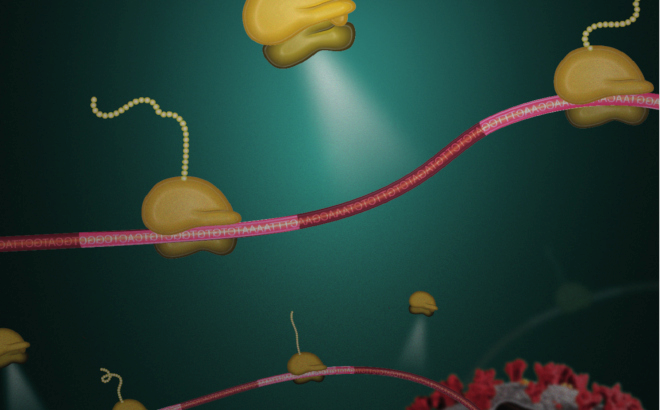
“Monitoring viral activity allows us to both understand intracellular processes and better understand how viruses work.”
Published February 8, 2022
By Assaf Uni
Prof. Noam Stern-Ginossar, 43, from the Department of Molecular Genetics at the Weizmann Institute of Science, smiles when she says that she was interested in viruses and researched them “even before all of humanity was shaken by the corona pandemic and everyone became an amateur virologist. Today, viruses need less ‘promotion’ than in the past,” she says, “because the importance of viral research has become clear.
But apart from the medical importance,” she explains, “viruses are just amazing. After all, they themselves do not invent anything—they have a very small and limited genome. But when they manage to get their genome into our cells, they very quickly take over and make the cells into machines, which serve them and produce new viruses.”
Prof. Stern-Ginossar’s research uses innovative methods of analysis to examine how human viruses work, and from this, learns about the different mechanisms of our cells. “If we look at the activity of viruses we can learn about the way they harm our cells, but we can also learn a lot about the way our cells work. Viruses will always target the most important and basic mechanisms in the human cell, and we want to discover them,” she says.
Learning from Success
Since 2014, Prof. Stern-Ginossar’s laboratory at the Weizmann Institute of Science uses sophisticated and advanced technological means to accurately characterize the most basic processes that occur when a virus infects a cell. These studies and the methods developed by Prof. Stern-Ginossar to carry them out are part of the reason for her selection as the Life Sciences Laureate of the 2022 Blavatnik Awards for Young Scientists.
Prof. Stern-Ginosar will receive US$100,000 in an unrestricted funds, join the prestigious list of Laureates in Israel and around the world, and participate in meetings and symposia with the honorees of the prestigious awards program, which operates in the United States, the United Kingdom and Israel. In Israel, the program was launched in 2017 in a collaboration between the Blavatnik Family Foundation, the Israel Academy of Sciences and Humanities, and the New York Academy of Sciences.
“Monitoring viral activity,” says Prof. Stern-Ginossar, “allows us to both understand intracellular processes and better understand how viruses work.” Among other things recently investigated in the Stern-Ginossar laboratory was the SARS-CoV-2 virus, which is responsible for the global corona epidemic over the past two years. “The corona is a relatively large virus. Its genome is made up of 30,000 bases, and although the human genome consists of billions of bases, the virus replicates within eight hours from the moment it enters a cell to completely reverse cellular activity and convert it into a virus factory. It’s unusual, and we are trying to learn from its success in doing that.”
Innovative Methods of Analysis
Prof. Stern-Ginossar’s innovative methods of analysis for this study were among the reasons for winning the award. “There has been a revolution in the last decade in our ability to understand genetic information. Relative to the past, today we can easily take cells and see comprehensively all of the genetic material expressed in them. If we look carefully, we can really see the dynamic processes, including infection. These methods, which show how a cell operates when it is infected with a virus, are bringing new insights that we did not know before,” she says.
Prof. Stern-Ginossar says that her laboratory recently tested part of the mechanism of action of the new coronavirus. “We wanted to understand how the virus takes over the cell,” she explains. “We knew that one of the things that viruses depend on the most is the ribosome—the intracellular ‘machine’ that translates genetic information in the form of RNA into proteins.”
“Viruses do not have ribosomes; they are simply receptacles for stored genetic information, and the first thing they need is to take over our ribosomes that will turn their genetic information into proteins. To do this, they need to develop a mechanism that will ensure that when they enter the cell, the ribosome will actually translate their RNA and not the cell’s native RNA,” she continues.
An Interest in Nature
“We tried to understand how the corona virus does this,” she says, “and we found that it uses several different mechanisms. For example, the first thing it produces inside the cell is a scissor-like protein that knows how to cut and break down all the RNA that the cell has, but does not harm its own RNA.” She says that this discovery may one day become a drug target to neutralize viral activity, but stresses that specific medical questions are very far from the research in her laboratory.
“We aim to do basic science to understand processes, not research aimed at medicine. Of course our ambition is that if we look at things and discover new mechanisms, someone will be able to develop technology that can use them,” she says.
Prof. Stern-Ginossar says that she came into academia and her field of research out of an interest in nature. “As a child, I really enjoyed nature walks,” she says. “This may have been the reason I started studying for a bachelor’s degree in biology, but I was thinking more about the fields of ecology and the environment,” she adds, “then I discovered the existence of this whole molecular world, and it amazed me.”
An Important Recognition
She went on to pursue a master’s degree (“that was when I really fell in love with the field”, she says) and a doctorate at the Hebrew University of Jerusalem., on “Modulation of NK cells cytotoxic activity”. I then went to pursue a postdoctoral fellowship at the University of California, San Francisco.”
When asked how she explains scientific breakthroughs and discoveries, Prof. Stern-Ginossar replies that ideas come to her quite randomly—”when I read something, when I walk down the street or just in my free time,” she expands, “but another important key is gatherings and interactions with people.” “They grant you a certain peacefulness, freedom from the day-to-day tasks, a chance to hang out with other researchers and think creatively.” In that sense, she says, “the corona pandemic has certainly changed things and those meetings are very much missing.”
“Academic awards provide a boost and motivation,” she says, adding that she was very happy when she was informed that she had been chosen as the Blavatnik Awards Laureate. “The process of research is full of doubts. You are never sure that you are doing something right until it succeeds, but upon receiving acknowledgement like this you feel you’re on the right track, especially when it comes to such a prestigious science award. This is an important recognition, both for me and for my entire laboratory.”
To learn more about the Blavatnik Awards for Young Scientists, visit blavatnikawards.org.
From Brainstorm to Scientific Breakthrough
Five common elements, an innovative synthesis procedure, and the potential to turn sunlight into an alternative fuel.
Published February 8, 2022
By Assaf Uni
These innovative developments are part of the reason for Prof. Shalom’s selection as the chemistry Laureate of the 2022 Blavatnik Awards for Young Scientists in Israel. Prof. Shalom will receive US$100,000 in unrestricted funds, he will join the prestigious list of Laureates in Israel and around the world, and will participate in meetings and symposia with the honorees of the awards program, which operates in the United States, the United Kingdom, and Israel. The Blavatnik Awards for Young Scientists in Israel program was launched in 2017 in a collaboration between the Blavatnik Family Foundation, the Israel Academy of Sciences and Humanities, and the New York Academy of Sciences.
The materials developed by Prof. Shalom are mostly based on only five common elements: carbon, nitrogen, phosphorus, sulfur, and boron. The innovation lies in the development of a new method for the synthesis of materials based on these elements, which makes it possible to control the physical properties of the finished product. Prof. Shalom is utilizing this new synthetic technique for one main purpose: to create fuels from sunlight.
A Very Complex Process
“Our research is very broad, but the common theme throughout is the goal of capturing sunlight and converting it into a fuel that can serve as a source of energy,” he says. “Water electrolysis (for hydrogen production), photosynthesis, and energy storage—all these mechanisms have been known for a long time,” explains Prof. Shalom, “but we are trying to see how we can control them and streamline the processes using the methods we have developed for the synthesis of specific materials.”
Prof. Shalom explains his scientific breakthrough using an analogy to Legos: “Imagine that I have some Lego bricks in only primary colors, and I want to create a certain structure from them after a ‘baking’ procedure in a high temperature oven. In reality it is a very complex process. The Lego bricks react with each other and their environment, and it is not possible to know what will be obtained from their connections after the heating process.”
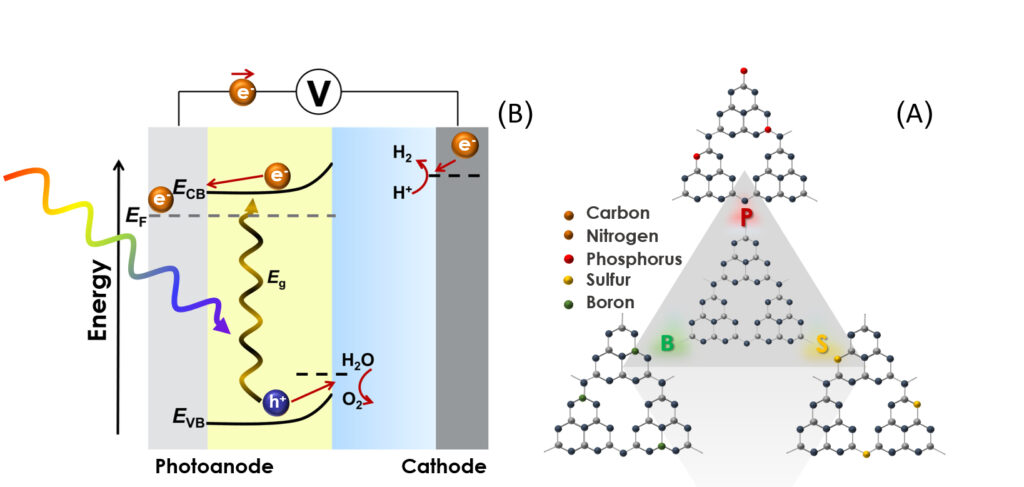
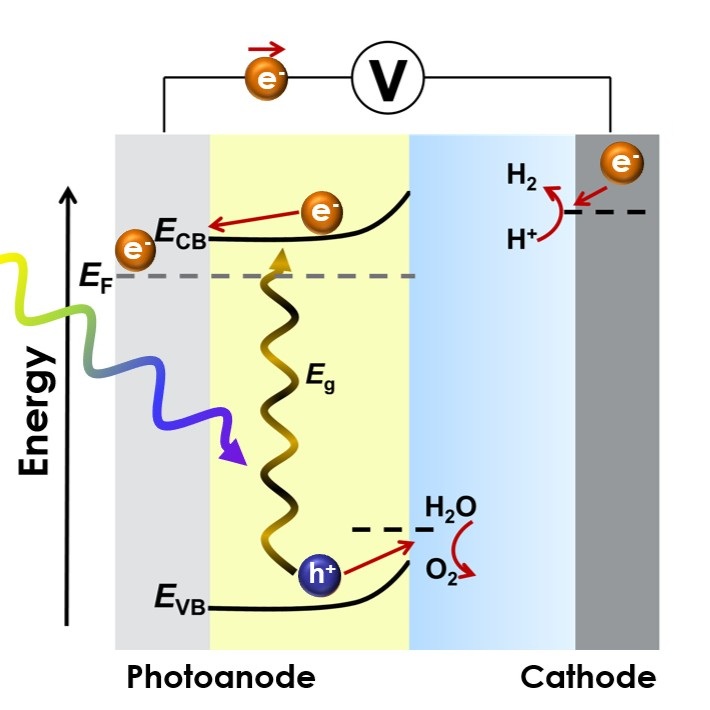
(B) An illustration of a photoelectrochemical cell under light (the active material in the photoanode absorbs the sun’s radiation and turns it into electrically-charged elements which perform the chemical reactions described: oxidizing water into oxygen, and generating hydrogen at the cathode).
“On the other hand,” he adds, “the method we have developed makes it possible to determine the functions of the bricks, and thus we can predict what the final shape will be after the material is built, even after reactions at high temperatures.”
A Unique Synthetic Methodology
The unique synthetic methodology opens up new and far-reaching possibilities of utility. “We have shown that the type of materials we are researching can compete with, and in some cases surpass, existing materials in the field of solar energy conversion to fuel.”
Prof. Shalom demonstrates this: “With the help of these new materials, it is possible to design efficient photoelectrochemical cells that will utilize the entire solar spectrum and also store the energy generated from it. Batteries can be developed without the use of elements that are less abundant on Earth. With careful planning of the necessary materials, it should also be possible to replace very rare metals, which are involved in a variety of processes, using only the five elements mentioned.”
Prof. Shalom says that he came to chemistry relatively late. “I would like to say that the periodic table was hanging over my bed and that I disassembled transistors as a child,” he says with a smile, “but that was not the case.” He grew up in south Tel Aviv and Holon, served additional years in the army, after which he traveled the world with the woman who later became his wife, and only then began his studies in chemistry.
“It was very exciting and thrilling”
“Because I focused on sciences in high school, I started studying computer science and chemistry at Bar-Ilan University,” he says. “But already in the second year,” he recalls, “I realized that chemistry is the main thing I wanted to focus on.”
He went on to pursue a master’s degree and a doctorate at Bar-Ilan University, on “Understanding the Mechanisms in Quantum Dot Sensitized Solar Cell Towards Innovative Design, Synthesis and Fabrication of Efficient Quantum Dot (Q.D.) Based Solar Cells” He went on to do a postdoctoral fellowship at the Max Planck Institute in Potsdam, Germany. He then returned to Israel, to lead a research group at Ben-Gurion University of the Negev. In his few years at the university, he has received research grants from the European Union’s Research Foundation, and also won the Israel vacuum society (IVS) early career excellence award and the Israel Chemical Society prize for young scientists.
Last summer he was informed that he had won the Blavatnik Award. “It was very exciting and thrilling,” he says, “especially because our whole family was in isolation after we all got sick with the coronavirus.” He says that apart from the personal feeling of pride, he is also proud to be the first winner of the prestigious award at Ben-Gurion University. “But I hope there will be many others in the coming years,” he says. “It’s a great feeling to receive the award. It gives a great boost to our research.”
Combining Different Fields
Prof. Shalom explains that the innovations that have taken place in his laboratory can be attributed to the fact that he started studying chemistry in the field of pharmaceuticals, moved on to the more physical side of chemistry in the field of solar cells, and from there went on to study advanced materials science in Germany. “I really like to combine different fields,” he says, “and that’s one of the most beautiful things in science, in my opinion. The thought of how to combine different areas gives you the ability to get better, move forward, and maybe reach real breakthroughs,” he said.
When asked how he creates an atmosphere in a lab that would allow such creativity, he replies: “We try not to be fixed. I encourage my students to work with other people and different members of the staff. I tell them they are allowed to make mistakes and that mistakes are a necessary part of learning, but one should always be curious and creative.
“Sometimes when brainstorming a topic we encounter the question of whether something will work or not. In our field it usually does not take months to find out if a certain direction is leading forward or backward, so I tell them: ‘Do not be afraid, try, the worst thing that can happen is that it will not work, but at least we will learn something new’. I believe many breakthroughs come from creative, outside of the box thinking.”
To learn more about the Blavatnik Awards for Young Scientists, visit blavatnikawards.org.
The Science of Tomorrow: Blavatnik Awards for Young Scientists in Israel
Overview
The Blavatnik Awards for Young Scientists in Israel is one of the largest prizes ever created for early-career researchers in Israel. Given annually to three outstanding, early-career faculty from Israeli universities in three categories—Life Sciences, Physical Sciences & Engineering, and Chemistry—the awards recognize extraordinary scientific achievements and promote excellence, originality, and innovation.
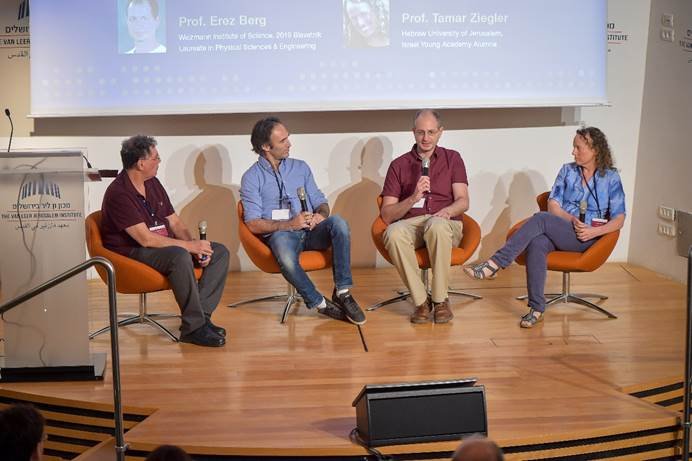
On August 2, 2021, the New York Academy of Sciences celebrated the 2020 and 2021 Laureates at the Israel Academy of Sciences and Humanities in Jerusalem, Israel. The multidisciplinary symposium, chaired by Israel Prize winners Adi Kimchi and Mordechai (Moti) Segev, featured a series of lectures on everything from a new class of RNA to self-assembling nanomaterials.
In this eBriefing, you’ll learn:
- The secret life of bats, and how the brain shapes animal behavior
- How genetic information in unchartered areas of the human genome—known as long noncoding RNA—could be used to develop treatments for cancer, brain injury, and epilepsy
- Creative ways of generating light, X-rays, and other types of radiation for practical applications such as medical imaging and security scanners
- The intricate choreography of protein assembly within cells, and how this dance may go awry in disease
Speakers
Yossi Yovel, PhD
Tel Aviv University
Igor Ulitsky, PhD
Weizmann Institute of Science
Emmanuel Levy, PhD
Weizmann Institute of Science
Ido Kaminer, PhD
Israel Institute of Technology
Life Sciences of Tomorrow
Speakers
Yossi Yovel, PhD
Tel Aviv University
Igor Ulitsky, PhD
Weizmann Institute of Science
From Bat Brains to Navigating Robots
Yossi Yovel, PhD, Tel Aviv University
In this presentation, Yossi Yovel describes his studies on bats and their use of echolocation to perceive and navigate through the world. To monitor bats behaving in their natural environment, he has developed miniaturized trackers—the smallest in the world—capable of simultaneously detecting location, ultrasonic sounds, movement, heart rate, brain activity, and body temperature changes.
By attaching these small sensors to many individual bats, Yovel is able to monitor large groups of free-flying bats—a task which would be almost impossible in other mammals. His current and future studies include applying bat echolocation theory to engineering acoustic control of autonomous vehicles.
Further Readings
Yovel
Moreno, K. R., Weinberg, M., Harten, L., Salinas Ramos, V. B., Herrera M, L. G., Czirják, G. Á., & Yovel, Y.
Annals of the New York Academy of Sciences, 2021.
Amichai, Eran, and Yossi Yovel.
Echolocating bats rely on an innate speed-of-sound reference
Proceedings of the National Academy of Sciences, 2021.
Geva-Sagiv, M., Las, L., Yovel, Y., & Ulanovsky, N.
Spatial cognition in bats and rats: from sensory acquisition to multiscale maps and navigation.
Nature Reviews Neuroscience, 2015
Decoding the Functions of Long Non-coding RNA
Igor Ulitsky, PhD, Weizmann Institute of Science
Igor Ulitsky outlines his investigation of the biology of a subtype of genetic material—long non-coding RNA (lncRNA)—an enigmatic class of RNA molecules. Similar to other classes of RNA molecules, lncRNAs are transcribed from DNA and have a single-strand structure; however, lncRNAs do not encode proteins. Even though non-coding regions of the genome comprise over 99% of our genetic material, little is actually known about how these regions function.
Ulitsky’s work has shown dynamic expression patterns across tissues and developmental stages, which appear to utilize diverse mechanisms of action that depend on their sub-cellular positions. These discoveries have unlocked the potential of using lncRNAs as both therapeutic agents and targets with promising leads for the treatment of diseases such as cancer, brain injury, and epilepsy.
Further Readings
Ulitsky
H. Hezroni, D. Koppstein, M.G. Schwartz, A. Avrutin, D.P. Bartel, I. Ulitsky.
Cell Reports, 2015
Y. Lubelsky, I. Ulitsky.
Sequences Enriched in Alu Repeats Drive Nuclear Localization of Long Rnas in Human Cells.
Nature, 2018
R.B. Perry, H. Hezroni, M.J. Goldrich, I. Ulitsky.
Regulation of Neuroregeneration by Long Noncoding RNAs
Molecular Cell, 2018
A. Rom, L. Melamed, N. Gil, M. Goldrich, R. Kadir, M. Golan, I. Biton, R. Ben-Tov Perry, I. Ulitsky.
Regulation of CHD2 expression by the Chaserr long noncoding RNA is essential for viability
Nature Communications, 2019
Chemistry and Physical Sciences & Engineering of Tomorrow
Speakers
Emmanuel Levy, PhD
Weizmann Institute of Science
Ido Kaminer, PhD
Israel Institute of Technology
Playing LEGO with Proteins: Principles of Protein Assembly in Cells
Emmanuel Levy, PhD, Weizmann Institute of Science
In this presentation, Emmanuel Levy describes how defects in protein self-organization can lead to disease, and how protein self-organization can be exploited to create novel biomaterials. Levy has amassed a database of protein structural information that helps him to predict, browse, and curate the structural features—charged portions, hydrophobic and hydrophilic pockets, and point mutations—within a protein that govern the formation of quaternary structures. By combining this computational approach with experimental data Levy is able to uncover new mechanisms by which proteins operate within cells.
Further Readings
Levy
H. Garcia-Seisdedos, C. Empereur-Mot, N. Elad, E.D. Levy.
Proteins Evolve on the Edge of Supramolecular Self-assembly
Nature, 2017
S. Dey, D.W. Ritchie, E.D. Levy.
PDB-wide Identification of Biological Assemblies from Conserved Quaternary Structure Geometry
Nature Methods, 2017
M. Meurer, Y. Duan, E. Sass, I. Kats, K. Herbst, B.C. Buchmuller, V. Dederer, F. Huber, D. Kirrmaier, M. Stefl, K. Van Laer, T.P. Dick, M.K. Lemberg, A. Khmelinskii, E.D. Levy, M. Knop.
Genome-wide C-SWAT Library for High-throughput Yeast Genome Tagging
Nature Methods, 2018
H. Garcia-Seisdedos, J.A. Villegas, E.D. Levy.
Infinite Assembly of Folded Proteins in Evolution, Disease, and Engineering
Angewandte Chemie International Edition, 2019
Shining Light on the Quantum World with Ultrafast Electron Microscopy
Ido Kaminer, PhD, Israel Institute of Technology
Ido Kaminer discusses his research on light-matter interaction that spans a wide spectrum from fundamental physics to particle applications. Part of his presentation addressed the long-standing question in quantum theory over the predictability of motions quantum particles. He also demonstrated the first example of using free electrons to probe the motion of photons inside materials. Finally, he talked about the potential applications of tunable X-rays generated from the compact equipment in his lab, for biomedical imaging and other applications.
Further Readings
Kaminer
R. Dahan, S. Nehemia, M. Shentcis, et al., I. Kaminer.
Resonant Phase-matching Between a Light Wave and a Free Electron Wavefunction
Nature Physics, 2020
K. Wang, R. Dahan, M. Shentcis, Y. Kauffmann, A.B. Hayun, O. Reinhardt, S. Tsesses, I. Kaminer.
Coherent Interaction between Free Electrons and a Photonic Cavity
Nature, 2020
Y. Kurman, I. Kaminer.
Tunable Bandgap Renormalization by Nonlocal Ultra-strong Coupling in Nanophotonics
Nature Physics, 2020
Y. Kurman, N. Rivera, T. Christensen, S. Tsesses, M. Orenstein, M. Soljačić, J.D. Joannopoulos, I. Kaminer.
Control of Semiconductor Emitter Frequency by Increasing Polariton Momenta
Nature Photonics, 2018
How the Brain Gives Rise to the Mind
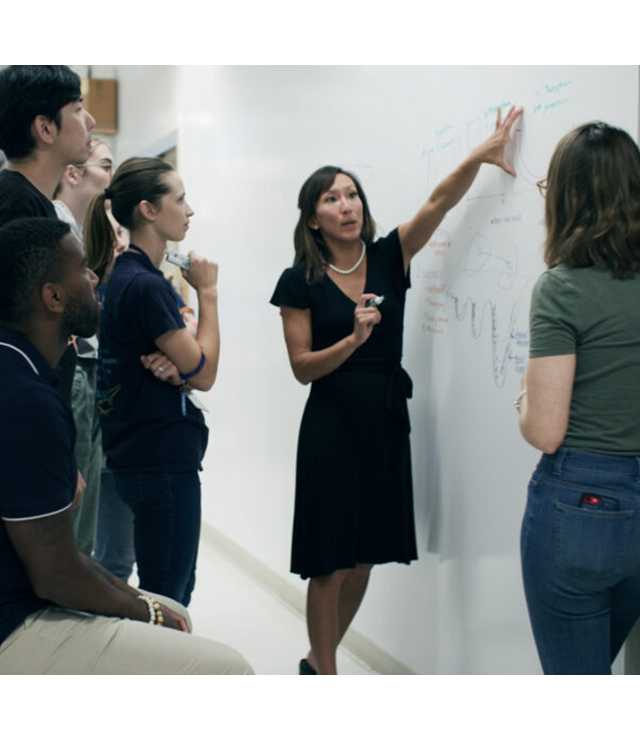
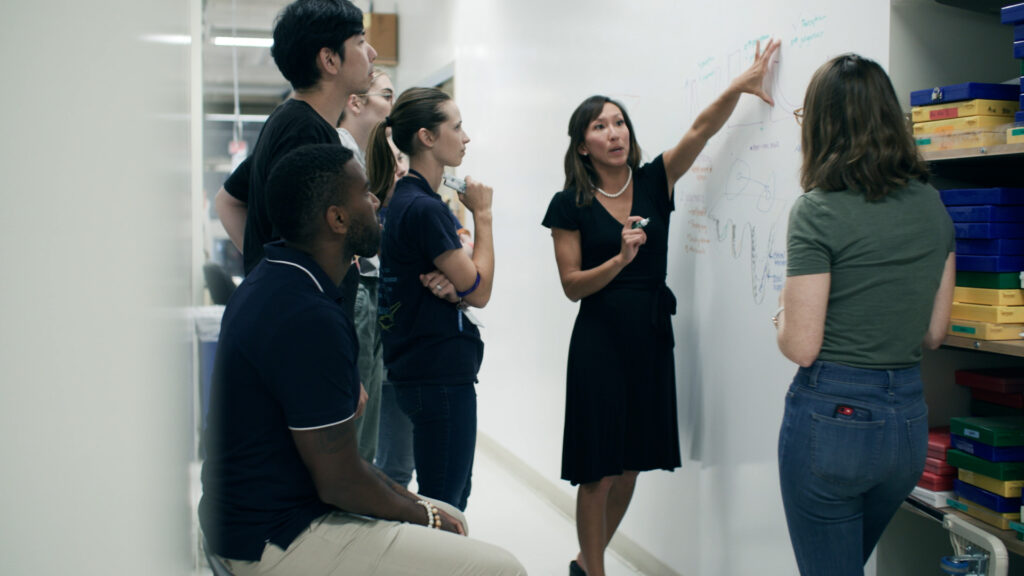
This Year’s Blavatnik National Awards for Young Scientists Laureate in the Life Sciences is connecting the activity of cells and synapses to emotions and social behavior
Published October 21, 2021
By Roger Torda
Neuroscientist Kay Tye has challenged orthodoxy in her field by studying the connection between the brain and the mind. The work has led to breakthroughs in basic science. It also points to new approaches to mental illness, with significant potential impact.
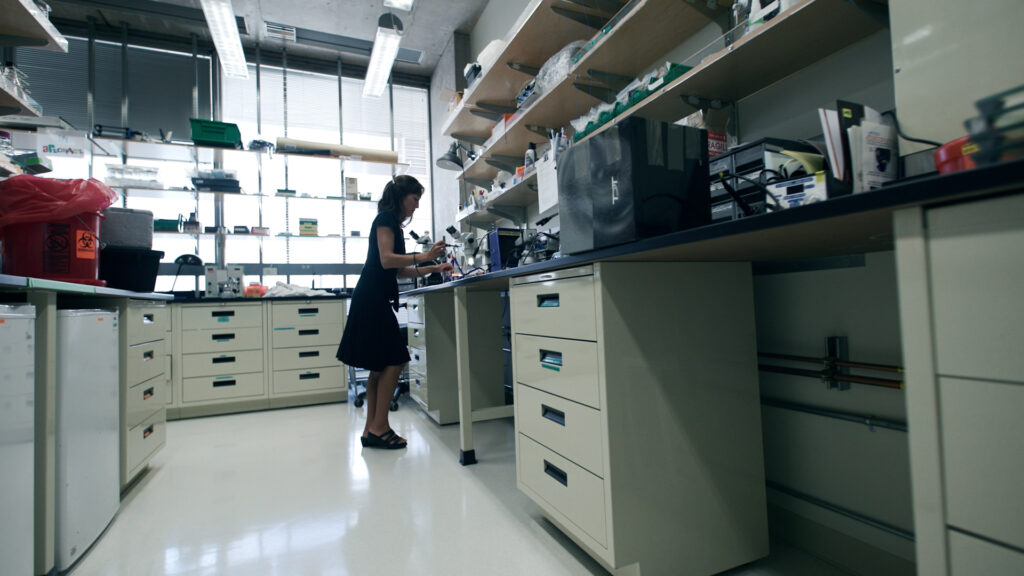
Tye is a professor in the Systems Neurobiology Laboratory at the Salk Institute for Biological Studies. She and her research team work to identify the neural mechanism of emotional and social processing, in health and disease. Tye explained to the New York Academy of Sciences why this work is so important.
Impacts on Mental Health
“Mental health disorders have a prevalence of one in two. This is half the population. If we could understand how the brain gives rise to the mind, we could de-stigmatize mental health, and everyone would go and get the treatment that they need,” she says.
Current therapies for mental disorders are developed by trial-and-error, with drugs that have broad ranges of effects. Tye envisions a much different approach, with treatments that target specific mechanisms in the brain.
“Our insights could revolutionize our approach to mental health treatments, supporting individualized therapies that would be effective for everyone and have the precision to be free of side effects,” she says.
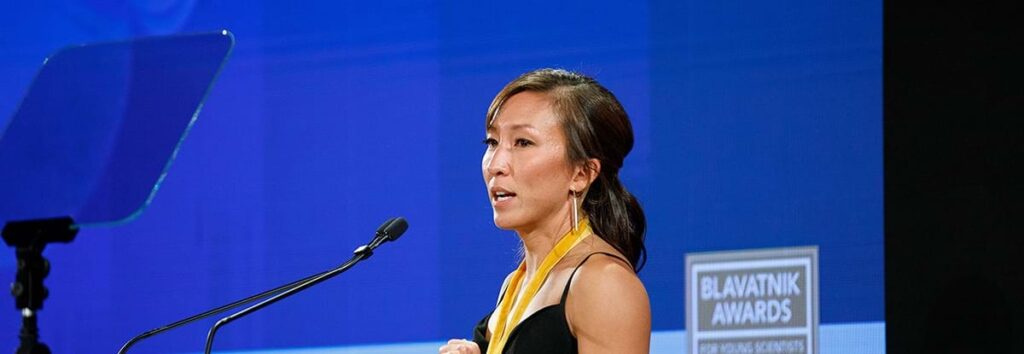
Tye’s work is widely recognized, and this year the Blavatnik National Awards for Young Scientists named Tye its 2021 Life Sciences Laureate.
Tye’s Background
Tye is the daughter of two scientists—a biologist and a physicist—who met while travelling to the U.S. from Hong Kong to pursue their educations. From a young age, Tye says she was fascinated by subjective experiences, foreshadowing her studies on the connection between brain and mind.
“How do I feel the way I feel?” Tye recalls wondering as a child. “How can two people listen to the same song and one person loves it and one person hates it? What are emotions?”
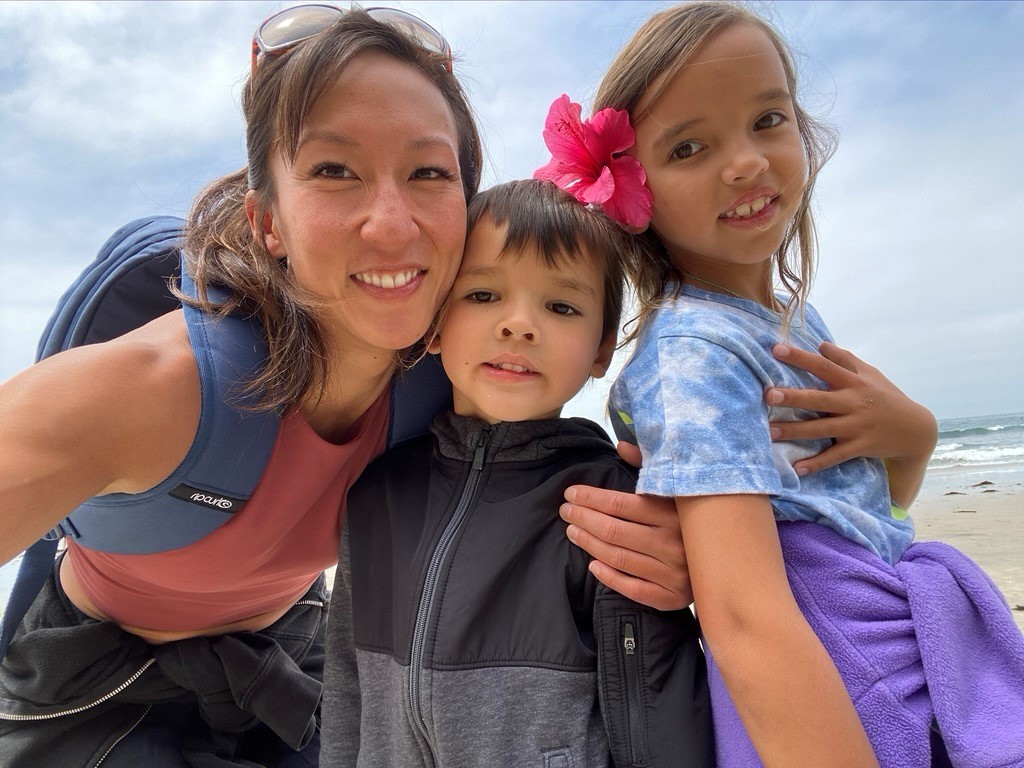
Tye went to MIT for her undergraduate degree and received her Ph.D. from the University of California, San Francisco. After a postdoctoral fellowship at Stanford, she opened her lab as an assistant professor at MIT in 2012. In 2019, she moved across the country again, to the Salk Institute.
As Tye gained confidence as a young scientist, she took on a difficult professional challenge as she sought to examine questions that had not traditionally been the purview of her field.
“As a neuroscientist, I’m often told I am not allowed to study how internal states like anxiety, or craving, or loneliness are represented by the brain,” she recalled in a TED Talk. “And so, I decided to set out and do exactly that.”
Research in Optogenetics
In her research, Tye uses technology called “optogenetics,” which transfers the light sensitivity of certain proteins found in some algae to specific neurons in the brains of lab animals. Researchers can then use light to control signaling by the neuron, and they can establish links between the neuron and specific behavior. Tye developed an approach using this tool called “projection-specific optogenetic manipulation.”
“This permits scientists to dissect the tangled mess of wires that is our brains to understand where each wire goes and what each wire does,” Tye said.
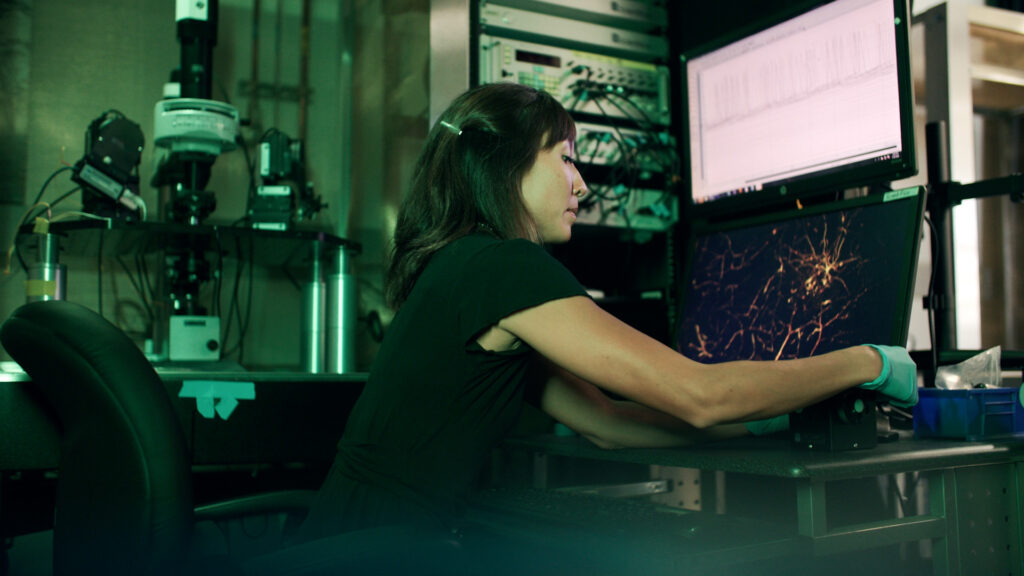
Tye’s postdoctoral training was in the Stanford University lab of Karl Deisseroth, who had recently developed optogenetics. Many young neuroscientists wanted to be among the first to use optogenetics, and Tye was eager to use it to study behavior and emotion. Tye recalled that period.
“It was a very exciting time in neuroscience, and in 2009 I already felt like I had come late to the party, and knew I needed to push the field forward to make a new contribution,” Tye says. “I worked absurdly hard during my postdoc, fueled by the rapidly changing landscape of neuroscience, and feel like I did five years of work in that two-year period.”
Analyzing Neural Circuits
Tye’s research program initially focused on the neural circuits that process emotional valence, the degree to which the brain assigns positive or negative value to certain sensory information. Her lab has analyzed the neural circuits controlling valence processing in psychiatric and substance abuse disorders.
This work includes the discovery of a group of neurons connecting the cerebral cortex to the brainstem that can serve as a biomarker to predict whether an animal will develop compulsive alcohol drinking behavior. Recent research has focused on neurons activated when animals experience social isolation and enter “loneliness-like” states.
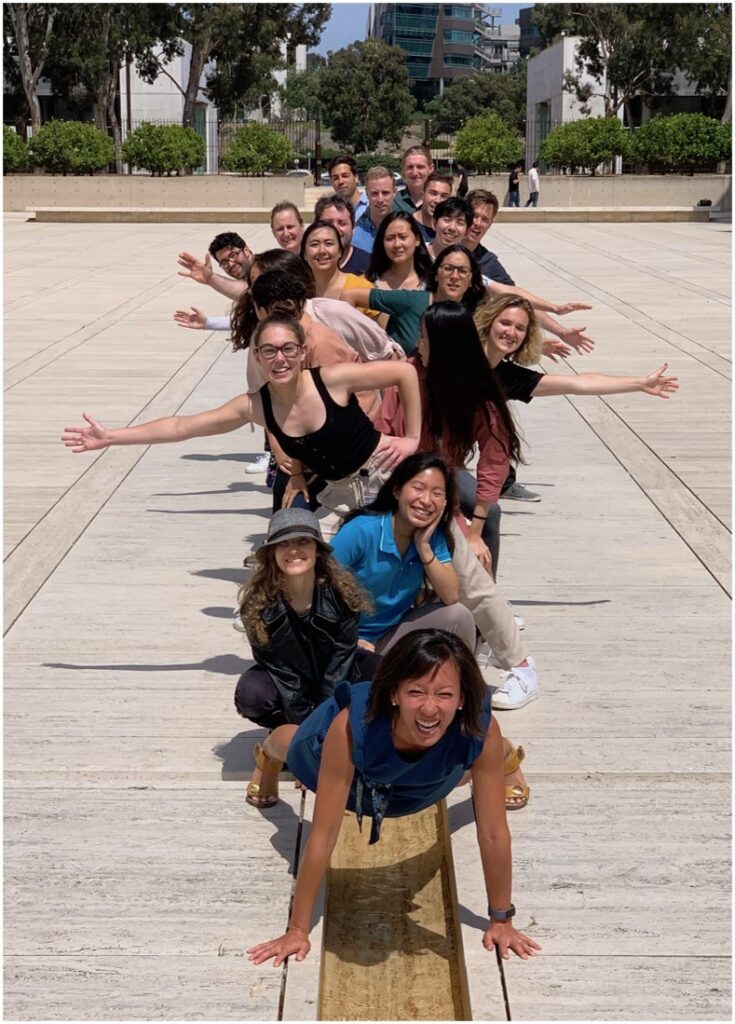
Tye and her research team are also exploring how the brain represents “social homeostasis”— a new field of research which seeks to understand how individuals know their place within a social group and identify optimal amounts of social contact.
Pushing Boundaries in Her Field
Even after considerable success in her field, Tye says she still feels as though she is pushing boundaries of her discipline. In doing so, she is continuing to bring neuroscience rigor to the study of feelings and emotions. Referring to her recent work, Tye said:
We faced a lot of pushback with this line of research, just because “loneliness” isn’t a word that has been used in neuroscience until now. These types of processes, these psychological constructs didn’t belong in what people considered to be hardcore neuroscience.
We are now bringing rigorous neuroscience approaches to ideas that were purely conceptual before. And so we’re being quantitative. We are being mechanistic. We are creating biologically grounded, predictive dynamical models for these nebulous ideas like “feelings” and “emotions.” And this is something that I find extremely gratifying.
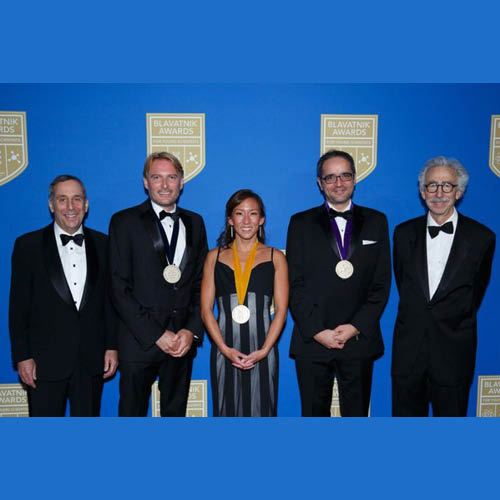
The 7th Annual Blavatnik Awards for Young Scientists Ceremony
“Again and again, science saves humanity with a combination of obstinate optimism and relentless realism.”
Published October 11, 2021
By Kamala Murthy
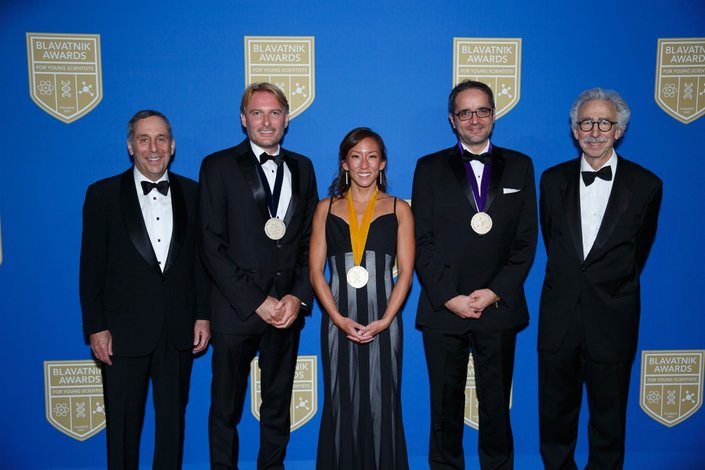
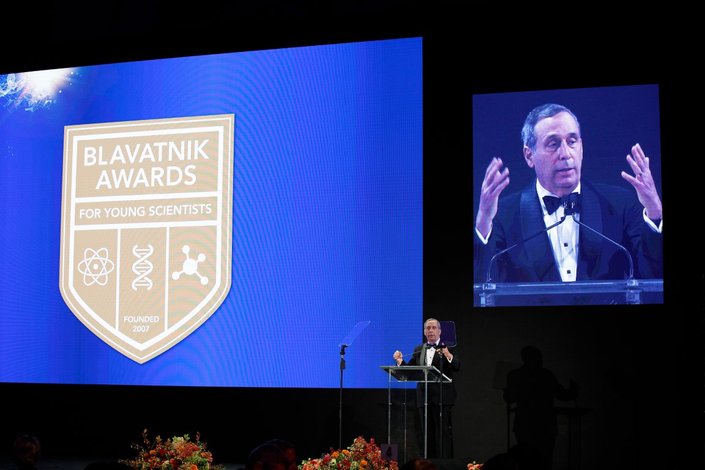
On Tuesday September 28, 2021, the Blavatnik Family Foundation hosted the seventh annual Blavatnik Awards for Young Scientists Ceremony at the American Museum of Natural History in New York City. This event honored the 2020 and 2021 Blavatnik National Awards Finalists and Laureates, along with the 2020 Blavatnik Regional Awards honorees, who are postdoctoral researchers in New York, New Jersey, and Connecticut. Some of New York’s leading figures in science, academia, and philanthropy attended, along with 138 guests. Larry Bacow, President of Harvard University, served as the Master of Ceremonies.
In reflecting on the past year and events related to the COVID pandemic, Bacow remarked “Science is a constant source of humility and an endless wellspring of achievement. This year—more than any other in my lifetime—has reminded me of that fact…Again and again, science saves humanity with a combination of obstinate optimism and relentless realism.” He concluded by introducing the President of The New York Academy of Sciences, Nicholas B. Dirks.
Prof. Dirks gave a brief history of The New York Academy of Sciences, the organization’s connection to the Blavatnik Awards and Len Blavatnik’s inspiration to create a unique science prize that honored scientists early in their career, where money and recognition could propel scientific achievement and innovation.
The Tri-State Area’s Most Talented Postdoctoral Scientists
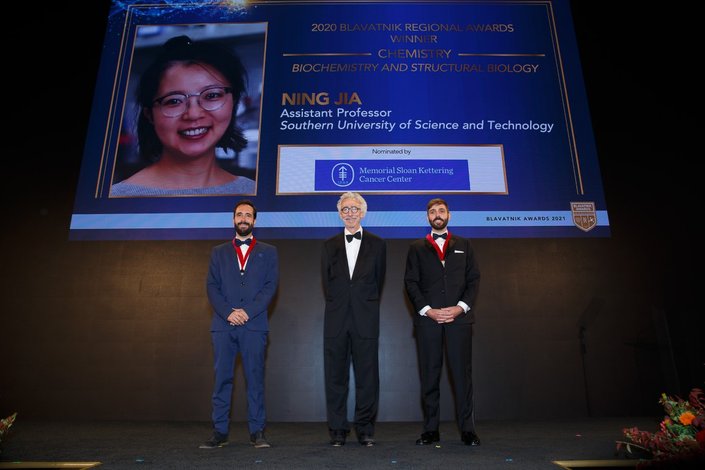
Prof. Dirks went on to introduce the nine 2020 Blavatnik Regional Awards Finalists and Winners, the Blavatnik Awards’ original prize honoring the Tri-state area’s most talented postdoctoral scientists. He introduced a film featuring the three 2020 Regional Winners, followed by the Winner’s receiving their medals on stage.
When the Master of Ceremony, Larry Bacow, returned to the stage, he announced on-stage the esteemed cohort of 2020 National Finalists and 2021 National Finalists in the awards categories of Life Sciences, Chemistry, and Physical Sciences & Engineering. The achievements of these incredible scientists were roundly lauded by the audience. A video highlighting the extraordinary work of the three 2020 Blavatnik National Awards Laureates, William R. Dichtel, Brian Metzger, and Cliff Brangwynne, was shown and each scientist was called to the stage to receive their medal.
Shortly afterwards, Bacow recognized the 2021 Blavatnik National Awards Laureates by introducing a film on each Laureate, followed by calling them to the stage to receive their medal by Prof. Dirks. Then each Laureate gave a scientific presentation at the podium.
Life Sciences
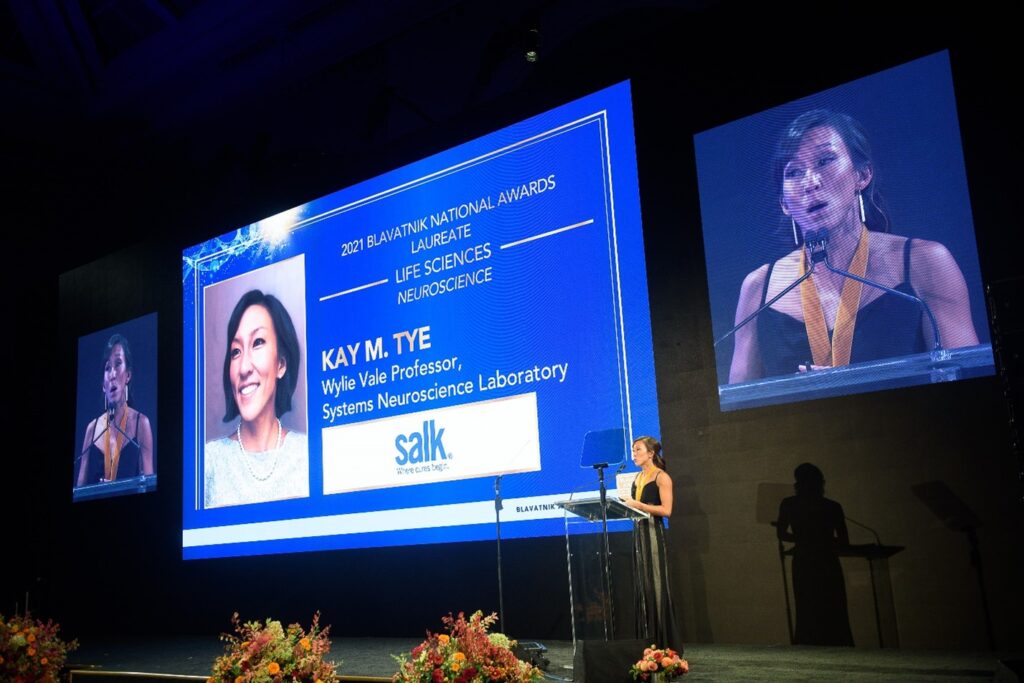
2021 Laureate in Life Sciences, Kay M. Tye from the Salk Institute of Biological Sciences spoke about her research focused on the neural circuitry driving emotions, cognition, addiction, and depression. She discussed how their team pivoted their research to study the effects of social isolation as a result of the COVID pandemic.
Chemistry
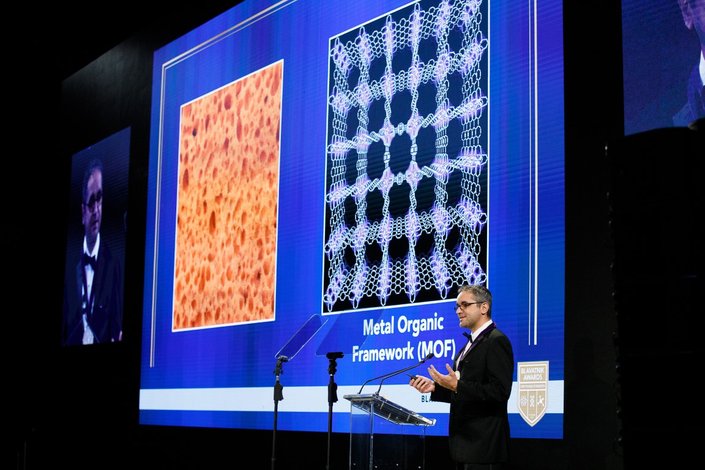
After receiving his medal, 2021 Laureate in Chemistry, Mircea Dincă from MIT, gave a talk on metal-organic frameworks (or MOFs) which he coined “sponges on steroids.” He discussed his discovery—conducting electricity through MOFs—and how these materials could be useful as supercapacitors for energy storage and new green technology systems; he also discussed his partnership with Lamborghini.
Physical Sciences & Engineering
Next, 2021 Laureate in Physical Sciences & Engineering, Andrea Alù from The City University of New York presented his latest research on nano-structured metamaterials which could lead to new, enhanced materials technologies that have applications in areas such as cellular communications, energy harvesting, radar cloaking, optical computing, and nano-optics.
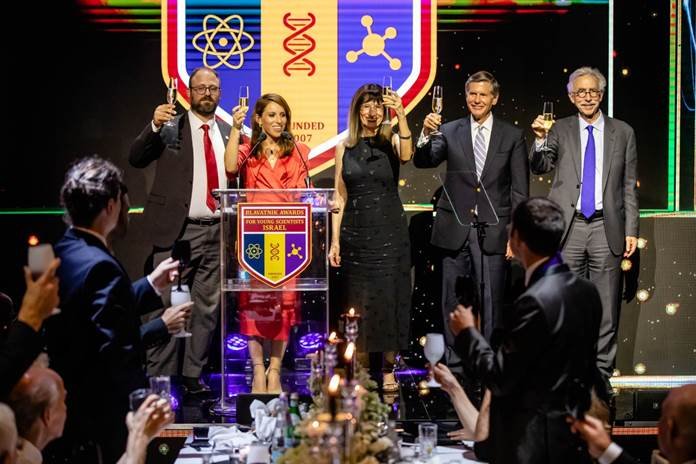
The evening concluded with Bacow’s Toast to Science: “With deepest gratitude and affection to the Museum of Natural History, to The New York Academy of Sciences, to all of our inspiring Young Scientists and to the great institutions where they have found homes, to the whale and to everyone who’s walked this hall under its gaze in search of knowledge and wisdom…To Science!”
To learn more about the Blavatnik Awards for Young Scientists, visit blavatnikawards.org.
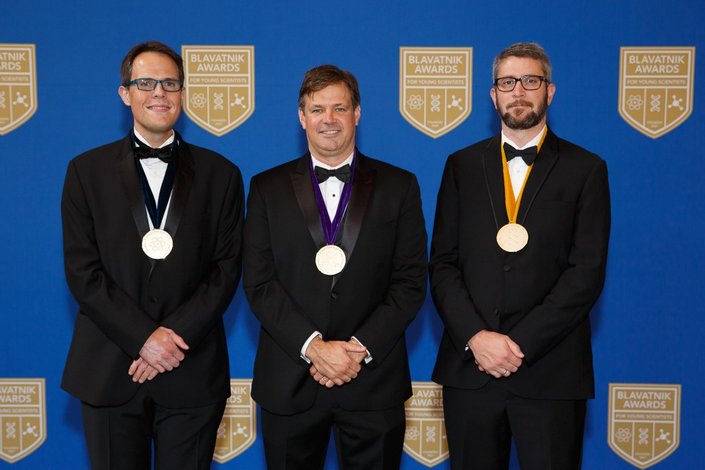
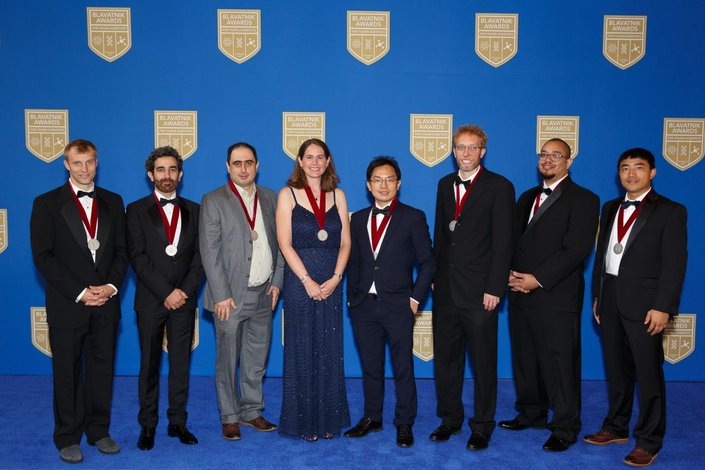
2021 Blavatnik Awards for Young Scientists in Israel
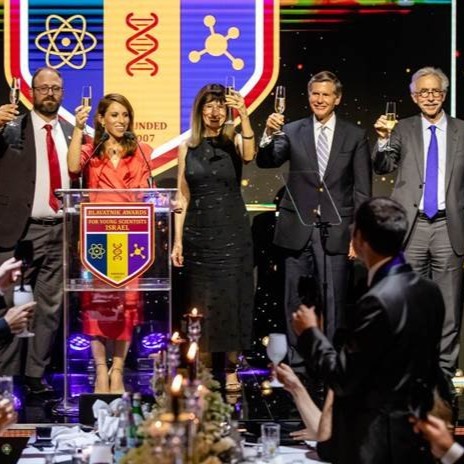
“The young scientists receiving the Blavatnik Awards tonight are illuminating the path to the future.”
Published October 11, 2021
By Kamala Murthy
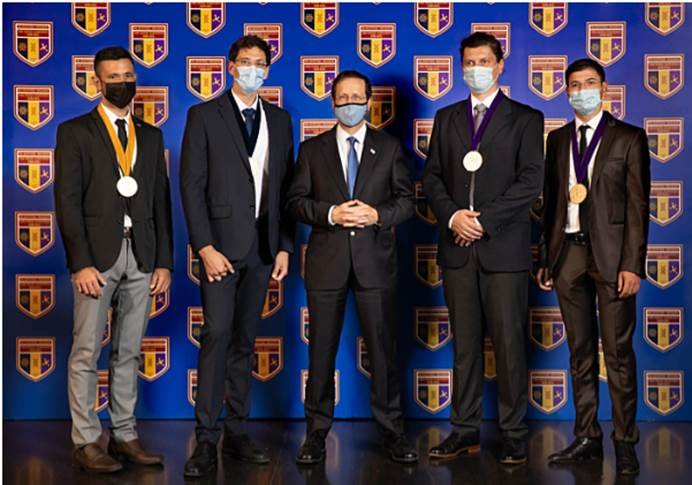
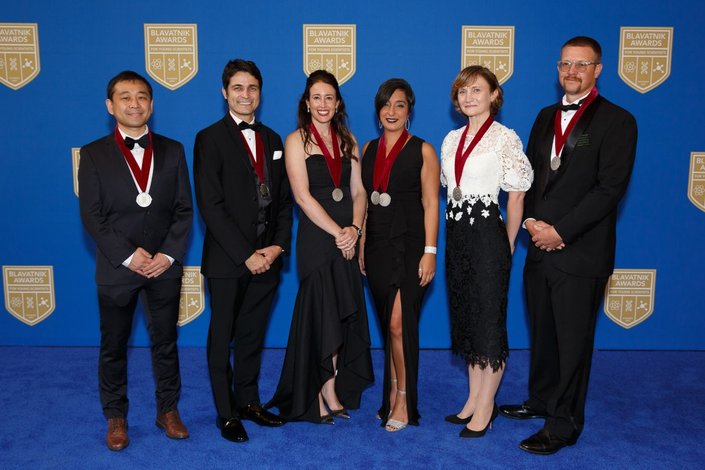
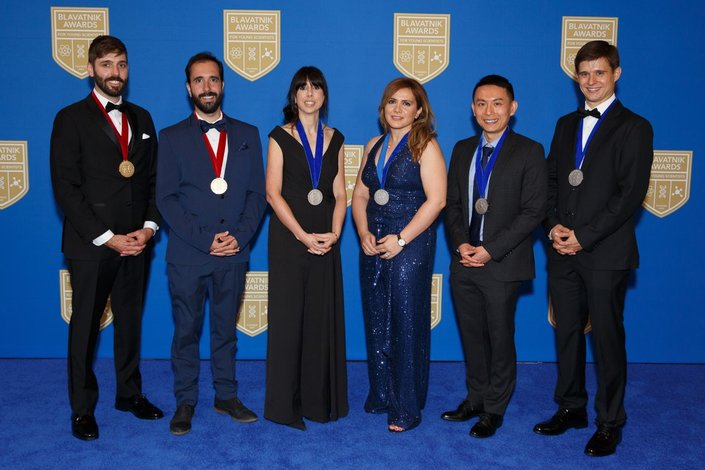
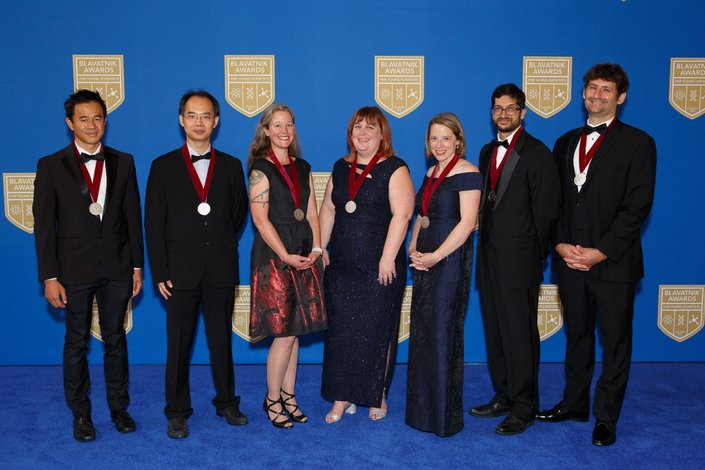
On Sunday, August 1, 2021, the Blavatnik Awards for Young Scientists in Israel were conferred as part of a gala evening held at the Israel Museum in Jerusalem, attended by over 100 guests. The Awards, a collaboration between the Blavatnik Family Foundation, The New York Academy of Sciences, and the Israel Academy of Sciences and Humanities, are one of the most significant awards granted to scientists at the early stages of their careers in Israel. This year’s Awards Ceremony jointly honored the 2020 and 2021 Blavatnik Awards in Israel Laureates.
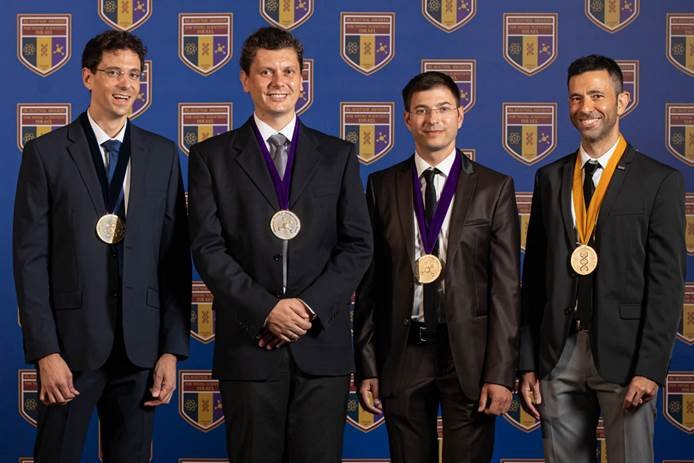
The honorees, listed below, were each awarded US$100,000:
Physical Sciences & Engineering
Prof. Ido Kaminer, Technion – Israel Institute of Technology, 2021 Laureate
Prof. Guy Rothblum, Weizmann Institute of Science, 2020 Laureate (in absentia)
Chemistry
Prof. Rafal Klajn, Weizmann Institute of Science, 2021 Laureate
Prof. Emmanuel Levy, Weizmann Institute of Science, 2020 Laureate
Life Sciences
Prof. Yossi Yovel, Tel Aviv University, 2021 Laureate
Prof. Igor Ulitsky, Weizmann Institute of Science, 2020 Laureate (in absentia).
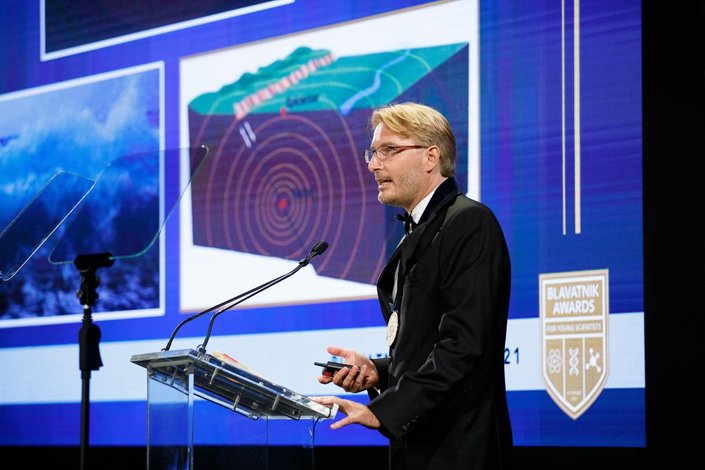
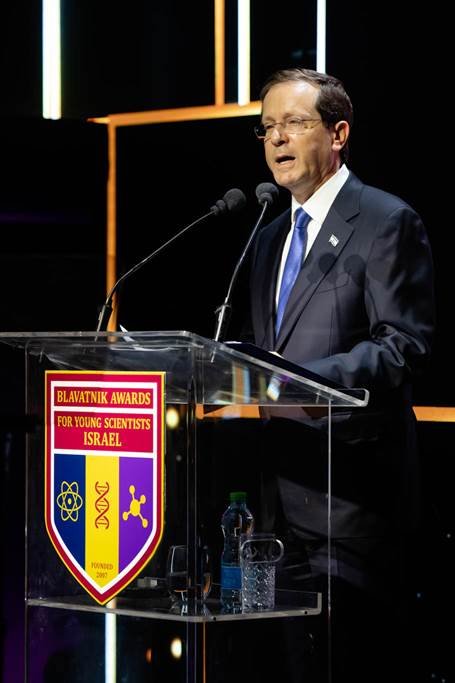
Israel’s newly-appointed President, Isaac Herzog, graced the ceremony with an appearance and a short speech. Herzog thanked Len Blavatnik for his philanthropy and support of scientific research, and praised scientists and their role in fighting COVID-19 in Israel, saying “Just as Pasteur’s experiments 150 years ago were the torch that illuminated the path to modern vaccines, the young scientists receiving the Blavatnik Awards tonight are illuminating the path to the future.”
Anchor of Israel TV’s Reshet 13, Dr. Hila Korach, served as Emcee. The President of the Israel Academy of Sciences and Humanities, Prof. Nili Cohen, gave opening remarks and introduced President Herzog. Afterward, The New York Academy of Sciences President and CEO, Nicholas B. Dirks, spoke about the importance of science to help humanity tackle the challenges ahead, and congratulated the Laureates.
Kfir Damari, Co-Founder of SpaceIL, was the keynote speaker and inspired the audience by sharing the story behind the inception of the Beresheet spacecraft and the creation of SpaceIL. Equally inspirational were Israeli Singer Marina Maximillian, youth performer Lia Schapira, and dancer Liron Ozery, who gave notable performances during the evening.
VIP Guests at the event included:
- Peter Thorén, Executive Vice President, Access Industries; Member of the Board of Governors, The New York Academy of Sciences
- Avi Fischer, Chairman & CEO of Clal Industries
- Uri Sivan, President of Technion – Israel Institute of Technology
- Alon Chen, President of Weizmann Institute of Science
- Ariel Porat, President of Tel Aviv University
- Robert John Aumann, 2005 Nobel Laureate in Economics
- Roger Kornberg, 2006 Nobel Laureate in Chemistry
- Ambassador Neil Wigan, United Kingdom Ambassador to Israel
- Ami Appelbaum, Chairman of Israel Innovation Authority;
- Yulia Berkovich Shamalov, former Israeli politician
- Ron Levkowitz, Chairman of First International Bank of Israel
To learn more about the Blavatnik Awards for Young Scientists, visit blavatnikawards.org.


Targeting Molecules with Tiny Sponges
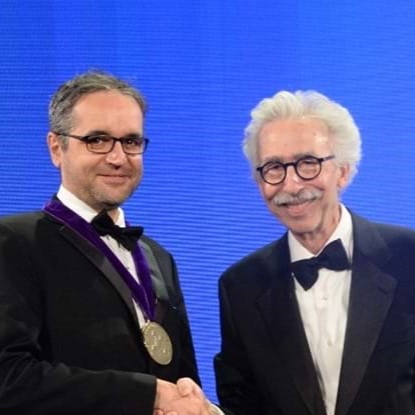
Growing up in Romania, Mircea Dincă’s was first exposed to science. Now he’s engineering an electric Lamborghini.
Published October 1, 2021
By Roger Torda
Mircea Dincă creates materials in the lab with surface features that can’t be found in nature. He then makes variants with electrical properties that other scientists once thought impossible. This is groundbreaking basic research with many emerging applications. One is particularly exciting: a supercapacitor to power a Lamborghini supercar.
Dincă, a professor of chemistry at MIT, is this year’s Blavatnik National Awards for Young Scientists Laureate in Chemistry. He heads a lab that synthesizes novel organic-inorganic hybrid materials and manipulates their electrochemical and photophysical properties.
Dincă and his students work with metal-organic frameworks, or MOFs. “These are basically what I like to call sponges on steroids because they are enormously porous,” Dincă told the Academy in a recent interview. “They have fantastically high surface areas, higher than anything that humanity has ever known.”
Metal-Organic Frameworks (MOFs)
MOFs have a hollow, crystalline, cage-like structure, consisting of an array of metal ions surrounded by organic “linker” molecules. Scientists can “tune” their porosity, creating MOFs that can capture molecules of different properties and size.
To help conceptualize the large surface area of MOFs, Dincă says a gram of the material would, if flattened out, cover an entire football field. This means their pores can hold an almost unimaginably large number of molecules. One application capitalizing on this capacity is gas storage. For example, a canister filled with MOFs would hold nine times more CO2 than an empty canister. Other emerging uses have included devices to manage heat, antimicrobial products, gas separation, and devices for scrubbing emissions and carbon capture.
Dincă first encountered MOFs as a graduate student. Several years later, after considerable research on the electronic structure of materials, he started envisioning MOFs with properties that had not been widely considered before. “Previously, people thought that metal-organic frameworks are just ideal insulators,” Dincă said. “But we realized that there are certain types of building blocks that, when put together, would allow the free flow of electrical charges.” This was something of a paradigm shift in the field.
A Partnership with Lamborghini
Dincă and his students started synthesizing MOFs with a variety of organic ligands and metal combinations to create materials that are both porous and conducting. They also developed ways to grow MOF crystals so they can be more easily studied with imaging tools, permitting analysis of their structure, atom-by-atom. The new techniques and materials have led to MOFs that might prove valuable for batteries, fuel cells, and energy storage. Dincă’s lab and MIT have signed a partnership with Lamborghini to use MOF supercapcitors in the company’s planned Terzo Millennio sportscar.
Dincă and his students also study the use of MOFs as catalysts, and as chemical sensors. They explore how these materials interact with light, which could lead to smart windows that lighten or darken automatically. Better solar cells are yet another possible application.
More efficient air conditioning, with considerable environmental benefit, is another goal. Dincă has co-founded a start-up called Transaera to build MOF-based cooling equipment that pulls water molecules out of air so that the AC doesn’t work as hard. The key is tuning the pores of the MOFs to just the right size to capture water at just the right humidity.
Scaling up remains a challenge for many of these applications. “It’s one thing to make a few grams in a laboratory, it’s quite another to make hundreds of kilograms so you can take them out into the real world,” Dincă said.
“Thirsty for Knowledge”
Dincă grew up in Romania, and says he got his first taste of chemistry in 7th grade. An MIT departmental biography playfully suggests “that having a dedicated teacher that did spectacular demonstrations with relatively limited regard for safety” was the initial influence. One imagines awe-inspiring, semi-controlled explosions in the front of a classroom of 12 year olds. In the following years, Dincă started participating in the Chemistry Olympiads, and in 1998, when he was in high school, he won first place at an international competition in Russia.
At the time, Dincă found he was running up against limits to his education. “I think the biggest challenges to my becoming a scientist were, early on in Romania where I grew up, that we just didn’t have access to labs, to books,” Dincă said. “That made me thirsty for knowledge.” So Dincă was eager to travel to the U.S. when he was offered a scholarship for undergraduate studies at Princeton. He then earned a Ph.D. from UC Berkeley. He has been teaching and conducting research at MIT since 2008.
Dincă met his wife, who is also from Romania, while they were both students at Princeton. She is a lawyer, and the couple have two children, Amalia and Gruia. Dincă’s father is a retired Romanian Orthodox priest, and his mother, a retired kindergarten teacher.
When he is not with his family or at work, Dincă might be running, hiking, or taking photographs.
Constant Exposure to the Unknown
Dincă enjoys teaching, including freshmen chemistry. For his more advanced students and postdocs, Dincă says he fosters original thinking by giving them as much responsibility as possible. “As a Principal Investigator myself, I tend to be very hands-off,” Dincă explained. “And that’s good because it allows students to take ownership of their projects and become creative themselves. In fact, most of the best ideas in my lab come from the students, not myself.”
One of the best things about being a scientist, Dincă said, is constant exposure to the unknown, and he is pleased when his commitment to basic research is recognized. “Being a Blavatnik National Award Laureate is, of course, fantastic recognition of my research, of my group’s efforts,” Dincă said. “But also, most importantly for me, it is recognition of the fact that curiosity-driven research is still appreciated.”
While curiosity may drive Dincă’s scientific inquiries, he believes applied research with new classes of MOFs will help address important environmental challenges. At the same time, there can be no doubt that one application may prove especially thrilling. “Never in my wildest dreams did I believe that just thinking about electrical current in porous materials would take me on a path to helping make an electric Lamborghini,” Dincă said. “But that is where our research has led us.”
Also read: Exploring Metamaterials and Photonics