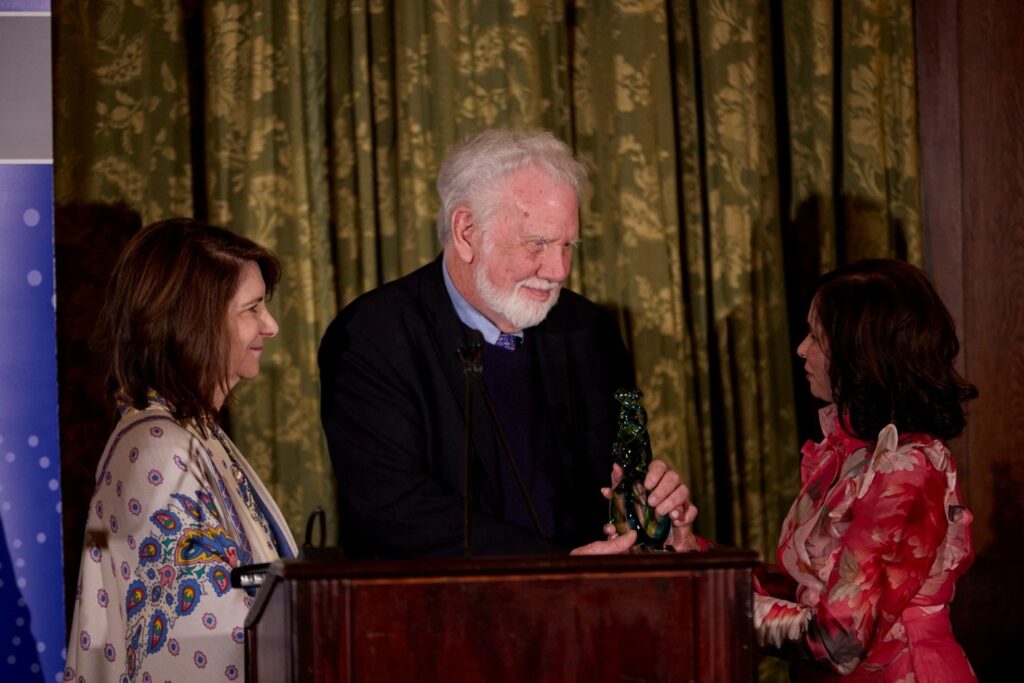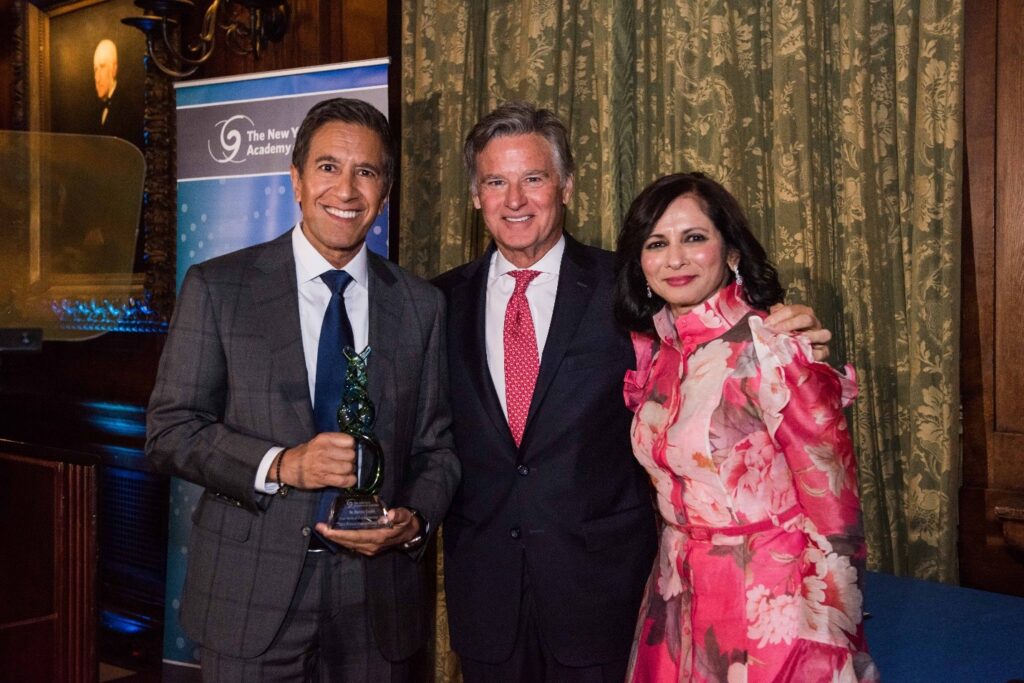
The Dr. Paul Janssen Award Symposium will celebrate the groundbreaking achievements of Dr. Anthony “Tony” Hunter, PhD, American Cancer Society Professor and Renato Dulbecco Chair at the Salk Institute for Biological Studies in La Jolla, California.
Dr. Hunter is being honored for his pioneering discovery of tyrosine kinases and protein-tyrosine phosphorylation as mechanisms for the malignant transformation of normal cells into cancer cells or other disease states. His fundamental discoveries have inspired the development of more than 80 cancer treatments that continue to transform patients’ lives today.
This symposium will bring together leading voices in cancer research and biomedical innovation to honor Dr. Hunter’s pioneering work and explore its profound impact on modern science and medicine.
The strategic applications of scientific knowledge are indispensable for the discovery and development of meaningful solutions to society’s challenges. Given the current funding environment around STEM and waning public trust in science, scientists have an increasingly critical role to play in transforming how the next generation understands, engages with, and trusts science.
This interactive workshop will provide the fundamentals for exposing scientists to youth-centered science communication. Through discourse and two hands-on activities, participants will explore practical ways they can activate their research and engage with K-12 students inside and outside of the classroom. Participants can leverage the workshop to build acumen in science communication, gain a basic understanding of how to engage with youth of different ages, and include their experience in critical application materials, such as cover letters for industry positions and teaching statements for academic roles.
By the end of the program, participants will gain a better understanding of how to communicate scientific concepts and their research to K-12 audiences through developing activities that are meaningful and approachable, ultimately helping foster public engagement with science and with scientists.
This training will be held in-person at the Academy’s space on 115 Broadway, 8th Floor, New York, NY 10006. Space is limited. Attendees are encouraged to register early. Refreshments will be served.
Speakers
Adrienne Umali
Associate Director, Education, The New York Academy of Sciences
Adrienne Umali is Associate Director of Education at The New York Academy of Sciences, where she leads K–12 enrichment programs designed to spark curiosity and inspire a lifelong love of science through mentorship and hands-on learning. She is passionate about making STEM accessible and engaging for all students, and brings experience as both a neurobiology researcher and a middle/high school science teacher in the Bronx. Adrienne holds a BS in Psychology from Brown University, a Master’s in Biomedical Science from the Icahn School of Medicine at Mount Sinai, and a Master’s in Education from CUNY Lehman College.
Danielle Mink-Bellizzi
Program Manager, Education, The New York Academy of Sciences
Danielle Mink-Bellizzi is a Program Manager on the Education team at The New York Academy of Sciences, where she leads STEM mentorship programs that connect scientists with K–12 students through hands-on, inquiry-driven learning. Driven by a commitment to expanding access to meaningful STEM experiences, she oversees the Afterschool STEM Mentoring Program and Family Science Nights, fostering inclusive partnerships across NYC. Before joining the Academy, Danielle spent over a decade in informal education across museums and schools, developing art and science programming. She also brings experience in geospatial technologies and remote sensing, having led teacher workshops and served as a STEM specialist with the KIPP Charter network. She holds a BA with the School of the Art Institute of Chicago and a BS in Coastal Environmental Studies from Stony Brook University.
Zamara Choudhary
Program Manager, Education, The New York Academy of Sciences
Zamara Choudhary oversees a portfolio of professional learning programming at The New York Academy of Sciences designed to accelerate career advancement for scientists, students, STEM professionals, educators, and adult learners. She leads the Leon Levy Scholarship in Neuroscience’s Mentorship Program, the Academy’s Internship Program, and alumni engagement for the Stevens Initiative. Passionate about democratizing knowledge across disciplines and continents, Zamara spent a decade in cultural institutions building expertise in international program design and management, teaching, fundraising, research, and public engagement. She holds a Master’s in Arts Administration from Columbia University and a Bachelor’s in History, English, and Arabic Studies from the CUNY Macaulay Honors College at Hunter College.
Join us for aspecial film screening of “Oliver Sacks: His Own Life”.
This compelling film explores the life and work of the legendary neurologist and storyteller, Oliver Sacks, as he shares intimate details of his battles with drug addiction, homophobia, and a medical establishment that accepted his work only decades after the fact. Sacks was a fearless explorer of unknown mental worlds who helped redefine our understanding of the brain and mind, the diversity of human experience, and our shared humanity.
You won’t want to miss this unique opportunity to explore the life and legacy of one of the most influential medical practitioners and writers of our time. The screening will be followed by a panel discussion with director Ric Burns and renowned psychologist and best-selling author Dr. Elissa Epel.
The New York Academy of Sciences is proud to recognize the Tata Sons Chairman as its most recent Life Governor.
Published December 5, 2025
By Nick Fetty
Nicholas B. Dirks (right), President and CEO of The New York Academy of Sciences, presents a Life Governor certificate to Natarajan Chandrasekaran, Chairman of Tata Sons, during the Tata Transformation Prize ceremony in India on Dec. 5.
Natarajan Chandrasekaran (Chandra), Chairman of India-based Tata Sons, joins a distinguished group of changemakers who serve as Life Governors for the Academy.
The Academy’s Board of Governors approved Chandra’s appointment earlier this year. He was presented with a certificate recognizing the honor by Academy President and CEO Nicholas B. Dirks during a ceremony in Mumbai, India on December 5.
Prior to his appointment as a Life Governor, Chandra served on the Academy’s Board of Governors where he lent his expertise to help guide the Academy on strategic and business matters. With more than three decades of science and leadership experience, he’s overseen revenues that have exceeded $100 billion across more than 100 Tata operating companies. He promotes the “One Tata” strategy, which focuses on themes like simplification, scale, synergy, and sustainability.
This recognition adds to a long list of accolades for Chandra which also include:
In collaboration with Tata Sons, the Academy launched the Tata Transformation Prize in 2023. The Prize recognizes and supports the implementation at scale of high-impact research that drives innovation in scientific disciplines of importance to India’s societal needs and economic competitiveness. Tata Sons also support the Academy’s Shaping Science podcast.
Learn more about the Tata Transformation Prize and check back for more updates from the 2025 ceremony!
The University Club of New York | One West 54th Street, New York, NY 10019
Reception: 6:00 PM Program & Dinner: 7:00 PM Dress Code: Festive or Business Attire (no sneakers permitted, jacket and collared shirt for men required)
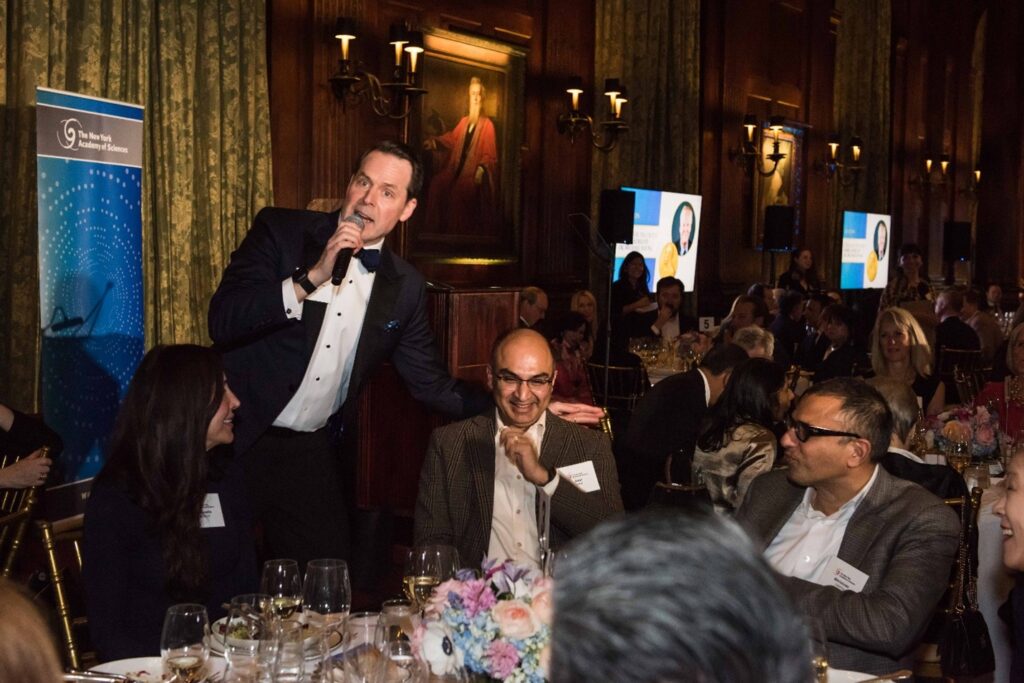
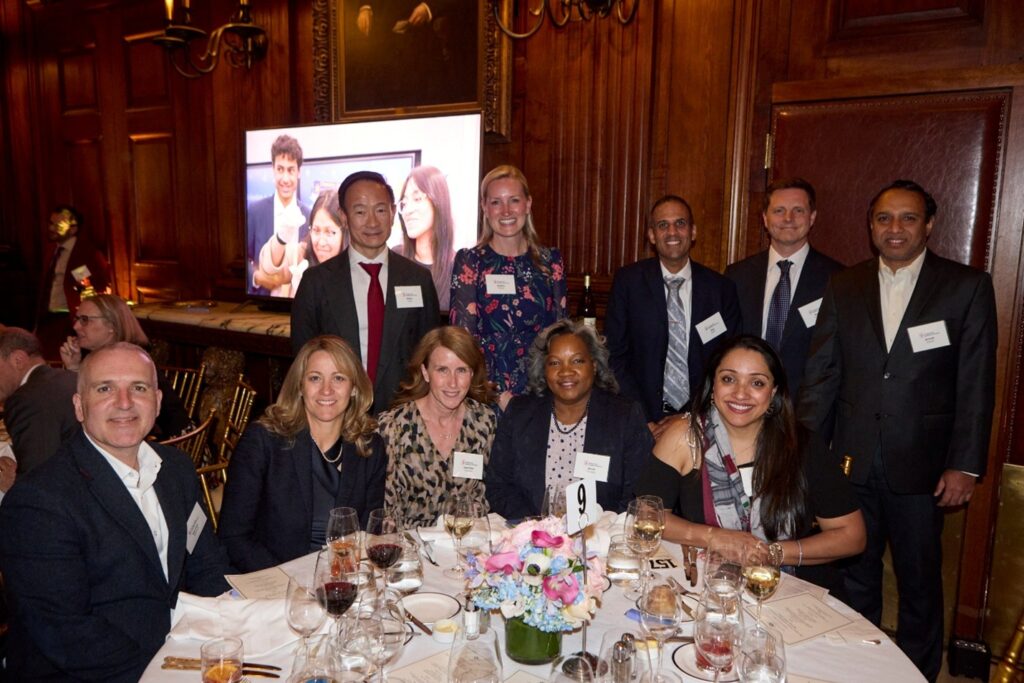
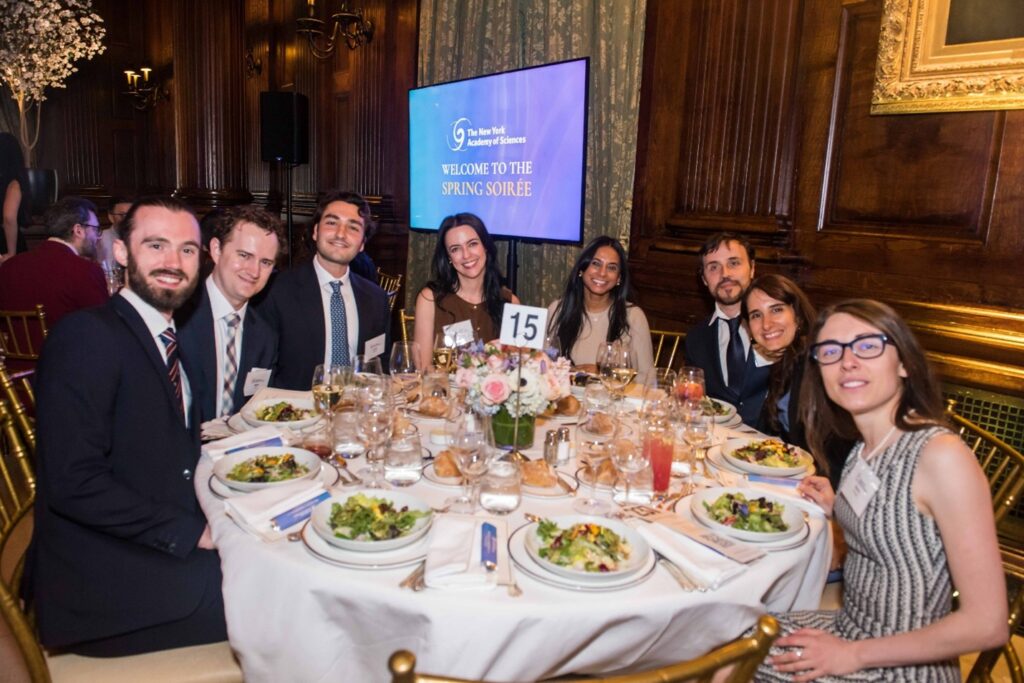
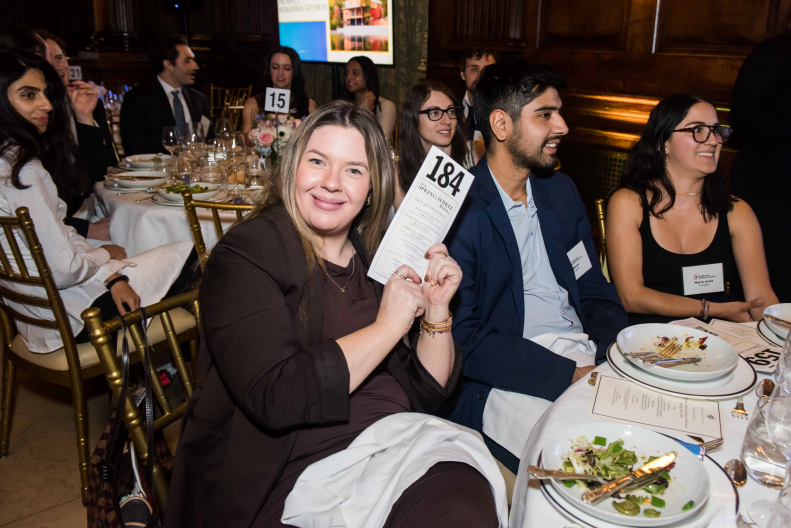
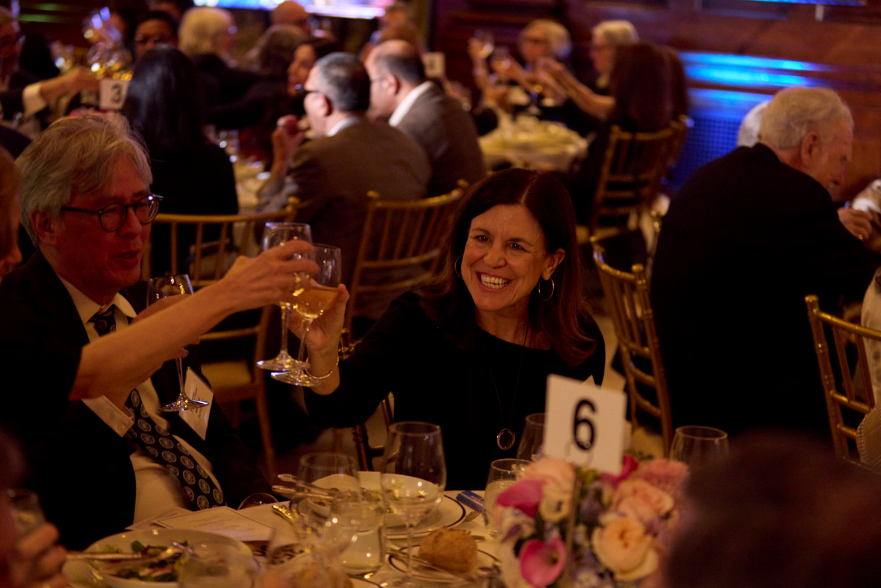
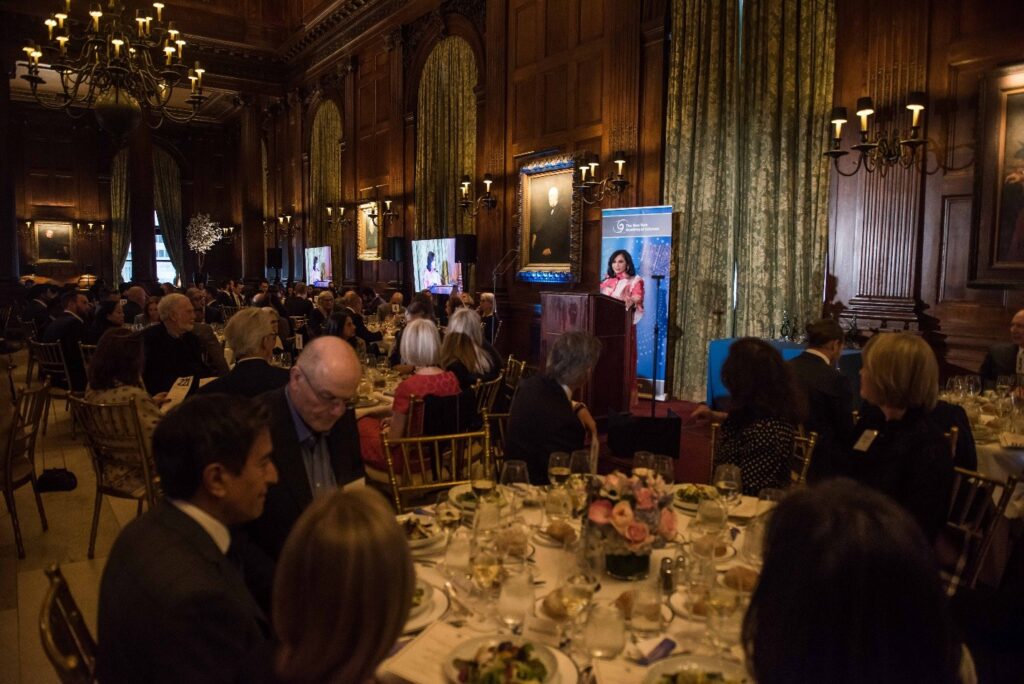
Join us for the Academy’s premiere fundraising event of the year, an unforgettable evening of innovation and discovery at our Spring Soirée, hosted by Academy President and CEO, Nicholas Dirks.
Together, we will celebrate the exceptional achievements of accomplished figures who have expanded the frontiers of knowledge and are shaping the future of science.
The Soirée promises to be an inspiring evening, filled with engaging conversations and captivating stories of scientific triumph. This event will offer a wonderful opportunity for you to network with scientific leaders from companies, universities and research institutes, and philanthropic organizations.
Honorees
Maria Gotsch
President and Chief Executive Officer, The Partnership Fund for NYC Recipient of the Visionary Award
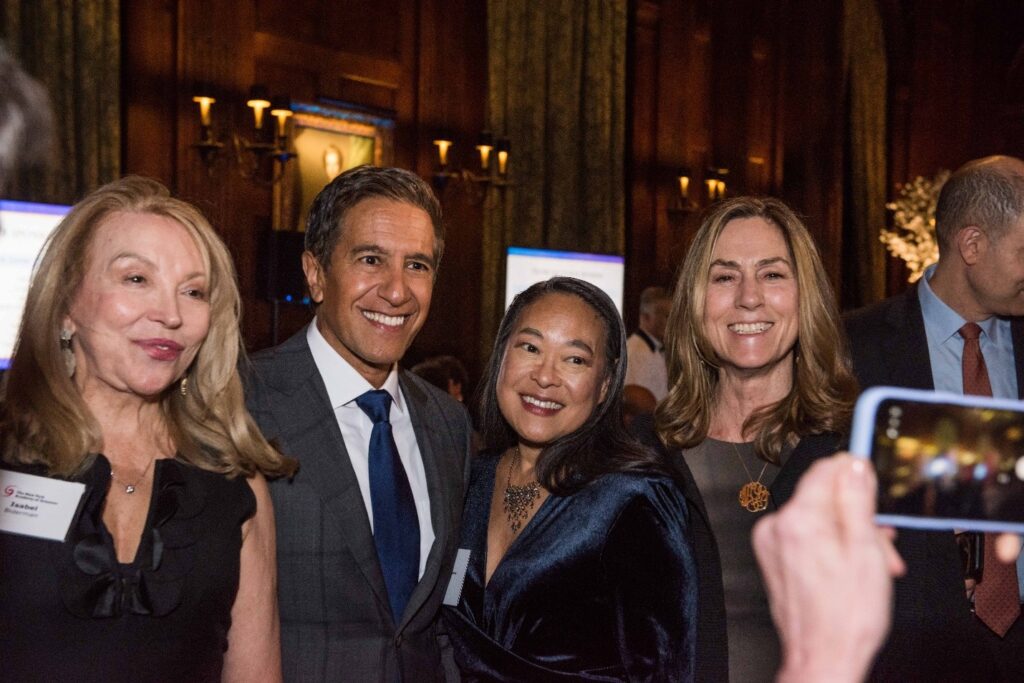
Dr. Sanjay Gupta
Chief Medical Correspondent, CNN Recipient of the Science Communicator Award
Josh Lerner
Jacob H. Schiff Professor, Harvard Business School; Co-Director, HBS Private Capital Project Recipient of the Constellation Award
John Sexton
NYU President Emeritus and NYAS Chair Emeritus Recipient of the Trailblazer Award
STEM Honorees
Rocheli Apilan
Teacher, High School For Health Professions & Human Services Cognizant STEM Teacher of the Year
Samay Garg, PhD
Department of Chemical Engineering, Columbia University Cognizant STEM Mentor of the Year
Dinner Chair
Seema Kumar
CEO, Cure.
Sponsors
Underwriter
Mission Partner
Benefactors
Laura B. Sachar Chandrika Krishnamurthy Tandon
Academic Patrons
Soirée Partners
The Carson Family Charitable Trust
Cindy and Brian Gavin
Elaine & Ken Langone
VIPs & Friends of the Soirée
Aida Habtezion AKA Strategy Benefit Plan Manager Brian Krisberg Club Quarters Elsevier Jeffrey S. Lehman Jerry Hultin Kauff McGuire & Margolis LLP
Kevin Ryan Lori E. Lesser Masaki Tan Mushett Family Foundation OneDigital Robert Catell Subra Suresh The Sky Foundation
Learn More
Our annual soirée provides an opportunity to celebrate and share our work, and to raise funds to support our mission of advancing scientific research, education and policy. View past soirée highlights here.
To attend, click the “Register” button at the time of the presentation. It will take you directly to the Zoom call.
Welcome and Introductions: 11:30 AM to 11:45 AM
Main Presentation: 11:45 AM to 2:30 PM
AI Data Center Boom: High Cost/Benefit, Locally & Environmentally
Tech companies are racing to expand data center capacity to win the competition for commercial dominance, most prominently through the AI path. This surge has been encouraged by the current business and political environment including new federal industrial policies, abundant capital, disregulation, and hype of AI.
Business tactics prioritizing immediate business interests over the public interest may include:
Bending/breaking some constraints, including legal ones
Building fast before anyone can react
Minimizing disclosure of critical data center features
Obfuscation of site ownership via complex LLCs, trusts, etc.
I will present brief summaries of findings from technical journals, newspapers, and magazines. Informative YouTube video segments will be included to elicit group discussion.
Speaker
Philip W. Apruzzese (BE Chem. E., MS Technology Mgmt., CHMM) graduated from Stevens Institute of Technology, Hoboken, NJ. He was employed in the pharmaceutical industry (Squibb, Beecham, Schering-Plough) for nearly 40 years, holding manufacturing operations, project, research pilot plant startup, and environmental compliance management positions. From 2010 to 2019 he was employed part-time as a Chem Eng/Environmental, health and safety consultant in addition to working seasonally as a Level C Official for USA Cycling racing events.
Since relocating to the Seattle area he has begun volunteer work with several non-profit community cycling/Recycling resources and advocacy organizations. Additionally he volunteers online with the Summit Old Guard, an organization for retired business and professional men.
In April, 2015, he spoke on Tour de France cycling performance enhancements – Post Lance/Post Drugs and in 2019 he presented on The Nobel Prize in Chemistry for the development of lithium ion batteries. In 2021 he presented on The Nobel Prize in Chemistry for the development of asymmetric organocatalysis. In April 2025 he spoke along with Stuart Kurtz on Becoming a Chemical Engineer: Two Stories.
Investment in companies offering technologies and services that enable decarbonization recently faced increased headwinds. Despite the urgent need for innovation in this area, it remains unclear whether we are seeing the development of economically viable new ventures or a repeat of the boom and bust associated with “cleantech” in the late 2000s and early 2010s. This session will explore these critically important issues.
Series Moderator
Josh Lerner
The Jacob H. Schiff Professor, Harvard Business School; Director, Private Capital Research Institute
Panelists
Emily A. Carter
Princeton University
Patrick Lynch
Featherlight Capital
Ron Gonen, MBA
Closed Loop Partners
Reuben Munger
Vision Ridge
Sponsors
Series Sponsor
Presented By
Pricing
All: Free
About the Series
The “Private Capital and Discovery: Strategic Investing in Scientific Innovation” series is brought to you by The New York Academy of Sciences and The Private Capital Research Institute. Through expert panels and thought-provoking discussions, the series examines how private equity is uniquely positioned to drive transformative advancements—while also exploring the ethical and strategic dilemmas that can arise when financial incentives influence the trajectory of science. Learn more about the series.
Angus Fletcher, PhD, joins Nick Dirks in the latest episode of Shaping Science to discuss how the humanities inform the sciences, the role of neurons as action initiators, and why he thinks artificial general intelligence (AGI) is a hoax. With degrees from the University of Michigan and Yale University, he is currently a professor of story science at Ohio State University’s Project Narrative. Trained in both neuroscience and literature, Prof. Fletcher bridges the sciences and humanities to explore how stories shape the human mind, inspire innovation, and foster resilience. His latest book—Primal Intelligence: You Are Smarter Than You Know—argues that it’s our unique form of human intuition, imagination, and emotional intelligence that give humans an edge even in the age of AI.
This episode of Shaping Science was made possible with the generous support of Tata Sons.
Ulysses S. Grant is best known for leading the Union Army to victory during the American Civil War and serving as the nation’s 18th president, but his less-well-known grandson, who was an associate member of The New York Academy of Sciences, had his own impact on the country in the fields of civil engineering and architecture.
Published November 11, 2025
By Nick Fetty
A portrait photograph of MG Ulysses S. Grant III, taken in April 1945. Photograph taken from Grant’s Official Military Personnel File (OMPF). Image courtesy of Wikimedia Commons. Public Domain.
Ulysses S. Grant, III, was born in Chicago in 1881. He eventually moved to New York City and studied at Columbia University. Grant briefly served during the Spanish-American War, prior to being admitted to West Point Academy, his grandfather’s alma mater. At West Point he was classmates with Douglas McArthur. MacArthur, who became America’s top general during World War II, graduated first in the class of 1903, while Grant was sixth.
Army Corps of Engineers and World War I
Upon graduating from West Point, Grant briefly served with the Army Corps of Engineers in the Philippines, Cuba, and Mexico. There he received formal training and education in engineering. He also served as an aide to President Theodore Roosevelt. It was at the White House that he met his future wife, Edith Ruth Root, daughter of Eilhu Root who served as Secretary of War and Secretary of State in the McKinley and Roosevelt administrations.
During World War I, Grant served as secretary of the American section of the Supreme War Council in Paris. Along with U.S. General Tasker H. Bliss, he played a role in negotiating and writing the Treaty of Versailles, which ended the war. Grant was promoted to the rank of Colonel and received the Army Distinguished Service Medal in 1919.
A statement from the War Department lauded Grant for his specific contributions: “As Secretary of the American section, Supreme War Council, Colonel Grant was entrusted with the most important duty of coordinating the work of the Joint Secretariat of the Supreme War Council and of the Joint Secretariat of the Military Representatives of the Supreme War Council, and as a member of the War Prisoners’ commission, Berne, Switzerland, he has rendered conspicuous service to the Government.”
Civilian Service and World War II
Between WWI and WWII, Grant returned stateside spending time in Washington, D.C. and San Francisco. During this time, he was promoted to the rank of Major. He worked as the executive officer of the Arlington Memorial Bridge Commission, a member of the National Capital Parks and Planning Commission, and eventually as the leader of the Office of Public Building and Public Parks in Washington, D.C. He continued to climb the military ranks, rising to Lt. Colonel and then Brigadier General.
When the U.S. entered World War II following the bombing of Pearl Harbor, Grant was named Chief of the Protection Branch of the Office of Civil Defense, overseeing the civil defenses of the entire United States.
Grant formally retired from the Army in 1945 with the rank of Major General.
Later Years
Despite hanging up his military uniform, Grant wasn’t ready to stop working. He served as vice president of George Washington University in Washington D.C. from 1946 to 1951. Though relatively little is documented from his foray into higher education administration, the university hosted an exhibit in 2023 recognizing the Grant family’s contributions to the museum. The exhibit, titled Rethinking Legacy and Memory: Behind the Image of Ulysses S. Grant, focused on the elder Grant and his legacy outside of his militaristic and political leadership.
The younger Grant was also an associate member of The New York Academy of Sciences (the Academy), meaning that despite moving away from New York he chose to remain affiliated with the Academy.
In his final years, Grant took an interest in history preservation. He served on the Civil War Centennial Commission and authored a biography of his grandfather. Ulysses S. Grant, III, passed away in 1968 at the age of 87. The elder Grant, who passed away in 1885, did not live long enough to see his grandson pursue a career of service to his country much like he had done roughly half a century earlier.
The treatment of children in the legal system provides unique challenges. It is necessary to understand the developing brain and child–adult social dynamics as these psychological and social phenomenon can have a significant and long-lasting impact on not only children but also the adults who interact with them. This collection of papers includes topics aiming to understand the impact of childhood in various legal situations such as forensic questions, false memories, allegations, language comprehension, and sexual abuse. The novel experimental findings, timely reviews, and unique perspectives will provide important contributions to address this challenging issue of the legal system. The virtual issue is edited by Kelly McWilliams (John Jay College of Criminal Justice).